

Japanese marinade with sake
- Preparation 5 min
- Servings About 1 ¾ cups (415 ml)
- Freezing Not recommended
Ads
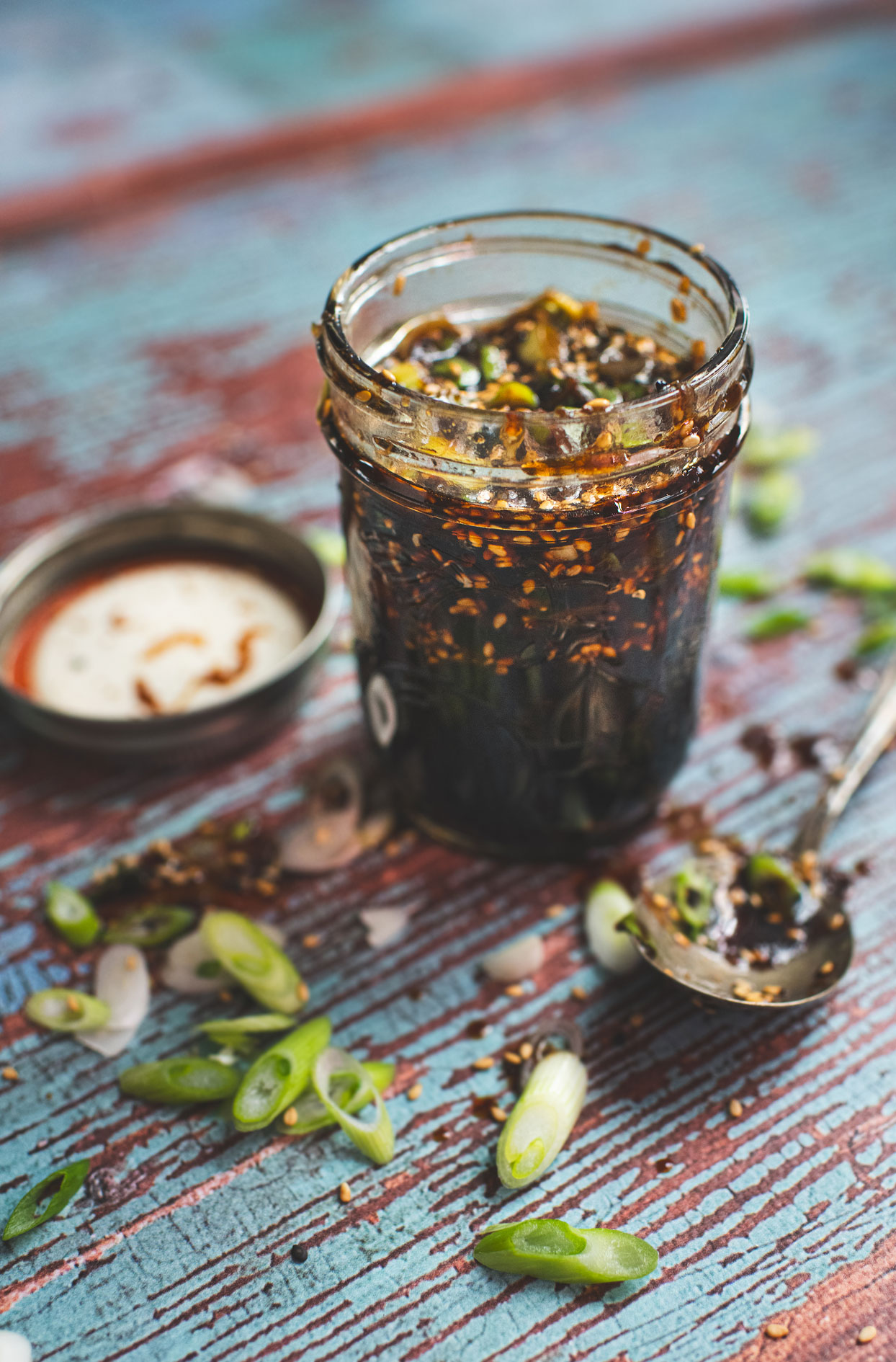
🎌 The marinade I pulled out of my beef skewers
I built this one for my Japanese-style beef skewers, and it worked so well on its own that leaving it buried inside another recipe started to feel like a waste. Dark brown sugar, reduced sodium soy sauce, sake, freshly grated ginger, garlic, toasted sesame oil and seeds, green onion, the juice of one lime. Sweet, salty and deeply savory at the same time. My reference point is izakaya cooking, those small Japanese bars where nothing shows up in a large portion and everything shows up loud.
🥩 What you actually put it on
This is the question people ask first, so here it is up front. Beef takes 1 to 2 hours. Boneless chicken, the same. Salmon stops at about 30 minutes, because the lime juice starts cooking it if you walk away. Firm tofu is happy for 2 to 4 hours and honestly comes out better than the meat does. Shrimp, 15 to 30 minutes and not a minute more.
Past raw marinating, it glazes chicken thighs and ribs on the grill, it goes straight into a bowl as a dipping sauce for gyoza and tempura, and it turns hard-boiled eggs into something very close to a ramen egg if you leave them in overnight.
🥢 Split it in two before anything raw touches it
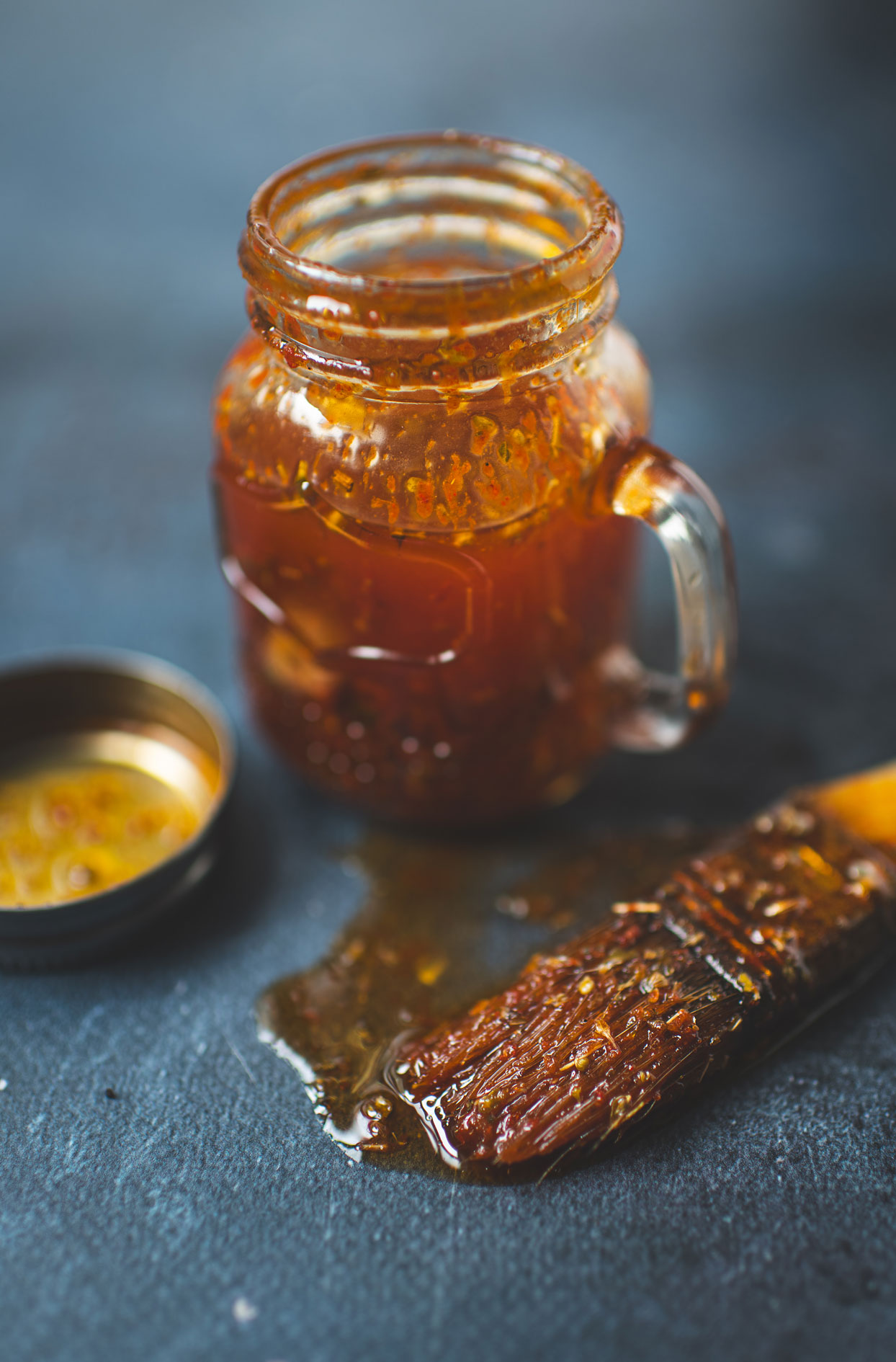
Half of the batch marinates the protein and gets thrown out afterward. The other half never meets raw meat and stays in a Mason jar for brushing during cooking and pouring at the table. Same marinade, three jobs, no cross-contamination. I do this with every single marinade I make and I am not flexible about it. The recipe makes about 1 ¾ cups (415 ml), enough for 2 lb (900 g) of protein, and it keeps 5 to 7 days in the fridge. It is better on day two than on day one.
Ads
🍶 Sake first, and what to do when there is none in the house
Sake is what makes this taste Japanese instead of taste generically Asian. It carries an umami depth that nothing else reproduces exactly. That said, I am not going to pretend the recipe collapses without it. Mirin steps in fine, just pull the dark brown sugar back by about a tablespoon because mirin is already sweet. Dry white wine works too, a little sharper, a little less round. Cooking sake from the grocery aisle is cheaper than drinking sake and does the job here. What does not work is hard liquor. Vodka or gin will scorch right through the ginger and the sesame.
🍯 Dark brown sugar, not light
The molasses in dark brown sugar is doing structural work against the soy sauce. Light brown sugar just makes the marinade sweeter and flatter.
🌶️ If you want heat
A squeeze of sriracha or a pinch of chili flakes goes in beautifully. Start small, taste, adjust. The sweet-salty base absorbs heat without losing itself.
🫙 Make it the day before if you can
The flavors keep developing in the jar. At 24 to 48 hours the ginger and the garlic have spread all the way through and the sesame oil stops sitting on top of everything. If you are cooking on Saturday, mix it Friday. Give it a good shake before you use it, the sugar likes to settle.
🥚 The leftover trick: ramen-style eggs
This is my favorite thing to do with the clean half of the batch. Boil eggs however you like them, hard or jammy in the middle, peel them and drop them in the marinade in the fridge for 4 to 12 hours. They come out amber-colored, seasoned right through the white, and they will improve any bowl of ramen, any rice bowl, any sandwich you put them in. Twelve hours is the ceiling. Past that the soy sauce takes over and the egg turns salty rather than savory.
🍲 Straight into a dipping bowl
No modification needed. Pour the clean half into a small bowl and serve it with dumplings, gyoza, spring rolls or tempura. A few extra drops of lime at the last second wake the whole thing up.
🐟 A note about salmon and shrimp
Both of these have a hard stop. Lime juice is acid, and acid cures fish the way ceviche does. Thirty minutes on salmon, half an hour maximum on shrimp, and you get flavor without the texture going chalky. Longer than that and you have cooked dinner in the fridge without meaning to.
✅ What to serve it with
The obvious one is the recipe it came from, my Japanese-style beef skewers. If you want to see how it sits next to the other Japanese things in my fridge, put it beside my homemade teriyaki sauce, which is thicker and built to glaze, and my homemade ponzu sauce with ginger, which is sharper and citrus-forward. Three different jobs, three different jars. On the vegetable side it makes a good dip for Asian-style edamame beans, and if you want the same flavor family in a lighter form, my Asian sesame, ginger and lime dressing does it without the sugar. Spooned over an Asian soba noodle salad it turns a side dish into the main event.

Ads
Ingredients
- ½ cup (125 ml) dark brown sugar
- ⅔ cup (160 ml) reduced sodium soy sauce
- 2 tbsp (30 ml) sake (or mirin or white wine as replacement)
- 1 tsp (5 ml) fresh ginger, finely grated
- 2 garlic cloves, finely grated
- 2 tbsp (30 ml) sesame seeds
- 1 tbsp (15 ml) toasted sesame oil
- 2 green onions, chopped
- Juice of 1 lime
Ads
Preparation
- In a large bowl, combine the brown sugar, soy sauce, sake, ginger, garlic, sesame seeds, toasted sesame oil, green onions and lime juice.
- Whisk well to completely dissolve the brown sugar.
- Separate the marinade into two portions: half to marinate the meat (to be discarded after use), half reserved in the fridge in an airtight Mason jar for brushing during cooking and drizzling at serving.
It depends entirely on the protein, and the differences are bigger than people expect. Boneless chicken and beef both want 1 to 2 hours. Chicken thighs with the bone in can go 4 hours and be better for it. Salmon stops at 30 minutes. Shrimp stops at 15 to 30 minutes. Firm tofu is the outlier and will happily sit 2 to 4 hours, or overnight if you forget it. The limit on the fish and the shellfish is the lime juice, not the soy sauce.
Mirin is the closest swap, but it is sweeter, so cut the dark brown sugar by about a tablespoon to keep the balance. Dry white wine works and gives a slightly sharper result. Cooking sake, the inexpensive kind sold in the Asian aisle, is completely fine for a marinade and is what I reach for when I am making a big batch. Dry sherry is the last resort and it does change the profile. Skip anything high-proof.
No. Sake is a fermented rice wine with very little sugar in it, and it brings savory depth. Mirin is sweet by design and is used mostly for gloss and glaze. You can substitute one for the other in this recipe as long as you adjust the sugar, but they are not interchangeable ingredients in general. If a bottle is labeled cooking sake, expect added salt, which is worth knowing before you add more soy sauce.
No, and this is the reason I split every batch in two before anything goes in. Marinade that has held raw chicken, beef or fish is contaminated and belongs in the garbage once the meat comes out. The clean half you set aside at the start is what you brush with during cooking and pour over at the table. If you did not split it and you want to salvage what is left, a hard rolling boil for several minutes makes it safe, but you lose the fresh ginger and lime brightness in the process.
The backbone is almost always soy sauce with sake or mirin, plus something aromatic. From that base you get teriyaki when it is reduced and sweetened, yakitori tare when it is simmered down thick for skewers, and shoyu-style marinades like this one when it stays thin and pourable. Ginger, garlic, sesame and green onion are the usual supporting cast. What I have added here that is not strictly traditional is the lime, which does the job yuzu would do if I could get it easily.
Ads

Ads
Ads
Ads
Ads