

Homemade ponzu sauce with ginger
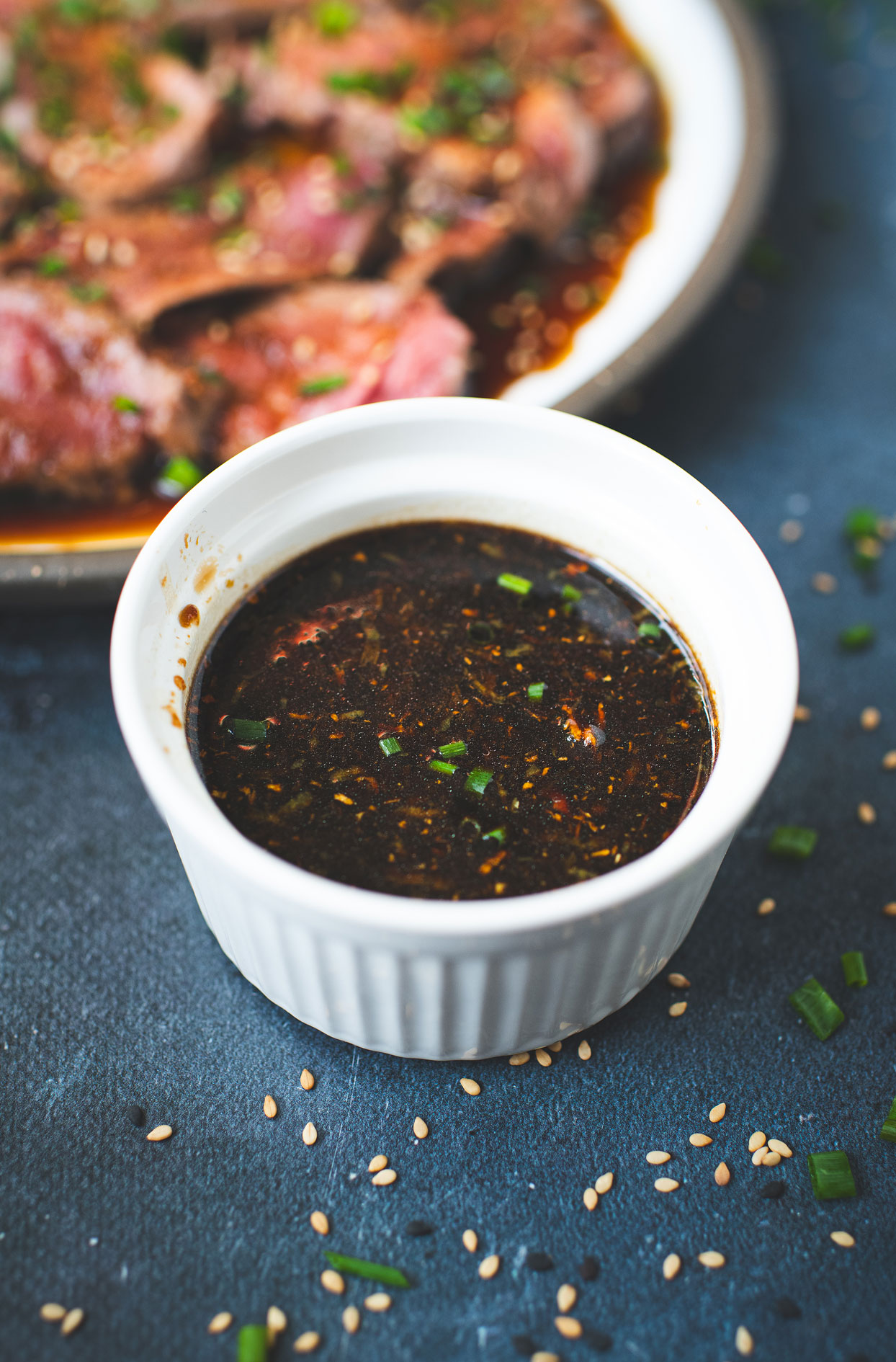
- Preparation 5 min
- Servings ⅔ cup (170 ml)
- Freezing I do not suggest
Ads
🍋 My homemade version of the Japanese sauce I order everywhere
In every Japanese restaurant I go to, I always end up ordering a dish with ponzu sauce. This tangy, salty, umami sauce that awakens the mouth with its citrus notes. I’ve been completely in love with it for years. I absolutely had to make my own version. This is the one I chose for my upcoming book, Tome 3. Bouffe pour recevoir du coup de grâce, to accompany my beef tataki. So good that I also wanted to release it as a separate recipe so you can use it everywhere at home, not just with the tataki. It’s a sauce that transforms an ordinary meal into a memorable moment.
🫚 Two personal touches that distinguish it from classic ponzu
Traditional Japanese ponzu uses yuzu, kombu, koikuchi soy sauce. Ingredients not always easy to find in Quebec grocery stores. My version keeps the spirit but simplifies access. First, I focus on a double citrus: lime juice and lemon juice with grated zest, which gives an explosion in the mouth that the classic single-citrus version doesn’t have. Then, my two personal additions that you don’t see in the original version: fresh grated ginger for a little citrusy spiciness, and a touch of toasted sesame oil for depth. These two twists add an oomph that completely changes the game. The first time, I had added salt by reflex and it was too salty. The tamari already does the job. Trust me, don’t touch the salt shaker.
🍣 So versatile you’ll make it by the full jar
This ponzu sauce is really the secret weapon you want to have permanently in your fridge. Dip for gyozas or grilled dumplings, drizzle for raw salmon tartare, sauce for a poke bowl, dressing on an Asian salad, dip for tempura vegetables, drizzle on hot edamames with fleur de sel. You’ll find a thousand uses. It keeps for five to six days in the fridge and even improves with time. As a bonus, because I use Kikkoman tamari rather than regular soy sauce, this sauce is naturally gluten-free. A nice bonus for guests with sensitivity. Perfect for entertaining stress-free, perfect for impressing your friends on Saturday night without telling them it took you five minutes to make.
Ads
Ads
🍋 Double citrus = explosion in the mouth
Classic ponzu uses a single citrus (often yuzu). My version uses lemon AND lime together, plus the zest of a lemon finely grated. This combo gives a complexity that lemon alone doesn’t have. Lime brings floral brightness, lemon brings tangy roundness, and the zest releases essential oils that perfume the whole sauce. Don’t skip the zest, it’s what makes all the difference.
🥢 Kikkoman tamari instead of regular soy sauce
I use Kikkoman tamari sauce because I love the flavors it develops. Richer, more complex, less simply salty than a classic soy sauce. Bonus: tamari is naturally gluten-free, so if you’re hosting someone with sensitivity, you can confirm they can eat without stress. Kikkoman is accessible in regular grocery stores, no need to go to a specialized Asian shop.
🫚 My two non-classic twists: ginger and sesame oil
I know that fresh ginger and toasted sesame oil are not in a traditional Japanese ponzu. But that’s exactly what makes my version special. Grated ginger brings a slightly citrusy spiciness that marries with the lemons, and toasted sesame oil gives a toasted depth that coats everything. I tested it once like this, I fell in love, it became my classic.
🧂 DO NOT add salt
Mistake I made the first time: adding a pinch of salt “to balance”. Result: too salty, impossible to recover. The tamari already does all the salinity work. If you find it lacks punch, add another drop of citrus juice instead, not salt.
🫙 Storage: 5-6 days in the fridge, improves with time
I always store my sauce in an airtight Mason jar in the fridge. It keeps easily 5 to 6 days and, interestingly, it becomes better after a night’s rest. The flavors marry, the ginger infuses, the sesame oil distributes. If you’re making it for entertaining, prepare it the day before instead of the same day.
🌶️ Twists to vary the pleasures
Want to experiment? Add a hint of wasabi for a spicy version that hits the sinuses, or a drop of liquid smoke for a grilled fire effect. If you want to feel funky with a Quebec version, add a teaspoon of dark maple syrup. It gives a ponzu-maple sauce that kills everything on grilled salmon.
✅ What to serve with my homemade ponzu sauce with ginger?
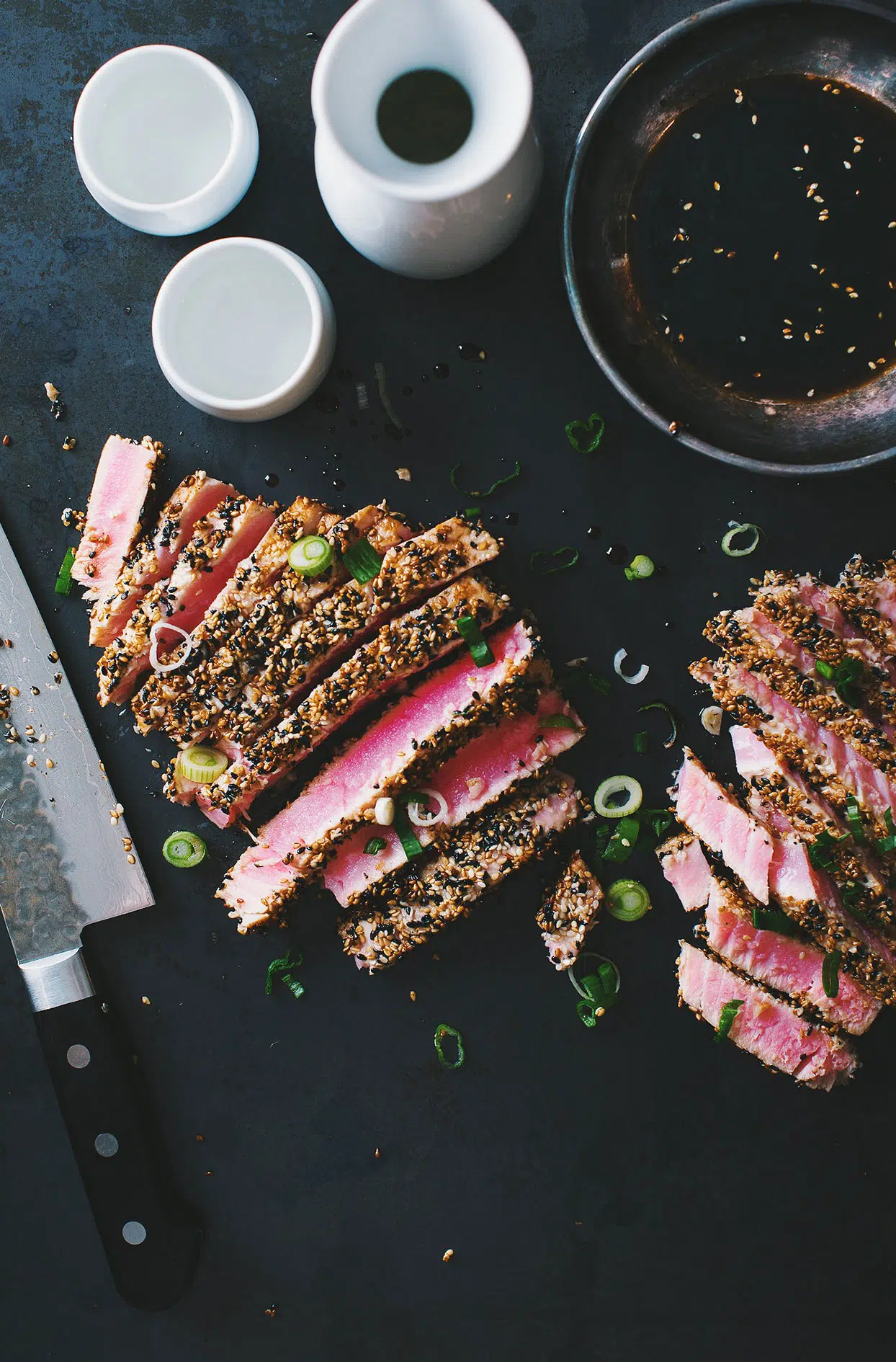
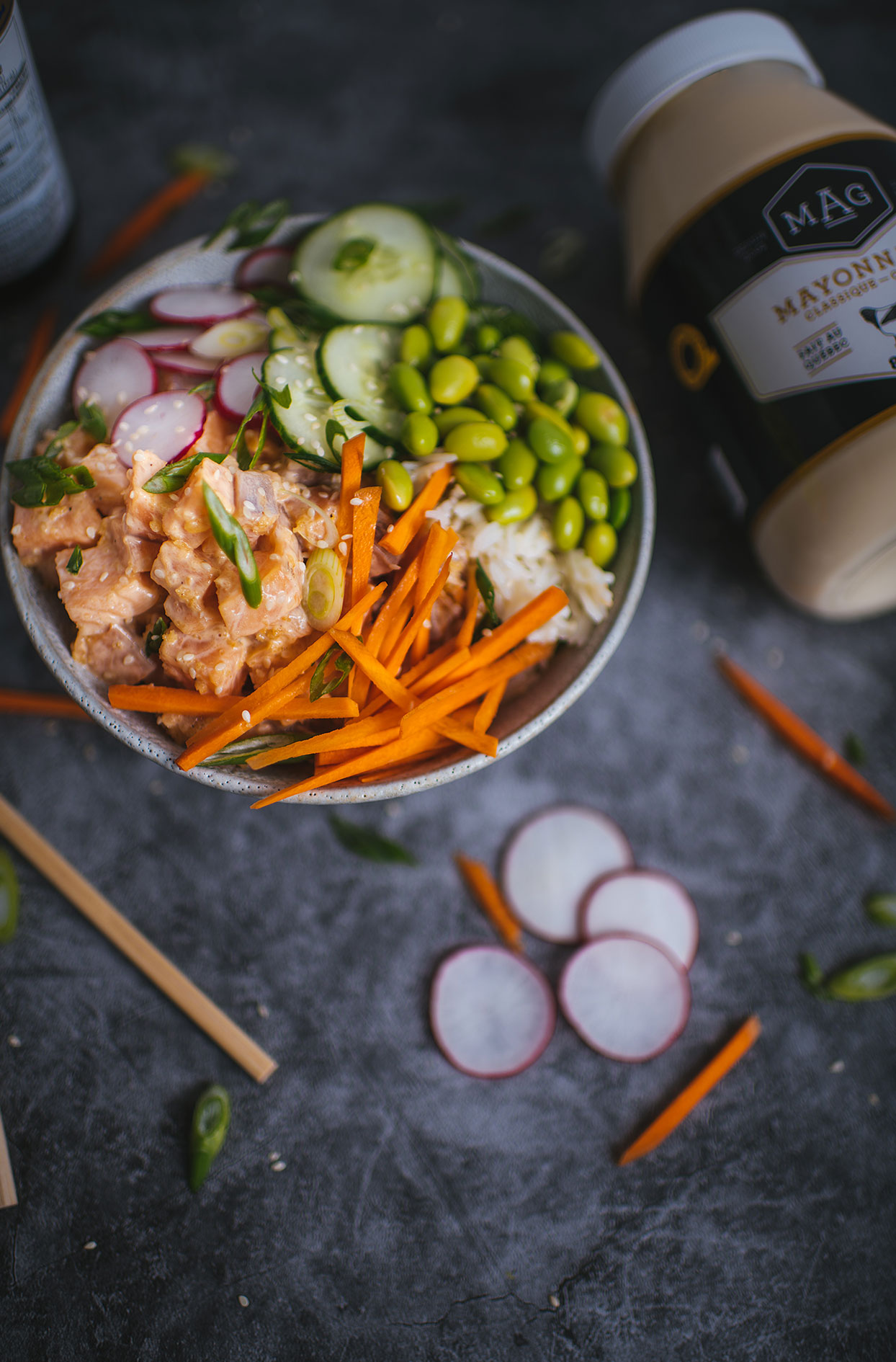
This sauce is made for fresh Asian dishes. Use it as a drizzle on my Beef tataki with legendary orange sauce, my Tuna tataki with sesame crust, or as a dip for my Asian-style edamame beans with a little fleur de sel. It’s also incredible on my Tuna poke or my Crispy spicy salmon poke bowl to replace the classic vinaigrette. Once you have it in your fridge, you’ll find ten uses per week.


Ads
Ingredients
- ¼ cup (60 ml) Kikkoman tamari soy sauce
- Zest of 1 lemon, finely grated
- 2 tbsp (30 ml) fresh lime juice
- 2 tbsp (30 ml) fresh lemon juice
- 2 tbsp (30 ml) Blue Dragon mirin
- 2 tsp (10 ml) plain rice vinegar
- 1 tsp (5 ml) toasted sesame oil
- 1 tsp (5 ml) fresh ginger, finely grated
Ads
Preparation
- In a bowl, combine all the ponzu sauce ingredients and whisk to mix well.
- Cover and refrigerate. The sauce can be made the day before without problem and improves with time.
Yes, but the taste will change a bit. Regular soy sauce (classic Kikkoman) is more saline and less complex than tamari. If you substitute it, reduce the quantity by a quarter (about 3 tbsp instead of ¼ cup) because it’s more intense in salt. Tamari remains my favorite for the roundness of its flavors and the gluten-free bonus.
In an airtight Mason jar in the fridge, 5 to 6 days without problem. Interestingly, the sauce becomes better after 12-24 hours of rest — the flavors marry, the ginger infuses well and the sesame oil distributes in the mixture. If you’re making it for hosting guests, prepare it the day before instead of the same day.
Yes, with a simple substitute. Replace the 2 tbsp of mirin with 2 tbsp of sake plus half a teaspoon of sugar, or with 2 tbsp of dry white wine plus half a teaspoon of sugar. You lose a bit of the traditional Japanese character, but the result is still very good. Blue Dragon is accessible in most grocery stores, so it’s worth looking for.
Almost everything that’s Asian and fresh. Japanese classics: beef tataki, tuna tataki, sashimi, salmon tartare, poke bowl. Dips: gyozas, grilled dumplings, tempura vegetables, spring rolls. Seasonings: Asian salad, hot edamames with fleur de sel, grilled vegetables, cold soba noodles. You’ll find new uses every week.
To get the best out of it, use it as a drizzle on my tataki de boeuf avec sauce légendaire à l’orange or my tataki de thon avec croûte de sésame. It’s also incredible as a dip for my fèves edamames à l’asiatique or as a replacement for vinaigrette on my poke bowl de thon and my poke bowl de saumon épicé croustillant.
This homemade ponzu sauce comes together with just a handful of pantry staples: Kikkoman tamari soy sauce, fresh lemon and lime juice, grated lemon zest, mirin, rice vinegar, toasted sesame oil, and fresh ginger. Whisk everything in one bowl and you get that classic citrusy, savory ponzu flavor. The double citrus and fresh ginger are what set this version apart from a plain store-bought bottle.
Ads
Ads
Ads

Ads
Ads
Ads