

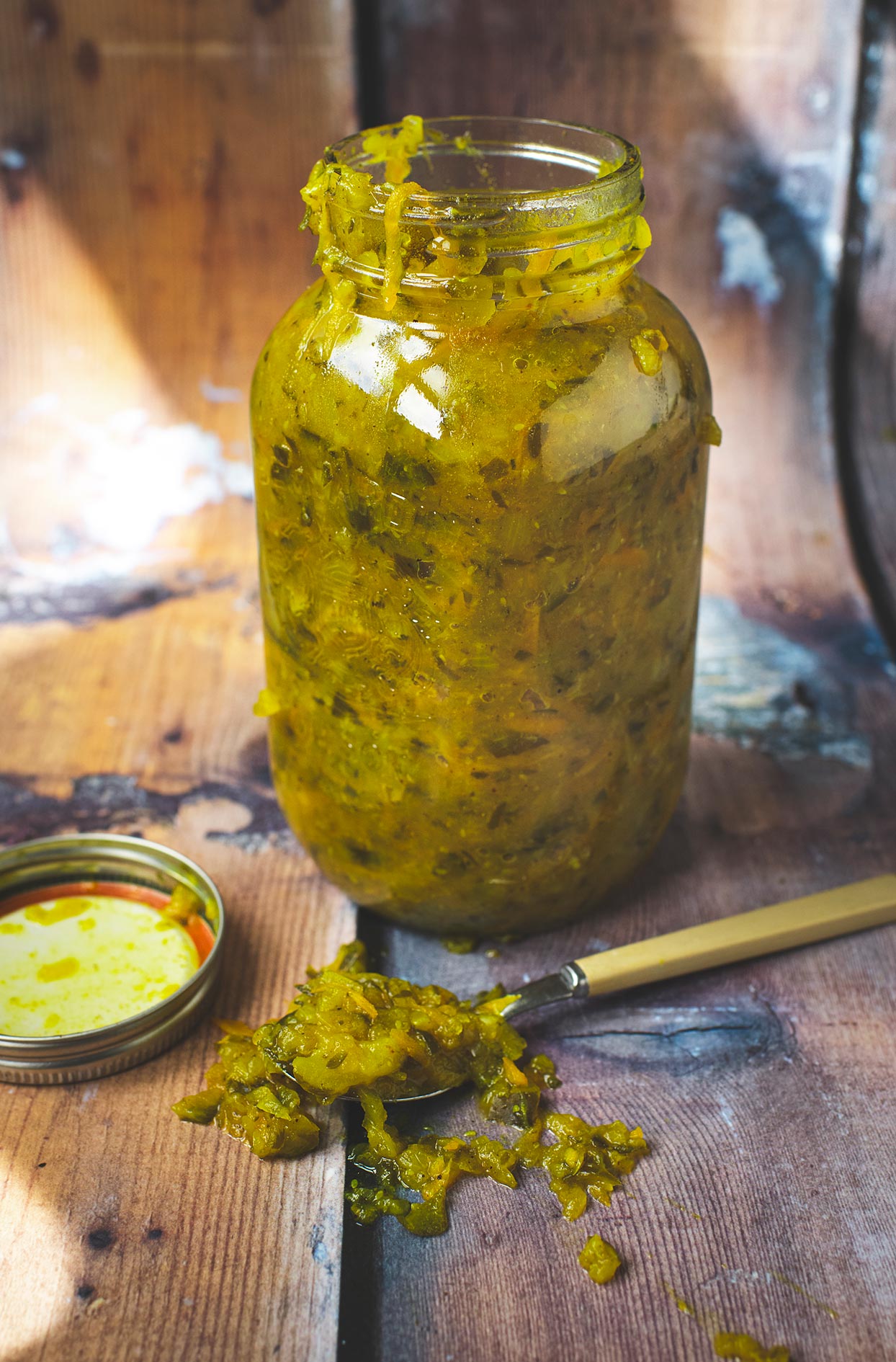
Homemade cucumber and carrot relish
- Preparation 30 min
- Refrigeration 2 h
- Cooking 25 min
- Servings 1 litre
- Freezing I do not suggest
Ads
🥒 Store-bought relish just tastes like sugar
I’ve never been a fan of store-bought relish. To me, it tastes like sugar and nothing else. It’s really not appealing, and I never understood why everyone puts it on their hot dogs. In my version, I cut back the sugar a lot so the sweetness is still there, but the vinegar gets a say too. That’s exactly the balance I was after, and once you taste it, you realize relish was never meant to be a piece of candy.
🍁 A sugar shack memory from Estrie
This recipe was inspired by a grandmother’s relish I tasted a long time ago at a sugar shack in Estrie. What I loved about it was precisely that it wasn’t too sweet compared to the acidity, and that’s what I wanted to bring back in my own version. It takes me back to a time when I used to eat homemade pickled things and everything actually tasted like something. I eventually built my own version, and I’ll be making it every year.
🥕 Carrot instead of bell pepper
Classic relishes use bell pepper alongside cucumber and onion. I didn’t feel like it, so I used carrot instead, and honestly it’s absolutely delicious. It brings a natural sweetness and colour without overpowering the cucumber. With the turmeric, celery salt and nutmeg, you get a relish packed with flavour that’ll end up on your hot dogs, your burgers and even on a steak. Buckle up. This is about to become your new homemade relish.
Ads
Ads
🌀 Use the food processor in three batches, never all at once
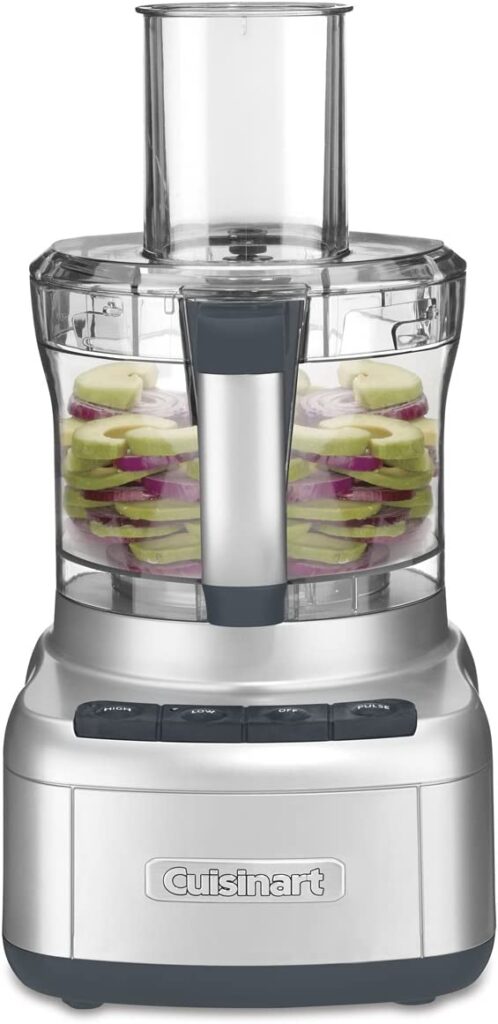
This is the single most important tip in the whole recipe. If you dump all six cups of cucumbers into the food processor at once, the ones at the bottom turn to mush while the ones on top barely get touched. The result is uneven texture and a half-pureed relish. Work in three small batches and pulse in short bursts instead of letting it run. Same goes for the onions. It takes two extra minutes and makes all the difference.
🥒 Keep the texture. This is not a purée
That’s exactly what sets a homemade relish apart from the store-bought kind. I aim for pieces slightly larger than a pea, big enough to see and still have a little crunch. Store-bought relish is a uniform paste where nothing has any personality anymore. Stop the food processor while there are still visible pieces. You won’t regret it.
⏱️ Two hours of salting is enough, and it’s already a long time
Many traditional recipes have you salt your cucumbers for eight hours or even overnight. I tested two hours in the fridge with coarse salt, stirring it through, and it’s perfect. The vegetables have given up everything they had to give. Honestly, I even find two hours feels long. That said, this step is not optional: without it, your relish would be watery and wouldn’t keep as well.
💪 Wring it out, and wring it hard
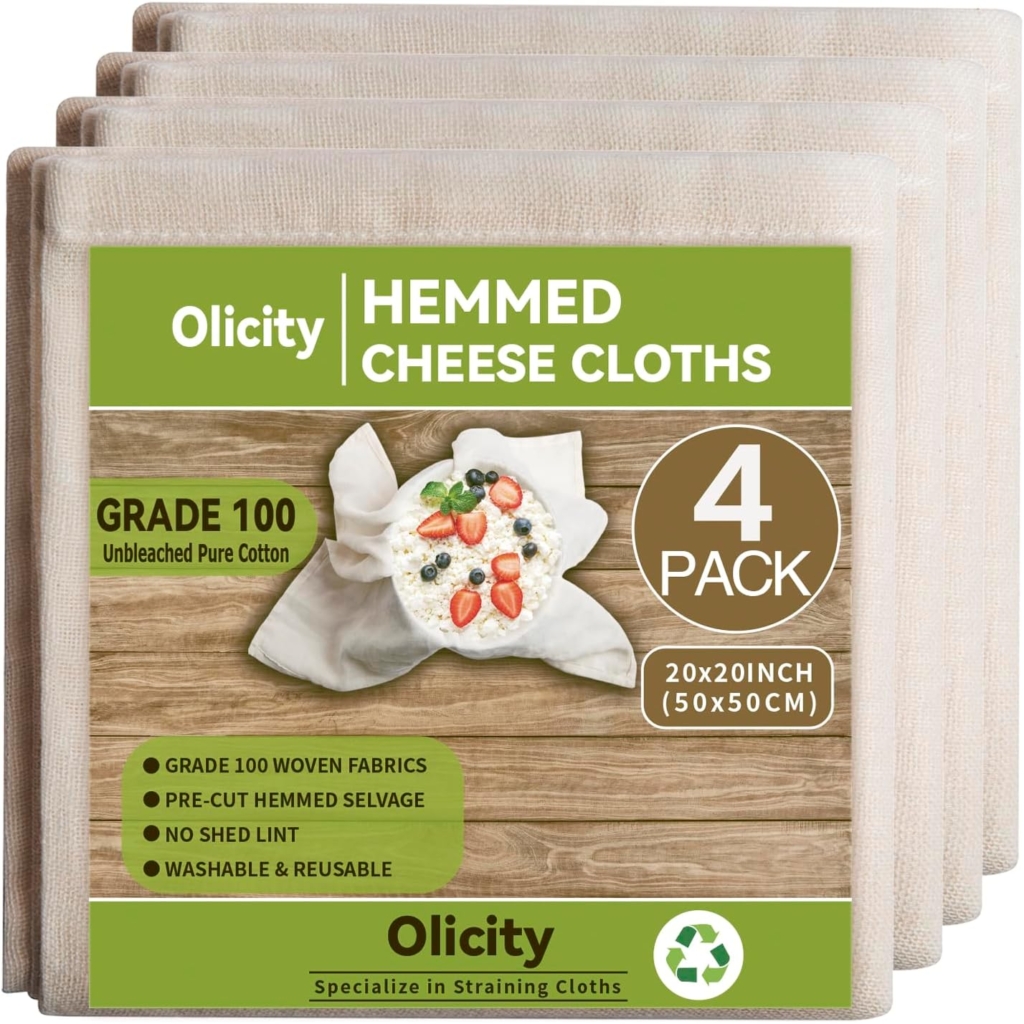
After rinsing, it’s time to put some muscle into it. Place the vegetables in a cheesecloth or a clean kitchen towel, close it up and twist with all your strength, turning as you go. You’ll be surprised how much water still comes out. This is the step that gives you a well-concentrated relish rather than a washed-out mixture. I bought reusable cheesecloths and I strongly prefer them over a dish towel: the weave is looser, so water passes through more easily and you can wring more efficiently.
🌡️ How to know when it’s ready
Twenty-five minutes of simmering over low heat, but still bubbling the whole time, uncovered. The visual cue: the relish has reduced nicely but still looks slightly liquid. Don’t try to get a dry paste in the pot, because it will keep thickening as it cools. If you go too far, you’ll end up with a compact relish instead of one that spreads nicely on a hot dog bun.
💛 Yes, it stains. And no, there’s no miracle fix
The turmeric is there as much for flavour as for that classic yellow colour, and this recipe really leans into the yellow. Your hands and your cutting board are going to pay the price. My trick for getting rid of it? Good old patience. Getting your hands stained while cooking is just part of life. It always comes off after a few washes.
🫙 How to can your relish
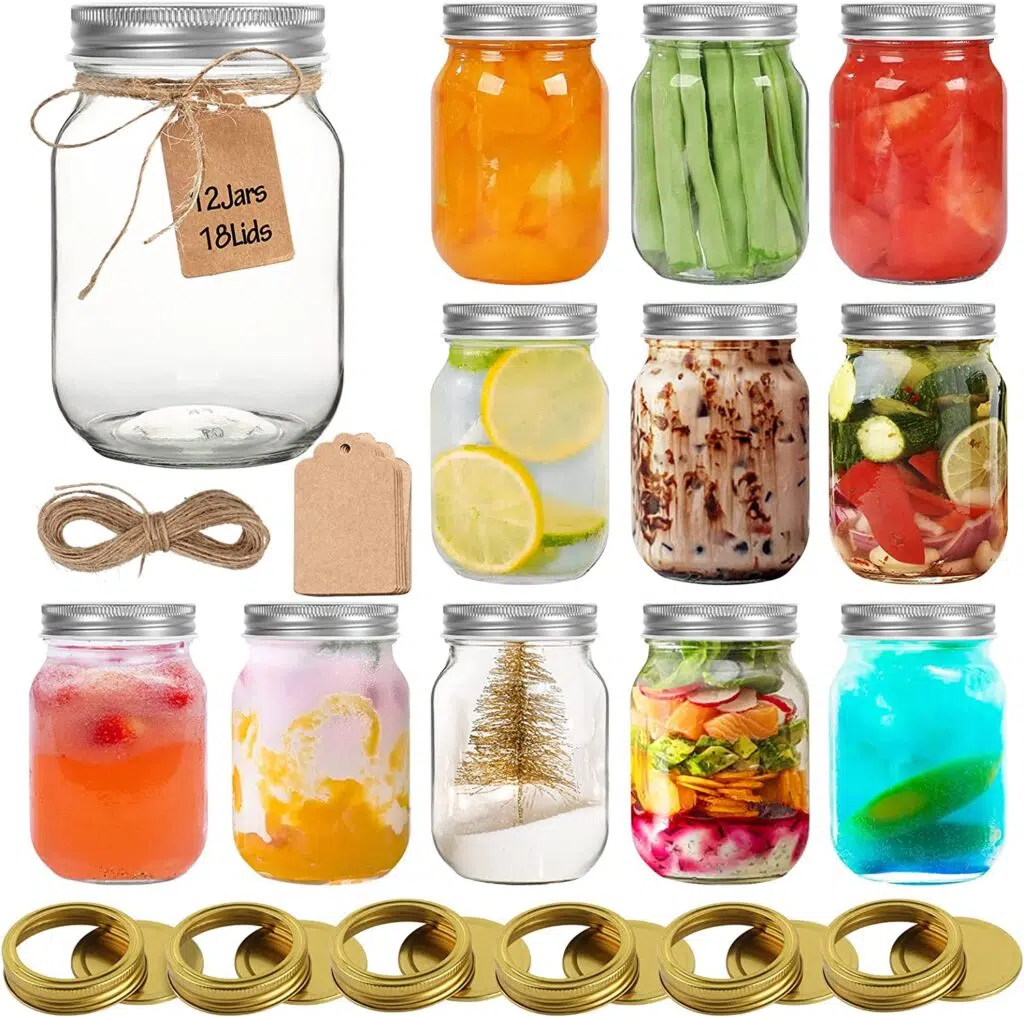
This is what lets you keep it in the pantry all year instead of just two weeks in the fridge. Sterilize your Mason jars and lids by boiling them for 10 minutes. Fill them with the hot relish, leaving about 1 cm of headspace below the rim, wipe the rim clean with a dry cloth, then screw on the lids without overtightening. Lower the jars back into the boiling water, making sure they’re covered by at least 2 cm of water, and process for 15 minutes from the time the water returns to a boil. Remove and let cool without touching: the lids will pop one by one as they seal. A properly sealed lid stays concave and doesn’t flex when you press the centre. A sealed jar keeps for one year in the pantry, and once opened it goes back in the fridge for about two weeks.
✅ What to serve with my homemade cucumber and carrot relish?
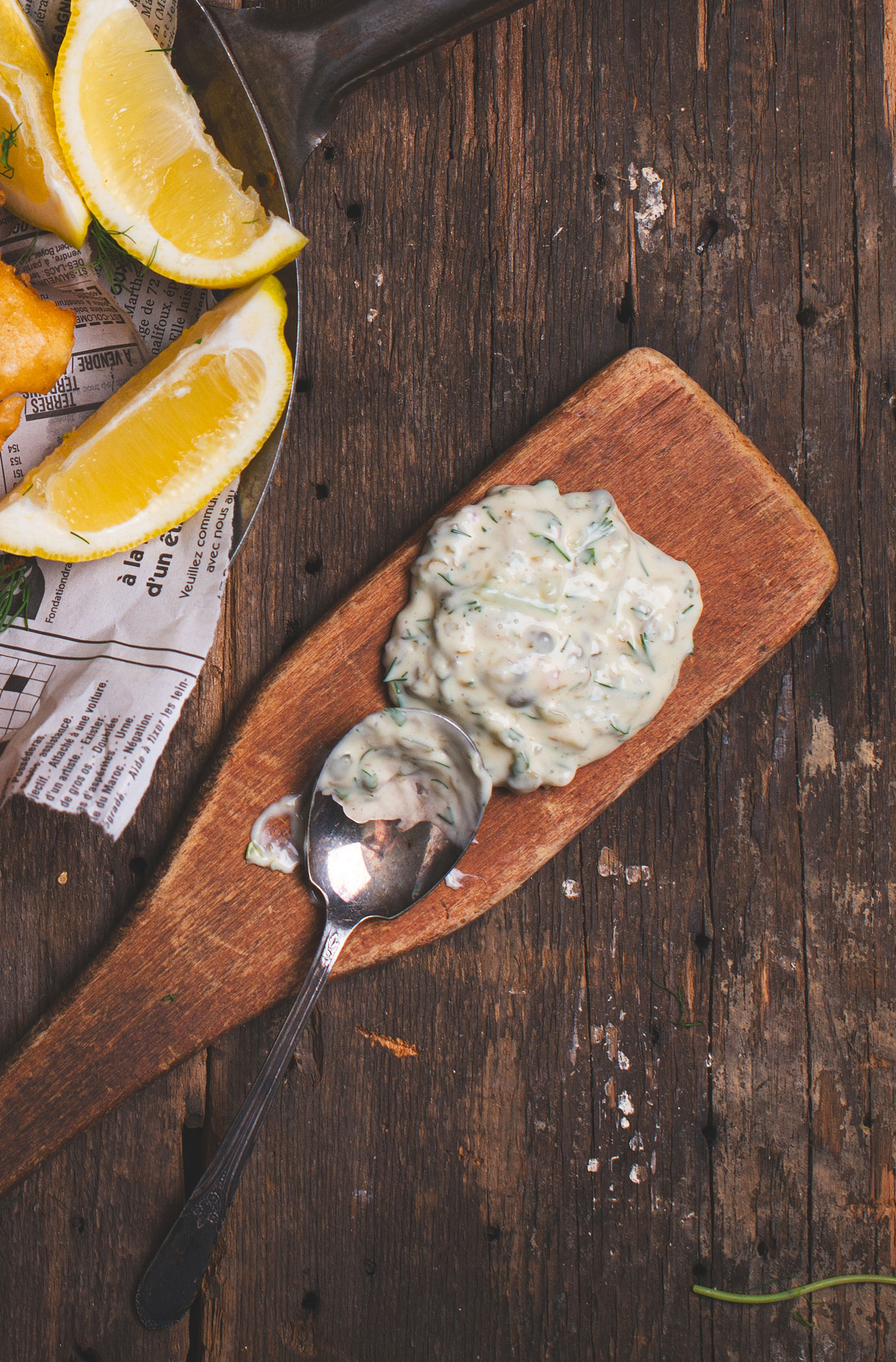
Hot dogs first, obviously, but it would be a shame to stop there. It’s excellent stirred into my macaroni salads, both my Classic macaroni salad and my Ham and macaroni salad, and in my The best potato salad with bacon. It transforms my Smoked cheese and bacon deviled eggs, and a spoonful stirred into my Homemade dill tartar sauce makes it flat-out better. On a burger, it’s a must. And trust me. Try it on a grilled steak.
Ads
Vegetables
- 6 cups (1.5 L) small cucumbers (Lebanese, garden or pickling), grated or chopped
- 2 cups (500 ml) onions, chopped
- ½ cup (125 ml) carrot, grated
- 3 tbsp (45 ml) coarse salt
Brine
- ¾ cup (180 ml) white sugar
- 2 cups (500 ml) white vinegar
- 1 tsp (5 ml) salt
- ¾ tsp (4 ml) turmeric
- ¾ tsp (4 ml) nutmeg
- ¾ tsp (4 ml) dry mustard
- ¾ tsp (4 ml) celery salt
- ½ tsp (2 ml) ground coriander
- ¼ tsp (1 ml) pepper
Ads
Preparation
- Chop the cucumbers and onions in a food processor, in three small batches rather than all at once, pulsing in short bursts. Aim for pieces slightly larger than a pea. Grate the carrot.
- In a large mixing bowl, combine the cucumbers, onions and carrot with the coarse salt. Cover and refrigerate for 2 hours to allow the vegetables to release their water.
- Rinse the mixture thoroughly in a fine-mesh strainer, then drain it in a cheesecloth or clean kitchen towel, wringing very tightly to remove as much water as possible.
- Transfer the vegetables to a large saucepan, add the sugar, vinegar, salt, turmeric, nutmeg, dry mustard, celery salt, coriander and pepper. Bring to a boil, then simmer uncovered for 25 minutes over low heat, stirring occasionally. The mixture should bubble the whole time.
- The relish is ready when it has reduced nicely while still remaining slightly liquid. Pour into airtight jars, let cool to room temperature, then refrigerate.
Small cucumbers are the key. I use Lebanese cucumbers from the garden, the ones also called baby cucumbers, because their skin is thin and not tough at all. Pickling cucumbers, the ones specifically grown for pickles and relish, are even better if you can find them. What to avoid is the large English cucumber from the grocery store: it’s too watery, the skin is waxy and the seeds are big. With small cucumbers, you don’t need to peel or seed them, which saves you a ton of time. I don’t peel them and I don’t seed them.
In four steps. First you finely chop your cucumbers, onion and carrot. Ideally in a food processor but in three small batches to keep an even texture. Then you salt the whole thing with coarse salt and refrigerate for 2 hours, which draws out the water from the vegetables. You rinse thoroughly, then wring very hard in a cheesecloth to extract the remaining liquid. Finally you simmer the vegetables for 25 minutes with vinegar, sugar and spices, until the mixture has reduced while still remaining slightly liquid. The relish continues to thicken as it cools.
At the base, it’s always chopped cucumber, onion, vinegar, sugar and salt, with turmeric giving it that characteristic yellow colour. Traditional recipes often add bell pepper. I replaced the bell pepper with grated carrot, which brings a natural sweetness and a nice colour without overpowering the cucumber. On the spice side, I use turmeric, nutmeg, dry mustard, celery salt, ground coriander and pepper. That blend, combined with a noticeably reduced amount of sugar, is what gives you a relish with character rather than a condiment that only tastes like sugar.
About two weeks in the fridge in an airtight container. I do not suggest freezing it: cucumber is full of water and comes out soft and washed out after thawing, which ruins exactly the texture we worked to preserve. If you want to keep it longer, the real solution is canning in sterilized Mason jars with 15 minutes of boiling water processing. A sealed jar will then keep for one year in the pantry, and once opened it goes back in the fridge for two weeks.
On a hot dog, that’s its natural home. And on a burger too. But it’s just as good stirred into my classic macaroni salad or my the best potato salad with bacon, where it replaces chopped pickles beautifully. Add it to my smoked cheese and bacon deviled eggs to give them some bite, and above all stir a spoonful into my homemade dill tartar sauce. And if you want my honest opinion, try it on a grilled steak. It surprises everyone.
Ads
Ads


Ads
Ads
Ads