

Japanese beef skewers
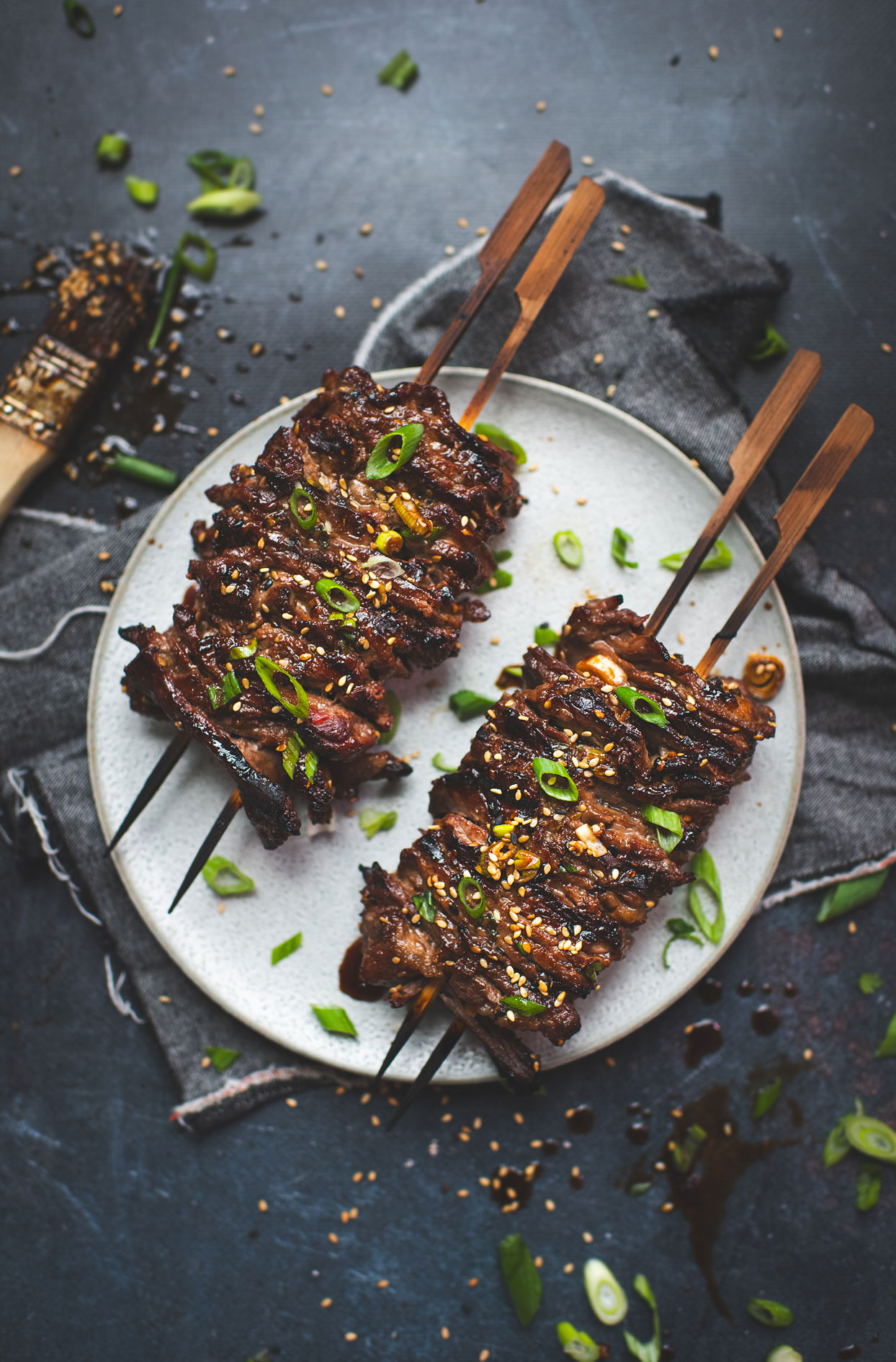
- Preparation 15 min
- Refrigeration 1 h
- Cooking 6 min
- Servings 2 to 3
- Freezing I do not suggest
Ads
🎌 I saw it online, then I made it mine
This one showed up in my feed and I thought it looked completely nuts. So of course I had to build my own version. That’s how half my recipes start: something hits me, I test it, I tweak it, and what comes out the other end beats the thing that gave me the idea. Japan is still on my list, and it’s coming. Until then I keep teasing myself with things like these Japanese beef skewers. Izakaya food, basically. Those little Japanese bars where you snack on one stick after another while the sake goes around the table. Sake, soy, dark brown sugar, fresh ginger, toasted sesame oil: on a hot grate that marinade turns into a sweet-salty glaze. I made a batch one night with nobody around and ate the whole thing standing at the counter. Best beef skewers I’d had in a long time.
🥩 Strip loin, sliced while it’s still half-frozen
The cut does a lot of the work. Strip loin, an inch and a half thick, with real marbling running through it. Ribeye is just as good. Filet mignon is not: too lean for something that cooks this fast and this hot, and it comes out dry. Ask your butcher for the best grade he has, Triple A or Prime Angus if there’s any in the case. Now the part that actually matters. Slice the beef while it is still solidly frozen. Not a brick, but firm, which is about thirty to forty-five minutes in the freezer. Firm meat lets you cut slices thin enough that the marinade wraps every one of them, and that is where the whole flavor comes from. Do it at room temperature and you’ll saw your way to thick, sad slabs.
🏯 Izakaya night, at your place
Two or three people as a main course. Feed more than that and you serve these Japanese BBQ skewers as tapas, next to other small Asian bites: my Asian cucumber salad, a bowl of Asian-style edamame beans, my Asian soba noodle salad. Store-bought sushi on the same table, nobody is judging. The grill setup is short: everything wide open for ten full minutes, then kill one burner, lay the skewers over the lit side and let the handles hang over the dead one so they don’t catch fire. Three minutes a side. And then the moment that sells the whole recipe, every time: people pulling the meat off the sticks with their fingers and dragging it through the reserved marinade.
Ads
Ads
🥩 Strip loin, an inch and a half thick
This is my cut for these Japanese beef skewers. Enough marbling to stay juicy over high heat, enough beef flavor to hold its own against a soy marinade. Ribeye does the same job. Filet mignon does not, it’s too lean and it dries out in the time it takes to sear a thin slice. Ask the butcher for his best grade, and trim off that thick line of fat along the edge before you start slicing.
🧊 Half-frozen is the whole trick
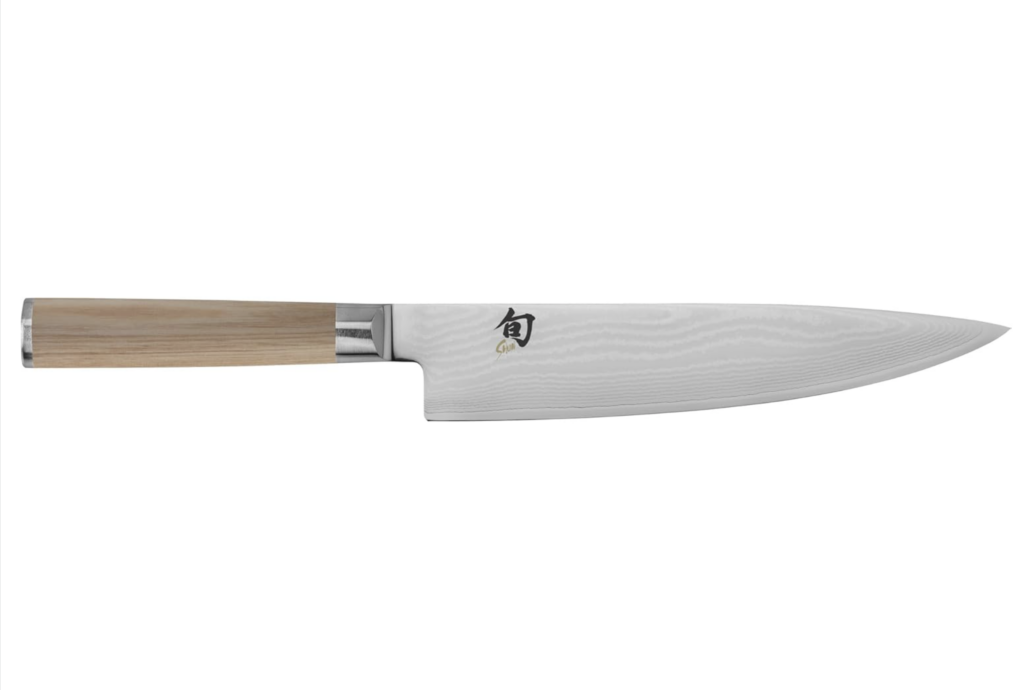
Thirty to forty-five minutes in the freezer, no more than that. You want the meat firm, not solid. Then slice against the grain, as thin as your knife will let you. There’s a reason behind it: a thin slice picks up marinade on both faces and sears through before the outside has a chance to burn, so every single bite is coated. A room-temperature strip loin squirms under the blade and you end up with chunks, and chunks are a completely different recipe.
🍶 Sake first, white wine if that’s what’s in the fridge
Sake carries an umami depth white wine simply doesn’t have. Try it once before you decide. And go dark on the brown sugar: the molasses in it is what makes the glaze taste like something.
🔥 Ten minutes of preheating, every burner wide open
Around 600°F (315°C) on a 3-burner Weber. It sounds like too much. It isn’t. Slices this thin either sear on contact or they steam, and steamed beef is gray beef. Oil the grate right before the skewers go down.
🎋 Two skewers, never one
Thread each slice onto two parallel skewers. The meat stops spinning when you flip it and everything cooks at the same rate.
🌡️ Give the handles somewhere cool to sit
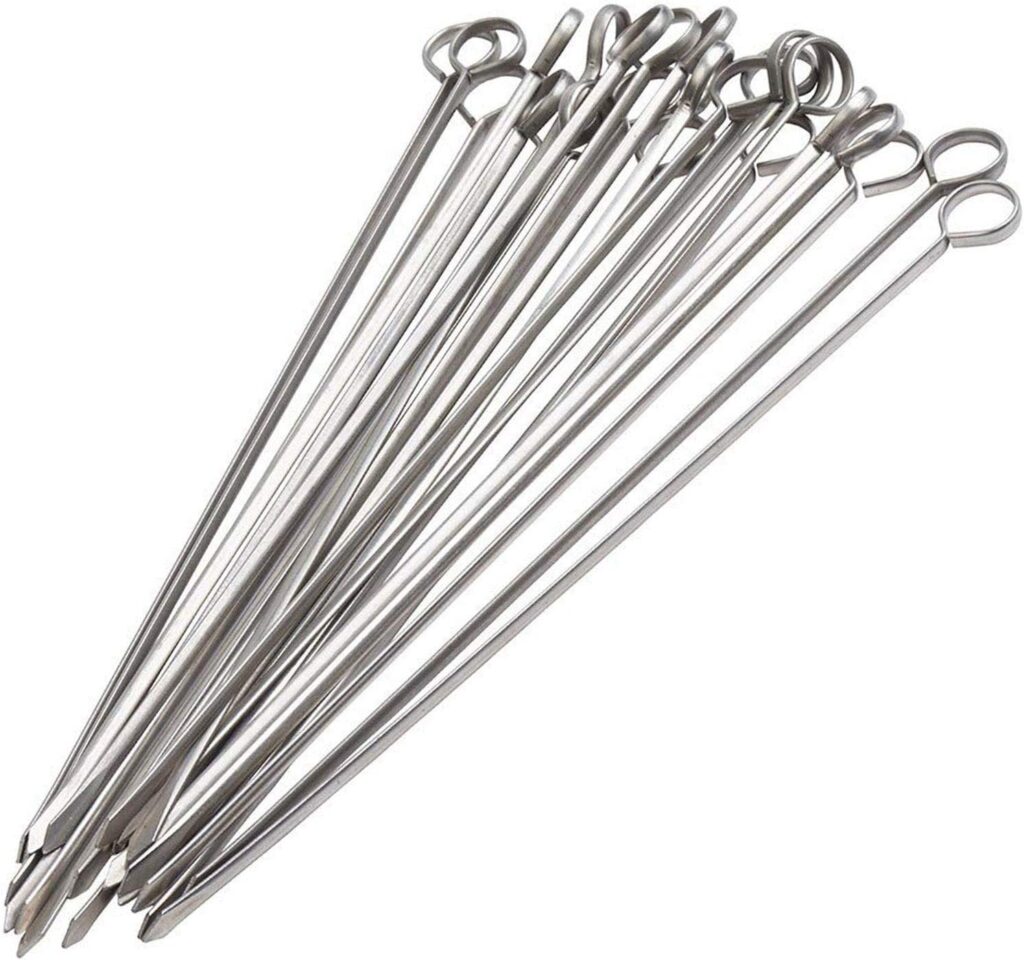
Shut one burner off. Cook over the lit side, but let the bamboo ends hang out over the dead one. That’s the reason the skewers reach the table instead of turning to charcoal halfway through the cook. Metal skewers make the problem disappear entirely, if you own a set.
🥢 Hold back a quarter of the marinade
Before the beef ever touches it, pour a quarter of the marinade into a sealed container and park it in the fridge. That’s your dipping sauce at the table, and it’s the part guests actually remember. Marinade that has held raw beef never gets reused, which is exactly why you set some aside first instead of trying to save it after.
🌶️ If you want heat
A squeeze of sriracha or a pinch of chili flakes into the marinade. It rides along with the sweet and the salty without covering either one.
✅ What to serve with my Japanese beef skewers
For a full izakaya spread at home, put my Japanese beef skewers next to my Asian cucumber salad for something cold and sharp, a bowl of Asian-style edamame beans to keep hands busy while the grill heats, or my Asian soba noodle salad if you need the meal to go further. Doing a real Asian tapas night? Fire up my mini flank steak skewers with Asian grapefruit sauce at the same time and put two very different beef skewers on the same platter, or my teriyaki beef flank skewers if you’d rather stay on the sweet side of the grill.

Ads
Ingredients
- 1 lb (500 g) top-quality beef strip loin (1 ½ inches / 4 cm thick), still solidly frozen for slicing
- ½ cup (125 ml) dark brown sugar
- ⅔ cup (160 ml) reduced-sodium soy sauce
- 2 tbsp (30 ml) sake (or white wine as a replacement)
- 1 tsp (5 ml) fresh ginger, finely grated
- 2 garlic cloves, finely grated
- 2 tbsp (30 ml) sesame seeds
- 1 tbsp (15 ml) toasted sesame oil
- 2 green onions, chopped
- Juice of 1 lime
- Fresh chopped green onions, for garnish
- Toasted sesame seeds, for garnish
Ads
Preparation
- Soak bamboo skewers in water for a few hours (or use metal skewers).
- In a large bowl, combine the brown sugar, soy sauce, sake, ginger, garlic, sesame seeds, toasted sesame oil, green onions and lime juice. Stir well to dissolve the brown sugar.
- Split the marinade in two: ¾ for the meat, ¼ reserved in the fridge in a sealed container for serving.
- Trim the thick line of fat off the strip loin. Slice the strip loin while it is still solidly frozen, into very thin slices against the grain.
- Put the beef slices in a resealable bag or an airtight container with the ¾ of marinade. Marinate 1 hour at room temperature.
- Take the bamboo skewers out of the water. Using 2 skewers in parallel, thread the meat so it holds in place and won’t spin on the grate.
- Preheat the barbecue wide open for 10 minutes (about 600 °F (315 °C) on a 3-burner Weber). Shut one burner off. Oil the grate.
- Lay the skewers over the lit burner with the bamboo handles hanging over the unlit side so they don’t burn during the cook.
- Grill 3 minutes per side for medium-rare. The meat is ultra thin, so it cooks fast. Watch it closely: overcooked or burnt happens in seconds.
- At serving time, spoon the reserved marinade over the skewers. Garnish generously with fresh green onions and toasted sesame seeds. Pull the pieces off the skewers as you eat and dip them in the leftover sauce. That’s where the magic happens.
Kushiyaki. It’s the catch-all word in Japan for anything grilled on a stick, beef included, and it’s the term you’ll see on an izakaya menu. Yakitori is the one everybody knows, but yaki-tori literally means grilled bird, so a beef skewer isn’t really yakitori no matter how many North American menus print it that way. The precise term for this one is gyu kushi, beef skewer. Ask for kushiyaki and you’ll be understood anywhere.
Strip loin, bought in one thick piece so you can slice it yourself. Ribeye is a straight swap and just as good. Top sirloin works if you accept a little more chew. Skip filet mignon, it’s too lean to survive a fast, screaming-hot grill, and skip flank steak here, its long fibres fight the ultra-thin slicing this recipe is built on. Whatever you pick, ask for the best grade the counter has.
Three minutes a side on a barbecue preheated wide open, for medium-rare. That’s the whole cook. Slices this thin go from perfect to overdone in well under a minute, so this is not the moment to walk inside for another drink. A thermometer won’t help you either, there’s nothing thick enough to read: pull one skewer, cut a slice, look at it.
A few hours in cold water, which is what I do while the marinade is doing its job. Soaked bamboo still chars if you leave it directly over a lit burner, so the real fix is the setup: one burner off, meat over the flame, handles hanging over the dead side. Metal skewers skip the whole question, and you’ll never buy another pack.
I do mine on the barbecue, every single time, so I can’t hand you a tested oven version. If I had no grill I’d run them under the broiler on the top rack and stand there watching, because slices this thin would go fast. Treat that as a starting point rather than a recipe, and expect to lose the smoke and the char lines that make these worth the trouble in the first place.
Ads
Ads

Ads
Ads
Ads