

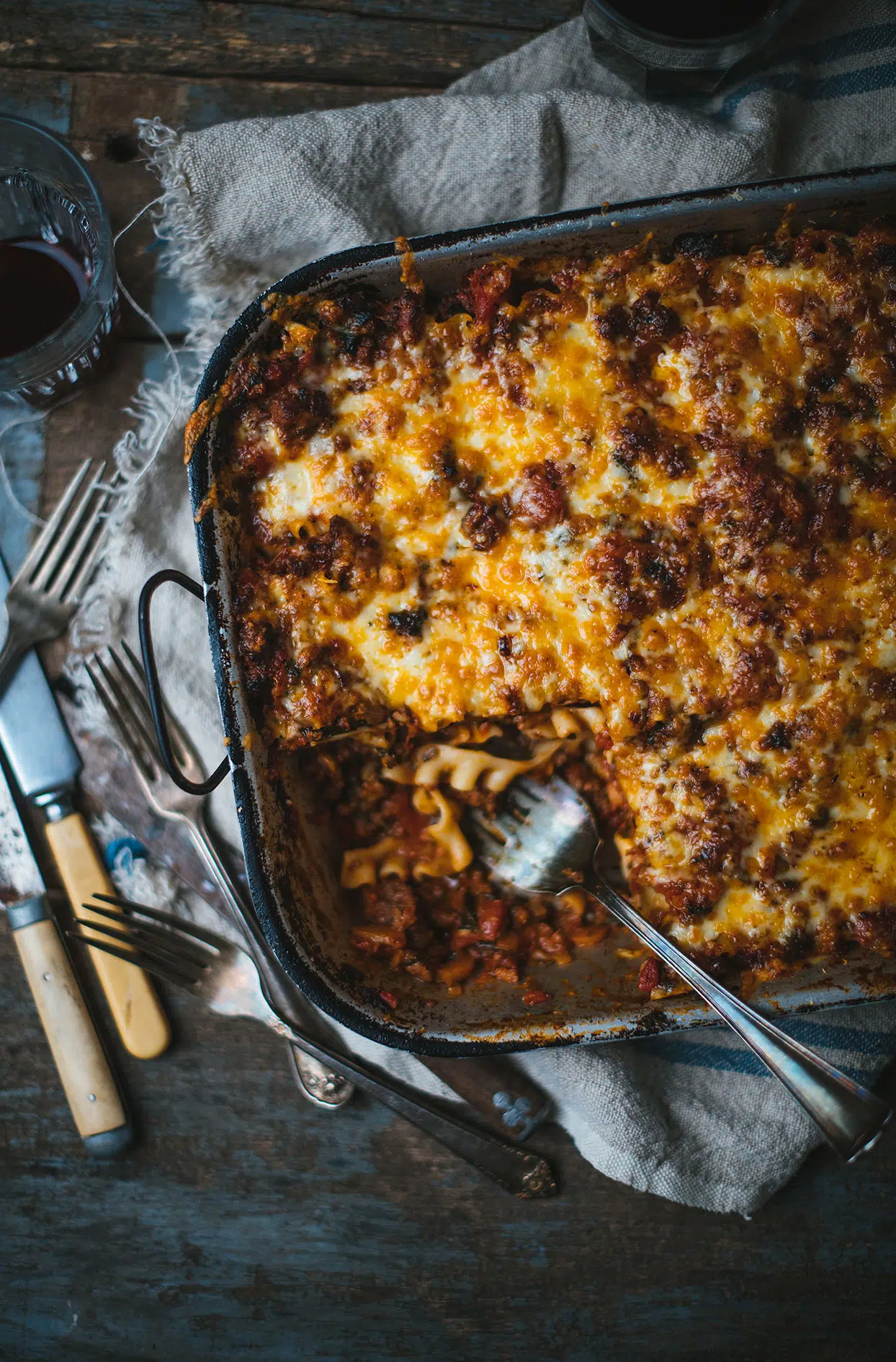
Lasagna with bolognese sauce and cheese curds
- Preparation 40 min
- Cooking 1 h 10 min
- Servings 6 to 8
- Freezing Absolutely
Ads
🥘 An old recipe of mine, and still the best lasagna I make
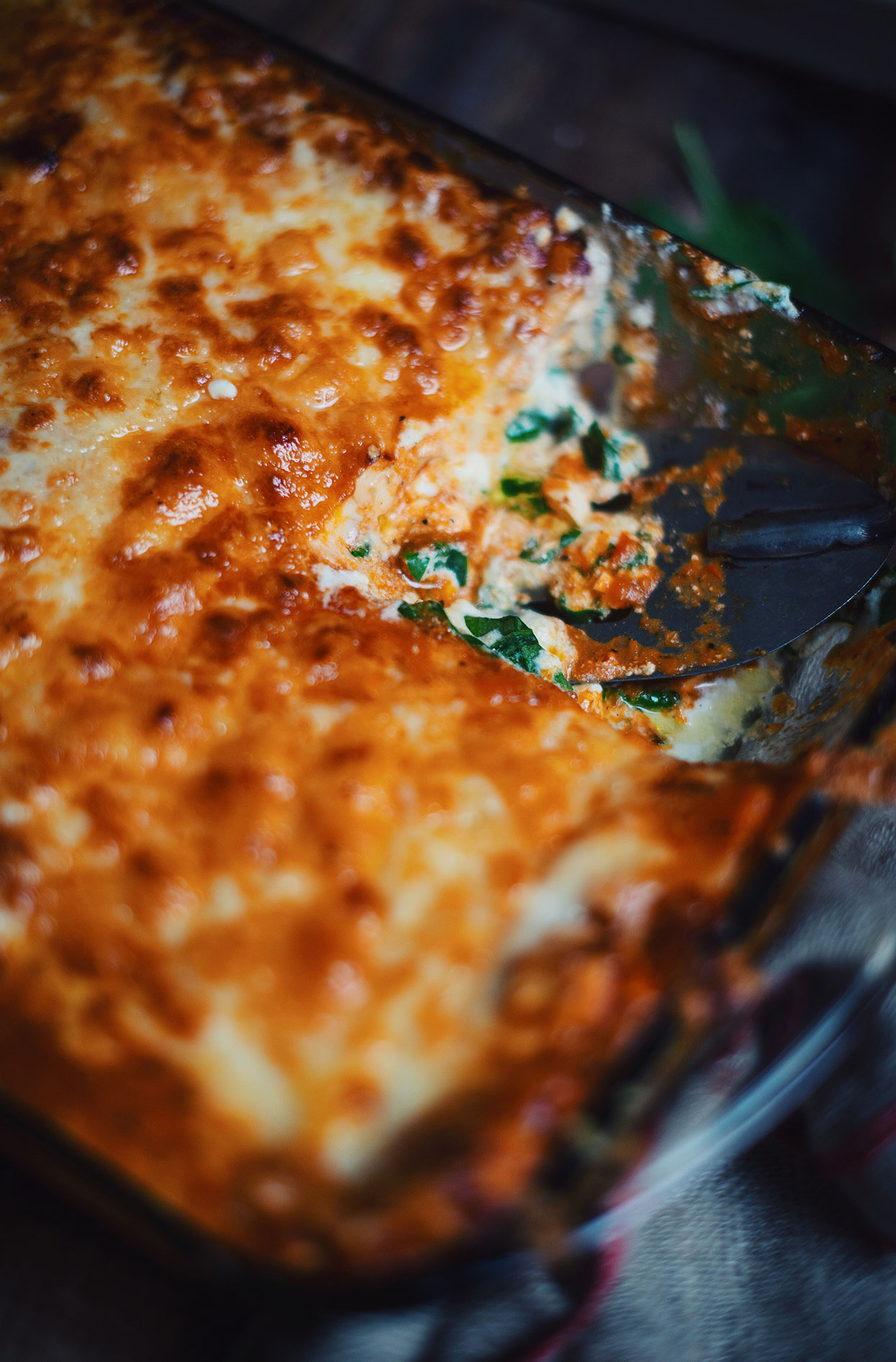
This one goes back years. It is a bolognese lasagna recipe built on a meat sauce that takes carrots, spinach, a full cup of red wine and a splash of 35% cream, then simmers uncovered until there is almost no liquid left in the pot. That is the whole trick, and most people skip it. The tomatoes concentrate, the ground beef goes tender, the parmesan melts in before a single noodle gets laid down. Then, right in the middle of the pan, a full layer of cheese curds. They turn into creamy pockets you hit halfway through a bite. Nobody sees it coming the first time.
🍷 The pan I build when people are coming over
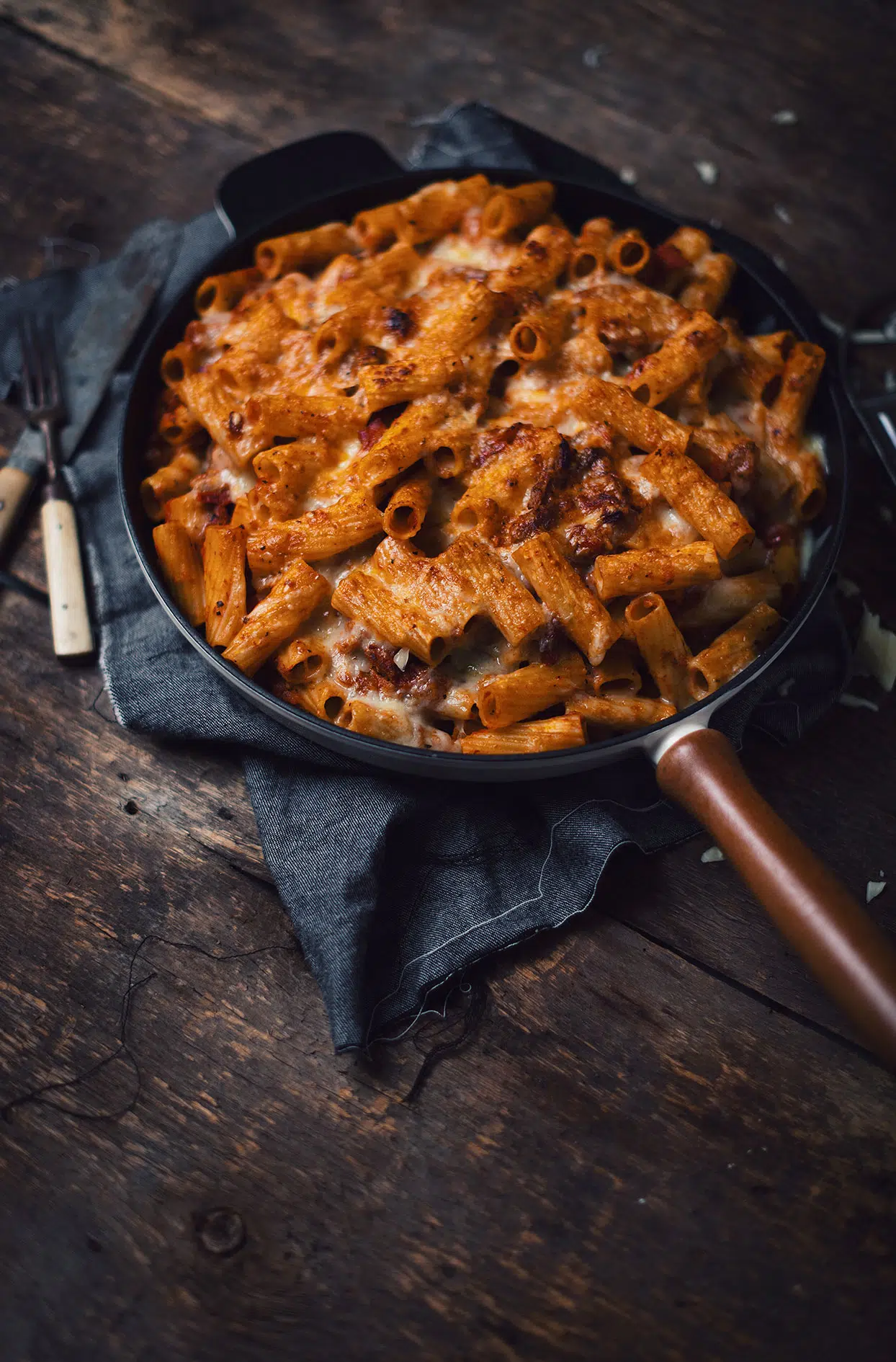
Saturday night, hockey on the TV, eight people crowding the kitchen. This is what goes in the oven. The wine-heavy sauce, the layers stacked high, the top blistered under the broiler for two minutes at the end, the five to ten minutes of rest that lets you cut squares instead of watching it slide across the plate. Every one of those details is doing a job. Skip the rest and you will find out exactly which one.
🧀 No ricotta, no bechamel, and it freezes like a dream
Six to eight generous portions, and not a spoonful of ricotta or bechamel anywhere in it. The 35% cream and the grated parmesan go straight into the bolognese, so the richness is already built in by the time you start layering. Shredded mozzarella and a little more parmesan handle the top. Make two while the sauce is hot, one for tonight and one for the freezer. It keeps three months.
Ads
Ads
🔥 Reduce the sauce until it is almost dry
This is the step that decides whether your lasagna cuts into squares or collapses into soup. Twenty-five minutes uncovered, medium heat, until the liquid from those two cans is nearly gone and what is left in the pot looks creamy rather than saucy. Canned tomatoes carry a shocking amount of water, and every drop that stays in the pan ends up between your noodles. The cream and the parmesan go in after the reduction, never before, or they scorch on the bottom while you wait. If you want to see the same reduction on its own, it is the backbone of my bolognese sauce made with Don de Dieu beer too.
🍷 The wine matters more than the price tag
A cup of red wine reduces down to almost nothing, which means whatever is wrong with the bottle gets concentrated four times over. Harsh wine turns bitter. Sweet cooking wine turns syrupy. Cabernet Sauvignon, Tempranillo, Côtes-du-Rhône or Chianti in the $15 to $20 range all work. The rule is simple: if you would not pour yourself a glass of it, do not pour it in the pot.
🧀 What cheese curds are, and why they go in the middle
If you are outside Quebec, cheese curds are the fresh, squeaky white cheddar sold in bags at the dairy counter, the same ones that go on poutine. They are young, barely salted, and they melt into soft creamy pockets instead of stringing out flat the way shredded mozzarella does. Bury them in the middle layer and they stay protected by pasta and sauce on both sides, which keeps them from drying out or catching under the broiler. Put them on top and you waste them. No curds anywhere near you? Torn fresh mozzarella or quartered bocconcini get you closest.
⏱ Pull the noodles a full two minutes early
They keep cooking in the pan, in hot sauce, for another twenty minutes. Al dente going in means al dente coming out. Rinse them cold so they stop cooking and stop welding themselves together while you build.
🏗️ Sauce on the bottom, curds in the middle, cheese on top
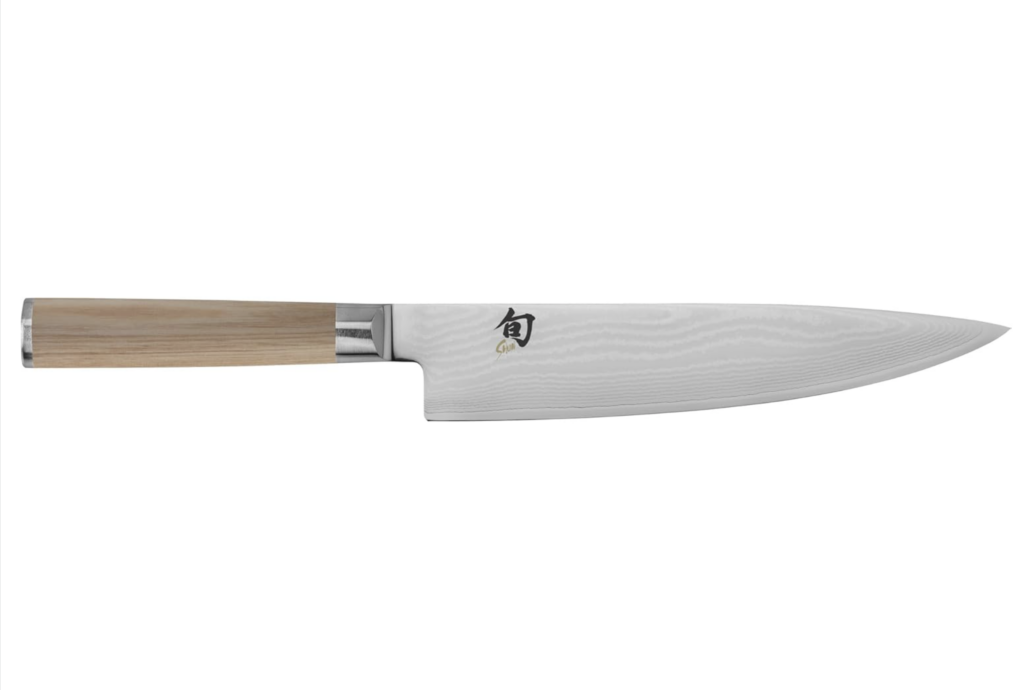
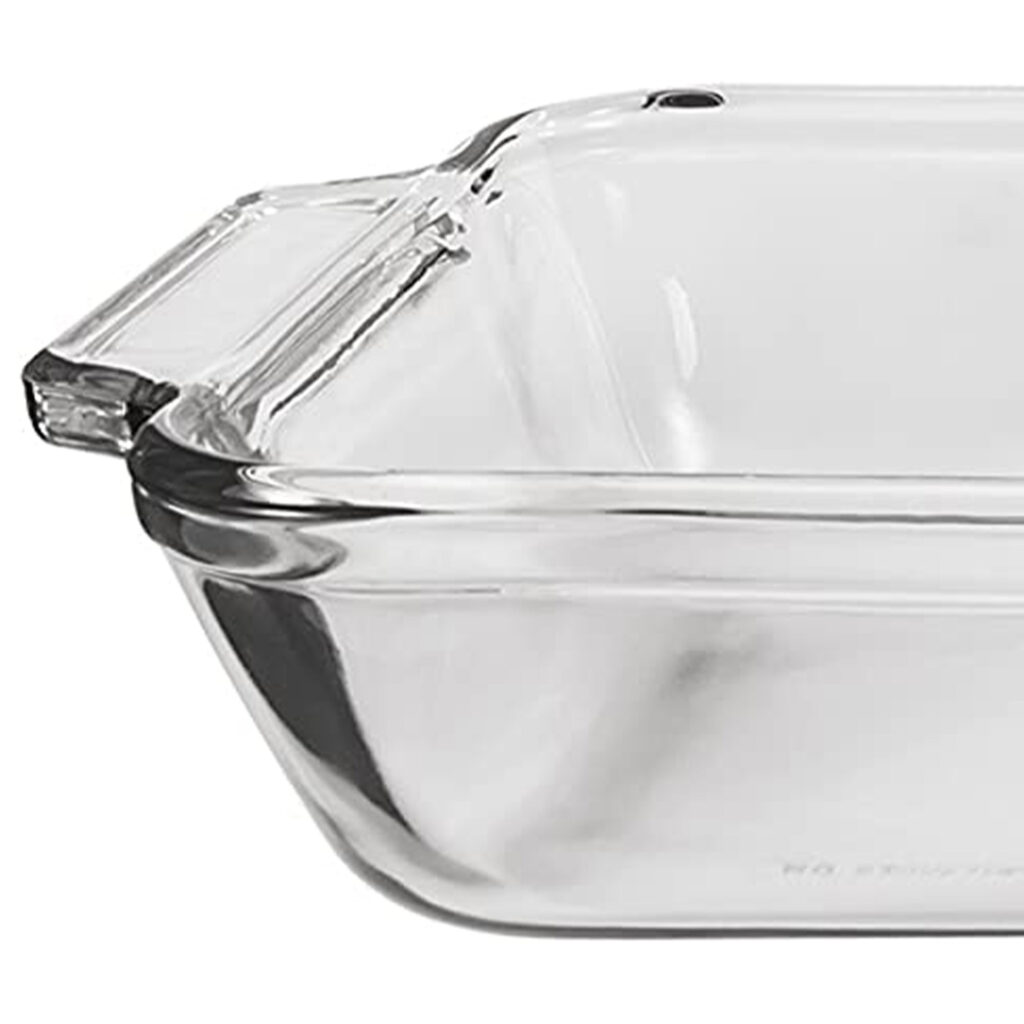
The order, top to bottom: mozzarella and parmesan, then sauce, then noodles, then sauce, then the curd layer, then noodles, then sauce, then noodles, then a first ladle or two of sauce on the bare dish. That bottom layer of sauce is not decorative. Without it the first sheet of pasta glues itself to the dish and burns. Three layers of noodles is what 12 sheets gets you in a standard 9×13. And always finish with a generous layer of sauce under the shredded cheese, so the cheese has something wet to melt into instead of drying into a crust.
🌟 Two minutes under the broiler, and do not walk away
Fifteen to twenty minutes at 350°F (175°C) cooks it through. The broiler is what makes it look like something. Two minutes, oven door cracked, eyes on the pan. The mozzarella goes gold, then bubbles, then browns at the edges. Thirty seconds past that and it is black.
⏸️ Ten minutes of rest is not optional
Cut it the second it leaves the oven and the sauce runs, the layers slide, and you serve a plate of very good mush. Give it five to ten minutes and the cheeses firm up just enough to hold a square. Use the time to set the table and open the wine.
🥗 What to serve with it
Something sharp and something to mop with. A classic Caesar salad does both jobs at once, and the lemon and anchovy cut straight through the parmesan and cream. Warm no-knead focaccia torn at the table handles the sauce left in the pan. If you are feeding a bigger crowd, my three-cheese and spinach lasagna goes in the oven beside this one and the vegetarians stop asking questions.
Ads
Ingredients
- 1 yellow onion, finely chopped
- 4 garlic cloves, finely chopped
- Olive oil
- 4 Nantes carrots (or 4 medium carrots), halved lengthwise then sliced
- 500 g (1.1 lb / 17.6 oz) medium-lean ground beef
- One package (142 g / 5 oz) baby spinach
- 2 cans (796 ml / 27 oz each) diced tomatoes with Italian seasoning
- 1 cup (250 ml) good quality red wine
- 2 tbsp (30 ml) tomato paste
- 2 tbsp (30 ml) sugar
- 2 tbsp (30 ml) dried oregano
- 1 1/2 tbsp (22.5 ml) Italian seasoning
- 12 lasagna noodles, cooked al dente
- 1/2 cup (125 ml) 35% cream (heavy cream)
- 1 cup (250 ml) freshly grated parmesan + 1/4 cup (60 ml) for the top
- 300 g (10.5 oz / about 2 cups) fresh cheese curds, the squeaky kind used for poutine
- 2 cups (500 ml) shredded mozzarella
Ads
Preparation
- In a large pot heated over medium heat, add the onion and garlic then drizzle with a good amount of olive oil. Cook 3 to 4 minutes stirring. Add oil as needed.
- Add the carrots followed by a drizzle of olive oil and cook for 5 to 6 minutes to soften.
- Add the meat, season with salt and pepper and cook for 7 to 8 minutes or until the meat is no longer pink. Break into small pieces. Drain the fat.
- Add the spinach and continue cooking 2 minutes to wilt.
- Add the tomatoes, red wine, tomato paste, sugar and spices then season generously with salt and pepper. Bring to a boil, reduce to medium heat and simmer for about 25 minutes uncovered, or until the liquid is nearly all evaporated and the mixture is creamy.
- Preheat the oven to 350 °F (175 °C).
- Add the cream and parmesan then mix. Continue cooking 2 minutes stirring. Set aside warm.
- Assemble the lasagna. In a large rectangular baking dish, spread 1 to 2 ladles of sauce in the bottom followed by a row of pasta. Spread some ladles of sauce and cover with lasagna again. Continue until there’s no more pasta and keep a nice amount of sauce for the top. Don’t forget to add a layer of cheese curds in the center.
- Cover with mozzarella cheese and finish with parmesan.
- Place in oven and bake for 15 to 20 minutes. Switch oven to BROIL and continue cooking for about 2 minutes or until cheese is golden. Remove from oven and let rest 5 minutes before cutting and serving.
Bottom to top: one or two ladles of sauce on the bare dish (skip this and the first sheet of pasta burns onto the bottom), noodles, sauce, noodles, then the cheese curd layer right in the middle, noodles, a generous layer of sauce, and finally shredded mozzarella with grated parmesan. Twelve lasagna sheets in a 9×13 dish gives you three pasta layers. The last layer of sauce goes under the shredded cheese, never over it, or the top dries out before it browns.
This one has none, and no bechamel either. The 35% cream and grated parmesan go directly into the bolognese at the end of the simmer, which gives you the same richness ricotta is supposed to provide without the grainy, chalky texture it can leave between layers. Cheese curds in the middle and mozzarella on top do the rest. If you want the ricotta-style version, that is my three-cheese and spinach lasagna.
Cheese curds are fresh, unaged white cheddar, sold in bags in Quebec and eastern Canada and famous for squeaking against your teeth. They are the cheese in poutine. In lasagna they melt into soft pockets rather than stretching into sheets, which is exactly why they go in the centre layer where they stay protected. Outside Canada, look for fresh curds at a cheese counter or a farmers market; torn fresh mozzarella is the closest easy substitute.
350°F (175°C) for 15 to 20 minutes, then two minutes under the broiler for the browned top. That is short because everything going into the dish is already cooked: the sauce has simmered 25 minutes and the noodles are boiled al dente. Straight from the fridge, add 10 minutes. From frozen and thawed overnight, add 10 to 15. The centre should be bubbling at the edges before you switch to broil.
Both. Assemble it the day before, cover it, refrigerate up to 24 hours, then pull it out 30 minutes before it goes in the oven and add 10 minutes to the bake. Or make just the sauce two or three days ahead, it is better on day two. For the freezer, assemble and freeze unbaked, or freeze baked portions individually and reheat at 350°F for 20 to 25 minutes. Three months either way.
Three culprits, in order. The sauce was not reduced far enough, so tomato water pooled between the layers. The fat was not drained off the ground beef after browning, and excess fat makes the sauce separate. Or the noodles went in fully cooked and released water instead of absorbing it. Fix all three and let the pan rest 10 minutes before cutting, and you get clean squares every time. The same reduction rule applies to my homemade meat spaghetti sauce.
Ads
Ads

Ads
Ads
Ads