

Focaccia Bread Recipe (Easy No Knead)
- Preparation 4 h 30 min
- Cooking 25 min
- Servings 12
- Freezing Absolutely
Ads
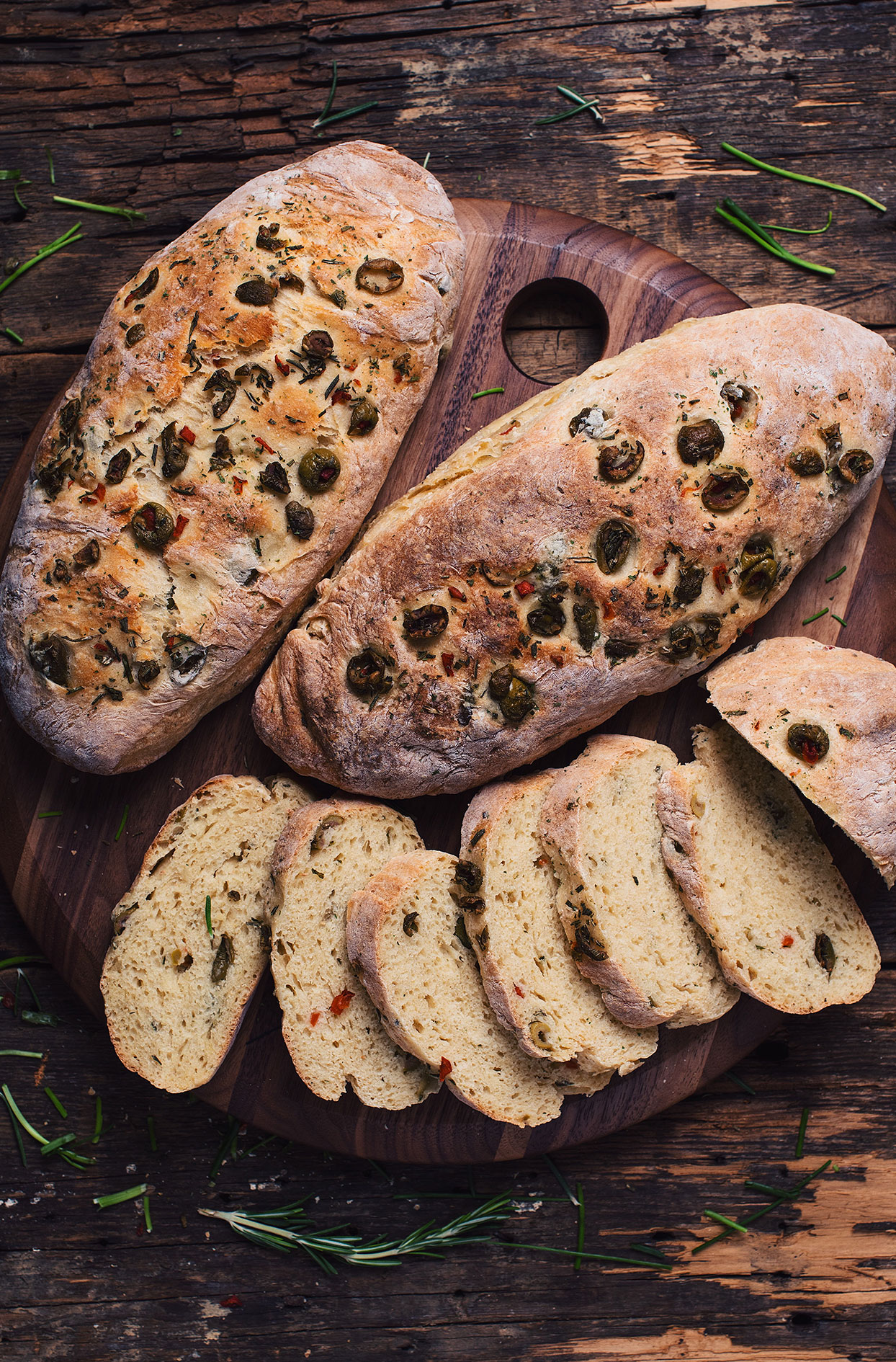
🫒 The best focaccia I have ever eaten in my life!
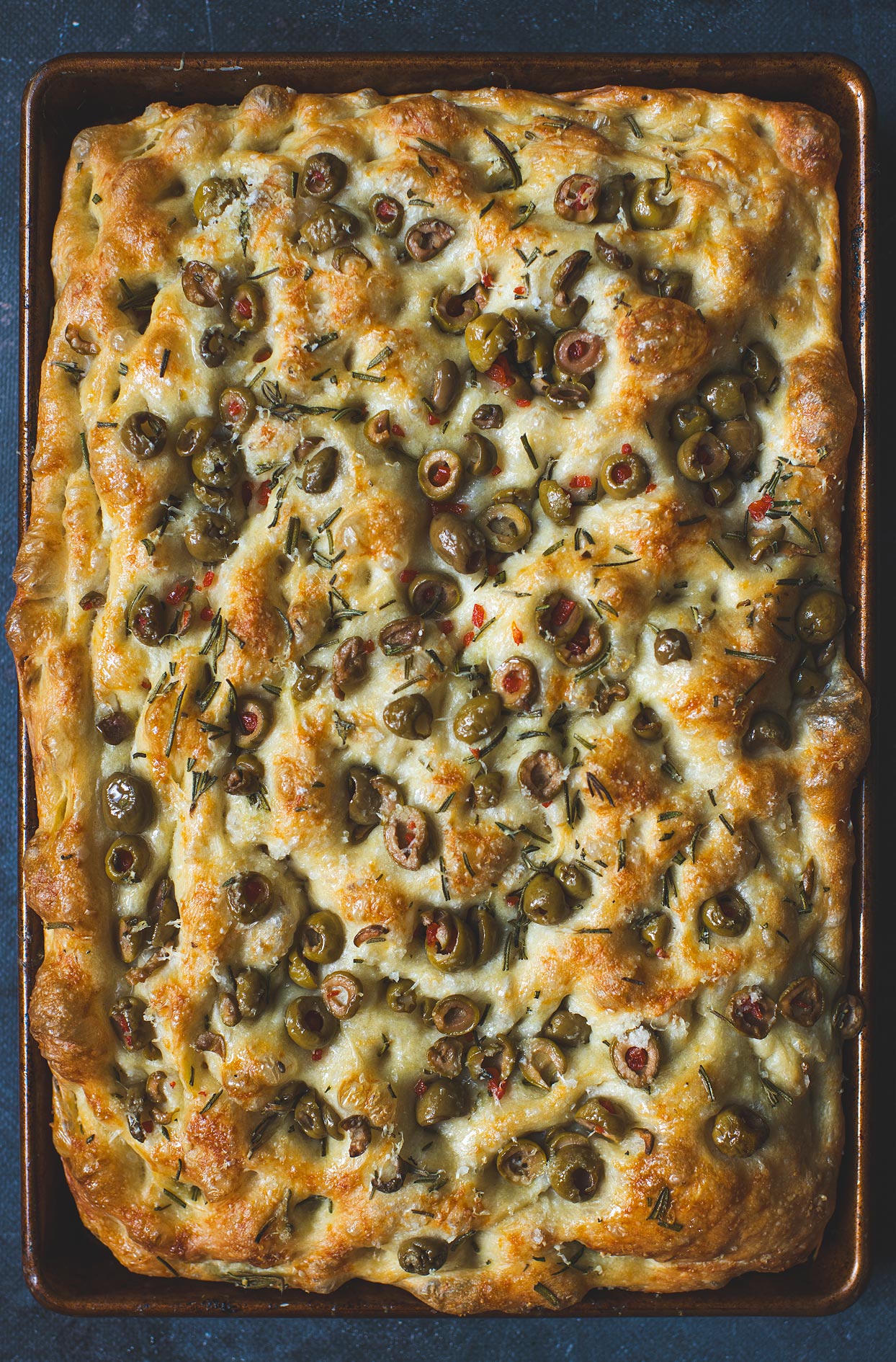
And believe me, I have eaten a lot of it. I have been chasing a proper rosemary focaccia for years. I tried several. This is the first one I pulled out of the oven perfect: the bottom fried and crackling in the oil, the crumb full of big holes, green olives pressed into the dimples and parmesan toasted on top. It is ridiculous.
🤲 Five stretch and folds, and the dough transforms
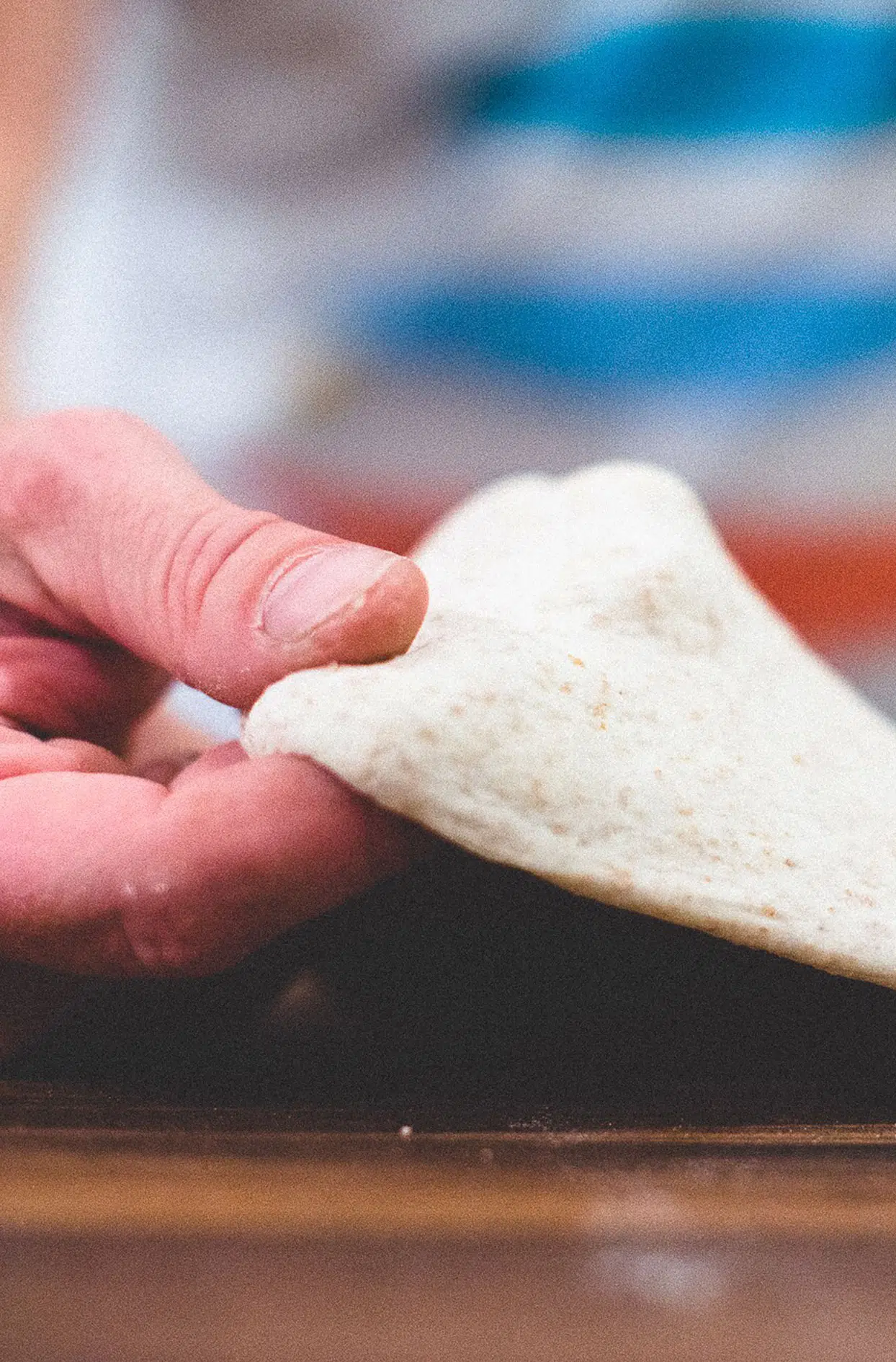
No kneading, no stand mixer. You wet your hands, stretch one side of the dough upward and fold it over the **opposite** side. Turn the bowl a quarter turn and go again, five times: one turn and a quarter. At the start the dough is lumpy and ugly. Every round makes it smoother and more elastic. And no, it does not really stick to wet hands. It handles beautifully.
🍕 This is also your base dough, top it however you want
Yes, this is an olive and rosemary focaccia. But the real thing here is the dough. You spread it in the pan, you oil it, you put whatever you want on top, you press it in with your fingers, and you bake. Cherry tomatoes, red onion, confit garlic. Lay prosciutto over it coming out of the oven and you have your protein: it becomes a main course. It is insane.
Ads
Ads
🤲 The stretch and fold, properly explained
This is the heart of the recipe and it is what nobody explains. Wet your hands. Grab the dough on one side of the bowl, stretch it upward without tearing it, and fold it over the opposite side. Turn the bowl a quarter turn, go again. Five times, which works out to one turn and a quarter. Each round stacks the gluten strands in a new direction without crushing the bubbles and without heating the dough the way kneading would. That is what replaces the mixer.
💧 83 % hydration, and it does not stick
415 g of water to 500 g of flour is a lot, and it is what gives you the big holes: that water turns to steam in the oven and blows the crumb open. People will tell you this is a difficult dough. I disagree. It starts out shaggy and unpromising, but by the second round of folds it is pliable, and with wet hands it barely sticks at all. The one rule: never turn it out onto a floured counter. It lives in its bowl.
🫒 Loads of oil in the pan, never butter
Three good tablespoons of olive oil in the bottom, spread everywhere, right into the corners. Some recipes butter the pan before oiling it. I do not do that and I do not recommend it: the oil is what fries the bottom of the focaccia and gives you that crackle. Do not be shy with it. A focaccia is half fried in oil, that is the whole idea.
👆 The dimples come AFTER the topping, not before
This is the opposite of what everyone writes. You spread the dough, you oil it, you add your green olives and rosemary, and then you press your fingers in everywhere, right down to the bottom of the pan. The dimples do two jobs: they knock out the big uneven air pockets so the crumb rises straight, and they drive the topping into the dough instead of leaving it perched on top. Olives added after the dimples roll into the gaps and burn.
🧀 Parmesan, flaky salt and pepper last, before the oven
Once the dimples are done, you sprinkle and you bake. The parmesan toasts along with the dough and turns into a little salty crust. The flaky salt keeps its crystals and crunches under your teeth, which fine salt dissolved into the dough will never do. It is three seconds of work and it is half the pleasure.
⏱️ Ten to fifteen minutes of rest, not thirty
It has to set a little before slicing, or the crumb squashes under the knife. But do not forget it on the counter either. Focaccia straight out of the oven is crisp to a ridiculous degree, and that fades. Ten to fifteen minutes is the compromise: enough that it cuts cleanly, not enough that it softens.
🍕 The real thing here is the dough
This recipe is an olive focaccia, but it is mostly a set of instructions. Once the dough is spread and oiled in the pan, put on whatever you want and press it in with your fingers. Halved cherry tomatoes, thinly sliced red onion, confit garlic, cheese. And to turn it into a full meal, lay fresh prosciutto over the hot focaccia as it comes out of the oven: the fat softens slightly and it becomes a main course.
📅 Make-ahead
The whole recipe is passive time. Across four and a half hours you work maybe twenty minutes in total, spread over five visits to the bowl. This is a weekend bread, a bread for a day when you are home doing something else. What you can set up ahead: chop the olives, strip the rosemary, grate the parmesan during the final two-hour rise. Everything in small bowls, ready to throw at the dough. The one thing that absolutely waits: the dimples, the parmesan and the flaky salt. That happens with the oven already hot, right before it goes in.
✅ What to serve with my homemade focaccia
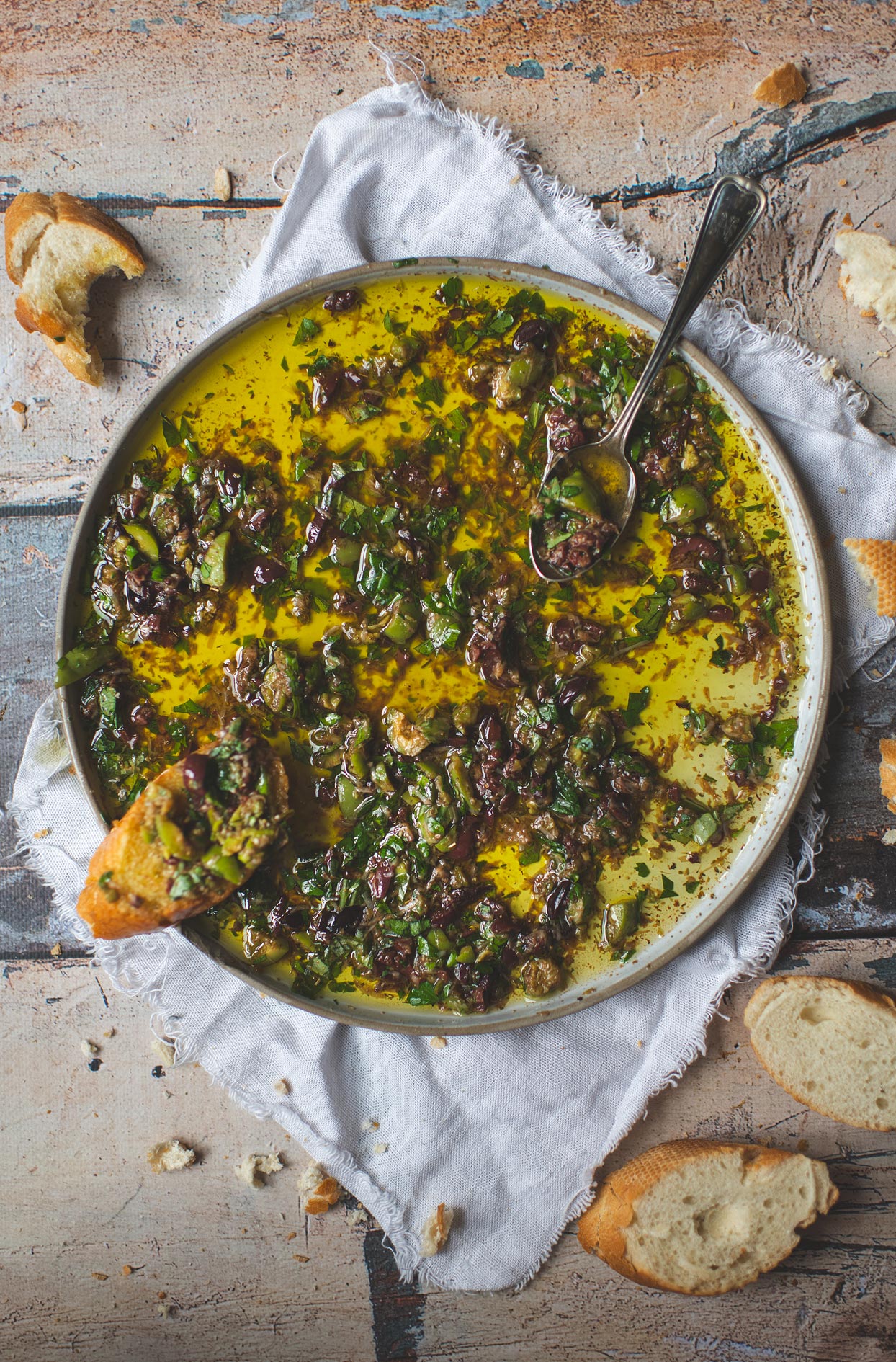
Plain with drinks, as lunch, alongside dinner. People lose their minds over it. Dipped in my olive, fresh herb and parmesan dipping oil it is an obvious match, the same flavors in liquid form. And if it is the dough that got you more than the focaccia, go look at my homemade pizza dough, which plays in the same family without being the same animal.
Ads
Dough
- 3 3/4 cups (500 g) all-purpose flour
- 2 tsp (10 g) sea salt
- 2 tsp (7 g) instant yeast
- 2 tbsp (30 ml) extra virgin olive oil
- 1 3/4 cups (415 ml) warm water
Pan
- 3 tbsp (45 ml) extra virgin olive oil
Topping
- 2 tbsp (30 ml) extra virgin olive oil
- 1/2 cup (125 ml) green olives, roughly chopped
- The leaves from 2 sprigs of fresh rosemary, roughly chopped
- 3 tbsp (45 ml) grated parmesan
- Flaky sea salt
- Freshly ground black pepper
Ads
Preparation
- In a large bowl, mix the flour, sea salt, yeast, olive oil and warm water with a fork or wooden spoon, until you have a shaggy dough with no dry flour left. Cover with a towel and let rest 30 minutes.
- Wet your hands. Grab the dough on one side, stretch it upward and fold it over the opposite side. Turn the bowl a quarter turn and repeat, for a total of 5 stretch and folds, which is one turn and a quarter. Cover and let rest 30 minutes.
- Repeat the round of 5 stretch and folds every 30 minutes, for 3 to 4 rounds over 2 hours. The dough goes from shaggy to smooth and supple.
- Pour the olive oil into a 10 x 15 in sheet pan and spread it everywhere, right into the corners. Transfer the dough in, fold it gently in three like a letter, then flip it so the seam is underneath. Cover and let rise 2 hours.
- Preheat the oven to 450 °F (230 °C).
- Drizzle the dough with olive oil. It will not have filled the pan on its own, it sits as a mound in the middle: with oiled hands, gently stretch it from the center outward, all the way to the four corners.
- Scatter on the green olives and rosemary. Press your fingers into the dough everywhere, all the way to the bottom of the pan, to make the dimples and drive the topping in.
- Sprinkle with parmesan, flaky salt and pepper. Bake 20 to 25 minutes, until deeply golden.
- Let rest 10 to 15 minutes before slicing.
Four things. One, respect the hydration: 415 g of water to 500 g of flour is what gives you the big holes. Two, forget kneading and do stretch and folds with wet hands, 5 per round, 3 to 4 rounds over two hours. Three, put plenty of oil in the pan, because the oil is what fries the bottom. Four, press the dimples all the way to the bottom of the pan, not just into the surface.
Turning the dough out onto a floured counter, which kills the hydration you worked for. Being stingy with the oil in the pan, which leaves you with a pale, dry bottom instead of a fried one. Dimpling before the topping goes on, so everything rolls into the gaps and burns. And slicing it straight out of the oven, which squashes the crumb.
Before, along with the olives, and then you press the dimples in over top. Rosemary is sturdy: those needles handle 450 °F for 20 minutes and come out toasted and fragrant rather than burnt, especially once the dimpling has pushed them partly into the dough. Soft herbs like basil are the opposite and want to go on afterward. Same logic for the parmesan in this recipe: it goes on before, and it toasts into a salty crust.
All-purpose does the job well, and it is what I used because it is what I had. If you want to push it, Italian “00” flour is milled finer and gives a slightly more tender crumb. The difference is real but small, and it does not justify a trip to the store. Use what is in your cupboard, because the hydration and the stretch and folds matter far more than the flour.
Warm or at room temperature, cut into squares, with your hands. Plain with drinks, alongside dinner, or split through the middle as a sandwich. At our place it goes out with dipping oil beside it. And to make it a meal, lay fresh prosciutto on the focaccia while it is still hot: the fat softens slightly and there is your protein.
Two to three days. I keep mine in a sealed container in the fridge and reheat it before eating, because the cold firms it up but the oven gives everything back. Figure 350 °F, wrapped in foil, 10 to 15 minutes, then two or three minutes uncovered to bring back the crisp bottom. It also freezes very well, up to three months, and reheats the same way.
Ads
Ads


Ads
Ads
Ads