

Homemade Applesauce Recipe (Cinnamon)
- Preparation 10 min
- Cooking 20 min
- Servings 2
- Freezing Absolutely
Ads
🍎 Warm, off the spoon, straight from the pot
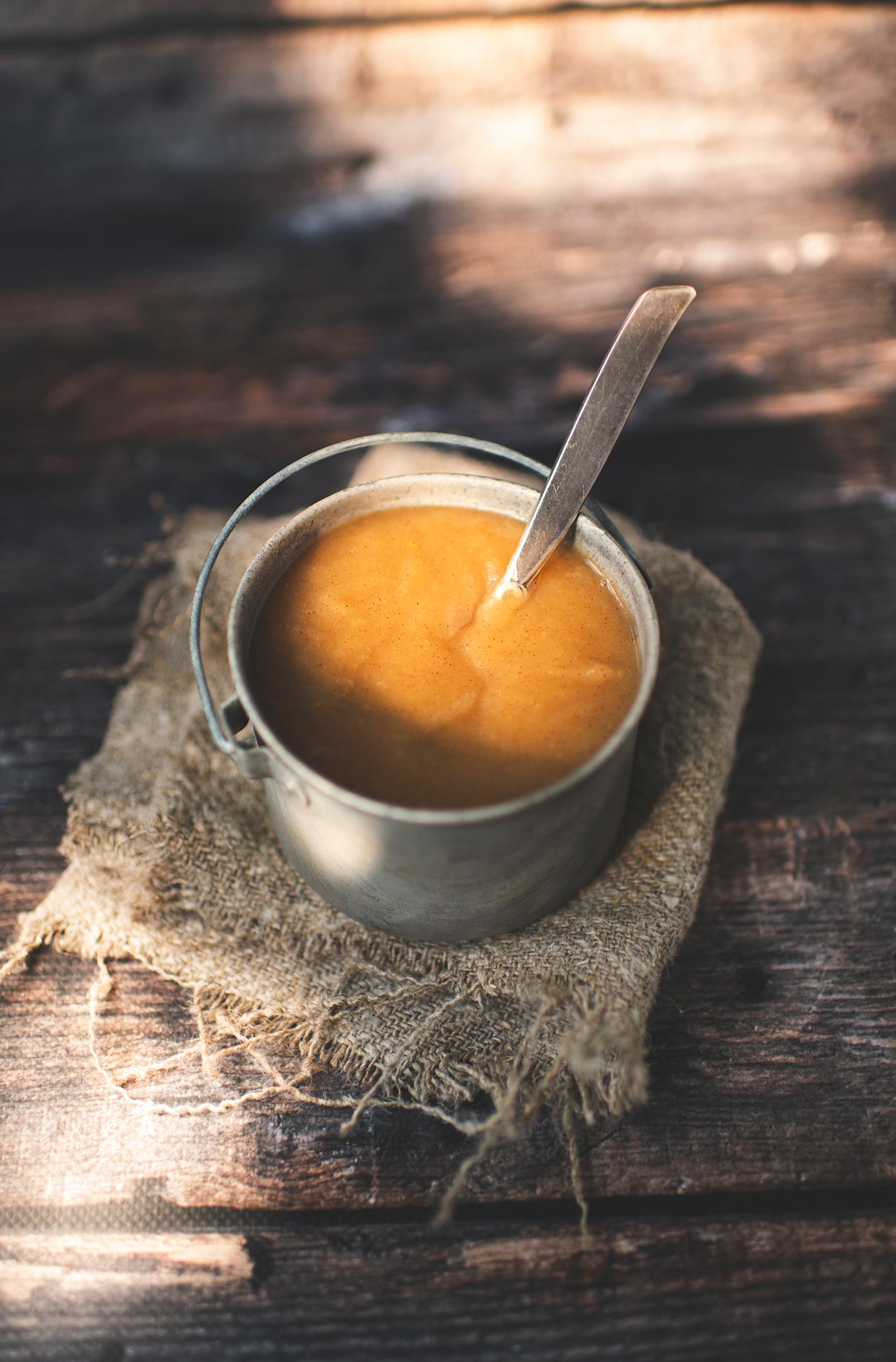
That is how the first serving gets eaten at my place, standing at the stove, before it has even had time to cool. Homemade applesauce tastes nothing like what comes in a jar: darker, more fragrant, and you taste the apples instead of the sugar. Five apples, twenty minutes, and the house smells like pie without you having made any pastry. You will double the batch next time.
💧 You adjust the water as you go
Half a cup to start, and you add more if it catches. This is the one part of the recipe where you watch instead of follow. Over medium heat for twenty minutes, even covered, it boils and it genuinely evaporates: what is left in the pot at the end has nothing to do with what you poured in. You cannot get this wrong for long. Too thick, add water. Too loose, uncover and let it reduce.
🥣 You will put it on everything
I eat it plain, with a spoon, straight out of the container. It goes in my muffins and in my yogurt in the morning. It freezes without any trouble, so one big batch in September when apples are at their best sets you up for winter. This is the kind of base recipe that ends up getting used ten times more than you expected.
Ads
Ads
💧 Start with half a cup, then adjust
It is enough to get the cooking going without drowning the apples, and McIntosh releases plenty of liquid on its own. Check around the ten minute mark: if it starts catching on the bottom, add a splash at a time. Over medium heat for twenty minutes, even covered, there is a lot of evaporation, so the starting amount is only a starting point. And if you overdid it, uncover the pot and let it reduce a few minutes. Fixable in both directions, always.
🍎 Peeling depends on your equipment
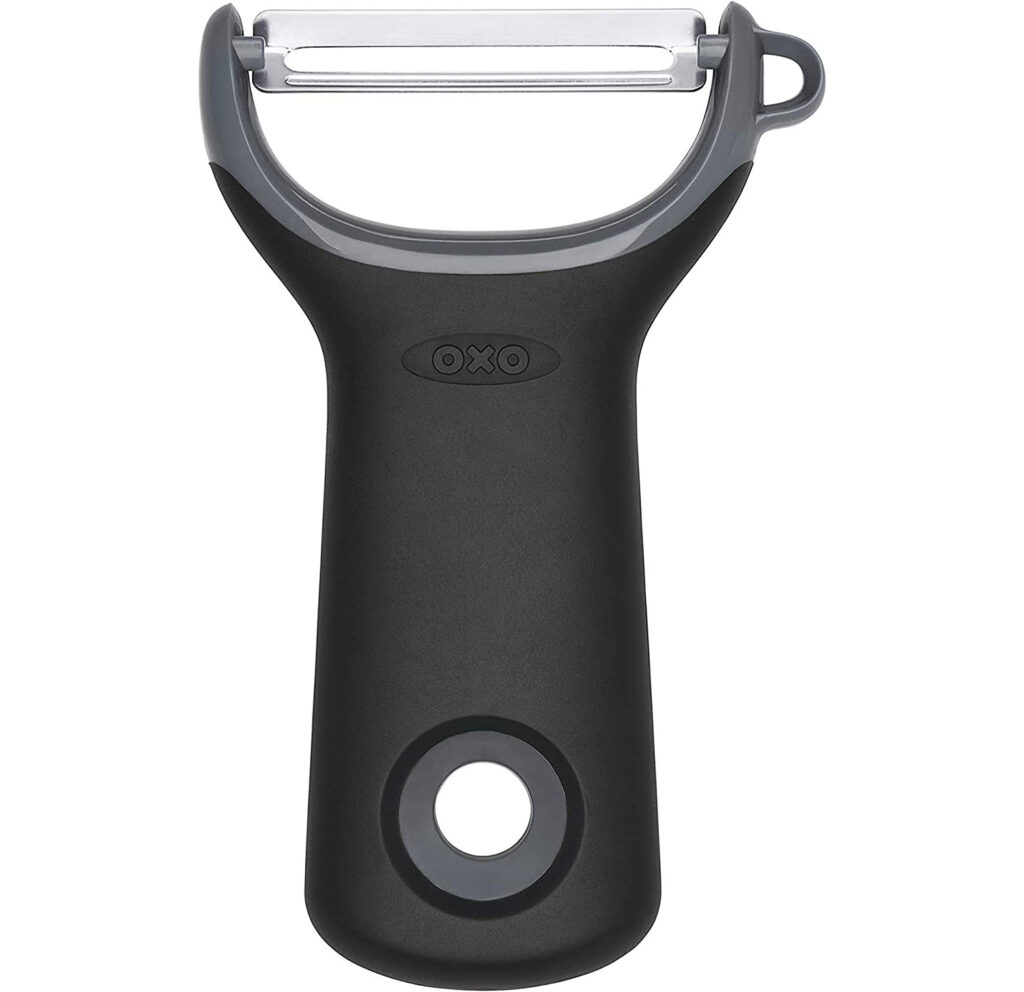
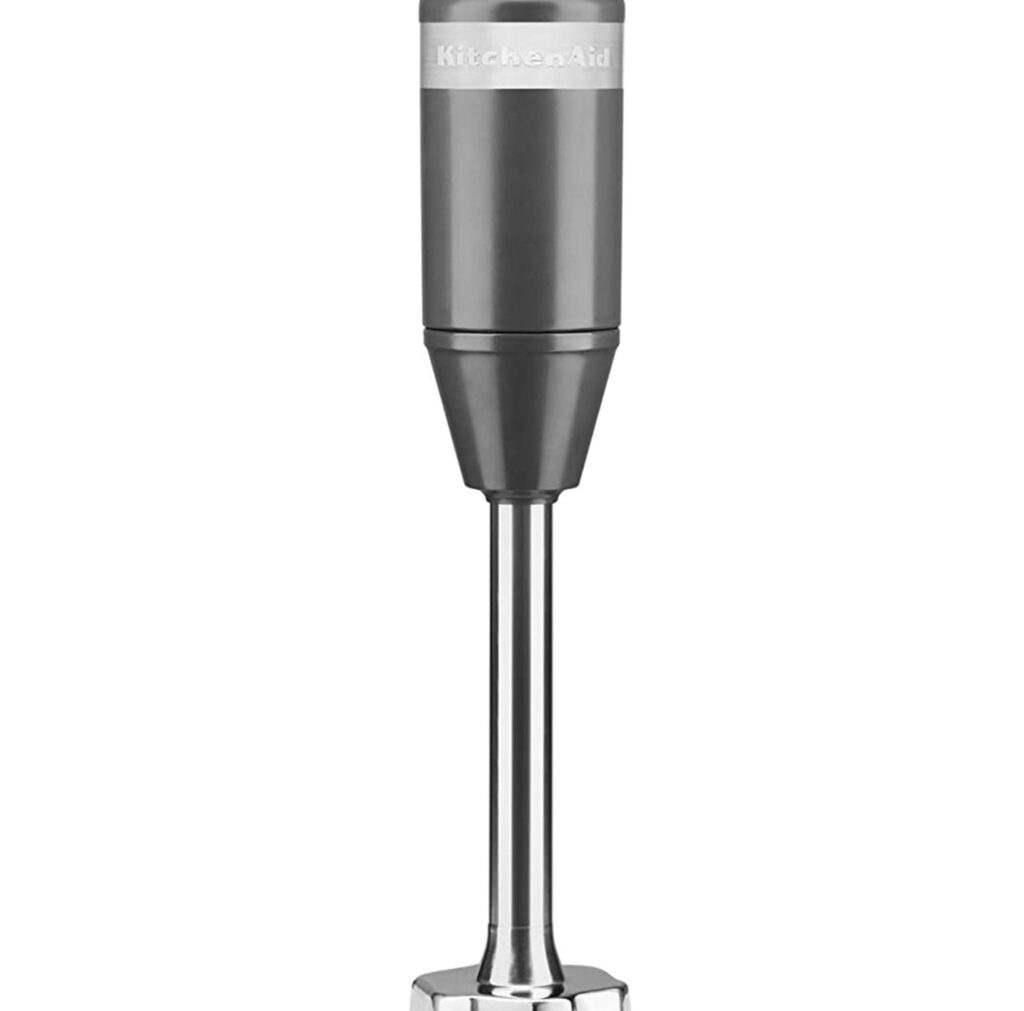
The skins give a rosy color and pectin, which thickens naturally. But be honest about your gear: you need a real countertop blender to make the skins disappear completely. With an immersion blender, which is what most people actually own, you will get little flecks of skin throughout. I peel mine. It takes seventeen seconds with a good peeler and the texture is smoother.
🍏 The apples that work best
McIntosh is the first choice: it collapses on its own and it is already sweet. Cortland, Lobo and Empire also work well and hold a little more body. The real move, if you want to push it, is to mix two varieties: one that breaks down like McIntosh, and one firmer and tarter like Cortland or Paulared. You get applesauce with texture and depth instead of a uniform purée.
🍋 Why it browns, and what to do
A cut apple oxidizes. That is chemistry, and it is normal. Your applesauce will darken over the days, especially on top of the container. Ground cinnamon also darkens it right in the pot, so do not expect a pale blond color if you use it. The tablespoon of lemon juice slows the oxidation and wakes up the McIntosh, which can taste a little flat on its own. Not mandatory, but it is two seconds of work.
🥄 Smooth or rustic, decide at the end
This is one of the rare choices you get to make after everything is cooked. A blender or food processor gives you silky applesauce, store-bought style, perfect for muffins and yogurt. A fork or masher leaves chunks and gives you something old-fashioned that eats like a dessert. Try both at least once before you pick a side.
🍯 Sweeten it, or do not
I made it unsweetened last time and it was excellent, so taste before you add anything. A ripe McIntosh already has all the sugar it needs. If you do want some, white sugar keeps the applesauce pale, brown sugar darkens it and adds caramel, and maple syrup does exactly what you think it does. Always add it at the end, a spoonful at a time.
🥣 What to do with it besides eating it plain
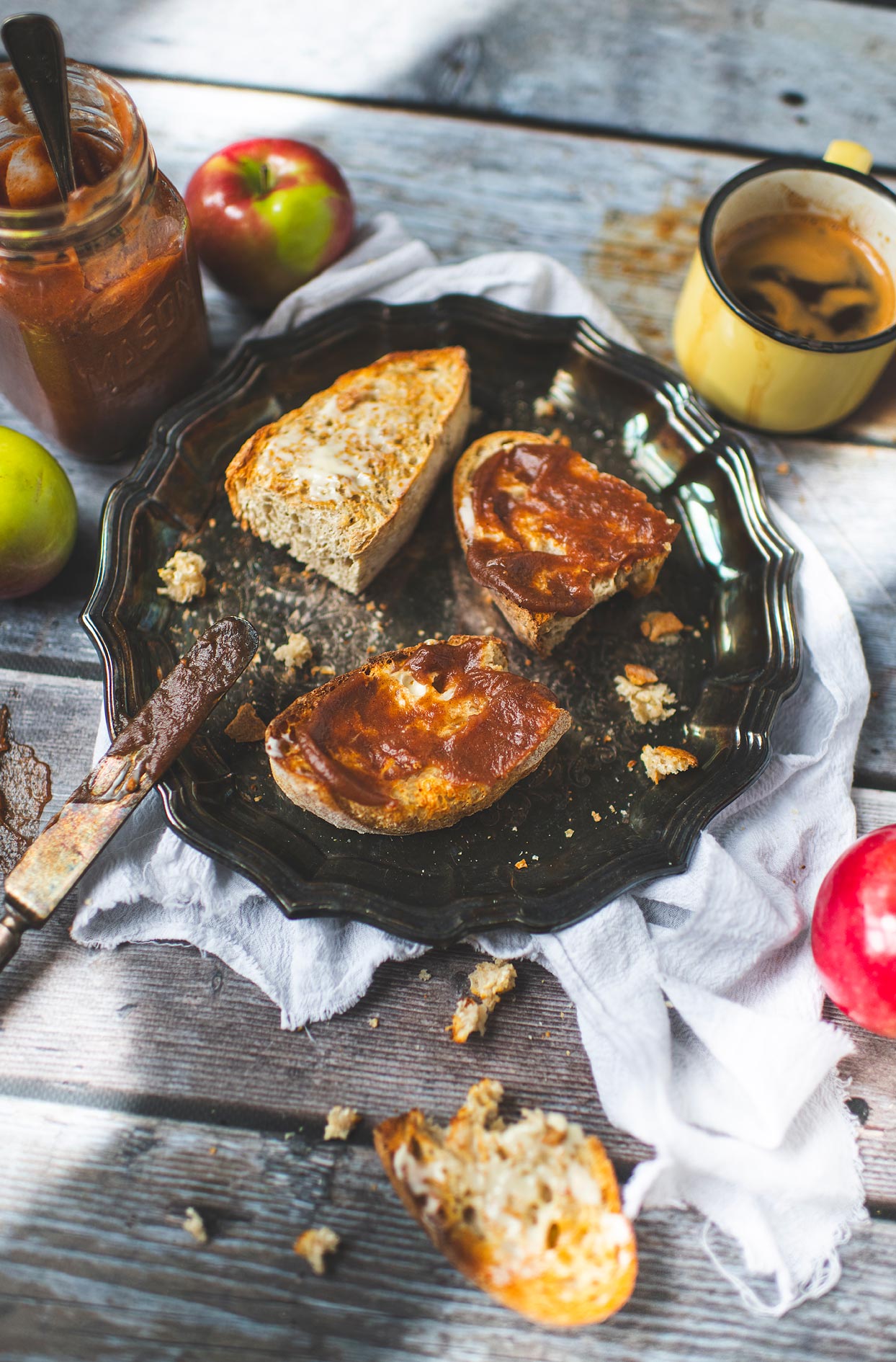
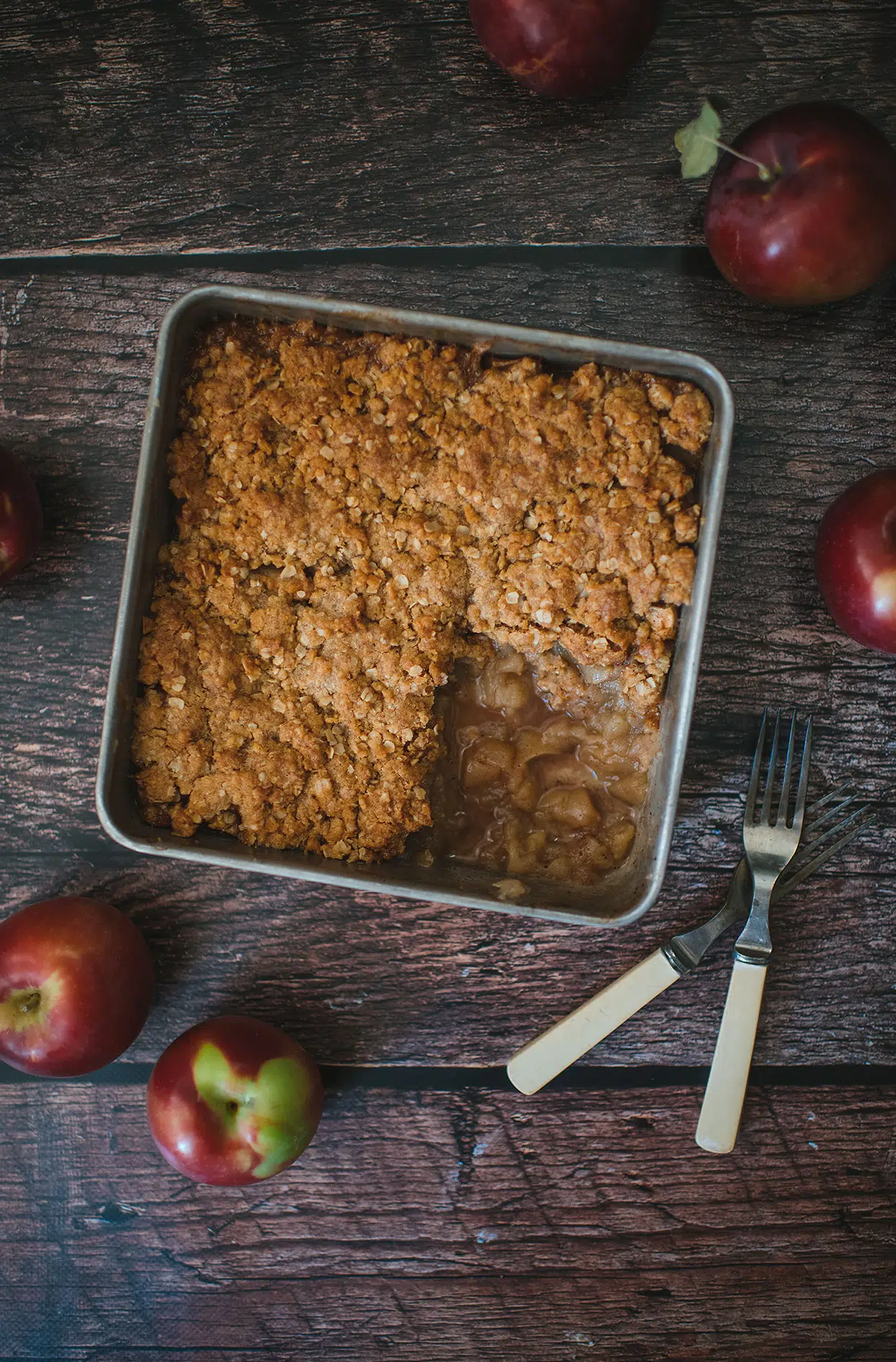
It replaces part of the fat in muffins and cakes, it stirs into plain yogurt in the morning, it goes alongside pork roast or sausages. It is also excellent warmed over vanilla ice cream. And if you like this, the long slow caramelized version of the same idea is my apple butter with maple syrup, which cooks for hours until it turns spreadable.
📅 Make ahead
This recipe IS make-ahead, that is the whole point of it. Make a double or triple batch during apple season, when they cost nothing and actually taste like something. What really helps: peel and cut your apples into a bowl of cold water with a squeeze of lemon while the pot heats, and they will not brown while they wait. Then portion the applesauce while it is still warm into labeled containers with the date, in small formats rather than one big one, because once it is open it goes fast.
❄️ Storage and freezing
Five to seven days in the fridge in an airtight container. Some people will tell you two weeks, but play it safe, there is nothing preserving it. To freeze, let it cool completely, transfer to containers or bags pressing out as much air as you can, and leave a little headroom because it expands. Three months, no problem. Thaw overnight in the fridge and stir before serving. It is normal for it to separate a little.
Ads
Ingrédients
- 5 large McIntosh apples, peeled, cored and cubed
- 1/2 cup (125 ml) water, plus more as needed
- 1 tsp (5 ml) ground cinnamon
- 1 tbsp (15 ml) lemon juice
- 1/4 cup (60 ml) sugar, optional
Ads
Preparation
- Peel the apples, remove the cores and cut them into cubes.
- In a saucepan, combine the apples, water, cinnamon, lemon juice and sugar if you are using it. Stir well and bring to a boil.
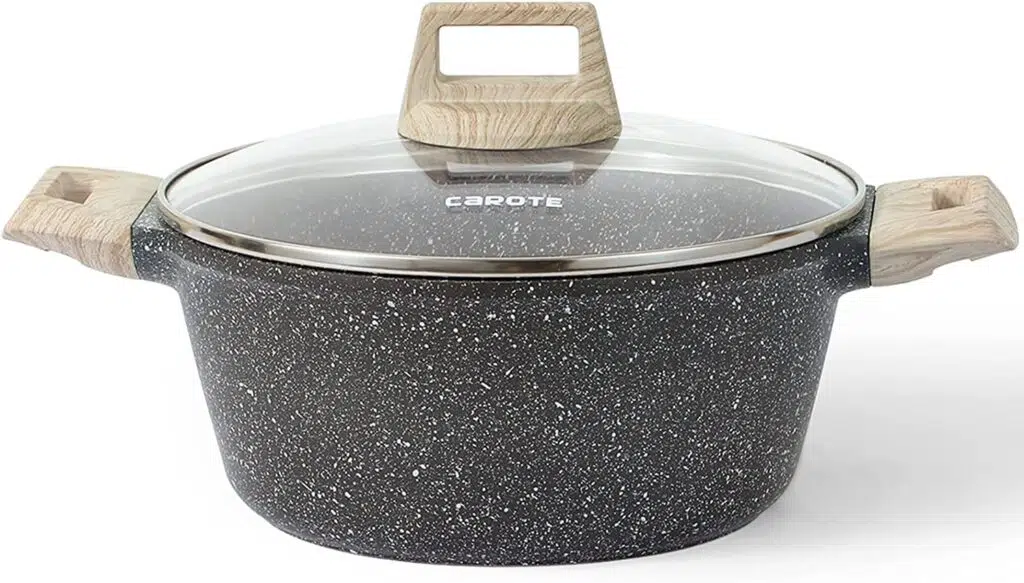
- Reduce to medium-low, cover and cook about 20 minutes, until the apples are tender and translucent and crush with no resistance under a fork.
- For a smooth applesauce, blend everything in a blender or food processor. For something more rustic, just mash with a fork or a potato masher.
- Taste and adjust the cinnamon or sugar. If it looks too loose, put it back on the heat uncovered for a few minutes to reduce.
Five peeled and cubed apples, half a cup of water, a teaspoon of cinnamon and a splash of lemon juice in a saucepan. Bring to a boil, cover and cook 20 minutes over medium-low until the apples crush under a fork. Then blend for smooth or mash for rustic.
It depends on your equipment. The skins add rosy color and pectin, but they only disappear completely in a countertop blender. With an immersion blender you will get little flecks throughout. I peel mine. Seventeen seconds with a good peeler and the texture is smoother.
Half a cup for five large apples, adding a splash during cooking if it starts to catch. McIntosh already releases a lot of liquid, and there is heavy evaporation over twenty minutes even with the lid on. If the result is too thin, uncover the pot and let it reduce.
Add a tablespoon of lemon juice, and store it in an airtight container with as little air on top as possible. Browning is oxidation, the same thing that happens to a cut apple on the counter, and it does not affect the taste. Note that ground cinnamon darkens applesauce on its own during cooking.
Five large apples give you roughly two cups. It scales cleanly, so double or triple it during apple season. McIntosh is the classic choice since it collapses on its own; Cortland, Lobo and Empire hold a bit more body.
Five to seven days in an airtight container, and up to three months in the freezer. Cool it completely before freezing and leave headroom in the container since it expands. Thaw overnight in the fridge.
Ads
Ads
Ads
Ads
Ads