

Apple butter with maple syrup
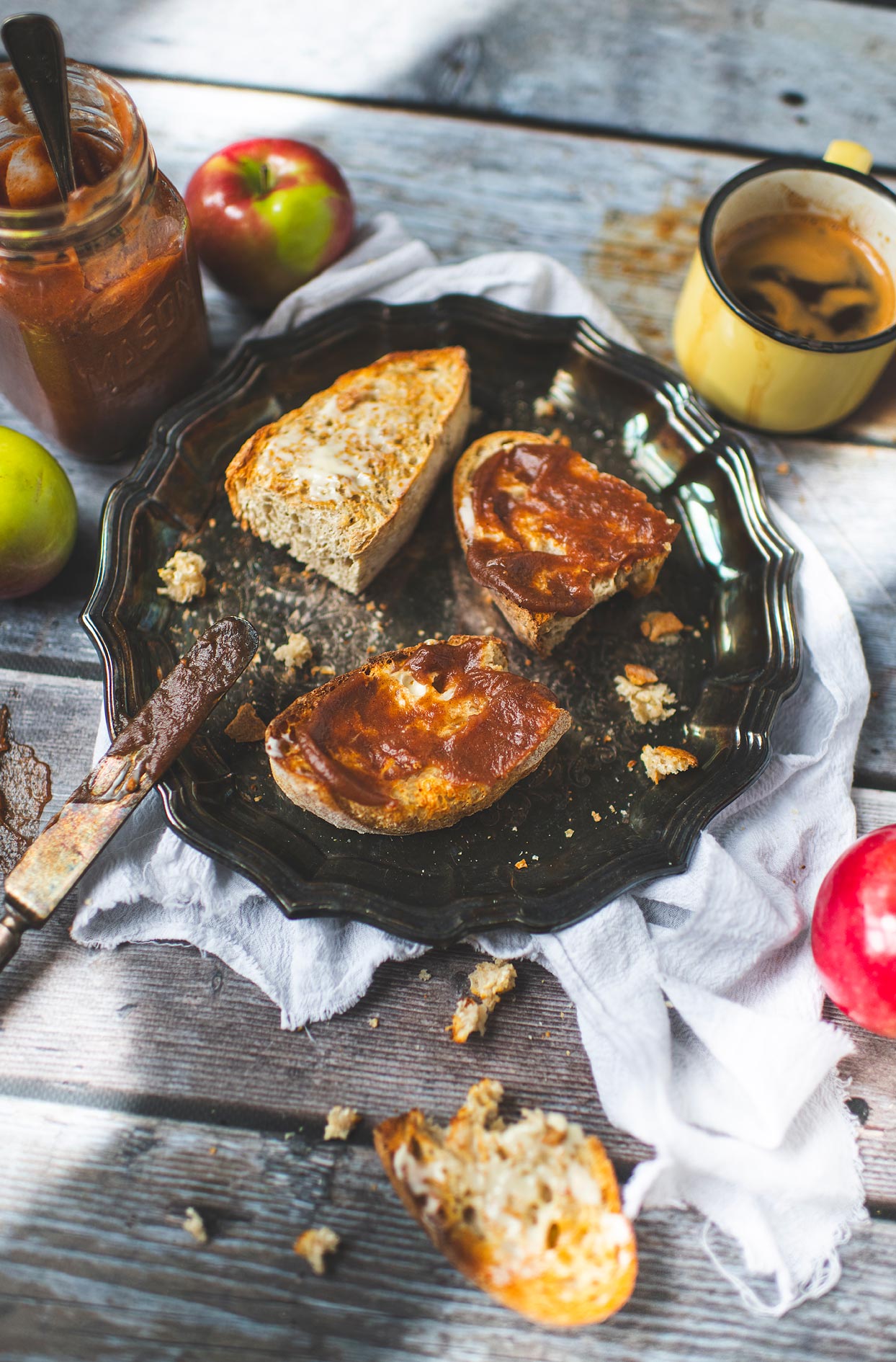
- Preparation 15 min
- Cooking 1 h 30 min
- Servings 1 ½ cups (375 ml)
- Freezing Absolutely
Ads
🍎 I tasted it everywhere before making my own
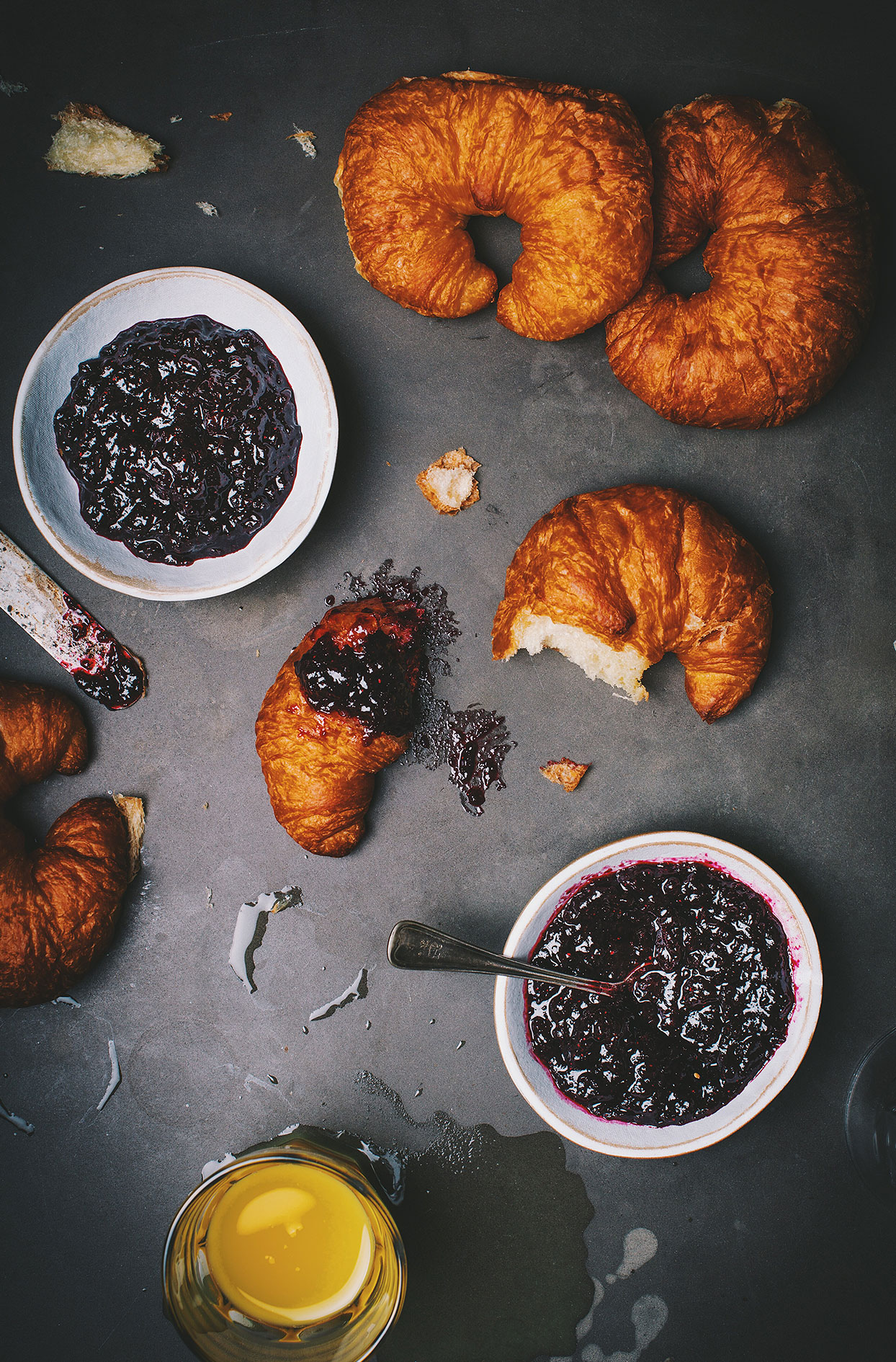
This apple butter is the result of a small obsession. For years, I tasted it wherever I went: in restaurants, bought at the grocery store, picked up at orchard stands during fall weekends. Some were good, some were ordinary, and most of them tasted more like sugar than apple. I needed my own version. This one has not a single ounce of white sugar in it, just maple syrup, and the apple is the star. Ever since, every time I go pick apples at a small organic orchard, I know exactly what I’m going to do with them.
⏱️ An hour and a half, not ten hours
In Quebec, pretty much every apple butter recipe asks for a slow cooker and a full day. I have one, a slow cooker. But why wait ten hours for something you can pull off in an hour and a half? It just makes no sense. A saucepan, a low flame, a lid and a little attention every now and then. That’s all it takes. You start after lunch and you have your jars of apple butter before dinner, instead of going to bed wondering if it’ll be ready tomorrow morning.
🧈 The secret is to blend much longer than you think
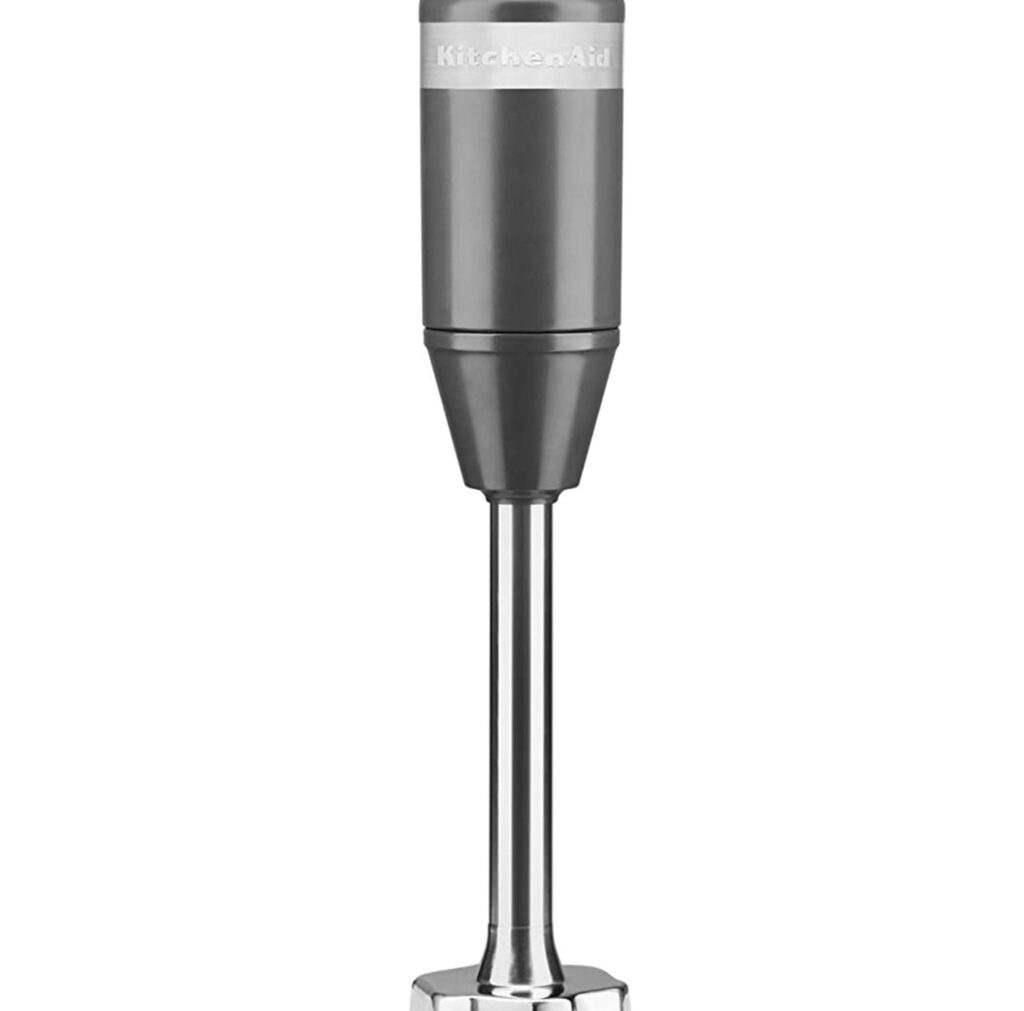
The first time, I started blending my mixture into a purée and the texture was already decent after a minute. But I kept going. And the longer I blended, the thicker, smoother and creamier it became, until it actually looked like butter. That’s when I understood that most people stop way too soon. Three to four minutes with an immersion blender is what separates a thick compote from a real apple butter. And no, there is absolutely no trace of the skins left, even though you don’t peel anything.
Ads
Ads
⏱️ Skip the slow cooker, grab a saucepan
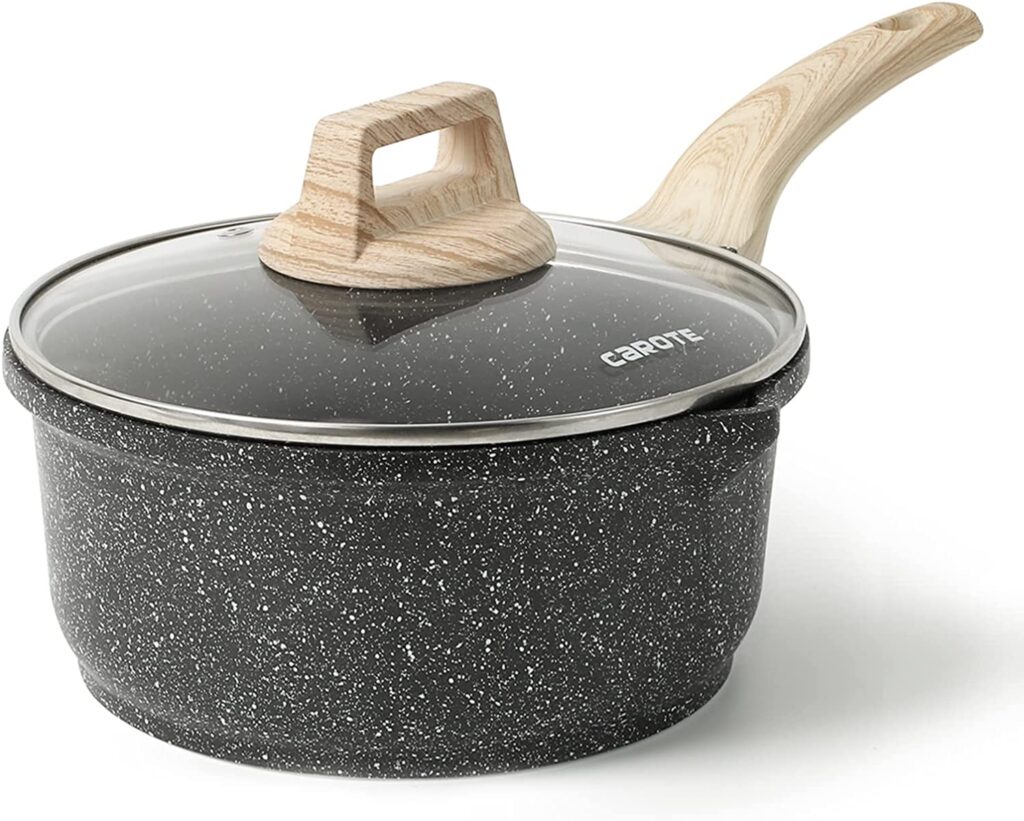
It’s the question I ask myself every time I see an apple butter recipe: why ten hours? Everyone tells you to start your slow cooker in the morning and wait until evening. I have one, and I don’t use it for this. On the stove, in a covered saucepan over low heat, you get the exact same result in an hour and a half, with the advantage of seeing what’s happening and adjusting as you go. The only trade-off is that you need to stir regularly, otherwise it sticks to the bottom.
🥤 A tall, narrow measuring cup. Not the saucepan
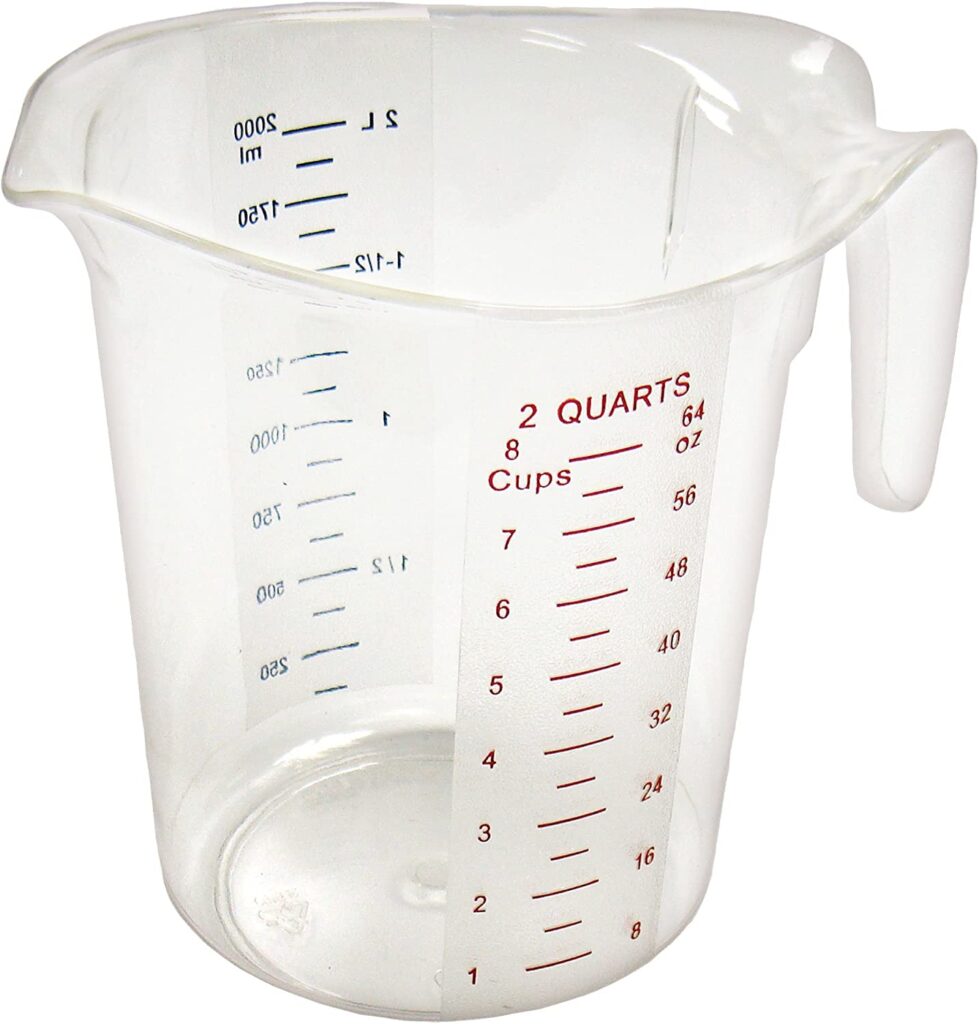
Here’s the tip that saved me a lot of cleanup. An immersion blender in a wide saucepan splatters hot apple purée everywhere. On the counter, on the wall and on you. Instead, transfer your mixture into a large, tall, narrow measuring cup: the walls go high enough to contain the splatter, and the narrow shape forces the mixture to circulate around the blade instead of spinning in circles. Smoother result, cleaner kitchen.
⏳ Blend much longer than your instincts tell you
This is the point where almost everyone goes wrong. After thirty seconds of blending, you have a nice purée and you think you’re done. Keep going. Three to four minutes of blending completely changes the texture: it thickens, it becomes glossy, it becomes creamy, and only then do you understand why it’s called apple butter. It’s also this long blending that makes the skins disappear without leaving a single trace.
🔥 Reduce dry before blending, never after
A lot of recipes have you thicken the mixture uncovered after blending it into a purée. Don’t do that: a purée bubbling in a saucepan spits everywhere and burns. Instead, you need to reach the right point during the first cook, the one with the lid on. When the liquid has reduced dry at the bottom and the mixture is well darkened, you’re ready. After blending, you should have nothing left to do but jar it up.
🍏 Any apple works, alone or in combination
I use McIntosh and it’s delicious, but I’ve tested more than a dozen varieties over the years: Granny Smith, Red Delicious, Honeycrisp, Cortland, Fuji. They all work. The one thing to keep in mind is that the sweeter your apples are to start, the sweeter your butter will be at the end. With Granny Smith, you get something brighter and more tart. A mix of two or three varieties often gives the most interesting result, so don’t hesitate to empty the bottom of the bag.
🍎 Keep the skins. That’s where the colour comes from
I never peel my apples for this recipe, and it’s not just out of laziness. The skins bring pectin, which helps the butter develop body, and above all they give that beautiful dark colour that sets a real apple butter apart from a pale compote. Peeling six apples is also twenty minutes of your life you never get back. Trust me on this one: after three to four minutes of blending, there is absolutely nothing left of them.
🎁 The hostess gift that always lands
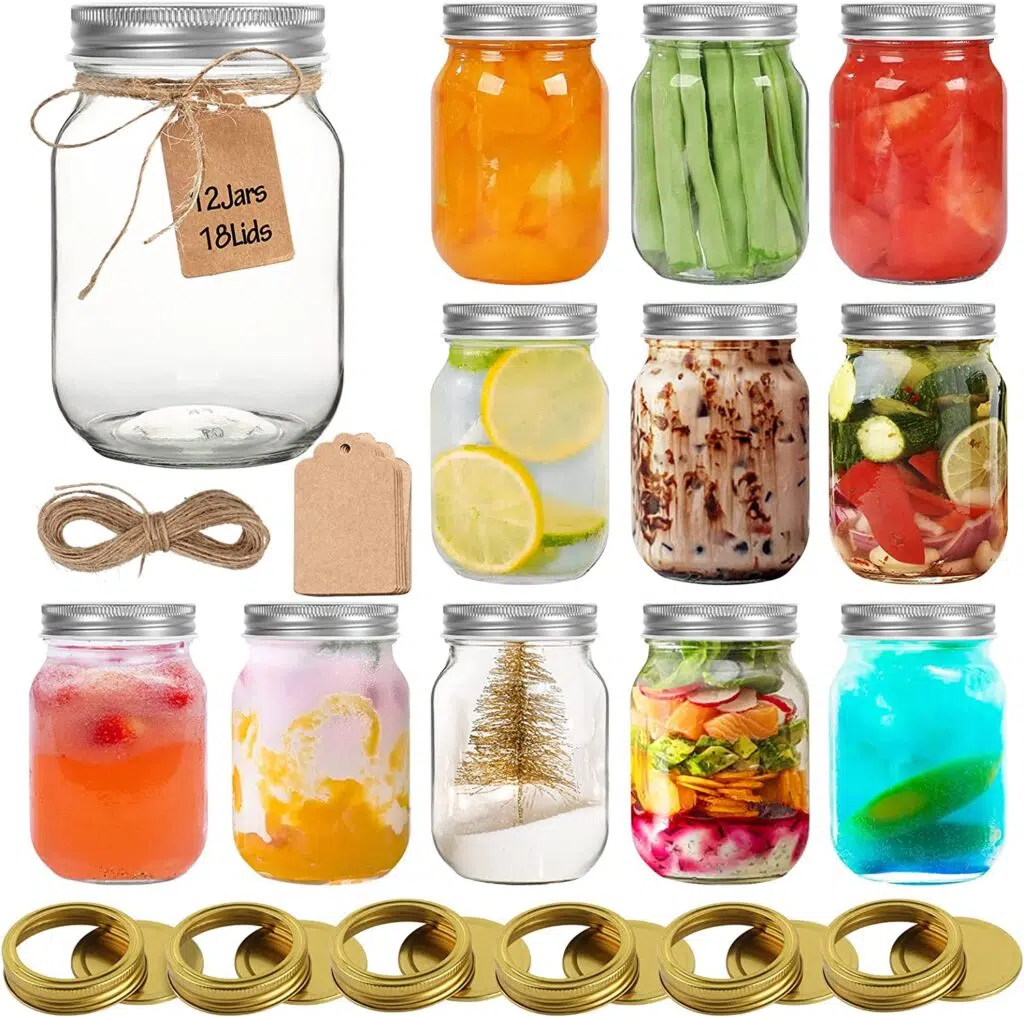
This recipe fills a small or medium Mason jar, which is exactly the right size to give away. In the fall and during the holiday season, I make batches and hand them out: a ribbon on the lid, a handwritten label, and you show up at someone’s place with something you made yourself. It’s worth a thousand times the bottle of wine grabbed in a rush on the way. And if you want to keep them at room temperature longer, they can be water-bath canned without any trouble.
✅ What to serve with my maple apple butter?
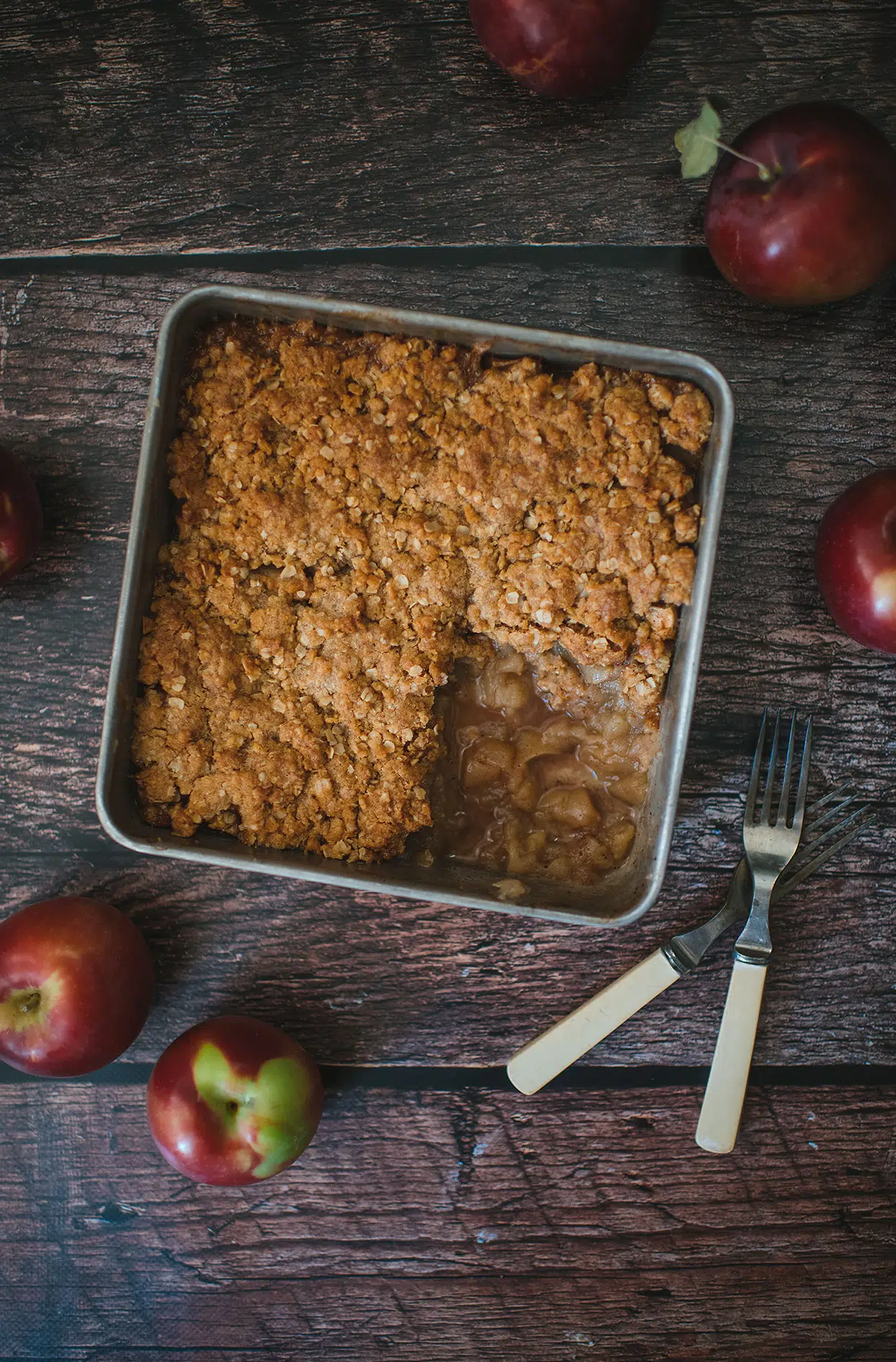
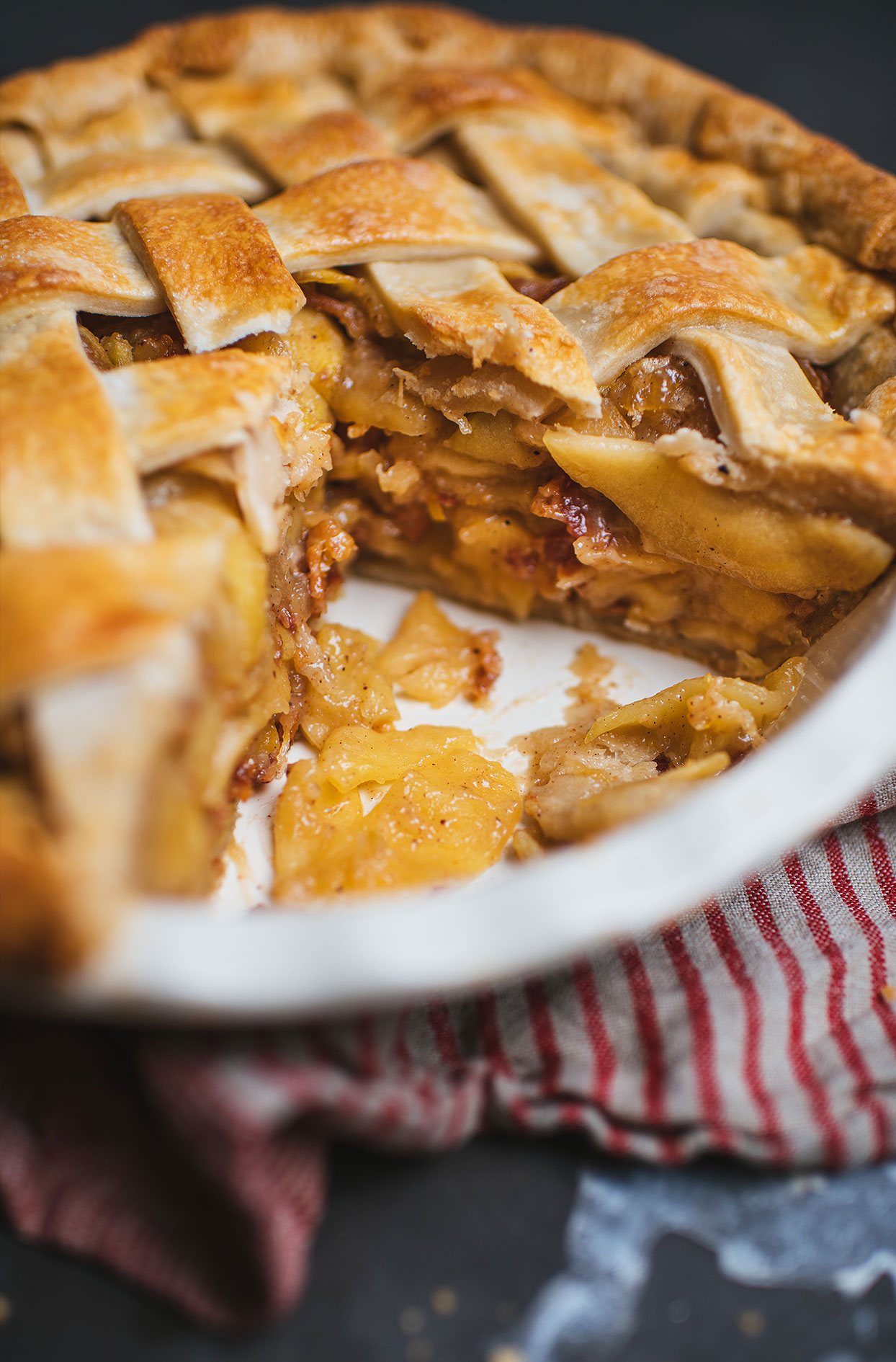
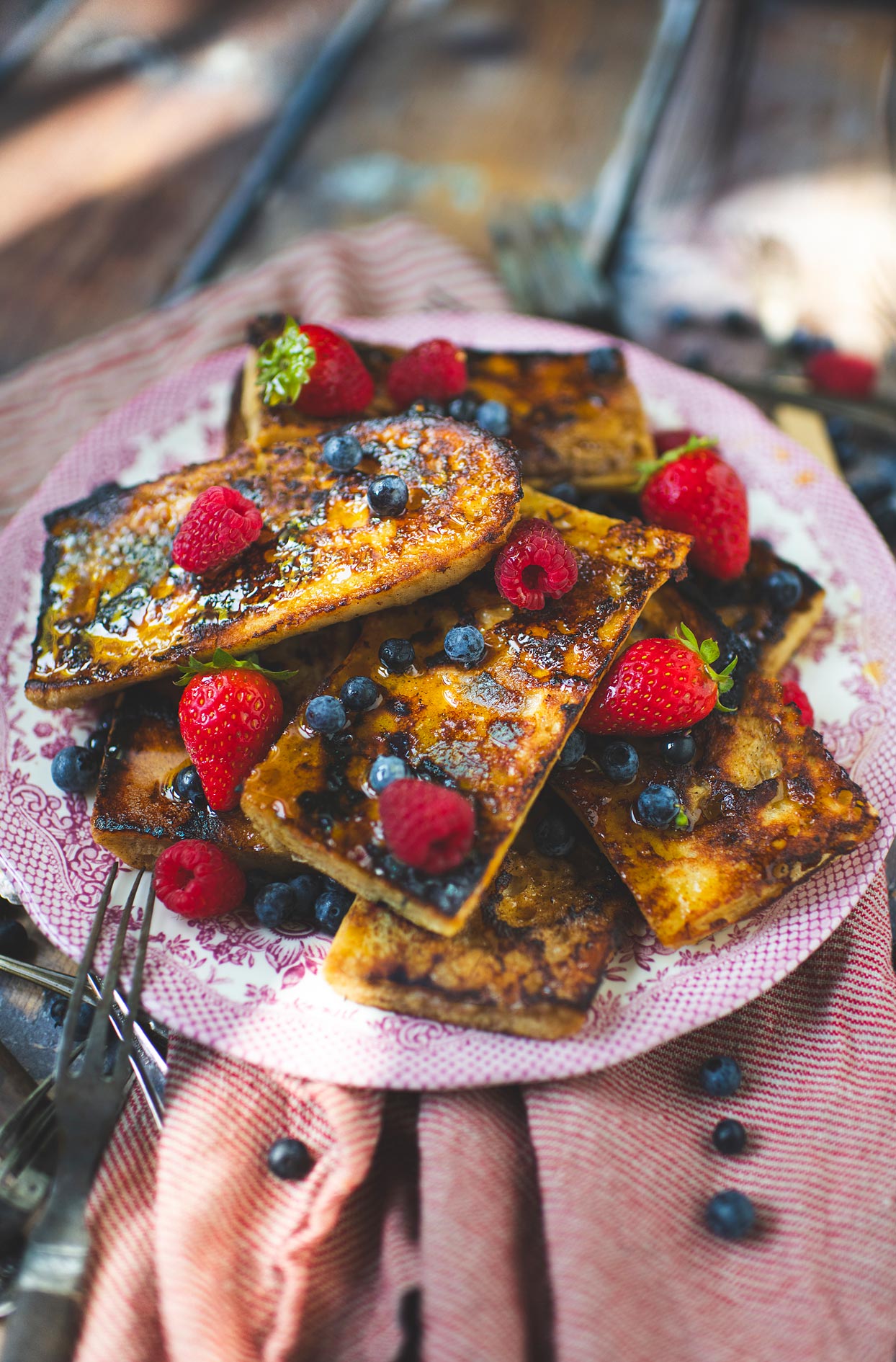
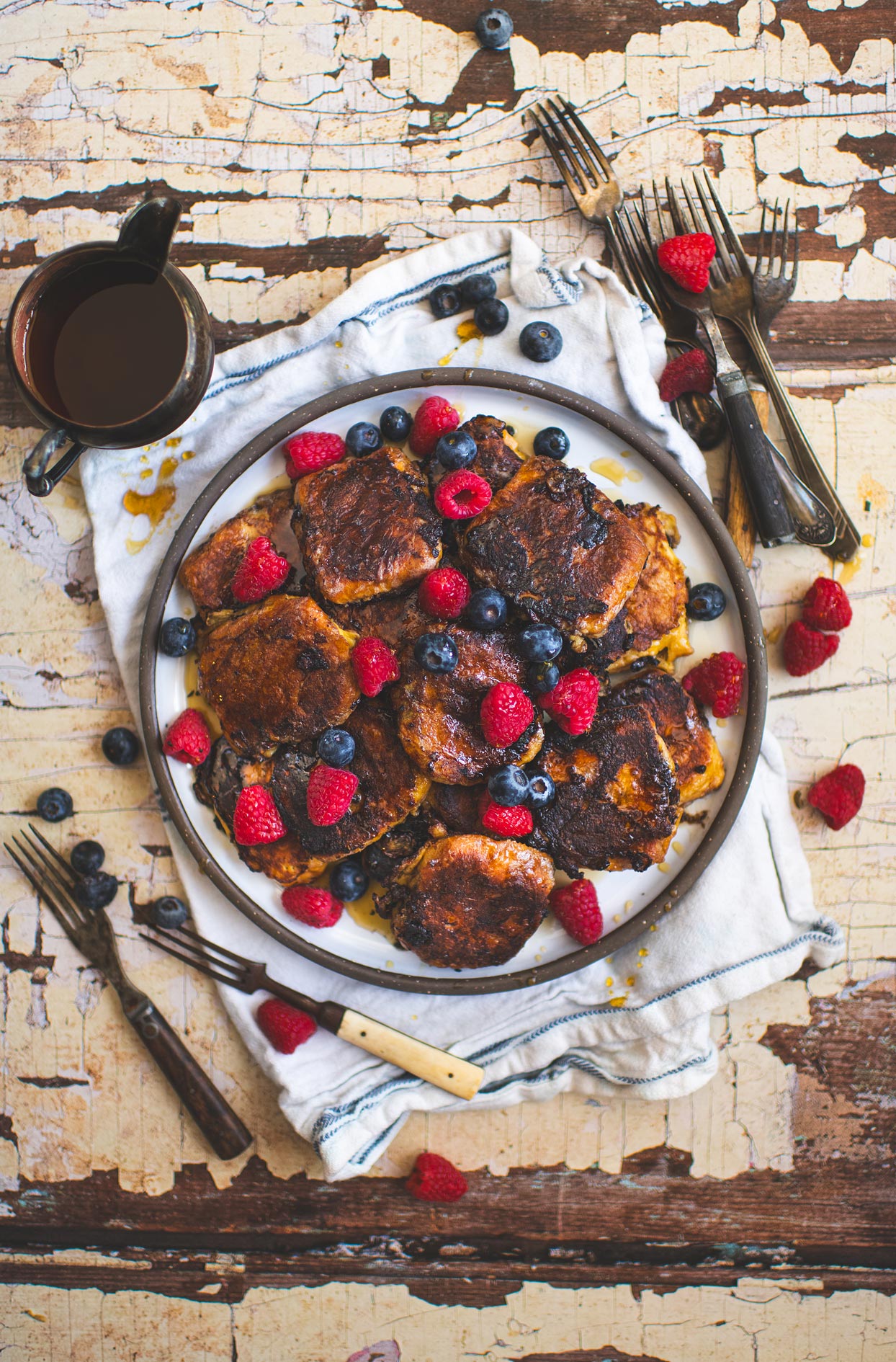
At home, it starts with the morning toast, still warm, with the apple butter melting a little on top. Then it becomes a habit: on my Rum pancakes with caramelised figs, on my Blueberry and lemon waffles, in a bowl of plain yogurt, and next to a cheese board where it’s a hit with a sharp cheddar. But the use that surprises people is with pork: a spoonful alongside my Pork tenderloins with Mustard, maple bacon and roasted apples and you immediately understand why apple and pork have gone together forever. And if you still have apples left after that, check out my Apple crisp.
Ads
Apple butter
- 6 medium McIntosh apples (about 2 lb/900 g), cored and roughly chopped
- ¼ tsp (1 ml) kosher salt
- 2 tbsp (30 ml) lemon juice
- 1 ½ tsp (7 ml) ground cinnamon
- ¼ tsp (1 ml) ground cloves
- ⅓ cup (80 ml) pure maple syrup
Ads
Preparation
- Combine all ingredients in a medium saucepan. Cover and cook over low heat for 1 hour to 1 h 30, stirring regularly so nothing sticks to the bottom. The apples should be completely broken down, the mixture well darkened, and the liquid reduced dry at the bottom of the pan.
- Remove from heat, take off the lid and let cool for at least 15 minutes.
- Transfer the mixture into a tall, narrow measuring cup, then blend with an immersion blender for 3 to 4 minutes. Don’t rush it: the longer it blends, the thicker and creamier it becomes, and the skins will completely disappear.
- Serve warm, or let cool completely and store in an airtight container in the refrigerator. Once cold, the apple butter firms up and takes on a texture between jam and butter.
Despite the name, there is not a single drop of butter in it. Apple butter is apple cooked for a very long time until it caramelizes, browns and concentrates, then blended into a smooth, creamy spread. That’s what sets it apart from applesauce: applesauce is cooked just enough to break down the apples and stays pale, while apple butter cooks long enough to darken and develop a deep, almost caramel flavour. The name comes from the texture, thick and spreadable like butter, not the ingredients.
The good news is there’s no wrong answer. I’ve tested more than a dozen varieties over the years, including Granny Smith, Red Delicious, Honeycrisp, Cortland, Fuji and McIntosh, and they all give a great result. I personally use McIntosh, which breaks down quickly and gives a very smooth texture. The real rule to remember is that the natural sugar in your apple transfers directly into your butter: a Honeycrisp will give something sweeter, a Granny Smith something brighter. And a mix of several varieties often gives the most complex result.
In an airtight container in the refrigerator, count about 2 weeks. In the freezer, it keeps easily for 6 months: I portion it into small jars and thaw it in the fridge overnight before using it. If you want to store it at room temperature for months, you’ll need to water-bath can it in sterilized jars. A properly canned jar keeps for 12 to 18 months in the pantry, but once opened, it goes back in the fridge and follows the same 2-week rule.
Yes, and it’s actually the most common method in Quebec: generally about 4 to 5 hours on high or 10 to 12 hours on low, then blended at the end. It works very well and requires less monitoring. I don’t do it that way because the saucepan gives me the same result in an hour and a half and I can see exactly where things stand. If you go with the slow cooker, keep the same principle in mind: the liquid needs to be reduced and the mixture well darkened before you blend.
The classic is morning toast, but it would be a shame to stop there. It’s excellent on rum pancakes with caramelised figs or blueberry and lemon waffles, stirred into plain yogurt, and on a cheese board where it pairs beautifully with aged cheddars. My favourite use, though, is with pork: a spoonful alongside my pork tenderloins with mustard, maple bacon and roasted apples, and the meal goes to a whole new level. It also makes a perfect topping on a slice of apple crisp with a little ice cream.
Ads
Ads

Ads
Ads
Ads