

Quick brown sugar salmon
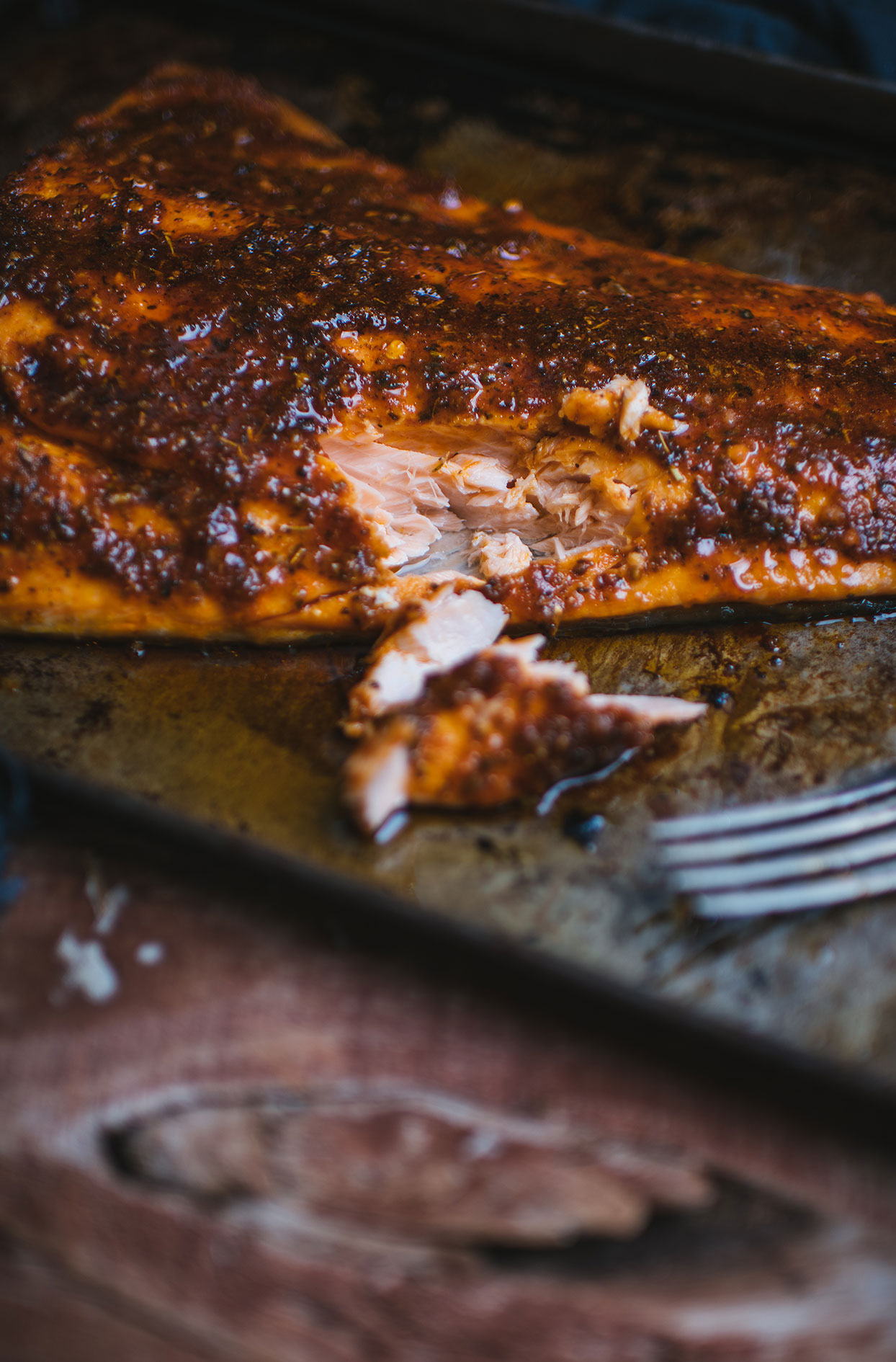
- Preparation 10 min
- Cooking 25 min
- Servings 4
- Freezing Absolutely
Ads
🔥 The salmon that gets supper done, with no marinating
Most brown sugar salmon recipes hand you a bowl of syrup and tell you to wait an hour. This one skips all of that. You stir the sugar into the oil and the spices until it turns into a paste, you smear it over the fillets, and the pan goes in. Thirty seconds of work. The sugar does its caramelizing on the fish instead of sitting in a dish on the counter.
🍯 Sweet, but it earns its place
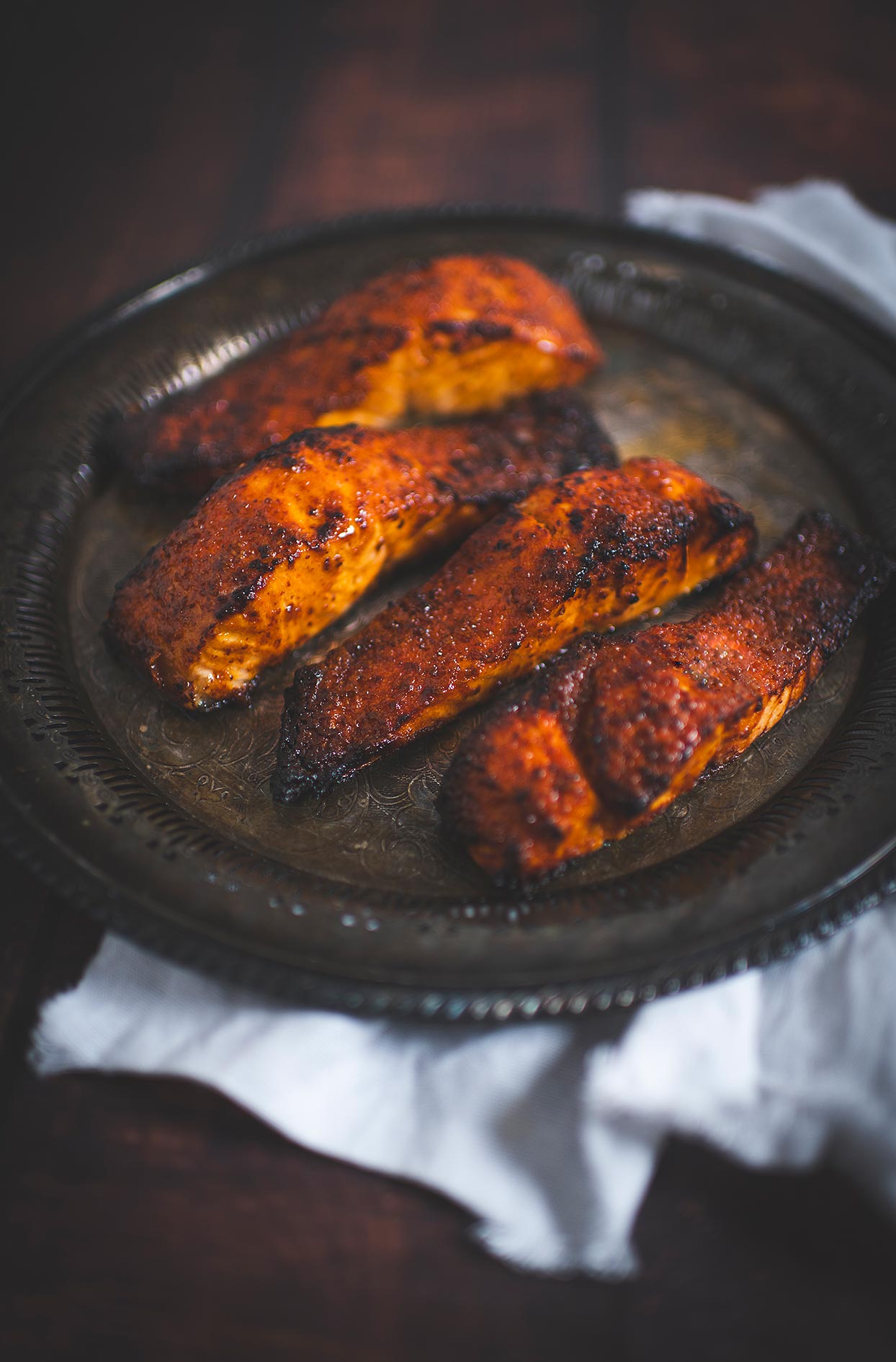
Two tablespoons of brown sugar for 1¾ lb (800 g) of salmon is nowhere near dessert territory. It is just enough to build a lacquered edge under the heat while the paprika, the Italian herbs and the Bas-du-Fleuve salted herbs push back from the other side. Those salted herbs are a Quebec pantry staple, fresh herbs packed in coarse salt, so they season and salt in the same move. What comes out is a crust with some grip to it and flesh underneath that still flakes clean off the fork.
🍽️ Oven or air fryer, same fish
Twenty-five minutes at 400°F (200°C) on a sheet pan. Or ten in the air fryer basket, which is the way I reach for first: the caramelization comes out more even and the fish is ready before the rice is. The oven wins when I want a second pan of vegetables roasting beside it. And a full batch is never a waste. Cold, flaked over greens with an avocado the next day, it is honestly half the reason I cook 1¾ lb (800 g) at a time.
Ads


Ads
❄️ Thaw it, then dry it. Non-negotiable
Frozen salmon goes in the fridge overnight (12 hours) or in a bowl of cold water for an hour. Then comes the part everybody skips: blot the fillets dry with paper towels before the rub touches them. Surface water turns to steam in the oven, steam keeps the sugar from setting, and instead of a caramelized edge you get a pale, wet-looking piece of fish. This one step decides how the whole thing turns out.
⚡ A rub, not a marinade
No hour of waiting. The paste grips the flesh directly instead of sliding off the way a thin liquid glaze does, so you get the punch of an overnight marinade out of thirty seconds of stirring.
♨️ Air fryer: 400°F, 10 to 12 minutes
For fillets around ¾ in (2 cm) thick, 10 to 12 minutes at 400°F (200°C) in the basket. No parchment. Start looking at 9 minutes. The circulating air browns the sugar more evenly than an oven does, and the skin lifts away with a spoon once it is out. If your air fryer runs hot, closer to 10.
🔥 Oven: 400°F, 22 to 25 minutes, broiler optional
Sheet pan, parchment, middle rack, 400°F (200°C) for 22 to 25 minutes. Want more color? Two or three minutes under the broiler at the end will do it, but stand there and watch. Brown sugar goes from lacquered to burnt in about half a minute.
🌡️ 140°F is the number
An instant-read thermometer in the thickest part of the fillet takes all the guessing out. 140°F (60°C) gives you a rosy, juicy, tender medium. Past 150°F (65°C) it starts drying out and no amount of sauce brings it back. No thermometer? Press the side of a fillet with a fork: when it separates into clean flakes and the flesh has gone opaque partway up the side, it is there.
🐟 Other fish that take the same rub
Rainbow trout behaves almost identically, same time, same temperature. Arctic char is more delicate, so drop to 8 to 10 minutes in the air fryer or 18 to 20 in the oven. Walleye, firm and white, cooks like the salmon does. Skip sole and flounder. They are too thin and the fillets come apart when you lift them.
🐠 Skin on, skin off
Skin-on fillets go skin side down and never get flipped, in the oven or the basket. The skin holds the moisture in and slides off with a spoon afterward if nobody at the table wants it. Skinless works exactly the same, it is just more fragile coming off the pan. Use a wide spatula.
♻️ What to do with the leftovers
The air fryer at 350°F (175°C) for 3 to 4 minutes is the best reheat by a wide margin, since it brings the caramelized surface back. The oven works too, 300°F (150°C) for 5 to 7 minutes in a covered dish with a splash of water. Or skip reheating altogether and flake it cold over greens with a vinaigrette and avocado, which is better than it has any right to be. The microwave turns salmon rubbery. Don’t.
✅ What to serve with brown sugar salmon
My favorites: my white balsamic arugula salad when I want something sharp against the sugar, my asparagus and prosciutto rolls when the meal needs to look like more than a Tuesday, or plain basmati rice with roasted vegetables. If you liked this one, my maple teriyaki salmon and my mustard and maple tuna steaks live in the same fast-and-sweet corner.
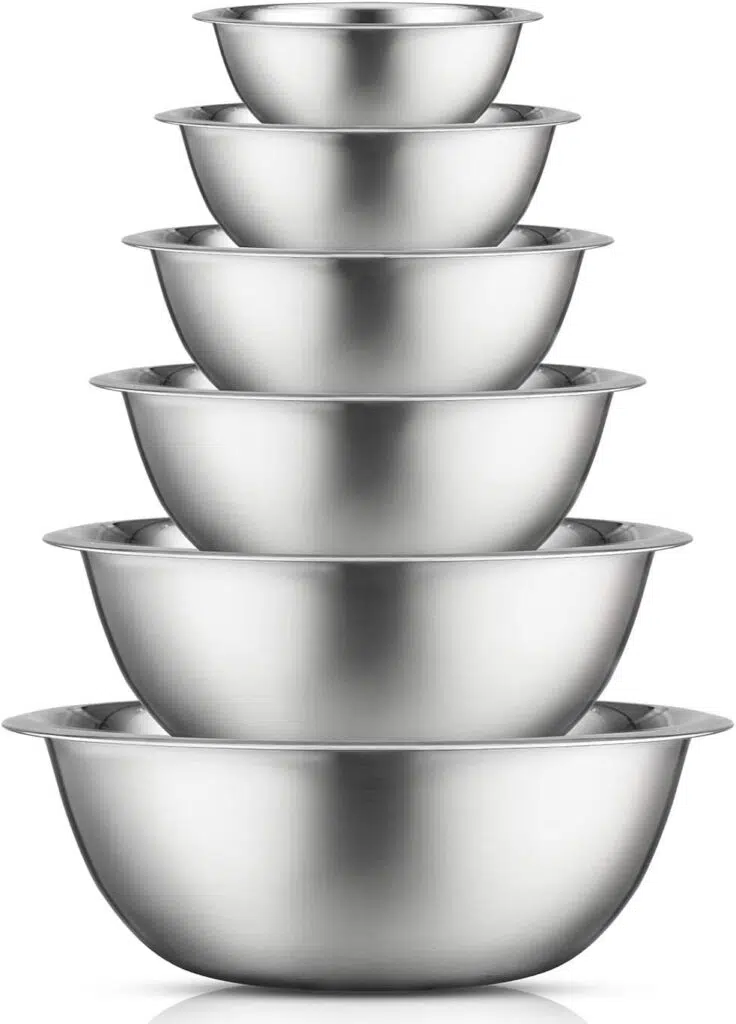
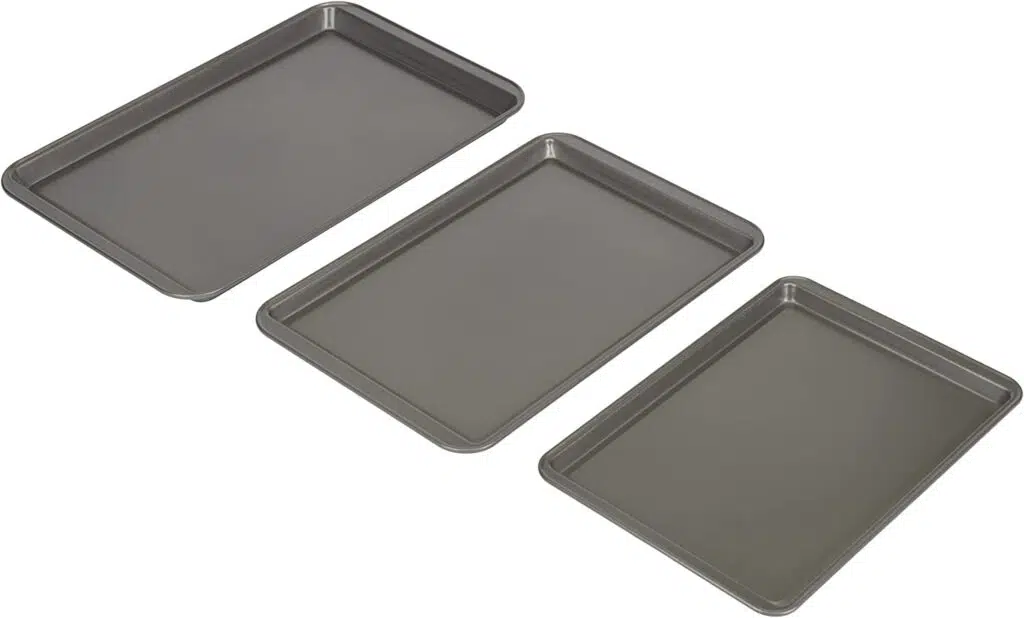
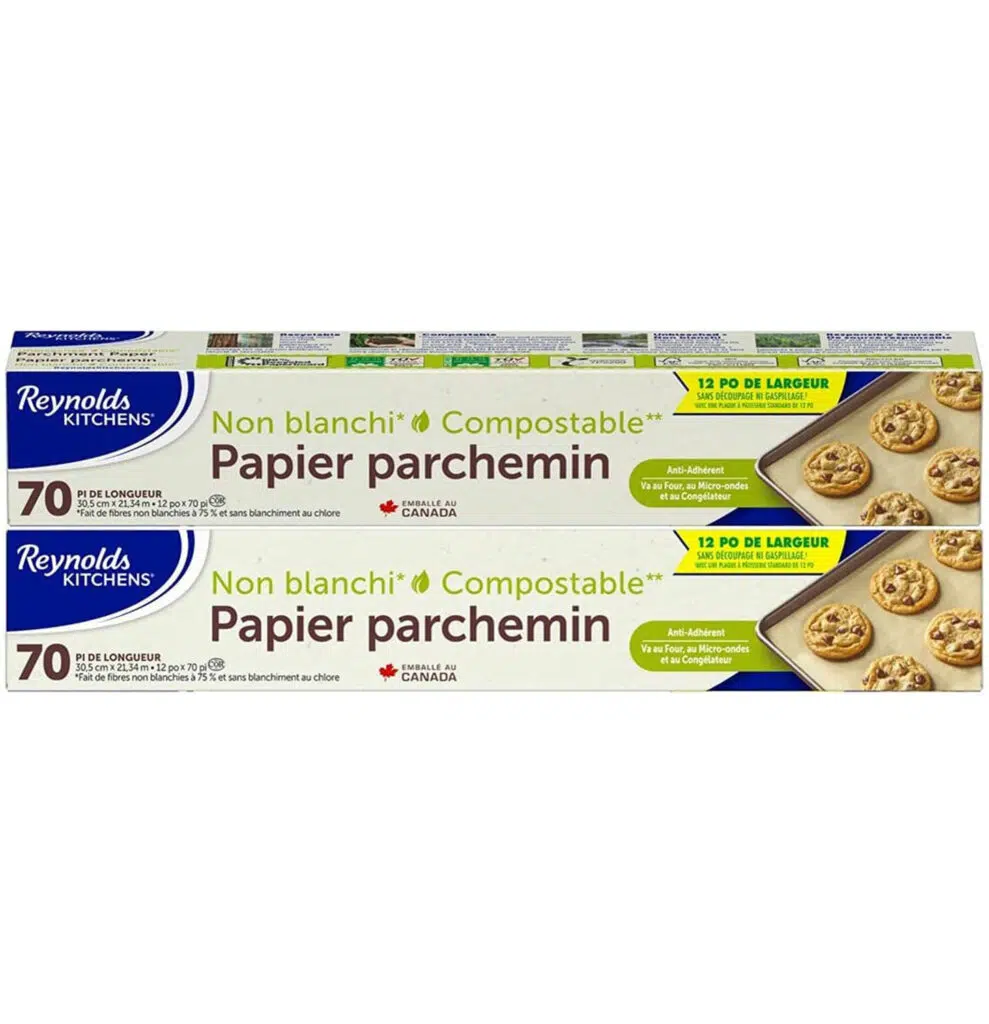
Ads
Ingredients
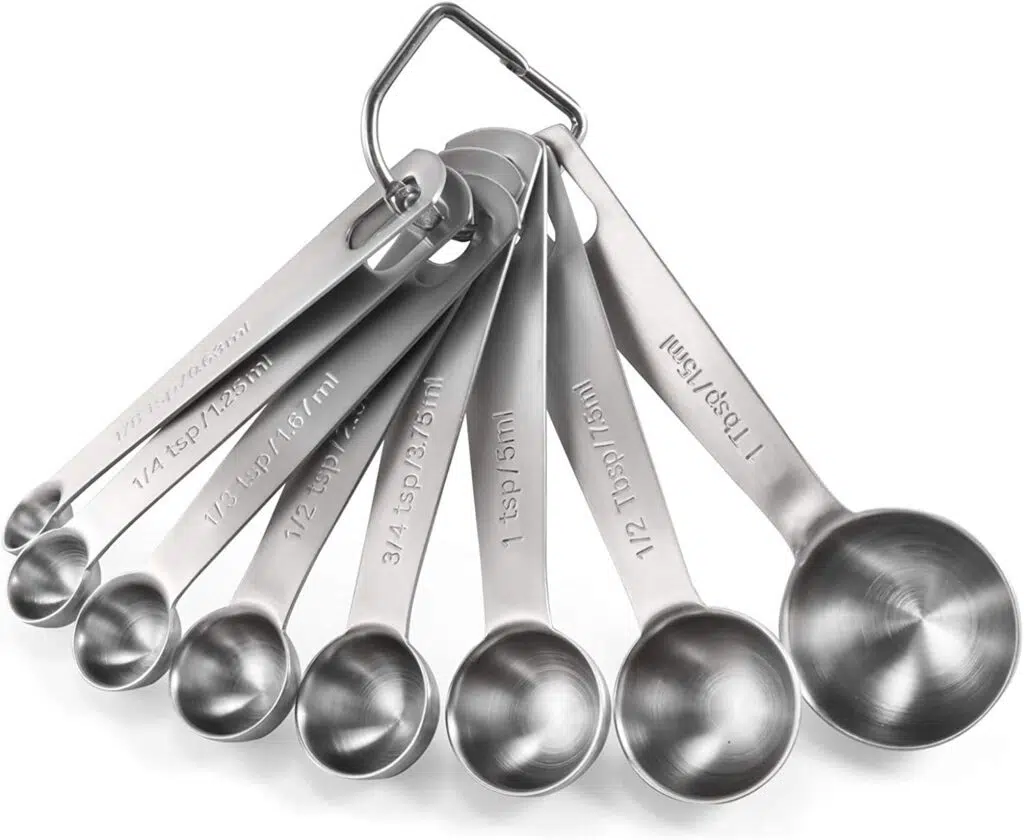
- 1¾ lb (800 g) salmon fillets (skin-on or skinless)
- 3 tbsp (45 ml) olive oil
- 2 tbsp (30 ml) brown sugar, packed
- 1 tsp (5 ml) Italian herbs
- 1 tsp (5 ml) paprika
- 1 tsp (5 ml) Bas-du-Fleuve salted herbs (Quebec herbs cured in salt)
- ½ tsp (2.5 ml) garlic powder
- ½ tsp (2.5 ml) onion powder
- Freshly ground pepper, to taste
Ads
Preparation
- If the salmon is frozen, thaw it completely in the fridge (12 hours) or in cold water (1 hour), then pat it dry with paper towels. Dry salmon caramelizes, wet salmon steams.
- In a bowl, stir together the olive oil, brown sugar, Italian herbs, paprika, salted herbs, garlic powder, onion powder and pepper until you have a loose paste.
- Spread a thin layer of the paste over the salmon (skin side down if the fillets have skin).
- OVEN: preheat to 400°F (200°C). Line a sheet pan with parchment, lay the salmon on it and bake 22 to 25 minutes, until the flesh flakes easily with a fork. Optional: 2 to 3 minutes under the broiler at the end for a deeper caramelization, watching it the whole time.
- AIR FRYER: preheat to 400°F (200°C). Set the salmon in the basket (skin side down, no parchment needed) and cook 10 to 12 minutes for fillets about ¾ in (2 cm) thick. Start checking at 9 minutes.
- Check doneness: the flesh should turn opaque and flake with a fork. With a thermometer, pull the fillets at 140°F (60°C) in the thickest part for a tender medium.
It is, as long as you keep it in check. Brown sugar melts and caramelizes at oven heat, so it builds a thin lacquered crust on the outside while the flesh underneath stays moist. The trap is using too much and ending up with candy. 2 tbsp (30 ml) for 1¾ lb (800 g) of fish is the ratio that gives you the crust without the dessert, especially with paprika and salted herbs pulling the other way.
Pull the fillets at 140°F (60°C) measured in the thickest part, for flesh that is still rosy and juicy in the middle. The USDA number for fish is 145°F (63°C), which is safe but noticeably drier. Past 150°F (65°C) the fat has rendered out and the texture goes chalky. Salmon also carries over a few degrees while it rests, so pulling a touch early is the right instinct.
22 to 25 minutes for fillets about ¾ in (2 cm) thick on a parchment-lined sheet pan, no flipping. Thinner tail pieces will be ready closer to 18. A thick center-cut piece can take 28. Time is only a guide with fish, so start checking with a fork at 20 minutes and let the flaking tell you.
You can, but you are making a different dish. Honey and maple syrup are liquids, so the paste turns into a glaze that slides off the fillet and pools on the pan, and both scorch faster than brown sugar under a broiler. If you go that way, use about 1½ tbsp (22 ml) of syrup for the 2 tbsp of sugar, skip the broiler step and expect a glossier finish rather than a crust.
The air fryer at 350°F (175°C) for 3 to 4 minutes is the best method, since it wakes the caramelized surface back up. In the oven, 300°F (150°C) for 5 to 7 minutes in a covered dish with a splash of water in the bottom. Skip the microwave, it turns the flesh rubbery. Honestly, the cold route is the best one anyway: flake it over greens with vinaigrette and avocado the next day.
With my brown sugar salmon, this Cheverny from Michel Gendrier leads with sauvignon blanc and finishes with a touch of chardonnay: green apple, lemon zest and white flowers, cut through with the flinty tension the Loire does better than anywhere. That acidity slices straight through the caramelized crust while the chardonnay rounds off the edges. Serve it cold, around 46°F (8°C).
See the productWith my brown sugar salmon, this lemon gose from Le Lion Bleu in Alma (3.8% ABV) does the job of the lemon wedge nobody remembers to cut. Its lactic bite pinches the sides of the tongue and clears the sugar off the palate, and the salt in the kettle pulls the fish back toward the sea instead of letting it settle into sweetness. Low in alcohol, built for a weeknight. Serve it very cold, right to the last mouthful.
See the productAds
Ads
Ads
Ads
Ads