

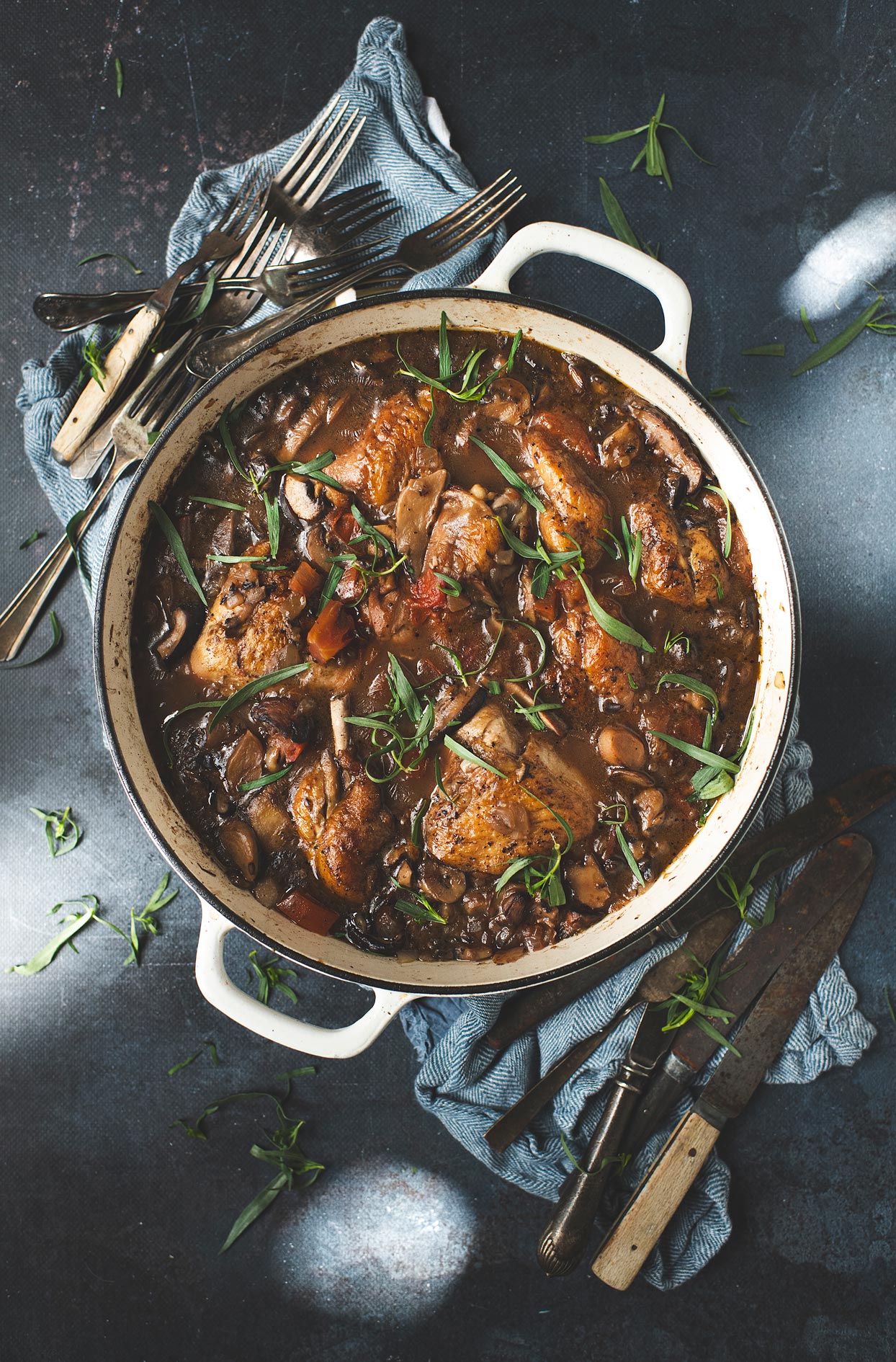
Chicken Chasseur Recipe (Three Mushrooms, Red Wine)
- Preparation 25 min
- Cooking 1 h 25 min
- Servings 4 to 6
- Freezing Absolutely
Ads
🍄 Three mushrooms, not a generic mix
Most chicken chasseur recipes just say “mushrooms” and you know they mean white button mushrooms. I use three, and each one does a different job. King oyster mushrooms sliced lengthwise hold up to cooking and give you something to bite into. Creminis bring the classic earthy depth. Shiitakes add an almost smoky note that no other mushroom can deliver. Together, they build a sauce with three layers of flavour instead of just one.
🍷 My French take on cacciatore
That’s how I see it. I already have a chicken cacciatore on the site, but that one is very tomato-forward, Italian all the way. Here we’re in French territory: the tomato is limited to just one, purely for acidity, and it’s the wine and mushrooms that lead. Traditional chasseur is made with white wine, I know. I made it with red, using beef broth instead of chicken broth, and the result was honestly mind-blowing: darker, bolder, deeper. It’s not the textbook version. It’s mine, and it’s the one I keep making.
🥄 A sauce that thickens itself
There’s no roux in this recipe, yet the sauce coats the back of a spoon by the end. The trick is to dust the flour directly over the hot mushrooms and coat them well before adding any liquid. The flour cooks in the fat, absorbs the bits stuck to the bottom of the pot, and binds everything the moment the wine and then the broth go in. It’s called singeing, a fundamental technique in French cooking, and it completely eliminates the need for a separate roux.
Ads
Ads
🍄 Leave the mushrooms alone
It’s mistake number one. Mushrooms hold a lot of water and release it the moment they heat up. If you stir them constantly, if the pot isn’t hot enough, or if you salt them too early, they’ll boil in their own liquid instead of browning, and you lose all that roasted flavour. Medium-high heat, a good amount of butter, and leave them to colour without touching them for the first few minutes.
🥄 Singeing, the technique that replaces a roux
Dusting flour over ingredients that have already been sautéed in fat, then letting it cook for a moment before adding liquid. That’s called singeing. The starch heats in the butter, blends with the bits stuck to the bottom, and forms an instant roux the moment the liquid goes in. The key point is to coat everything well and let the flour cook for a few seconds, otherwise the sauce will taste of raw flour.
🍷 One minute of reduction, no more
There are a lot of mushrooms and not much wine in this pot, so the reduction happens very fast. One minute is more than enough. If you reduce it dry like many recipes suggest, you lose the acidity of the wine, which is precisely what balances the richness of the butter and the beef broth.
🍗 Cut the thighs in two
Separating the drumsticks from the upper thighs gives you eight pieces instead of four. They cook more evenly and they serve better. Buy them already skinless if you can find them; otherwise get them skin-on and remove it yourself, it takes thirty seconds. The skin wouldn’t crisp up here anyway: it simmers for an hour in the sauce and only makes it greasy.
🔄 Don’t have all three mushrooms?
No big deal, but keep at least two different varieties. That’s where the magic happens. Creminis can be replaced by brown button mushrooms, king oysters by regular oyster mushrooms. Shiitakes are the hardest to substitute because of their smoky note. And keep the stems: a lot of recipes tell you to throw them out, but after an hour of simmering there’s nothing tough left in them. They soften completely.
📅 Prep ahead, cook fresh
Don’t make this the day before and reheat it. A braise filling the house with its smell while your guests arrive beats a dish pulled from the fridge every time. What you prep ahead is everything else.
The night before: slice all three mushrooms into one container, chop the onion and garlic into another, cut the chicken legs in two, measure out the wine and broth. Label your containers. That’s the difference between a calm kitchen and a frantic one. On the day, all that’s left is browning, deglazing and covering. One hour of simmering while you’re with your people instead of stuck at the stove.
Save the tarragon for the end, chopped at the last minute. Fresh herbs cut the day before lose everything in the container.
❄️ Storage
Keeps 3 days refrigerated and freezes well up to 3 months. Like every braise, it’s even better the next day as the sauce thickens and the flavours round out.
✅ What to serve with my chicken chasseur with three mushrooms?
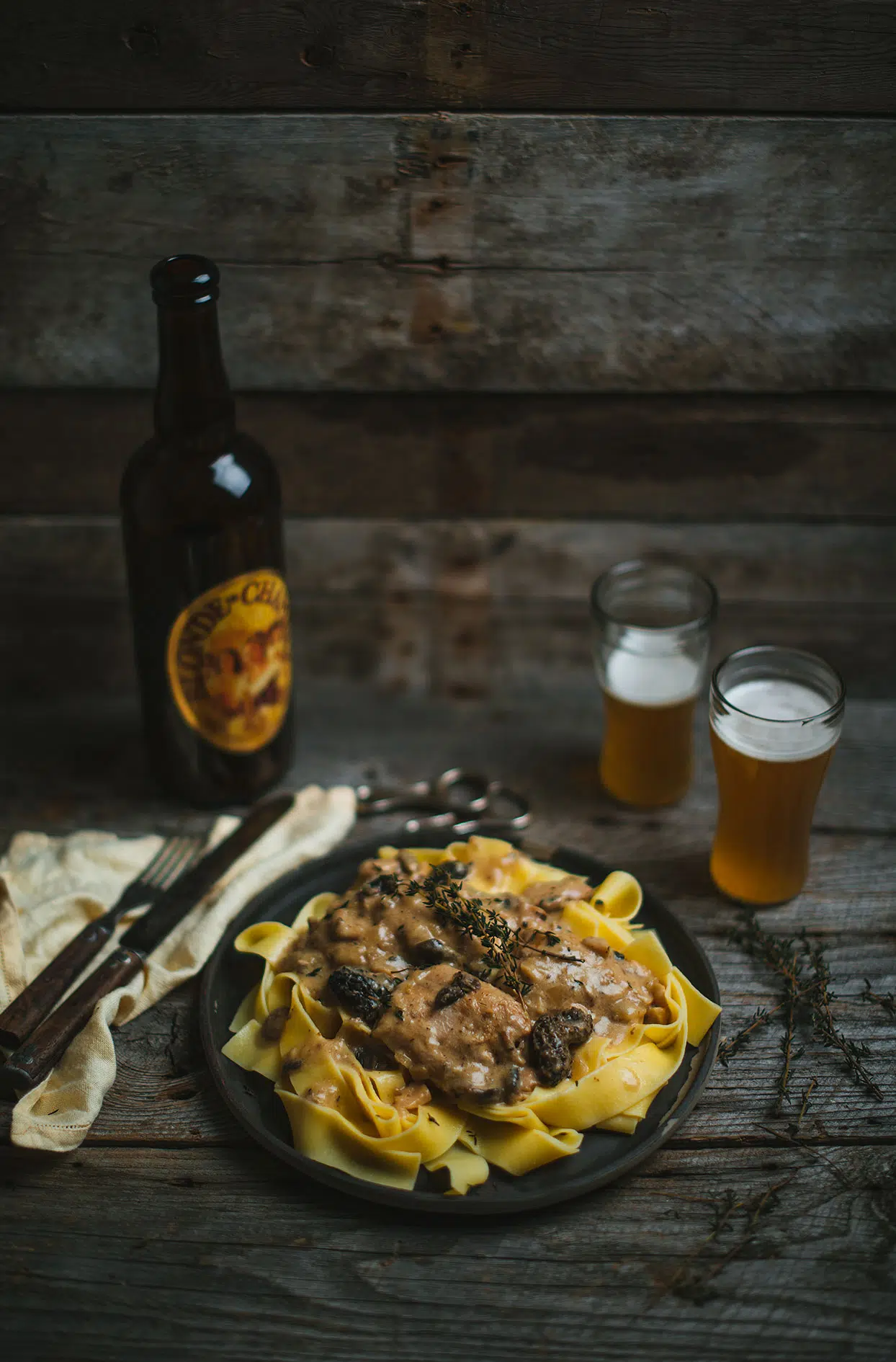
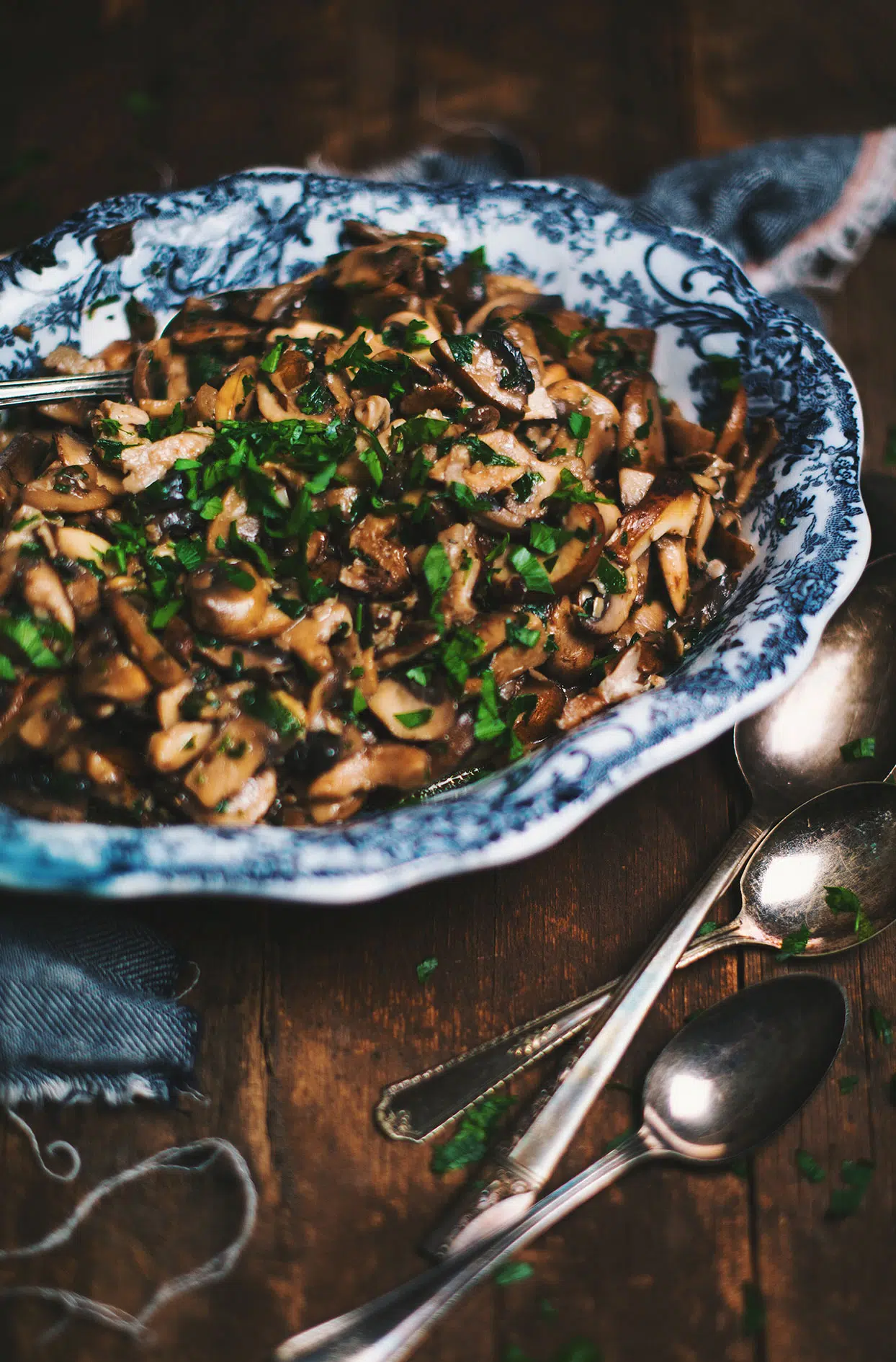
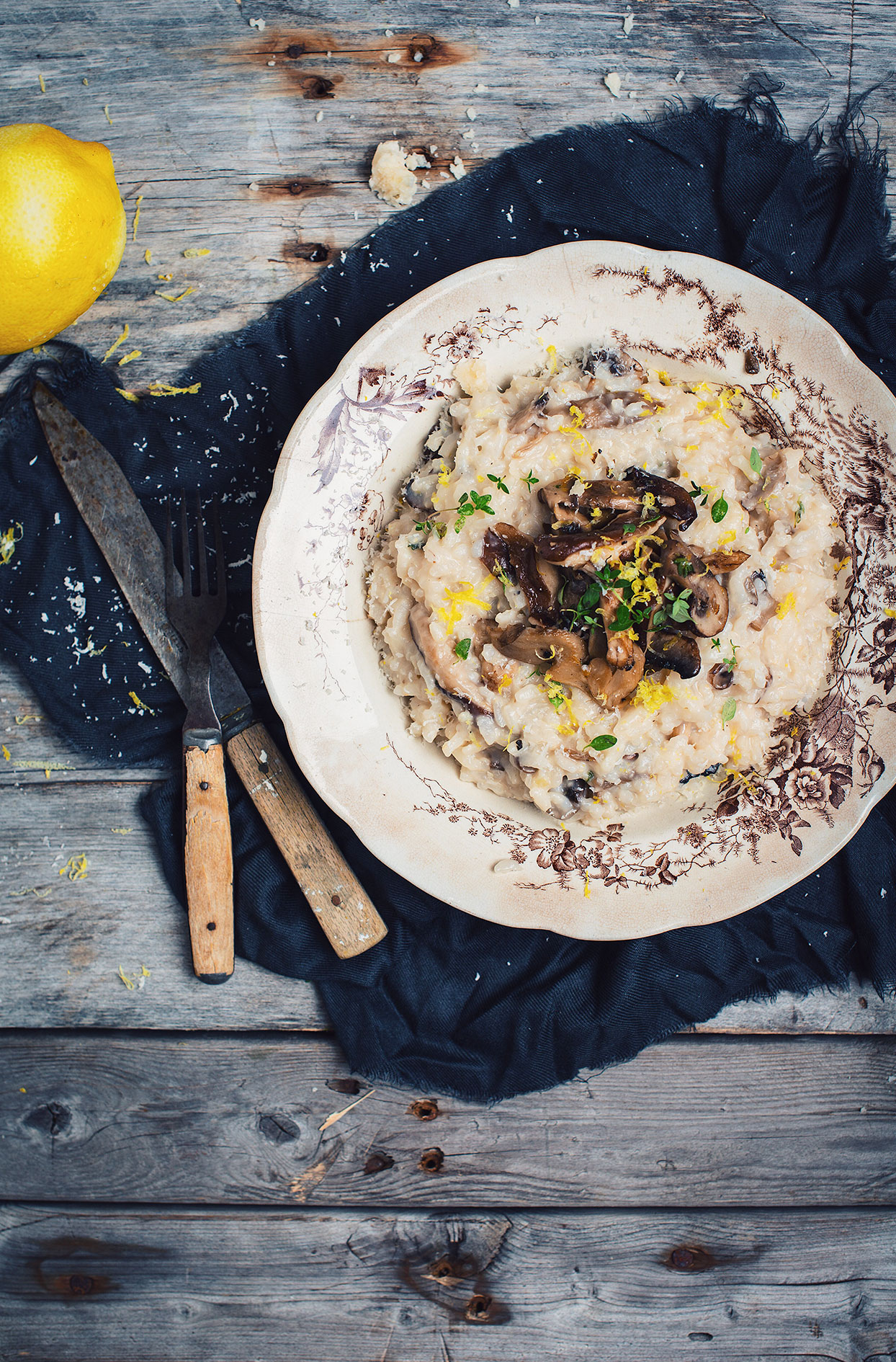
Buttered pasta, plain and simple. It’s the classic accompaniment and the sauce clings to it perfectly. Good bread for soaking up the sauce works just as well, and mashed potatoes or creamy polenta are excellent options too. If you want to lean even further into the mushroom theme, serve my Sautéed mushrooms in garlic butter and fresh herbs on the side, or build the meal around my Mushroom risotto.

Ads
Chicken
- 4 skinless chicken thighs
- 15 ml (1 tbsp) olive oil
- Salt and pepper
Sauce
- 45 ml (3 tbsp) butter
- 200 g king oyster mushrooms, sliced
- 227 g cremini mushrooms, sliced
- 125 g shiitake mushrooms, sliced
- 2 ml (1/2 tsp) dried thyme
- 1 medium yellow onion, finely chopped
- 2 large garlic cloves, finely chopped
- 30 ml (2 tbsp) unbleached all-purpose flour
- 125 ml (1/2 cup) dry red wine
- 375 ml (1 1/2 cups) beef broth
- 1 small tomato, seeded and diced
- 5 ml (1 tsp) fresh tarragon, chopped
Ads
Preparation
- Using a knife, cut the thighs in two by separating the drumsticks from the upper thighs.
- In a large pot over medium-high heat, brown the chicken in the oil on both sides. Season with salt and pepper. Set aside in a bowl.
- In the same pot over medium-high heat, brown the three mushrooms in the butter with the dried thyme, 5 to 6 minutes, adding a drizzle of oil if needed. Don’t stir constantly. Let them colour.
- Add the onion and garlic. Continue cooking 3 to 4 minutes, until the onion is tender.
- Dust with the flour and coat the mushrooms well. Deglaze with the red wine, scraping the bottom with a wooden spoon, then let reduce for about 1 minute.
- Add the beef broth, tomato, and reserved chicken with its juices. Bring to a boil, then cover, reduce to low heat, and let simmer for 1 hour, stirring occasionally.
- Remove the lid and let the sauce reduce for about 5 minutes, or until it coats the back of a spoon. Adjust seasoning.
- Add the fresh tarragon just before serving. Serve with buttered pasta.
It’s a classic French dish: pieces of chicken browned then simmered in a sauce made with mushrooms, onion or shallot, wine, and tomato, finished with fresh herbs. The name comes from the idea of a dish prepared with whatever the hunter brought back, wild mushrooms included. It’s not an Italian dish, despite the frequent confusion.
In its classic form: sliced mushrooms sautéed in butter, shallot, white wine, often a splash of cognac, tomato, veal stock, and a finish of tarragon and chervil. My version keeps the mushrooms, tomato, and tarragon, but swaps the white wine for red and the veal stock for beef broth, which gives a darker, bolder sauce.
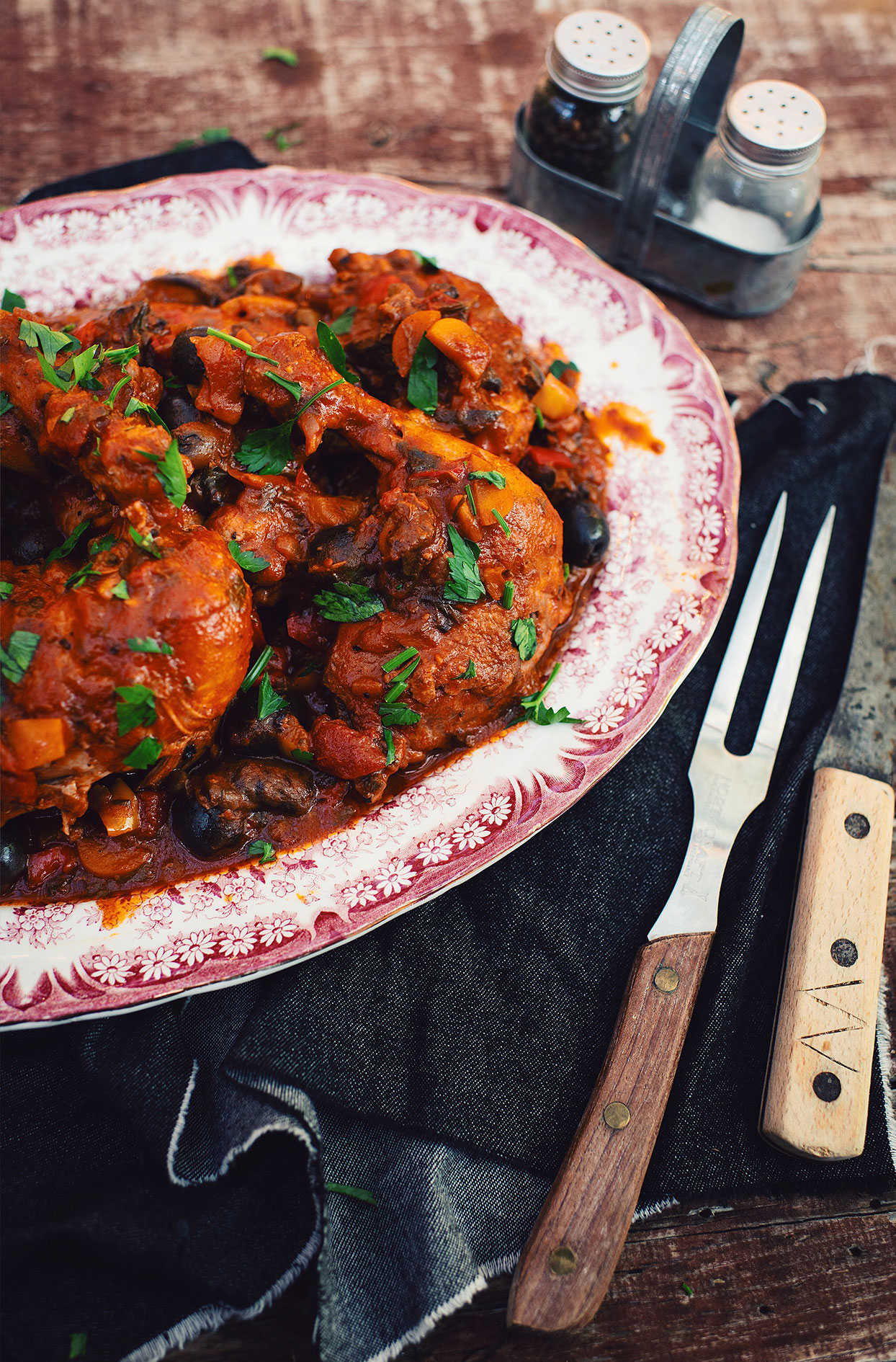
“Cacciatore” literally means “hunter” in Italian, yet the two dishes don’t actually resemble each other that much. The difference comes down to one word: tomato. My cacciatore is very tomato-forward. It’s a red Italian-style sauce. Chicken chasseur, on the other hand, is the French register: one small tomato for acidity, and it’s the wine, mushrooms, and tarragon that lead. I have both on the site and I make them very differently.
Tradition calls for white, and most recipes you’ll find use a dry white wine. I make it with red because I prefer it bolder, and because red wine pairs better with the beef broth I use. Both work: white gives a lighter, brighter sauce, red gives a darker, rounder one. If you go with white, switch to chicken broth at the same time.
Yes, but don’t skip the stovetop steps. Brown the chicken, brown the mushrooms, singe and deglaze with the wine exactly as in the recipe, then transfer everything to the slow cooker with the broth and tomato. Cook on low for 4 hours. If you throw everything in raw, you’ll end up with a pale, flat dish. It’s the browning at the bottom of the pot that builds all the flavour.
Absolutely, and I recommend it. Chicken chasseur is better the next day: the sauce thickens, the mushrooms finish absorbing the wine and broth, and everything rounds out. Reheat gently covered over low heat, and only add the fresh tarragon at serving time so it keeps its fragrance.
Ads
Ads

Ads
Ads
Ads