

Quiche lorraine recipe

- Preparation 30 min + 30 min resting
- Cooking 1 h 30 min
- Servings 6
- Freezing Absolutely
Ads
🥧 The good old French version, no detours
This is a new recipe for me, but it’s not a reinvention. It’s the classic quiche lorraine: bacon, gruyère, eggs, cream, and a crust that crackles. No spinach, no broccoli, no eighteen vegetables to make it healthy. When a recipe survives two hundred years unchanged, it’s usually because it doesn’t need any help.
🥓 What I added anyway
Two things. Lemon zest in the filling, a must, because it adds freshness and cuts through the richness of the bacon and cream without tasting like lemon. And a mix of gruyère and finely grated parmesan instead of gruyère alone, because parmesan adds salt and depth without overpowering. Half a teaspoon of Dijon in the egg mixture finishes the job.
🕒 And no, you won’t wait three hours
A lot of recipes ask you to let the quiche cool for two to three hours to get perfect slices. Honestly, when your quiche is done, you want to eat it. Thirty minutes of resting is more than enough: the centre finishes setting, the slices hold together, and it’s still warm. A perfectly pretty slice that’s cold doesn’t interest me.
Ads

Ads
🥧 Why blind baking is non-negotiable
The filling of a quiche is very liquid. Poured into a raw crust, it soaks in before the crust even has a chance to set, and you end up with a soggy bottom. Pre-baking the crust empty gives it time to dry out and brown first, turning it into a watertight barrier. It’s thirty extra minutes, and it’s the entire difference between a soggy bottom and one that cracks under your fork.
🍽️ A store-bought crust works perfectly fine
I used a store-bought crust and it was genuinely good. If you want to make your pastry from scratch, go for it. You won’t regret it. But don’t deprive yourself of a quiche on a Tuesday night just because you don’t feel like pulling out the rolling pin.
🍴 Prick the bottom, but not too much
About ten pokes with a fork is enough. That’s what lets the steam escape and keeps the bottom from puffing up. At my house the crust still shrank a little and puffed slightly in spots, and that’s completely fine: the filling levels everything out.
🥄 Be careful when removing the weights
This is the trickiest moment in the recipe. After 15 minutes, the crust is cooked but still very fragile, and a broken edge at this point can’t be fixed. Lift the parchment by all four corners, slowly, without forcing it.
🌡️ Go by temperature, not by looks
Everyone writes “until a knife comes out clean,” but that’s vague and often leads to overcooking. An instant-read thermometer inserted in the centre should read 160 to 165 °F (71 to 74 °C). The centre will still be slightly jiggly at that point, and that’s exactly what you want: it finishes setting during the resting time.
🟡 Half a teaspoon of Dijon in the mixture
It seems like nothing, and yet. The Dijon doesn’t taste like mustard once baked: it wakes up the gruyère and adds depth to the filling. Don’t overdo it. Half a teaspoon is enough for the whole quiche.
❄️ Storage and freezing
The quiche keeps for up to 3 days in the fridge. Bring it to room temperature on the counter before serving, or warm it gently in the oven at 325 °F (165 °C) until the centre is hot. It also freezes very well, baked and cooled, for up to 3 months. The pre-baked crust on its own freezes for up to 3 months as well, which lets you get ahead.
✅ What to serve with my quiche lorraine with bacon and gruyère?
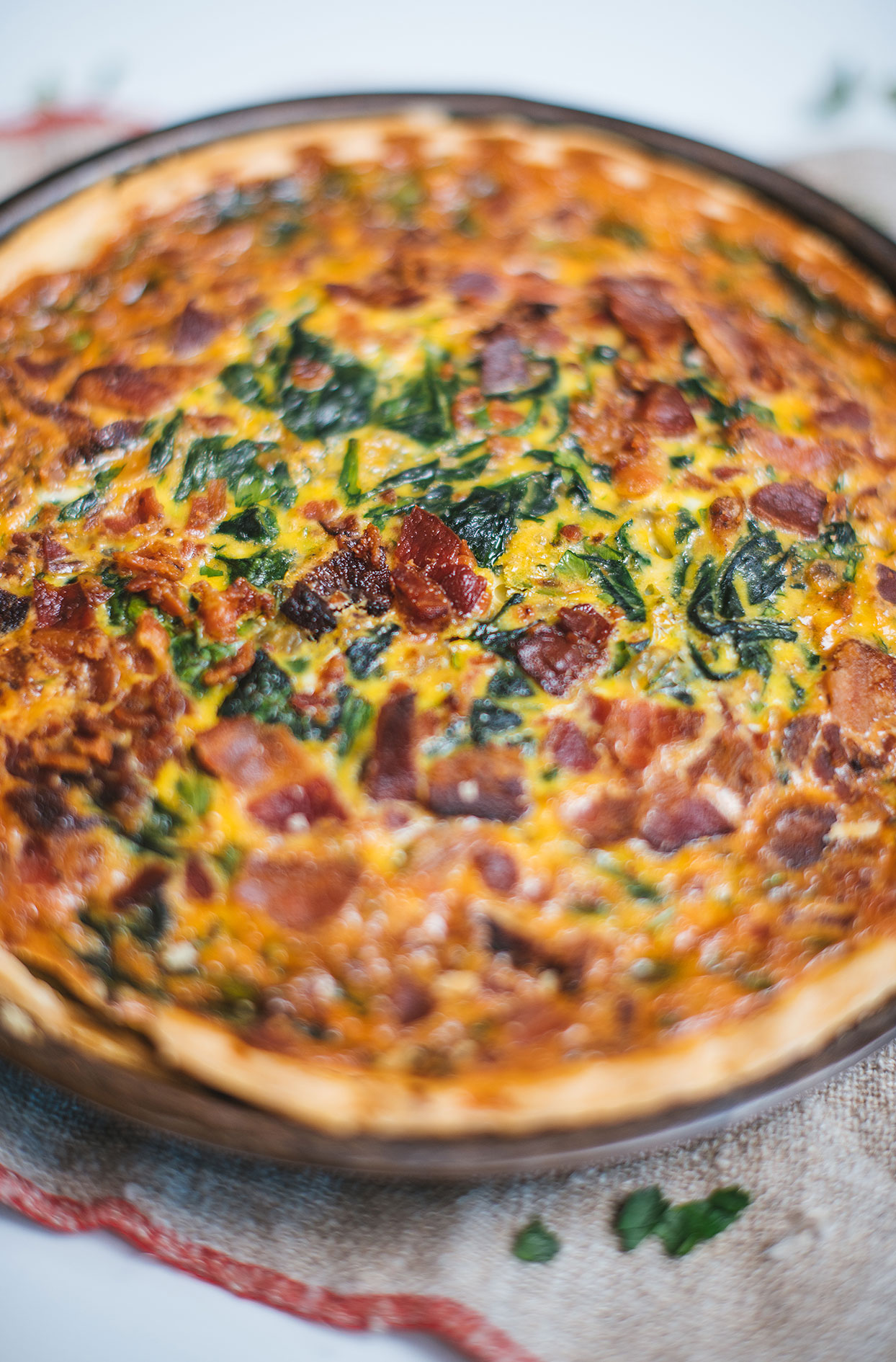
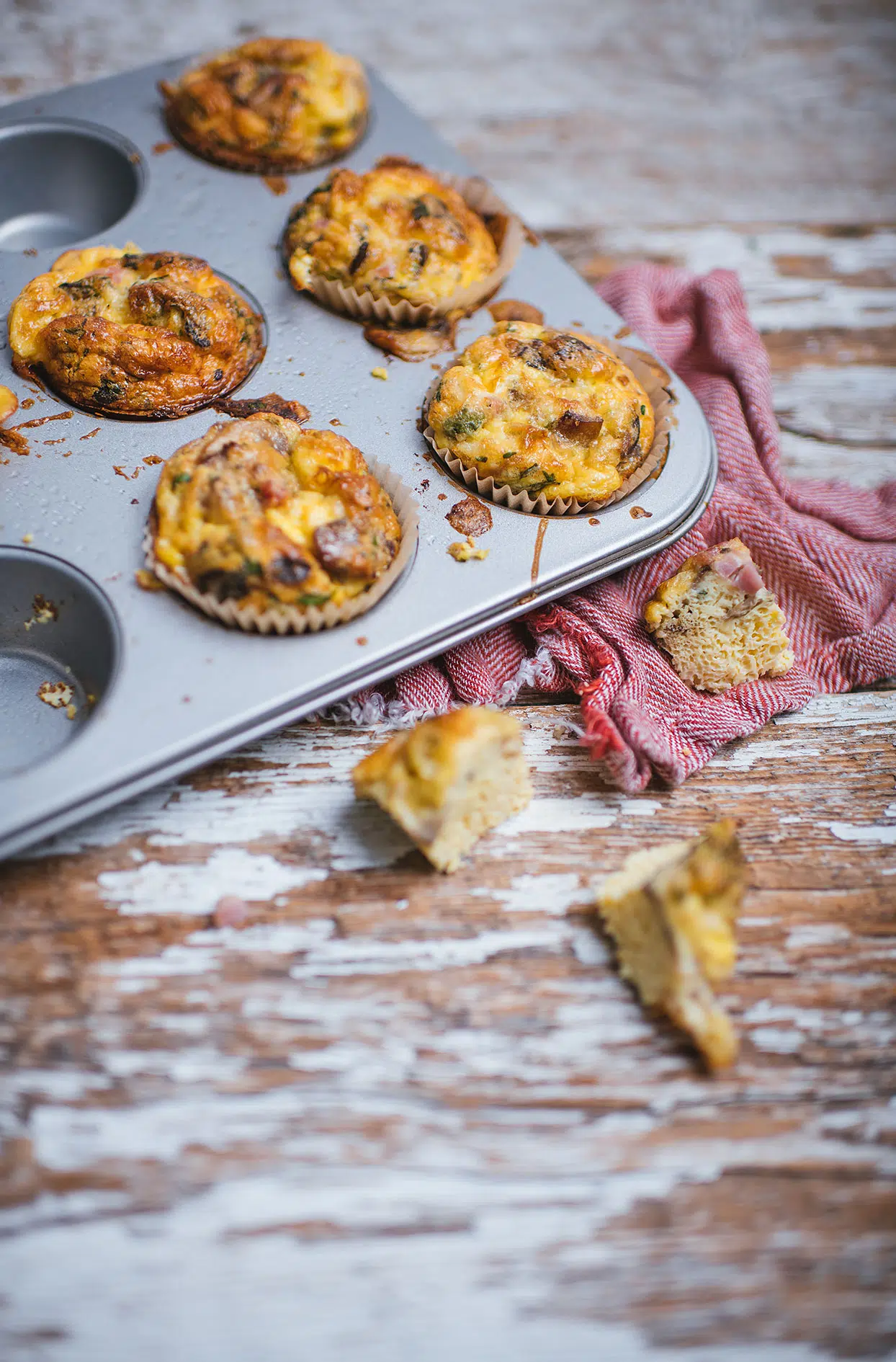
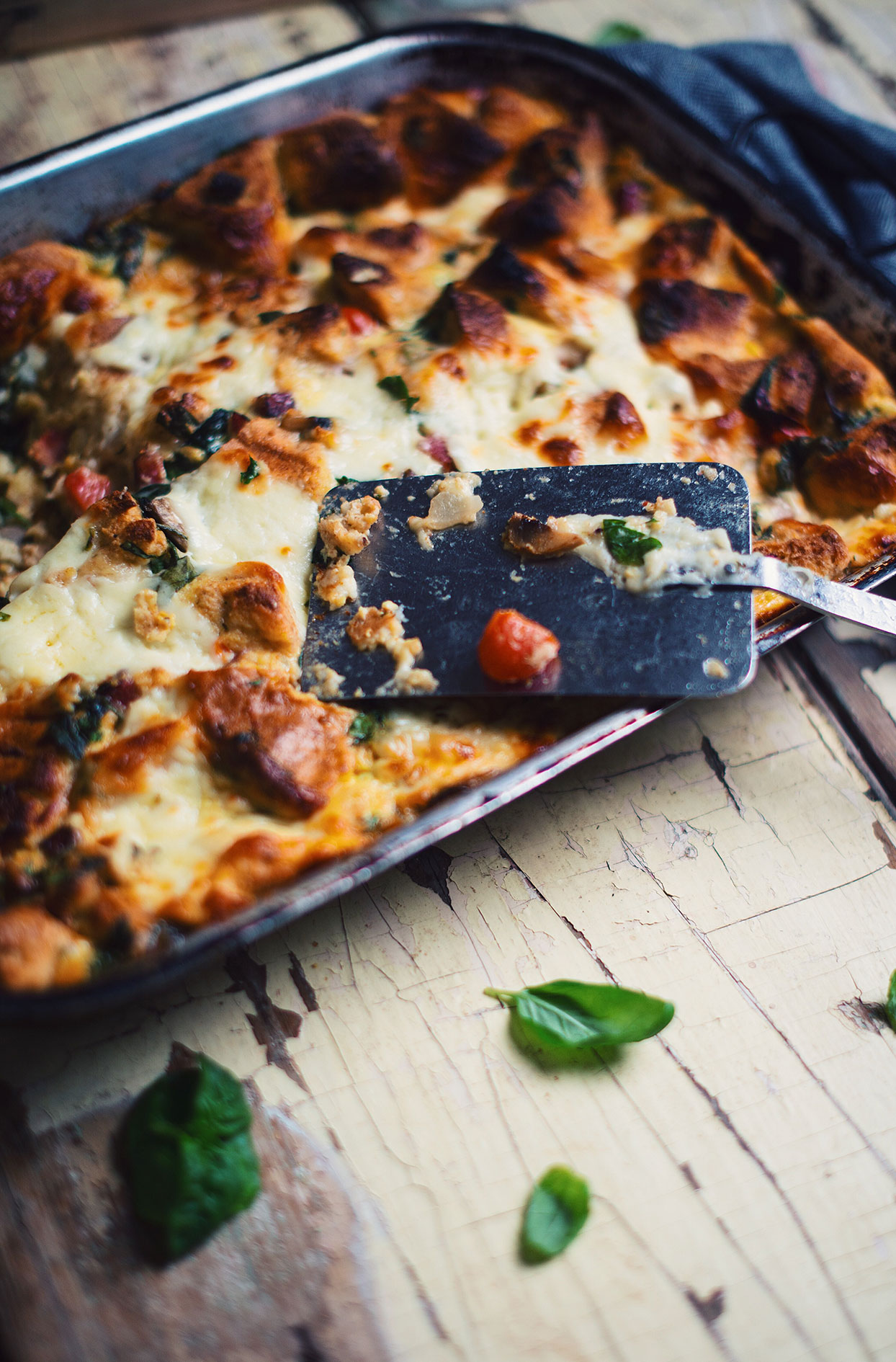
A well-dressed green salad on the side and the meal is complete. For a brunch that really impresses, serve it with my Mini quiches with ham and caramelized onions as bites, or with my Cheesy strata with bagels, dried sausage and spinach if you’re feeding a crowd. And if you want the veggie version, my Bacon and spinach quiche is right there.


Ads
Crust
- 1 pie shell, 9 in (23 cm), homemade or store-bought
Filling
- 300 g sliced bacon, cut into 1 cm pieces
- 1 small yellow onion, finely chopped
- 2 garlic cloves, finely chopped
- 1/2 tsp (2 ml) dried thyme
- 4 large eggs
- 3/4 cup (175 ml) whole milk
- 3/4 cup (175 ml) 35% cooking cream
- 1/2 tsp (2 ml) Dijon mustard
- 3/4 tsp (4 ml) finely grated lemon zest
- Salt and pepper to taste
- 1 pinch of freshly grated nutmeg (optional)
- 1 cup (250 ml) grated gruyère
- 1 cup (250 ml) finely grated parmesan
- 2 tbsp (30 ml) fresh chives, thinly sliced
Ads
Preparation
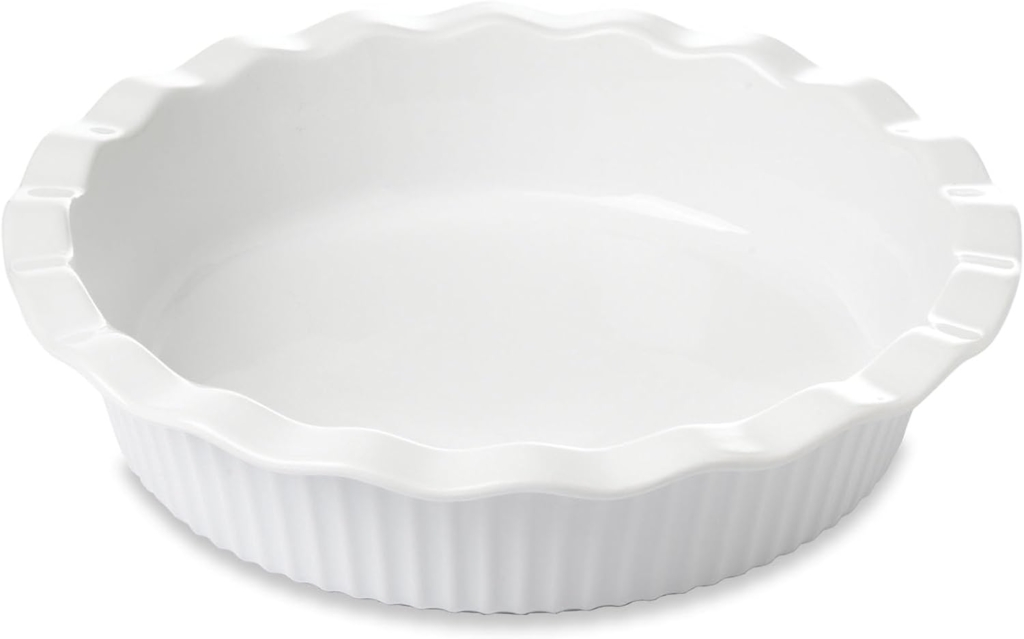
- Place the rack in the centre of the oven and preheat to 350 °F (175 °C). Place the pie shell in a 9 in (23 cm) pie plate, preferably metal, and press gently to fit. Trim the excess, fold the edge under itself and crimp all the way around. Refrigerate while the oven preheats.
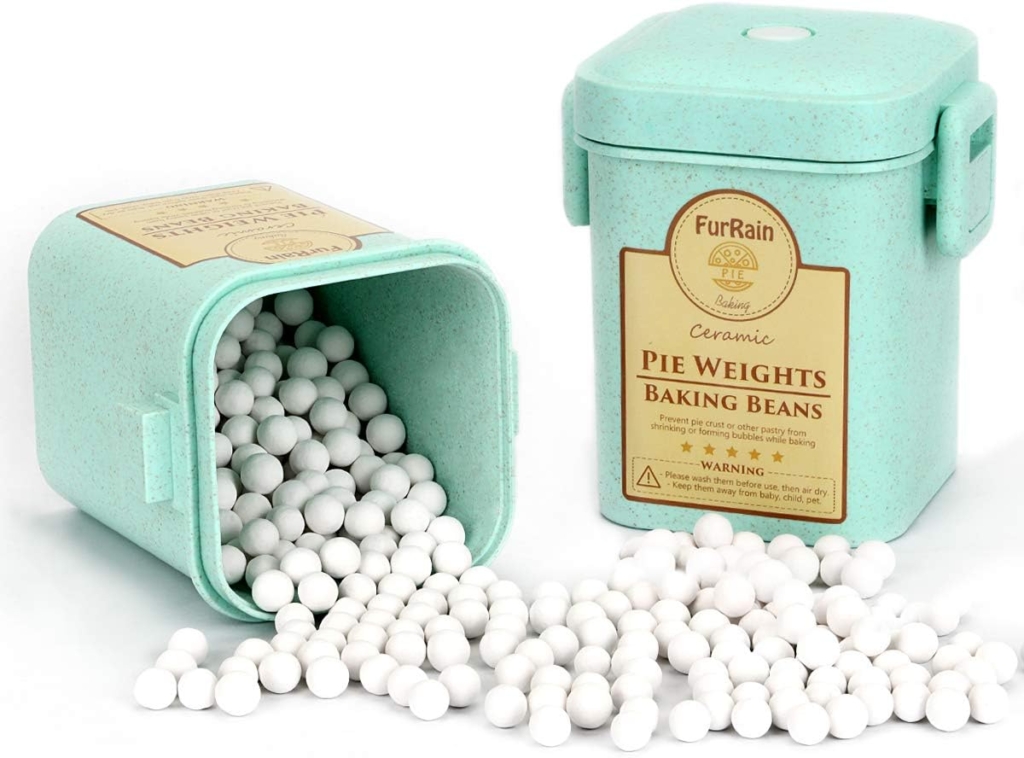
- Prick the bottom of the crust about ten times with a fork. Line with two sheets of parchment paper, covering the edges well, then fill with pie weights, dried beans or granulated sugar all the way to the top. Bake for 15 minutes.
- Remove the parchment and weights carefully. The crust is very fragile at this stage. Continue baking for 15 minutes, until the bottom is dry and lightly golden. If the crust puffs up, prick it gently with the tip of a knife. Set aside. It does not need to cool before being filled.
- In a 10 in (25 cm) skillet, cook the bacon over medium heat, stirring often, until evenly browned and crispy, 7 to 9 minutes. Transfer with a slotted spoon to a plate lined with paper towel. Keep 1 tbsp (15 ml) of fat in the pan and discard the rest.
- Heat the reserved fat over medium heat. Add the onion and cook, stirring often, until tender and golden, 3 to 4 minutes. Add the garlic and thyme and cook until fragrant, about 30 seconds. Remove from the heat and let cool for about 10 minutes.
- In a large bowl, whisk the eggs until no streaks of white remain. Whisk in the milk, cream, Dijon mustard, lemon zest, salt, pepper and nutmeg. Add the bacon, the cooled onion mixture, the gruyère and the parmesan, then stir to distribute everything evenly.
- Pour the filling into the pre-baked crust and smooth the top. Bake for 50 minutes to 1 hour, loosely covering with a sheet of aluminum foil halfway through to prevent the crust from over-browning. A well-filled pie plate often needs the full hour, so go by the result rather than the timer. The quiche is ready when the centre is set but still slightly jiggly, and an instant-read thermometer inserted in the centre reads 160 to 165 °F (71 to 74 °C).
- Transfer to a rack and let rest for 30 minutes. Sprinkle with fresh chives, slice and serve.
Yes, if you want a crispy bottom. The filling is too liquid for a raw crust: it soaks in before the crust has had time to set and you end up with a soggy base. By pre-baking it empty, you let it dry out and brown first, so it holds up against the filling. Thirty extra minutes. That’s all it costs.
Absolutely, and that’s exactly what I did. It was very good. Grab one that’s 9 in (23 cm), thaw it according to the package and blind bake it as the recipe says. Homemade pastry obviously has a better buttery flavour, but a quiche made on a weeknight with a store-bought crust is a hundred times better than a quiche never made at all.
Because both extremes have a flaw. All 35% cream, as many classic recipes call for, gives a very rich filling but a heavy one, and the fat ends up masking the bacon and gruyère. All milk gives a lighter texture but one that lacks roundness and can turn grainy. Half and half, you get the creaminess without the heaviness.
Yes, and it will settle back down. An egg-based filling expands with the heat, then stabilizes during resting. If it puffs a lot and unevenly, the oven is often too hot: check your temperature with an oven thermometer. Many ovens run 25 degrees hotter than they claim.
You can, but squeeze them completely dry. Vegetables release a lot of water during cooking and that’s the number one cause of a watery quiche. Sauté them first, press them in a clean cloth, then add them to the mixture. That said, a lorraine with spinach is no longer a lorraine, and I already have a recipe made exactly for that.
Thirty minutes is enough. The centre finishes setting and the slices hold together. A lot of recipes call for two to three hours for perfectly clean slices, and it’s true that a fully cooled quiche cuts more neatly. But we’re talking about a quiche that just came out of the oven, not a photo shoot. I eat it warm and I’ve never had a slice fall apart.
Ads
Ads


Ads
Ads
Ads