
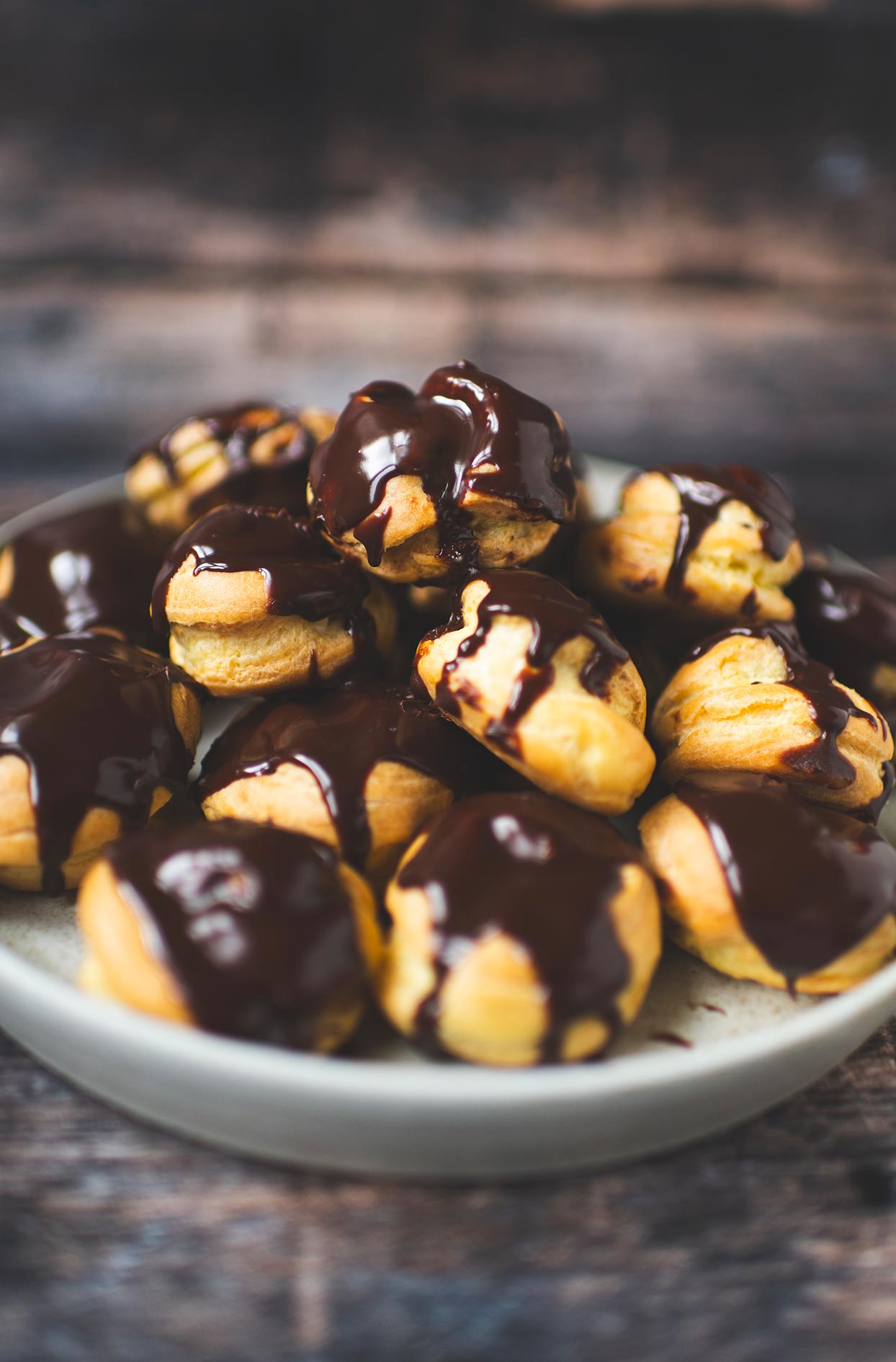
Cream Puff Recipe (Chocolate Profiteroles)
- Preparation 3 h
- Cooking 25 min
- Servings 12
- Freezing Absolutely
Ads
🍫 Forty golden puffs, and the cream pushes out when you bite in!
This is the kind of dessert that quiets a table. A golden shell that cracks under your fingers, so light it weighs nothing, and inside a real vanilla pastry cream that pushes out the second you bite down. Warm chocolate poured over the top finishes the job. It looks like something out of a French pastry window, and yet it is water, butter, flour and eggs. Four things already sitting in your kitchen. Make forty at once and watch how fast they go!
📏 The size is the whole secret
Two teaspoons per puff. Not three, not “about that much”. I made mine too big the first time and had to stretch the bake way out to get them to hold their shape. A bigger puff means more dough to dry out, so more time in the oven, and if you pull it at fifteen minutes anyway it collapses as it cools. Respect the two teaspoons and the rest of the recipe falls into place on its own.
🔥 Two pans, never one
Crowd your puffs onto a single pan to save on dishes and you will end up with a nicely browned outer ring and a pale middle. Your oven is not the problem. A puff throws off an enormous amount of steam in the first fifteen minutes, and the ones in the middle sit in their neighbours’ steam. A wet surface cannot brown. Two inches between each, two pans, and swap them halfway through.
Ads
Ads
💧 Water under the parchment, not butter
Everyone tells you to grease the pan so the parchment stops sliding around while you pipe. I put a little water on the pan instead, spread it with my hand, and lay the paper on top. It grabs instantly and never moves again. The paper holds just like it would with butter, it costs nothing, and at what butter goes for these days, that is two minutes of thinking that pays for itself.
📏 Two teaspoons, and count them
This is the one measurement in the recipe with no wiggle room. A bigger puff holds more dough to dry out, so it needs more time in the oven. Pull it at fifteen minutes anyway because that is what the recipe says, and the inside is still wet, and it collapses as it cools. That is exactly what happened to me the first time. A 13 to 15 mm round tip gives you the right size without measuring every single one.
🔥 Two pans, two inches, and swap them
The instinct is to crowd everything onto one pan and wash less. Do not. A puff throws off a huge amount of steam in the first fifteen minutes, and the ones in the middle end up baking in their neighbours’ steam. A wet surface cannot brown, so they stay pale while the outer ring of the pan browns normally. Two inches apart, two pans, and switch their positions halfway.
🟤 Golden, not just risen
This is where it is all decided. A risen puff is not a baked puff. Until it is properly golden on top, the wall is not dry enough to hold itself up, and it will deflate on your rack as it cools. Go by color, not by the timer. And if you do pull a pan too early and they start caving, put them straight back in for three or four minutes. I have rescued a whole batch that way.
🕳️ Pierce the side, then back in the oven
The hole does two jobs: it lets the trapped steam out so the inside can finish drying, and it gives you the entry point for filling later. Pierce the side with the tip of a knife, not the bottom, or the cream runs out when you set them down. And never pierce them before they are golden: a soft shell with a hole in it collapses on the spot.
🥄 Pastry cream: twenty seconds past the hard boil
Forget the thermometer. The cream foams, then thickens all at once with big bubbles breaking at the surface. When it boils hard like that, count twenty seconds while whisking and pull it off. No longer. One pass through a sieve is enough, after cooking, and it catches anything that might have set up at the bottom.
📅 Make-ahead
This dessert is built to be made ahead, which is rare for pastry. The pastry cream goes the day before and keeps 24 to 48 hours in the fridge with plastic wrap right on the surface. The shells bake in the morning and sit out uncovered. The chocolate sauce takes two minutes in the microwave. You can even fill them in the morning for dinner. Keep them in the fridge in a single layer, never stacked, and pour the chocolate at the last second. What cannot be done ahead: nothing, honestly. That is what makes it the party dessert. All you have left is the pouring, while your people finish their plates.
✅ What to serve with my cream puffs
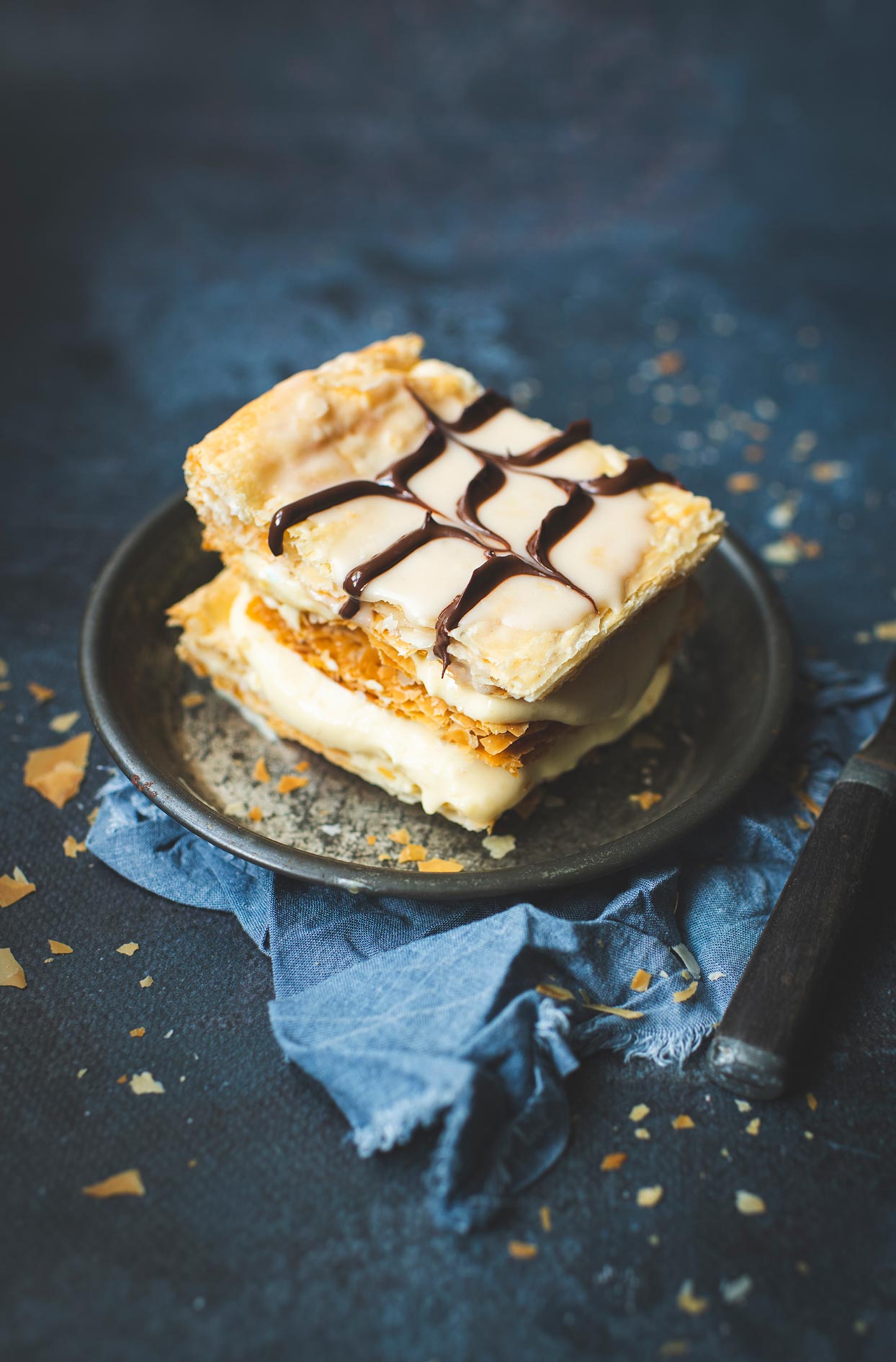
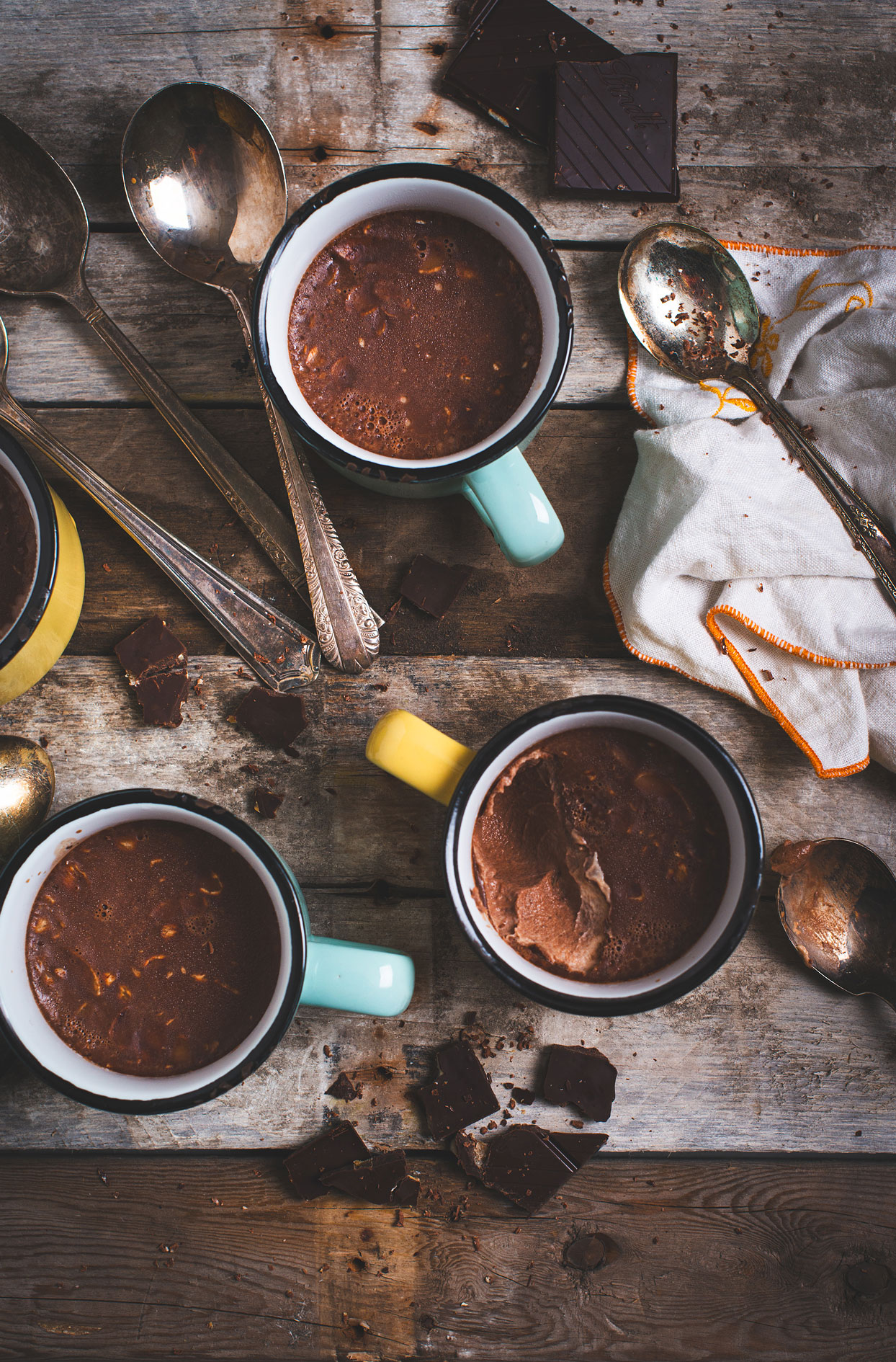
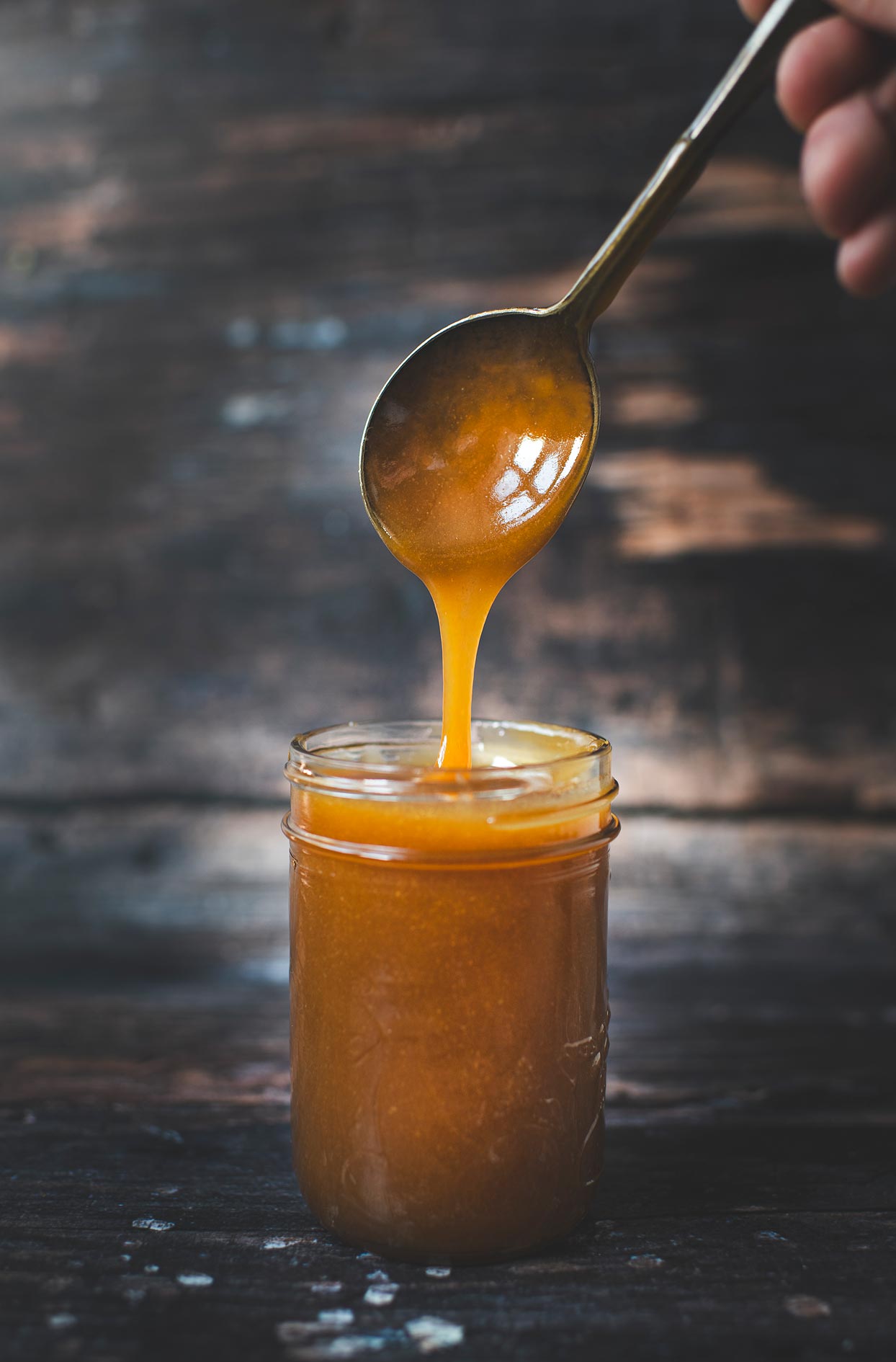
On a plate, flat, with chocolate poured over. The pyramid looks spectacular but be ready for chocolate all over your fingers, because stacking gets it everywhere. If you are building a dessert spread, set them next to my mille-feuille, which plays the same pastry cream in a completely different format. My orange and coffee chocolate panna cotta makes a nice texture contrast beside it, and if you want to swap the sauce, my brown sugar caramel sauce replaces the chocolate no questions asked.
Ads
Choux pastry
- 100 g unsalted butter
- 1 cup (250 ml) water
- 125 g all-purpose flour
- 1 pinch of salt
- 4 large eggs (55 to 60 g each), at room temperature
Pastry cream
- 4 large egg yolks
- 30 g cornstarch
- 2 cups (500 ml) milk
- 105 g granulated sugar
- 14 g unsalted butter, softened
- 1 tsp (5 ml) pure vanilla extract
- 1 pinch of salt
Chocolate sauce
- 250 g semi-sweet chocolate, or chocolate chips
- 1 cup (250 ml) heavy cream
Ads
Preparation
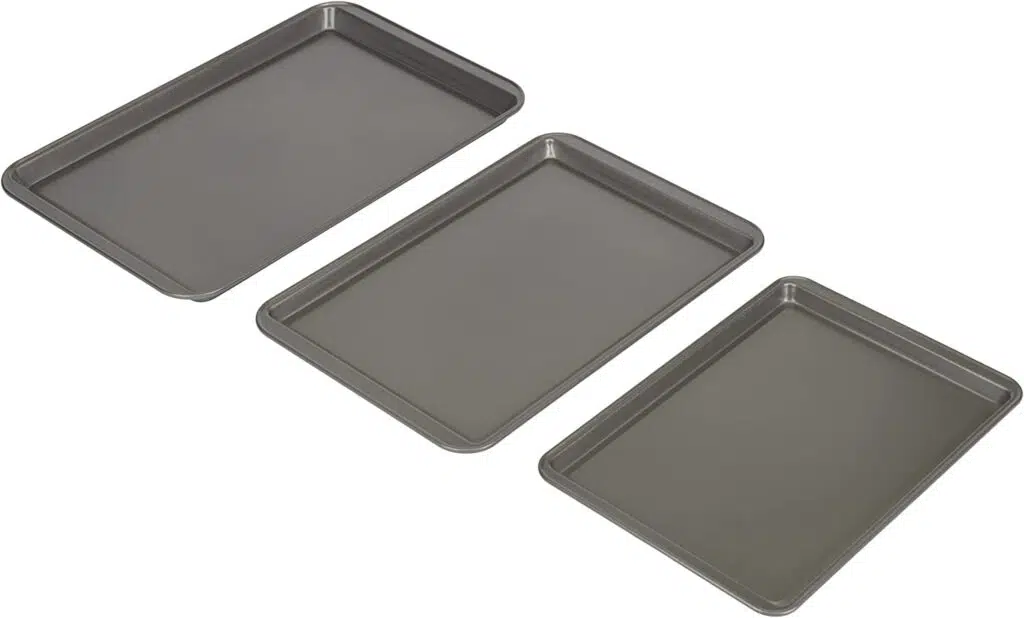
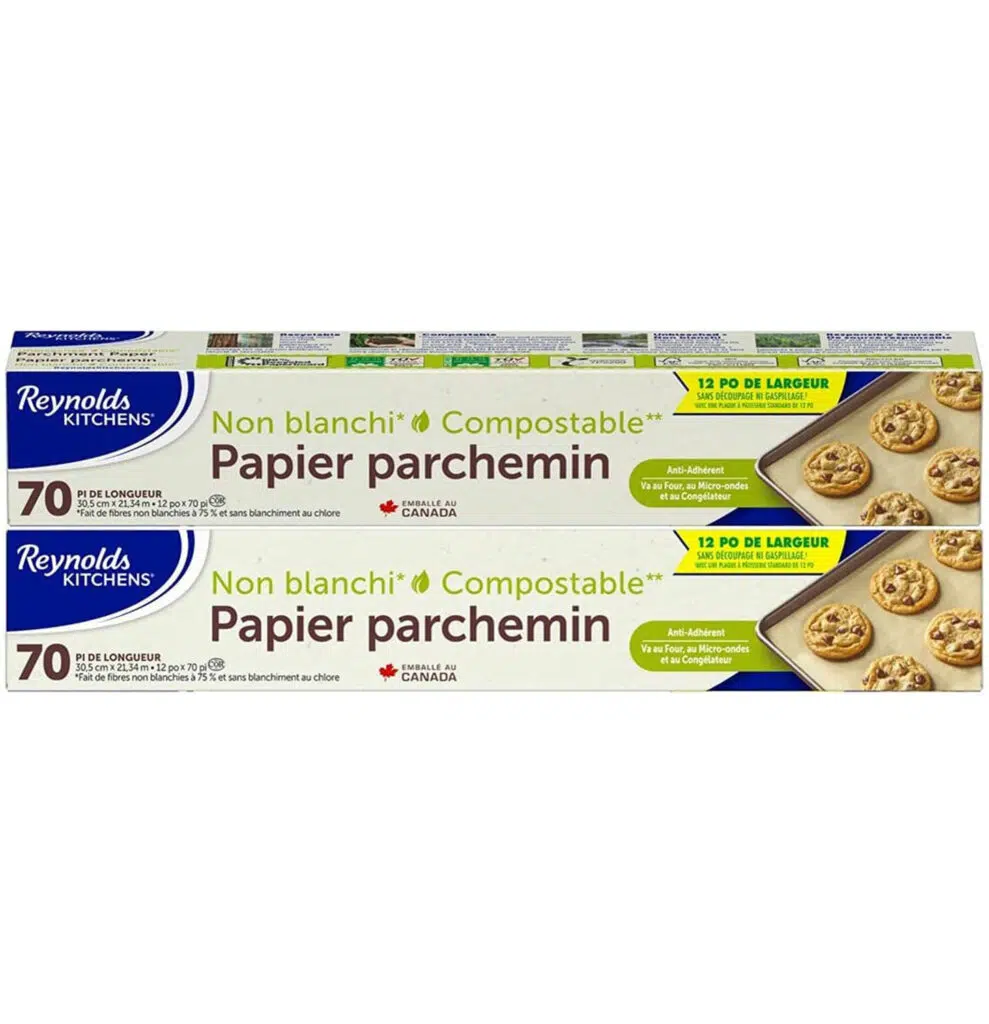
- Lightly wet two large baking sheets with a little water, spread it with your hand, then lay the parchment paper on top. It sticks on its own and will not shift while you pipe.
- Preheat the oven to 425 °F (220 °C).
- In a saucepan, melt the butter over medium heat. When it is almost melted, add the water and bring to a hard boil.
- Add the flour and salt all at once, without taking the pan off the heat, and stir hard with a wooden spoon until the dough forms a ball that pulls away from the sides, about 1 minute.
- Take off the heat and let cool 10 minutes.
- Transfer the dough to the bowl of a stand mixer fitted with the paddle and beat 30 seconds, to finish knocking the heat out of it.
- Add one egg and beat until fully incorporated. Repeat with the other three, one at a time. The dough should be thick and glossy.
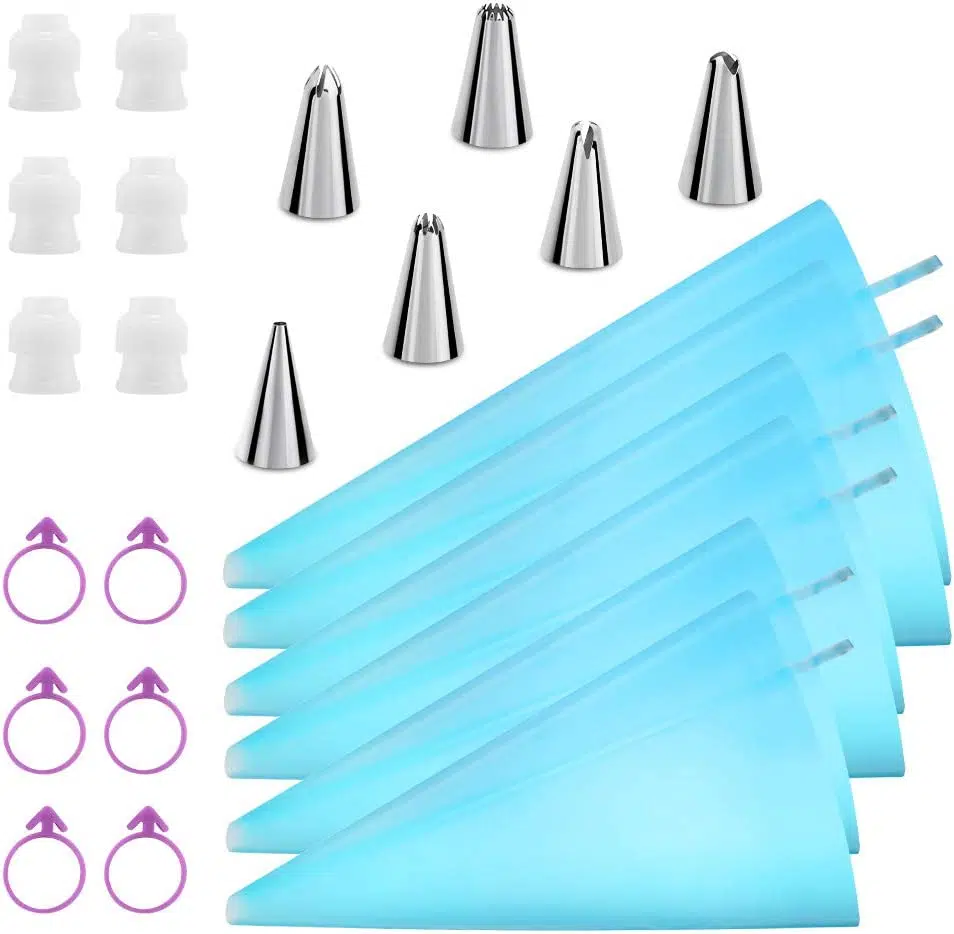
- Transfer the dough to a piping bag fitted with a 13 to 15 mm (1/2 to 3/5 inch) round tip.
- Pipe 2 tsp (10 ml) mounds, spaced 2 inches (5 cm) apart, about 20 per pan.
- Wet your finger and flatten the peaks into smooth round balls.
- Bake both pans together 15 minutes, swapping them halfway through. The puffs should be deep golden on top, not just risen.
- Take them out and pierce each puff on the side with the tip of a knife.
- Return to the oven 5 to 7 minutes, until golden and crisp.
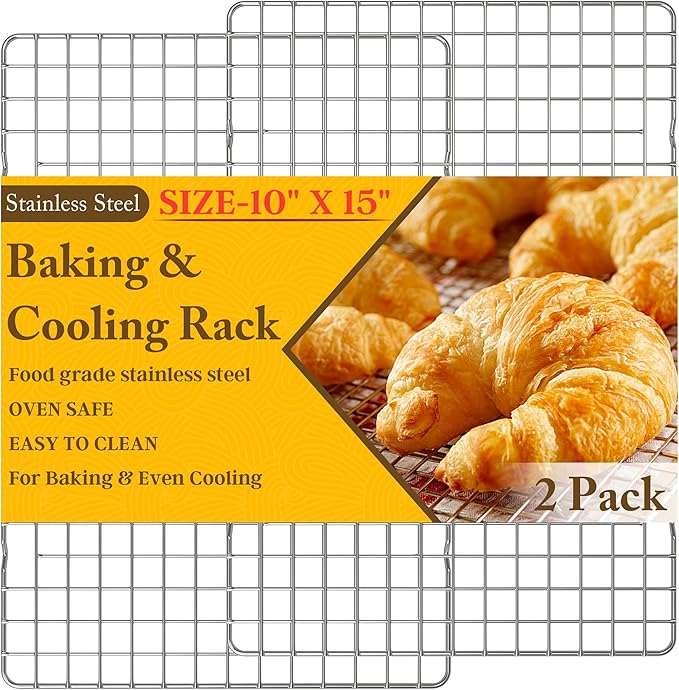
- Transfer to a rack and let cool completely before filling.
- Make the pastry cream. In a large heatproof bowl, whisk the egg yolks and cornstarch with a fork until thick and smooth. If it stays dry, add a few drops of milk to bring it together.
- In a medium saucepan over medium heat, whisk the milk and sugar until the sugar dissolves, then bring to a gentle simmer. Take off the heat.
- Slowly pour the hot milk over the yolks, whisking constantly so they do not cook, then return everything to the saucepan.
- Back over medium heat, whisk constantly. The mixture will foam, then thicken with big bubbles breaking at the surface. As soon as it boils hard like that, count 20 seconds and take it off the heat.
- Whisk in the butter, vanilla extract and salt. Let cool 10 minutes, then pass through a sieve.
- Transfer to a bowl and lay plastic wrap directly on the surface to keep a skin from forming. Refrigerate at least 3 hours.
- Whisk the cream to loosen it, transfer to a piping bag fitted with a small tip and fill the puffs through the hole you pierced during baking.
- Make the sauce. Put the cream and chocolate in a heatproof bowl. Microwave 4 times for 30 seconds, stirring between each, until smooth.
- Let cool slightly, pour over the profiteroles and serve.
Same dough, usually the same shell. The difference is in the serving: a profiterole gets warm chocolate sauce poured over it, a cream puff does not. Profiteroles also tend to run smaller, since they are meant to go down in two bites with the sauce. In France they are often filled with ice cream rather than pastry cream. I go with pastry cream: it can be made the day before and it does not melt in the plate while you serve.
Yes, and that is what makes them a dinner party dessert. The pastry cream keeps 24 to 48 hours in the fridge with plastic wrap directly on the surface. The shells bake in the morning and sit out uncovered. You can even fill them in the morning for the evening: keep them in the fridge in a single layer, never stacked, and pour the chocolate right before serving. The pouring is the only last-minute step.
Nine times out of ten they came out of the oven too early. A risen puff is not a baked puff: until the wall is properly golden it is still too wet to support itself, and it caves as it cools. Go by color rather than the timer. Second likely cause: puffs piped too big, which need more time than the recipe states. And if the damage is done, put them back in for three or four minutes, that often saves them.
The empty shells, yes, and very well: two to three months in an airtight container, in a single layer. To serve, give them 5 to 7 minutes in a 300 °F (150 °C) oven and they crisp right back up. Let them cool before filling. Never freeze a filled puff though: the pastry cream splits as it thaws and you end up with water inside the shell.
On a plate, flat, with warm chocolate poured over. For a dessert spread, serve them with my mille-feuille and my orange and coffee chocolate panna cotta. If the pastry cream is what got you, go look at my shortcrust pastry. And to change the topping completely, my brown sugar caramel sauce does the job.
Ads
Ads

Ads
Ads
Ads