

Braised beef ragù sauce
- Preparation 25 min
- Cooking 3 h 25 min
- Servings 6 to 8
- Freezing Absolutely
Ads
🥩 Braised beef starts with a chuck roast
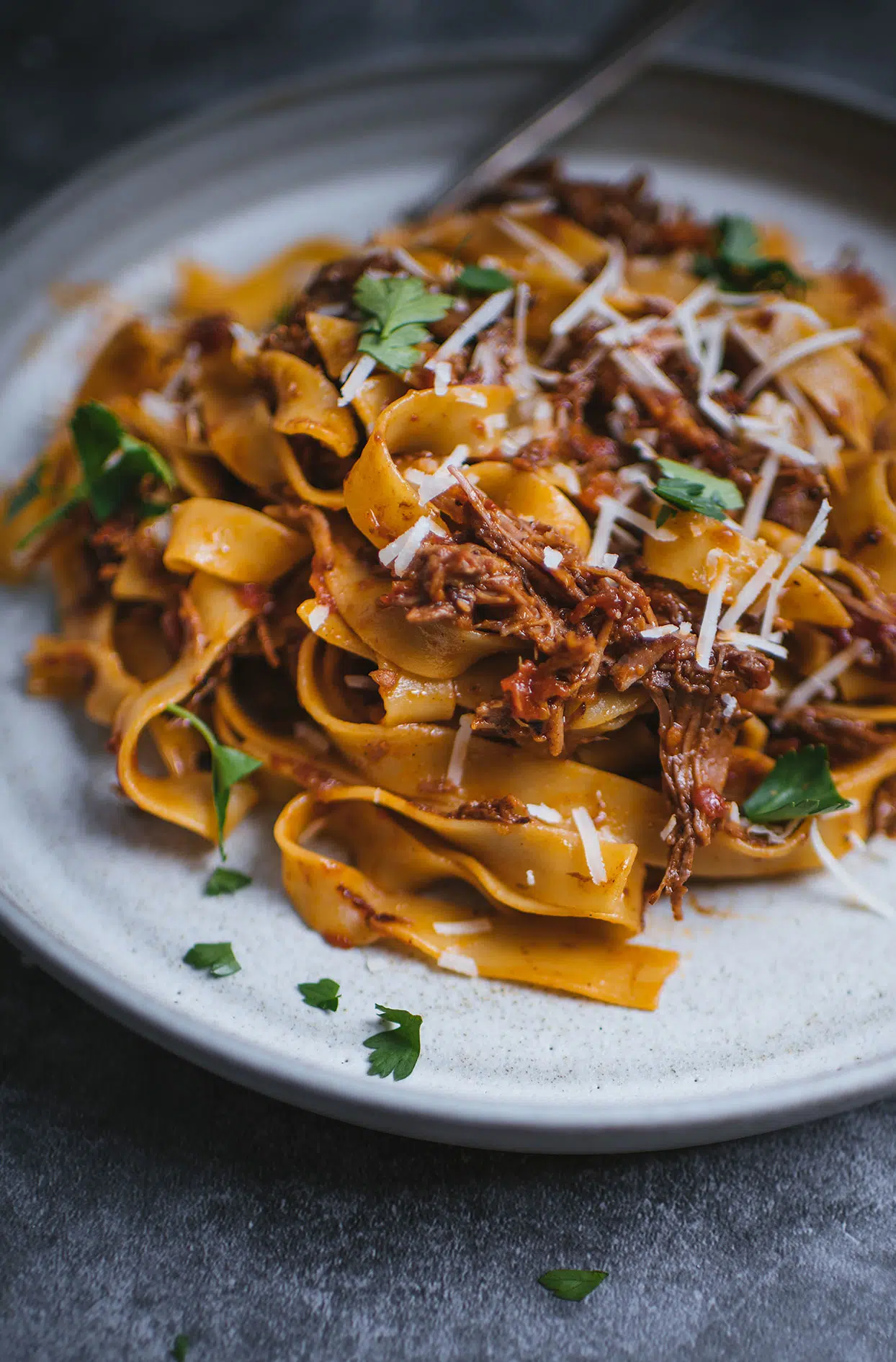
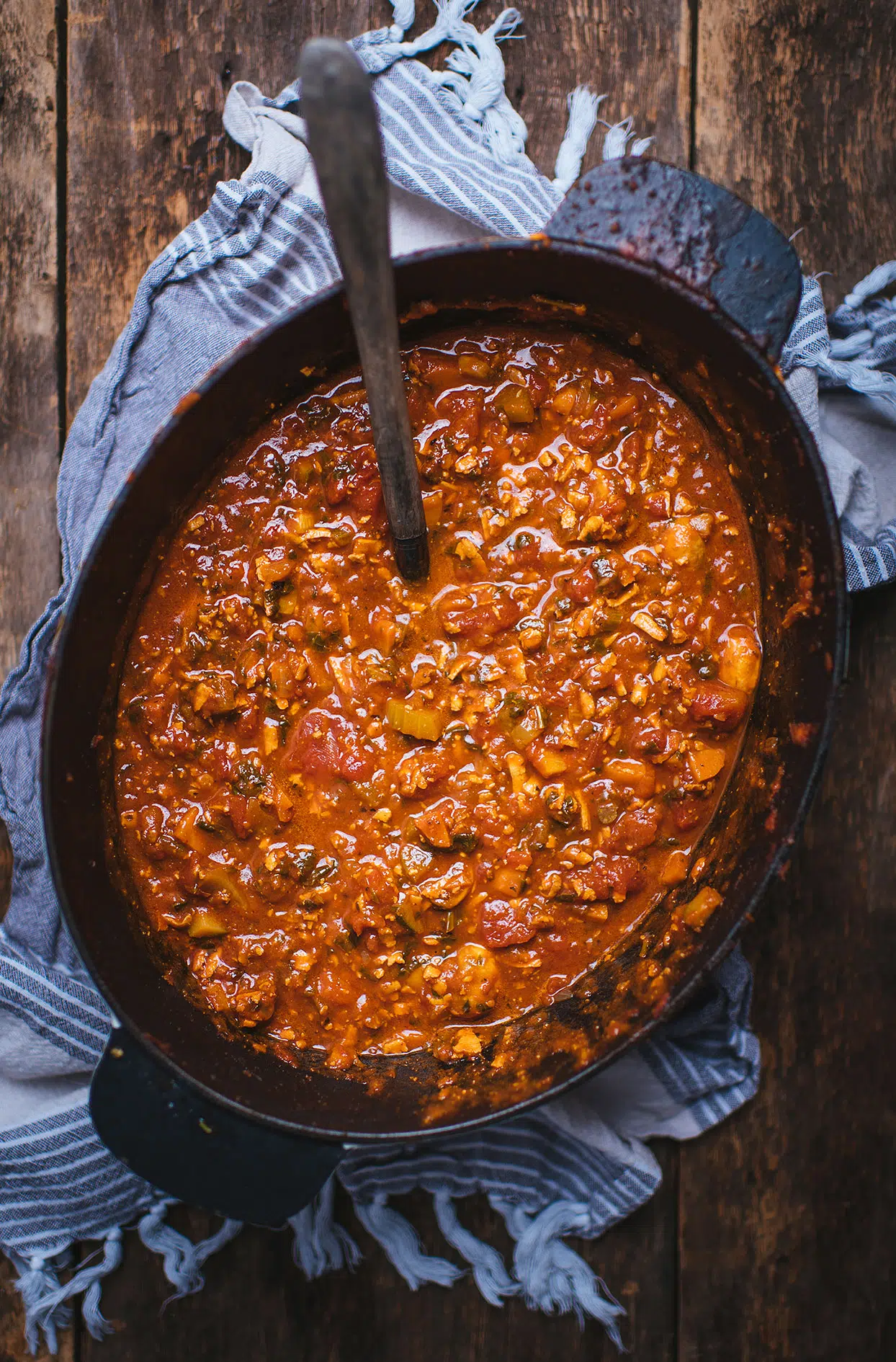
The cut decides everything here, and mine is a chuck roast. I cut it into three big blocks, trim the fat off and sear it until the bottom of the pot looks almost too dark. That is where the flavour hides. Three hours later the meat falls apart the second a fork touches it, and you shred it straight into the sauce. Nothing like a ground meat sauce. Here you actually chew strands of beef.
🍷 Why I use white wine instead of red
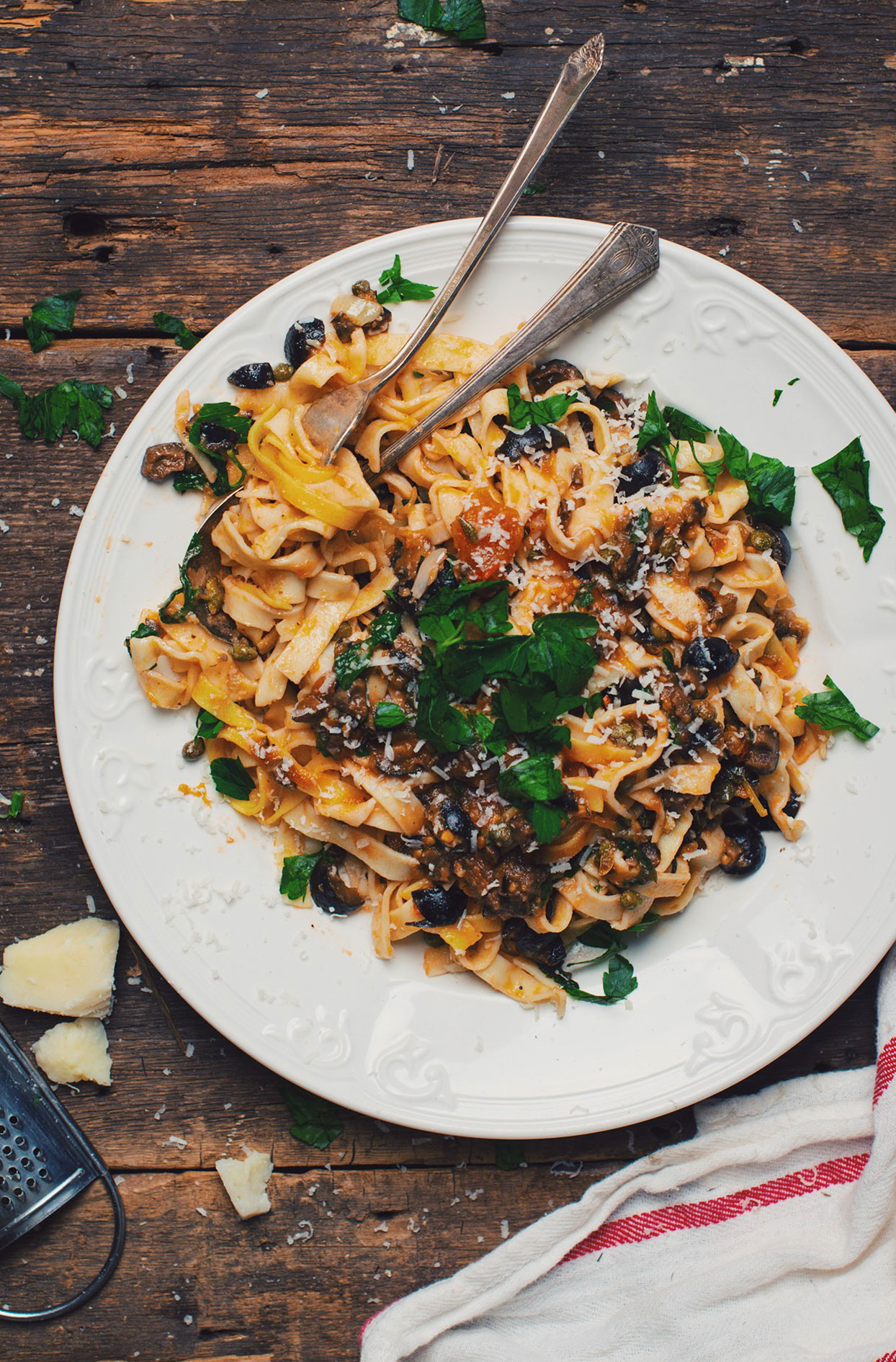
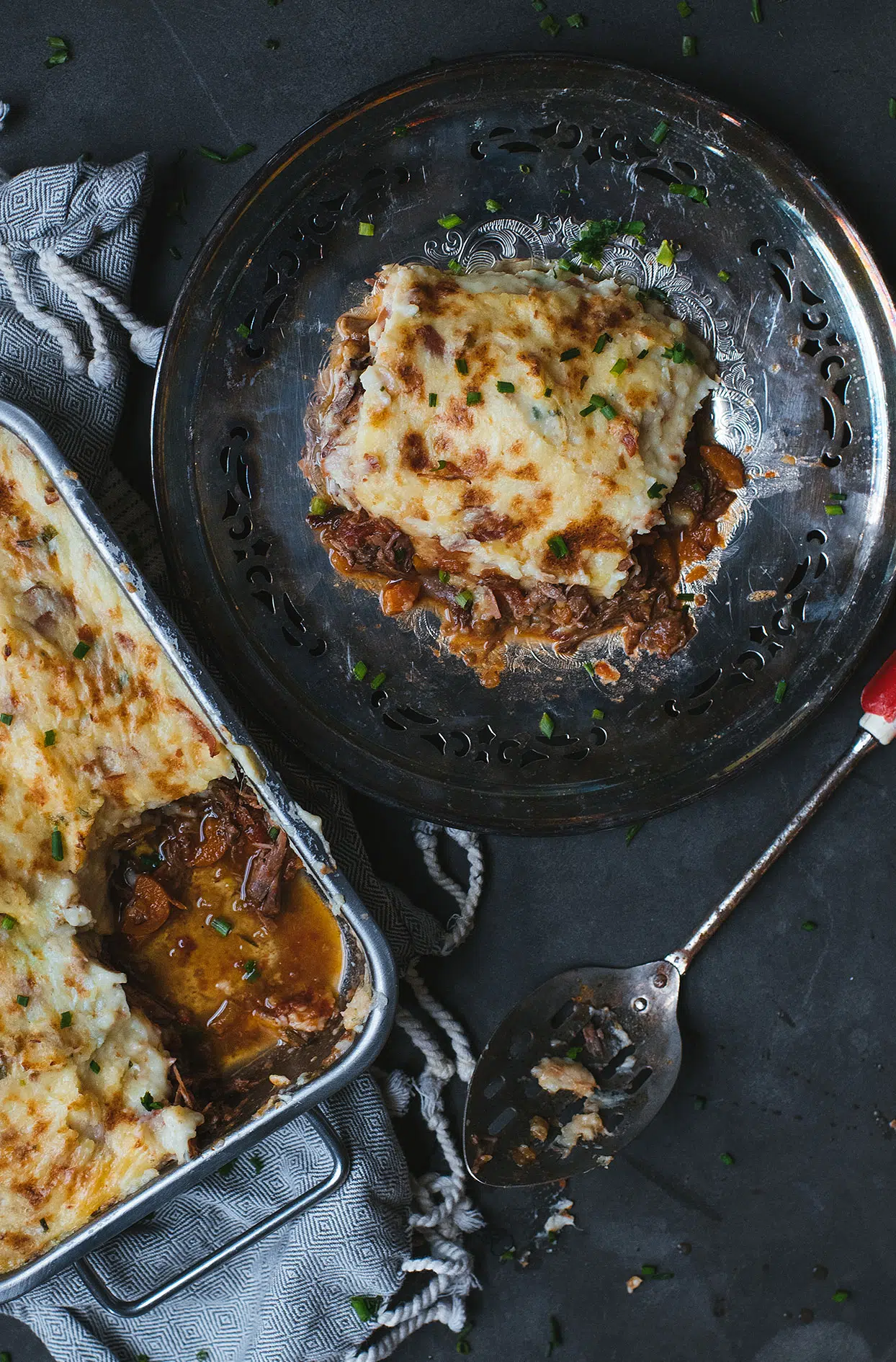
Everybody deglazes with red. I use white, on purpose. A quarter cup, just enough to lift the fond off the bottom, not enough to announce itself. Red pulls the sauce heavy and leaves its tannins sitting there for three hours. White keeps the tomato bright and lets the beef speak. It is a small thing that changes the whole pot. If you want the red wine version, I already have one, my red wine braised beef parmentier.
🍝 Shredded beef ragù goes on more than pasta
At my place it lands on pappardelle or tagliatelle. Wide pasta, the kind that can carry a sauce like this, and better still if it is my homemade fresh pasta. But I have spooned it over polenta, over gnocchi, and once into a submarine bun with Parmesan piled on top. It works everywhere. The recipe makes about 1.7 litres of sauce, enough for six to eight people or a few containers for the freezer.
Ads
Ads
🥩 Chuck roast, and nothing else
This is the cut the recipe is built on, not one option among several. Chuck is run through with collagen and intramuscular fat: three hours covered and all of that melts into gelatin, which is what gives the sauce its body without a drop of cream. A lean cut comes out dry and stringy no matter how long you give it. Same cut carries my Guinness braised beef chuck roast.
🔥 Push the sear past golden
Ten minutes, every side, until the bottom of the pot looks almost too dark. That stuck-on brown is what the white wine lifts two minutes later, and it is half the flavour of the sauce. If the meat greys instead of browning, there is too much in the pot or the heat is too low.
🍷 White wine, and only a quarter cup
Yes, it is a small amount. That is the point. The wine is there to lift the fond and add a shot of acidity that keeps the tomato bright, not to perfume the sauce. Any dry white you would pour at the table does the job. If red is all you have, go ahead, but the sauce turns heavier and more tannic and it stops being this recipe.
⏱️ Three hours, not two
Low on the stove or covered in a 350 °F (180 °C) oven, the result is the same: it takes three hours before the beef gives way to a fork. At two hours it still needs a knife and the sauce is still loose. The oven asks for less watching, the stove lets you taste as you go. Start to plate, sear and pasta included, figure roughly 3 h 50.
🍴 Shred in the pot, not on a plate
Pull the bay leaf, grab two forks and break the meat apart right in the sauce. The strands drink the sauce while they cool and the sauce thickens with the juices that escape. Shred it on a plate and you lose both.
🍲 The slow cooker works, if you are heading out
It can be done. Sear the meat and sweat the vegetables in a skillet first, because a slow cooker browns nothing, then transfer everything with the tomatoes and broth for 7 to 8 hours on low. I do not make it that way, I like the stove, but the logic holds: a slow cooker does exactly what a covered oven does, only slower.
📅 Get ahead the day before
Everything but the cooking can be done a day early. Slice the carrots, chop the onion and garlic, measure the wine, broth and tomato paste, strip the thyme, cut the roast into blocks and leave it in the fridge on its plate. Next day you open three labelled containers and the pot is going in ten minutes. The braise perfumes the house while your people are there, which beats reheating a dish you cooked yesterday.
❄️ Three to four days in the fridge, freezer for the rest
In an airtight container it holds three to four days, and it is honestly better on day two once the tomato and thyme settle. Three months in the freezer. I freeze it by the cup, one per person, so you take out exactly what you need. Reheat gently with a spoonful of pasta water.
✅ What to serve with my braised beef ragù sauce?
Wide pasta first: pappardelle or tagliatelle, better still my homemade fresh pasta. After that, open it up. Over gnocchi, over creamy polenta, or piled into a bun the way I do my meat submarines with raclette cheese. On the side, cheesy garlic bread, or my no-knead focaccia to mop the plate and a classic Caesar salad to cut the richness.
Ads
Braised beef ragù
- Olive oil
- 1 lb 14 oz (850 g) beef chuck roast, cut into 2 or 3 large chunks and fat removed
- ½ yellow onion, finely chopped
- 3 large garlic cloves, finely chopped
- 2 large Nantes carrots, quartered lengthwise then thinly sliced
- ¼ cup (60 ml) dry white wine
- One can (798 ml) whole Italian tomatoes
- The leaves of 3 large sprigs of fresh thyme
- 1 large bay leaf
- ½ cup (125 ml) beef broth
- 1 teaspoon (5 ml) tomato paste
- 1 lb (454 g) pappardelle
- Freshly grated Parmesan for serving
- Chopped fresh parsley for serving
- Salt and freshly ground pepper
Ads
Preparation
- In a large saucepan over medium-high heat, drizzle in a thin stream of olive oil and brown the meat on each side, about 10 minutes in total. Season generously with salt and pepper on all sides and add more oil as needed. Set the meat aside on a plate.
- Add the onion, garlic and carrots, then drizzle with a little olive oil. Cook 3 to 4 minutes to soften, stirring occasionally.
- Deglaze with the white wine, stir and cook for 2 minutes.
- With the exception of the pasta, Parmesan and parsley, add the rest of the ingredients, season with salt and pepper then stir. Bring to a boil, reduce heat to low and cover. Simmer for 3 hours, stirring occasionally, until the beef falls apart easily with a fork and the sauce is thick. Break the tomatoes into small chunks. (You can also cook it covered in the oven for 3 hours at 350 °F (180 °C).) Remove the bay leaf, shred the beef and stir it back in.
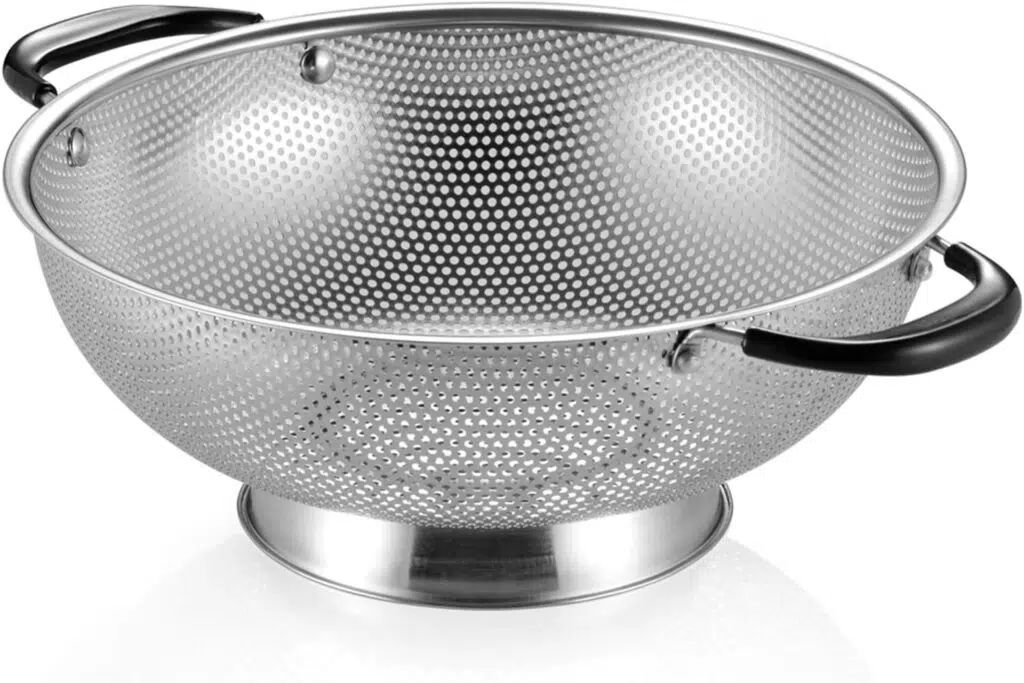
- In a large saucepan filled with salted boiling water, cook the pasta al dente according to package directions. Pour into a colander and drain. Toss in the sauce and mix. Bury with Parmesan and garnish with fresh parsley!
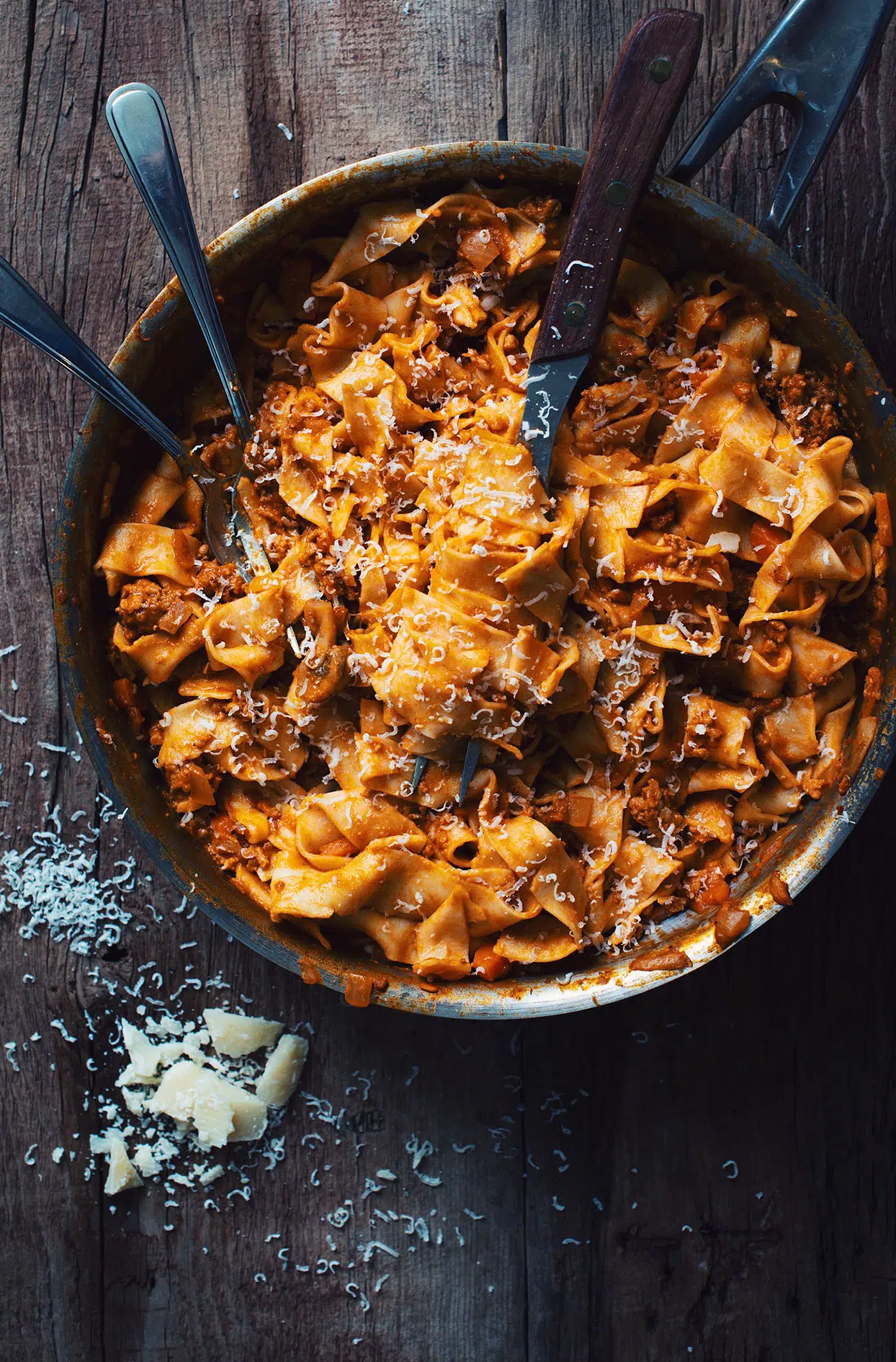
The cut of meat, and nothing else. A ragù uses whole pieces braised for hours and then shredded, so you chew actual strands of beef. A bolognese uses ground meat simmered with milk and tomato, which gives a smooth sauce that coats the pasta instead of loading it. Both are Italian, both take hours, but the texture has nothing in common. If bolognese is what you are after, go see my bolognese sauce with Don de Dieu beer.
Beef, tomatoes, wine and a small handful of aromatics. This one is a chuck roast seared hard, then braised for three hours with onion, garlic, carrots, whole Italian tomatoes, white wine, beef broth, thyme and a bay leaf. No celery, no cream, no sugar. The beef is shredded back into the pot at the end, and Parmesan and parsley go on at the table.
About 3 h 50 from start to plate, though you are not standing at the stove for most of it. Figure 25 minutes of prep, about fifteen minutes to sear the beef, sweat the vegetables and deglaze, then 3 hours of covered braising where you stir now and then. The pasta goes in during the last ten minutes. This is a Sunday afternoon recipe, not a Tuesday night one.
You can, but it stops being the same sauce. Red brings tannins and sugar, the pot turns heavier and darker, closer to a classic braise. White keeps the tomato bright and leaves the beef out front, which is exactly why I use it. If you have neither, swap the 60 ml for beef broth with a few drops of white wine vinegar.
Three to four days in the fridge in an airtight container, and it is better the next day. Three months in the freezer. I freeze it by the cup, one per person, so it thaws quickly and you pull out only what you need. Reheat gently with a little pasta water to bring the texture back.
Pappardelle or tagliatelle, or my homemade fresh pasta if you have the afternoon. It is just as good over gnocchi or creamy polenta. For a full meal, add cheesy garlic bread, or my no-knead focaccia and a classic Caesar salad. And if there are leftovers, pile them into a bun the way I do my meat submarines with raclette cheese.
Ads
Ads
Ads
Ads
Ads