

Red wine braised beef cottage pie
- Preparation 40 min
- Cooking 4 h 30 min
- Servings 6 to 8
- Freezing Absolutely
Ads
🍷 The Old Port dinner behind my red wine braised beef cottage pie
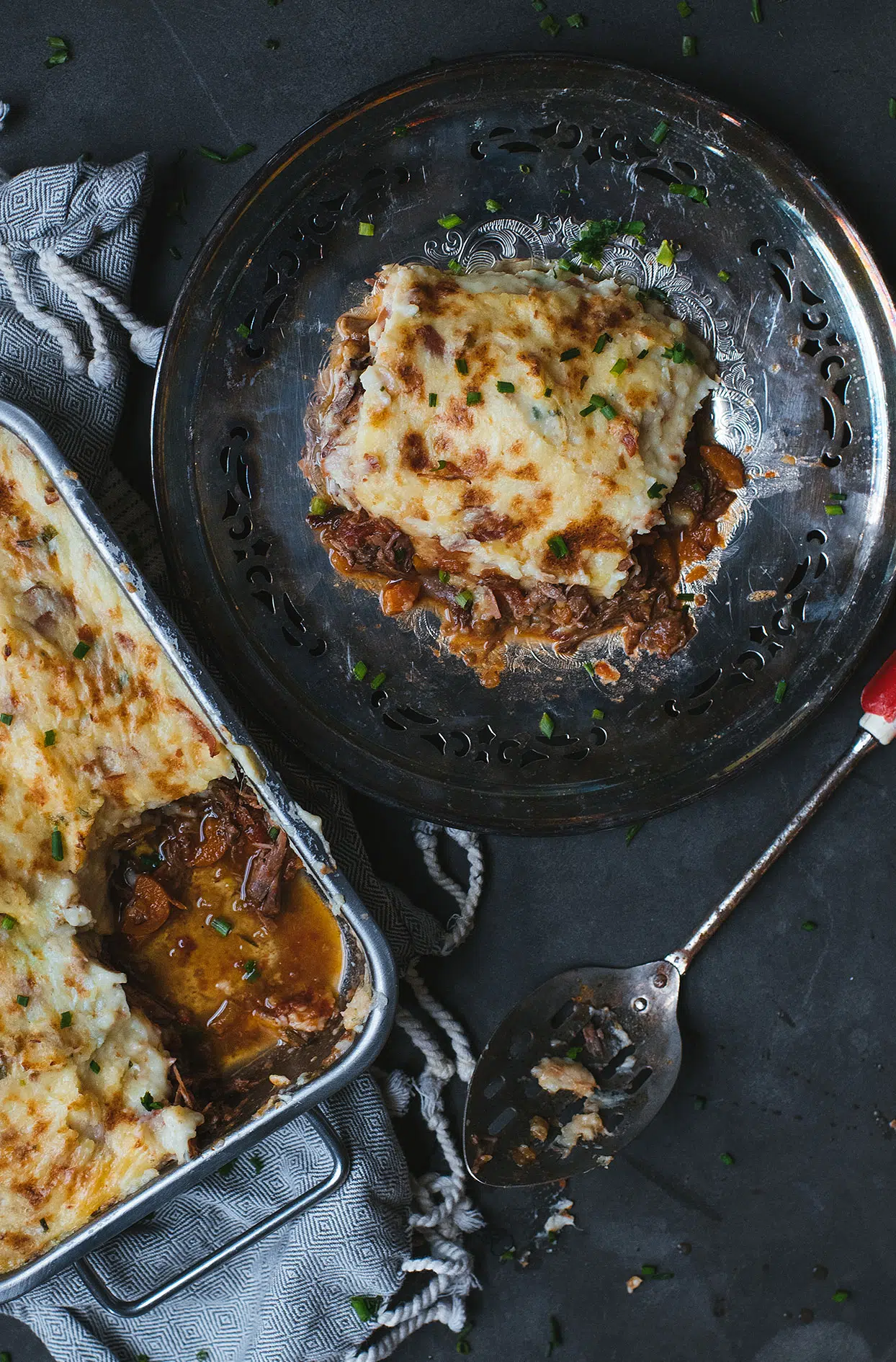
I ate a version of this in a restaurant down in Montreal’s Old Port and it followed me home. I never asked for the recipe. What stayed with me was the sound of a fork going through beef that had been sitting in red wine all afternoon. So I rebuilt it from memory in my own kitchen: red wine braised beef underneath, a potato and parsnip mash on top, and far more smoked cheese than any restaurant would put on it. It has been one of the most-read recipes on the site ever since, and people still write to tell me they make it on repeat. That never gets old.
🥩 Blade roast, three hours, and a fork does the rest
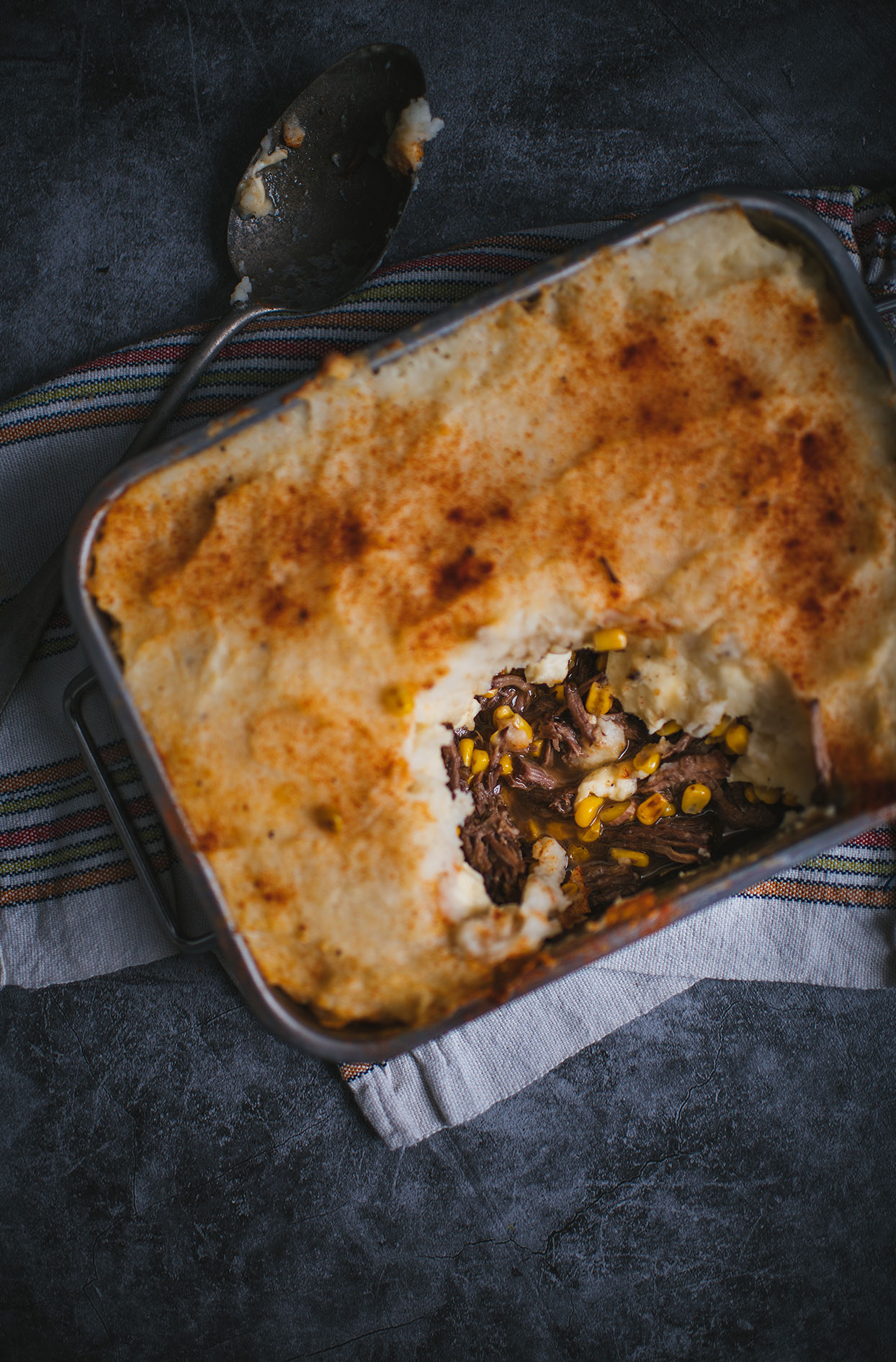
The cut decides everything here. A boneless blade roast, what your butcher may also call a chuck roast, is loaded with connective tissue, and connective tissue is exactly what melts into that silky, shreddable texture after a long braise. Sear it hard first. Ten to twelve minutes, and no shortcuts. Then it goes low and covered in red wine, tomatoes and beef broth for three hours. When it is ready, you pull it out, shred it with two forks, throw away the fat you can see, and stir it back into the vegetables that cooked alongside it. Nothing gets blended, nothing gets wasted.
🧀 Cottage pie, parmentier, whatever you want to call it
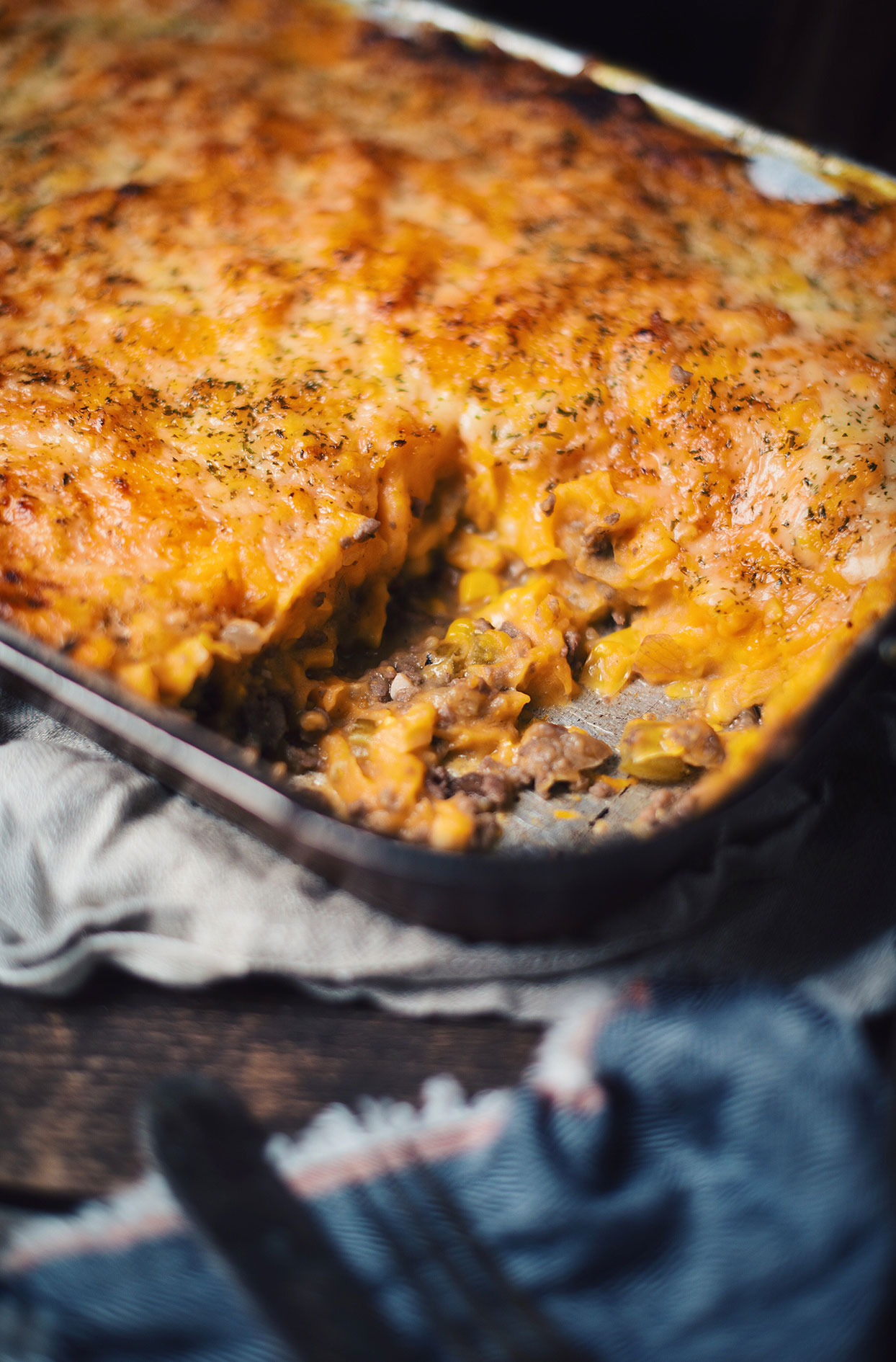
In French this is a parmentier. In English it is a cottage pie, since the meat is beef and not lamb. Call it what you like. The top is where I do things my own way: parsnips cooked in with the potatoes for a sweeter, earthier mash, crispy prosciutto folded straight into it, and Le Calumet on top, a cold-smoked firm cheese made in Quebec that smoked gouda replaces well. And if you want to abandon all restraint, tuck cheese curds through the meat before you spread the mash. They melt, they stretch, and you will go looking for them with your spoon.
Ads
Ads
🥩 Sear the blade roast properly, or do not bother making this
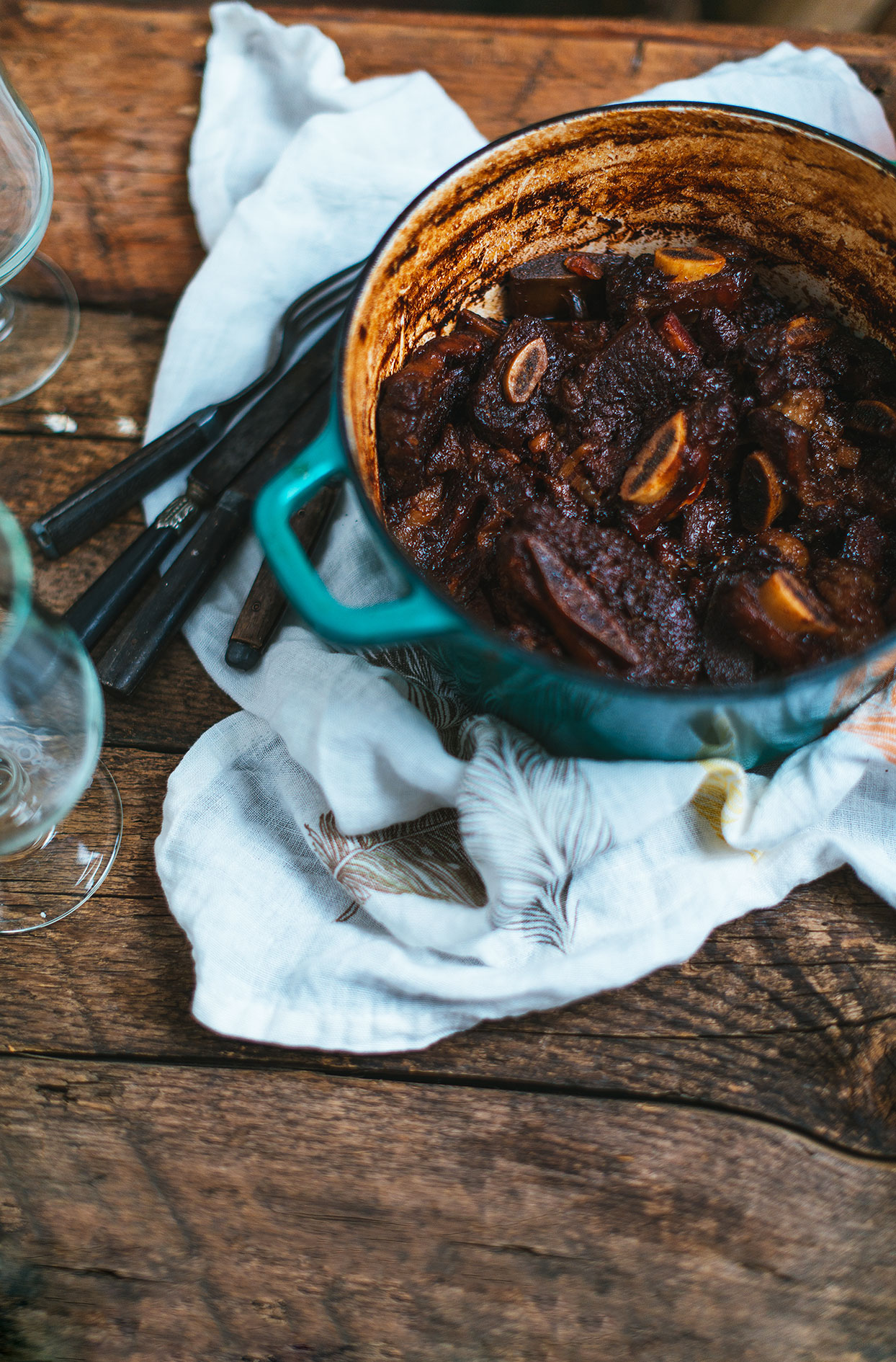
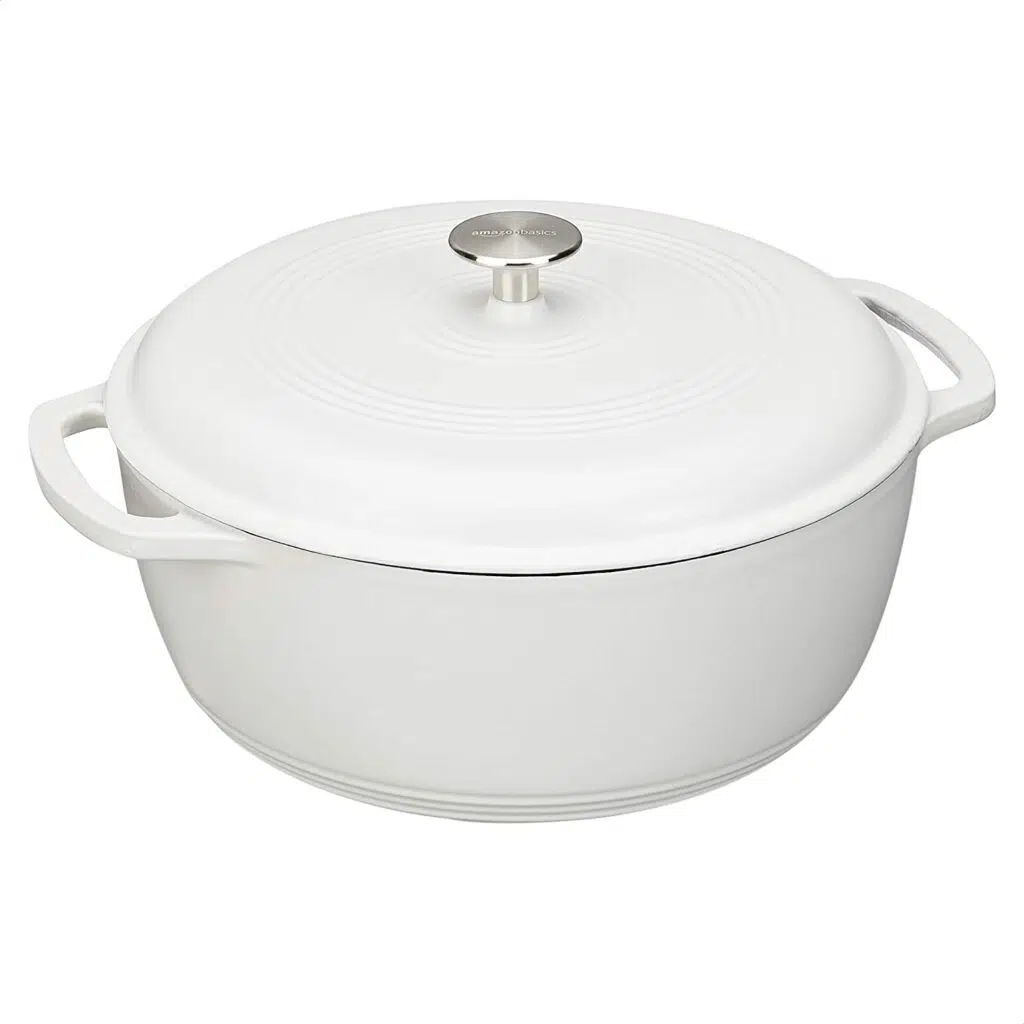
Ten to twelve minutes, each piece, in a hot Dutch oven with a thin film of olive oil. This is the step that builds the deep roasted flavor of the finished dish, through the Maillard reaction, and no amount of wine later on will put it back if you skip it. Hot pot, do not crowd it, and leave the meat alone so it takes on color instead of steaming. It is also the moment to season generously. Under-seasoning right here is the number one mistake people make. Meat that went in bland comes out bland, even under a perfect sauce.
🍷 The red wine you actually want
Buy something you would drink. Not the cheapest bottle on the shelf, and not a fifty dollar bottle either. A flavorful Cabernet Sauvignon with some tannin but a round finish is exactly right. The wine reduces for three hours and concentrates everything it has, so if it is dull in the glass it will be dull in the dish. Eighteen to twenty-two dollars is the sweet spot.
⏳ The two-fork test beats any timer
Stick two forks in and pull them apart. If the beef separates without arguing, it is done. If it resists, give it another 30 minutes on low.
🍴 Shred it, never blend it
Same technique as my General Tao pulled pork. Meat onto a board, two forks, pull it into strands, and throw out the fat you can see. Never a stand mixer. It crushes the fibers instead of separating them, and you end up with paste.
🥔 A mash that holds its shape and is not over-salted
Cook the yellow potatoes and the parsnips together in salted boiling water until a fork slides in without resistance, roughly 40 minutes. Drain them well, then put them back in the hot pot over medium heat for a minute. That last minute drives off the leftover water, and it is the difference between a mash that sits proudly on the beef and one that sinks into it. Then taste before you salt. The prosciutto, the Le Calumet and the braising sauce underneath are already bringing plenty. An over-salted mash takes the whole dish down with it.
🥓 Crisping the prosciutto
Single layer on a parchment-lined sheet pan, 400 °F (200 °C), 8 to 10 minutes, until golden. Let it cool before chopping. It crisps up further as it sits.
🧀 Cheese curds through the meat, the version I make to show off
Want to push it? More grated Le Calumet on top before it goes in the oven. Or better yet, tuck cheese curds through the beef layer before you spread the mash. In the oven they melt and stretch, and every spoonful hits a pocket of them. If you cannot find fresh curds where you live, torn-up fresh mozzarella gets you part of the way there, though it will not squeak.
✅ What to serve with my red wine braised beef cottage pie
It is already a full meal, so I keep the sides sharp rather than heavy. A white balsamic arugula salad is my standard, the acidity does the work of cutting through the braise. If the point of the evening is to overdo it, put my crispy honey cheese bread on the table too. Dark chocolate and an espresso to close, and that is a Saturday night.
Ads
Ingredients for the braised beef
- Olive oil
- 2 lb (1 kg) boneless beef blade roast (chuck roast), cut into 3 pieces
- 1 large yellow onion, finely chopped
- 3 large garlic cloves, finely chopped
- 2 celery stalks with the leaves, sliced
- 3 Nantes carrots, halved lengthwise and sliced
- 2 cups (500 ml) red wine
- One 28 oz (796 ml) can diced tomatoes with Italian herbs
- 1/2 cup (125 ml) beef broth
- The leaves of 4 thyme sprigs
- 1 bay leaf
- Salt and freshly ground pepper
Ingredients for the potato and parsnip mash
- 6 medium yellow potatoes (5 cups / 1.25 L), peeled and diced
- 3 parsnips (1 1/2 cups / 375 ml), peeled and cut into large dice
- 3 tbsp (45 ml) butter
- 1/4 cup (60 ml) 15% cooking cream (light cream)
- 4 oz (125 g, about 10 slices) cooked prosciutto, crisped and roughly chopped
- 10 chive stems, finely chopped
- 7 oz (200 g) smoked Le Calumet cheese (or smoked gouda), grated
- Salt and freshly ground pepper
Ads
Preparation
- In a large Dutch oven over medium-high heat, add a thin drizzle of olive oil and brown the roast on all sides, 10 to 12 minutes total. Season generously with salt and pepper. Add more oil as needed. Remove from the pot and set aside on a plate.
- Reduce to medium heat, add the onion and the garlic, then add a drizzle of olive oil. Cook 2 to 3 minutes, stirring.
- Add the celery and the carrots, then a good drizzle of olive oil, and season with salt and pepper. Cook 7 to 8 minutes, stirring.
- Deglaze with the red wine and scrape the bottom of the pot hard to lift every bit of flavor stuck down there.
- Add the tomatoes, the beef broth, the thyme, the bay leaf and the meat, season generously with salt and pepper, then stir.
- Bring to a boil, reduce to low heat and cover. Simmer 3 hours, basting from time to time.
- Pour the contents of the pot into a colander and drain off the liquid. KEEP THE VEGETABLES. Take out the meat and shred it, discarding the fat. Return it to the pot with the vegetables and stir. Keep warm.
- When the beef has about 45 minutes left, start the mash. In a large pot of boiling salted water, cook the potatoes and the parsnips about 40 minutes, or until the potatoes are fork tender. Drain and return to the pot over medium heat.
- Preheat the oven to 400 °F (200 °C).
- Add the butter and let it melt while you mash the vegetables.
- Add the cream and mash hard to work it in. Season with salt and pepper to taste.
- Add the prosciutto and the chives and stir.
- In a large baking dish, spread the beef mixture and cover it with the mash. Bury the whole thing under the cheese.
- Bake 10 minutes. Switch the oven to BROIL and cook 2 to 3 minutes, or until the cheese is deeply golden!
The meat, and nothing else. A cottage pie is made with beef, a shepherd’s pie with lamb, which is where the shepherd comes from. This recipe is red wine braised beef under mashed potatoes, so it is a cottage pie in the strict sense. In North America the two names get used interchangeably, which is why you see beef versions sold as shepherd’s pie all over the place. In French the same construction is called a parmentier. If lamb is what you actually want, that is my shepherd’s pie with beef, lamb and sweet potato mash.
Blade roast, also sold as chuck roast. It is full of connective tissue and marbling, which is exactly what you want for a long braise: it breaks down into gelatin and gives you beef that shreds under a fork. Boneless short ribs or brisket work too, with a longer cook. What does not work is a lean cut like round or sirloin. It has nothing to give up over three hours and comes out dry and stringy. Ground beef makes the classic cottage pie, but it is a different dish from this one.
A dry red with real body and moderate tannin. Cabernet Sauvignon is my default here, and a Tuscan Sangiovese does the job beautifully as well. Skip anything sweet, skip anything labeled cooking wine. The wine reduces for three hours, so every flaw in it concentrates right along with the good parts. A bottle in the eighteen to twenty-two dollar range is more than enough, and you get to drink what is left.
Three hours on low, covered, basting from time to time. Some blade roasts want another 30 minutes, which is why the clock is not the real test. Two forks pulled in opposite directions is: if the beef gives way without resistance, it is ready. If it fights back, put the lid on and keep going. You cannot really overshoot a braise at low heat, but you can absolutely undershoot it, and undercooked braised beef is chewy in a way no sauce fixes.
Replace the 2 cups (500 ml) of wine with 1 cup (250 ml) of concentrated beef broth, 1 tbsp (15 ml) of balsamic vinegar and 1 tbsp (15 ml) of Worcestershire sauce. You lose a little depth, but you keep the acidity that stops the braise from tasting flat, which is the wine’s real job here. A dark beer works too and pushes the whole thing malty and slightly sweet. What does not work is broth on its own: without something acidic, the beef and the mash sit heavy on the palate.
Drain the braising liquid off the meat before you build the dish. That is the step most recipes skip, and it is why so many cottage pies come out soupy under the mash. You keep the vegetables, you shred the beef back into them, and the filling stays thick enough to hold the potatoes up. After that it is a dry mash, seasoning tasted in layers rather than dumped in at the end, and two or three minutes under the broiler so the top browns instead of just sitting there pale.
Ads
Ads

Ads
Ads
Ads