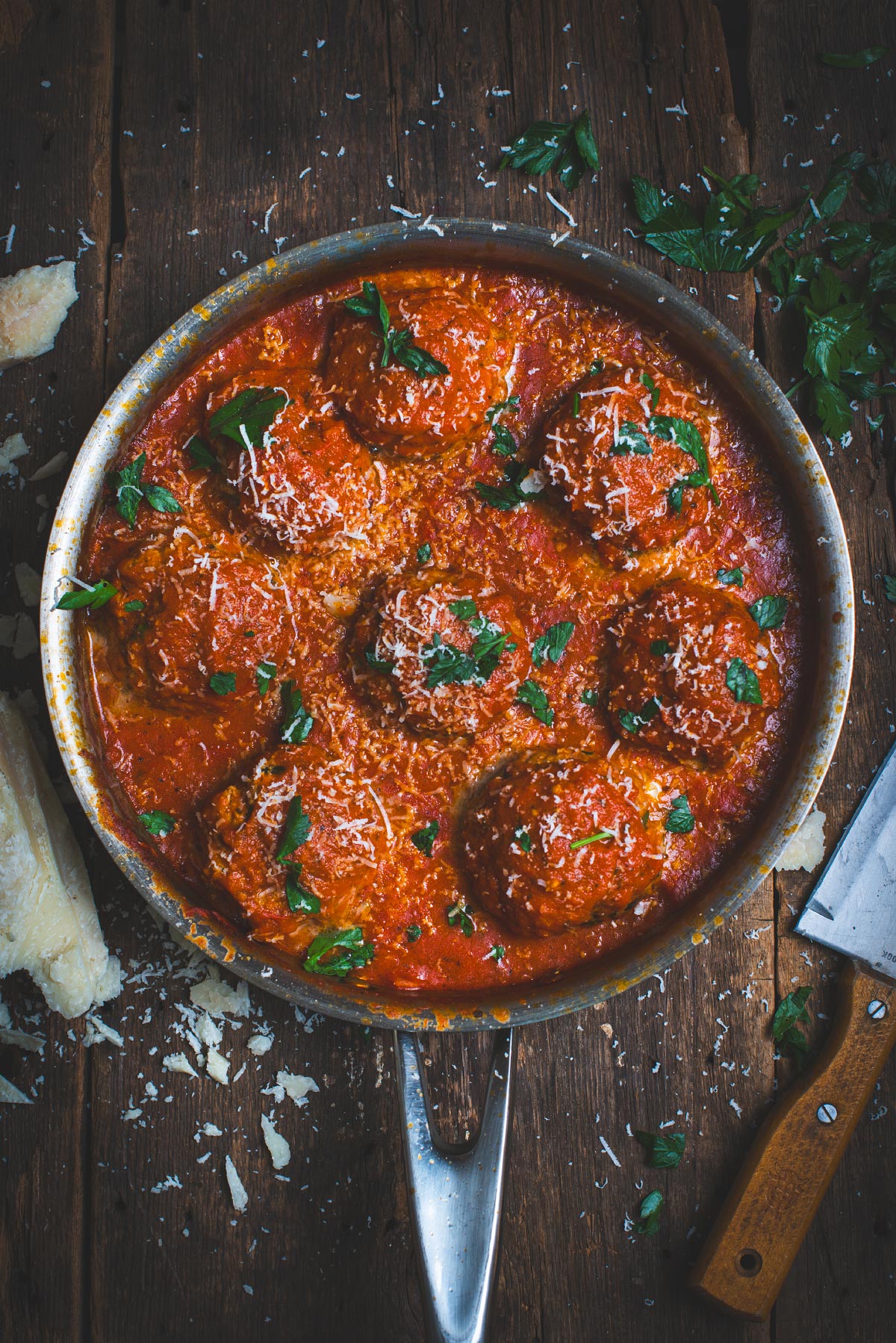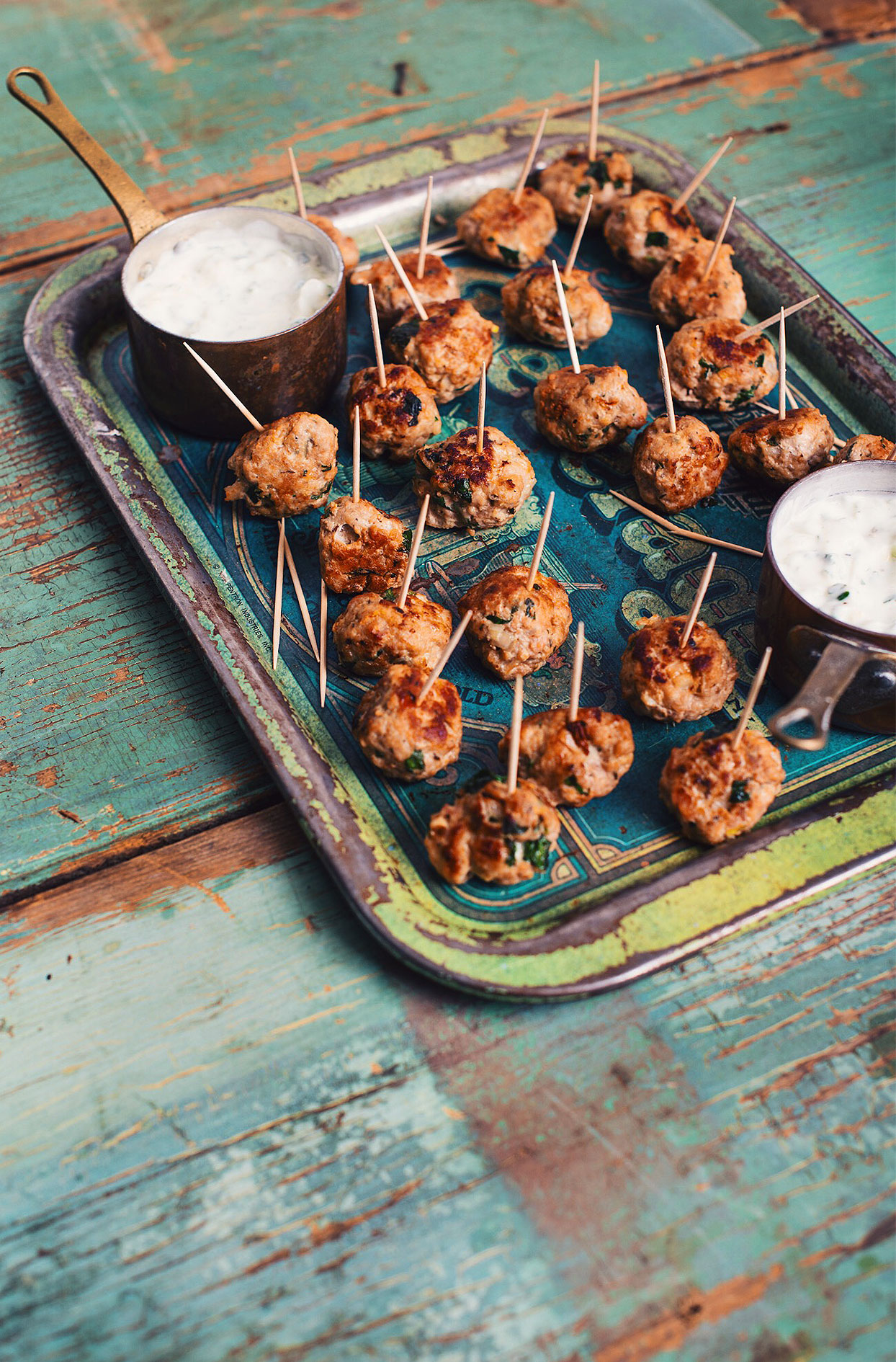
Beef and pork meatballs simmering in a tomato sauce with parmesan. The meat is fatty, the tomato is acidic, and you need a drink that stands up to both without fading.
Amber ale is our base beer: its caramel malt follows the cooked meat and softens the tomato. Red ale comes second, a little more toasty. Both have enough body for the meat. For wine, a Sangiovese from Tuscany, with a Barbera from Piedmont behind it, both acidic enough for the sauce.
Italian tomato sauce, brown sauce, sweet and sour or BBQ, Asian with ginger, or poultry and veggie: the sauce changes everything, and for the last one the meat does too. The page has a beer and wine pairing for each.
The basic pairing
Meatballs in Italian tomato sauce
Beef and pork meatballs with parmesan, simmered in a very acidic tomato sauce.
This amber ale has a caramel and toasted bread malt, with a soft bitterness. The beef and pork are fatty and the tomato is acidic: the caramel rounds out the acidity, and the body of the beer stands up to the meat. The parmesan melts into it all, a supper that feels good at home!
Red ale is a little more toasty than amber ale, with caramel and a nutty note. Take it if the sauce has simmered a long time and the tomato has become deeper, or if you want a rounder beer.
This Tuscan Sangiovese smells of sour cherry and dried herbs, with bright acidity and a tannin that dries the mouth a little. Against beef and pork meatballs in a tomato sauce, it has the acidity needed to answer the tomato, and the fat of the meat makes it softer in the mouth, without it losing its freshness.
Barbera from Piedmont smells of cherry and plum, with very bright acidity and a mouthfeel that barely dries. Take it if the sauce is well seasoned, or if Sangiovese seems too dry next to the meat.
The Negroni is gin, sweet vermouth and a clean bitterness, with orange underneath. With Italian-style meatballs, it opens up your mouth to the tart tomato, stands up to the beef and pork and gets along with the Parmesan, like an aperitivo over there. A short drink with character. For a big weeknight plate.
Or the Aperol spritz: sparkling wine and bitter orange, light and bubbly. Choose it when the Negroni feels too hefty for the tomato sauce and Parmesan.
Alcohol-free
Sparkling water with lemon and basil
Cooked tomato is acidic and the sauce is full of flavour. Basil carries on the tomato sauce, and the lemon keeps the mouth fresh.
The brown sauce is smooth, with cream and mild spices. Brown ale is malty and round, with caramel and hazelnut, and a low bitterness. It has the same softness as the sauce, and its roasted malt joins the taste of the browned meat. Nothing clashes, everything wraps together.
Amber ale is a little drier and lighter than brown ale, with a caramel and toasted bread malt. Take it if the sauce is very creamy, because it cuts richness better.
Burgundy Pinot noir smells of red cherry and a little forest floor, with a light texture and fresh acidity. The brown sauce is smooth and mild in spices: the wine is supple enough not to clash with it, and its acidity refreshes the cream. The meat stays in front, tender under the sauce.
Bordeaux Merlot is rounder and fleshier, with ripe plum and a little chocolate. Take it if the sauce is very smooth, or if you want a softer red, less lively than the Pinot noir.
A Manhattan, whisky and red vermouth, silky, with a cherry at the bottom, goes with brown sauce meatballs, stewed or Swedish. The smooth sauce, the cream and the mild spices find an equally round glass.
Alcohol-free version: Tart cherry juice and cold black tea, a cherry at the bottomThe cherry and the black tea recall the red vermouth and the whisky, with the same deep base.
The sauce is sweet, tangy and sticky, with a base of smoke if it is BBQ. Amber ale has a caramel and toasted bread malt that likes that caramelized side, and its soft bitterness cuts the sugar. Its body is round enough to stand up to the stickiness of the sauce. The sweetness and the vinegar calm down.
Pale ale is hoppier than amber ale, with citrus and a sharper bitterness. Take it if the sauce is very sweet or very tangy, because its bitterness cuts it better.
Rhône Valley Grenache smells of ripe strawberry, cherry and a little spice, with a round body and very little tannin. The sauce is sweet and tangy: the wine has enough ripe fruit not to seem thin, and its suppleness keeps the vinegar from making it harsh. The meatballs stay juicy.
Rhône Valley Syrah is more peppery, with blackberry and a smoky note. Take it if the sauce is BBQ, because its pepper and smoke follow those of the sticky sauce.
A whisky sour, whisky, lemon and sugar, round and bright, with a silky foam, goes with sweet-and-sour or BBQ meatballs. The lemon follows the vinegar, and the sugar answers the sticky sauce.
Our recipe → · Alcohol-free version: Smoky black tea, lemon and a drizzle of mapleThe smoky tea stands in for the whisky's oaky side, and the lemon and maple keep the sour.
Soy, ginger and sesame are salty, sweet and fragrant. Amber ale has a caramel and toasted bread malt that joins the sweetness of the teriyaki, and its soft bitterness lets the ginger breathe. The toasted sesame and the roasted malt get along well. It all stays balanced, without the sweetness taking over.
Blonde ale is lighter and more discreet than amber ale, with a soft bread malt. Take it if the sauce is very fragrant with ginger, because it leaves that perfume in front.
Alsace Riesling smells of lemon, green apple and a little flowers, with bright acidity. Against the soy and the sweetness of the teriyaki, its acidity cuts the salt, and its fruit follows the ginger. The sesame and the meat keep their place, and the wine does not get covered. It refreshes the mouth with every sip.
Beaujolais Gamay is a light red that smells of strawberry and cherry, with very little tannin. Take it if you want red with the soy, because its fruity lightness does not fight the sweet and salty.
A Moscow mule, vodka, lime and ginger beer, goes with Asian meatballs with teriyaki and ginger. Its ginger joins the ginger in the meatballs, and the lime lightens the soy and sesame.
Our recipe → · Alcohol-free version: Ginger beer and lime, in a copper mug if you have oneA Moscow mule is already ginger beer and lime: without the vodka, it still bites.
Poultry or vegetable meatballs are leaner, with herbs and a light sauce. Blonde ale is soft, with a bread malt and little bitterness, and its fine fizz cleans without imposing anything. It lets the herbs speak, which a stronger beer would not.
Saison is drier and more peppery than blonde ale, with citrus and a dry finish. Take it if the herbs are very present, because its pepper and citrus lift them.
Beaujolais Gamay smells of strawberry, cherry and a little flowers, with a light body and fresh acidity. Poultry meatballs are lean and light: a sturdy red would crush them. This wine stays supple, and its freshness follows the herbs in the sauce without covering them. The dish stays light from start to finish.
Alsace Pinot gris smells of pear, honey and spice, with a round body. Take it if you prefer a white, or if the meatballs are veggie, because its roundness gives body without crushing anything.
A Tom Collins, a lemony gin lemonade, long and bubbly, goes with poultry or veggie meatballs. These meatballs are leaner, with herbs and a light sauce, so a light, fresh glass suits them well.
Our recipe → · Alcohol-free version: Homemade lemonade →A Tom Collins is already a lemonade: without the gin, you keep the lemon, the sugar and the bubbles.
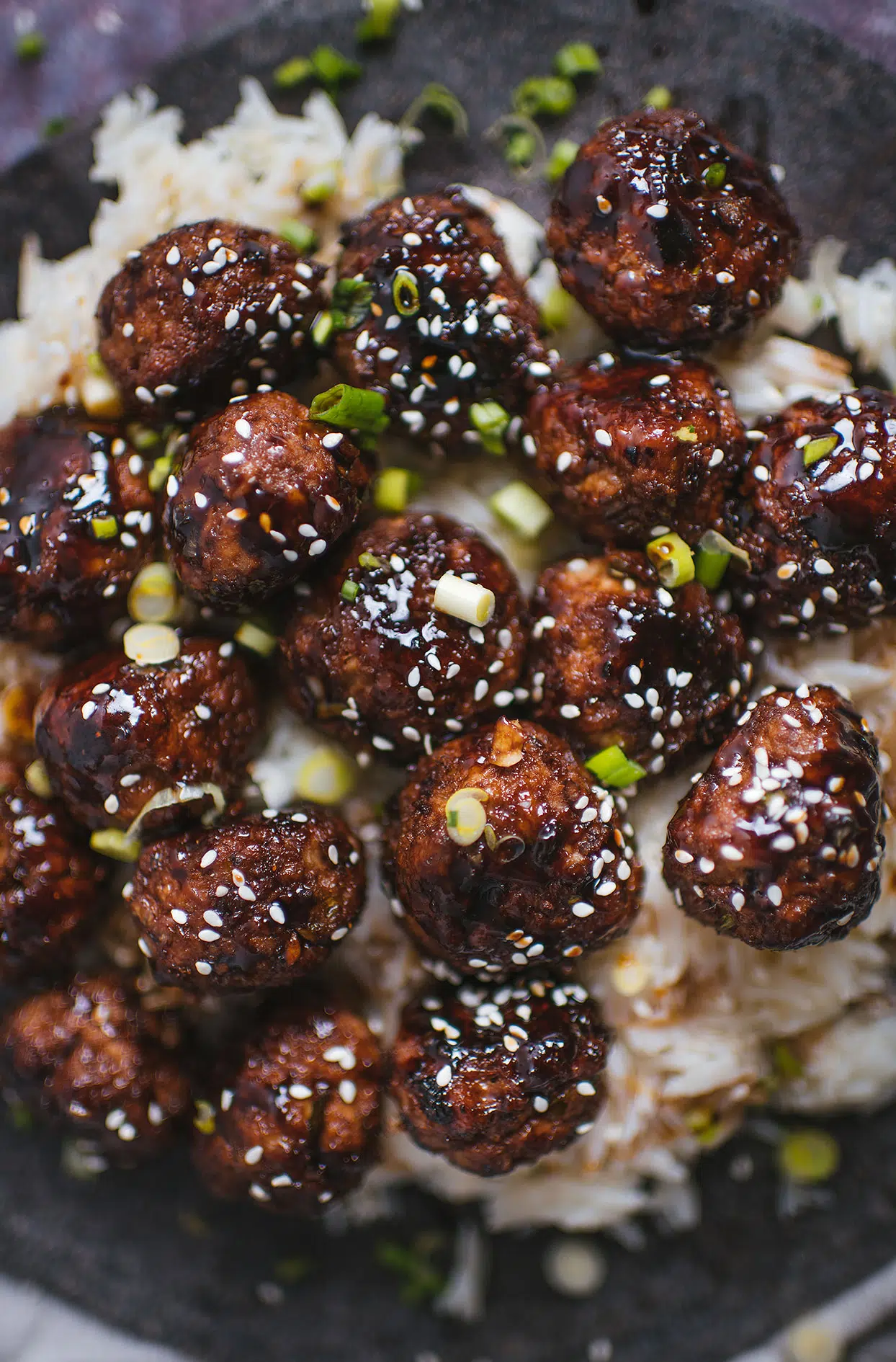
That plays in the same league as the soy and honey pork meatballs. The sharp hoppy bitterness balances the sweetness of the honey sauce, while the tropical and citrus notes make a natural bridge with the ginger and sesame oil. A beer that holds its own against the sauce without dominating it. Exactly the profile you want for Asian-inspired food.
An Alsace Riesling that goes after the soy and honey pork meatballs as if it were made for them. The Riesling's nice acidity cuts the sweet-and-salty side of the soy-honey-hoisin sauce, while the lemon notes and the mineral finish balance the richness of the pork. It's the classic Alsace and Asian cuisine pairing that high-end restaurants keep for their connoisseurs.
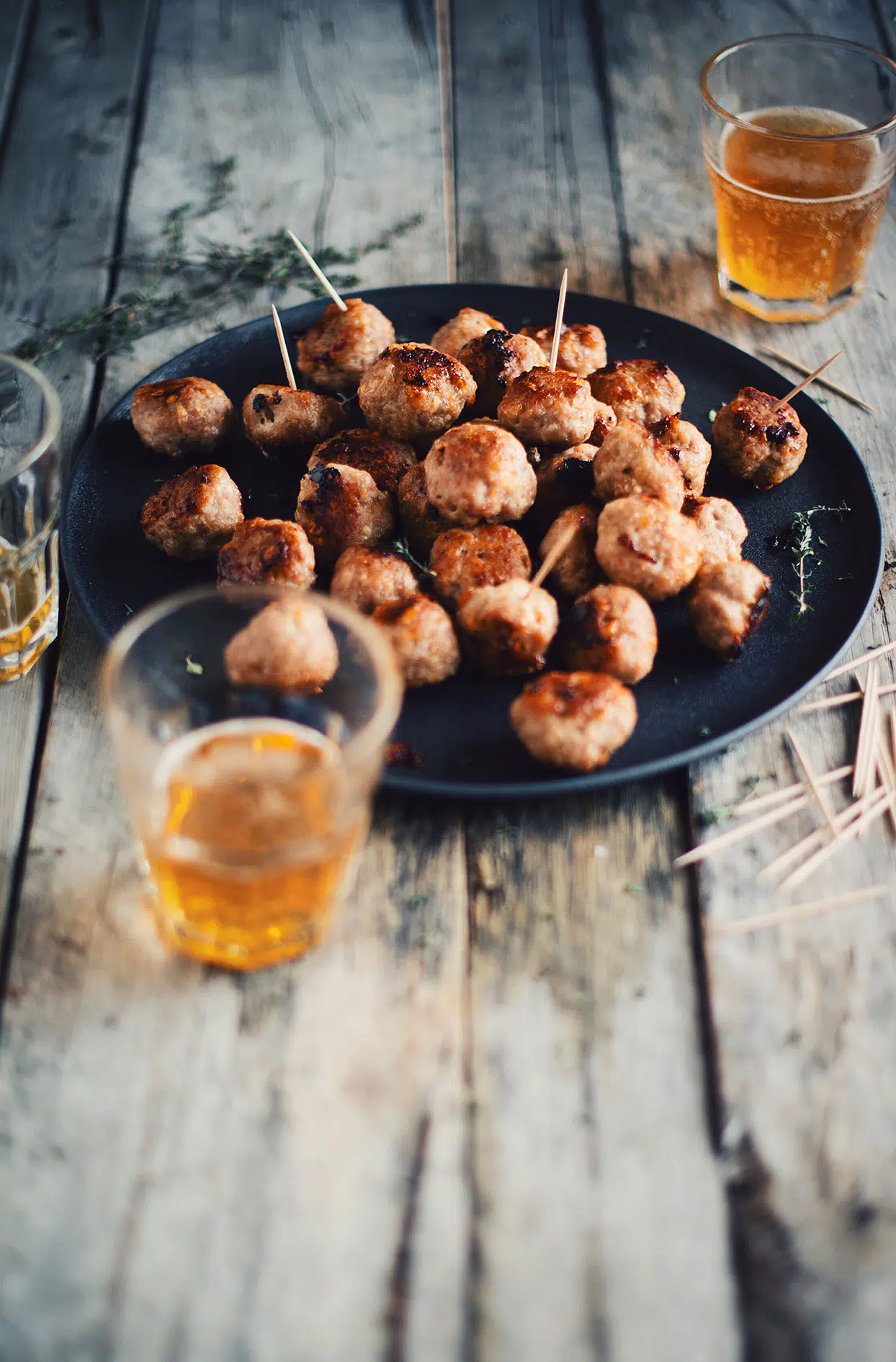
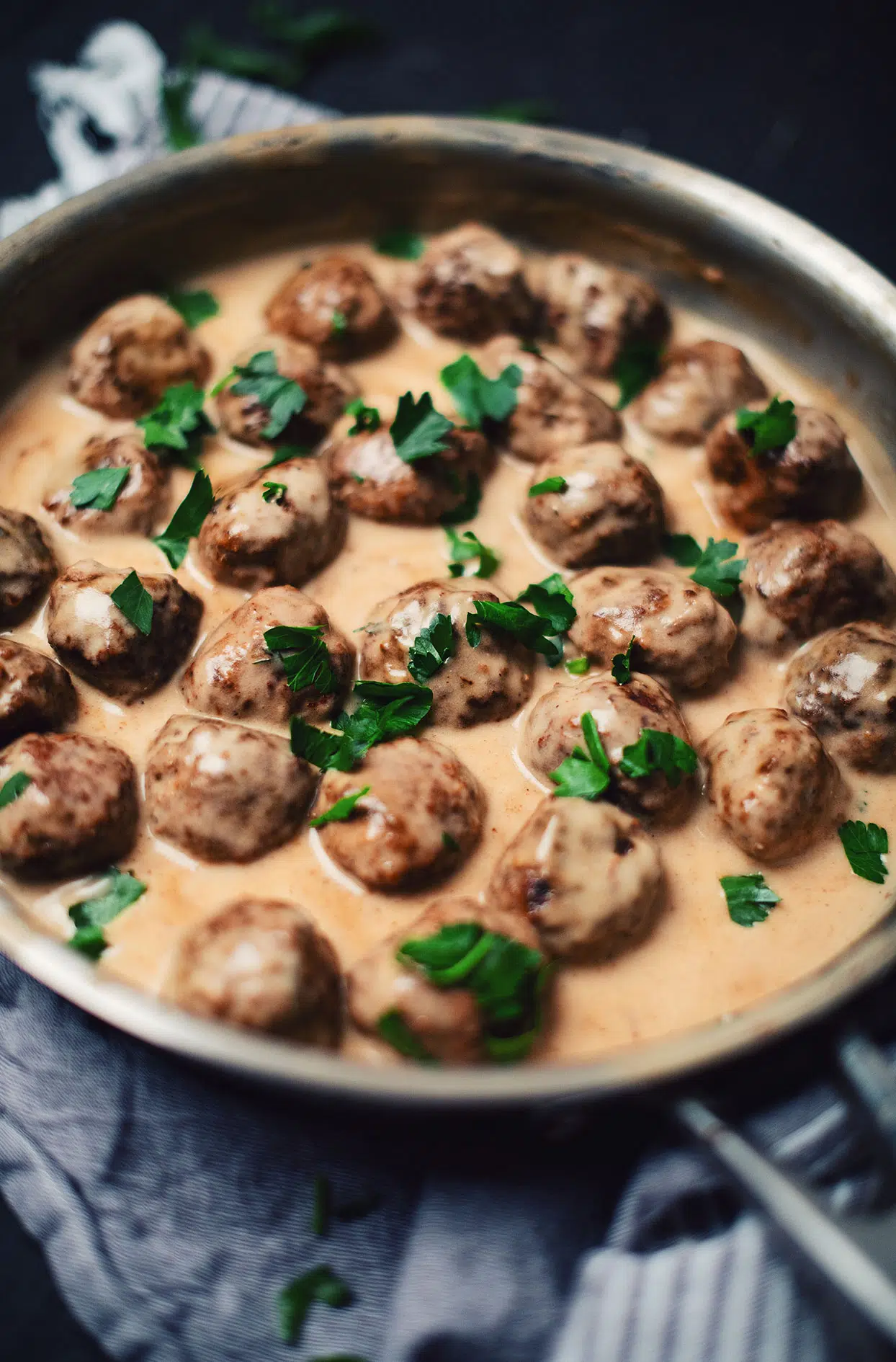
Pork, cheddar and maple in the same meatball: it's fatty and sweet. A German-style pilsner, with honey, caramel and fresh bread, sits right on top, and its light bitterness is quickly softened by the cheese. The mouth stays clean, which is the whole point.
It's fresh, full of flavour and will go really well with these meatballs. Notes of citrus, ripe apple and flowers with a dry finish that will cut the fat and salt of this starter!
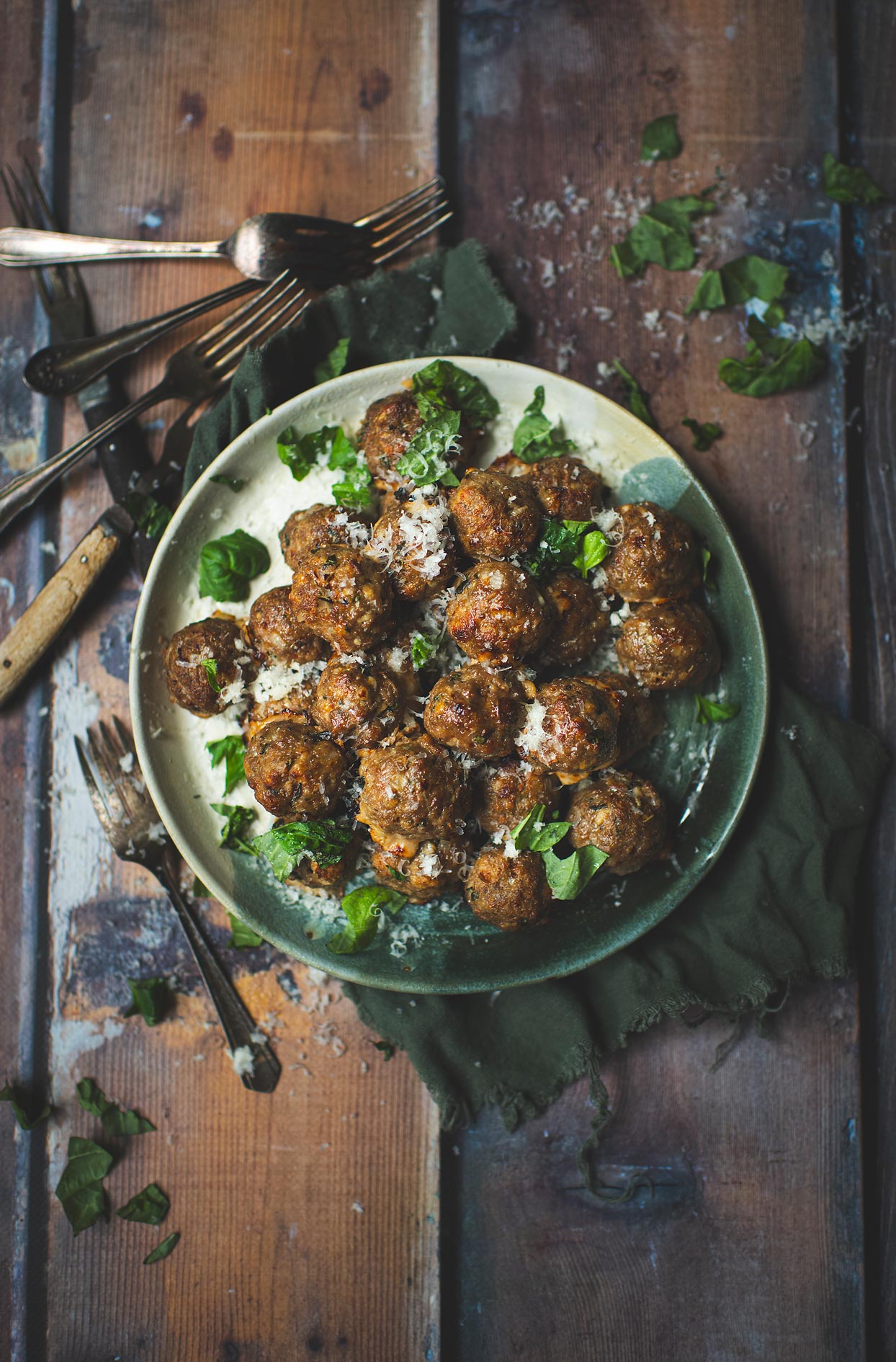
An English brown ale, built on toasted malt rather than hops. The choice comes from the oven's top heat: these meatballs come out with a properly roasted top, and the oven-toasted malt of a brown ale speaks the same language. It has enough body to stand up to the parmesan without covering the veal.
A medium-bodied sangiovese from Puglia, on jammy red fruit with a touch of cocoa. Sangiovese is the Italian grape for meatballs for a reason: its acidity scrubs the fat of the veal and answers the salt of the parmesan, which otherwise builds up. A tannic red would flatten the veal. Serve it at 16 °C.
The malt sugar answers the acidity of the tomato sauce: that's the heart of the pairing. This bitter adds a herbal finish that recalls the herbs in the pot, and its dryness lets the melted cheese coat the palate. Simmered meatballs, an English beer, a Sunday dinner.
This corvina goes brilliantly with my 3-meat Polpette meatballs with its notes of black cherry, spice, almond and roasted ripe fruit. Its rich texture and supple tannins coat the meats simmered in the fresh tomato sauce while its freshness cuts through the fat of the parmesan and the cheese curds. Serve around 16°C.
A straight, mineral Chablis with no oak on it at all. Properly dry. That is exactly what you need to cut through the sour cream and butter in my Swedish meatballs. Its edge of acidity and its green apple and lemon notes clean the palate between bites, and the saline finish stands up to the beef broth without ever stealing the show. The SAQ keeps it on the shelf year round. It is there when you go looking.
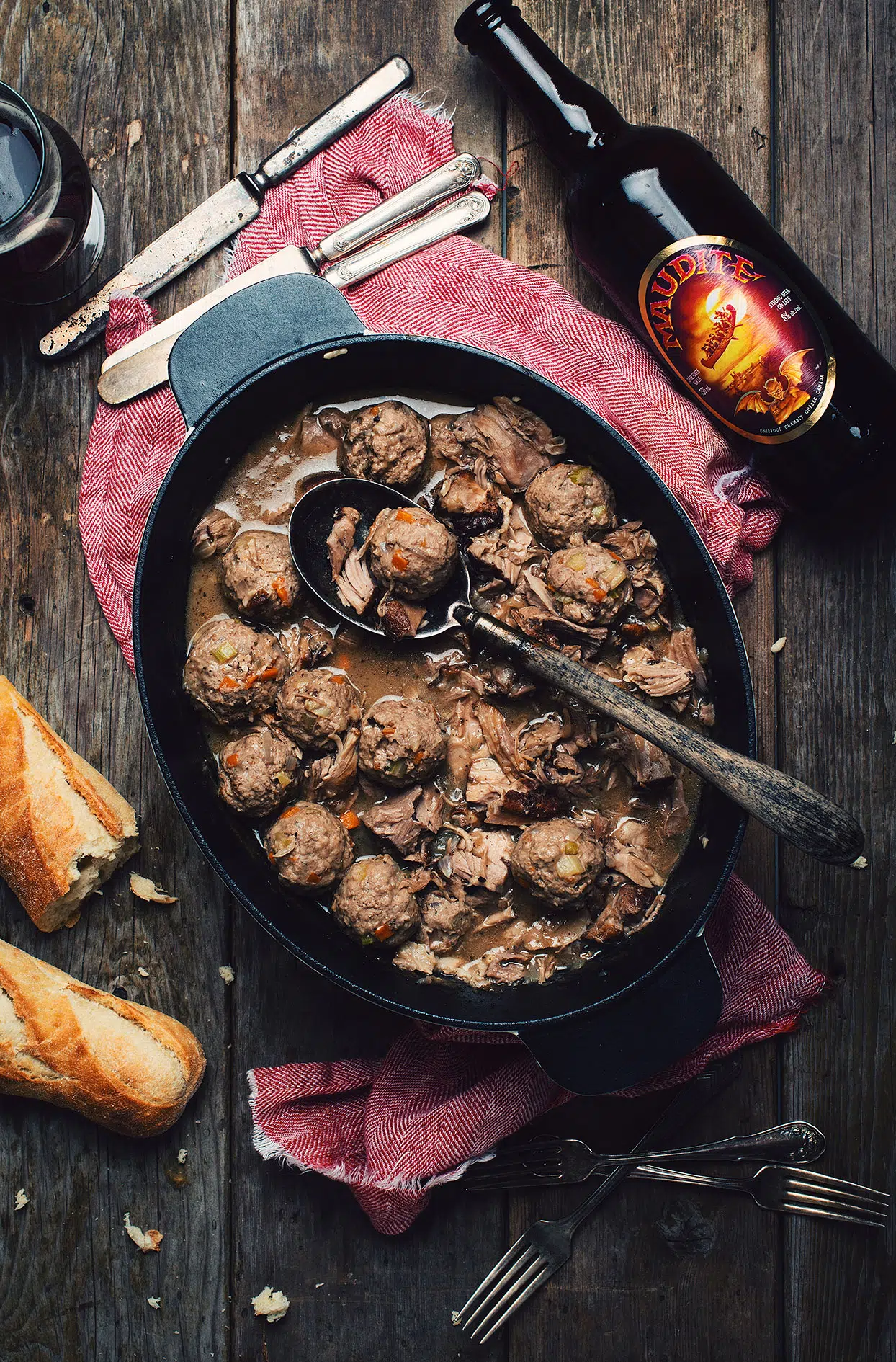
Meatballs, pigs' feet, toasted flour: the holiday stew is heavy and owns it. The malt, orange and clove in the beer fall exactly into the spices of the dish, and its alcohol cuts through the brown sauce. A family table pairing.
A great, excellent Portuguese. At a more than reasonable price! Complex nose of pepper, forest floor, a hint of oak, slightly jammy raspberry, smoke, rosewood. Even olives. Complex enough for you? The palate is powerful, with a long finish and rounded tannins. What a wine!
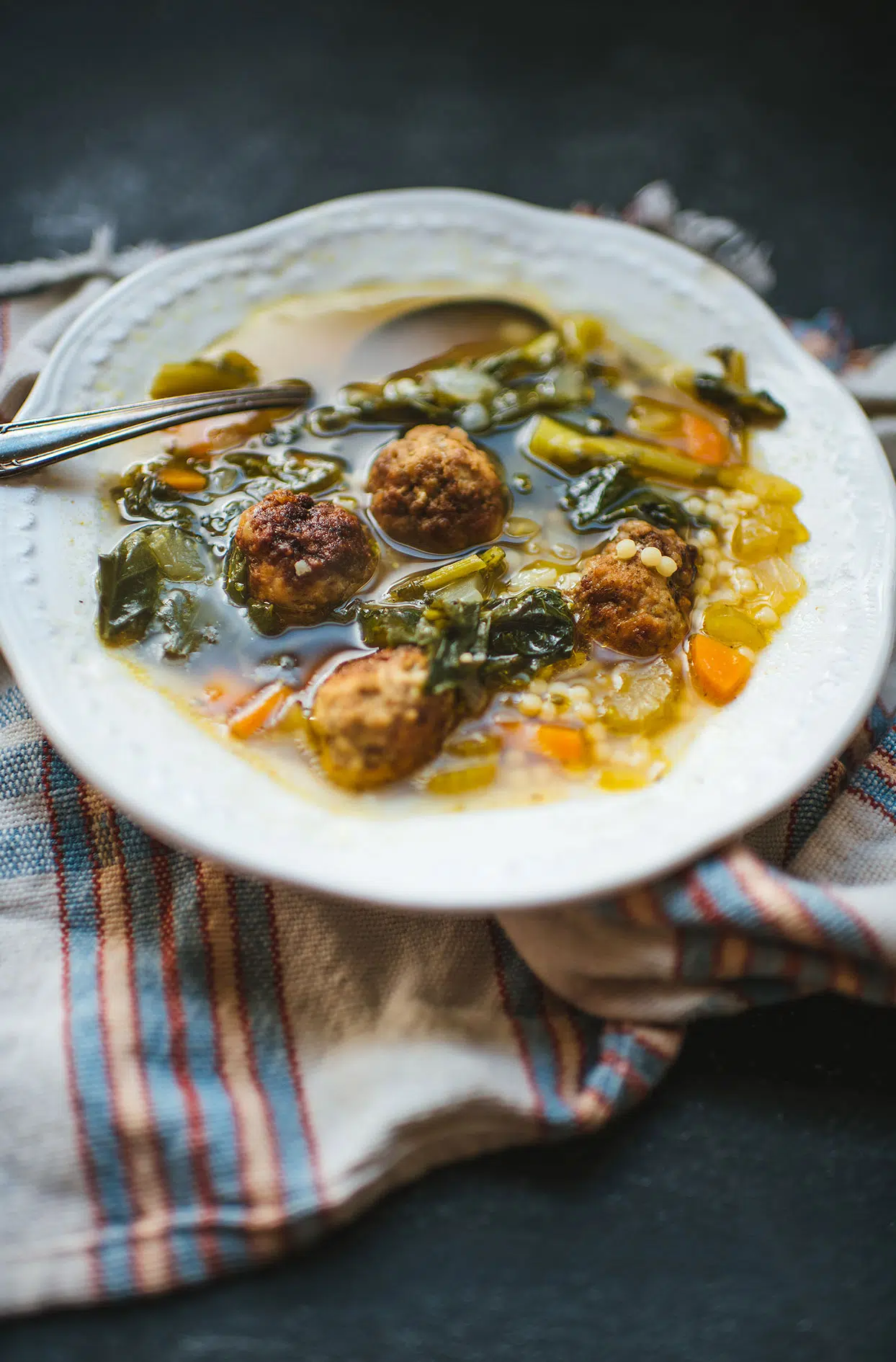
You'd open a natural red with this soup, and the blackberry sour offers the same kind of fruity tannin. The fat of the broth and the meatballs softens its acidity, and its low alcohol makes it easy to drink between spoonfuls.
This lovely 100% Nero d'Avola is a charmer. With notes of ripe dark red fruit and cedar, with an anise and herbal side, it's a sturdy wine with silky tannins. Long on the palate, it's a charming, warm wine, and it will be a very nice companion for this Italian meatball soup.
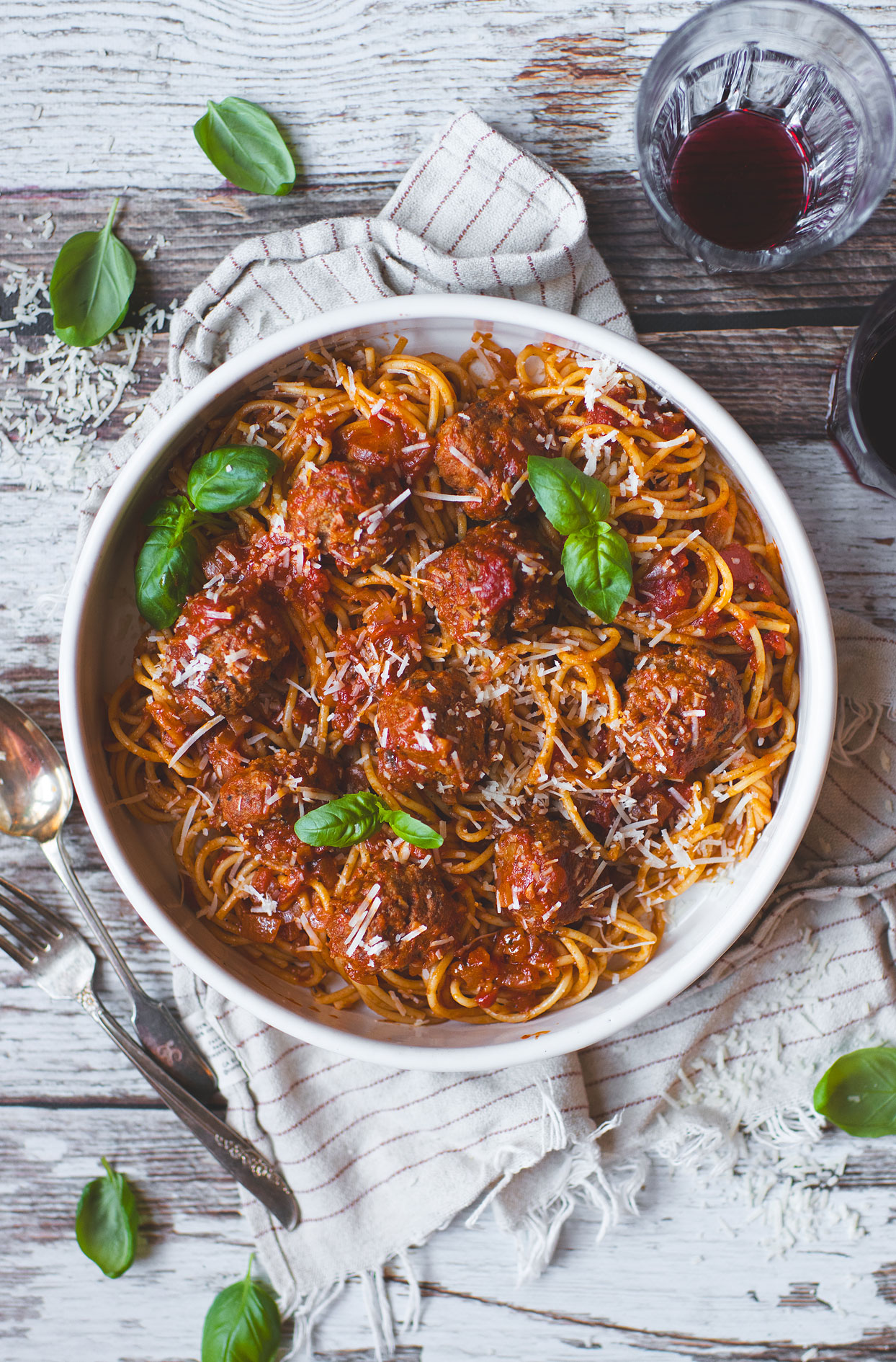
A brown ale with caramel, hazelnut and molasses notes makes a killer match for these spaghetti and meatballs. Its malty side hugs the deep, savoury flavour of the simmered tomato sauce, while the slightly bitter finish balances the richness of the Parmigiano Reggiano and the juicy meatballs.
A generous, fruity Italian Primitivo with notes of dark fruit, plum and soft spice that goes wonderfully with my best spaghetti and meatballs. Its roundness matches the richness of the red wine tomato sauce, while its medium structure holds up against the beef and Italian sausage meatballs. The natural Italian pairing.