

Meatballs in tomato sauce (Polpette)
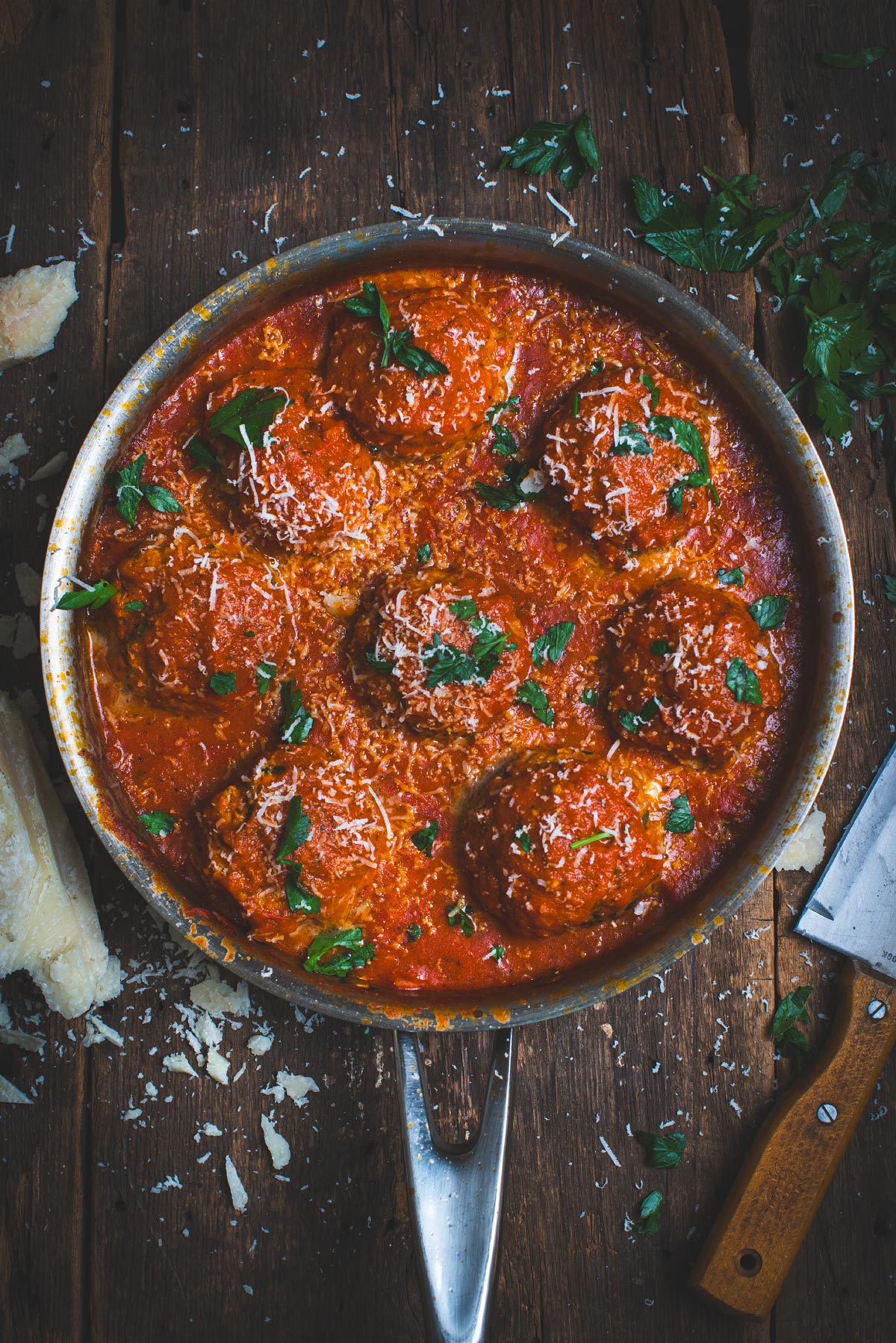
- Preparation 1 h 15 min
- Cooking 1 h
- Servings 4 to 6
- Freezing Absolutely
Ads
🍝 My weekend polpette. Slow-food meatballs worth the afternoon
These polpette are the recipe I keep for a Saturday. Not a Thursday night before soccer practice, not something you throw together while the pasta water boils. You chop, you mix, you roll twenty meatballs by hand, you let a pot of tomatoes go quiet on the back burner for a while. It takes what it takes. That is the whole point of the dish, and it is why I only make them when there are people coming over.
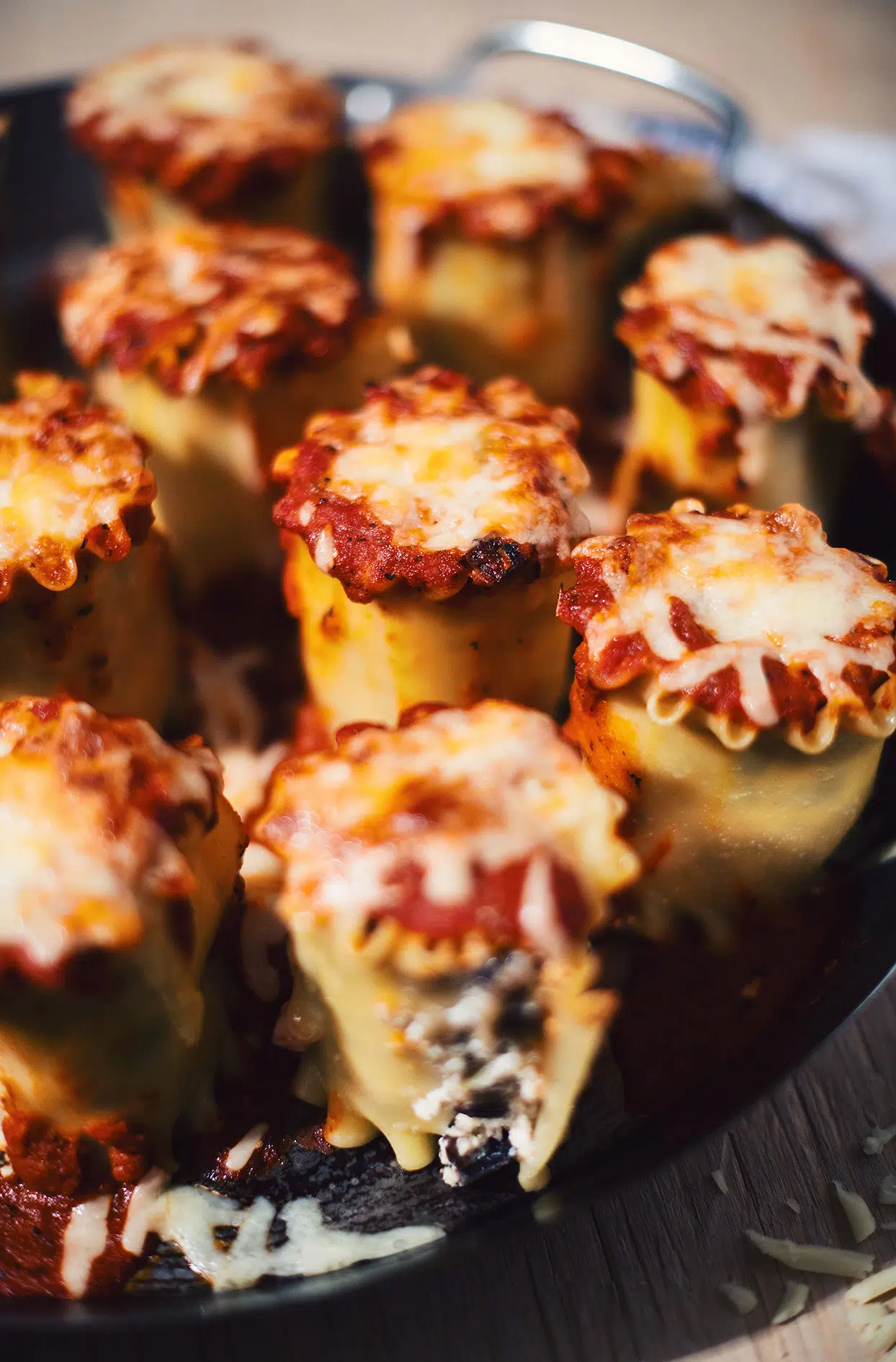
🧀 Three meats, three cheeses, and one cold surprise in the middle
Pork brings the fat and that smell that fills the house. Veal brings tenderness nothing else matches. Beef gives the whole thing a backbone. On the cheese side it is also a trio: parmesan grated straight into the mix, ricotta for softness, and then the part people remember, very cold cheese curds pushed into the center of every meatball. Cut one open at the table and it stretches. Add finely chopped spicy chorizo and Genoa salami and you have a meatball that tastes like it came out of somebody’s grandmother’s kitchen. Mine came out of a fridge cleanout. It stayed.
🍞 Broil first, simmer second, then serve them on whatever you want
The two-step cook is not optional. Five to seven minutes under the broiler builds the browned crust, then ten to thirteen minutes in the simmering sauce finishes them without ever drying them out. Skip the broiler and you get pale, boiled-tasting meatballs. After that, do what you like: spaghetti, penne, rigatoni, white rice, creamy polenta, or a warm loaf torn apart for sopping up the sauce made from seven fresh tomatoes. That last one is my favorite, and I am not sure it is close.
Ads
Ads
🥩 Why three meats instead of one
Pork carries the fat. Veal carries the tenderness. Beef carries the flavor. Drop any one of them and you feel the hole: all-beef polpette come out firmer and drier, all-pork come out soft and a little flat. You can absolutely do 100% ground beef or a pork-and-beef split and still eat well. The trio is what I make when I want somebody at the table to stop mid-bite.
🍞 Bread soaked in milk, not dry breadcrumbs
Cubed bread soaked in milk is called a panade, and it is the single biggest difference between a tender meatball and a rubbery one. Dry breadcrumbs pull moisture out of the meat. Wet bread puts moisture in and holds it there through the simmer. I use multigrain brown bread because it has more going on than white, but a stale baguette or a ciabatta heel works fine. The tablespoon of lemon juice in with the milk is mine: it loosens the meat slightly and cuts the fat. Subtle. Worth doing.
🧀 The curds have to be COLD
This is the one rule I would not bend. Cheese curds are the squeaky fresh cheddar curds sold in Quebec by the bag, and if you use them at room temperature they melt out of the meatball long before the meat is cooked. Straight from the fridge, they survive the broiler and the simmer and they stretch when you cut in. No curds where you live? Cut fresh mozzarella into small cubes and freeze them for fifteen minutes first. Low-moisture mozzarella works too and leaks less, though the pull is not as dramatic.
🌶️ Chorizo and salami are about a third of the flavor
Spicy chorizo plus Genoa salami, both chopped fine. It sounds like a lot of cured meat inside a meatball that already has three kinds of ground meat, and it is, and that is the recipe. Pancetta, prosciutto, capicola, soppressata, mortadella: any of them will do the job. What you cannot do is leave the charcuterie out and expect the same plate.
🤲 Mix gently, and stop early
Once the meat goes in, use your hands and stop as soon as everything is evenly distributed. Overworked ground meat turns dense and bouncy, the same way overworked bread dough turns tough. Damp or lightly oiled hands keep the mixture from gluing itself to your palms while you roll.
📏 Twenty meatballs, about 2.5 oz (75 g) each
Billiard-ball size. Big enough to be a statement on the plate, small enough to eat in two bites over pasta. Two pounds of meat total gives you twenty, and all twenty fit in a 6-quart (6 L) Dutch oven in a single go. Smaller pot? Simmer them in two batches of ten rather than crowding them, or they steam instead of soaking up sauce.
⏲️ Make them the day before
The sauce is better on day two, full stop. Tomatoes need a night in the fridge to settle into themselves. Shape the meatballs, make the sauce, keep them in separate containers, and do the broil and the simmer the next day. Fifteen minutes of work before guests arrive instead of two hours.
♻️ Reheating leftovers without wrecking them
Covered dish, 350°F (175°C), twelve to fifteen minutes, with a spoonful of sauce over top. Or low heat on the stove in the sauce with a splash of water, because the meatballs drink up sauce overnight and it goes thick. Stir carefully. I do not own a microwave, so those are the only two methods I can actually vouch for.
✅ What to serve with polpette
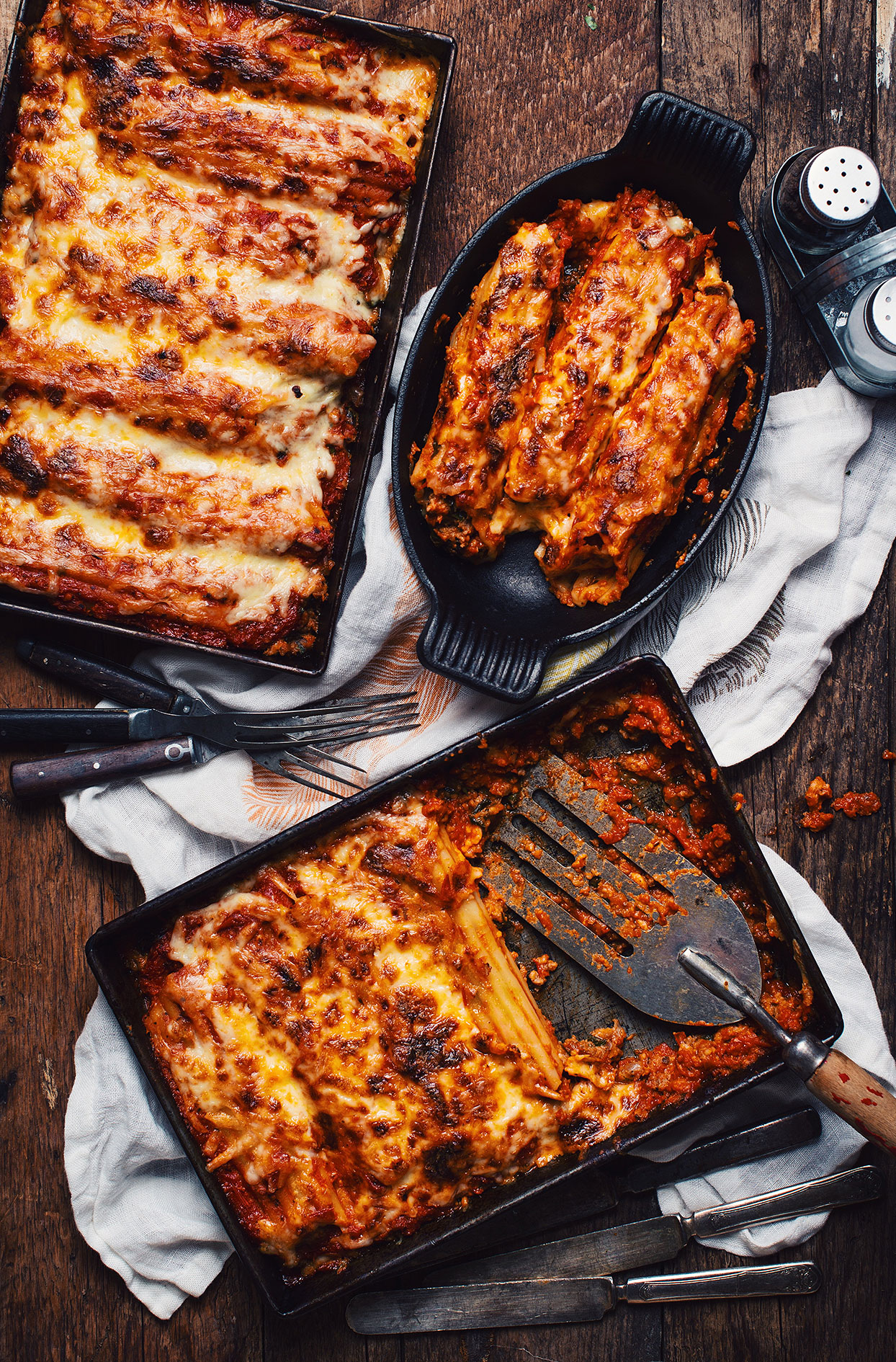
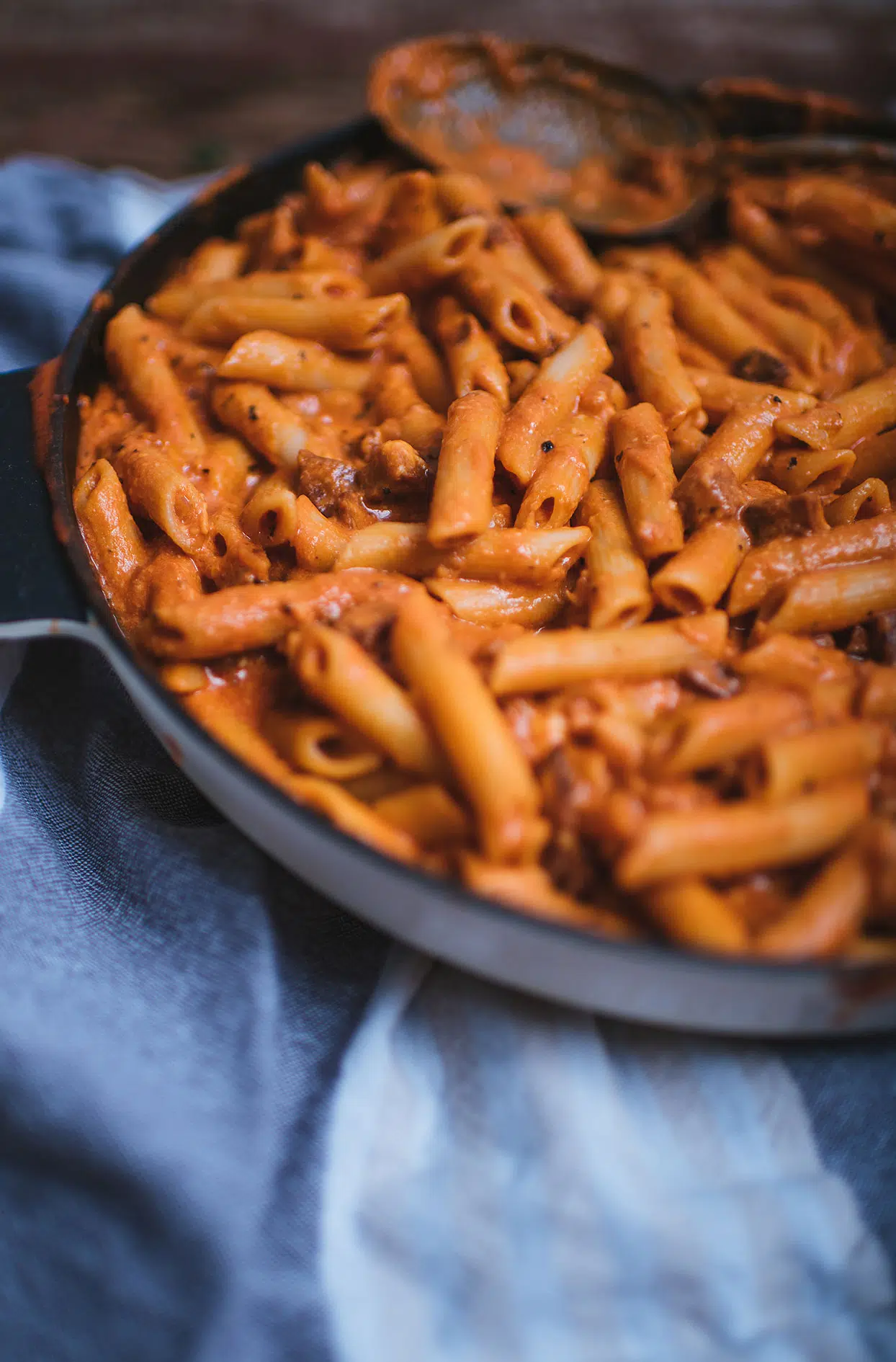
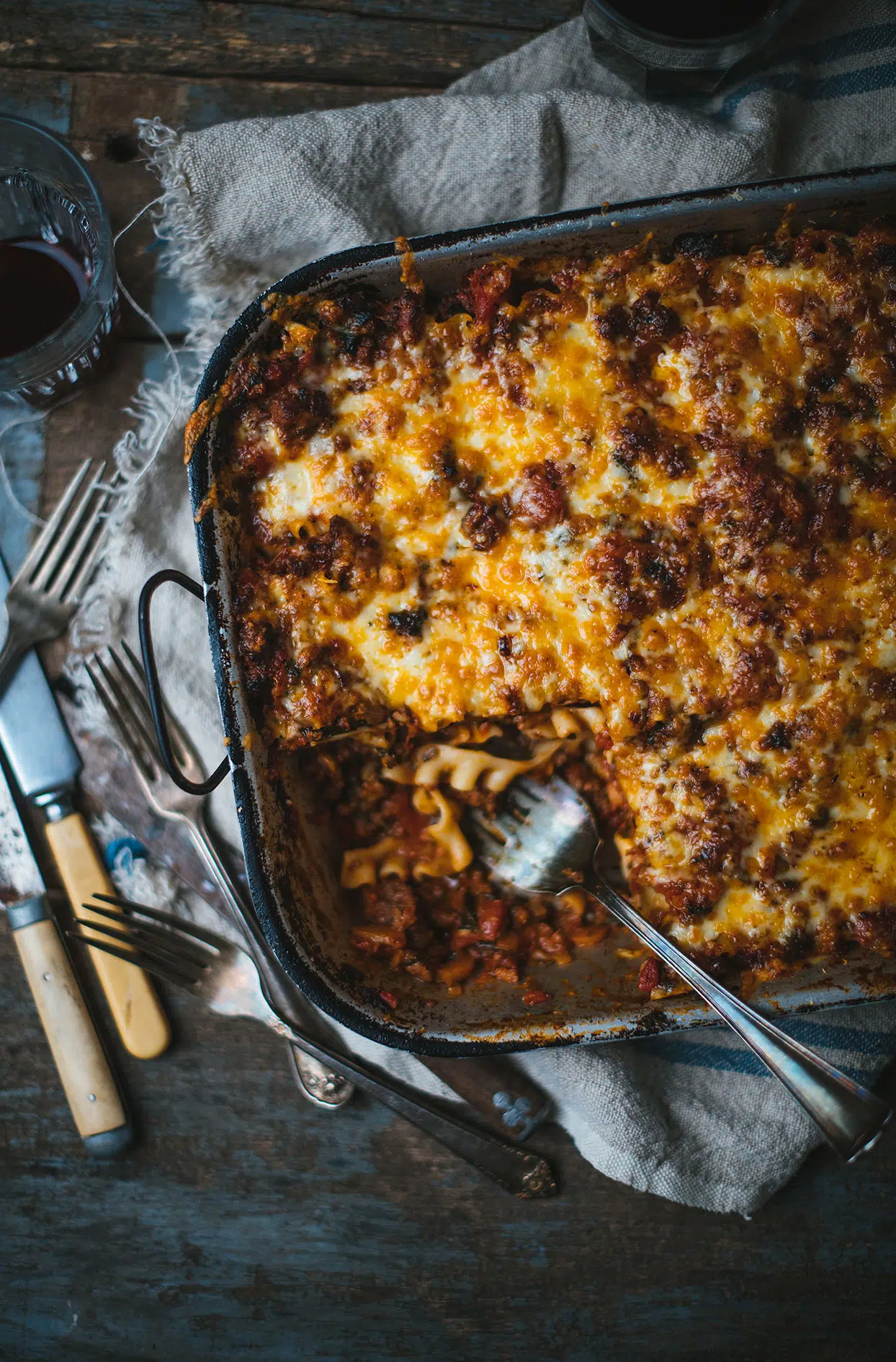
Spaghetti is the obvious one, and if that is the direction you are going you may as well look at my spaghetti and meatballs, which is built around it. Penne and rigatoni trap more sauce in their ridges. White rice and creamy polenta both work when you want something softer under the meat. My own preference is a warm loaf and nothing else, eaten standing at the counter. On the side, an orzo salad with bocconcini and pesto or a creamy Greek pasta salad keeps the meal from getting too heavy. And if you have the same crowd back next weekend, the lasagna with cheese curds uses the same trick.
Ads
Homemade tomato sauce
- ¼ cup (60 ml) olive oil
- 1 red onion, finely chopped
- 2 garlic cloves, finely minced
- 7 fresh tomatoes, cubed
- 1 can (5 ½ oz / 156 ml) tomato paste
- 1 bay leaf
- ½ tbsp (7.5 ml) white wine
- ½ tsp (2.5 ml) sugar
- ½ tsp (2.5 ml) dried basil
- ½ tsp (2.5 ml) dried oregano
- ½ tsp (2.5 ml) dried thyme
Meatballs
- 2 cups (500 ml) multigrain brown bread, cubed (any bread works, but multigrain brown is my favorite)
- ⅓ cup (80 ml) milk
- 1 tbsp (15 ml) lemon juice
- 1 tsp (5 ml) salt
- 6 garlic cloves, finely minced
- 2 eggs
- 1 small red onion, finely chopped
- 1 cup (250 ml) grated parmesan + extra to garnish
- 1 cup (250 ml) finely chopped kale
- ½ cup (125 ml) finely chopped spicy chorizo
- ½ cup (125 ml) finely chopped Genoa salami
- ½ cup (125 ml) finely chopped flat-leaf parsley + extra to garnish
- 1 cup (250 ml) light ricotta cheese
- ⅔ lb (300 g) medium-lean ground pork
- ⅔ lb (300 g) medium-lean ground veal
- ⅔ lb (300 g) medium-lean ground beef
- 7 oz (200 g) very cold cheese curds
- Freshly ground pepper, to taste
- Rice, pasta or bread (for serving)
Ads
Preparation
TOMATO SAUCE
- In a saucepan over medium heat, pour in the oil. Add the onion and garlic and sauté for 3 to 4 minutes, stirring regularly.
- Add the rest of the sauce ingredients, mix well and simmer for 15 minutes. Remove the bay leaf and purée with an immersion blender (or in a blender). Set aside.
MEATBALLS
- In a very large bowl, combine the bread, milk and lemon juice. Mix well so every bread cube is soaked through (add a little more milk if needed). Salt and pepper. Let soak 10 minutes.
- Add all the remaining meatball ingredients to the bowl, except the meats and the cheese curds. Mix well.
- Add the 3 meats, pepper, and mix gently but thoroughly for a few minutes to combine. Shape 20 billiard-ball-sized meatballs (about 2.5 oz / 75 g each), pressing 1 or 2 pieces of very cold cheese curd into the center of each one. Set them on a parchment-lined baking sheet.
- Set the oven to broil. Cook 5 to 7 minutes, turning them occasionally, until the meatballs are well browned.
- Bring the tomato sauce to a boil, then lower the heat. Slide the meatballs into the sauce and simmer 10 to 13 minutes. At billiard-ball size, all 20 fit in a 6-quart (6 L) Dutch oven. In a smaller pot, simmer them in 2 batches of 10.
- Serve over rice, pasta (spaghetti, penne) or with bread for sopping up the sauce. Spoon extra sauce over the top, garnish with fresh parsley and a ton of parmesan!
Polpette is simply the Italian word for meatballs, plural. One is a polpetta. In Italy they are usually smaller than what North Americans picture, often made from whatever was left over, and they are not automatically served on spaghetti. Mine are bigger than the Italian standard and stuffed with cheese, so call them polpette with a Quebec accent.
You want a cheese that melts into a stretch but does not turn to liquid and escape. Fresh cheese curds are my pick, straight from the fridge and very cold. Low-moisture mozzarella cut into cubes is the easiest substitute and leaks the least. Fresh mozzarella gives the best pull but releases water, so freeze the cubes briefly first. Skip anything soft and spreadable like cream cheese, it will not hold its shape through the broiler.
Ten to thirteen minutes for these, and that is because they go under the broiler first for 5 to 7 minutes. The broiler builds the crust and cooks the outside, the sauce finishes the middle. Raw meatballs dropped straight into sauce need 25 to 30 minutes at a gentle simmer instead, and they never brown. Keep the sauce barely bubbling either way. A hard boil breaks them apart.
Almost always one of three things. The mixture was too dry, so soak the bread in more milk. The meat was too lean, and you need at least medium-lean ground meat for the fat to hold everything together. Or you kneaded it too long and the proteins tightened up, which makes meatballs crack rather than bind. Eggs, milk-soaked bread and grated parmesan together are what actually do the binding here.
Not spaghetti, usually. In Italy polpette often arrive as their own course with bread, or over a bit of sauce with nothing under them at all. Spaghetti and meatballs on one plate is an Italian-American invention, and a very good one. Serve these however you want: pasta, rice, polenta, or a torn loaf for the sauce.
A red ale is the pairing my polpette ask for, and Le Trèfle Noir's Chronique answers it precisely. Its caramel malt and quiet hazelnut notes meet the sweetness the tomatoes built up over a long simmer, rounding the acidity instead of arguing with it. The earthy English hops cut a clean line through the parmesan and the cured meats, so every bite of meatball lands as fresh as the first. Serve it cool, around 46°F (8°C).
See the productAds
Ads

Ads
Ads
Ads