

Perfectly juicy Christmas roast turkey
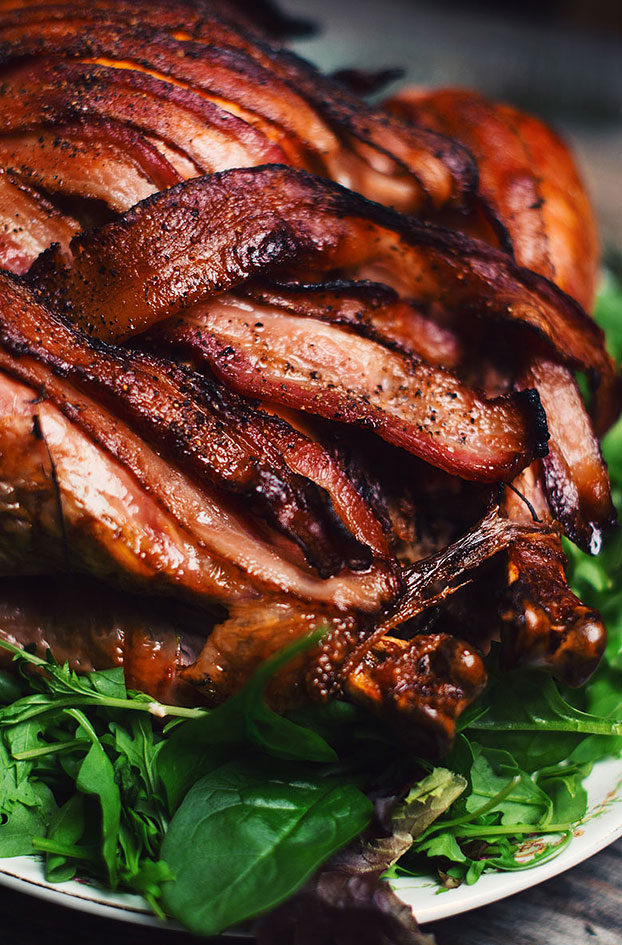
- Preparation 1 h
- Refrigeration 12 h
- Cooking 3 h
- Servings 8 to 12
- Freezing Absolutely
Ads
🧂 The brine, and why it is absolutely wild
A brine is heavily salted water that you soak the meat in. Said out loud it sounds like nothing. What actually happens is that the salt changes the structure of the proteins in the flesh, and the turkey starts holding on to water instead of pushing it out in the oven. It even absorbs some of it, along with everything else soaking in there: the wheat beer, the juniper, the fennel, the bay, the coriander, the thyme. Twelve hours later the seasoning is no longer sitting on the skin, it is inside the meat.
The beer is my thing. I put it in nearly everything I cook, because it adds flavour and it completes the rest instead of stealing the show. Three bottles of Belgian-style wheat beer in a brine do exactly that: fruit, a hint of spice, and a base note that stays in the meat.
The result is a breast that stays juicy even if you leave it five minutes too long. An unbrined turkey breast forgives nothing. This one forgives a lot. It is the only truly non-negotiable step in the recipe, and it is the one people skip most often.
⏳ Fifteen years of making this one, published here in 2016
I was already making it long before it went online. I have cooked it every year for fifteen years, and it has lived on the site since 2016. Not much changed between the two, because there was not much to change.
What makes me happiest is the number of people who write to tell me they tried it once and now make nothing else. That is worth more than any comment. Christmas turkey is a dish you cook once a year: when somebody decides to stop looking, it is because it worked.
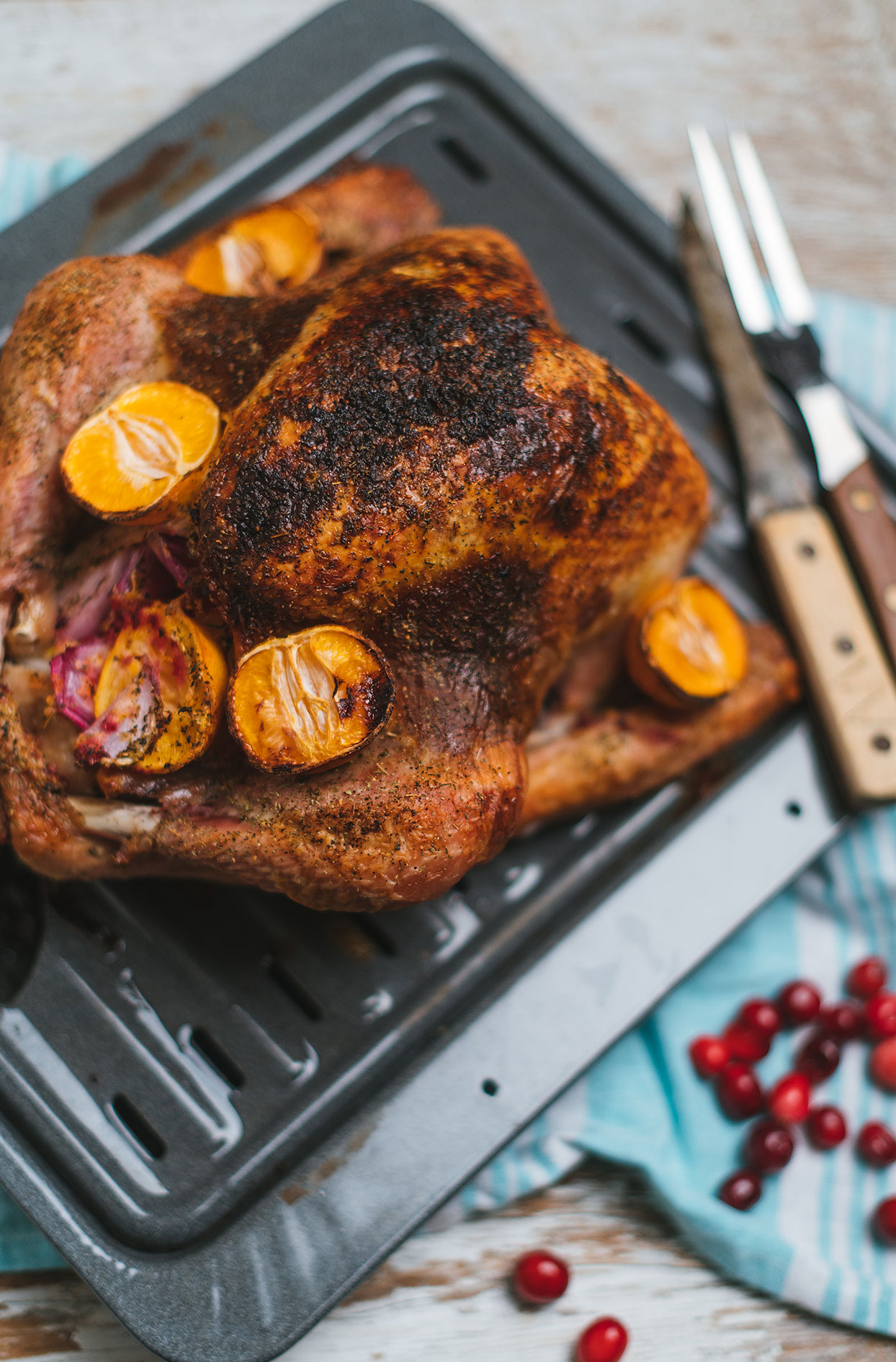
There are two whole birds on this site, this one and the clementine and cranberry turkey. Neither is better than the other: you pick based on what you feel like eating and which flavours you feel like trying that year. This one goes salty, smoky and maple. The other one heads for citrus and acidity.
🥪 My real argument: the leftovers
I always host at Christmas, and honestly, what I look forward to most is not the meal. It is the four months that follow. Turkey sandwiches with mayo and salt, turkey grilled cheese with cheese that stretches for days, hot chicken sandwiches when it is minus twenty outside. It is genuinely ridiculous.
That is why I buy 6 kg for eight people instead of calculating tight. The extra turkey is not waste, it is the best investment of the whole holiday season. And the maple bacon that cooked on top goes straight into the next day’s sandwiches.
Ads
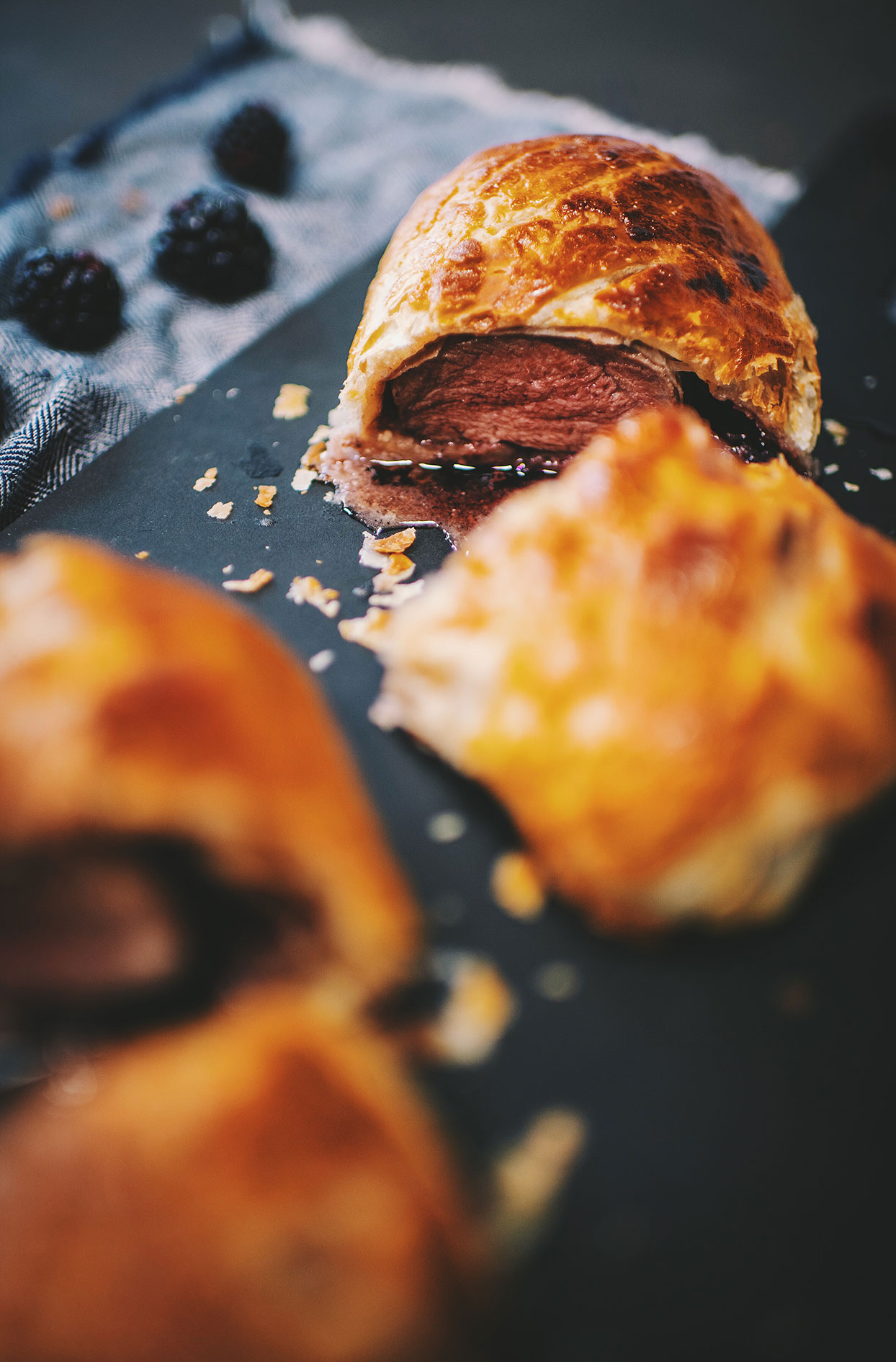
Ads
🧂 What a brine actually does to a turkey
Salt dissolved in water crosses the skin and denatures the proteins in the flesh. In plain language, the muscle fibres relax and hold on to water instead of squeezing it out under heat. A brined turkey loses roughly a third less juice in the oven than a plain one. At the same time, everything soaking in that liquid travels inward with the water: the beer, the juniper, the fennel. That is why the first bite tastes of something even at the centre of the breast, while an ordinary turkey only tastes of anything where there is skin.
🧂 Coarse or kosher salt, never fine
This is the detail that ruins brines. A cup of coarse sea salt and a cup of fine salt do not weigh the same: fine crystals pack down and you end up with almost double the salt for the same volume. Use fine salt and your turkey comes out inedible with no way to save it. Coarse sea salt or kosher salt, measured by the cup, no further thought required.
⏱️ Twelve hours, not three days
There is a tipping point. After about fifteen hours the flesh has absorbed all the salt it can hold and starts turning into ham. The texture goes rubbery and the saltiness becomes impossible to walk back. Twelve hours or overnight is perfect. If you sleep in and pull it at fourteen, no drama. Three days and you are throwing the bird out.
🧊 The cooler trick
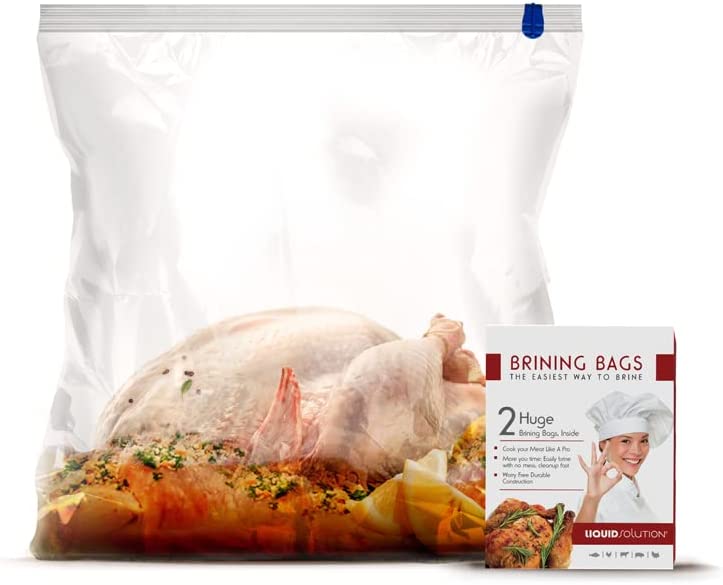
Nobody owns a pot that swallows 6 litres of water plus a 6 kg turkey, and nobody has the fridge space for it anyway. A fresh garbage bag set inside a clean cooler solves everything. Turkey in the bag, brine poured over, bag tied tight, ice bags packed around it. The cooler holds everything under 4 °C all night with no electricity, and in the morning you drain it into the sink. I did it this way for years before I owned a brining bag.
🌡️ The thermometer decides, not the clock
Two to two and a half hours is an estimate for a 6 kg bird. Yours may be bigger, your oven may be lying by fifteen degrees, the turkey may still be cold at the centre. The one thing that does not lie is a thermometer pushed into the thickest part of the breast without touching bone: 140 °F (60 °C) before the bacon goes on, 165 °F (74 °C) at the end, and 180 °F (82 °C) in the thigh. Without a thermometer you are gambling with the centrepiece of your holiday dinner.
🥓 Why the bacon only shows up at the end
Half a kilo of maple bacon laid on the bird from the start gives you burnt bacon and skin that never browns, because it steams under a blanket of fat. Adding it at 140 °F gives the bacon exactly enough time to render, crisp up and drip its maple down the breast over the last thirty minutes. The oven stays at 350 °F the whole way through, you never turn it up. The syrup brushed on top caramelizes at the same time. Out of the oven, those bacon slices are the most fought-over thing on the table.
⚖️ What size bird for how many people
The rule that works: about 500 g of raw turkey per person for a meal with no leftovers, 750 g if you want to eat it all week. My 6 kg bird therefore feeds twelve people tightly, or eight people with real leftovers. That is the math I use, and it is why the card says 8 to 12 servings. For anything bigger than that I will not hand you a timing rule: I have never cooked one, and the thermometer is what decides anyway.
🦃 A natural, un-injected bird? Change nothing
Most people buy a plain, un-injected turkey, and that is perfectly fine. You change nothing: same brine, same amount of salt, same timing. The brine does exactly the job the industrial injection is trying to imitate, only better and with real flavour in it. If yours happens to be butter-basted, it still works the same way, do not lose sleep over it.
🦆 The duck confit stuffing
Duck confit brings fat and depth that a bread stuffing will never have, and it is already cooked, so you have nothing to worry about at the centre of the bird. Any confit legs from the counter will do, there is nothing special to hunt for. The Honeycrisp holds its shape instead of collapsing into sauce and its acidity cuts the duck fat. Do not pack the cavity so tight that nothing can circulate: push hard, but let the stuffing breathe a little, otherwise the centre stays lukewarm while the breast is done.
🥣 The gravy, which I am not rebuilding here
Roasting juices deglazed with white wine make an honest sauce in five minutes. But if you want the real thing, the one that coats and stays on the mash, take my homemade demi-glace sauce and finish it with the turkey drippings. It is the same sauce I pull out for a homemade brown gravy night, and it can be made the day before.
📅 Getting ahead
Two days out, move the turkey from the freezer to the fridge. A 6 kg bird needs two full days, not one night. The morning before, measure all your brine spices into one bowl, slice the red onion, cut the celery and the apple, and boil your salted water early so it has time to cool. The brine has to be cold before the turkey touches it. Late in the day, the bird goes in for the night.
For the stuffing you can cut everything ahead and keep each item in its own container, but you mix it and load the cavity only as the turkey goes into the oven. Assembled stuffing sitting overnight inside a raw bird is the one real food safety risk in this recipe. The bacon also waits until the last minute: sliced ahead, it welds into a block and you lose ten minutes prying it apart while the turkey cools on the counter.
🥪 Leftovers keep four months
Bone the turkey the same evening, while it is still warm, and separate white meat from dark. The white goes in the fridge for the next three days of sandwiches. The dark and the rest go into the freezer in two-cup portions, in freezer bags with the air pushed out. Both hold four months: white and dark alike, neither one gives out before the other. The carcass goes into a pot of water with an onion and two carrots: best stock of the year.
✅ What to serve with my Christmas roast turkey
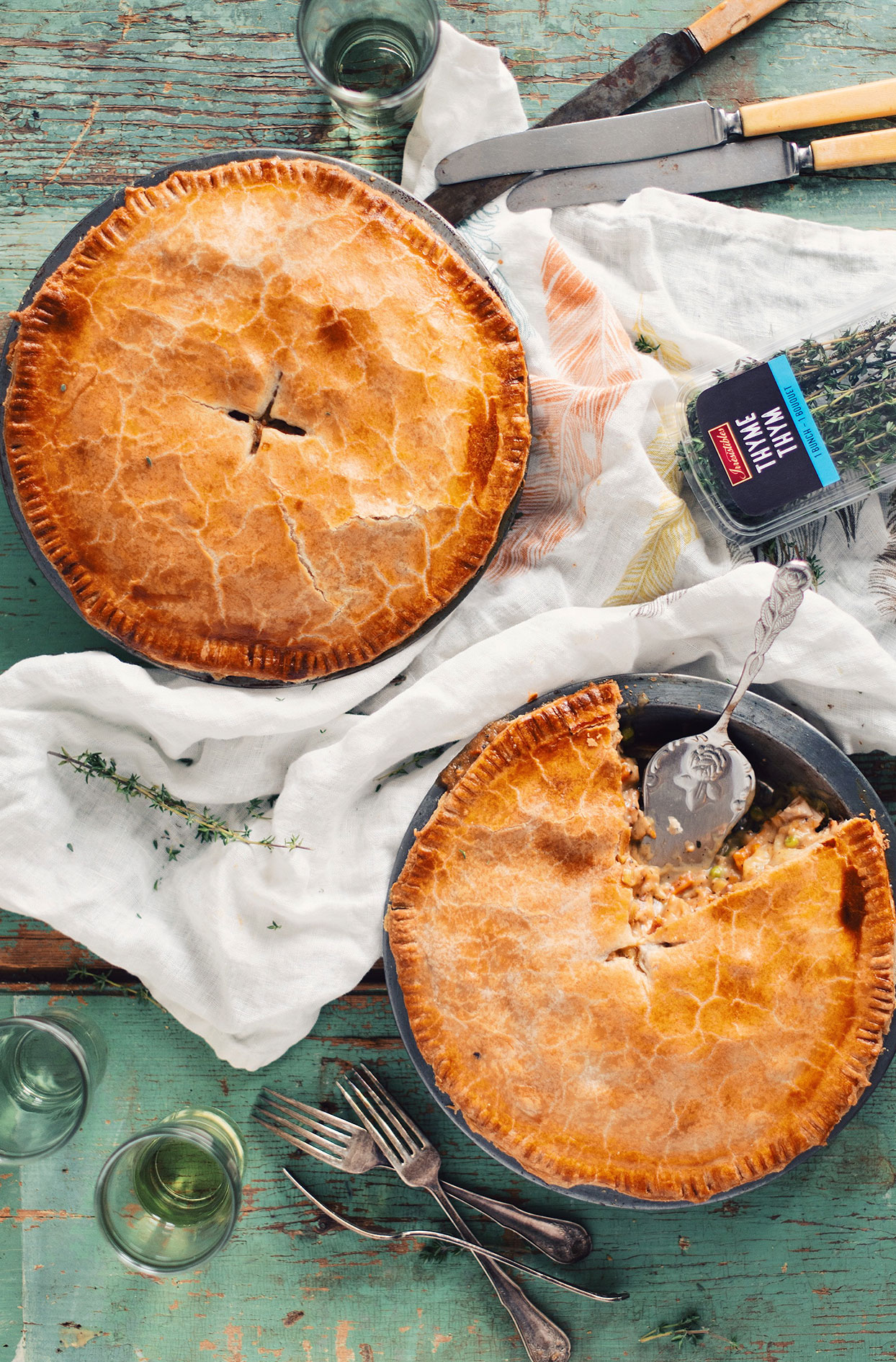
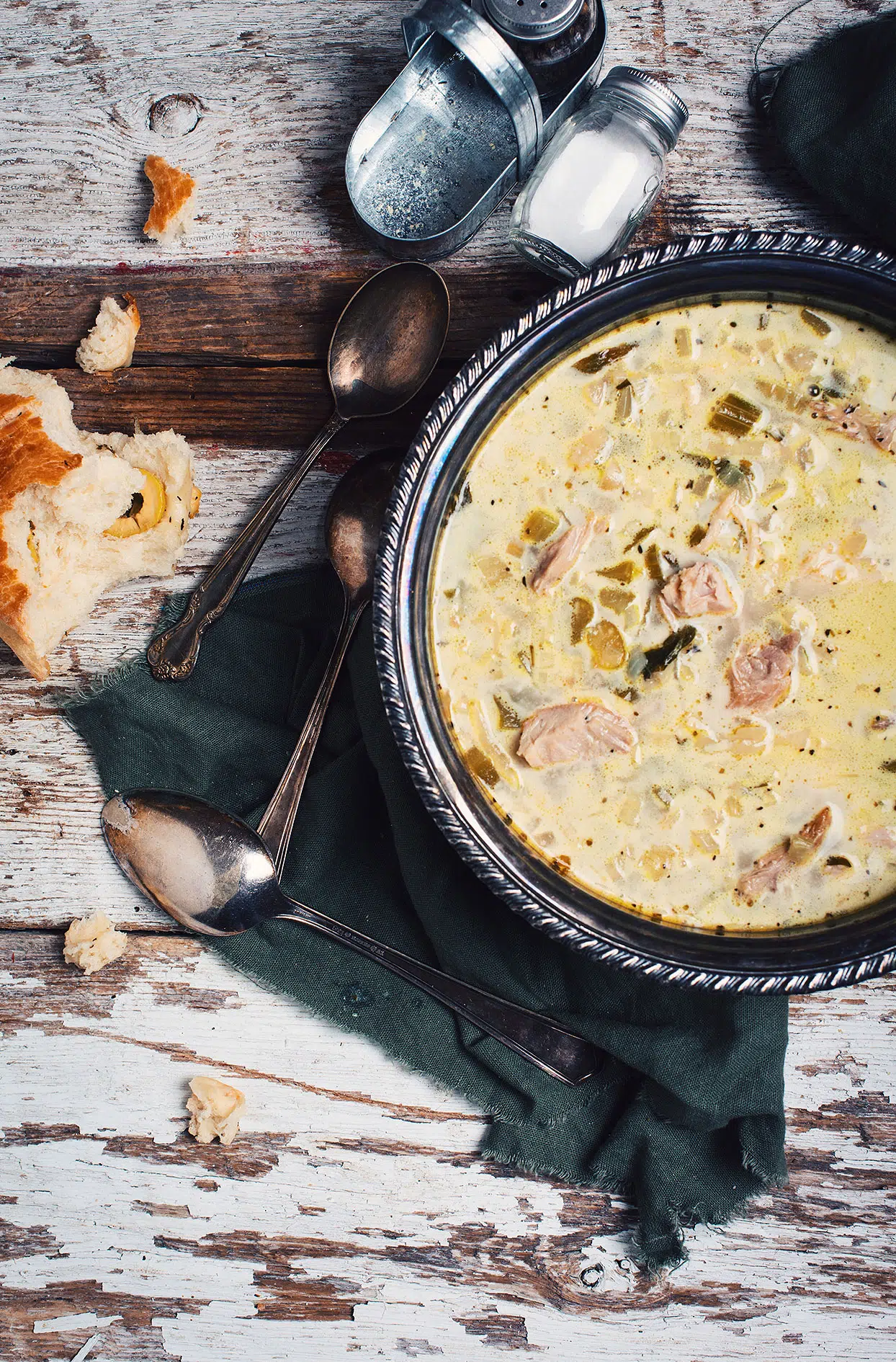
Mashed potatoes with far too much butter, carrots roasted in maple syrup, my homemade demi-glace sauce finished with the roasting juices, and a green salad to feel better about yourself. If you want to stretch the holiday table, the clementine and cranberry turkey takes the bird in a different direction. And for the days after, keep the turkey pie with leek, bacon and white beer and the creamy turkey and leek soup in mind: that is exactly where my leftovers end up.

Ads
Ingredients for the brine
- 1 young butter-basted turkey of about 6 kg (13 lb), neck and giblets removed, thawed
- 24 cups (6 L) cold water
- 1 cup (250 ml) coarse sea salt or kosher salt (never fine salt, it salts almost twice as hard by volume)
- 1/4 cup (60 ml) brown sugar
- 3 bottles (341 ml each) fruity Belgian-style wheat beer, any of them, even the cheapest one
- 4 bay leaves
- 2 tablespoons (30 ml) peppercorns
- 1 tablespoon (15 ml) juniper berries
- 1 tablespoon (15 ml) fennel seeds
- 1/2 tablespoon (7.5 ml) coriander seeds
- 4 fresh thyme sprigs
- 3 garlic cloves, peeled
- 2 celery stalks, cut in big chunks
- 1 red onion, finely sliced
- 1 red apple, quartered
- A big handful of fresh parsley
Ingredients for the rest
- Meat from 4 cooked confit duck legs, pulled
- 1 Honeycrisp apple, cored and cut in small wedges
- 1 red onion, cut in small wedges
- 3 garlic cloves, peeled
- 5 fresh thyme sprigs
- 500 g (1 lb) maple bacon
- 1/4 cup (60 ml) maple syrup
Ads
Preparation
- In a sauce pan, pour 4 cups (1 L) of water then add the salt and sugar. Bring to a boil, stir well to dissolve then remove from heat. Set aside.
- In a big big big pot or in a brining bag, place the turkey in the bottom then add the rest of the water and brining ingredients including the salt and sugar mix. Stir well and place in the fridge for about 12 hours or overnight. Do not go past about fifteen hours: beyond that the flesh turns too salty and the texture goes hammy. Remove from the brine 30 minutes before cooking, drain well, pat the skin dry with paper towel and set aside at room temp. ***You do not own a giant pot or a brining bag? Place a garbage bag in the bottom of a big cooler then place your turkey with the brine in it. Close the bag tightly, add a couple of ice bags around it and you are in business!***
- Preheat the oven to 350 °F (180 °C).
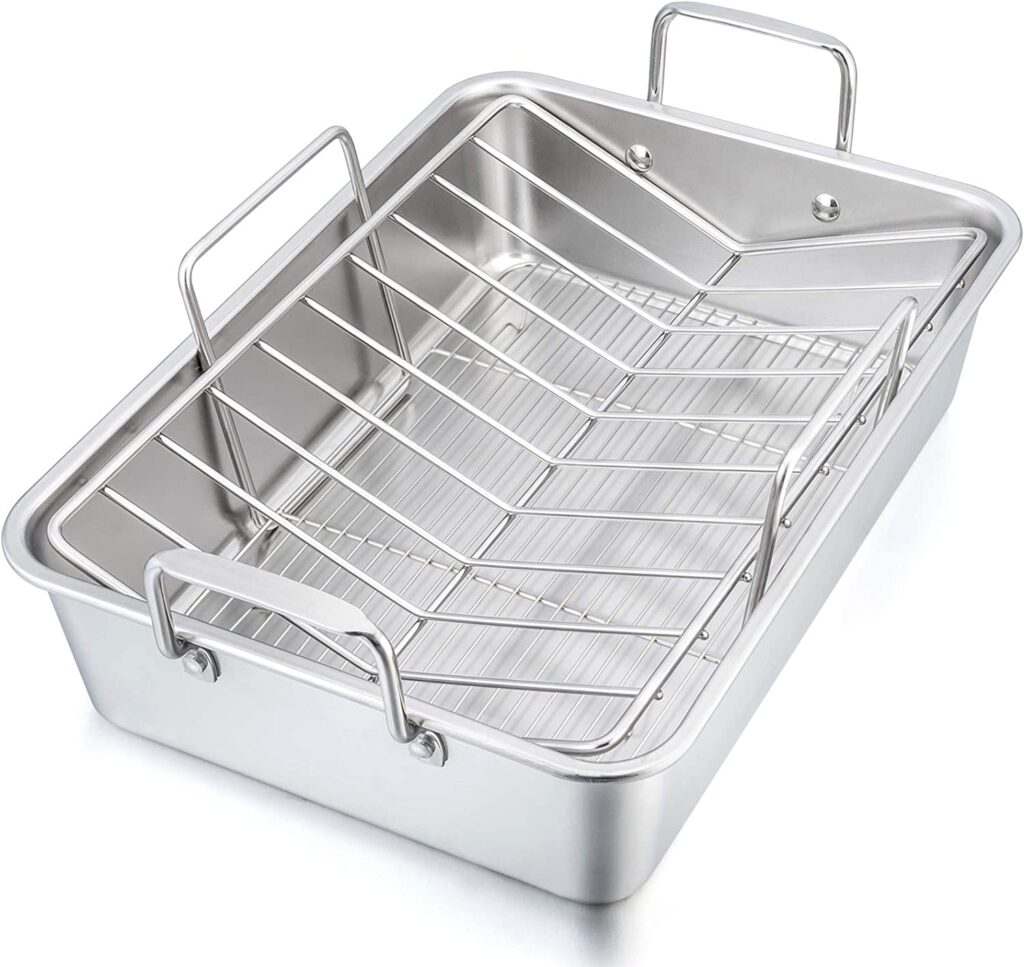
- For the stuffing, add the duck confit, apple, onion, garlic and thyme sprigs to a big bowl, then season with salt and pepper. Toss well. Fill the turkey cavity by pushing hard and fitting in as much as you can. Place on a big roasting pan, breast up, and tuck the wings underneath. Cook in the oven for about 2 h to 2 h 30, or until the breast temperature reaches 140 °F (60 °C).
- Remove from the oven and cover with the maple bacon slices. Do not forget the wings! Baste everything with the maple syrup and return to the oven, still at 350 °F (180 °C), for about 30 minutes, or until the breasts reach an internal temperature of 165 °F (74 °C) and the thighs 180 °F (82 °C). Do not crank the oven to crisp the bacon: it crisps on its own at that temperature.
- Remove from the oven, cover tightly with aluminium foil and let rest for 20 minutes before carving! Do not forget to serve the stuffing with this legendary turkey!
You brine it, and that is most of the answer. Twelve hours in heavily salted water changes the structure of the proteins: the fibres hold water instead of pushing it out in the oven, and the bird loses about a third less juice. Everything soaking in that liquid rides inward with the water too, so my three bottles of Belgian wheat beer, the juniper, the fennel and the bay end up seasoning the centre of the breast and not just the skin. The second reflex is the thermometer instead of the clock, 165 °F (74 °C) in the breast, no further. The third is the 20 minutes of rest under foil before carving. Do all three and you will never eat dry turkey again.
350 °F (180 °C), start to finish, and you never turn it up. A 6 kg (13 lb) stuffed bird takes about 2 h to 2 h 30 to reach 140 °F (60 °C) in the breast, then roughly 30 minutes more once the maple bacon goes on top. That works out to about 13 to 15 minutes per pound with stuffing in the cavity. People argue 325 against 350: at 325 the skin never really browns, at 350 the bacon renders and crisps on its own without burning. Add time, not heat, if it is running behind. And treat every number here as an estimate, because your oven can be lying to you by fifteen degrees and my clementine and cranberry turkey behaves the same way.
Count about 500 g of raw turkey per person for a meal with no leftovers, and 750 g if you want to eat it all week. My 6 kg bird therefore gives twelve tight portions or eight generous ones with leftovers for days. Those numbers account for the bone and the carcass, which make up nearly half the purchase weight.
165 °F (74 °C) in the breast and 180 °F (82 °C) in the thigh. Push the probe into the thickest part of the breast without letting it touch bone, because bone reads hot and will tell you the bird is done when it is not. Take a second reading in the thigh, again away from the bone. There is one more checkpoint that matters in this recipe: 140 °F (60 °C) is when the bacon goes on, and if you wait past that you end up with cooked turkey and raw bacon. An instant-read thermometer costs less than the bird and it is the only thing in the kitchen that does not guess.
Up to fourteen or fifteen hours is still fine. Beyond that, the flesh has taken all the salt it can hold and the texture turns hammy: firm, rubbery, too salty to rescue. Three days of brining means a turkey in the garbage. Aim for overnight and no further.
Draining well and patting it dry with paper towel is enough. Wet skin does not brown, it steams. If you went past fifteen hours of soaking, then yes, a quick cold rinse helps carry off some of the surface salt. Dry it thoroughly afterwards either way.
You can cut the apple, onion and garlic the day before and keep them separate in the fridge. What you must not do is mix the stuffing and load it into the bird ahead of time: damp stuffing sitting overnight inside a raw turkey is the one real food safety risk here. Mix and stuff as the oven comes up to temperature, it takes three minutes. My homemade demi-glace sauce, on the other hand, is happy to be made a day ahead.
Mashed potatoes with far too much butter, carrots roasted in maple syrup and my homemade demi-glace sauce finished with the roasting juices. If you are hosting big, put the clementine and cranberry turkey alongside it so the table offers two directions of flavour. And the next day the leftovers go into the turkey pie with leek, bacon and white beer or the creamy turkey and leek soup.
Ads
Ads

Ads
Ads
Ads