

Baked tomato mac and cheese with tomato soup
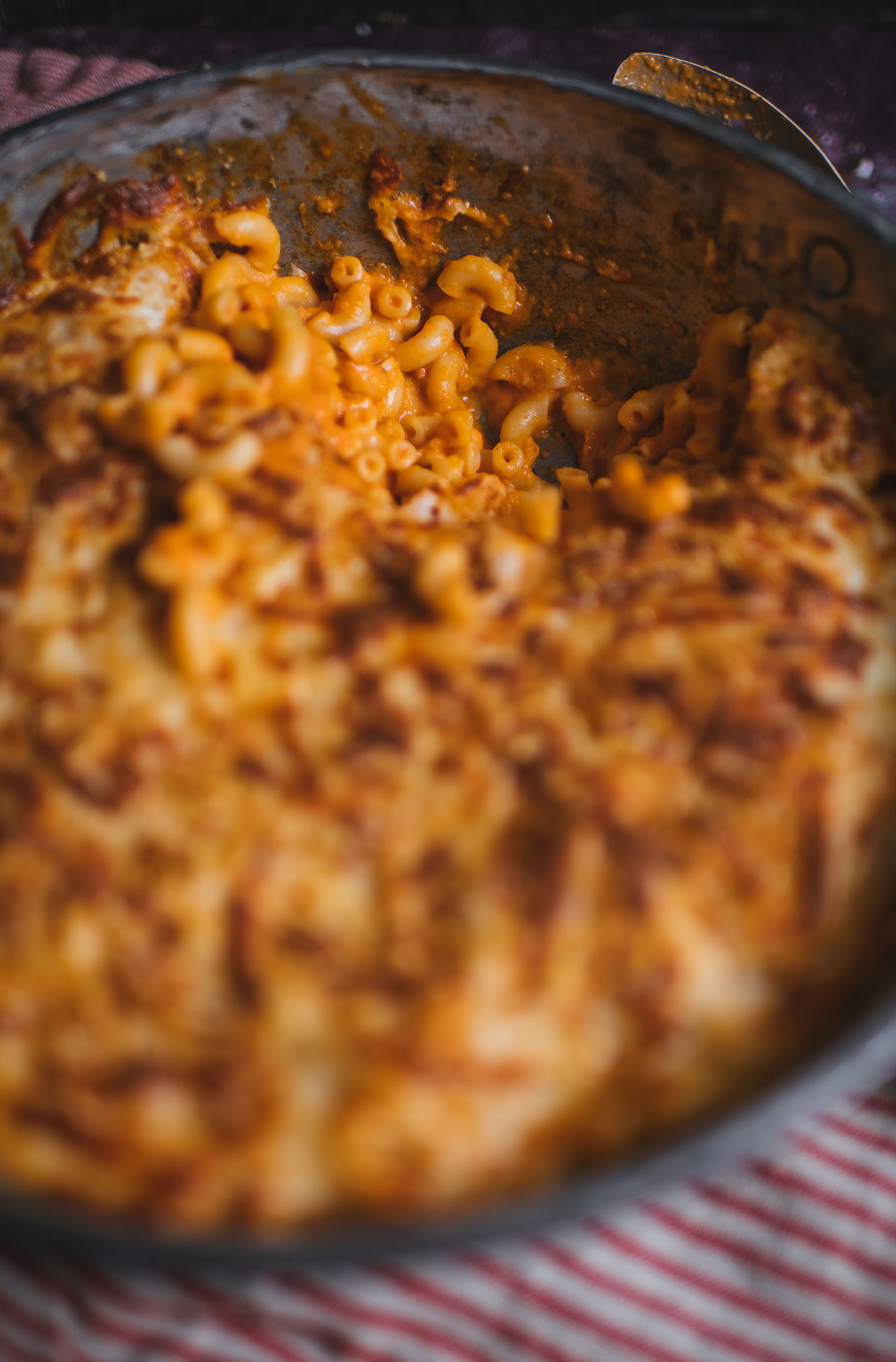
- Preparation 25 min
- Cooking 45 min
- Servings 4 to 6
- Freezing Absolutely
Ads
🧾 My apartment macaroni
I was broke. I shared an apartment with my brother, and plenty of nights supper was a can of condensed tomato soup poured over macaroni, salt, pepper, and that was it. No baked mac and cheese, no crust. No cheese. Just that. And you know what? Back then it was good. Some meals taste like a period of your life far more than they taste like ingredients, and I ate that one twice a week without ever getting tired of it.
🍅 What I changed, and what I did not
Let us be clear: canned tomato soup is good. It saves suppers, it costs next to nothing, and there is no shame in opening one. It is simply never as good as the version you make yourself. Here the “soup” is built from Italian seasoned diced tomatoes, onion, garlic, a little chicken broth and cream, simmered fifteen minutes and blended smooth. It takes barely longer than opening a can, and the flavour plays in a different league. Better tasting, and quite a bit better for you too.
🧀 Three cheeses, panko, and a crust that actually cracks
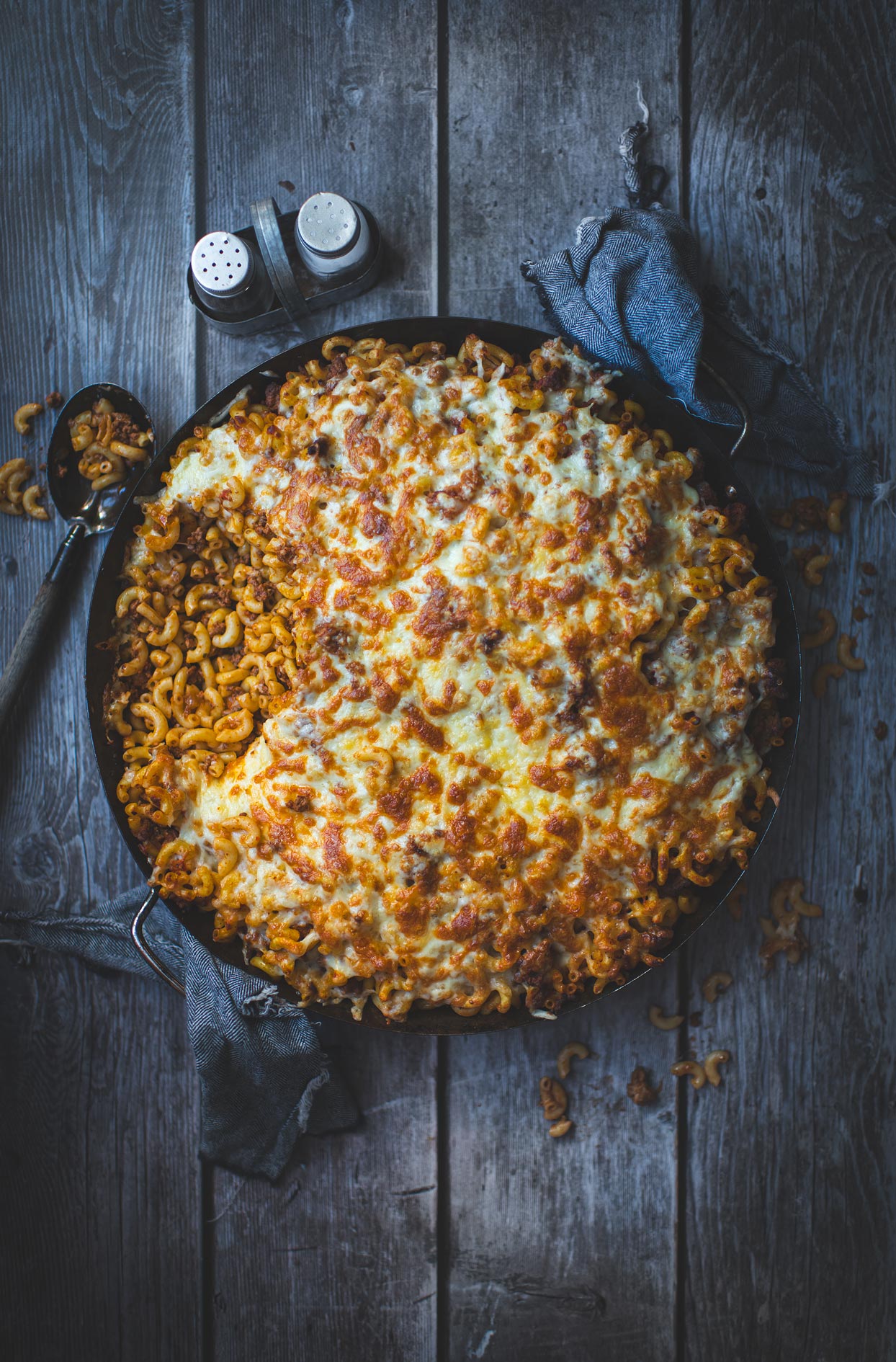
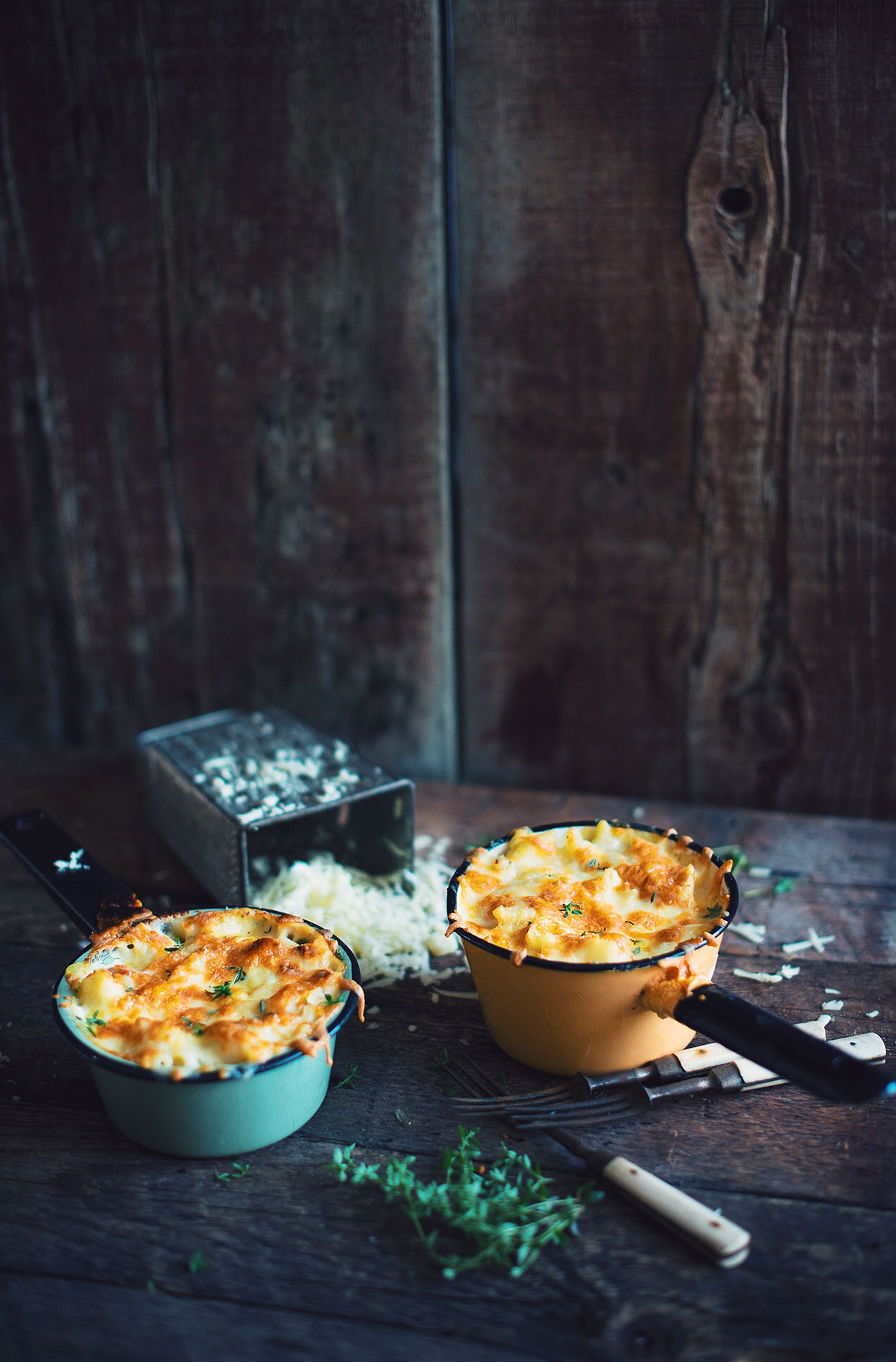
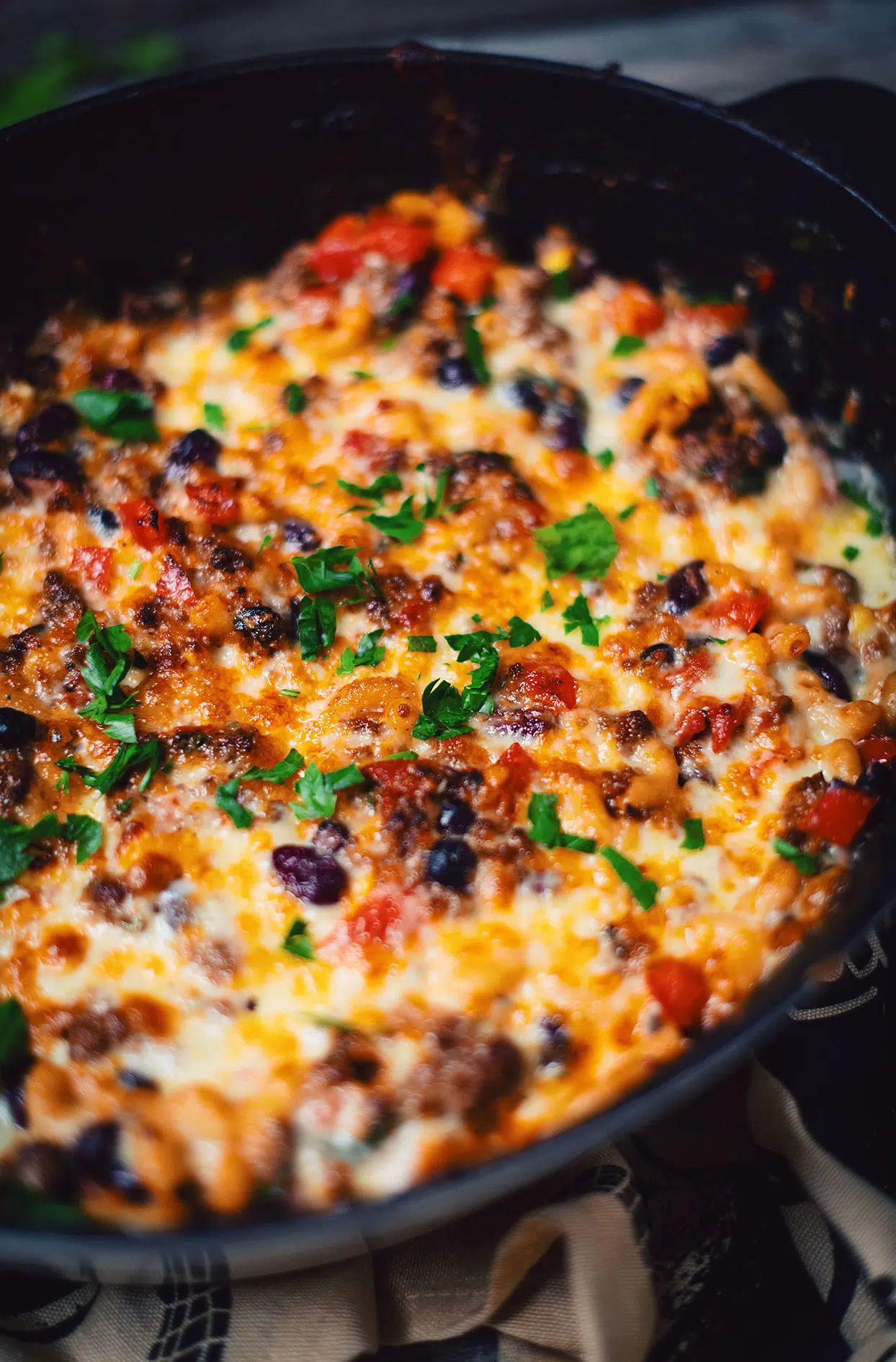
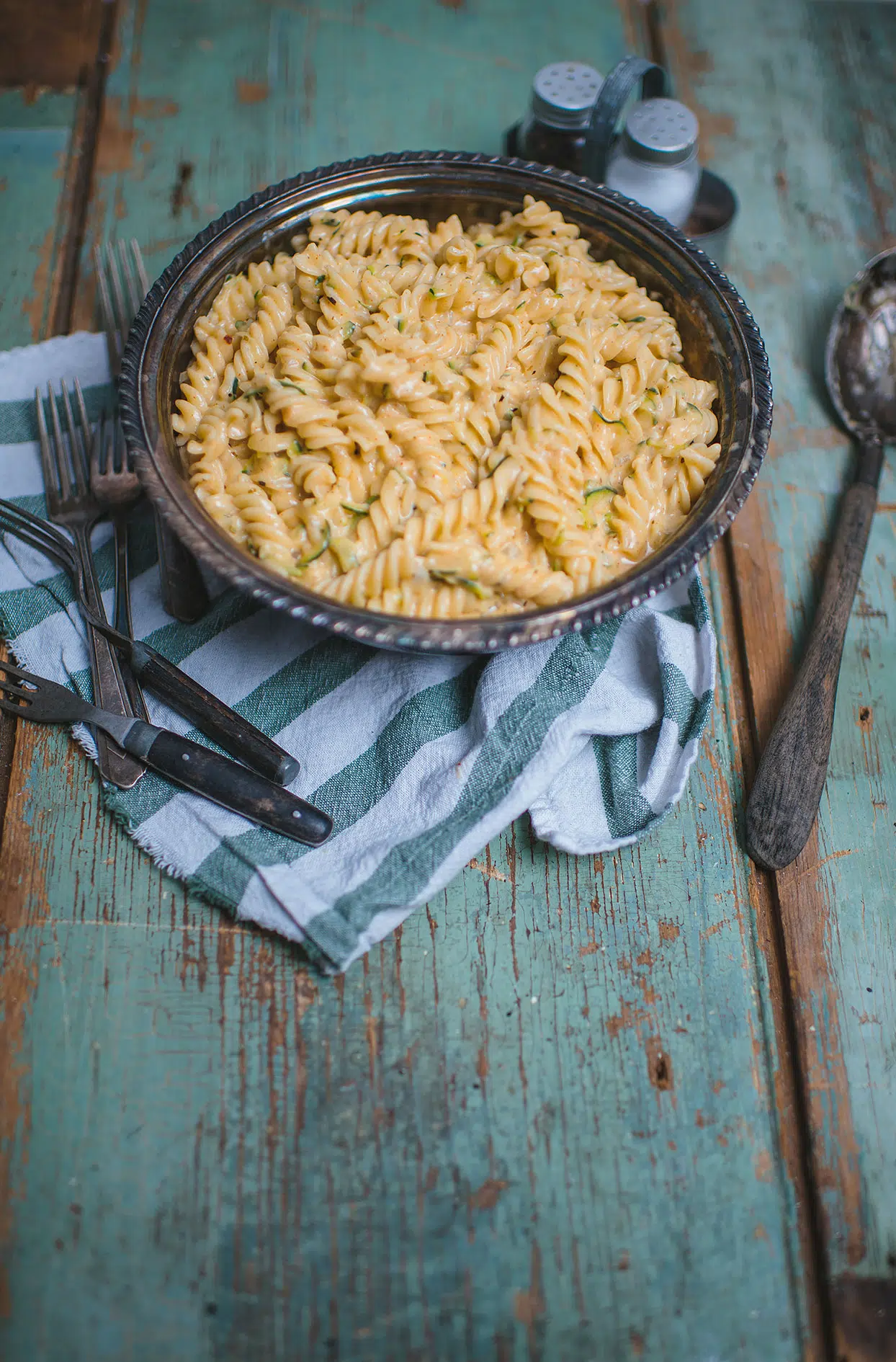
This is where a plain tomato mac and cheese takes off. Mozzarella for the pull, sharp cheddar for the bite, Parmesan for the salt, and panko breadcrumbs tossed with all three before going over the pasta. That is not a mistake, it is deliberate, and I explain why in the tips below. If you want other versions, there is the cheesy beef and macaroni casserole and the beer mac and cheese, but this one stays my favourite. It is a tribute to the macaroni I used to make for myself, a hundred times better.
Ads
Ads
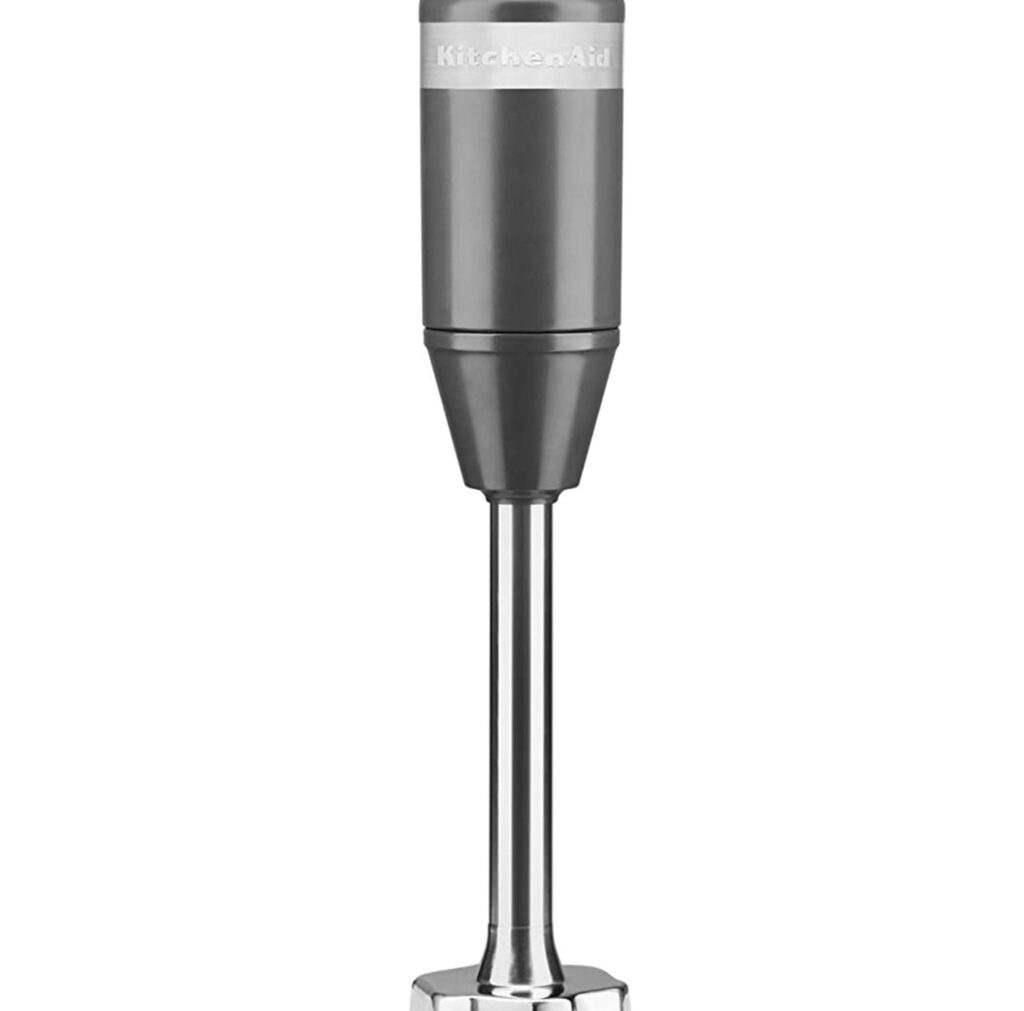
🥄 Blending: immersion blender or food processor, both work
This is the step that turns diced tomatoes into a genuinely silky soup. The immersion blender is easiest, because it works right in the pot and there is nothing extra to wash. The food processor gives an even smoother texture, but you transfer twice and you have to let the sauce cool a little first, or the steam blows the lid off. Use whichever you own, the end result is the same.
🚫 Do not rinse the macaroni
The old version of this recipe told you to rinse the pasta under cold water. That was a bad idea and I took it out. Cold water washes away the surface starch, which is exactly what lets the sauce cling to the pasta instead of sliding off it. Drain, keep it warm, keep going. Rinsing belongs to cold macaroni salad, not to a gratin.
🥛 Why 15% cooking cream
It is not an accident. Cooking cream at 15% is thicker than regular table cream, which gives the sauce body without twenty extra minutes of reducing. And it is leaner than 35% cream, so the dish stays creamy without turning heavy, which matters when there are already three cheeses on top. It also holds up to a boil far better than milk or 10% cream.
🍞 Panko mac and cheese: the crumbs go into the cheese, not on top of it
Most recipes scatter breadcrumbs over the cheese. Here we do the opposite, on purpose. Tossed with the three grated cheeses, the panko soaks up the melting fat and browns evenly instead of scorching in patches. You get a crust that cracks everywhere, not just around the edges, and you avoid that dry breadcrumb layer that lifts off in one sheet the moment a spoon goes in.
🍅 If you cannot find Italian seasoned tomatoes
They are in nearly every grocery store and they cost no more than plain ones, so look before improvising. If your store does not carry them, use regular diced tomatoes and add 1 teaspoon (5 ml) of Italian seasoning along with the oregano. The result is practically identical.
🧀 Grate your own cheese
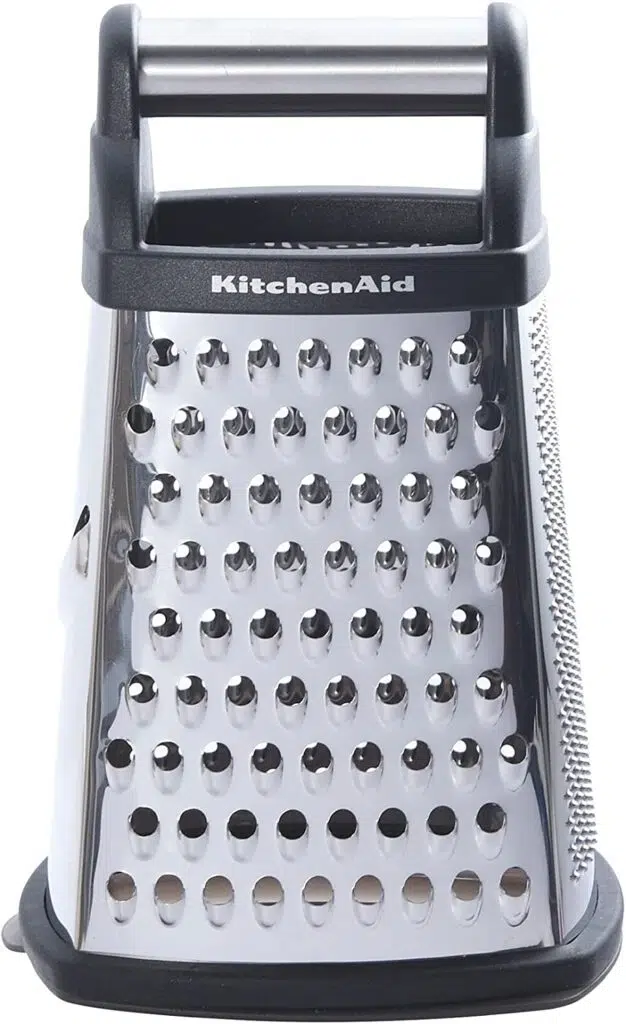
Pre-shredded cheese is coated with starch so it does not clump in the bag, and that starch gets in the way of a clean melt. A block of sharp cheddar grated by hand melts better, pulls better and tastes stronger. It takes four minutes. For the Parmesan, use the real thing finely grated. The shelf-stable stuff in a tub brings little beyond salt.
🔥 Stand in front of the broiler
Two to three minutes, and I mean it. A broiler goes from perfectly golden to burnt in forty seconds. Stay at the oven door, turn the dish once halfway if your element heats unevenly, and pull it the moment the surface is browned all over.
♻️ Leftovers and freezing
Four days in the fridge in an airtight container. To reheat, add a splash of milk or cream to the dish before putting it in a 350°F oven. That brings the creaminess back, where a microwave just dries the gratin out. It freezes well for up to three months, ideally in single portions, but the panko crust does not survive thawing. Scatter a fresh handful before reheating.
📅 Getting ahead
What you can do ahead is the prep. Onion and garlic can be chopped the day before and wait in the fridge. The three cheeses can be grated ahead and keep two days in a sealed container. The tomato sauce can be made a full three days early: simmer it, blend it, cool it and refrigerate. It is honestly better the next day. What has to wait until the last minute: cooking the pasta, mixing the panko into the cheese, and obviously the trip to the oven. Pasta cooked ahead keeps absorbing sauce and turns soft, and panko mixed into the cheese too early goes limp before it ever sees heat.
✅ What to serve with tomato mac and cheese
A sharp green salad is genuinely all it needs. The dish is rich, it wants vinegar across from it. Garlic bread for mopping, if you feel like it. And if you want to keep going down the comfort aisle, the chili mac and cheese and the Chinese macaroni with beef play in the same league.
Ads
Ingredients
- 1 lb (454 g) macaroni
- 1 small yellow onion, finely chopped
- 2 garlic cloves, finely chopped
- 2 tablespoons (30 ml) olive oil
- One 28 oz (796 ml) can of Italian seasoned diced tomatoes
- 1 cup (237 ml) 15% cooking cream
- 1/2 cup (125 ml) chicken broth
- 1/2 teaspoon (2.5 ml) dried oregano
- 1/2 teaspoon (2.5 ml) sugar
- 1 1/2 cups (375 ml) grated mozzarella cheese
- 1 cup (250 ml) grated sharp cheddar cheese
- 1/2 cup (125 ml) grated Parmesan cheese
- 1/2 cup (125 ml) panko breadcrumbs
Ads
Preparation
- Preheat the oven to 400°F (200°C).
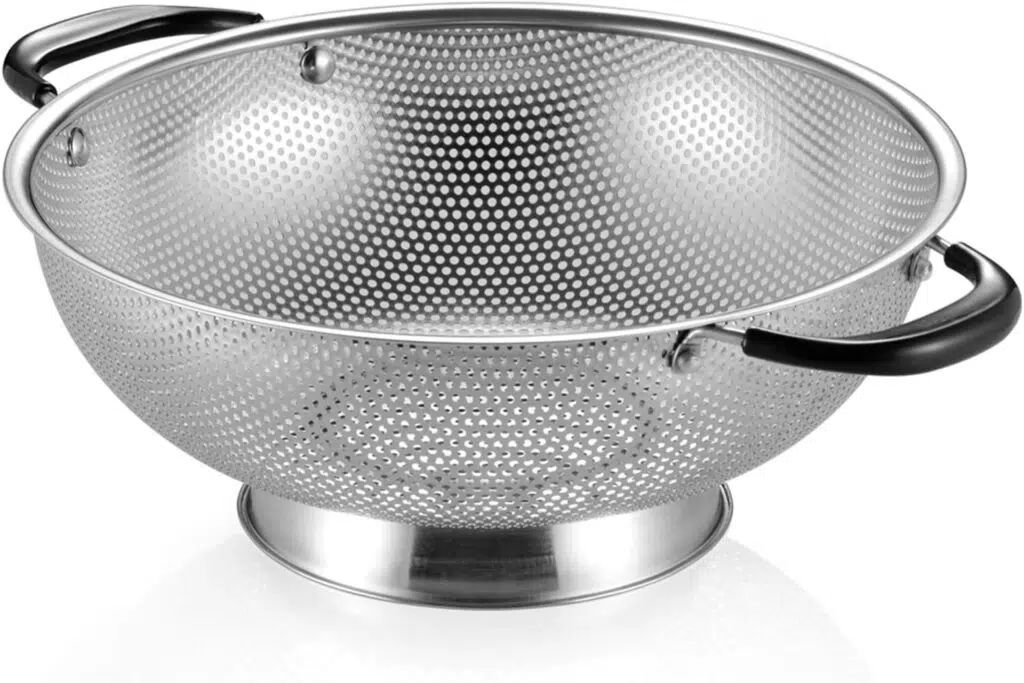
- In a large pot of salted boiling water, cook the macaroni al dente according to the package directions. Drain without rinsing and set aside.
- In the same pot over medium heat, add the onion, garlic and olive oil. Cook for 3 to 4 minutes, stirring.
- Add the tomatoes, cream, chicken broth, oregano and sugar. Season with salt and pepper and stir. Bring to a boil, reduce to low heat and simmer for 15 minutes, stirring from time to time.
- Blend the sauce smooth with an immersion blender, right in the pot. A food processor works just as well: pour the sauce in, blend, then return it to the pot.
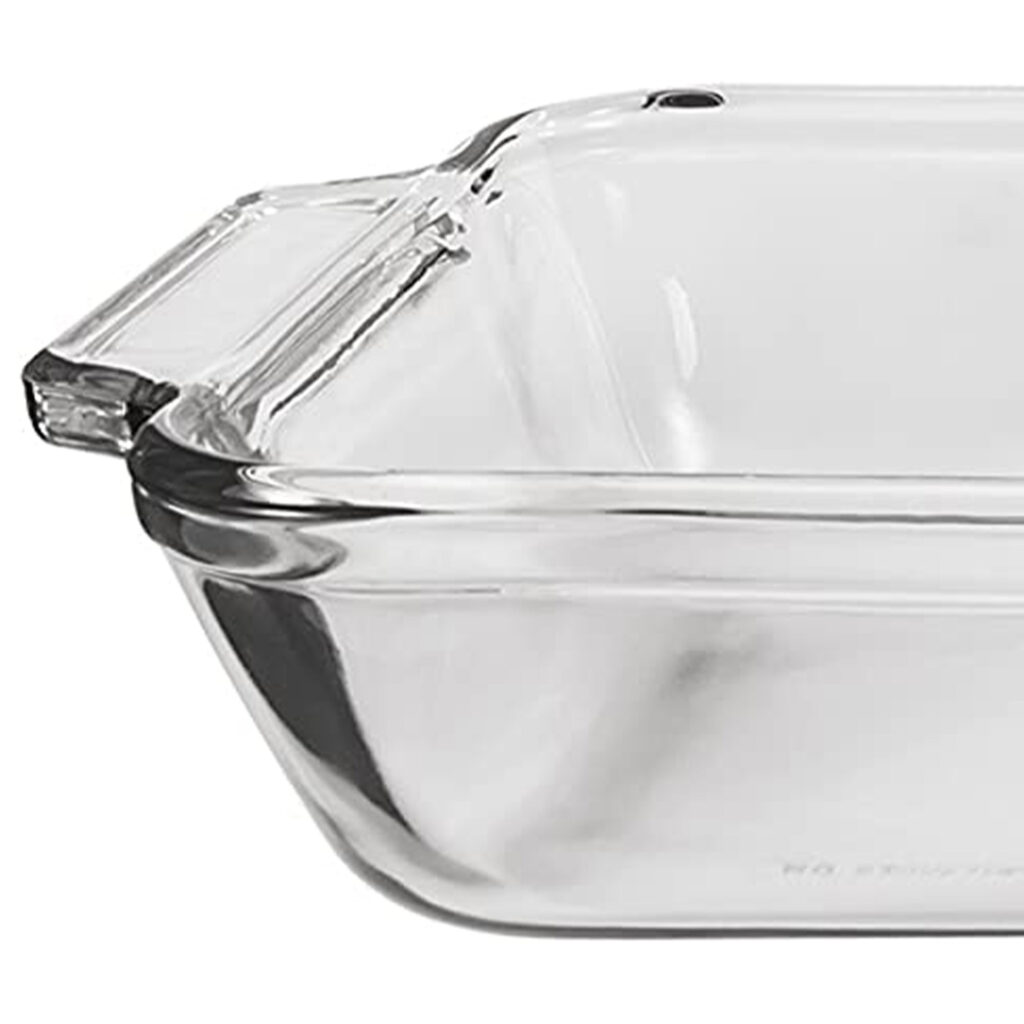
- Add the macaroni and cook for 2 minutes, stirring. Pour into a large baking dish and set aside.
- In a large bowl, combine the mozzarella, cheddar, Parmesan and panko, then toss. Spread over the macaroni.
- Bake for 10 minutes. Switch the oven to broil and continue for 2 to 3 minutes, or until the cheese is deeply golden.
You absolutely can, and I will not judge you, because that is exactly how I ate macaroni when I lived in that apartment. Swap the homemade sauce for a can of condensed soup thinned with cream rather than water, then carry on to the gratin. It saves about fifteen minutes. The difference is that the homemade version tastes of tomato and garlic rather than sugar and salt, and it is far less salty. Try both and you will taste it immediately.
Three levers, in order of impact. First, acidity. It is what is missing from nine mac and cheeses out of ten, and here the tomatoes handle it. Second, a blend of cheeses. One cheese alone gives you a flat note, and mozzarella, sharp cheddar and Parmesan each cover a different part of the range. Third, texture on top: panko tossed through the cheese instead of scattered over it. If you want to push further after that, a grating of nutmeg is the classic move in any cheese sauce, and a pinch of sugar keeps the tomatoes from turning sharp. Go easy on both. This is not a dish that wants to taste of spices, it wants to taste of cheese and tomato.
There is no single best one, which is exactly why this recipe uses three. Mozzarella is the stretch. Sharp cheddar is the flavour, and the sharper the block the less of it you need. Parmesan is the salt and the savoury edge that keeps the whole thing from tasting like melted butter. What matters more than the brand is that you grate the block yourself. Pre-shredded cheese is dusted with starch so it will not clump in the bag, and that starch is the reason a sauce turns grainy on you instead of going smooth. Skip Gruyère here unless you want it to fight the tomato.
Yes, up to three months. Portion it into individual containers rather than freezing the whole dish, it reheats far better that way. Thaw overnight in the fridge, add a splash of cream or milk, then reheat in a 350°F (180°C) oven for about twenty minutes. The panko crust does not survive the freezer, so scatter a fresh handful mixed with a little cheese before it goes back in.
Ten minutes at 400°F (200°C), then two to three under the broiler. That is it. The pasta is already cooked and the sauce is already hot when the dish goes in, so the oven is only there to melt the cheese and set the crust. Recipes that call for forty-five minutes are starting from raw sauce or raw pasta. Bake this one that long and you will pull out a dry brick. The broiler is the part that needs you standing there: it goes from golden to burnt in under a minute.
Ads
Ads
Ads
Ads
Ads