
Canele Recipe (No Beeswax Needed)
- Preparation 20 min
- Refrigeration 24 h
- Cooking 1 h
- Servings 16
- Freezing I do not suggest
Ads
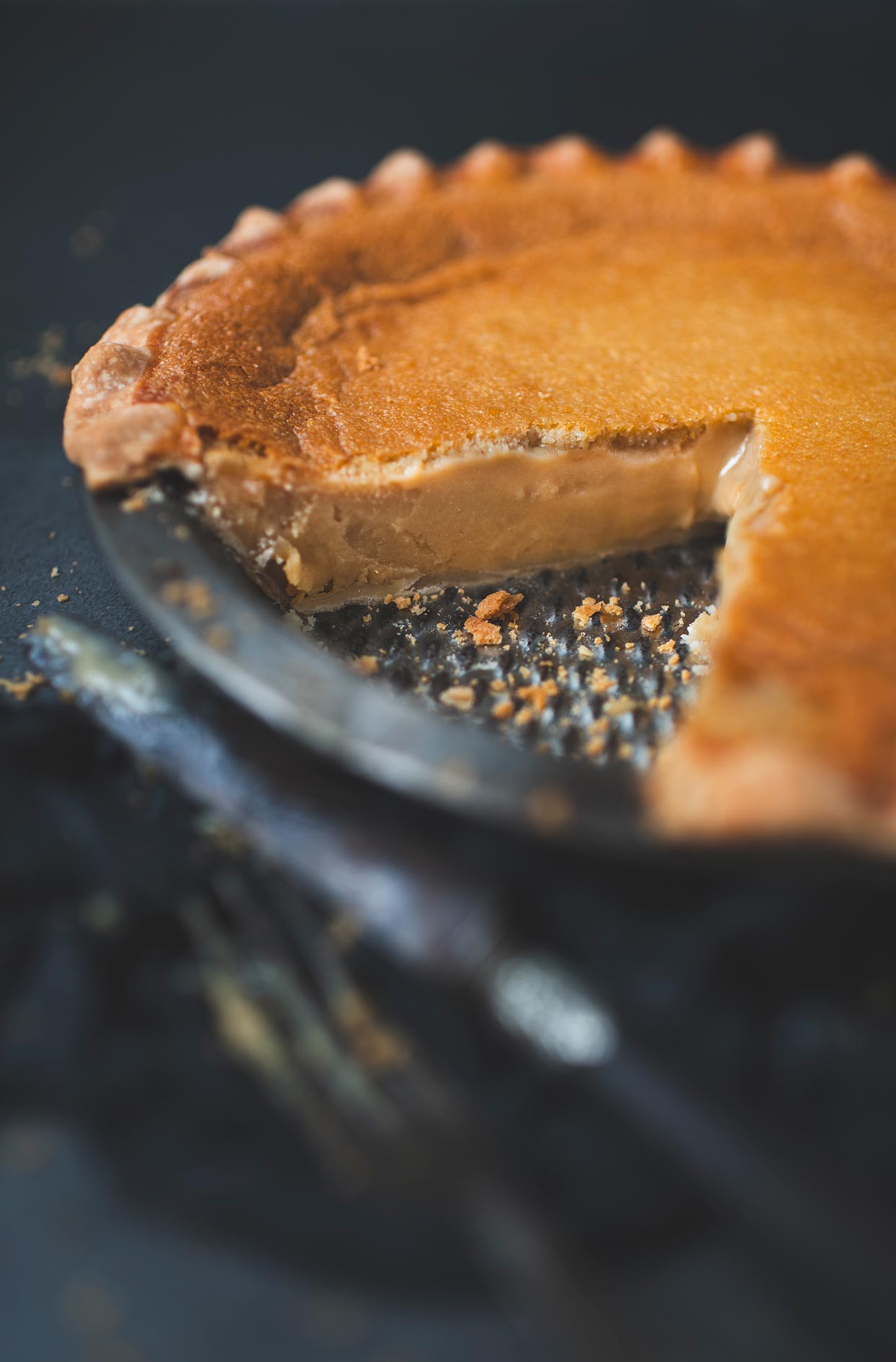
🍮 Dark crackling shell, molten center: the real canele!
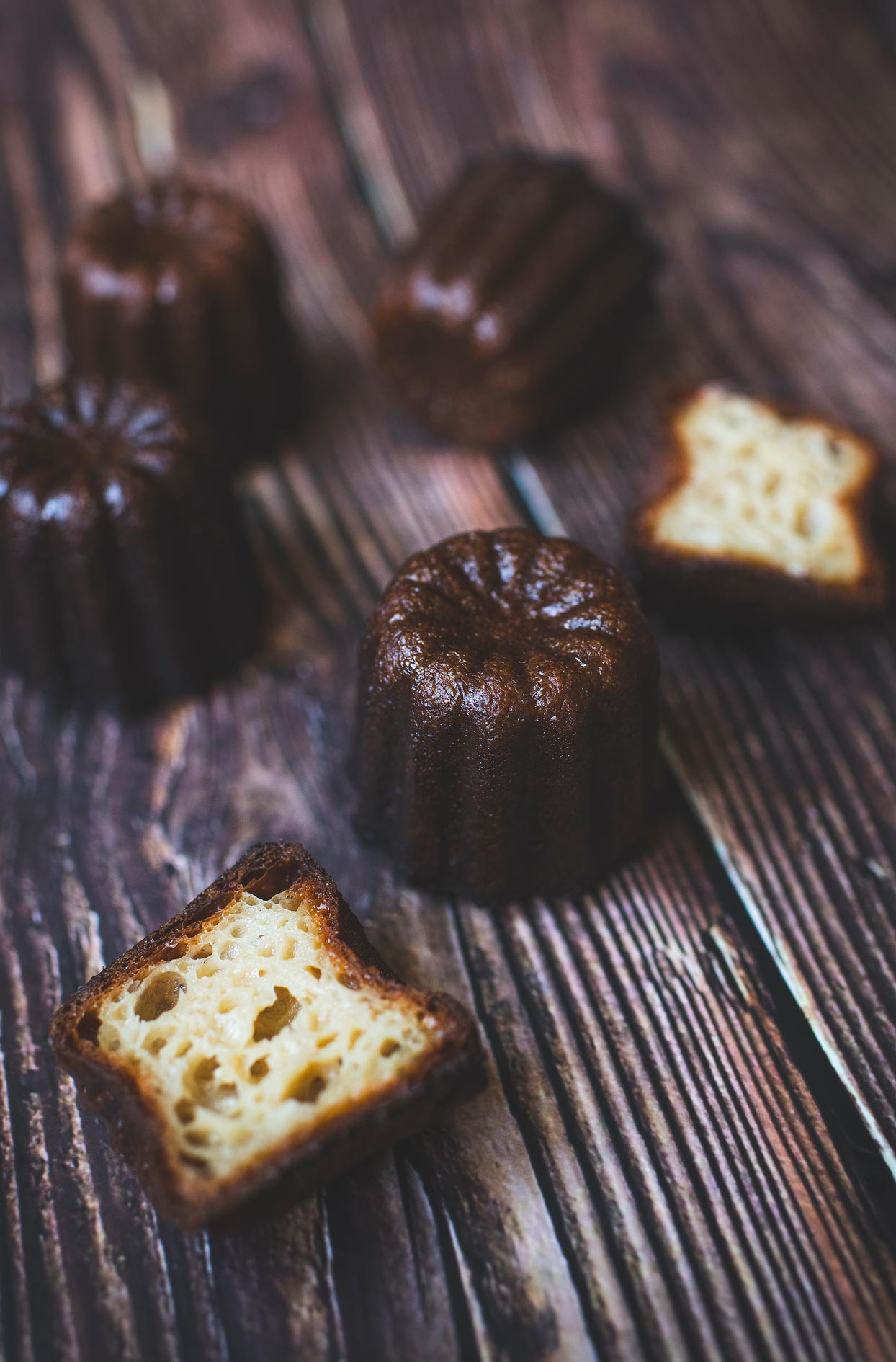
You break the shell with your teeth and it fights back. Underneath, a tender, almost molten center that tastes of vanilla and spirits. It is the most spectacular contrast in all of French pastry, and it happens with seven ingredients you already own. Sixteen caneles a batch, and they will not last the day.
🧈 No beeswax, just butter, and I stand behind it
The purist Bordeaux method coats the molds in a mix of beeswax and clarified butter. It gives a glossy sheen and a slightly thicker shell. I skip it. Softened butter, generously, into every groove, that is it. It was simpler, and the crust came out dark, thick and genuinely incredible. A Bordeaux artisan sitting in Google’s top five does exactly the same. You lose the shine. You do not lose the canele.
⏳ Twenty-four hours of rest, and that is not a suggestion
This is the one step with nothing to negotiate. While the batter sleeps in the cold, the flour finishes absorbing the milk and the gluten relaxes. That is what gives you the dense, custardy interior instead of a spongy cake that puffs in the oven. Twenty-four hours is perfect. The batter keeps three days in the fridge, so you can spread your batches across the week.
Ads
Ads
⏳ The 24 hours is where everything happens
Batter whisked and baked right away gives you a spongy cake that puffs. During the cold rest two things happen: the starch granules in the flour finish absorbing the milk, and the gluten formed during mixing relaxes. The batter thickens, it turns homogeneous, and in the oven it rises less and bakes denser. That is exactly the interior you are after. Twenty-four hours is perfect. The batter keeps three days in the fridge, so use it in two or three goes if you want fresh caneles two days running.
🧈 No beeswax, and here is what that actually costs you
Food-grade beeswax is hard to find and honestly not worth the hunt. What it gives you: a glossy shell and a slightly thicker crust. What it does not give you: flavor. With softened butter worked generously into every groove, my crust came out dark, thick and crackling. One detail though: softened butter, not melted. I tried melted and it slides to the bottom of the mold instead of clinging to the walls.
🥄 Fill two-thirds full, never more
This is the number to remember. The batter rises in the oven, and an overfilled mold spills over the rim: you get a mushroom cap, the base blows out, and the canele loses its shape. It looks genuinely bad. A slightly underfilled mold gives you a shorter canele, and that is all. Between the two flaws, always pick underfilled.
🍳 Do not whip air into the eggs
This is the failure nobody explains. When you beat sugar and eggs like you would for a cake, you trap air bubbles in the batter. At 500 °F those bubbles expand all at once and push the batter over the rim. That is the other cause of the mushroom, alongside overfilling. Whisk just until the mixture is smooth, then stop. Same logic when you wake the batter after its 24 hours: two minutes of whisking to bring it back together, not to aerate it.
🔥 The two temperatures are not decoration
Ten minutes at 500 °F, then fifty at 375 °F. The opening blast sets the shell and stops it from puffing; the long low phase cooks the custard through and caramelizes without burning. And above all: do not open the oven door to change the temperature. You turn the dial, that is it. An oven opened at that moment is a shell that collapses.
🧊 Unmold right away or the crust goes soft
It feels wrong after an hour of baking, but a canele cooling in its mold softens all by itself: steam gets trapped between the cake and the wall and the condensation soaks the crust you just spent an hour building. Pull the pan, flip the molds, tap them on a cutting board. They usually slide right out. Then the caneles cool in open air, on a tray, for two hours.
🥃 Brandy at my place, dark rum in the tradition
The classic Bordeaux recipe calls for dark rum. I used French brandy because that is what was in the cupboard, and the result was incredible. Brandy pulls toward fruit and wine, rum toward caramel and roundness. Both work, use what you have. One method detail: the spirit goes in at the very end, into warm batter, never into the hot milk, or the aromatics simply evaporate.
🍽️ The mold, aluminum or copper
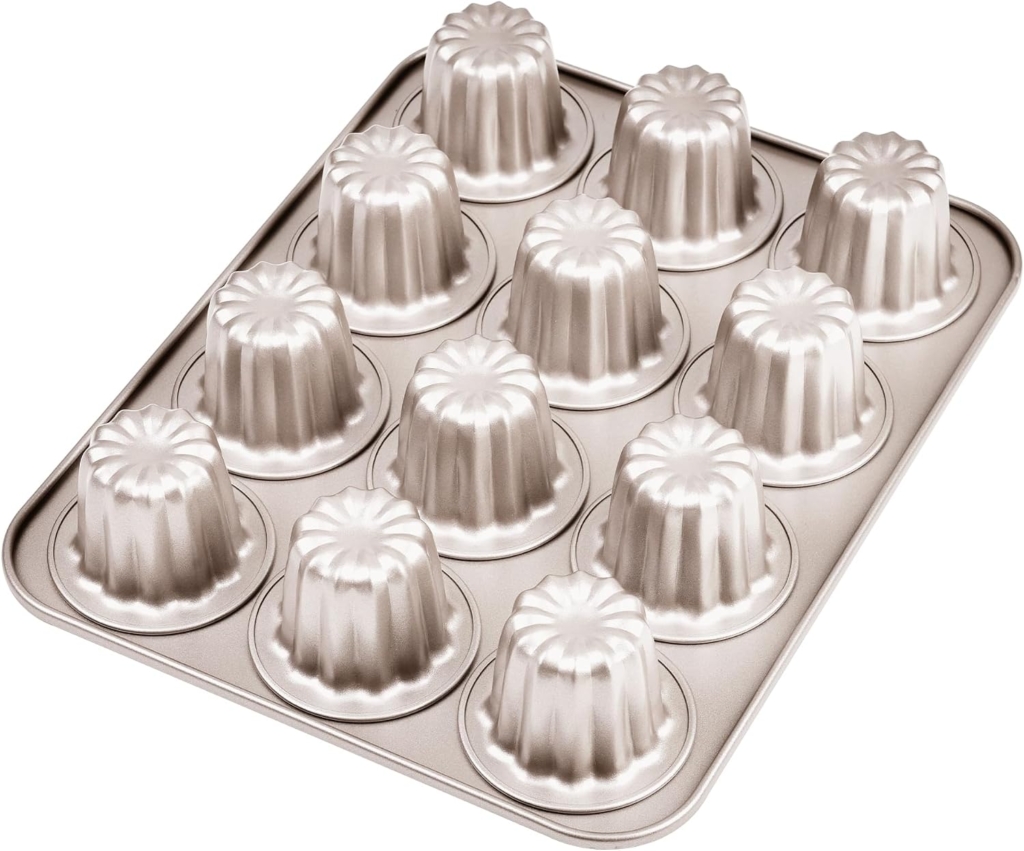
Mine is aluminum, twelve cavities, and it does the job perfectly. Tinned copper is still the purist’s reference because it conducts heat even better, but count on 20 to 25 dollars per individual mold. Silicone I skip: it conducts poorly, the sides stay pale and soft while the top browns, and you need a good fifteen extra minutes of baking.
📅 Make-ahead
The bulk of the work happens the day before by definition, which makes caneles surprisingly practical for entertaining. Make the batter two days ahead, keep it in the fridge, and on the morning of your dinner all you do is butter the molds and bake. An hour of hands-off baking, two hours of cooling, and they are ready for dessert. Another way to spread it out: butter the molds in the morning and put them back in the fridge. The butter sets and clings to the grooves even better. The one thing that absolutely waits: the baking itself. A canele baked the day before is a soft canele. There is nothing to be done about that.
✅ What to serve with my caneles
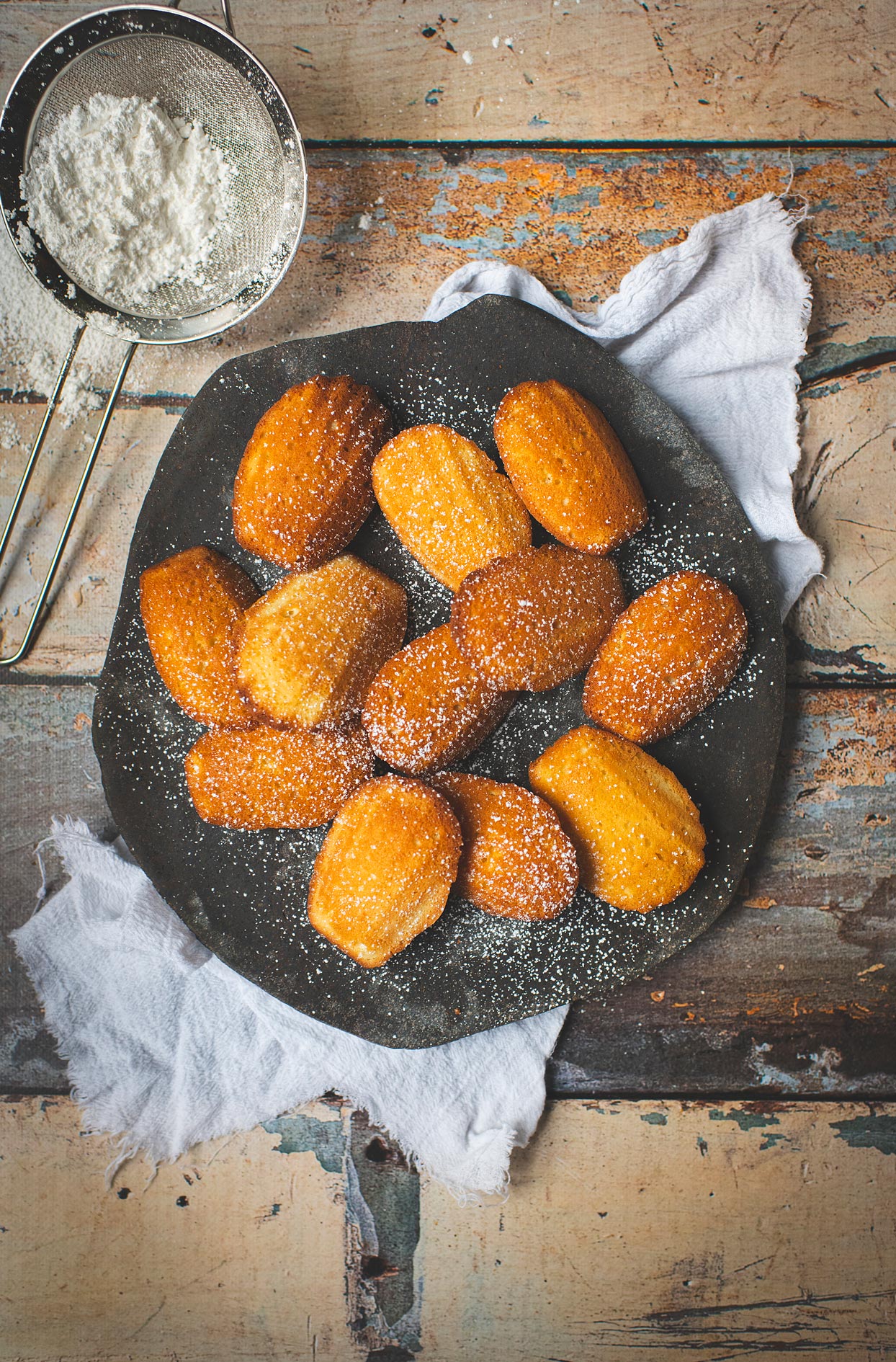
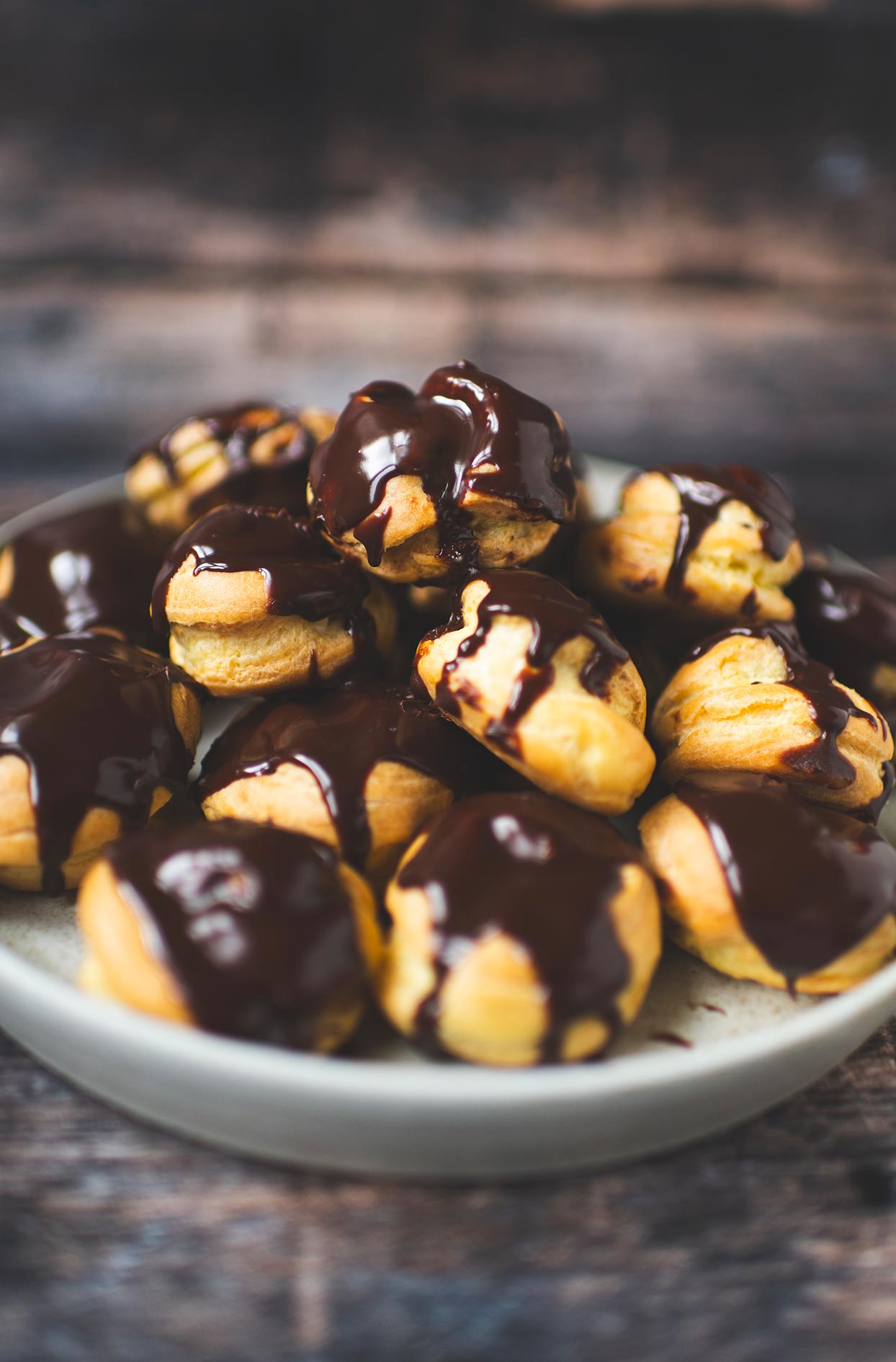
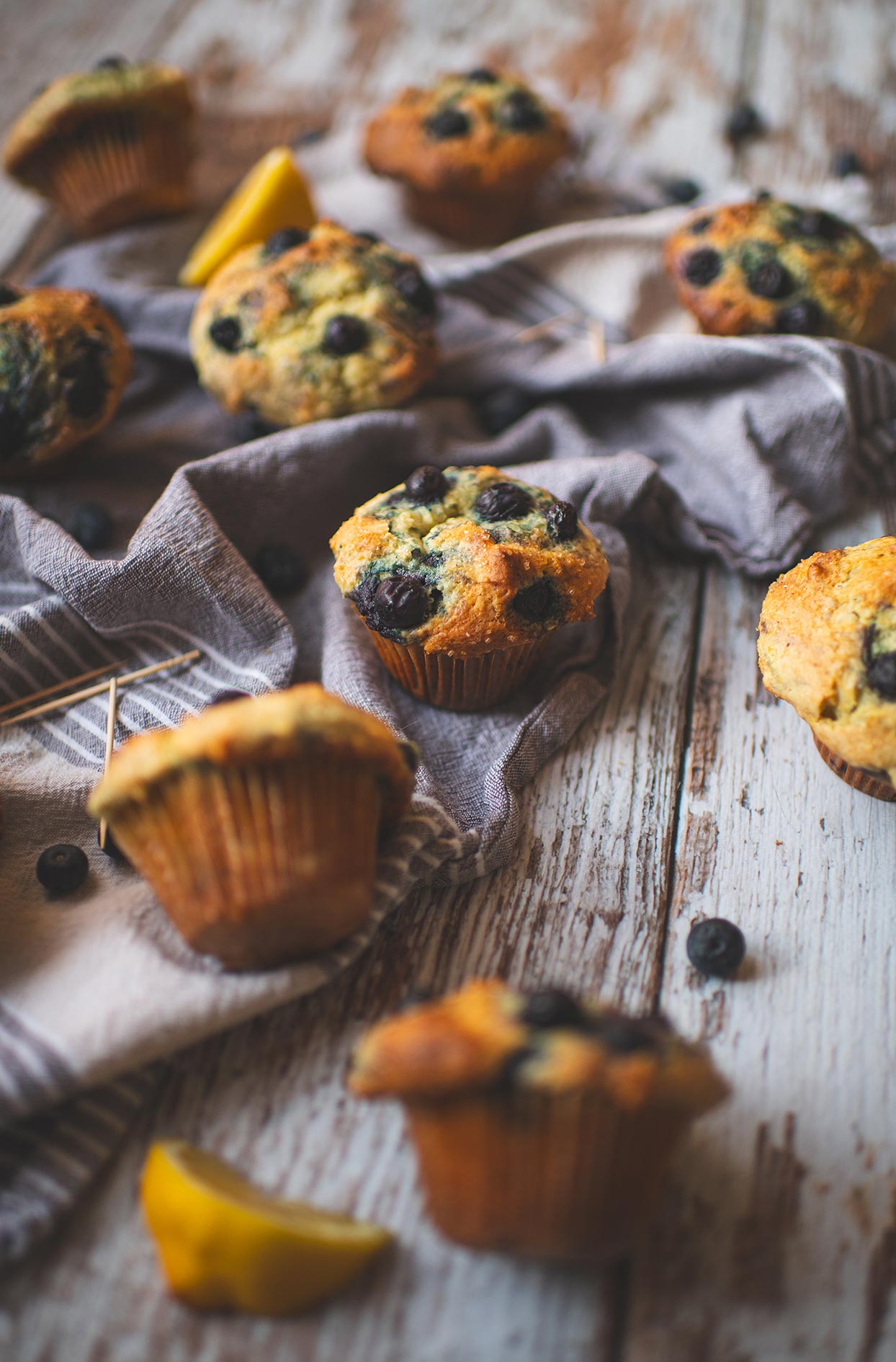
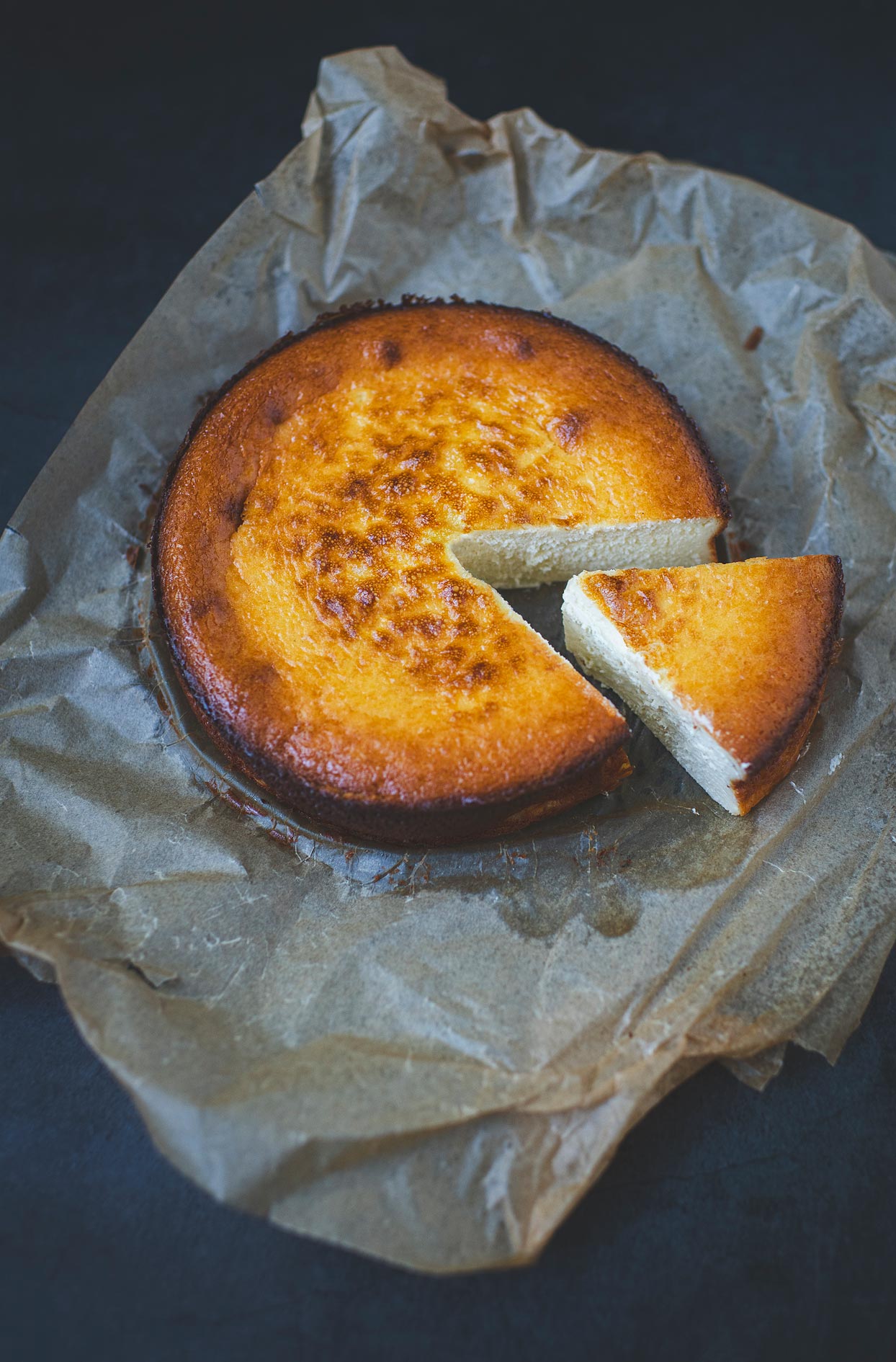
Plain, with a coffee. That is how I eat them and it is hard to improve on. They are sweet enough and rich enough to need nothing beside them. If you want to build out a dessert plate, my lemon madeleines bring exactly the tart contrast a canele wants next to it, and my chocolate profiteroles play on the same French pastry team.
Ads
Caneles
- 2 cups (500 ml) whole milk
- 1 tsp (5 ml) vanilla bean paste
- 1 cup (200 g) sugar
- 2 large eggs
- 2 egg yolks
- 1/4 cup (50 g) butter, melted
- 3/4 cup (95 g) all-purpose flour
- 1/4 cup (60 ml) French brandy
For the molds
- Softened butter, generously
Ads
Preparation
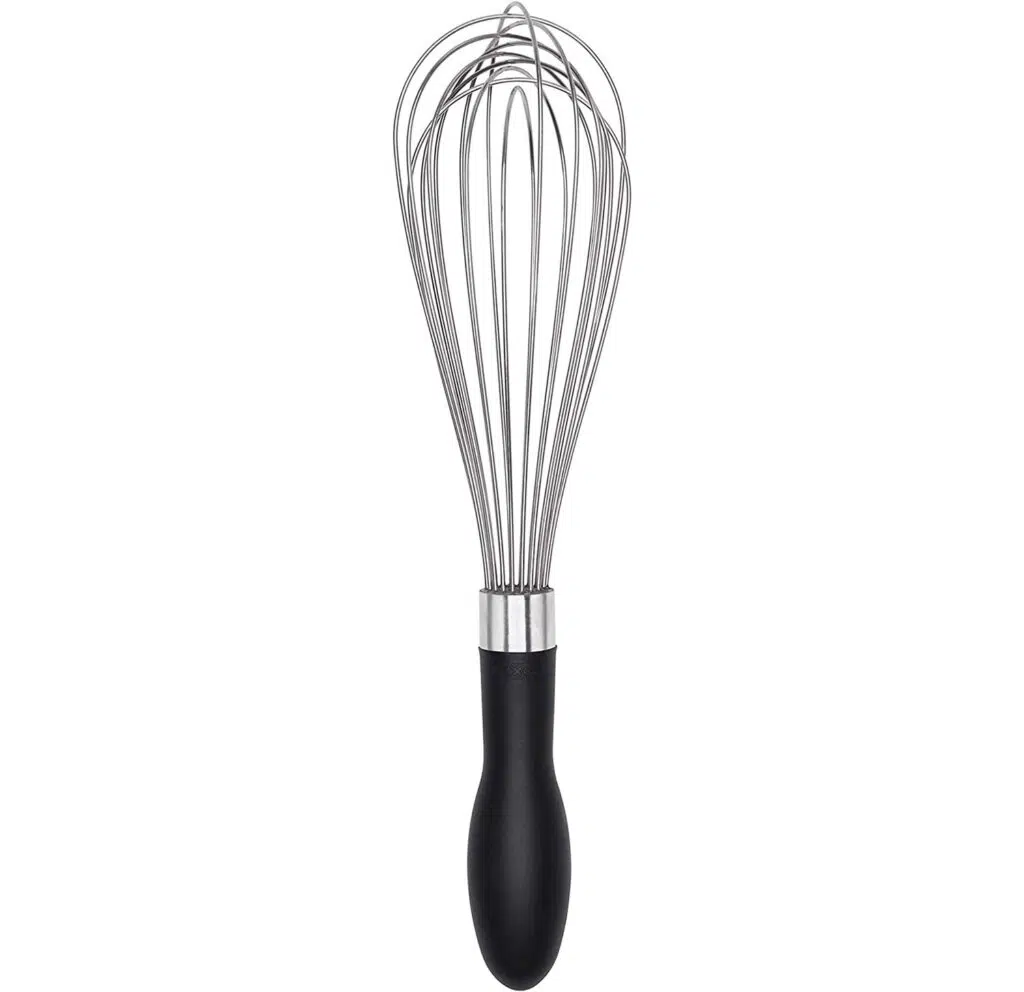
- In a saucepan, heat the milk with the vanilla paste to a bare simmer, whisking to dissolve the paste completely. Remove from the heat.
- In a bowl, whisk the sugar, eggs and yolks just until smooth, without beating air into them. Add the melted butter and whisk again.
- Pour about a quarter of the hot milk over the egg mixture while whisking, to temper it. Add the flour and mix until smooth. Slowly work in the rest of the milk, then the brandy.
- Cover and refrigerate 24 hours.
- Butter the molds generously with softened butter, making sure to coat every groove.
- Preheat the oven to 500 °F (260 °C). Take the batter out of the fridge and whisk it 2 minutes to bring it back together. Fill the molds two-thirds full and set them on a foil-lined sheet pan.
- Bake 10 minutes. Without opening the oven, drop the temperature to 375 °F (190 °C) and continue baking 50 minutes.
- Take them out and unmold immediately: flip the molds over and tap them on a cutting board. Set the caneles on a tray.
- Let cool 2 hours at room temperature. Eat the same day.
Seven, and every one of them is ordinary: milk, sugar, flour, butter, eggs, vanilla and a spirit. That is what makes a canele so maddening to get wrong, because there is nothing exotic in it. Mine is 2 cups whole milk, 1 cup sugar, 3/4 cup flour, 1/4 cup melted butter, 2 whole eggs plus 2 yolks, 1 tsp vanilla bean paste and 1/4 cup brandy. Everything else is technique and time.
It is not difficult, it is unforgiving. There are four rules and they cover nearly every failure. Rest the batter 24 hours, no exceptions. Fill the molds only two-thirds, because it rises. Do not whip air into the eggs, since those bubbles are what push the batter over the rim into a mushroom cap. And unmold the second they come out, or condensation softens the crust you just built.
Because a bakery is selling you two days of work and a lot of failed trays. The batter has to rest overnight before it can even be baked, the molds are traditionally tinned copper at 20 to 25 dollars apiece, and the classic method coats them in beeswax. Add an hour of oven time for something that has to be sold the same day and cannot be held over, and the price starts making sense. At home, with an aluminum pan and butter instead of wax, the cost collapses.
You get a canele, but not THE canele. Silicone conducts heat poorly: the top and bottom brown while the sides stay pale and soft, and the famous dark shell never really arrives. You also need about fifteen extra minutes. If silicone is what you have, try it, you will eat something good. But a twelve-cavity aluminum pan costs about the same and changes the result completely.
Both exist and both are defensible. “Canele” with one n is the spelling registered by the Bordeaux guild in 1985. “Cannele” with two n comes from “cannelure”, the grooves of the mold, and it is the version you see most often in Quebec. I write cannele. Order caneles in Bordeaux and nobody will correct you.
The same day, and I mean the same day. The crust stays crackling for two to six hours after cooling, then moisture from the inside migrates into the shell and the whole thing softens. By the next day you are eating a soft, rubbery little cake with none of the contrast left. I have never frozen them, but if you want to try, the method that circulates is to freeze them baked and reheat about five minutes in the mold to bring the crunch back.
Ads
Ads
Ads
Ads
Ads