

Lemon Madeleines Recipe (French Classic)
- Preparation 20 min
- Refrigeration 30 min
- Cooking 12 min
- Servings 15
- Freezing I do not suggest
Ads
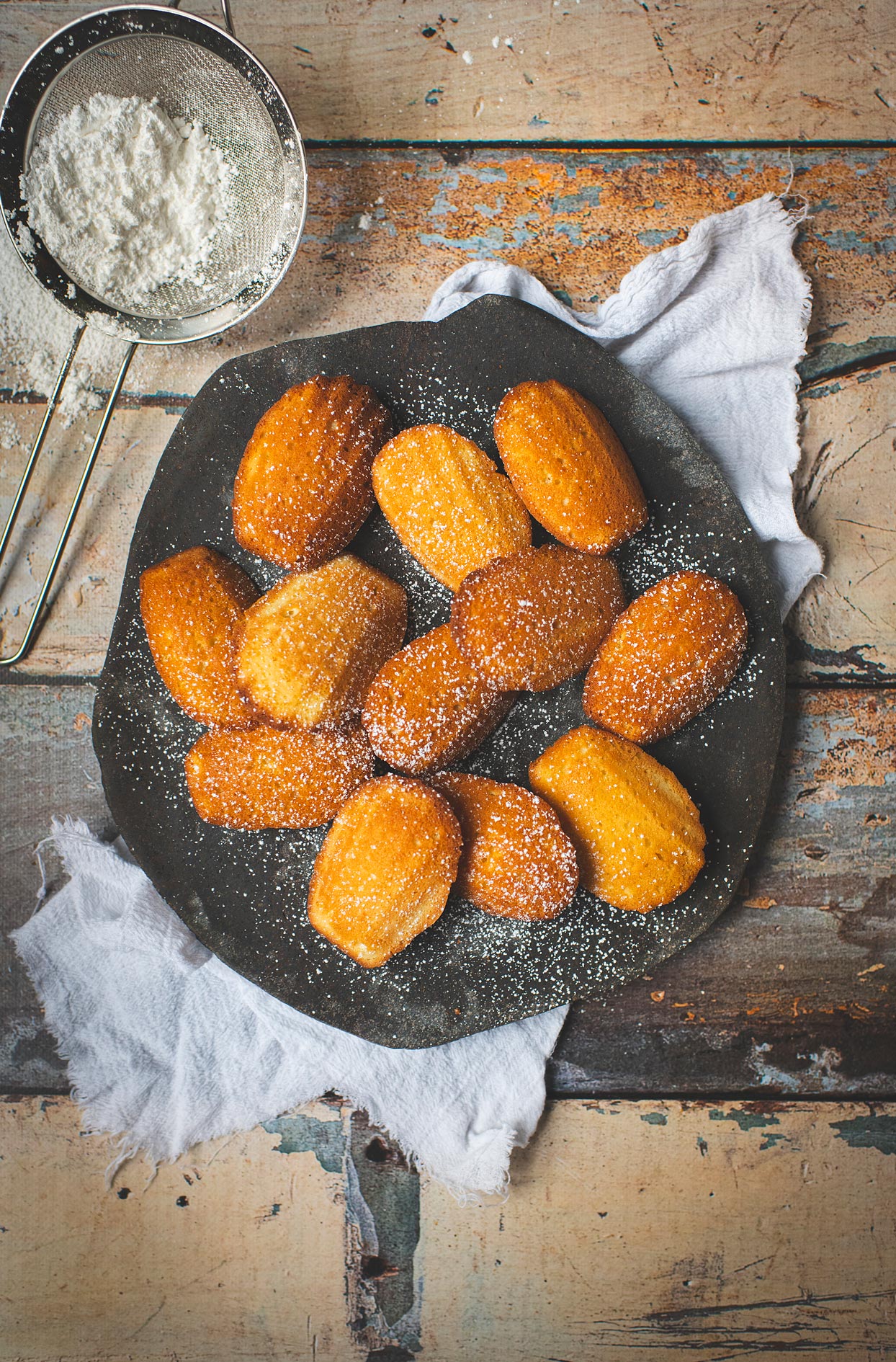
🍋 Warm out of the oven, hump and all!
There is a reason madeleines get eaten standing over the pan. Straight from the oven they are warm, tender, with the lemon coming up at you and that little domed hump on top proving you did it right. An hour later they are still perfect. Fifteen madeleines, one bowl, one mixer, and thirty minutes of chilling while you do something else. This is the kind of recipe you will know by heart after making it twice!
🥄 Here the hump comes from the whisk, not the oven
There are two schools for making a madeleine rise. The French school cranks the oven to 425 °F and relies on thermal shock: cold batter meets a blazing oven, the edges set, and steam pushes up through the center. The other school, the one I follow, bakes at 350 °F and does the work upfront, with eight minutes of whipping. Eight minutes sounds long for two eggs. It is where everything happens. You beat the eggs and sugar to the ribbon stage, that pale thick foam that falls back in a visible trail when you lift the whisk. That air is your leavening. Which means that from the moment the flour goes in, every extra stroke of the spatula deflates your hump.
🌡️ They will come out pale, and that is normal
I am telling you upfront because it bugged me. At 350 °F, madeleines do not take on the bronzed color you see in other recipes’ photos. They come out blond. I tried to fix that by giving them three extra minutes, and all I gained was drier madeleines. Color comes from oven temperature, never from time. Twelve minutes, out they come, you accept that they are pale, and you eat them warm.
Ads
Ads
🌡️ They will be pale, and you have to make peace with that
This is the one compromise in this recipe. At 350 °F you will not get the golden bronzing you see in magazine photos. I tried to make up for it by stretching the bake three extra minutes, and all I ended up with was drier madeleines. Color depends on oven heat, not on time spent in there. If bronzing matters more than anything to you, you would need to go to 400 °F and shorten the bake, but at that point you are changing recipes and giving up what the eight minutes of whipping bought you.
🧈 Butter with a brush, never oil spray
I tested both the same day, on the same pan. With oil spray, the inside of the madeleines came out full of little holes. With melted butter brushed on, the shape is cleaner and the crumb is tighter. Take the butter. And brush even if your pan is nonstick: the coating wears down, and the ridges of the shell are exactly the kind of nook batter grabs onto. If you find the shell ridges lack definition, add a dusting of sifted flour over the butter and tap the pan to knock off the excess. It fills the grooves and the imprint comes out sharper. I skip it myself, but the option is there.
🥄 Eight minutes, and stop counting strokes after that
The whisk is your leavening. Eight minutes on high, to the ribbon stage: the mixture should be pale, roughly tripled in volume, and fall in a visible trail that holds a few seconds. After that the mixer is done. The dry ingredients get folded with a spatula, half at a time, and you stop the second the flour disappears. One extra stroke and your hump leaves with the air you just whipped in.
🥣 One heaping tablespoon in the center, no spreading
Do not fill the cavity to the rim and do not push the batter toward the edges. One heaping spoonful in the middle, three-quarters full, that is it. The batter spreads on its own as it bakes. An overfilled pan overflows, and a madeleine that overflows never makes a hump.
🚪 The oven door stays shut
Twelve minutes is not long to wait. Every time you open the door you let out the steam that pushes the hump up, and a hump that falls does not come back. Skip convection too: the fan warps the shells.
🧊 Freeze the batter, not the madeleines
This is the tip nobody gives you. Baked madeleines freeze badly, they lose their texture, and texture is the whole reason they are good. Raw batter, on the other hand, freezes for up to two months, right in a piping bag. Pull it out, let it come back in the fridge, and bake as many as you want. Fresh madeleines on a Tuesday night with nothing to prepare.
📅 Make-ahead
The batter can be made the day before and spend the night in the fridge. It will be firmer than after thirty minutes, so pull it out ten minutes before filling the pan, long enough to loosen up and spoon in cleanly. You can also zest and juice your lemon ahead, and butter the pan while the oven preheats. What cannot be done ahead: the baking. A madeleine baked in the morning for the evening has already lost half of what makes it interesting. This one you bake while the coffee brews.
✅ What to serve with my lemon madeleines
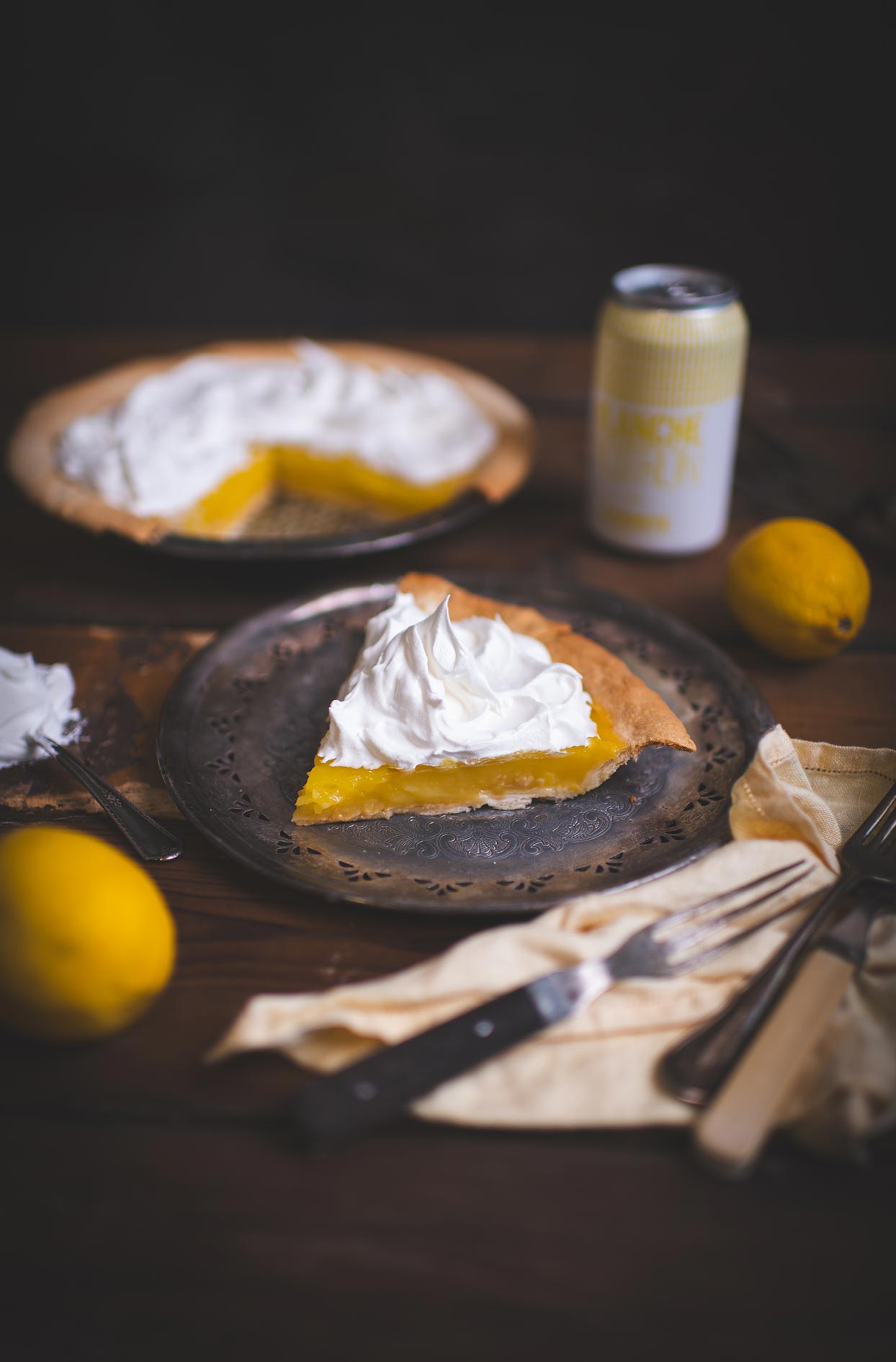
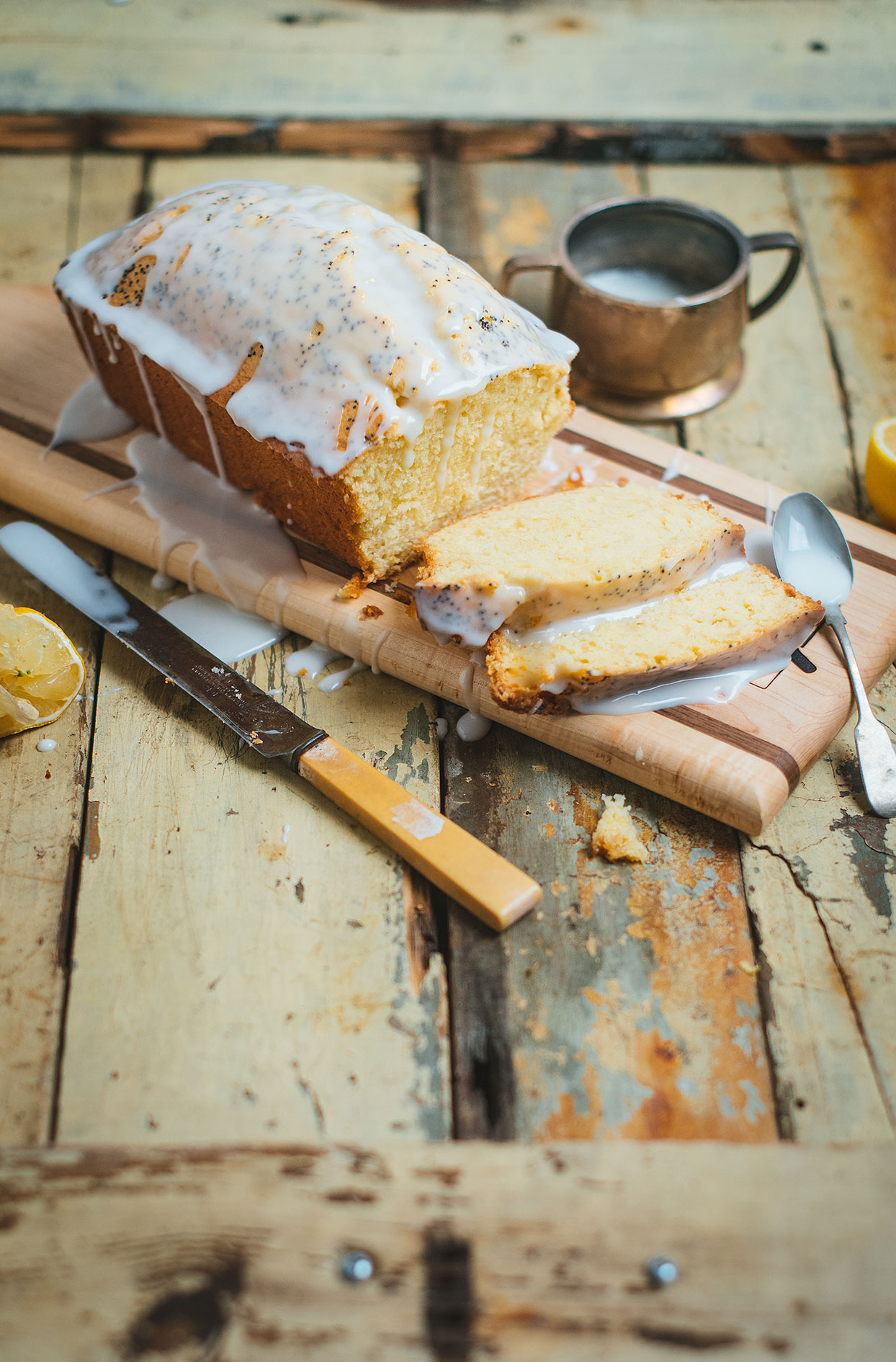
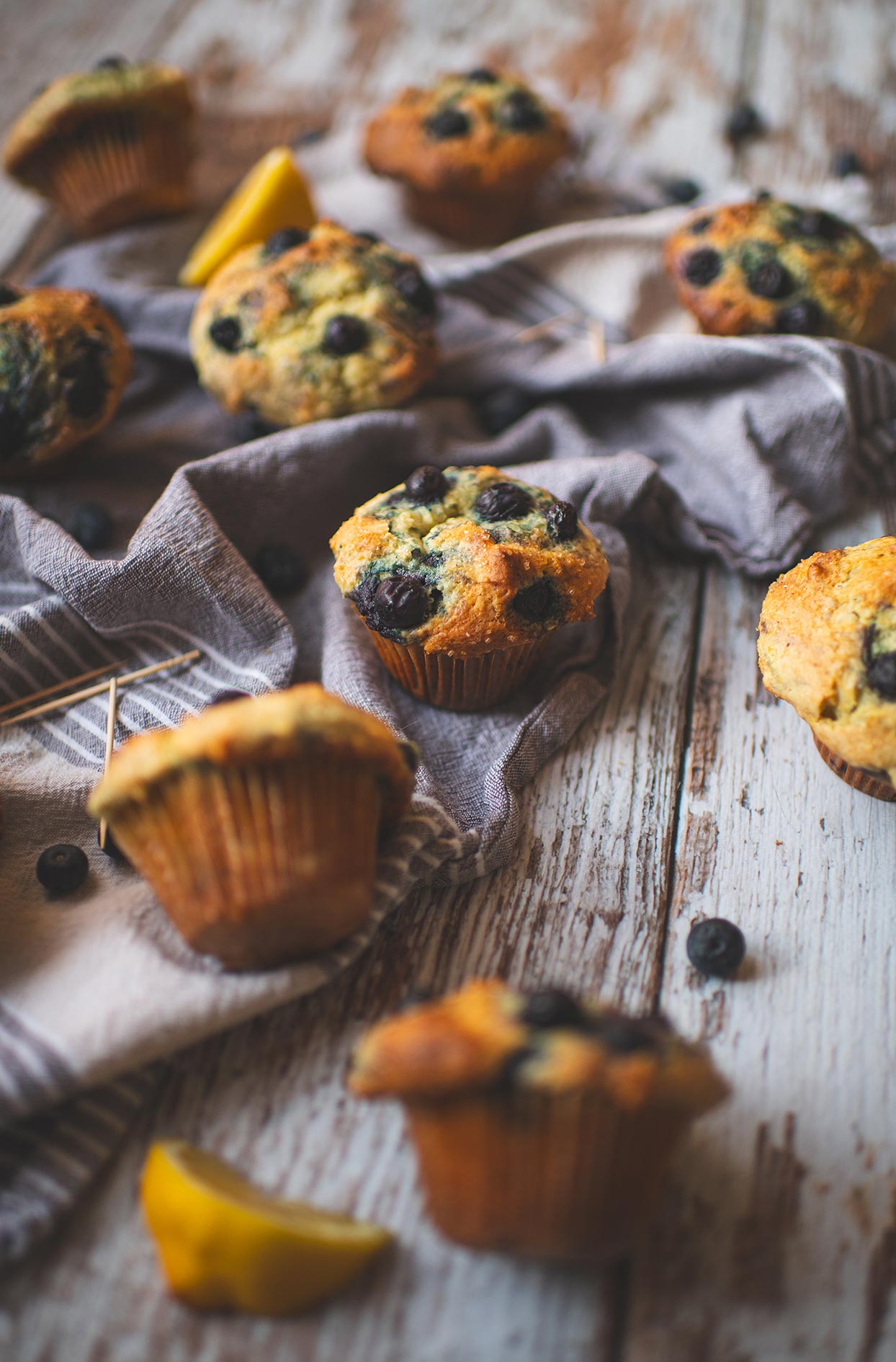
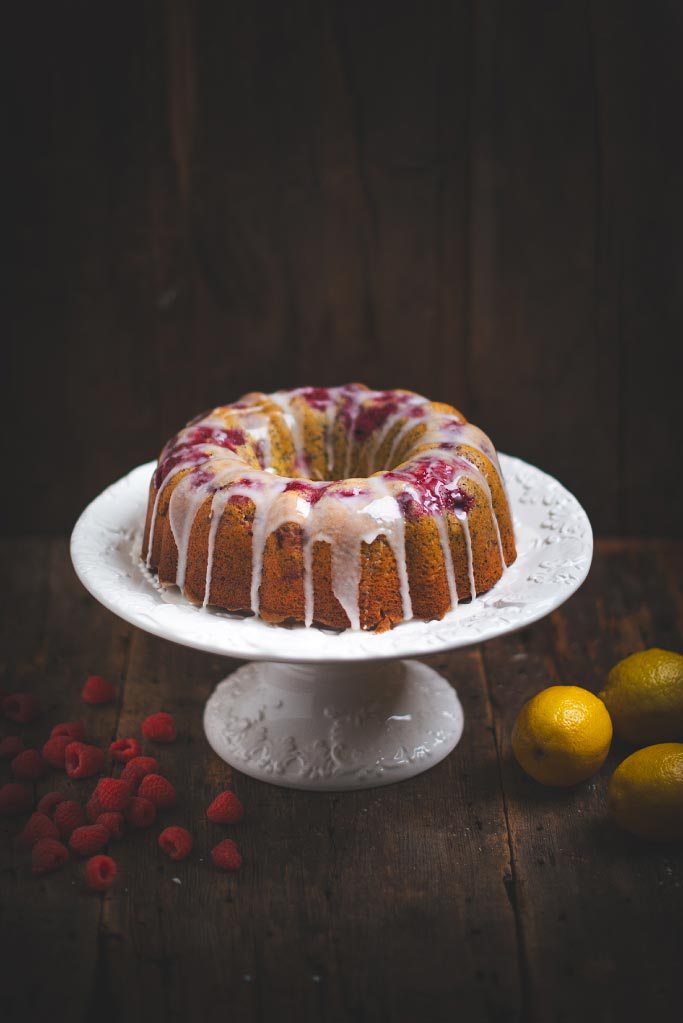
Warm, with coffee or tea, which is where they belong. A little icing sugar over the top if you have company. For a lemon dessert spread, set them next to my lemon tart and my lemon and limoncello pound cake. For another breakfast format, my blueberry and lemon muffins play the same position. And on a table of small sweet bites, my lemon raspberry bundt cake holds the center.

Ads
Madeleines
- 1/2 cup (113 g) unsalted butter
- 2 large eggs, at room temperature
- 1/2 cup (100 g) granulated sugar
- Zest of 1 large lemon, about 1 1/2 tbsp
- 1 tbsp (15 ml) fresh lemon juice
- 1 tsp (5 ml) pure vanilla extract
- 1 cup (115 g) all-purpose flour, sifted
- 1/2 tsp (2 ml) baking powder
- 1/8 tsp (0.5 ml) salt
Pan and finish
- 2 tbsp (28 g) unsalted butter, melted
- Icing sugar, for dusting (optional)
Ads
Preparation
- Melt the 1/2 cup of butter in a large bowl, in the microwave or on the stove, and set it aside to cool while you make the rest.
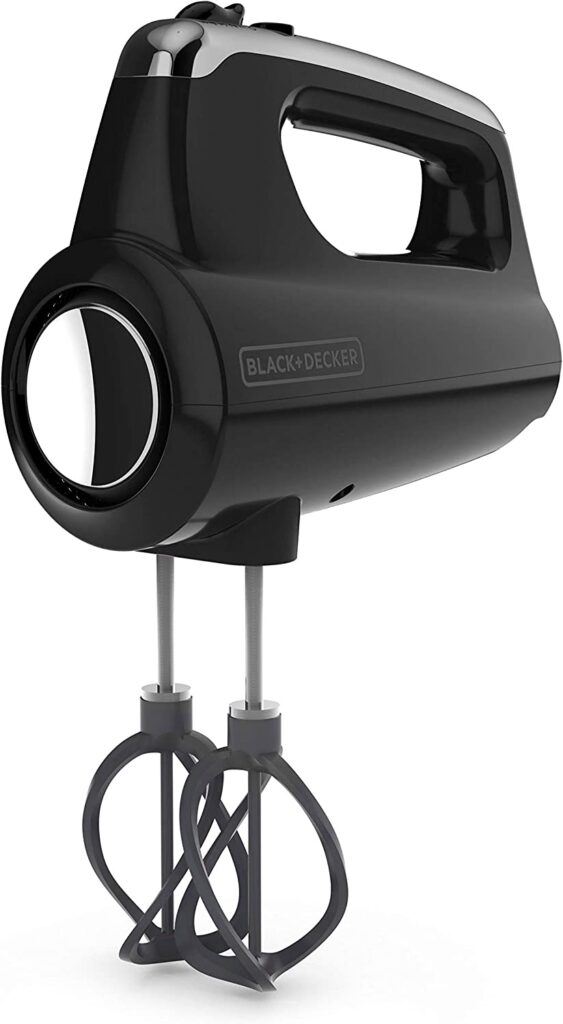
- With an electric mixer fitted with the whisk, beat the eggs and sugar on high speed for at least 8 minutes. The mixture should be thick, pale, and fall in a ribbon that holds for a few seconds on the surface when you lift the whisk.
- Add the zest, lemon juice and vanilla, and whisk just to combine. Everything after this is done by hand, the mixer is finished.
- In a small bowl, whisk the flour, baking powder and salt. With a silicone spatula, fold the dry mixture in, half at a time. Handle the batter gently so you do not deflate the eggs.
- Fold 1/4 cup of batter into the melted butter and stir until fully combined, about 1 minute. Pour that back into the rest of the batter and fold gently. The batter will be thick, silky and glossy.
- Cover and refrigerate 30 minutes.
- Toward the end of the rest, preheat the oven to 350 °F (177 °C), on conventional heat, not convection.
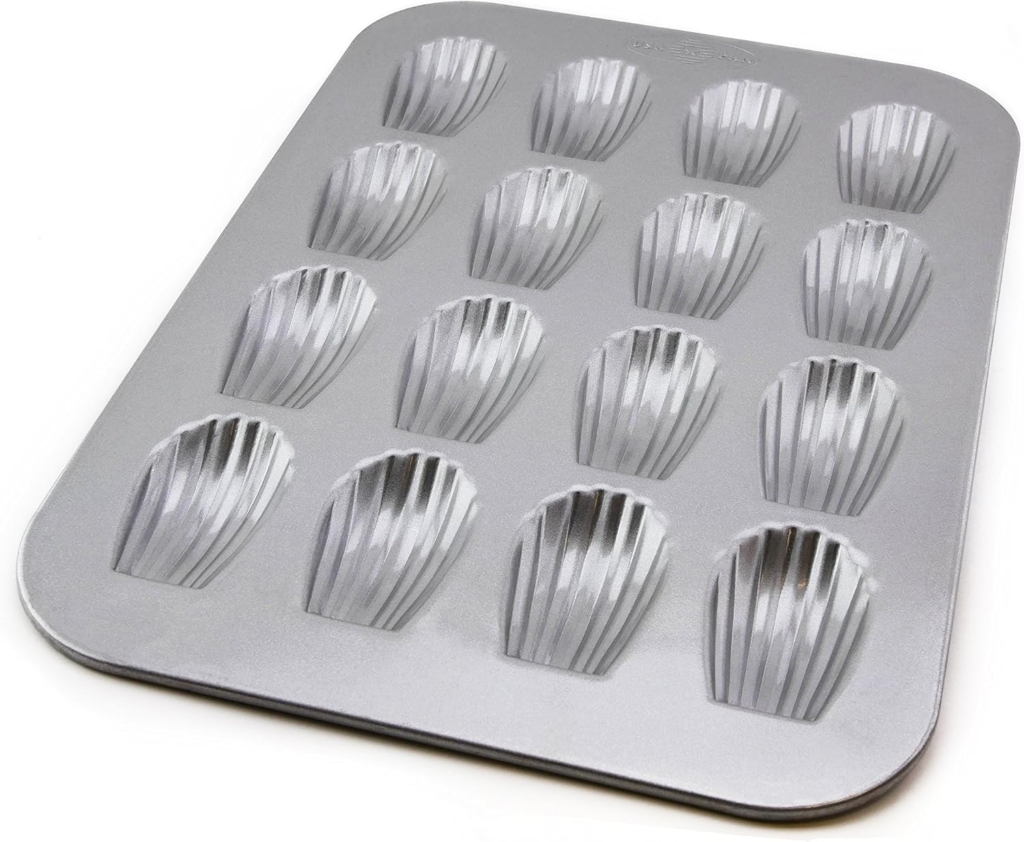
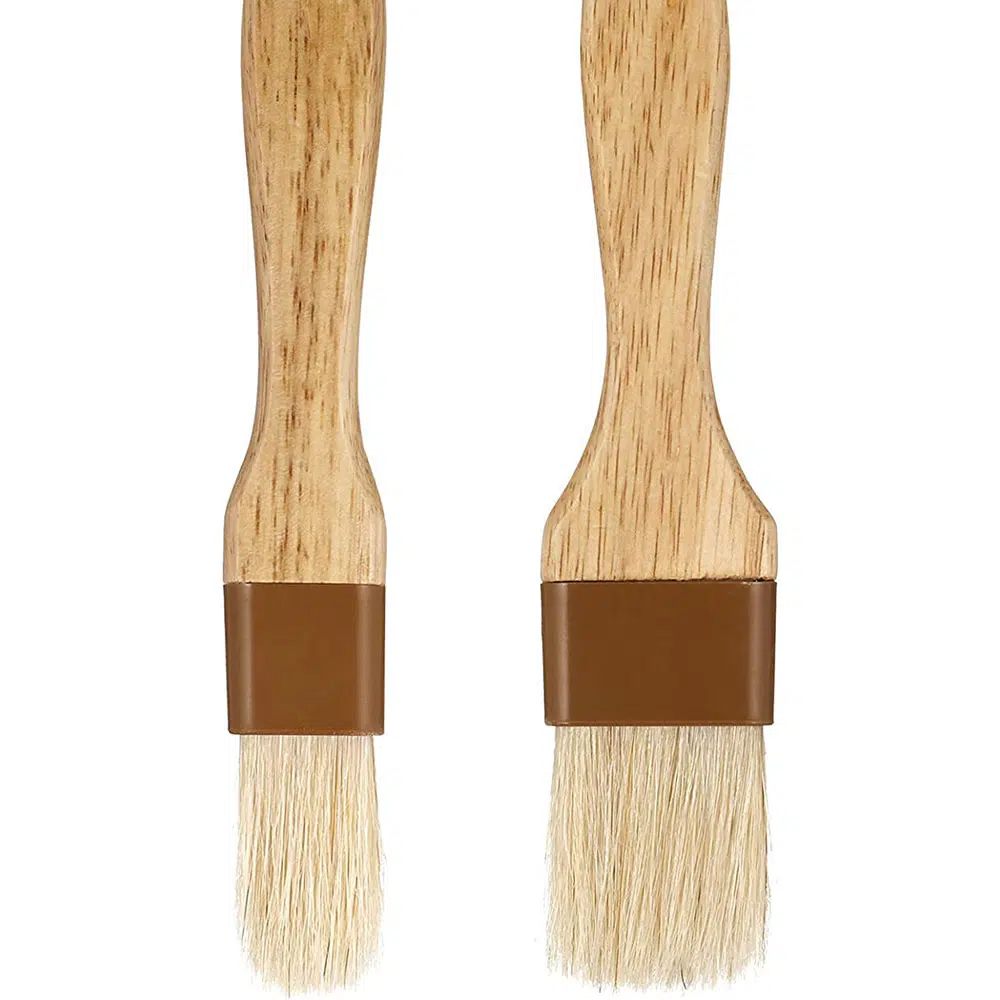
- Melt the remaining 2 tbsp of butter. With a pastry brush, lightly coat each cavity of the madeleine pan, even if the pan is nonstick.
- The batter will be airy and spongy after resting, which is what you want. Do not deflate it. Drop 1 heaping tablespoon of batter into the center of each cavity, without spreading it to the edges. The cavity should be three-quarters full, no more.
- Bake 12 minutes, without ever opening the oven door. The madeleines are done when the tops spring back under light finger pressure.
- Turn the pan over onto the counter, then transfer the hot madeleines to a rack.
- Wash and butter the pan again, then bake the rest of the batter, keeping it in the fridge between batches. With a 16-well pan, it all goes in at once.
- Dust with icing sugar if you like, and serve warm.
There are two ways to get the hump, and you have to pick one. The French method leans on thermal shock: very cold batter, a cold metal pan, a 425 °F oven. The edges set first, the center stays liquid longer, and steam can only escape through the middle. The method I use leans on air instead: eight minutes of whipping to the ribbon stage, and that air expands in the oven. Either way, three things do not change: a metal pan and never silicone, cavities filled only three-quarters, and an oven door that stays shut from start to finish.
Because your oven is at 350 °F, and that is normal. A madeleine’s color comes from heat, not from duration. The recipes showing deeply bronzed madeleines bake between 390 and 480 °F. I made the mistake of stretching the bake to chase color: all I gained was dryness. Pull them at twelve minutes, when the tops spring back under your finger. Pale and tender beats golden and dry.
Yes, always. The coating wears down over time, and the ridges of the shell are a shape batter loves to grab. Brush each cavity with melted butter. I also tested oil spray the same day: the shape came out worse and the inside was full of small holes. Butter wins. If you want very defined ridges, dust sifted flour over the butter and tap the pan to knock off the excess.
The day you bake them, and that is it. They are at their best warm out of the oven, still excellent an hour later, and they lose moisture fast because a cake that small has a lot of surface for very little volume. In an airtight container you can stretch to two days, but it is not the same thing anymore. I do not recommend freezing baked madeleines, the texture does not survive. Freeze the raw batter instead, it holds two months.
Warm, with coffee or tea. For a lemon dessert spread, serve them with my lemon tart and my lemon and limoncello pound cake. At breakfast, my blueberry and lemon muffins make the pair. And on a spread of small sweet bites, my lemon raspberry bundt cake anchors the table.
Ads
Ads
Ads
Ads
Ads