

Peach Cheesecake Recipe (No Bake)
- Preparation 30 min
- Cooking 2 min
- Servings 12
- Freezing Absolutely
Ads
🍑 Peak season peaches, with nothing hiding them
This is the window. Peaches are at their best right now, and in two weeks they go back to being tennis balls that taste like cardboard. So we don’t cook them. They go into the food processor raw, and that puree becomes the entire filling. No flavouring, no syrupy can. I tried it with canned peaches in heavy syrup once and it tasted like almost nothing. Get fresh ones, dead ripe, the kind you can smell from across the kitchen!
🔥 Not one minute of oven. Actually.
Most recipes that call themselves no bake still bake the crust for eight or nine minutes. Not this one. Graham crackers get crushed, mixed with melted butter, pressed into the pan, done. What holds the cake together is gelatin. No eggs, raw or cooked, no water bath, no crack across the top to patch with sour cream. The only heat in the whole recipe is two minutes on very low to dissolve the gelatin. In August or September, not turning on the oven changes your whole afternoon.
💛 The jelly layer is what sets it apart
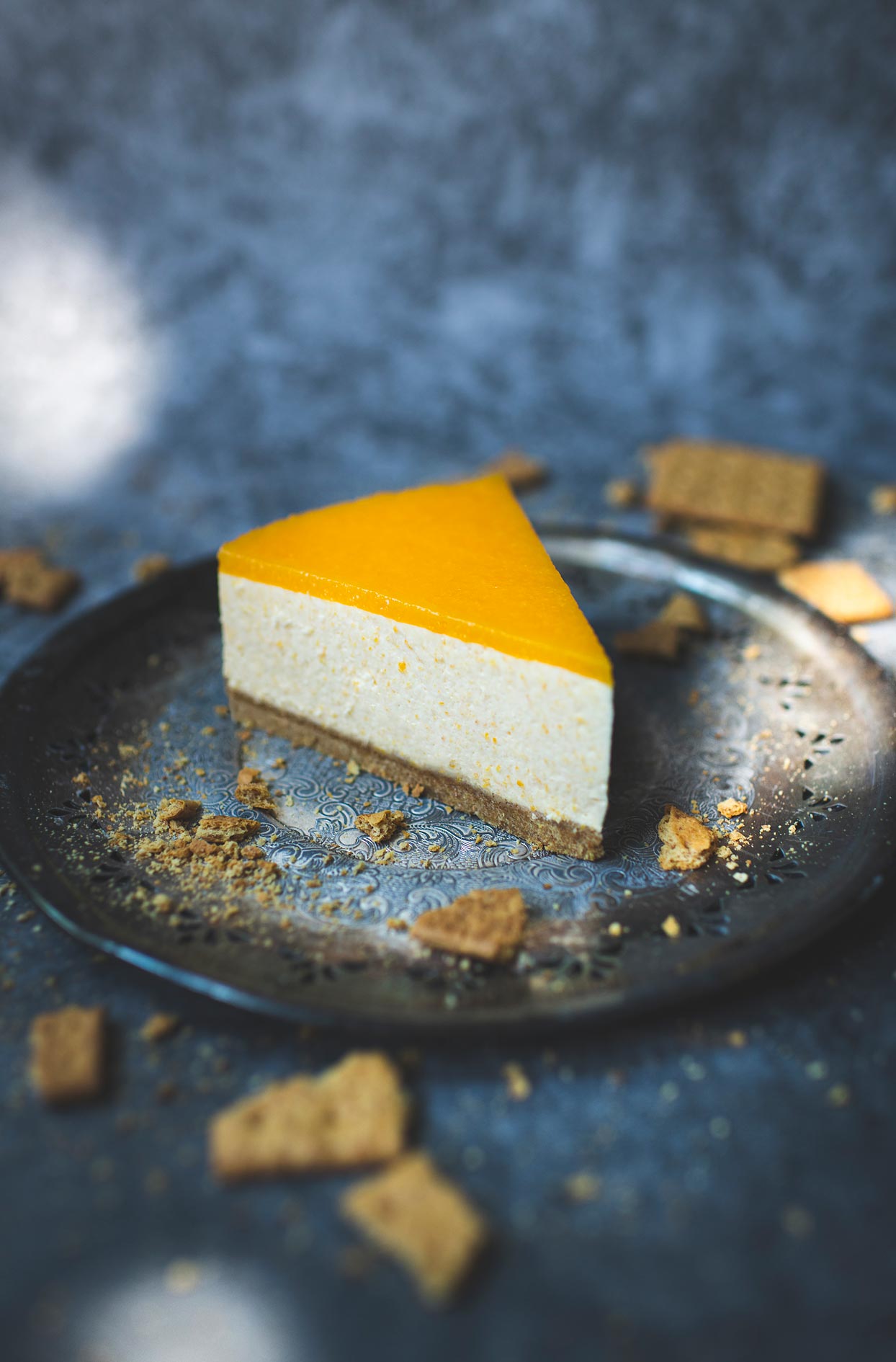
Everybody lays peach slices on top of a cheesecake. I pour a real peach jelly over mine instead, made from the puree I set aside at the start. You get a second texture, a yellow mirror that catches the light when you cut the first slice, and a second hit of peach at the end of every bite. It is also what makes the thing look like it came out of a bakery when it came out of your fridge.
Ads

Ads
🍑 Fresh first, frozen second, canned last
The order matters. Dead ripe fresh peaches are the first choice by a mile, because the entire flavour of this cake comes from them. If the season is over, buy frozen and let them thaw completely before they go in the processor. Canned peaches are a distant third. I made one with canned peaches in heavy syrup and it tasted like almost nothing. If canned is all you have, choose them packed in juice rather than syrup and drain them very well so they don’t water down the filling.
🌡️ Gelatin is where this is won or lost
Two moves decide whether it sets. First: sprinkle the gelatin across the entire surface of the cold water, never in a pile in the middle. A pile leaves a dry core that will never dissolve. Second: very low heat, and never a boil. Too much heat breaks the gelatin and you end up with a cheesecake that puddles on the plate. Use powdered gelatin, not sheets. Powder is far more reliable here.
🍍 Raw peach is fine, raw pineapple is not
Good news: peaches contain no enzyme that attacks gelatin, so the raw puree causes no trouble at all. If you ever feel like swapping the fruit, know that raw pineapple, kiwi, papaya, mango and fig will stop gelatin from setting for good. With those, you have to use the canned version.
🔪 Peeled, ideally
Skin in a raw puree leaves stringy bits and dulls that beautiful yellow. Easiest way: score a small X on the bottom of the peach, drop it in boiling water for 30 seconds, then into ice water. The skin slips right off. That said, if you skip it, the world will not end.
🥄 Individual portions work too
The same recipe builds in small glasses or jars. Crust pressed in the bottom, filling, then the jelly poured over after the three hour mark. They set a little faster and they look sharp on a party table. And you avoid cutting slices in front of your guests.
❄️ Four to five days, and it freezes in slices
Well covered, the cake keeps 4 to 5 days in the fridge easily. To freeze it, cut it into slices first, never whole: you take out what you need and the rest is left alone. Thaw in the refrigerator, not on the counter. One more thing: the jelly stays bare. No peach slices laid on top. The yellow mirror is good looking as it is, and fresh slices would weep water onto the surface.
📅 Make-ahead
This one is built for it. The whole cake goes together the day before and spends the night in the fridge. On the day, you open the pan, you slide, you serve. Nothing to do at the last minute, which is rare for a dessert. To push further, the crust can be pressed into the pan two days ahead and wait in the fridge, well covered. Peel and slice the peaches the night before as well, and keep them in a labelled container with a spoonful of lemon juice so they don’t brown. The one thing you cannot rush is pouring the jelly before the filling is genuinely set. Three hours, firm to the touch. Pour too early and the two layers marry into one.
✅ What to serve with this peach cheesecake
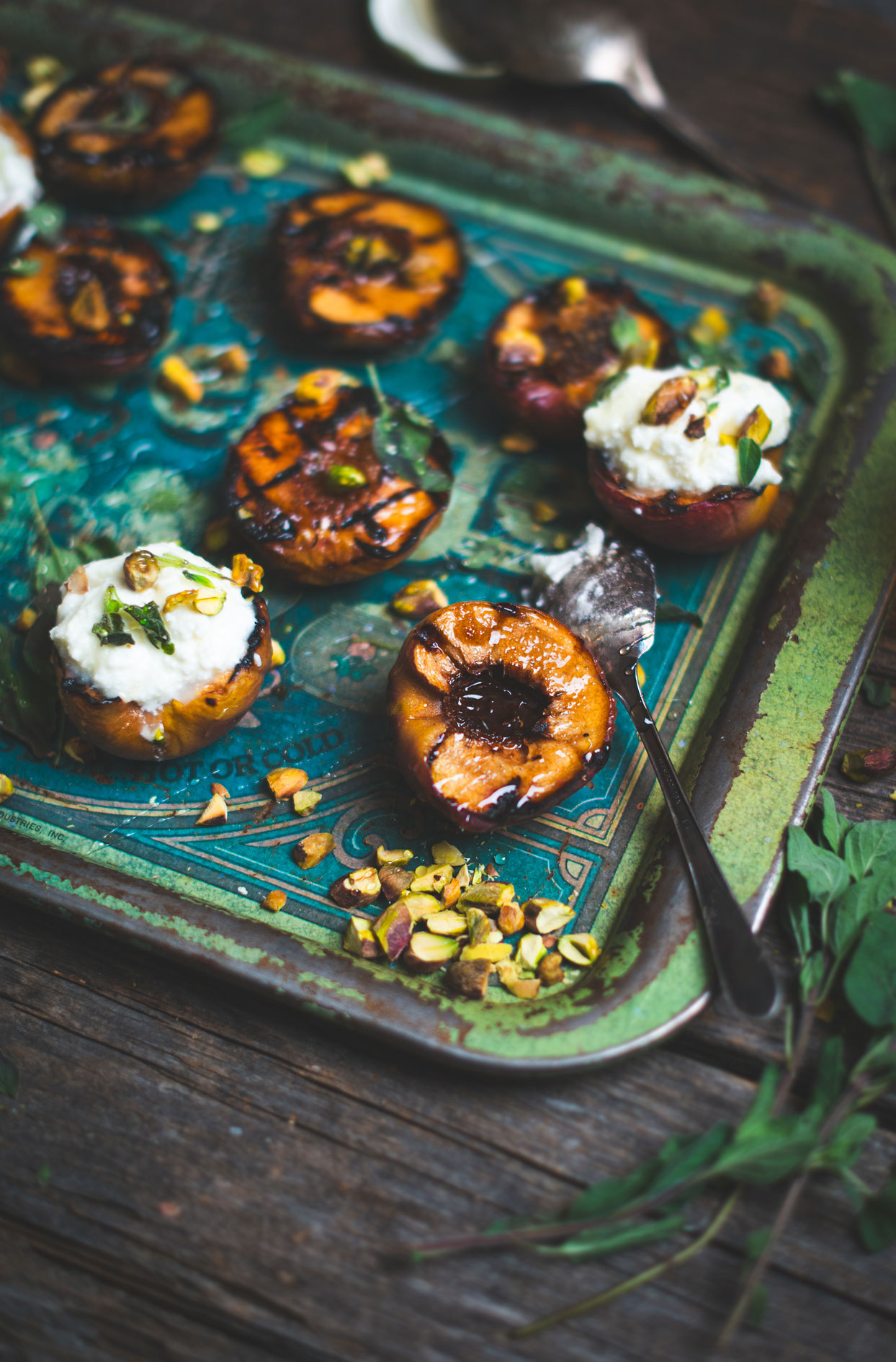
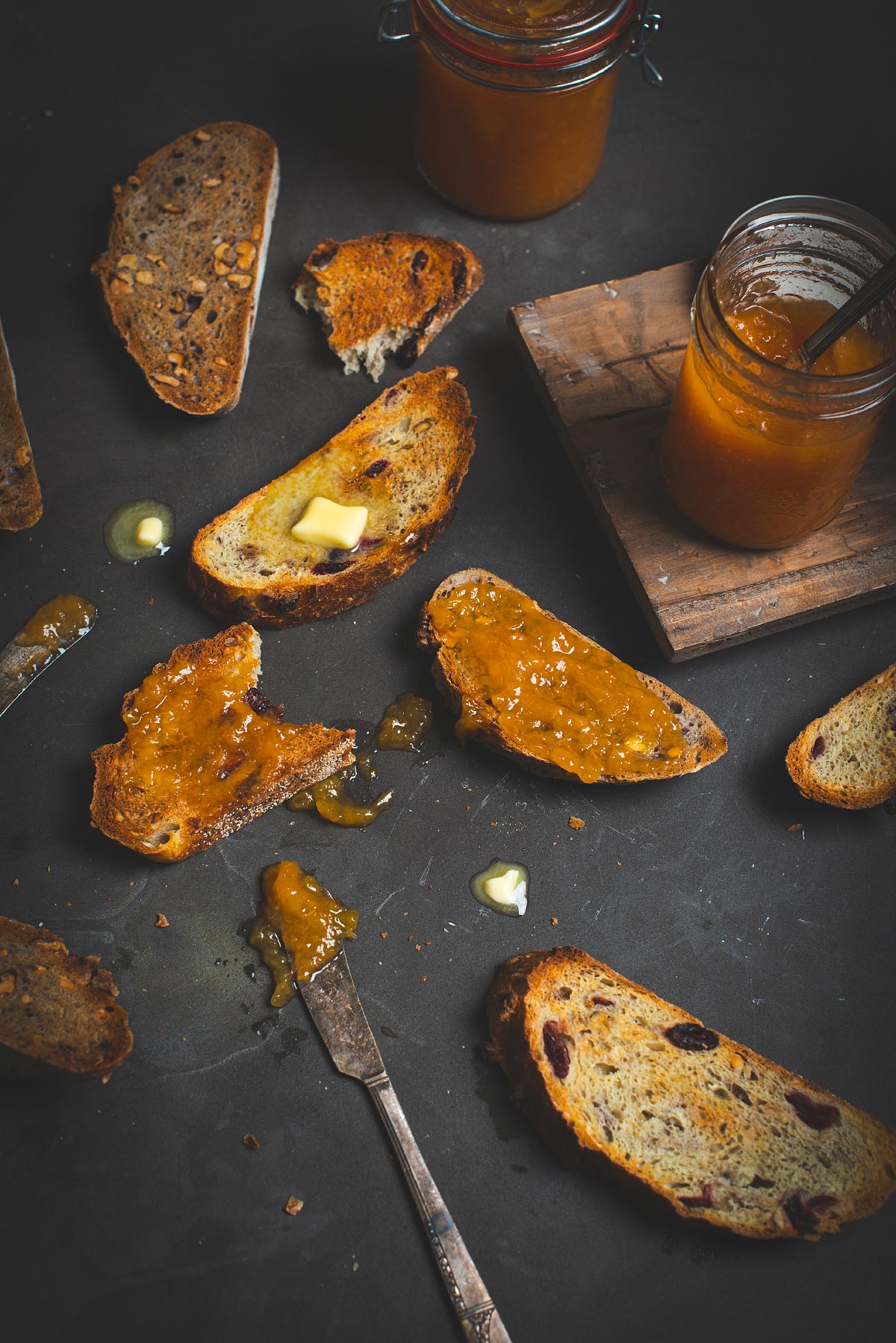
This closes a summer or early fall meal, something grilled and simple, eaten outside. Cut small slices, it is richer than it looks. If you are hosting and want a second plate on the table, reach for contrast with grilled peaches with ricotta, honey and fresh oregano, warm and far less sweet. And if peaches are still sitting on your counter at the end of the week, they end up as peach jam.
Ads
Crust
- 200 g graham crackers
- 7 tbsp (100 g) unsalted butter, melted
- 2 tbsp (30 ml) brown sugar
Peaches
- 4 cups (about 6) very ripe fresh peaches, peeled and pitted
Filling
- 2/3 cup (133 g) granulated sugar
- 1/2 cup (125 ml) cold water
- 4 1/2 tsp (22 ml) powdered gelatin
- 500 g (2 blocks) plain cream cheese, softened
- 1 1/4 cups (300 ml) 35% whipping cream
Jelly
- 1/4 cup (60 ml) cold water
- 3/4 tsp (3.75 ml) powdered gelatin
- 1 tbsp (15 ml) fresh lemon juice
Ads
Preparation
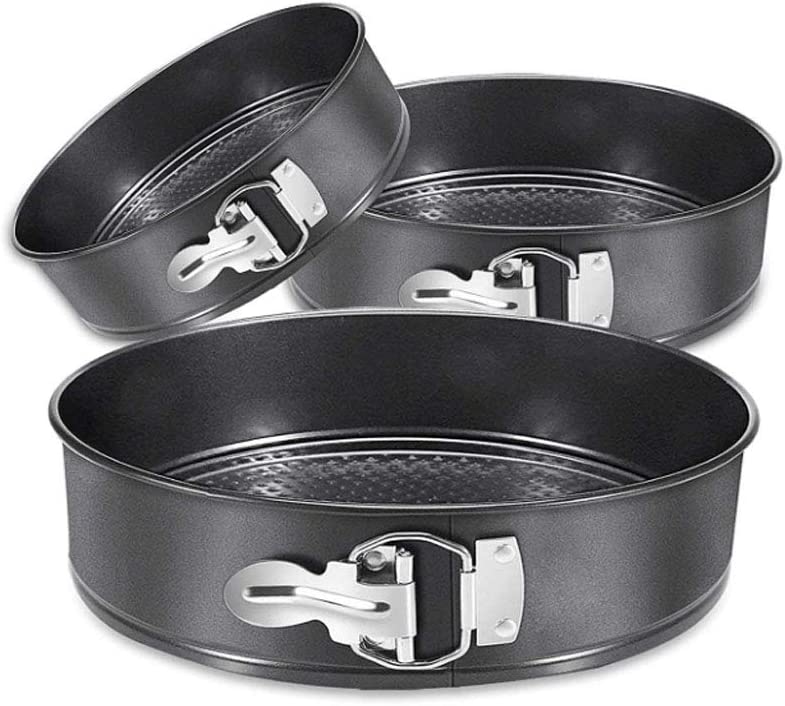
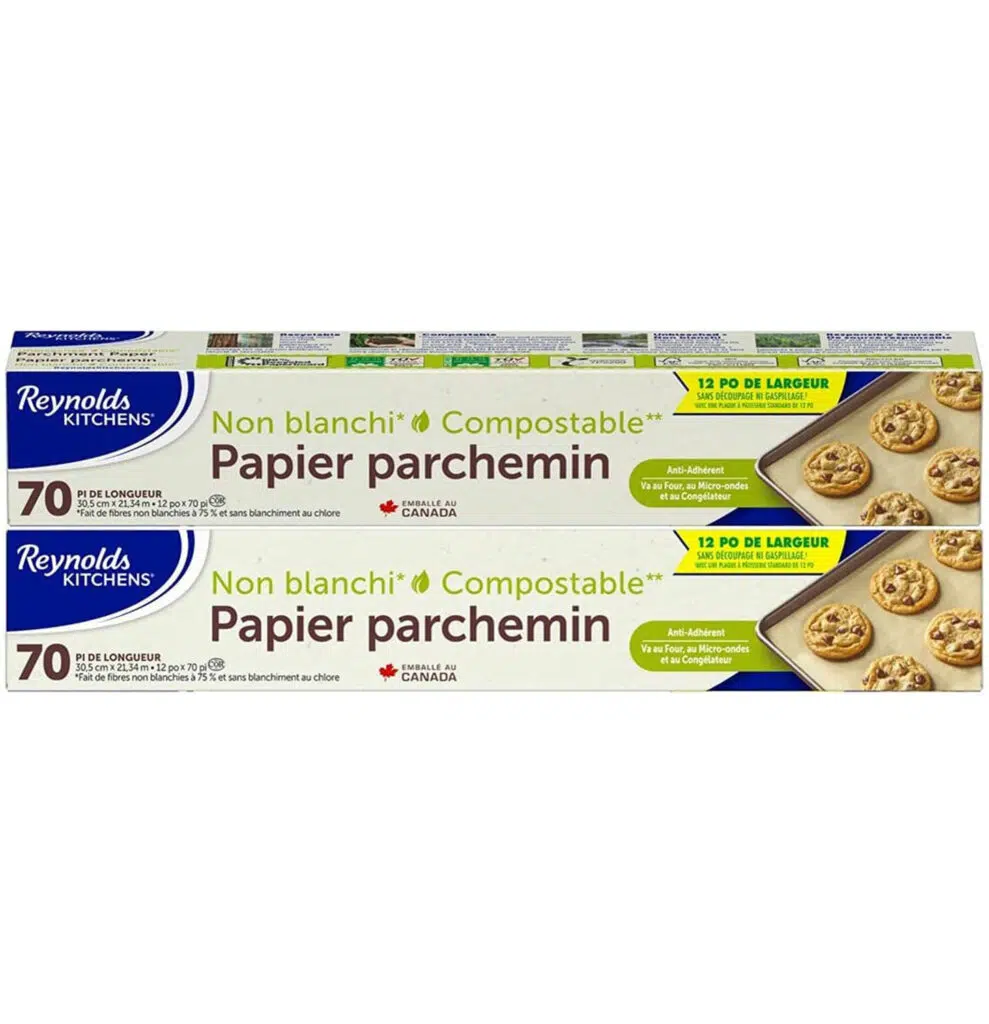
- Take a 9 inch (23 cm) springform pan and remove the ring. Lay a square sheet of parchment paper over the base, close the ring over it so the paper hangs out all around. Butter the sides.
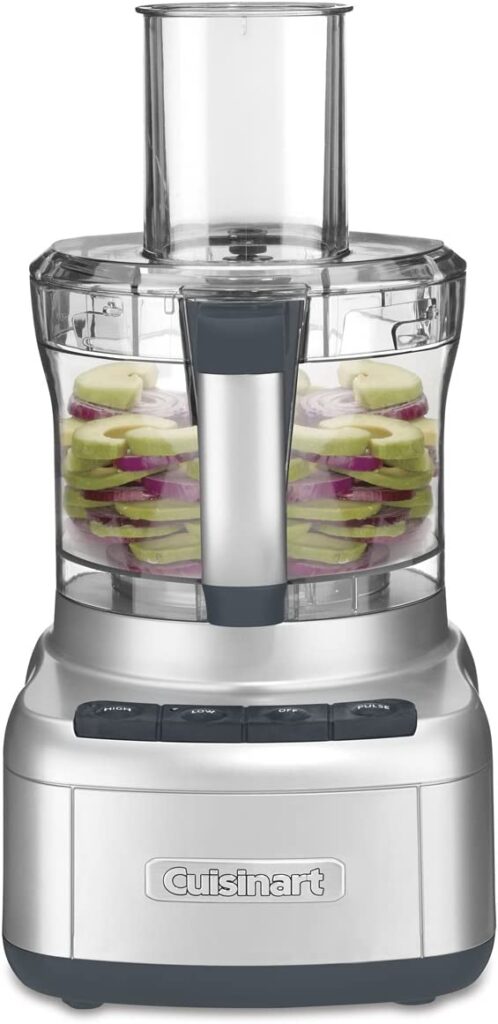
- In the food processor, grind the graham crackers to a fine crumb. Add the melted butter and brown sugar, pulse until evenly moistened. Tip into the pan and press firmly into the bottom only, never up the sides.
- Clean the processor bowl. Puree the peaches in it until completely smooth. Remove 3/4 cup (180 ml) of puree, set it aside in a bowl for the jelly, and leave all the rest in the processor.
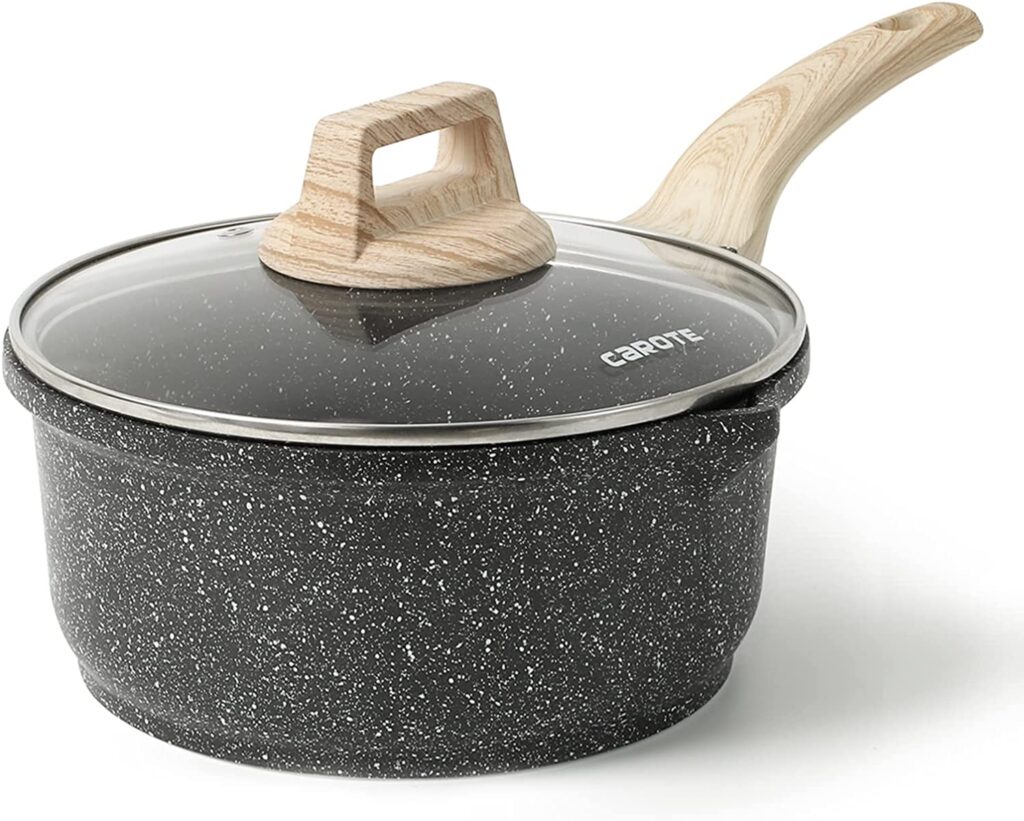
- In a small saucepan, pour 1/2 cup (125 ml) cold water. Sprinkle the gelatin evenly across the whole surface, never in a pile in the middle, or it clumps. Stir lightly and let stand 5 minutes, until the mixture turns gelatinous.
- Heat over very low heat, stirring constantly, until the gelatin is fully dissolved and the liquid runs clear. Never let it boil: too much heat destroys the gelatin’s setting power. Remove from the heat and let cool 5 minutes.
- To the puree still in the processor, add the cream cheese, the cream, the sugar and the warm gelatin. Blend 30 seconds, until perfectly smooth. If the bowl is too small, transfer the puree to a large bowl, blend the other ingredients in the processor, then bring everything together with a whisk, beating vigorously.
- Pour the filling over the crust. Refrigerate 3 hours, until the top is firm to the touch.
- Make the jelly. Pour 1/4 cup (60 ml) cold water into a small saucepan, sprinkle the gelatin across the surface, let stand 5 minutes. Heat over very low heat, stirring constantly, until fully dissolved. Remove from the heat and let cool 5 minutes.
- In a bowl, combine the reserved peach puree and the lemon juice. Pour in the warm gelatin and whisk vigorously. Pour gently over the set filling, then tilt the pan slowly so the jelly spreads on its own.
- Refrigerate 3 more hours, until the jelly is set.
- Release the ring. Use the overhanging parchment to slide the cake onto a serving plate, then pull the paper away gently.
They are one of the best fruits for it, because peach is soft and floral rather than sharp, and it does not fight the cream cheese the way a berry can. The trick is getting enough peach in there. Slices laid on top mostly look nice. Here the puree goes into the filling itself and again into the jelly on top, so peach is the flavour of the cake rather than a garnish.
The one that uses fruit at its peak and does not bury it. This version is no bake, set with gelatin instead of eggs, so nothing is heated and the raw peach flavour stays intact. The second gelatin layer on top is what most recipes skip, and it is where the second hit of peach comes from.
Yes, but it is the third choice. I made one with canned peaches in heavy syrup and the flavour was nearly gone. If canned is what you have, buy them packed in juice rather than syrup and drain them thoroughly. Frozen peaches, fully thawed, land much closer to fresh.
The baked New York style, because it needs a water bath, a slow oven, a gradual cool down, and it still cracks. This one removes every one of those problems. The only heat is two minutes on very low to dissolve the gelatin, and there is nothing to crack.
Almost always the gelatin got too hot. Past a bare simmer, the heat breaks what makes it firm and it will never set again. Very low heat, and off the burner the moment the liquid runs clear. The other two causes are gelatin sprinkled in a pile instead of across the surface, which leaves dry clumps, and cutting the chilling time short.
About 6 medium ripe peaches to reach 4 cups of puree, roughly 2 lb before peeling and pitting. Peach size varies a lot by variety, so measure the puree rather than counting the fruit.
Yes, and it holds up well. Cut it into slices first, never whole, so you can take out what you need and leave the rest undisturbed. Thaw in the refrigerator, never on the counter.
Ads
Ads
Ads
Ads
Ads