

Bone in beef ribeye roast with herbs
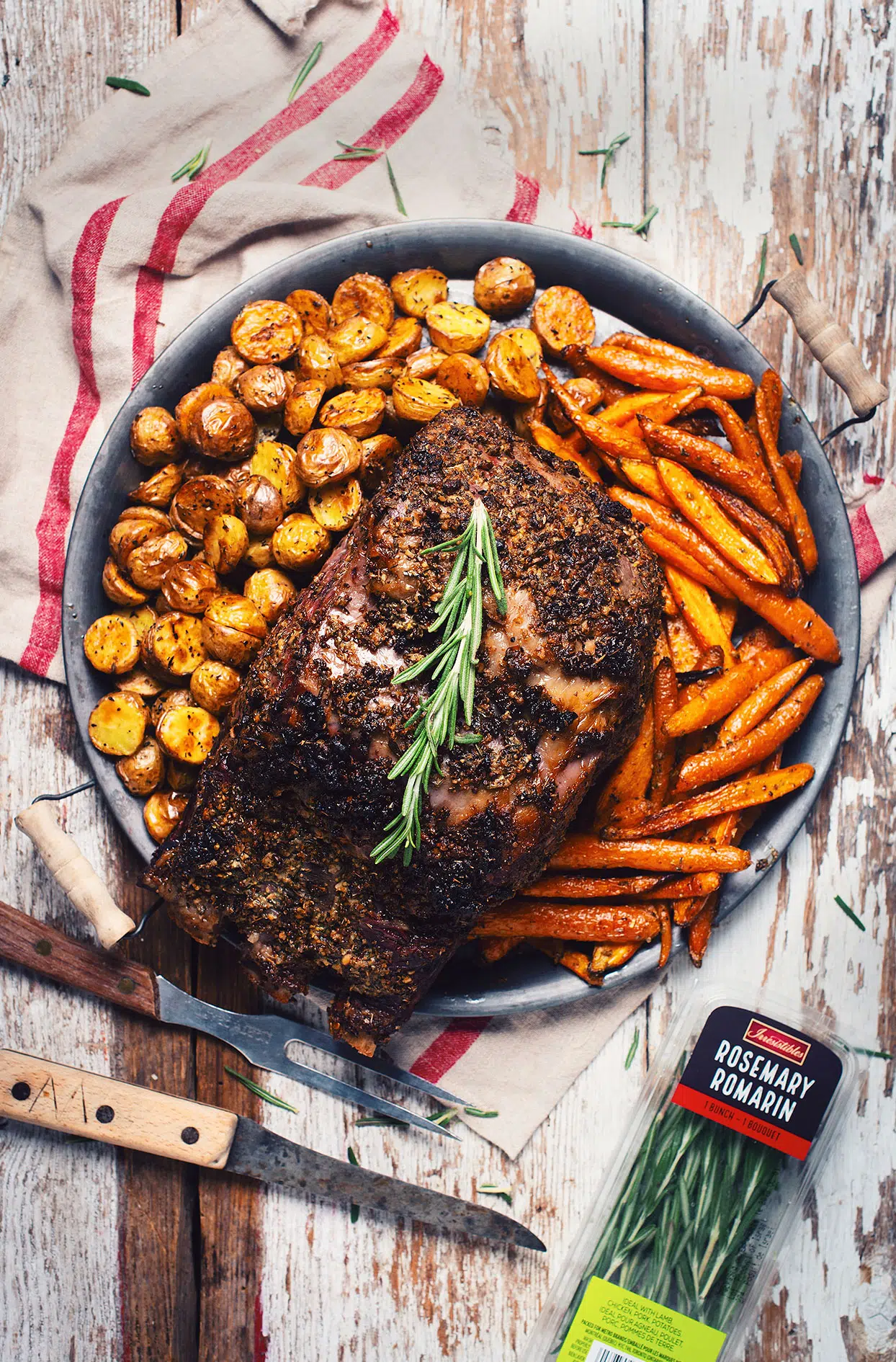
- Preparation 30 min
- Refrigeration 2 h (+ 2 h tempering)
- Cooking 3 h
- Servings 6 to 8
- Freezing Not recommended
Ads
🥩 The cut you bring out to impress people
A bone in beef ribeye roast is expensive. This is not the Tuesday-night piece of meat you throw in the oven because the fridge was empty. It is the holiday cut, the one that quiets the room when it lands on the table. Choose your guests carefully.
The good news is that once you have paid for the beef, the rest is almost too easy. A mustard and herb paste, a bed of onions, an oven. Nothing to sear, nothing to baste.
🌿 The mustard crust does all the work
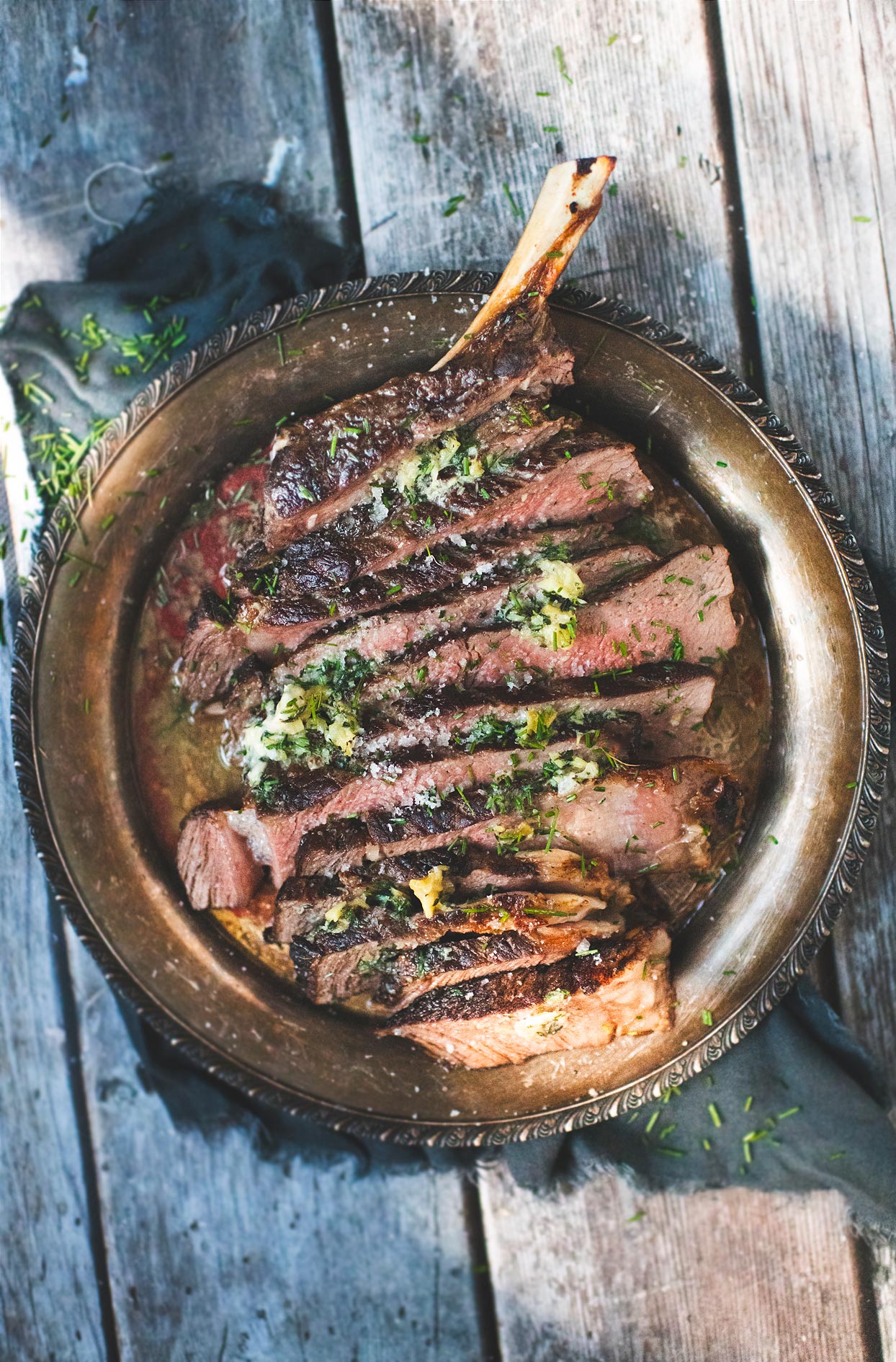
Garlic, grainy mustard, fresh rosemary and thyme, oregano, olive oil. You spread it over every inch of the roast, chill it for two hours, then let it come to room temperature for two more before it sees heat. In the oven the mustard dries out and sets into a crust. That crust is where the color comes from, which is exactly why there is no searing step in this recipe. On a smaller cut like my oven-roasted beef rib steak with roasted garlic butter, I do the opposite and sear it hard. Different piece of meat, different method.
🌡️ The thermometer decides, not the clock
Three hours is an estimate. Your oven is not my oven, your roast does not weigh exactly 7.7 lb, and it did not leave the fridge at the same time as mine. The only number that never lies is the temperature at the center of the meat. A meat thermometer costs almost nothing and it is the one tool you genuinely need in a kitchen.
Ads
Ads
🌡️ The whole secret to a tender roast, in two moves
People go looking for something complicated. There is nothing complicated. Season it properly, and do not overcook it. That is the entire secret.
The herb crust handles the first half. Two hours in the fridge gives the salt time to work its way into the meat instead of sitting on the surface. For the second half there is exactly one tool, and it is the thermometer. A roast this size that spends five extra minutes in the oven turns grey in the middle, and nothing brings it back. A meat thermometer costs next to nothing and it is the single most useful thing in a kitchen drawer. No thermometer, no business cooking a hundred-dollar piece of beef.
🌡️ Internal temperature chart, before and after the rest
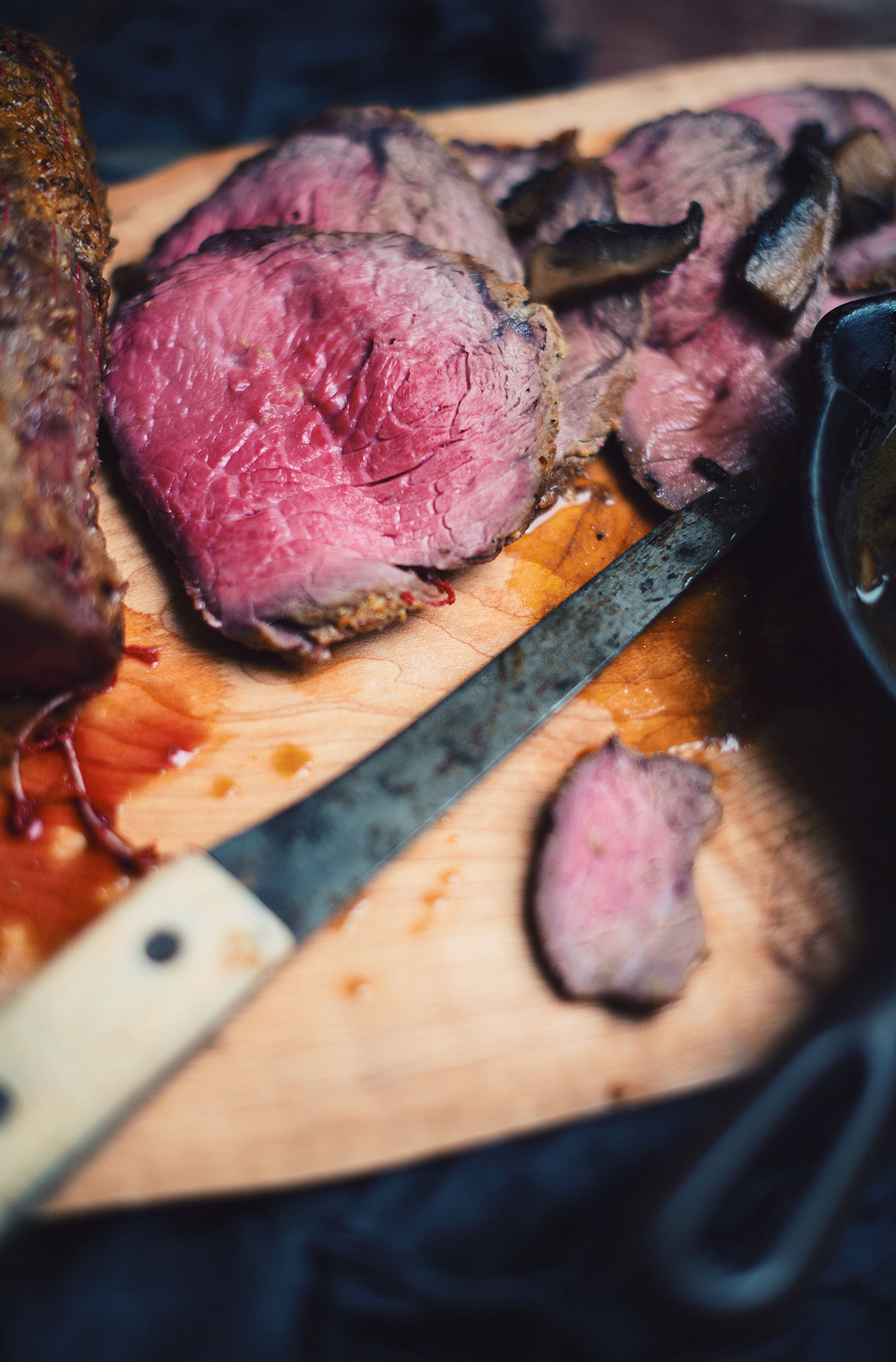
Two numbers matter here, not one. The temperature you pull the roast at, and the temperature it reaches after fifteen minutes under foil. On a 7.7 lb roast, heat keeps traveling toward the center and the reading climbs another 5 to 10°F.
| Doneness | Pull from oven | After resting |
|---|---|---|
| Rare | 115 to 120°F (46 to 49°C) | 125 to 130°F (52 to 54°C) |
| Medium-rare | 120 to 128°F (49 to 53°C) | 130 to 135°F (54 to 57°C) |
| Medium | 128 to 138°F (53 to 59°C) | 135 to 145°F (57 to 63°C) |
| Medium-well | 138 to 148°F (59 to 64°C) | 145 to 155°F (63 to 68°C) |
My recipe pulls at 130°F and lands around 135 to 140°F on the plate. That is medium-rare edging toward medium, and it is how I serve it. If you want a true rare center, pull closer to 120°F and watch it closely from there.
⏱️ How long to cook it, by weight
This roast runs about 20 minutes per pound in total, split between the hot blast and the slow finish. Here is where different sizes land:
| Roast weight | 450°F (230°C) | 350°F (180°C) | Total, approx. |
|---|---|---|---|
| 5 lb (2.3 kg) | 45 min | 1 h to 1 h 15 | 1 h 45 to 2 h |
| 6.5 lb (3 kg) | 50 min | 1 h 15 to 1 h 45 | 2 h 05 to 2 h 35 |
| 7.7 lb (3.5 kg) | 50 min to 1 h | 1 h 30 to 2 h | 2 h 20 to 3 h |
| 9 lb (4 kg) | 1 h | 1 h 45 to 2 h 15 | 2 h 45 to 3 h 15 |
Treat every one of those numbers as a starting point. A roast that came out of the fridge one hour ago instead of two will take longer. Start checking the temperature thirty minutes before the chart says you should.
⏰ Start in the morning if you are eating at six
This is the trap. The recipe card says three hours of cooking, so people start at three in the afternoon. Do not.
Two hours in the fridge with the crust, two hours coming to room temperature, three hours of oven, fifteen minutes of rest. That is roughly seven hours between the first time the roast leaves the fridge and the moment you carve it. A six o’clock dinner starts around eleven in the morning.
🧅 Onions go under the rack and on top of it
Not a typo. Half the onions sit in the bottom of the pan, in the wine and water, where they melt down and flavor the juices. The other half sits on the rack directly under the roast, where they caramelize and keep the beef off the metal.
🦴 Leave the bones attached
Plenty of people will tell you to cut the bones off before serving. Not here. Carve the roast as it is and let the bone ride along on the end of some of the slices. It looks better on the plate, it keeps the meat juicy while it rests, and whoever gets the bone is usually the happiest person at the table.
🛒 What to ask for at the butcher counter
Ask for a bone in rib roast, three or four ribs, somewhere between 6.5 and 9 lb (3 to 4 kg). Have the heavy surface fat trimmed but keep a thin layer on: that layer bastes the roast on its own for three hours. Ask for the bones to be left attached to the meat.
Price per pound swings a lot week to week, especially around the holidays. It pays to watch the flyers a week or two ahead and buy when the cut drops. It keeps well for a few days in the fridge in its packaging.
🥄 Strain the juices, never throw them out
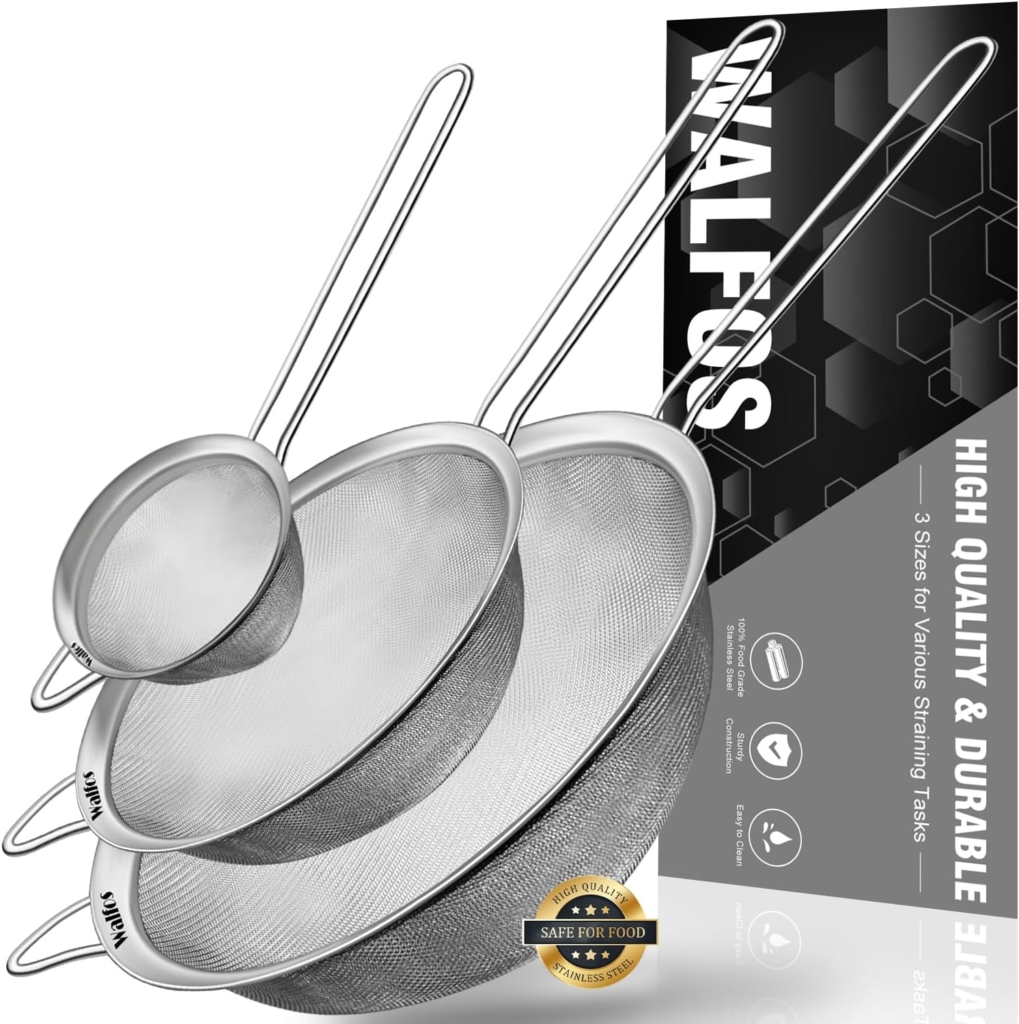
The bottom of the pan holds white wine, water, collapsed onions and everything that dripped off the roast. Pour it through a fine mesh strainer into a small saucepan, let it settle for a minute and skim the fat off the top. Reduce it two or three minutes if it tastes thin. This is an au jus, not a thick gravy, and that is the point.
❄️ Leftovers
Three or four days in the fridge, in an airtight container with a spoonful of the strained juices over the slices. I would not freeze beef like this: a cut at this price gives up too much on the thaw. Cold slices make a dangerous sandwich the next day.
✅ What to serve with my bone in beef ribeye roast with herbs
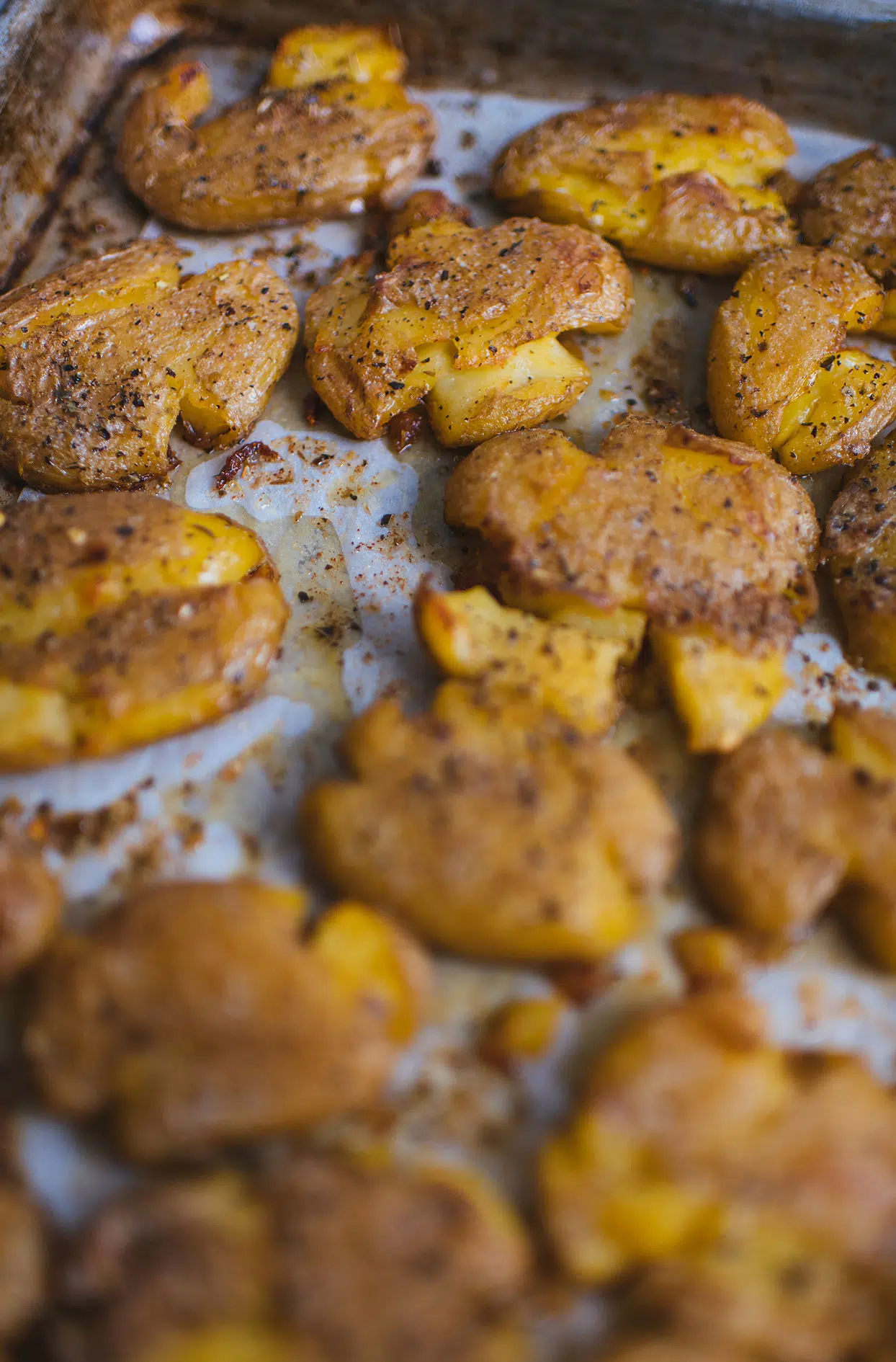
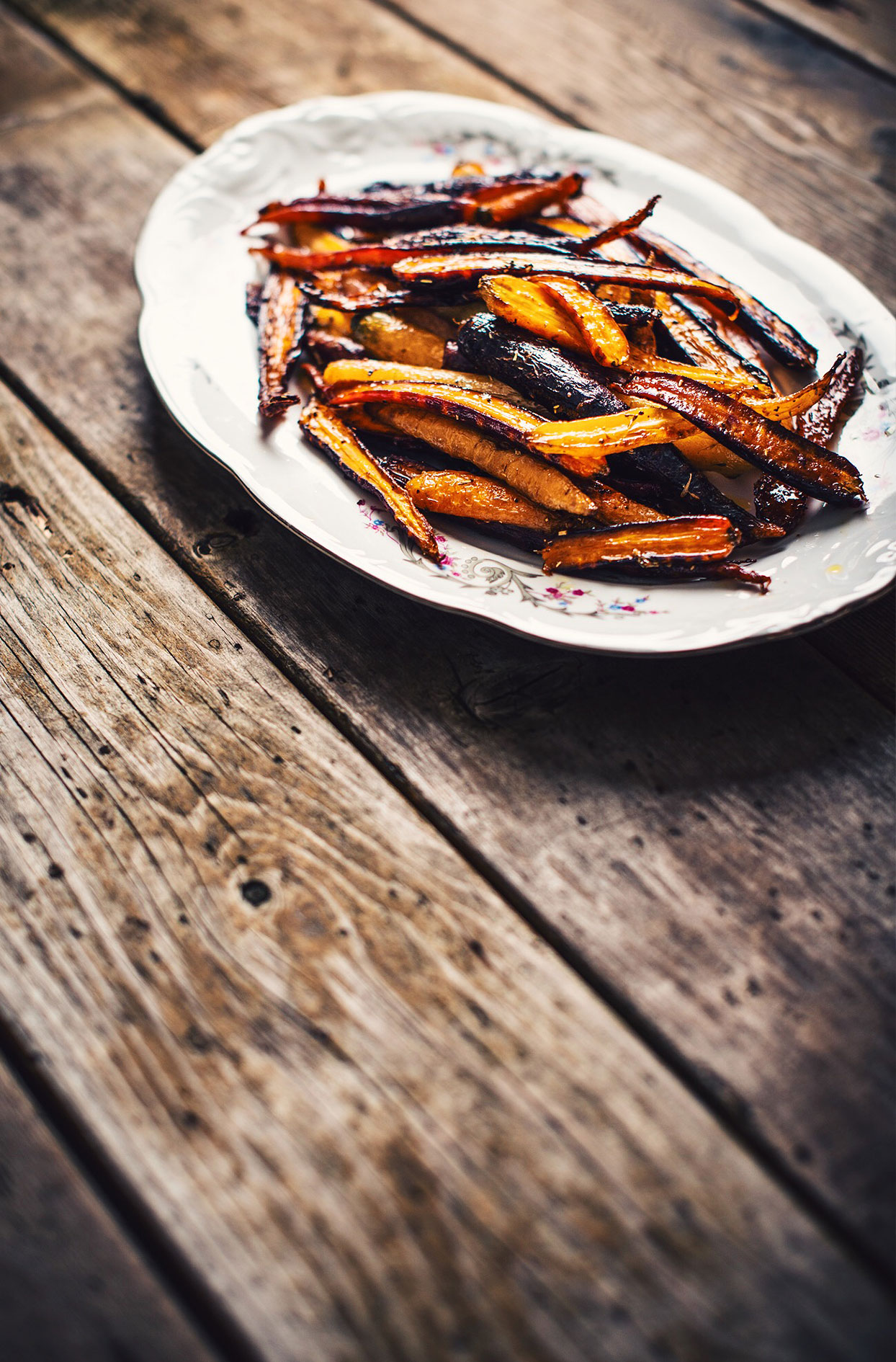
A white balsamic arugula salad for the bite and the bitterness, perfectly crispy baby potatoes for mopping up the juices, and roasted carrots with honey and white wine to bring the sweetness. Feeding a crowd? Add a classic macaroni salad. It looks like nothing next to a rib roast, and it is always the first bowl to empty. For a quieter Sunday version, go see my roast beef with red beer and portobello juice.

Ads
Ingredients
- 1 bone in beef ribeye roast, about 7.7 lb (3.5 kg)
- 6 garlic cloves, finely chopped
- 1/3 cup (80 ml) grainy mustard
- 5 teaspoons (25 ml) finely chopped fresh rosemary
- 5 teaspoons (25 ml) finely chopped fresh thyme
- 5 teaspoons (25 ml) olive oil
- 3 teaspoons (15 ml) dried oregano
- 2 teaspoons (10 ml) cracked pepper
- 1 1/2 teaspoons (7.5 ml) salt
- 2 large yellow onions, cut into large chunks
- 1 cup (250 ml) white wine
- About 2 cups (500 ml) water
Ads
Preparation
- In a bowl, add the garlic, grainy mustard, rosemary, thyme, olive oil, oregano, pepper and salt. Mix well to form a paste.
- Place the roast on a plate and spread the herb paste all over it. Cover with plastic wrap and refrigerate for 2 hours. Take the roast out of the fridge and let it come to room temperature on the counter for 2 hours.
- Preheat the oven to 450°F (230°C).
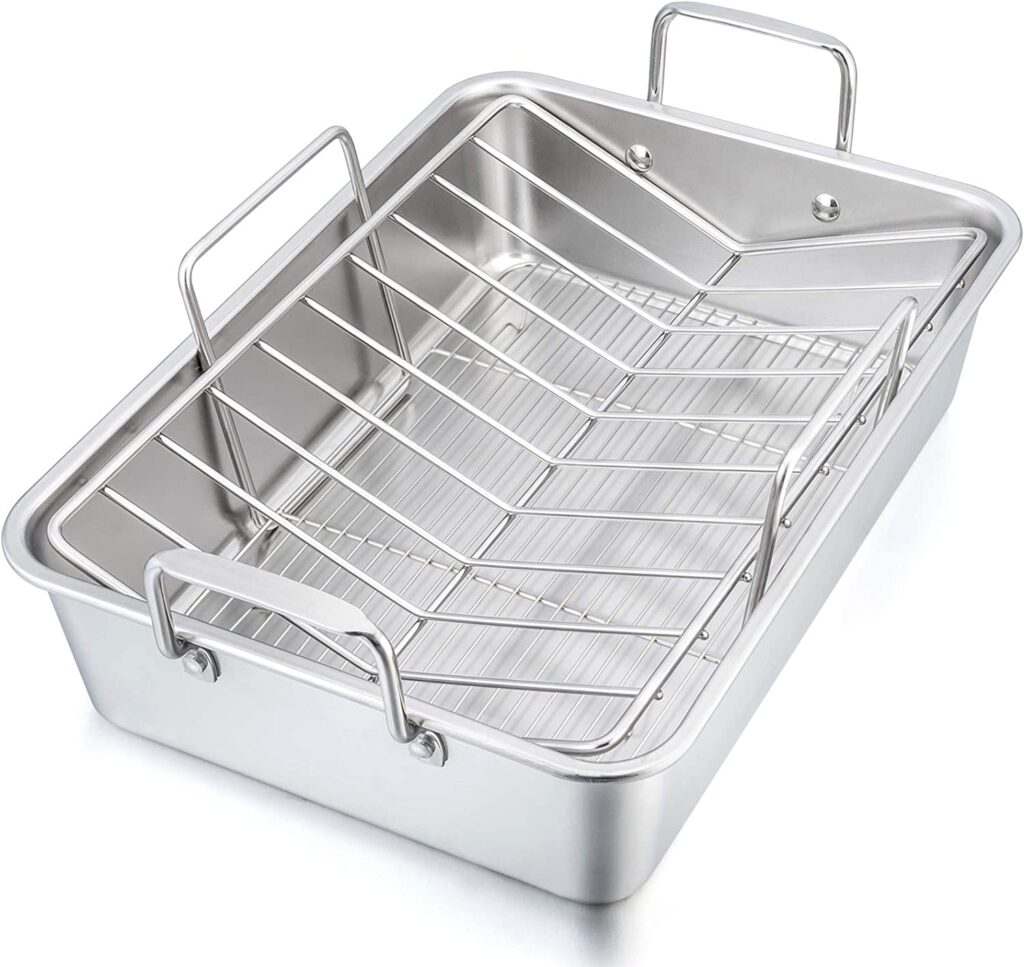
- In a large roasting pan, place half of the onions in the bottom, then set the rack on top. Add the rest of the onions and place the roast over them. Pour the white wine into the bottom, followed by the water. There must be enough water to cover the bottom without the liquid touching the roast.
- Place in the oven and cook for 50 minutes to 1 hour, until a nice crust forms on top. Rotate the pan 180 degrees halfway through.
- Lower the heat to 350°F (180°C).
- Continue cooking for 1 hour 30 minutes to 2 hours, or until the internal temperature at the center reaches 130°F (55°C). Cover with foil if the top browns too quickly. Add water to the bottom of the pan if needed.
- Remove from the oven, transfer to a platter and tent with aluminum foil. Rest for 15 minutes before carving. The temperature keeps climbing another 5 to 10 °F (-10 °C) during the rest and settles around 135 to 140°F (57 to 60°C), which is medium-rare.
- Strain the pan juices and serve alongside the meat. Carve without removing the bones: the bone stays on the end of some of the slices.
All three come off the back of the animal, but not from the same spot and not with the same qualities.
A ribeye roast is the rib section, which is what this recipe uses. Bone in and served whole, the same cut is usually sold as prime rib or a standing rib roast. It is the most marbled of the three, so it is the most tender.
A boneless ribeye is that same muscle with the bones taken off. Same meat, less structure, and it cooks noticeably faster.
Strip loin, sold as New York strip, sits further back. Leaner, firmer, more chew. It costs less and it does not behave the same way over three hours in an oven.
For this recipe you want the bone in rib roast. The bone and the fat cap are what hold the piece together through a long roast.
I pull mine at 130°F (55°C), measured in the thickest part without touching the bone. After a fifteen minute rest it settles around 135 to 140°F (57 to 60°C), which is medium-rare.
The number that counts is the one after the rest, because heat keeps moving toward the center once the roast is out of the oven. For a true rare center you would pull much earlier, around 120°F (49°C). Full chart is up in my tips.
About 20 minutes per pound in total with this method: 50 minutes to 1 hour at 450°F (230°C) for the crust, then 1 hour 30 to 2 hours at 350°F (180°C). A 7.7 lb (3.5 kg) roast lands between 2 hours 20 and 3 hours.
Use it as a starting point and nothing more. Weight, oven calibration and how long the roast sat out all move that number. Start checking with a thermometer half an hour before you think you need to.
Plan on one pound of bone in roast per person. The bones weigh something, the fat renders away, and there is always less on the platter than you pictured.
My 7.7 lb (3.5 kg) roast comfortably feeds six to eight, with enough left for sandwiches. Below three ribs the piece is too small for this method: it cooks through before the crust has had time to build.
Yes, and it is better that way. The recipe asks for two hours in the fridge, but nothing stops you from mixing the mustard and herb paste and coating the roast the night before. The salt then has all night to work into the meat.
What you cannot do ahead is the tempering. Those two hours on the counter have to happen the same day, right before the roast goes in.
Ads
Ads


Ads
Ads
Ads