

Beef and broccoli noodles
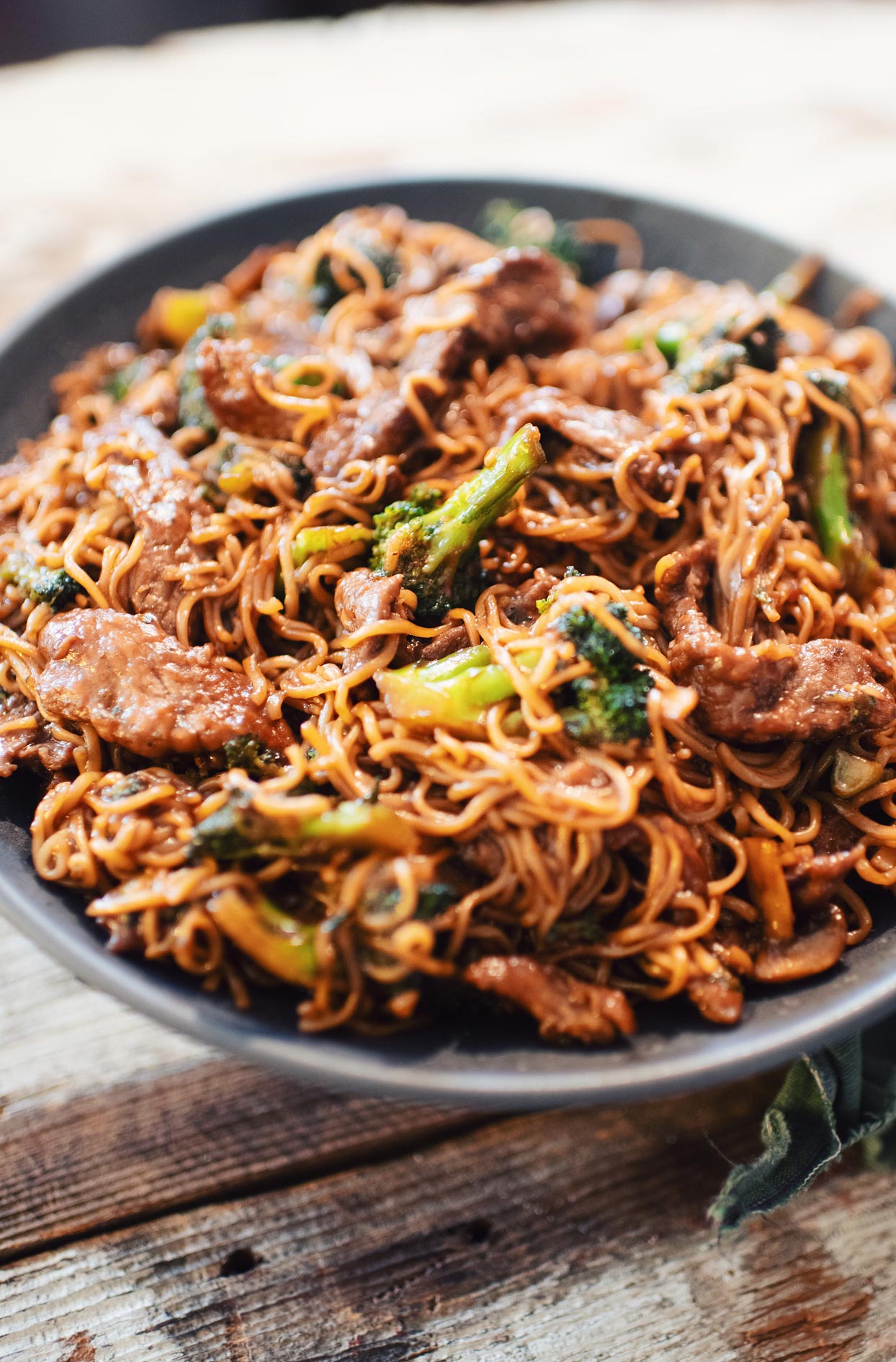
- Preparation 15 min
- Cooking 15 min
- Servings 4
- Freezing I do not suggest
Ads
🥡 Beef and broccoli, served on noodles
Beef and broccoli is a takeout classic and it almost always lands on a bed of white rice. Not here. Here it goes straight onto ramen noodles and the whole thing becomes one bowl instead of two dishes. The sauce coats the noodles, the broccoli stays green and loud, and nobody at the table asks where the rice went.
🍜 Instant ramen is underrated
People look down on the cheapest instant ramen packs. I don’t. Those noodles are good, and if you dress them up they make a real meal instead of a last-resort dinner. The seasoning packet stays out of it: the sauce gets built separately from four things, soy sauce, brown sugar, cornstarch and toasted sesame oil.
🥩 Strip loin, and no velveting
There’s a whole technique floating around for tenderizing beef with baking soda before it hits the pan. I skip it. You don’t need it if you buy a decent cut. Strip loin sliced thin is the sweet spot between marbling and meat, and the cornstarch coating handles the rest: it browns, it grabs the sauce, it thickens everything at the end. Rib eye works too, just fattier. Flank steak does the job for less money.
I saw this dish go by on social media a very long time ago. Made it my way, and it stuck around. My kids love it, I love it.
Ads
Ads
🥩 Cornstarch goes in twice
Two tablespoons on the beef, two more in the sauce. Four in total, which is more than you’ll find anywhere else, and it’s on purpose. On the meat it builds a thin crust that browns fast and keeps the juice where it belongs. In the sauce it does the thickening, so when everything goes back into the pan at the end the sauce clings to the noodles instead of pooling at the bottom of the bowl. A thin sauce ends up on the plate. A thick one ends up on the noodle.
Whisk it again right before you pour. Cornstarch settles in about two minutes.
🍜 Pull the noodles early
Cook the ramen a minute short of what the package says. They finish in the sauce, and that’s where they get good. Don’t rinse them, the starch is what helps the sauce hold on.
🔥 Beef first, broccoli after
The order is not an accident. The beef goes into the hot pan first with 3 tablespoons (45 ml) of oil, sears, leaves a layer of browned bits behind, and comes straight back out. The vegetables go in after and pick all of that up. That’s where the flavour comes from. Medium-high for the vegetables: hot enough to sear, not so hot that the broccoli dumps its water and starts quietly boiling.
🥦 Don’t blanch the broccoli
Raw, straight into the pan. It stays crunchy, it stays green, and there’s no extra pot to wash. Overcooked broccoli is sad.
🍄 The mushrooms
Mushrooms are always good.
🦪 Want it sweeter? Oyster sauce
The classic Chinese-American version leans on oyster sauce. Mine doesn’t, and I’m happy with that. But if you want that rounder, sweeter edge, stir a small spoonful in with the soy sauce and brown sugar and you’ll get there. A spoon, not a pour, it takes over fast.
🍳 Wok or skillet?
Doesn’t matter. A big wok, a big pot, anything that holds its heat. What matters is surface area: pile everything on top of itself and it steams instead of searing.
🥡 Leftovers
Three to four days in the fridge. Reheat it in a pan with a splash of beef broth and it comes right back. The microwave turns the noodles to mush. I don’t freeze this one, the noodles don’t survive it.
✅ What to serve with beef and broccoli noodles
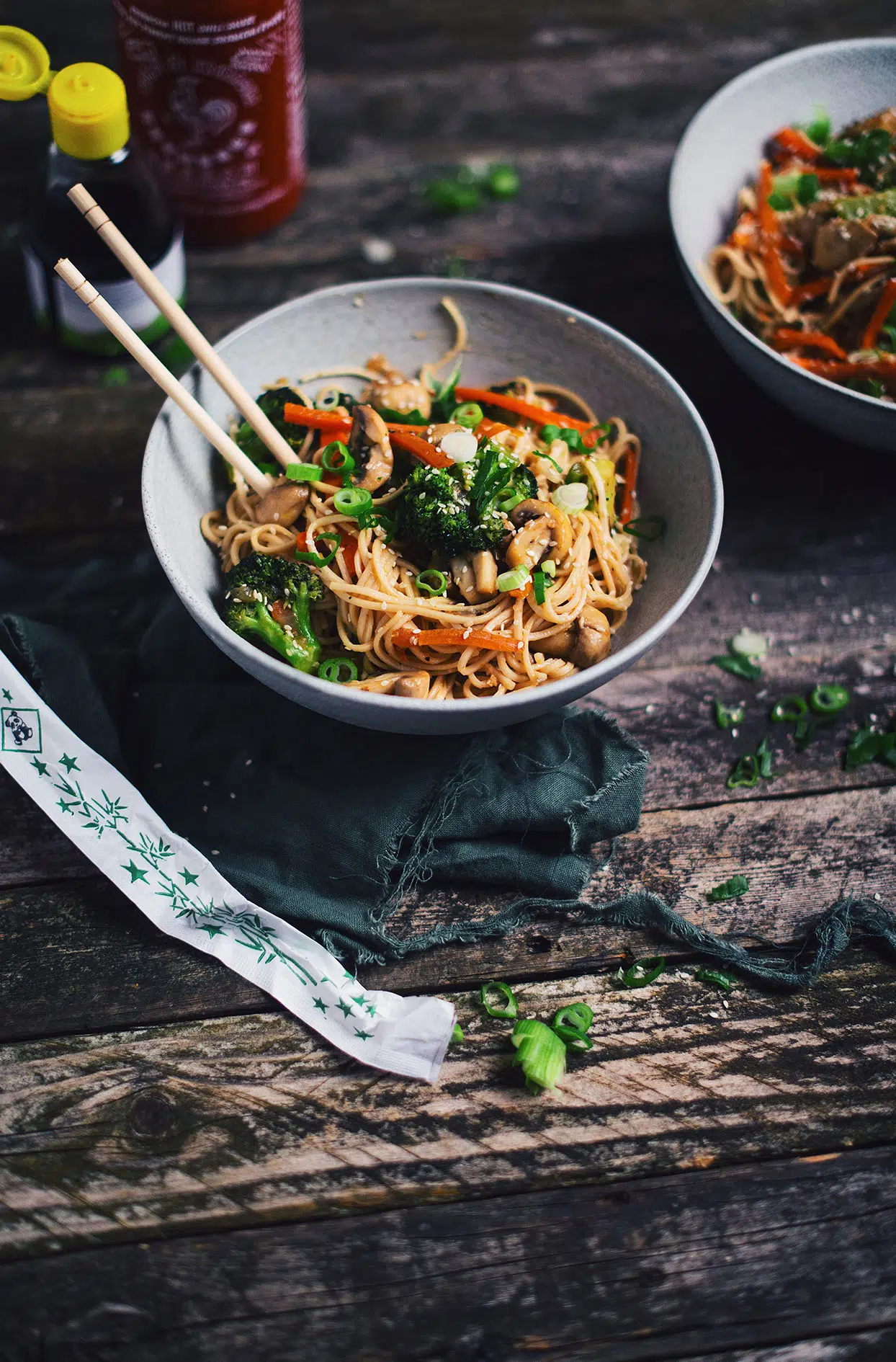
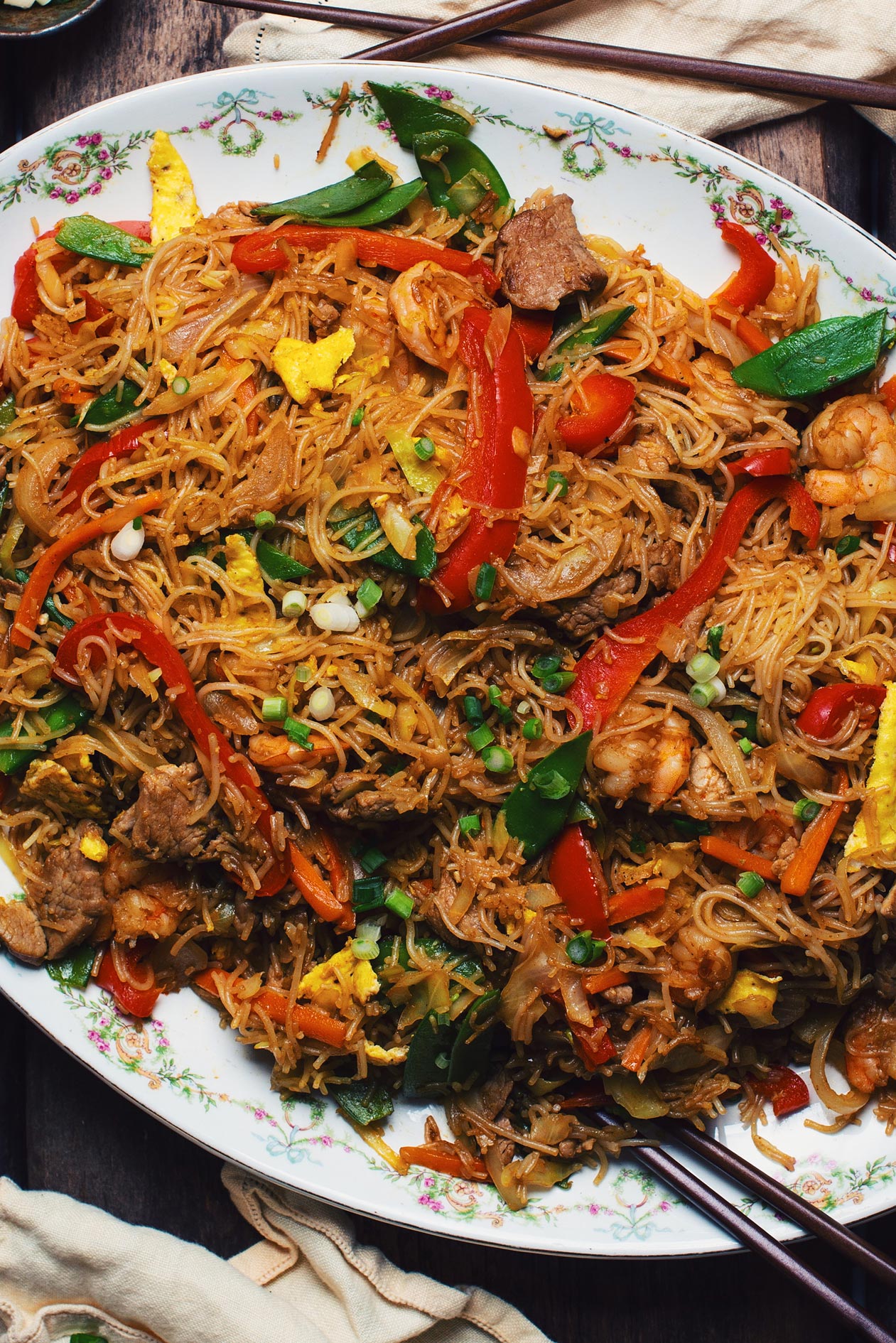
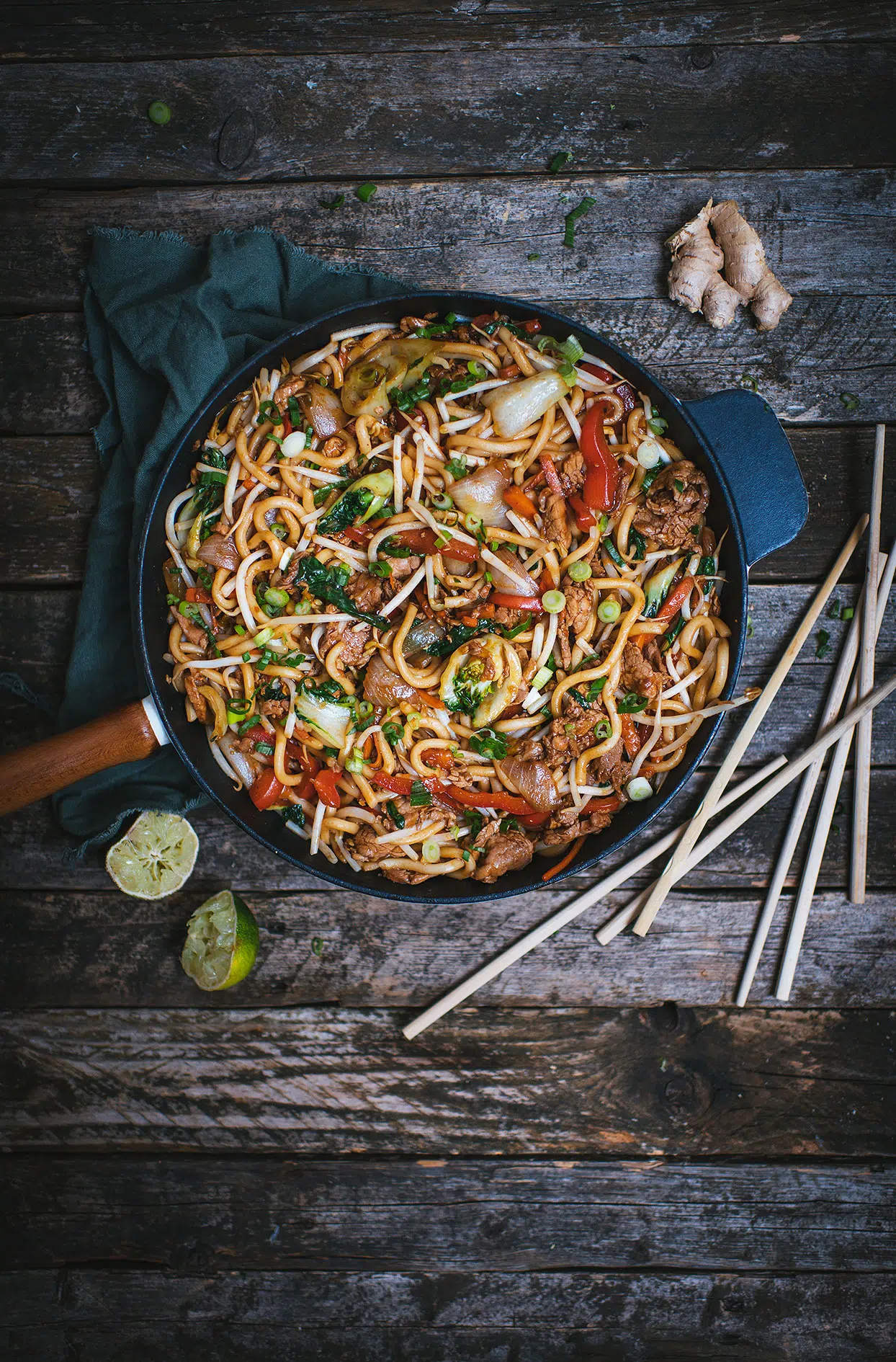
Nothing, really. Meat, vegetables and noodles are already in the same bowl. If you’re feeding a crowd and want to stretch the table, a cheesy garlic bread or a grilled Caesar salad will do it. And once this one is in your rotation, go look at my homemade chicken and beef chop suey, my chicken and vegetables fried rice and my pork noodle stir fry. Same cupboard, same reflexes.


Ads
Ingredients
- 550 g (1.2 lb) strip loin, sliced thin
- 2 tbsp (30 ml) cornstarch
- Olive oil
- 4 cups (1 L) broccoli, cut into small florets
- 227 g (½ lb) white mushrooms, quartered
- 5 cloves garlic, finely chopped
- 1 tbsp (15 ml) fresh ginger, grated
- ½ cup (125 ml) beef broth
- 255 g (½ lb) ramen noodles, cooked al dente
- Salt and pepper
Ingredients for the sauce
- ½ cup (125 ml) reduced-sodium soy sauce
- 3 tbsp (45 ml) brown sugar
- 2 tbsp (30 ml) cornstarch
- ½ tsp (2.5 ml) toasted sesame oil
Ads
Preparation
- In a large bowl, add beef followed by cornstarch. Season with salt, pepper and toss to coat. Set aside.
- In a bowl, add the ingredients for the sauce and whisk to break up the starch. Season with salt and pepper. Set aside.
- In a large skillet over high heat, add 3 tablespoons (45 ml) olive oil followed by beef. Cook stirring for 3 to 4 minutes. Add oil as needed. Pour into a bowl and set aside.
- In the same skillet over medium-high heat, add 3 tablespoons (45 ml) olive oil followed by broccoli, mushrooms, garlic and ginger. Cook for 3 to 4 minutes, stirring. Season with salt and pepper. Add oil as needed.
- Add beef broth and cook for 5 to 6 minutes, stirring, until broccoli is tender.
- Add the beef and sauce then toss. Cook for 2 minutes, stirring, to thicken the sauce.
- Add the noodles, toss and serve immediately!
Three things, and none of them are ingredients. Slice the beef thin and against the grain. Coat it in cornstarch before it goes anywhere near the heat. And cook it first, on its own, then take it out before the vegetables go in. Crowd everything into the pan at once and you get a stew, not a stir fry.
Mine is four ingredients: reduced-sodium soy sauce, brown sugar, cornstarch and toasted sesame oil. That’s it. No oyster sauce, no Shaoxing wine, no five spice, nothing you have to go looking for. Whisk it well before it hits the pan so the cornstarch doesn’t sit at the bottom, and it thickens into a glaze in about two minutes.
The technique people talk about is velveting: a pinch of baking soda or a cornstarch slurry on the meat before cooking, to keep it soft. I don’t bother. You don’t need it if you buy a decent cut. Strip loin, sliced thin, coated in cornstarch and seared hard for three or four minutes comes out tender on its own.
I can’t tell you what happens in every restaurant kitchen. What I can tell you is what the classic Chinese-American version is built on: oyster sauce, a cheaper cut like flank steak, and a bed of white rice underneath. Mine goes a different way, strip loin and a four-ingredient sauce, and the rice becomes ramen noodles. If you miss the oyster sauce, add a spoonful, it works.
Nothing is needed. It’s a complete meal in one bowl. If you’re feeding people and want more on the table, a cheesy garlic bread or a grilled Caesar salad on the side does the trick.
Ads
Ads

Ads
Ads
Ads