

Asparagus and pecorino romano risotto
- Preparation 20 min
- Cooking 35 min
- Servings 4
- Freezing Absolutely
Ads
🧀 I love parmesan, but I wanted something different
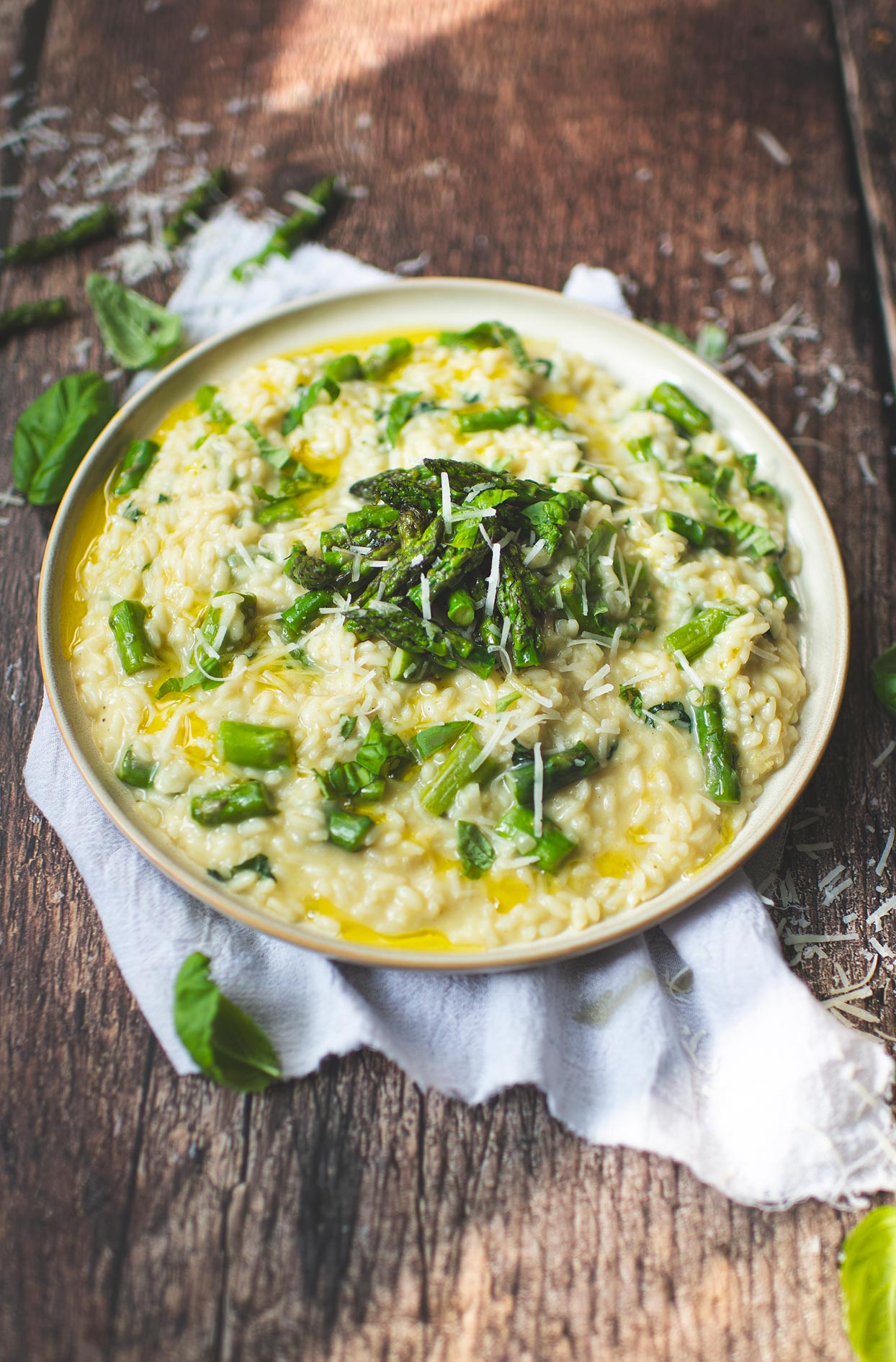
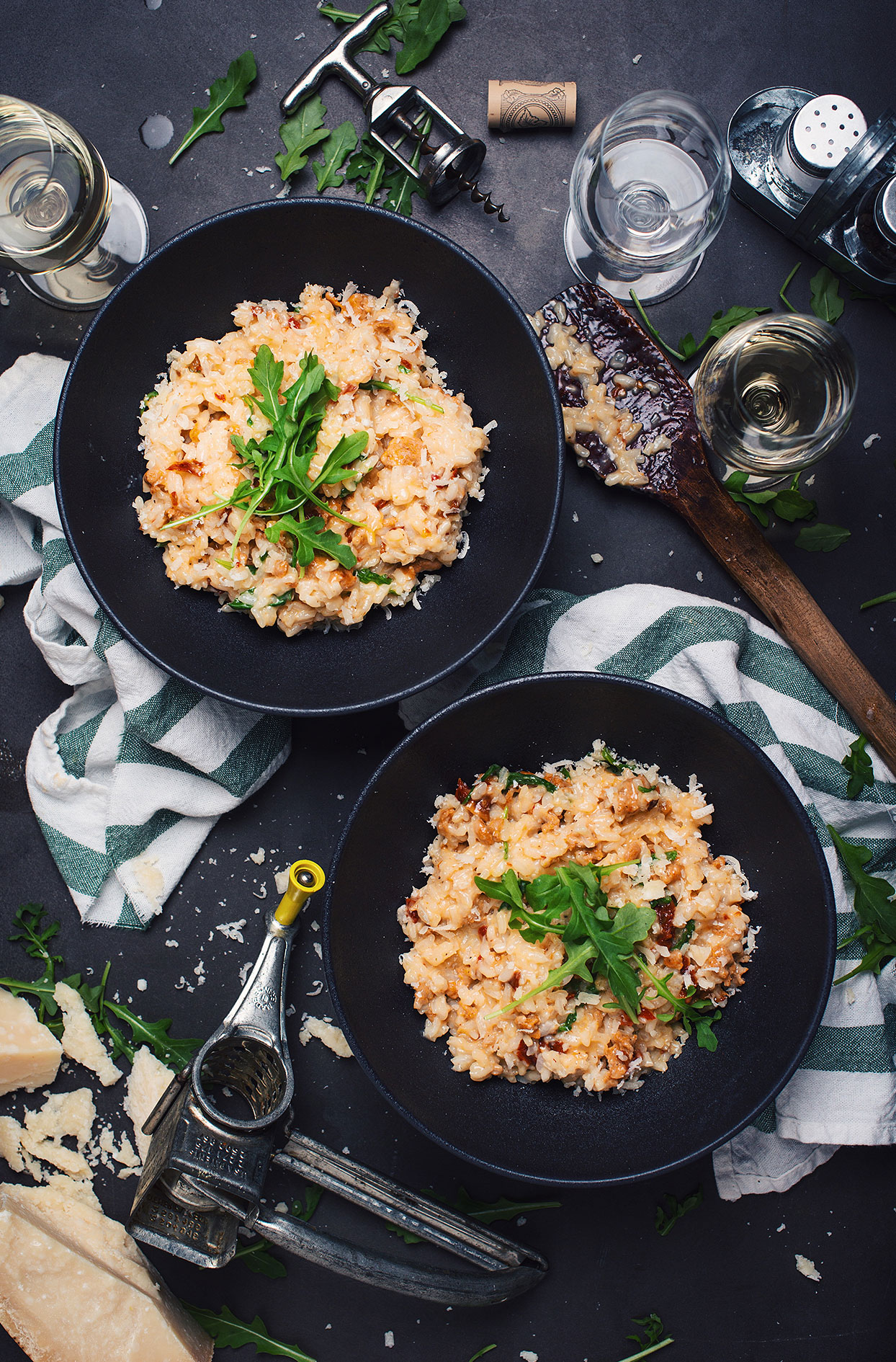
This risotto was born out of a simple craving: I felt like eating risotto, so I made it. I use parmesan everywhere and I love it dearly, but that evening I wanted to break out of my routine. I grabbed my block of pecorino romano and never looked back. It’s a sheep’s milk cheese, sharper, saltier, and more assertive than parmesan. The flavor profile it brings to a risotto is, in my opinion, absolutely unbeatable. With the asparagus staying tender-crisp and fresh basil stirred in at the very end, you get a dish that tastes like spring even in the middle of July.
💧 The secret is the last ladle of broth
Everyone tells you to add your broth one ladle at a time, and that’s true. But the real trick, the one I use in every single risotto I make, is to save one cup of hot broth for the very end. Once I’ve pulled my pot off the heat, added my butter, my pecorino, and my asparagus, I pour in that last ladle and stir gently. Why? Because the rice keeps absorbing liquid even after cooking. Without that last ladle, your risotto arrives in the bowl as a stiff clump instead of flowing gently the way it should. That’s the difference between a decent risotto and a restaurant risotto.
🎉 The dish that impresses when you have guests
At our place, risotto is either for entertaining or for spoiling people. This one does both. It’s absolutely stunning served on its own as a vegetarian main, and it becomes genuinely spectacular alongside braised meat or a beautiful grilled steak. I bring it out when I want my guests to be impressed without me having spent the whole day in the kitchen. Twenty-five minutes of stirring at the stove with a glass of white wine in hand. Honestly, I wouldn’t call that work.
Ads
Ads
🍚 Never rinse your arborio rice
It’s the number one reflex to unlearn. With regular white rice, you rinse to remove surface starch and keep it from sticking. With risotto, it’s exactly the opposite: that starch is what creates the creamy texture, slowly releasing into the broth as you stir. Rinsing your arborio means pouring the creaminess down the drain before you’ve even started. Arborio or carnaroli, both work. But never rinsed.
🥄 No, you don’t need to stir non-stop
The myth of the arm that never stops turning for twenty-five straight minutes can be put to rest. The Michelin Guide itself confirms it: constant stirring is not necessary. What matters is stirring regularly and gently, so the rice rubs and releases its starch without breaking apart. You have plenty of time to pour yourself a glass of white wine between ladles.
🍶 Your broth must stay hot the whole time
If you pour cold or lukewarm broth onto your rice, you drop the temperature of the pot all at once and the cooking stops dead. The rice then cooks unevenly. Some grains mushy, others raw in the center. Keep your broth pot at a gentle simmer right next to you, from start to finish. That’s the difference between a restaurant risotto and one that falls flat.
🧀 The mantecatura is what makes a risotto creamy without a drop of cream
Italians have a word for the finishing step of a risotto: the mantecatura. It means pulling the pot off the heat, letting everything settle for a second, then vigorously incorporating cold butter and grated cheese. The contrast between the scorching rice and the cold fat creates an emulsion between the released starch, the remaining liquid, and the butter. That, and nothing else, is what gives that silky, glossy texture. A real risotto never contains cream. It simply doesn’t need it.
💧 Save one cup of broth for the very end
It’s my signature move and I do it in every single risotto I make. The rice keeps absorbing liquid even after the pot is off the heat, so by the time you bring your bowls to the table, your risotto has already thickened. By adding one last ladle of hot broth just before serving, after the cheese, you compensate exactly for what the rice is going to drink. The result should flow slightly when you tilt the bowl. Never sit in a clump.
🧀 Buy your pecorino as a block and grate it yourself
Pre-packaged grated cheese, never. It’s coated with anti-caking agents that prevent it from melting properly, and that ruins your mantecatura. Buy a piece of pecorino romano and grate it fresh with a fine grater. Same goes for parmesan. One more thing to keep in mind: pecorino is much saltier than parmesan, so taste before seasoning at the end. You’ll be surprised.
🥦 Sautéed, never blanched
A lot of recipes have you blanch your asparagus in boiling water. I sauté mine in butter in a separate pan, stalks and tips together, for 3 to 4 minutes. The flavor is noticeably more pronounced, you get a little nutty note that’s impossible to achieve in water, and you have one less pot to wash. The tips get set aside for garnish; they make the whole dish look the part.
❄️ Yes, it freezes, and the kids love it
Let’s be honest: defrosted risotto is not something you’re serving your guests. But you’re not throwing it out either. I freeze leftovers in portions and reheat them very gently with a splash of broth to bring the rice back to life. It’s a bit softer, a little more mushy, but my kids are always happy when I pull risotto out of the freezer. Zero waste.
✅ What to serve with my asparagus and pecorino romano risotto?
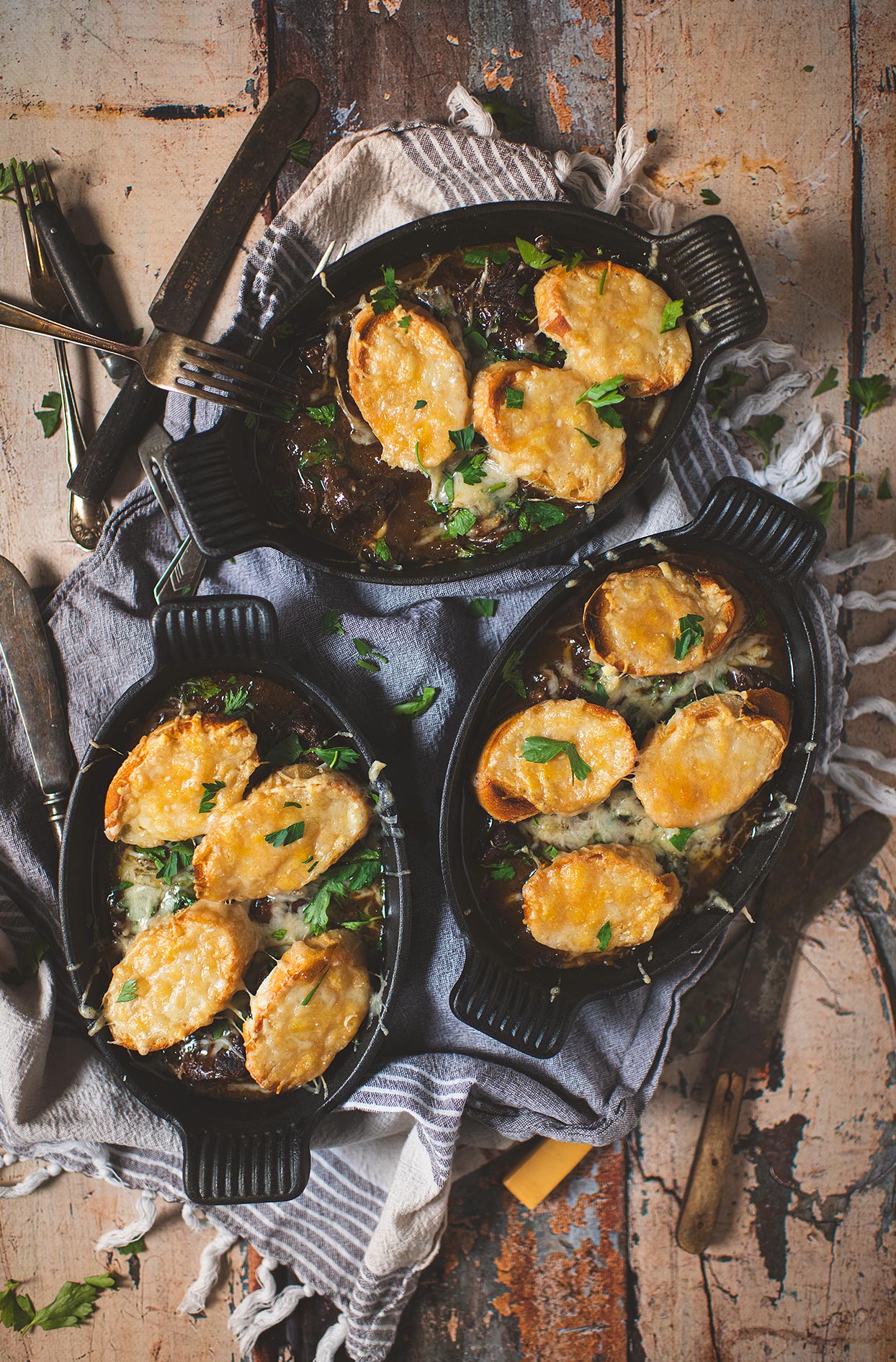
Since it’s completely vegetarian, it holds its own as a full main course, especially alongside a Classic Caesar salad to add crunch and acidity. When I’m entertaining, I serve it as a side to a saucy meat dish, like my Slow cooked beef cheeks with port, or next to my Beef sirloin with homemade Montreal steak spices for a plate that really looks the part. And there’s always my Cheesy garlic bread on the table for those who want to mop up every last bit from their bowl.

Ads
Risotto
- 1 lb (450 g) asparagus
- 6 cups (1.5 L) chicken broth, with 1 cup (250 ml) reserved for the end
- ¼ cup (60 ml) butter, divided
- 1 French shallot, finely chopped
- 2 cups (500 ml) arborio rice
- A thin drizzle of olive oil + a little more for serving
- 1 cup (250 ml) dry white wine
- 1 cup (250 ml) grated pecorino romano + a little more for serving
- 5 to 6 large fresh basil leaves, chiffonade + a little more for serving
- Salt and freshly ground pepper
Ads
Preparation
- Cut the asparagus tips (about 2 in/5 cm) and set them aside for garnish. Slice the remaining stalks into ½ in (1 cm) pieces. In a saucepan, bring the chicken broth to a gentle simmer and keep it hot throughout the cooking process.
- In a large saucepan over medium heat, melt 1 tbsp (15 ml) of butter and cook the shallot for 2 to 3 minutes, without letting it color. Add the arborio rice, then a thin drizzle of olive oil. Season with salt and pepper and toast for 1 minute, stirring, until the grains look pearlescent. Never rinse the rice beforehand: it’s the starch that creates all the creaminess.
- Deglaze with the white wine and let it reduce almost completely, stirring.
- Add the hot broth one ladle at a time, about ¾ cup (180 ml), letting the rice absorb it almost completely before each new addition. Stir regularly. This will take 20 to 25 minutes, until the rice is al dente. Lower the heat if the liquid absorbs too quickly, and keep the last cup of broth for finishing.
- Meanwhile, in a skillet over medium-high heat, melt 2 tbsp (30 ml) of butter and sauté the asparagus stalks and tips for 3 to 4 minutes, until tender-crisp. Season with salt and pepper. Set the tips aside for serving.
- Remove the saucepan from the heat. Add the remaining butter, the pecorino romano, the asparagus stalks, and the basil. Stir well, then adjust the seasoning. Go easy on the salt. The pecorino already brings a lot.
- Just before serving, add the last cup of hot broth and stir gently: the risotto should flow slightly, never sit in a clump. Serve in shallow bowls and garnish with the reserved asparagus tips, basil, a drizzle of olive oil, extra pecorino, salt, and pepper.
Absolutely never. It’s the most common mistake, and it comes from a good habit applied in the wrong place: you rinse regular white rice specifically to remove surface starch and keep it from sticking. In a risotto, that starch is the main ingredient behind the texture. As you stir, the rice rubs against the sides of the pot and gradually releases its amylopectin, which binds with the broth and butter to create the creaminess. Rinsing your arborio condemns you to a bowl of rice in broth rather than a risotto.
The mantecatura is the Italian name for the finishing step of a risotto, and it’s by far the most important one. You pull your pot off the heat, let it rest for a second, then vigorously incorporate cold butter and grated cheese. The contrast between the scorching rice and the cold fat triggers an emulsion between the starch released during cooking, the remaining liquid, and the fat. That emulsion is what gives a restaurant risotto its silky, glossy texture. And it’s also why a real risotto never contains cream: it doesn’t need it. It makes its own.
Yes, absolutely. Parmesan is actually the traditional choice in a risotto. What you lose by switching is character. Pecorino romano is made from sheep’s milk, so it’s sharper, saltier, and more assertive, while parmigiano reggiano is milder and nuttier. I chose pecorino specifically for that bite, which really wakes up the asparagus. If you switch to parmesan, season with a little more salt at the end, since the pecorino was bringing a good amount of it. Either way, a block you grate yourself. Never pre-packaged.
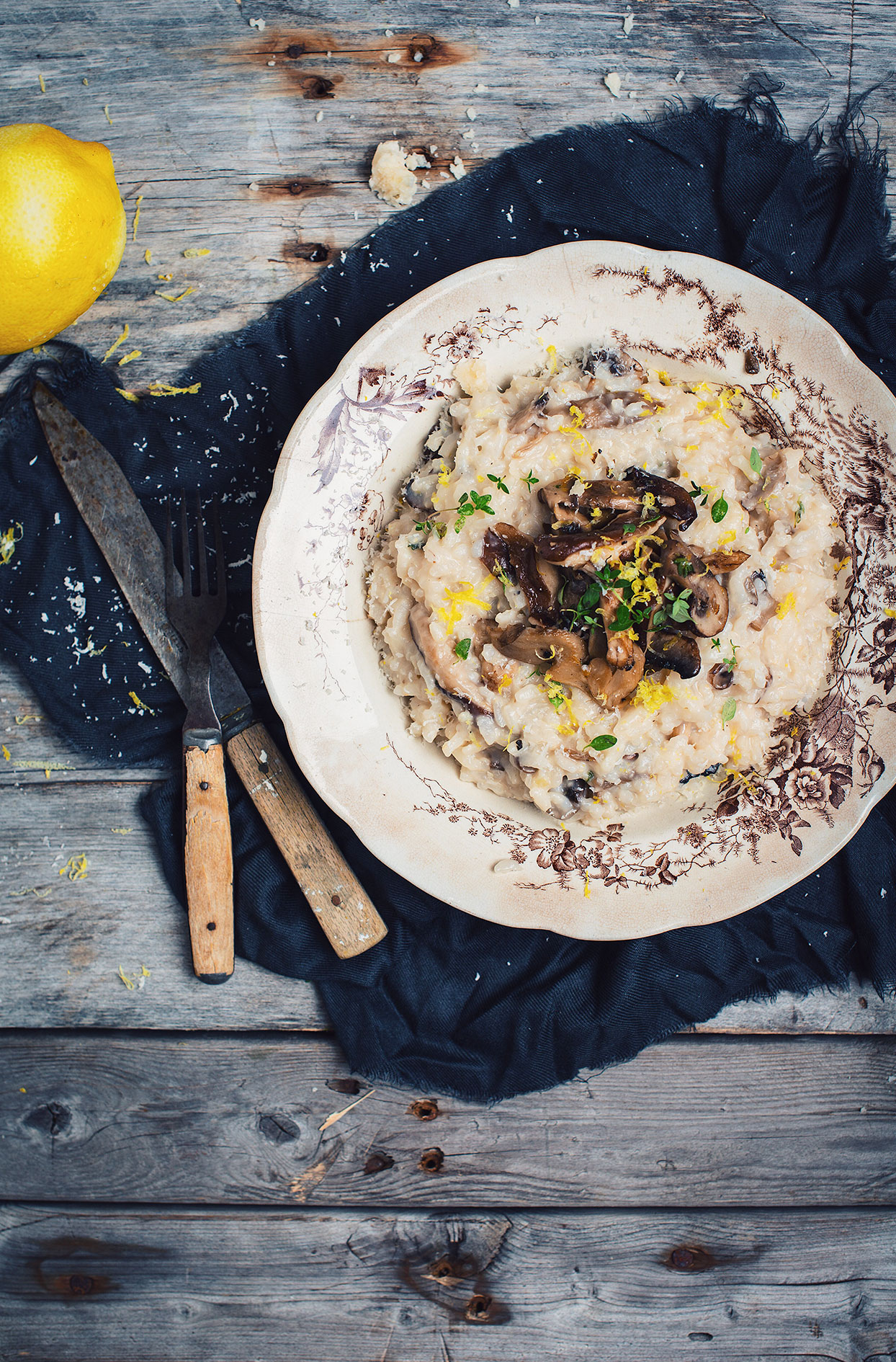
It works really well and it’s one of the most requested variations. Sauté your mushrooms separately over high heat in butter until nicely browned and their moisture has completely evaporated, then stir them in at the same time as the asparagus, off the heat. Never add them raw to the risotto while it’s cooking: they’ll release their water and make your rice soggy. If mushrooms are really what you’re after, check out my mushroom risotto, which is built around them from start to finish.
It’s vegetarian and rich enough to stand as a complete main course, especially with a classic caesar salad to bring crunch and acidity. When I’m entertaining, I serve it as a side to a saucy meat dish, like my slow cooked beef cheeks with port, or alongside my beef sirloin with homemade montreal steak spices for a plate that really makes an impression. And there’s always my cheesy garlic bread on the table to finish off the bowls.
Ads
Ads

Ads
Ads
Ads