

Artichoke and burrata risotto
- Preparation 15 min
- Cooking 30 min
- Servings 4
- Freezing I do not suggest
Ads
🥟 The risotto that will elevate your weeknight dinner
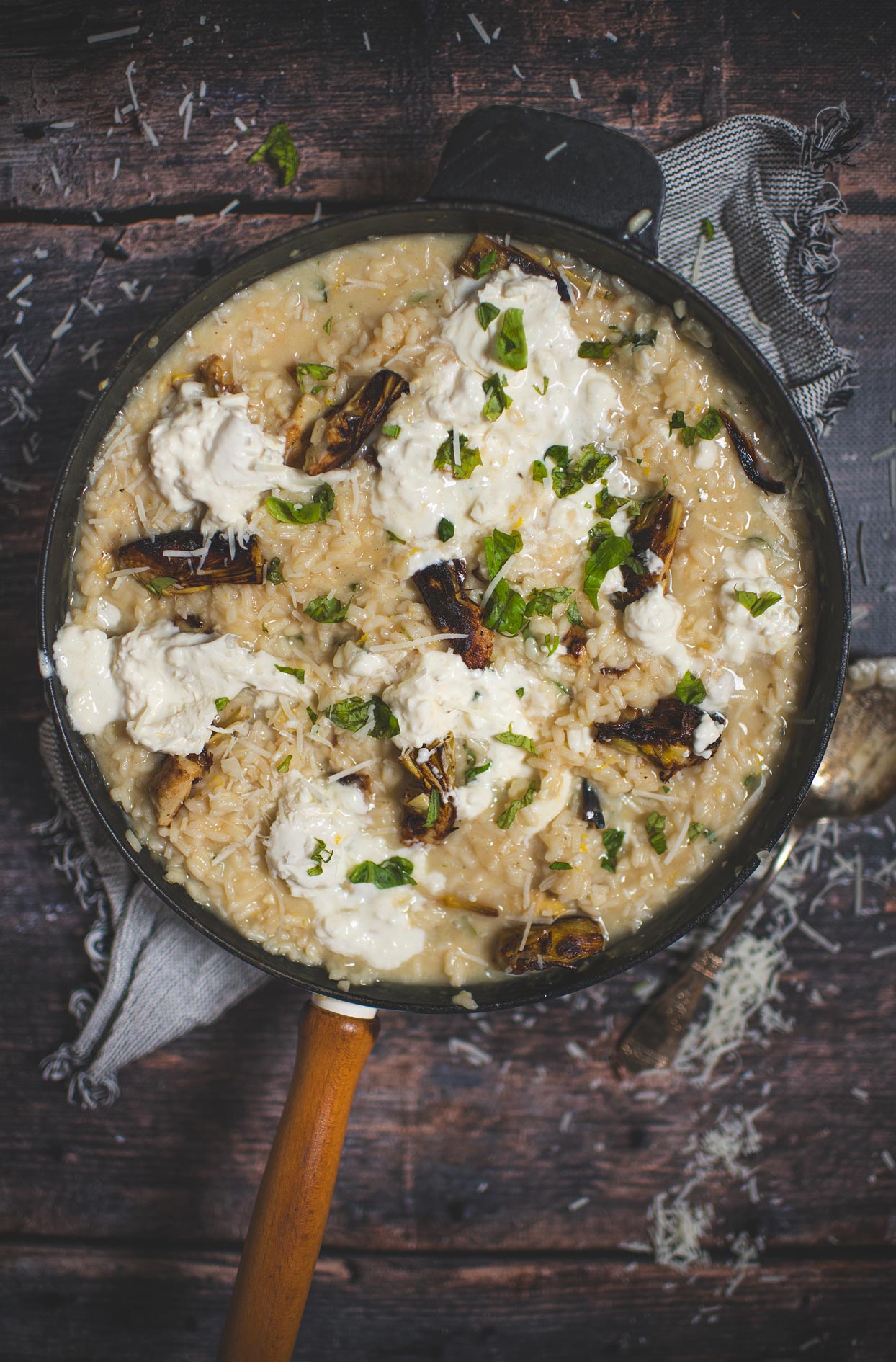
A creamy risotto with artichoke hearts and melted burrata placed in the center. This is the kind of dish that impresses effortlessly. Each grain of arborio rice is coated with parmesan and butter, with that silky texture that comes from working with the ladle, one ladle at a time. It’s the perfect dinner for a Tuesday night when you want to treat yourself, a romantic dinner, or an evening with friends that deserves a little extra attention.
🔥 Artichoke and burrata, an underrated duo
Artichoke hearts bring a slightly bitter vegetal touch that contrasts perfectly with the sweetness of burrata. The lemon zest at the end awakens everything and prevents the dish from being too rich. It’s the perfect balance between creamy and fresh. Whether for a casual reception, a holiday meal, or simply because you deserve a good risotto on a Thursday night, this recipe delivers every time.
Ads

Ads
🍲 The broth must always be hot
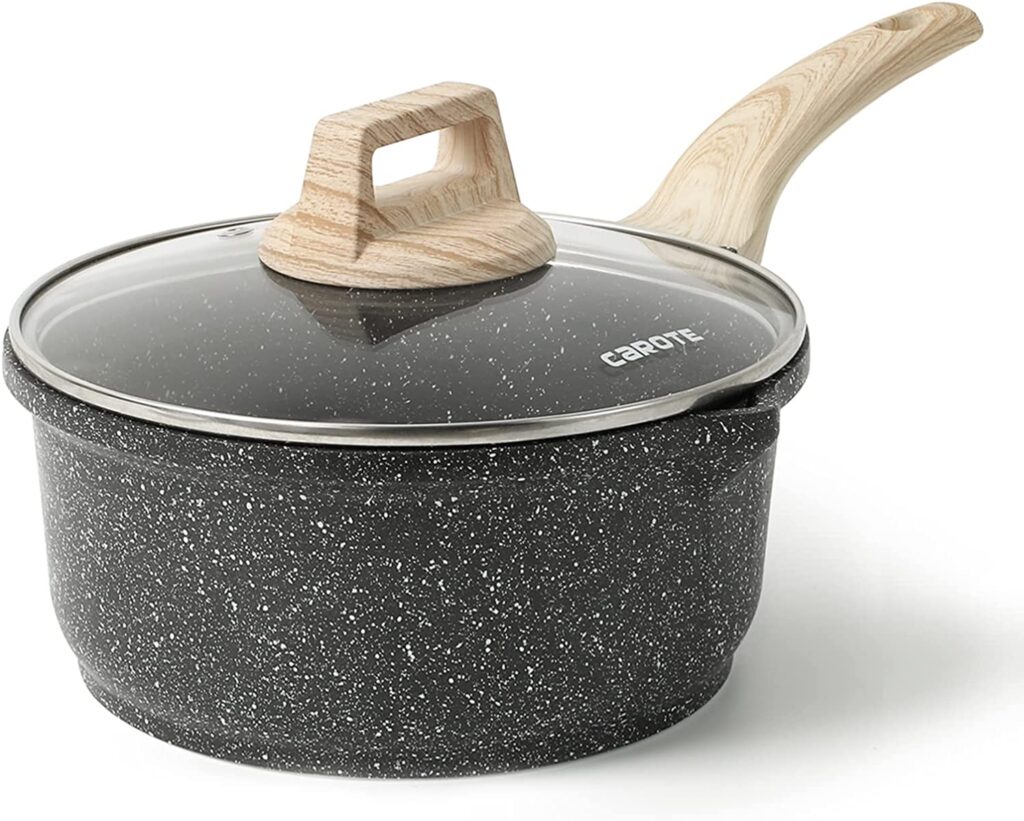
This is the golden rule of risotto: the broth must be kept over low heat in a saucepan beside you throughout cooking. Adding cold broth to the rice would drop the temperature and slow the starch release, resulting in a dry and grainy texture instead of creamy. Keep your ladle ready and your broth steaming. That’s what makes all the difference. For an even more flavorful result, use homemade chicken broth.
🥄 Constant stirring is non-negotiable
The secret to silky risotto is constant stirring. Each spoon movement releases starch from the arborio rice, creating that creamy texture without needing to add cream. No need to stir like crazy, but regular and constant movement throughout cooking is essential for a perfect result.
🍷 The right time for white wine
White wine should be added right after coating the rice and before starting with the broth. The wine’s acidity brings essential freshness to the dish and the alcohol evaporates in seconds at high temperature. Use a wine you would drink. If the wine isn’t good in your glass, it won’t be good in your risotto either.
🧀 Burrata goes on at the very end
Burrata should be at room temperature before placing it on the risotto. Take it out of the fridge at least 30 minutes before. Place it in the center of the bowl when serving and let each guest cut it so the inner cream mixes with the risotto. Never mix it directly in the pot, it would completely ruin the texture and presentation.
🍋 Lemon zest, your secret weapon
Lemon zest as a finishing touch is not optional. It’s what prevents the risotto from being too heavy. It brings aromatic freshness that awakens the flavors of parmesan and artichokes without adding aggressive acidity. Zest directly over the bowl when serving to maximize the citrus essential oils.

Ads
Ingredients
- 4 cups (1 L) chicken broth, hot
- 2 tbsp (30 ml) butter
- 1 tbsp (15 ml) olive oil
- 1 onion, finely chopped
- 2 garlic cloves, minced
- 1 ½ cups (375 ml) arborio rice
- ½ cup (125 ml) dry white wine
- 1 can (398 ml) artichoke hearts, drained and quartered
- ½ cup (125 ml) grated parmesan
- 1 burrata
- Zest of 1 lemon
- Salt and pepper, to taste
- Fresh basil, for garnish
Ads
Preparation
- In a saucepan, keep the chicken broth hot over low heat.
- In a large saucepan, melt the butter with olive oil over medium heat. Add the onion and cook 3 minutes, until translucent.
- Add the garlic and cook 1 minute, stirring.
- Add the arborio rice and stir to coat each grain well, about 2 minutes.
- Deglaze with white wine and stir until completely absorbed.
- Add the hot broth, one ladle at a time, stirring constantly. Wait for the liquid to be absorbed before adding the next ladle. Repeat for about 18 to 20 minutes, until the rice is creamy and al dente.
- Add the artichoke hearts and parmesan. Mix well and season with salt and pepper.
- Serve in bowls, place the burrata in the center, garnish with lemon zest and fresh basil.
Mozzarella di bufala is the best alternative. It offers a similar texture with a slightly more pronounced taste. You can also use stracciatella (the creamy interior of burrata) mixed directly into the risotto for an ultra-melting result. Avoid hard cheeses that won’t give the same texture contrast.
A dry white wine that’s not too oaky does the job: Pinot Grigio, Sauvignon Blanc or Soave are excellent choices. What matters is that the wine is acidic enough to bring freshness without dominating the dish’s flavors. Avoid sweet or overly aromatic wines like Gewürztraminer. It would unbalance the risotto’s taste.
Risotto is always best served immediately, but you can prepare it three-quarters of the way (stop after 15 minutes of cooking with broth) and finish it just before serving. Add the last ladles of broth, artichokes and parmesan at the right moment. Burrata is always placed at the very end, never in advance.
Absolutely, but it requires more work. Fresh artichokes must be trimmed, outer leaves removed, then cooked in lemon water for 15 to 20 minutes before being added to the risotto. Canned artichoke hearts are a practical and perfectly acceptable option that gives excellent results with much less effort.
A risotto is already a complete dish on its own, but to transform it into a real restaurant meal at home, I suggest my tomato salad with avocados, mozzarina and fresh basil for freshness, my panzanella with arugula and fennel for crunch or even my bruschetta with tomato and white beer caramelized fennel for a perfect Italian pairing. You’re going to flip!
Ads
Ads


Ads
Ads
Ads