

Beef tenderloin salad
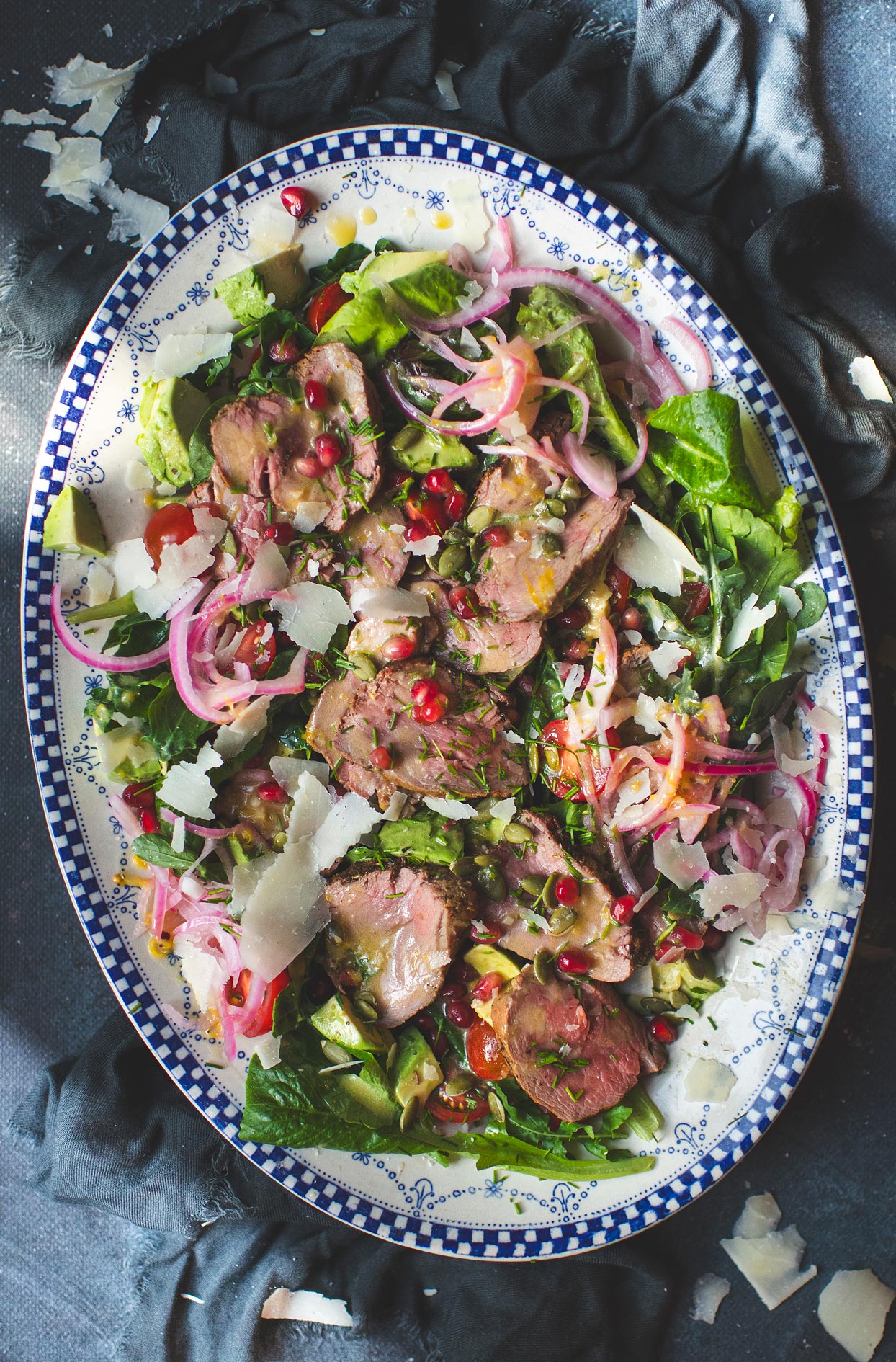
- Preparation 45 min
- Cooking 6 min
- Servings 2
- Freezing I do not suggest
Ads
☀️ The summer salad that feels nothing like a punishment
There are salads you eat because you have to, and then there’s this one. In the middle of summer, when it’s too hot to even think about turning on the oven, I fire up the barbecue just long enough to sear two beef tenderloins and build the rest cold. Cherry tomatoes, avocado, pomegranate, arugula, pumpkin seeds: it’s fresh, it’s crunchy, it’s colourful, and it’s meant to be eaten on the patio with a glass of light red wine. Nobody at the table feels like they’re eating a salad out of obligation.
🥩 Treating yourself right on the weekend
Let’s be honest, beef tenderloin is expensive. That’s exactly why I save it for weekends, when I feel like splurging and treating the people around me. It’s the most tender cut of beef, and also the leanest, which means it does not forgive overcooking. Two or three minutes per side on a blazing hot grill, a thermometer to take the guesswork out, and you get a rare, melt-in-your-mouth piece of meat. Sliced thin over a bed of greens, it turns a bowl of salad into a real meal.
🍋 Bright and Italian, not even a little bit Asian
I already have a grilled beef salad that leans more Asian with its creamy dressing, but this one plays in a completely different league. Here everything revolves around lemon: the juice, the zest, whisked together with olive oil, a little honey and a touch of Dijon. It gives you a bright, punchy vinaigrette that lifts the meat instead of burying it. Shavings of pecorino romano bring their salty, sharp edge, the pickled red onions add acidity, and the pomegranate bursts with sweetness throughout. It’s unabashedly Mediterranean.
Ads

Ads
🌡️ Pull your meat 5 degrees before the target, always
This is the trick that separates a perfect beef tenderloin from an overcooked one, and almost nobody does it. A piece of meat keeps cooking after it comes off the heat: the residual heat on the surface migrates toward the centre and raises the internal temperature by 3 to 5 degrees during the rest. So if you’re aiming for 120 °F for rare, pull it at 115 °F. Waiting until 120 °F on the grill means landing at 125 °F on the plate, and on such a lean cut, you’ll notice it right away.
🥩 Beef tenderloin does not forgive overcooking
It’s the most tender cut of beef, but also the leanest. There’s almost no fat to protect the meat during cooking, so every extra minute translates directly into dryness. It’s the exact opposite of a flank steak or a rib steak, which have fat and collagen to fall back on. Two to three minutes per side on a blazing hot grill, no more, and a thermometer so you’re not guessing.
⏲️ Thirty minutes on the counter before grilling
A steak that goes straight from the fridge to the grill cooks unevenly: the outside is done long before the centre has had a chance to warm up. By letting it sit out for 30 minutes before putting it on the grill, you close that gap and the cook becomes uniform from edge to edge. It’s also the perfect time to prepare the pickled onions and whisk together the vinaigrette.
🔪 Always against the grain
Once the meat has rested, look at the muscle fibres: they all run in the same direction. Your knife needs to cut through them perpendicularly, never lengthwise. This shortens the fibres and the meat becomes noticeably more tender to bite through. On an already tender cut like this, it might seem like a minor detail, but you can still feel the difference.
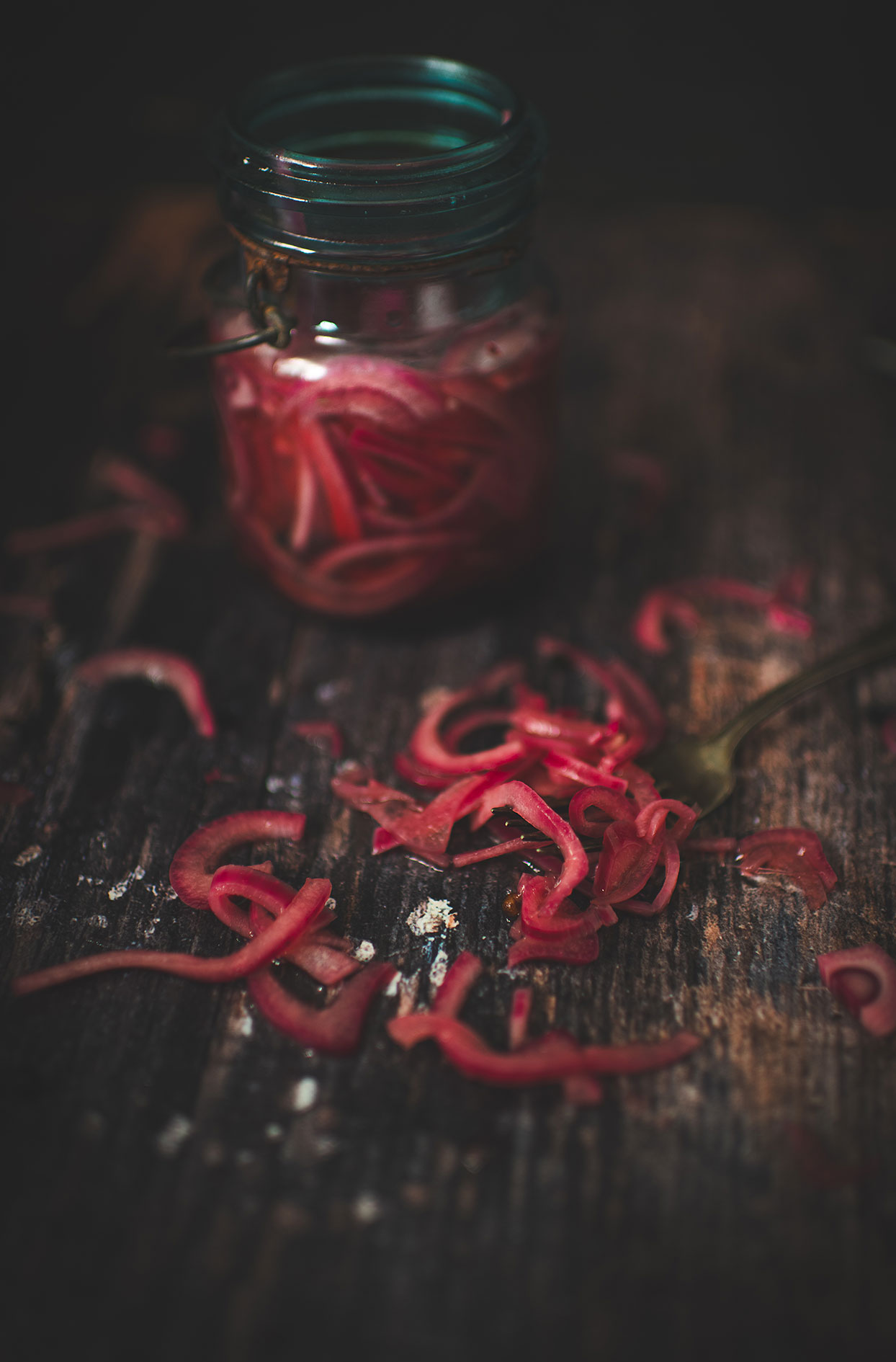
🧅 Homemade pickled onions, 20 minutes and you’re done
They’re the ones that deliver the little burst of acidity that runs through every bite of the dish. The full recipe is included here, but if you want the detailed version with all my notes, it’s in my Quick pickled red onions. They keep for several days in the fridge, so when I make them, I always make more than I need. They end up in burgers, tacos and sandwiches throughout the week.
🧀 Pecorino with a peeler, never grated
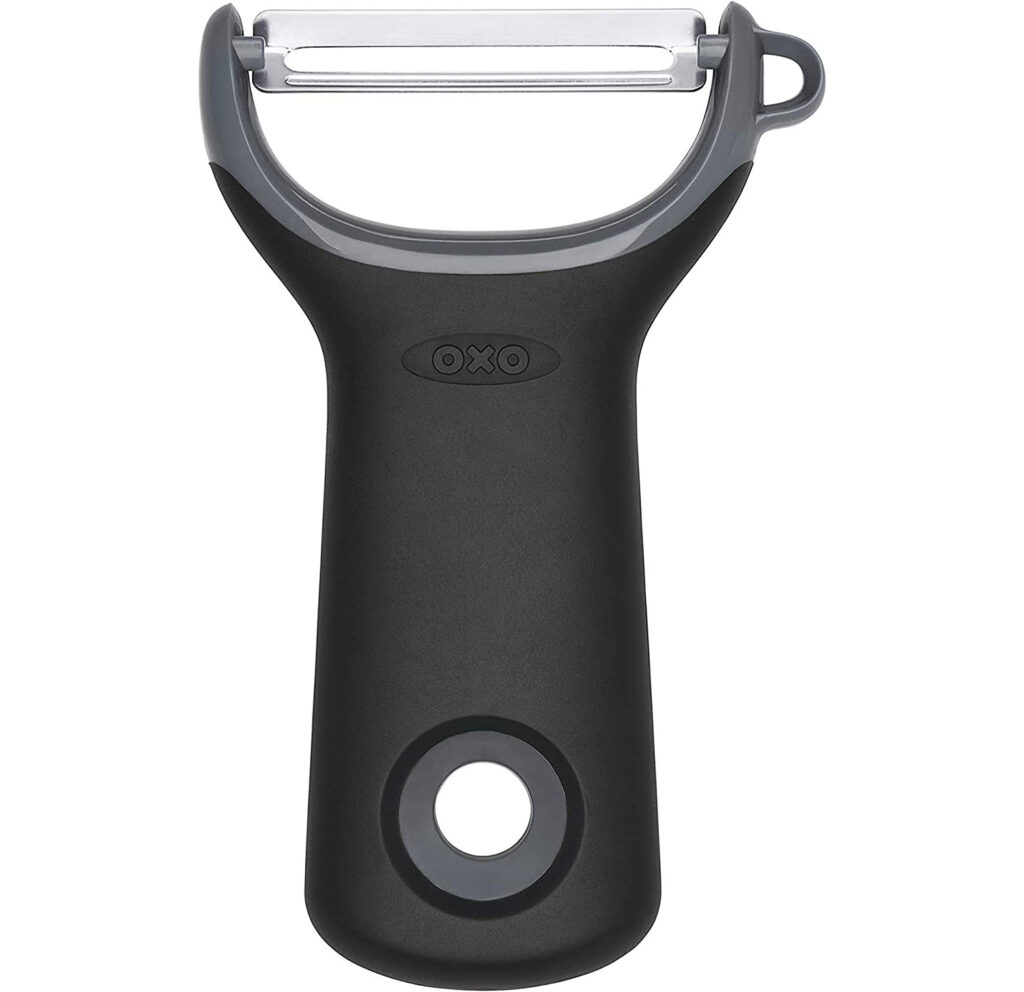
Take your vegetable peeler and run it flat across the block of pecorino to get large, thin shavings. Finely grated, the cheese disappears into the salad and turns into white dust. In shavings, you get distinct bites of salty cheese that contrast with the creaminess of the avocado and the sweetness of the pomegranate. It’s as much about texture as it is about presentation.
🥗 Build your salad in the plates, not in a bowl
I never toss this salad in a big bowl. I arrange the greens and vegetables directly in the plates, lay the sliced meat on top, and only then add the pumpkin seeds, vinaigrette, pomegranate and pecorino. Tossing everything together turns the avocado into mush, the pomegranate seeds sink to the bottom and the cheese sticks to the sides. Plated individually, every element stays in place and the dish actually looks the part.
✅ What to serve with my beef tenderloin salad?
You need bread, non-negotiable: there’s always vinaigrette left at the bottom of the plate and it would be a crime to leave it there. My Cheesy garlic bread does the job perfectly, as do my Bread baguettes with olives, fresh herbs and beer, which stay in that Mediterranean register. If you’re hosting and want to stretch the meal, start with my Bruschetta with tomato and white beer caramelized fennel, and keep my Tomato salad with avocados, mozzarina and fresh basil in mind for the evenings when you don’t feel like firing up the barbecue.

Ads
Beef tenderloin
- 2 beef tenderloin steaks, 8 oz (250 g) each, about 1 in (2.5 cm) thick
- Kosher salt and freshly ground pepper
Vinaigrette
- 3 tbsp (45 ml) extra-virgin olive oil
- ¼ cup (60 ml) lemon juice, about 1 lemon
- Zest of 1 lemon
- 1 tbsp (15 ml) honey
- 2 tsp (10 ml) Dijon mustard
- 1 garlic clove, finely minced
- ¼ tsp (1 ml) kosher salt
- A pinch of freshly ground pepper
Pickled onions
- 1 red onion, thinly sliced
- ½ cup (125 ml) water
- ¼ cup (60 ml) white vinegar
- ¼ cup (60 ml) apple cider vinegar
- 1 tbsp (15 ml) honey
- 1 tsp (5 ml) peppercorns
- ½ tsp (2 ml) salt
Salad
- 2 cups (500 ml) arugula, lightly packed
- 10 to 12 leaves of curly lettuce
- 1 cup (250 ml) cherry tomatoes, halved
- 1 avocado, peeled, pitted and diced
- 2 tbsp (30 ml) chives, thinly sliced
- ¼ cup (60 ml) raw pumpkin seeds
- ½ cup (125 ml) pomegranate seeds
- Pecorino romano shavings, to taste
Ads
Preparation
- Remove the beef tenderloins from the refrigerator 30 minutes before cooking to bring them to room temperature. Season generously with salt and pepper.
- Meanwhile, prepare the pickled onions. In a small saucepan, combine the water, both vinegars, honey, peppercorns and salt. Bring to a boil, then remove from heat. Pack the red onion into a Mason jar, pour the hot liquid over top, seal and let sit for 20 minutes.
- In a small bowl, whisk together the olive oil, lemon juice and zest, honey, Dijon mustard, garlic, salt and pepper until the vinaigrette is emulsified. Set aside.
- Preheat the barbecue to maximum heat and oil the grates. Place the beef tenderloins on the hot grill and sear for 2 to 3 minutes per side, a little longer if they are thicker than one inch.
- Remove from heat when the internal temperature reaches 115 °F (46 °C), which is 5 degrees below the target. Loosely tent with a sheet of aluminum foil and let rest for 5 minutes. The final temperature should reach about 120 °F (49 °C) for a rare steak.
- While the meat rests, plate the salad directly in the bowls: the arugula, curly lettuce, cherry tomatoes, avocado, ½ cup (125 ml) of drained pickled onions and the chives.
- Slice the beef tenderloins against the grain and scatter the slices over the salad. Sprinkle with pumpkin seeds, drizzle with vinaigrette, then finish with the pomegranate seeds and pecorino shavings. Serve immediately.
The short answer: one with acidity. Beef tenderloin is rich and buttery, so whatever you pair it with needs to cut through that rather than pile on. Arugula, lemon, pickled onions, vinegar. Those are the right instincts. Avoid heavy creamy dressings and mild cheeses, which will only weigh down an already generous plate. Here, the lemon vinaigrette and the salty pecorino play exactly that role. And the simplest approach is often to do what this recipe does: instead of serving the salad alongside the steak, just put the steak right on top of it.
About 120 °F (49 °C) at the centre once the rest is done. The trick is to pull it off the heat at 115 °F (46 °C), because the temperature keeps climbing 3 to 5 degrees during the 5 minutes of resting. If you prefer medium-rare, aim for 130 °F (54 °C) by pulling at 125 °F (52 °C). For all other cuts and doneness levels, I’ve laid everything out in my guide des températures de cuisson des viandes et du poisson.
Absolutely, and it’s still excellent. Flank steak is the best substitute: it has more chew and a lot of flavour, it costs considerably less, and it gets sliced exactly the same way, firmly against the grain. Strip loin also works and gives a meatier result. In both cases, keep the same logic of a short, high-heat cook and the same rest before slicing. The only adjustment is timing: a thinner flank steak cooks even faster than a beef tenderloin.
Partly, yes. The vinaigrette and pickled onions can be made the day before and wait in the fridge with no issues. The onions actually keep for several days. The vegetables can be cut a few hours ahead, except the avocado which is best done at the last minute. The assembly, however, happens right at serving time, full stop. Once the dressing goes on, the greens wilt and the plate turns soggy within minutes. That’s also why there are never interesting leftovers: this salad is meant to be eaten right away.
Bread, absolutely. My cheesy garlic bread or my bread baguettes with olives, fresh herbs and beer are perfect for soaking up the vinaigrette left at the bottom, and honestly that’s the best part. For a more substantial meal when you’re hosting, open with my bruschetta with tomato and white beer caramelized fennel. This is already a complete meal for two, so there’s no need to overdo it.
Ads
Ads

Ads
Ads
Ads