

Singapore Noodles
- Preparation 1 h
- Cooking 20 min
- Servings 4 to 6
- Freezing Absolutely
Ads
🍜 The takeout order I stopped ordering
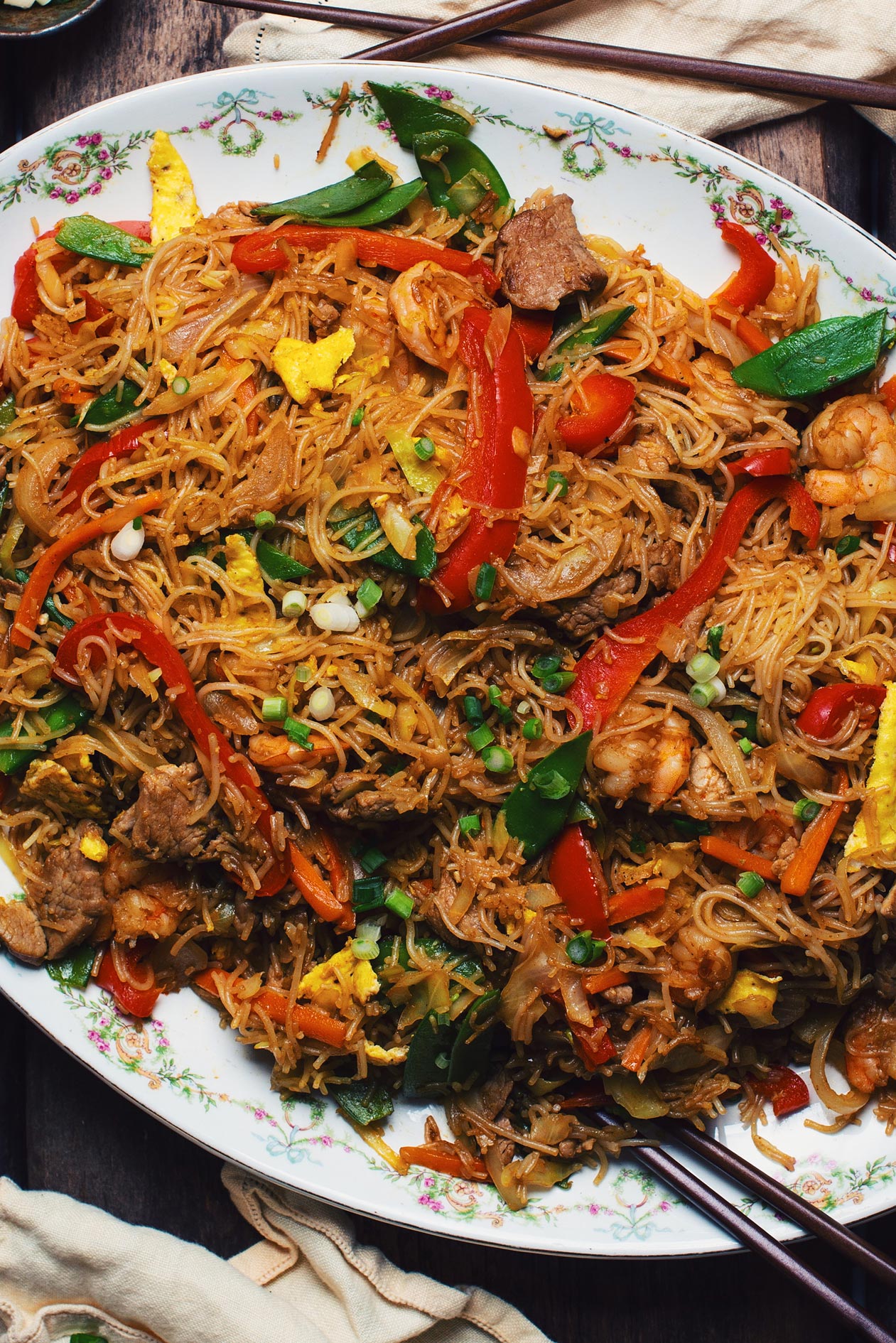
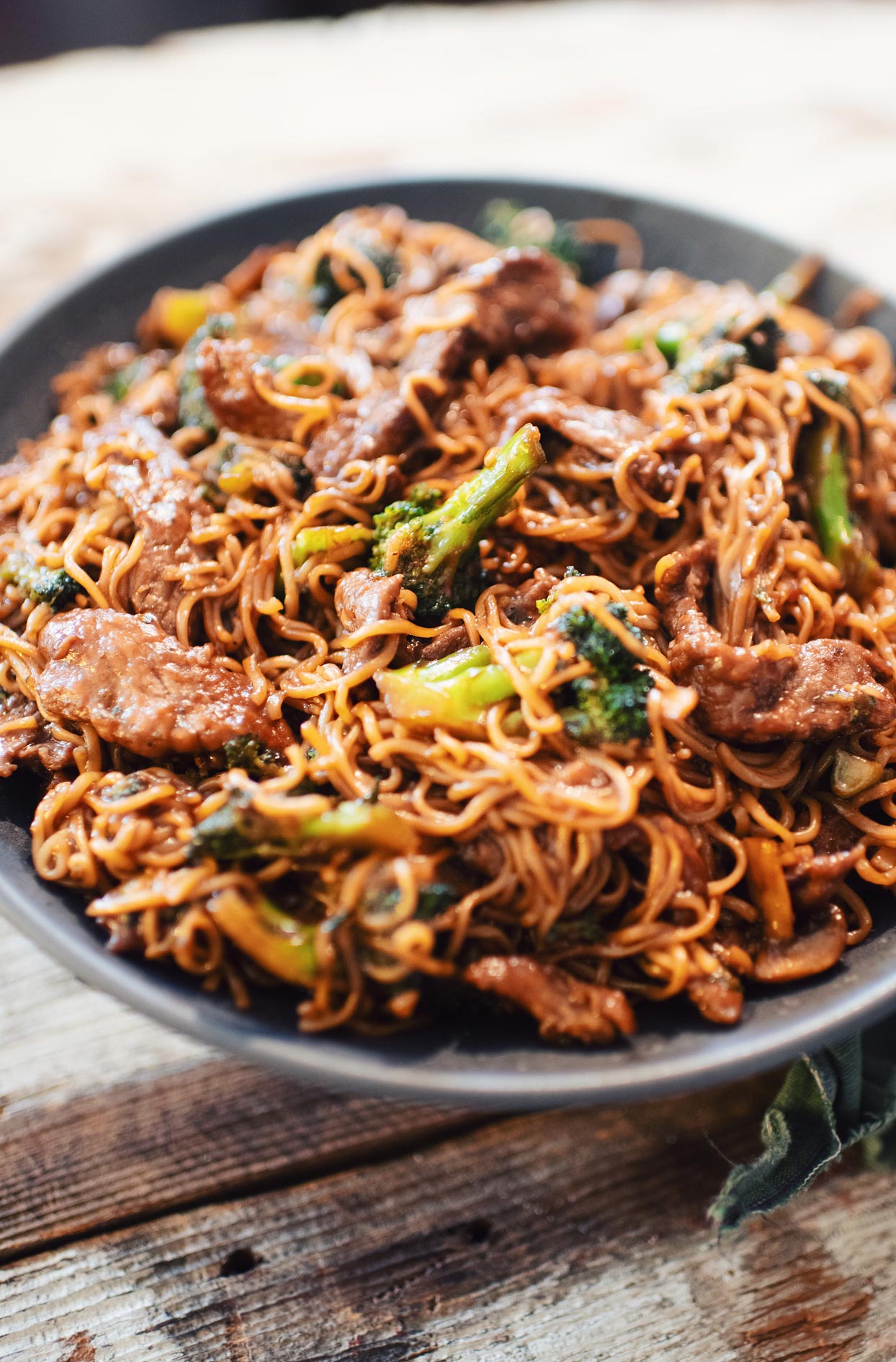
There is a version of Singapore noodles that shows up in a paper box with the curry pooled at the bottom and the vegetables gone limp. This is not that one. Thin rice vermicelli tossed in yellow curry powder until every strand turns gold, pork tenderloin sliced thin enough to go tender in seconds, shrimp that still snap, cabbage and snow peas that never lost their bite. Every mouthful tastes like something, and it tastes loud.
🔥 It looks harder than it is
The ingredient list is long. The cooking is ten minutes. Everything about this dish gets decided before the burner goes on: pork in its marinade, vegetables julienned into their own containers, sauce mixed in a small bowl, eggs beaten and waiting. Once that is done there is no thinking left, only heat and order. That is exactly why I make Singapore mei fun when people come over. Guests walk in, I fire the wok, and supper is on the table before anyone finishes a first drink.
🍽️ How to serve them so people talk about it
These noodles hold a table on their own. Still, two things make the meal. A crunchy Asian salad with a sharp lime vinaigrette cuts straight through the curry, and lime wedges squeezed at the table wake the whole bowl back up. If you want the full effect, carry the wok to the middle of the table and let everybody dig in from it. It is a Saturday night dish that happens to cook like a Tuesday one.
Ads
Ads
📋 Mise en place, or how to cook this with guests in the room
The whole trick to Singapore noodles when you are entertaining: do all of it up to 4 hours ahead. Slice the pork and leave it in its marinade in the fridge. Julienne every vegetable and keep them in separate containers, not one big pile, because they go into the wok at different moments. Mix the sauce in a small covered bowl. Beat the eggs. Cook the vermicelli, rinse it cold, cut it in four, lid it. When the doorbell rings the only thing left is the fire, and that part takes under ten minutes.
🔥 Get the wok ripping hot before anything touches it
This is the whole difference between decent noodles and Chinese restaurant noodles. Preheat the dry wok on high for a full minute before the oil goes in, then wait until that oil shimmers and smokes at the edges. Cold pan means the pork and vegetables steam in their own liquid instead of searing, and steamed is exactly what nobody wants here. Carbon steel or cast iron is ideal. A big stainless skillet works. Non-stick does not, because it cannot take the heat this needs.
🔪 Cut everything to the same 3 mm
Uniform julienne is not fussiness, it is timing. Carrots, onion, bell pepper, cabbage all hit the wok within seconds of each other, so if the carrots are chunky and the peppers are wispy you get raw carrot and mush pepper in the same bite. About 3 mm across, everything. This is the slow part of the recipe and it is worth every minute.
🍝 Rinse the vermicelli cold, then cut it in four
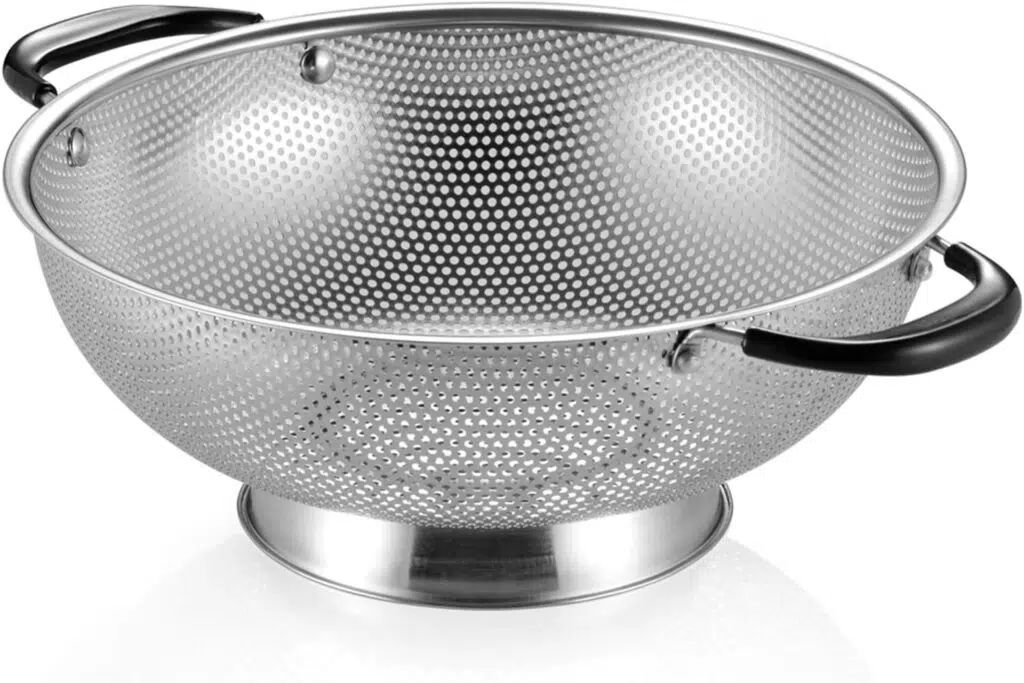
The step people skip. Straight out of the pot, rice vermicelli keeps cooking on its own residual heat and the loose starch glues it into one solid brick. Rinse it hard under cold running water in a strainer until it feels cool in your hand. Then cut through the nest in four with scissors, otherwise the strands are absurdly long to eat and impossible to toss evenly in the wok.
🌶️ Sriracha is a dial, not a dose
One teaspoon is where the recipe sits, and that is mild. A crowd that likes heat can go to a full tablespoon without the curry losing its shape. Kids or tender stomachs, half a teaspoon or none at all. Either way put the bottle on the table and let people finish their own plate. Sambal oelek works too and brings more depth, and a spoon of red Thai curry paste sends the whole thing somewhere else entirely.
🍳 The egg goes in flat, then gets sliced
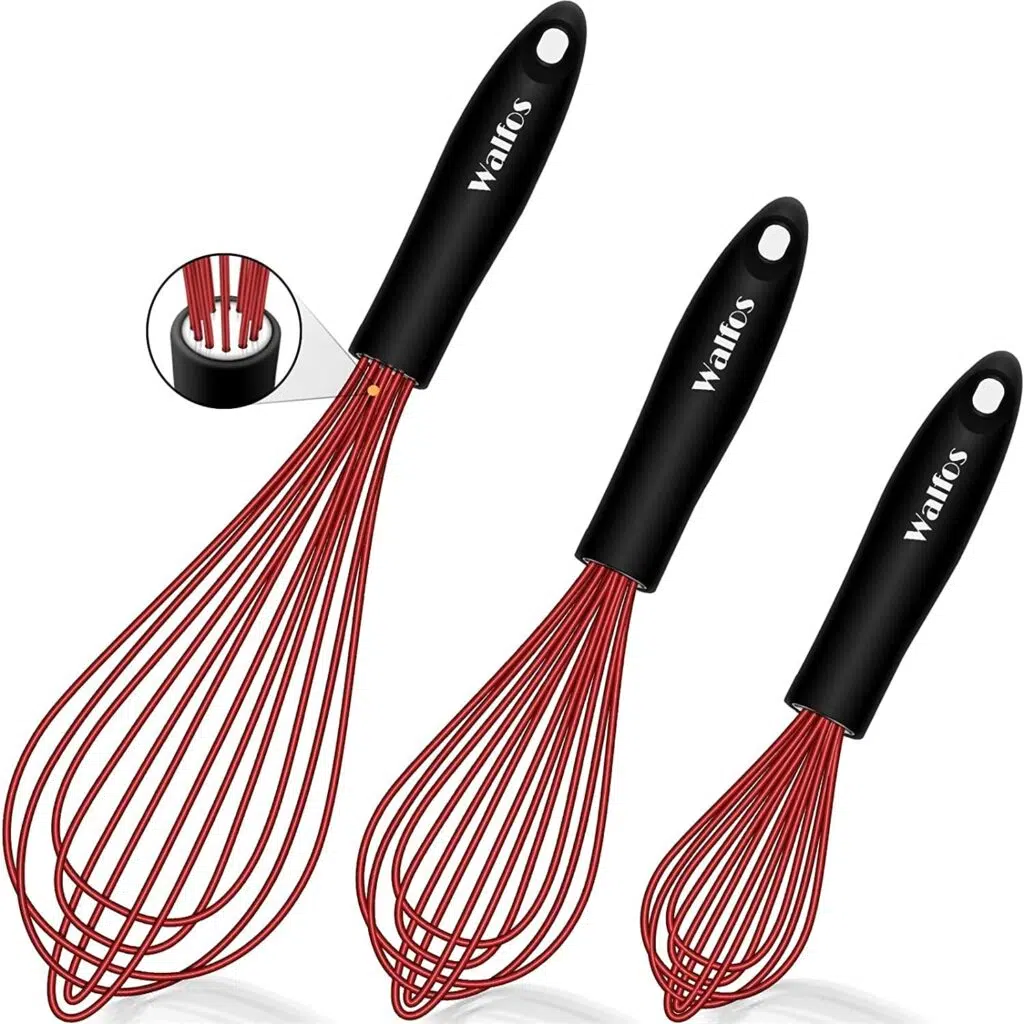
Most recipes scramble the egg into the wok like fried rice and it vanishes into confetti. I cook it as a flat omelet instead, two or three minutes without touching it, slide it onto a plate and cut it into thin ribbons. You end up with gold strips that stay visible in the finished bowl and are easier to actually pick up with chopsticks.
🍱 Leftovers keep 3 days, and the microwave ruins them
Airtight container, 2 to 3 days in the fridge. To reheat Singapore rice noodles, skip the microwave, which turns them soft and gluey. Hot pan or wok, medium-high, 1 tablespoon of oil plus 1 tablespoon of water to bring the steam back, 3 to 4 minutes tossing. It comes back close to fresh. Freezing is a different story: vermicelli thaws rubbery, so do not bother.
🍽️ What to serve with Singapore noodles
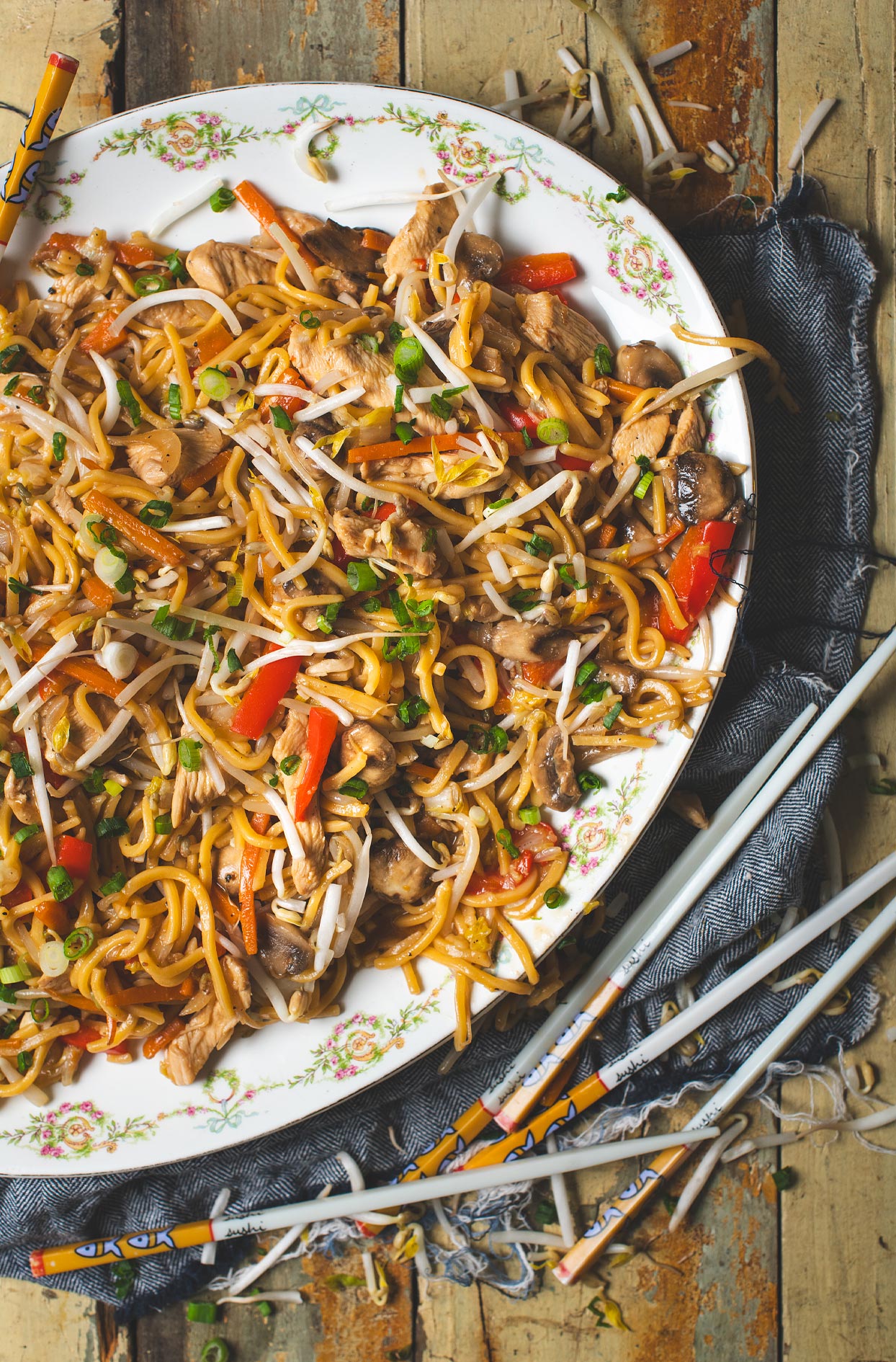
They are a full meal, which is half the point of making them. When I want a real spread, I put out something cold and sharp beside them, a shredded cabbage salad with lime and fish sauce, and something to pick at first. Dumplings with a proper homemade sauce work every time, and so does a plate of fried squid. Lime wedges on the table, always. If the crowd is big, my chicken chow mein next to these makes a two-wok feast that costs almost nothing.

Ads
Ingredients
- 1.3 lb (600 g) pork tenderloin, slightly frozen, fat trimmed and thinly sliced
- 2 tablespoons (30 ml) soy sauce
- 2 tablespoons (30 ml) fish sauce
- 1 teaspoon (5 ml) toasted sesame oil
- 1 ½ packages thin rice vermicelli (about 1 lb / 450 g)
- 4 tablespoons (60 ml) canola oil
- 3 eggs
- 2 carrots, julienned
- ½ Spanish onion, thinly sliced
- 25 raw shrimp, size 31-40, peeled and deveined
- 1 teaspoon (5 ml) sriracha (or more, to taste)
- 1 red bell pepper, cut into strips
- 20 snow peas, trimmed and cut in half on the diagonal
- 2 cups (500 ml) green cabbage, finely julienned
- 2 tablespoons (30 ml) yellow curry powder
- 1 green onion, thinly sliced
Ingredients for the sauce
- 3 garlic cloves, finely chopped
- 2 teaspoons (10 ml) soy sauce
- 2 teaspoons (10 ml) white wine
- 2 teaspoons (10 ml) fish sauce
- ¼ teaspoon (1 ml) brown sugar
- 1 teaspoon (5 ml) curry powder
Ads
Preparation
- In a large bowl, combine the pork with the soy sauce, fish sauce and sesame oil, then pepper to taste. Mix and set aside.
- In a small bowl, stir together all the sauce ingredients. Set aside.
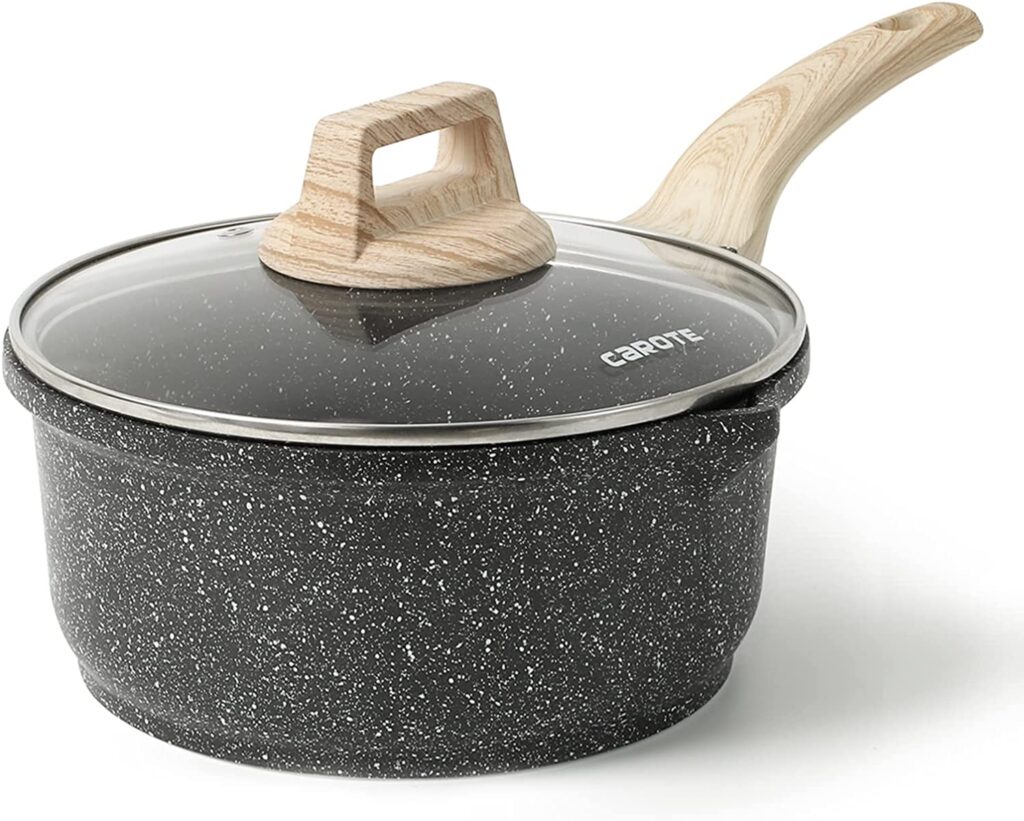
- In a large pot of boiling water, cook the rice vermicelli according to the package instructions. Drain in a strainer, rinse thoroughly under cold water and drain well. Cut the noodles into 4 and set aside.
- In a bowl, beat the eggs with salt and pepper until well blended. Set aside.
- In a large wok or skillet over medium heat, add 1 tablespoon (15 ml) canola oil and swirl to coat. Pour in the eggs and do not stir. Let them set as a flat omelet, 2 to 3 minutes. Slide onto a plate, slice into thin ribbons and set aside.
- Turn the wok up to high heat, add 2 tablespoons (30 ml) canola oil and let it heat for 1 minute. Add the carrots, onion, pork, shrimp, sriracha and sauce, then stir-fry 2 to 3 minutes, breaking up the meat as you go.
- Add the bell pepper, snow peas and cabbage and keep cooking 2 to 3 minutes, just until the pepper softens.
- Add the noodles, the curry powder, the egg ribbons and 1 tablespoon (15 ml) canola oil, then toss over the heat for 3 to 4 minutes until every strand is coated in curry. Serve right away, scattered with green onion.
Singapore noodles are thin rice vermicelli stir-fried with yellow curry powder, sliced pork, shrimp, egg and julienned vegetables, all tossed fast over very high heat. The curry is what defines the dish. It is dry, not saucy, and every strand should be stained gold rather than swimming. On Chinese restaurant menus in North America you will also see it written as Singapore mei fun or Singapore chow mei fun, which is the same plate under a Cantonese name.
They are not from Singapore at all. Cantonese restaurants in Hong Kong built the dish in the 1950s and hung the name on it because curry powder read as Southeast Asian to their customers. Order Singapore noodles in Singapore and you will mostly get a shrug, or a plate labelled Hong Kong noodles. It has since become one of the most recognizable Chinese takeout dishes in North America, Britain and Australia, which is a strange fate for a dish named after a city that never claimed it.
All three are stir-fried, and that is where the similarity ends. Singapore noodles use thin rice vermicelli and get their character from curry powder. Chow mein uses wheat egg noodles, often crisped, with a soy-based sauce and no curry at all, like my chicken chow mein. Lo mein uses soft wheat noodles that are tossed with sauce rather than fried in it, so it comes out slippery and wet instead of dry. Different noodle, different technique, different plate.
Thin dried rice vermicelli, roughly 1 mm across, the white bundles from the Asian aisle. Wide pho-style rice noodles turn heavy and soak up too much curry, and egg noodles are a different dish entirely. Rice vermicelli itself is naturally gluten free, so the dish can be, but the sauce is where gluten hides. Regular soy sauce contains wheat. Swap in tamari or a certified gluten-free soy sauce and check the fish sauce label, and you are fine.
Mild as written. Curry powder brings warmth and aroma rather than heat, and the single teaspoon of sriracha is a nudge, not a punch. You control the burn entirely. As for healthy, this is a stir-fry with lean pork, shrimp, egg and four vegetables, cooked in a few tablespoons of oil rather than deep-fried. It is lighter than most of what comes out of a takeout container, mostly because you decide how much oil, salt and sugar go in.
Freely. Chicken thighs sliced thin are the closest match in texture. Flank or striploin cut against the grain works if you keep it moving. Firm tofu needs to be browned properly on its own first or it will fall apart in the toss. Squid rings go in at the very end, two minutes and out. You can also skip the pork and double the shrimp, which is how I make it when I want it to feel like a treat.
Ads
Ads
Ads
Ads
Ads