

Roasted Butternut Squash Soup Recipe (No Cream)
- Preparation 15 min
- Cooking 1 h
- Servings 6
- Freezing Absolutely
Ads
🎃 One sheet pan, one blender, and the best soup of your fall!
You open the oven after an hour and it smells like roasting, sweetness and herbs. The squash has browned at the edges, the onion has collapsed, the garlic is golden. All of it goes into the blender with stock and comes back out velvety, deep orange, without a drop of cream in it. Six servings, a grilled baguette, plenty of butter and whatever cheese you like. At our place this is the whole supper, and the boys ask for it again every time. Best part? It freezes for three months. Since the pan is already out, make a double batch!
🔥 Cut side up, and I stand by it
Most recipes have you set the squash face down on the pan. That makes sense when the face is bare: it touches the hot metal and browns by contact. Except here the cut side is not bare. There is oil, salt, pepper and a teaspoon of herbes de Provence on it. Flip it over and you trap those herbs between the flesh and a 425 °F pan for an hour: they scorch, and the bitterness spreads through the whole soup once it hits the blender. So the squash roasts cut side up, the herbs toast gently in the air, and that is exactly what you want to taste.
🍁 What makes the difference: roasting, spices, maple
Squash simmered in a pot tops out at 100 °C in water. No browning is possible, which is where that flat, vegetal taste of ordinary squash soup comes from. In a 425 °F oven, the surface moisture evaporates, the squash sugars concentrate and brown, and you pick up nutty, toasted notes you cannot get any other way. Add nutmeg and ginger for the classic, herbes de Provence for the not-classic, and two tablespoons of maple syrup to round it all off. That is where it gets good.
Ads

Ads
🔥 Cut side up, because the herbs are on it
This is the one place I break from everyone else, and it is deliberate. A bare squash goes face down on the pan: contact with the hot metal browns the flesh faster than oven air can. But the moment you season the cut side, the rule flips. My herbes de Provence, trapped under a squash for an hour at 425 °F, would scorch and turn the whole soup bitter. Face up, they toast gently and perfume the flesh. You give up a little browning and gain everything else.
🧄 Garlic for ten minutes, and no it does not burn
Three large cloves, peeled and crushed, drizzled with oil, added only for the last ten minutes. It reads scary, because bare garlic at 425 °F is exactly the kind of thing that blackens fast. I have done it and it comes out golden, never burnt. Two conditions: the cloves must be LARGE, and they must be well coated in oil. Small cloves or dry garlic will blacken at the edges, and that bitterness carries through everything once it hits the blender.
🌿 Herbes de Provence, my break from the classic
Nutmeg and ginger are the pair everybody puts in squash soup, and I keep them. What nobody does is add a teaspoon of herbes de Provence to the squash before roasting. The thyme and rosemary cut the squash’s sweetness and give it a backbone the sweet spices cannot. If you do not have any, an Italian seasoning blend does the job nicely.
🥄 Three cups of stock, never four at once
The water content of a squash varies a lot from one to the next. Pour three cups, blend, see what you have, then add up to four. Going the other way there is nothing you can do: a soup that is too thin cannot be fixed without roasting another squash. I ended up at four cups myself, but still start at three.
🥣 It works without a high-powered blender
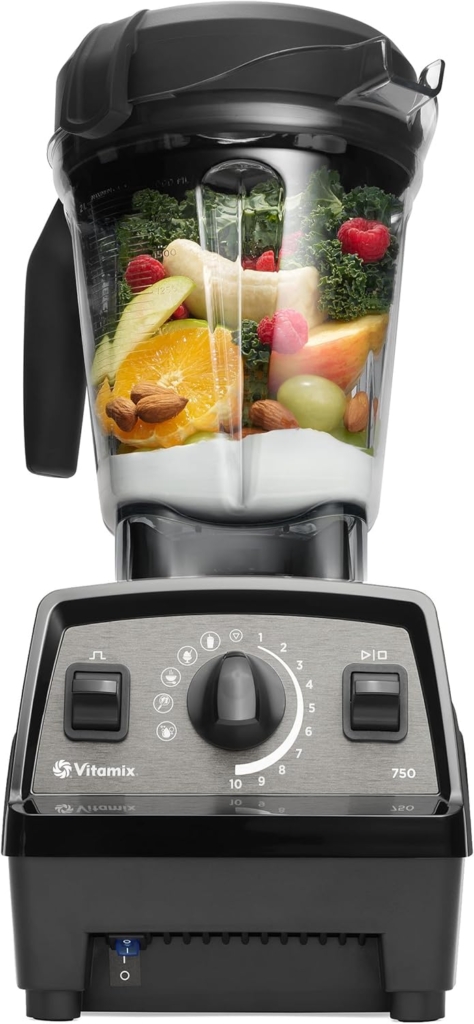
I use a Vitamix and the texture it gives is remarkable. But any decent blender does the job, you just need to run it longer, two or three minutes instead of one. An immersion blender works too, right in a large bowl, accepting it will be slightly less smooth. Do not let the lack of a big machine stop you from making this. One safety note though: a blender full of scalding liquid with the lid sealed will blow that lid off. Fill it two-thirds, take out the center cap and cover the hole with a towel.
🍁 Two tablespoons of maple, and I own it
Most recipes use a teaspoon, sometimes less. I use two tablespoons for 1.6 kg of squash, and I know that is generous. It is not there to sweeten: the squash is already sweet and roasting concentrates its sugars further. It is there for maple’s woody, vanilla notes, which round off the earthiness of the squash. If you prefer it more restrained, cut it in half.
📅 Make-ahead
The whole soup can be made the day before, and it is honestly better the next day, once the spices settle in. It keeps four to five days in the fridge in a sealed container, and three months in the freezer. Since there is no dairy in it, it will not split or turn grainy when it thaws. Another way to spread it out: cut the squash and onion in the morning, keep them in the fridge, and just put the pan in the oven at night. The cooking is hands-off anyway, you do something else during that hour.
✅ What to serve with my roasted butternut squash soup
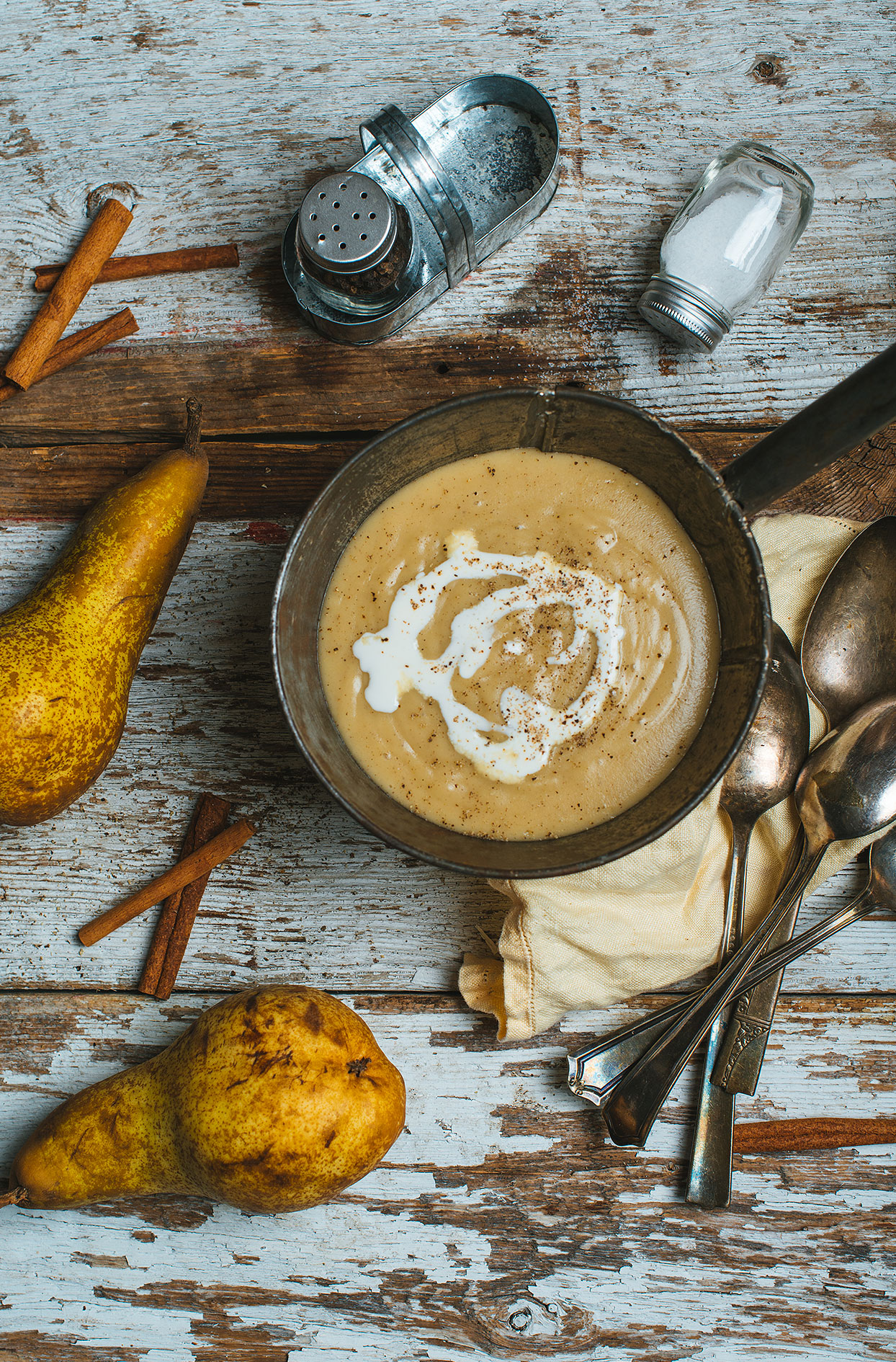
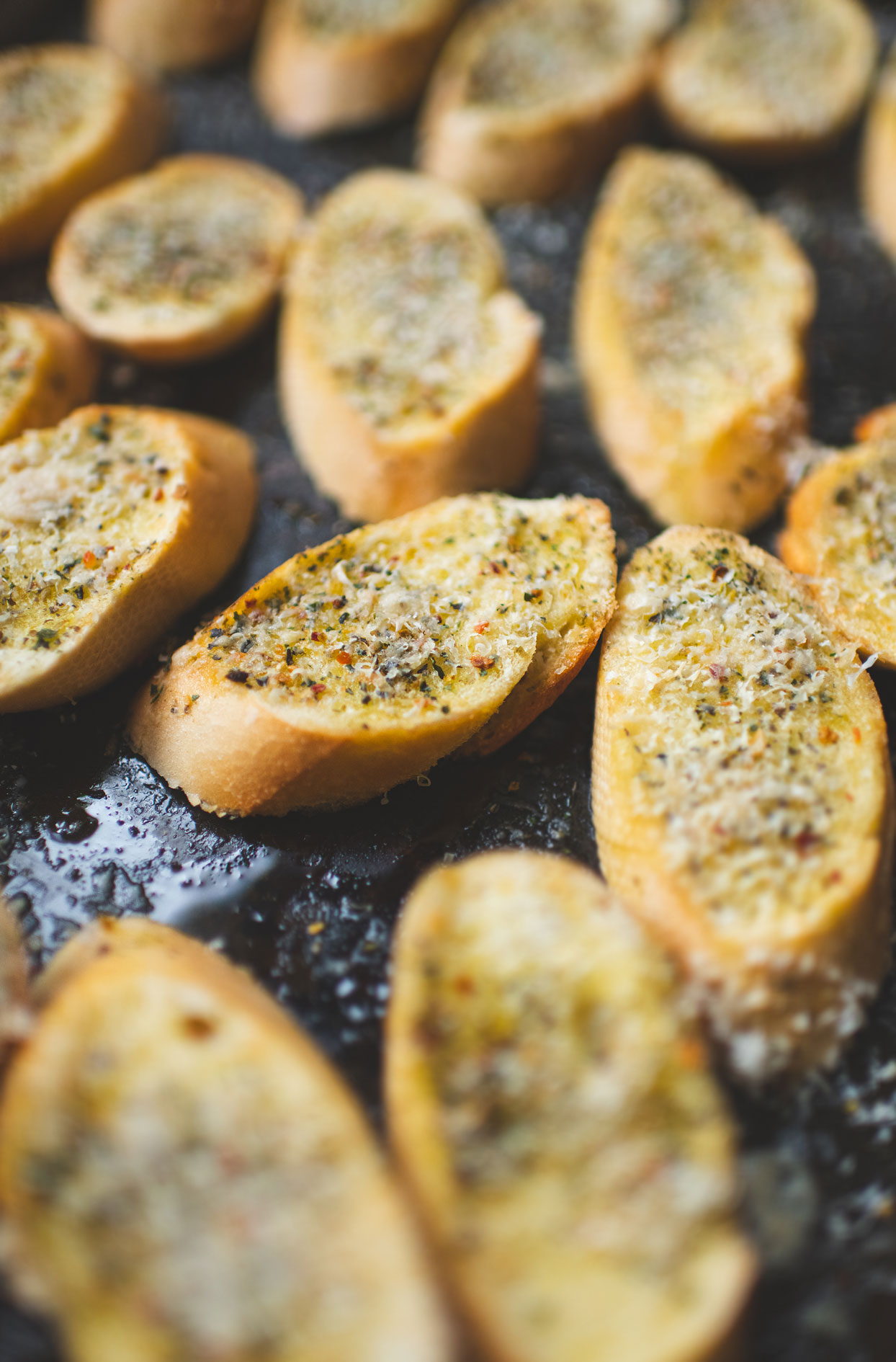
A big grilled baguette, plenty of butter and your favorite cheese. Brie, goat cheese, whatever you have. At our place we add cured sausage and olives and it becomes the whole supper, not just a starter. If you want to stay in soup territory, my carrot and ginger soup and my parsnip and pear soup play the same position. And if it is the roasted squash that got you more than the soup, go look at my roasted butternut squash with bacon and goat cheese, where you eat it in wedges, skin and all.
Ads
Soup
- 3 1/2 lb (1.6 kg) butternut squash
- 3 tbsp (45 ml) olive oil
- 1 tsp (5 ml) salt
- Freshly ground black pepper, to taste
- 1 tsp (5 ml) herbes de Provence
- 1 small yellow onion, halved
- 3 large garlic cloves, peeled and crushed
- 2 tbsp (30 ml) maple syrup
- 1/4 tsp (1 ml) ground nutmeg
- 1/4 tsp (1 ml) ground ginger
- 4 cups (1 L) chicken stock
Garnish
- Raw pumpkin seeds
- Fresh parsley, chopped
- Freshly ground black pepper
Ads
Preparation
- Preheat the oven to 425 °F (220 °C).
- Trim the ends off the squash. Stand it upright and cut it in half lengthwise, carefully. Scoop out the seeds and stringy bits with a spoon.
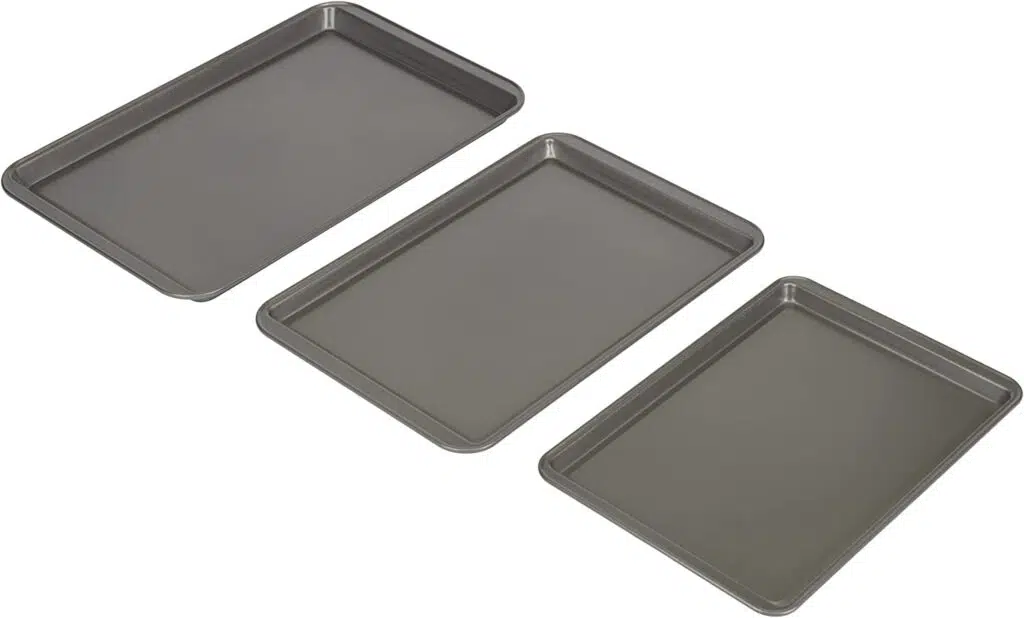
- Set both halves on a sheet pan, cut side up. Drizzle each half with about 1 tbsp of olive oil, season generously with salt and pepper, then sprinkle with the herbes de Provence.
- Roast 30 minutes.
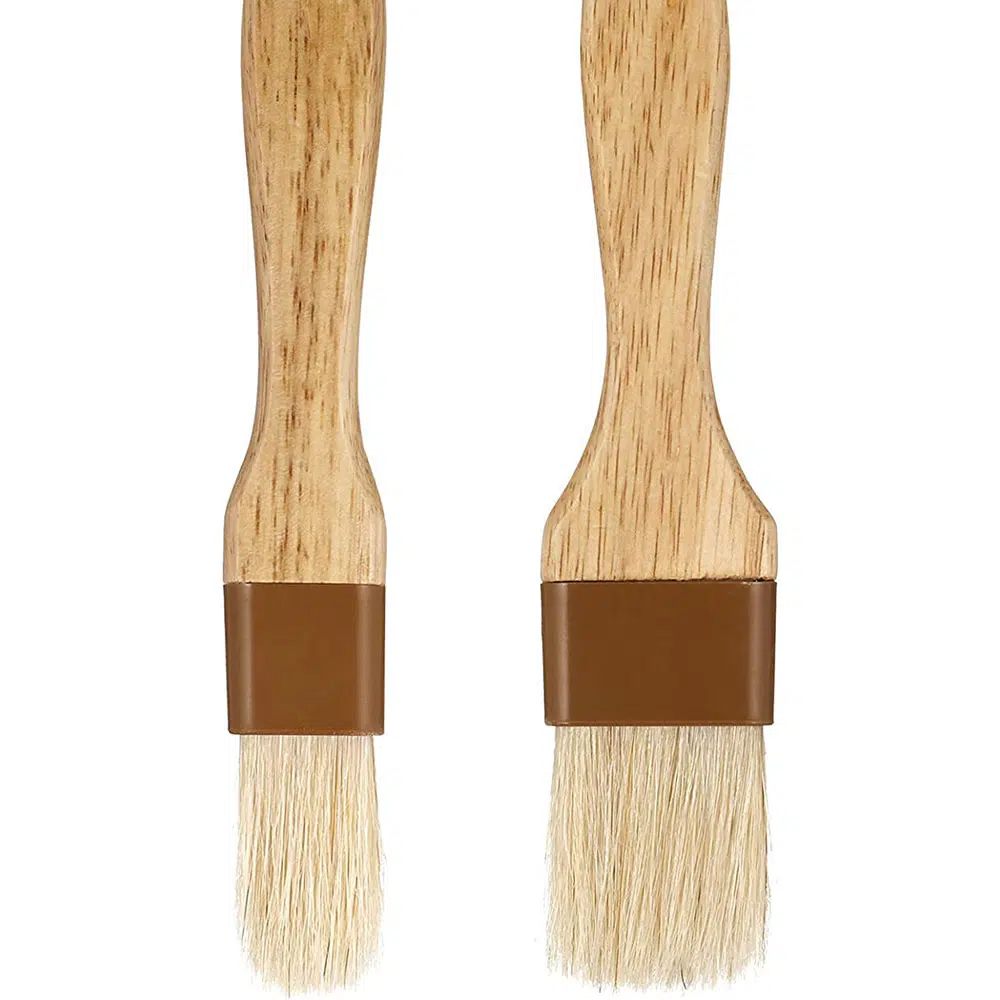
- Brush the cut side of the onion with the remaining oil and set it on the pan, cut side down. Continue roasting 20 minutes.
- Add the crushed garlic cloves to the pan, drizzled with a little oil. Continue 10 minutes. The squash will have roasted 60 minutes total.
- Take the pan out of the oven. Once the squash is cool enough to handle, scoop out the flesh with a spoon, scraping well, and transfer it to the blender. Discard the skin.
- Peel the outer layer off the onion, then add it to the blender with the garlic, maple syrup, salt, nutmeg, ginger and 3 cups of stock.
- Blend 1 to 2 minutes on high, until creamy. Add stock up to 4 cups to reach the consistency you want. Adjust salt and pepper.
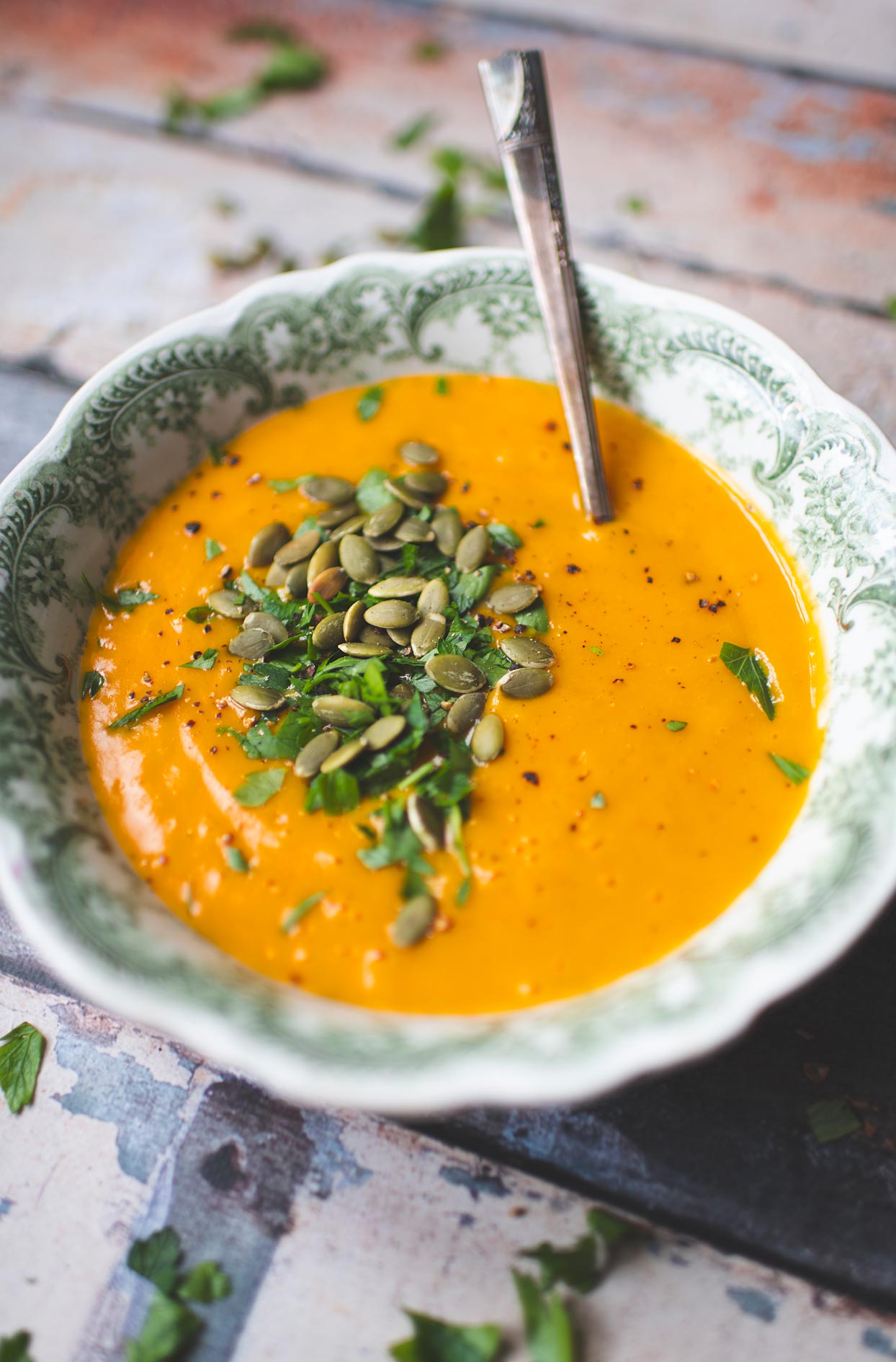
- Pour into bowls. Garnish with raw pumpkin seeds, parsley and black pepper.
Absolutely, and it is good. Butternut squash roasted in wedges is eaten skin and all, it goes tender and it has real flavor. That is actually how I prefer it as a side dish. In this soup though, I leave it out. What you want here is the smoothest possible texture, and the skin leaves bits behind even in a high-powered blender. Scrape the flesh well with a spoon and discard the skin.
Roasting, no contest. Squash simmered in a pot tops out at 100 °C: it cooks, but it never browns, and that is where the flat taste of ordinary squash soup comes from. In a 425 °F oven the surface moisture evaporates, the sugars concentrate and caramelize, and you get nutty, toasted notes that are impossible to reach any other way. The spices and the maple come after, but roasting does 80 % of the work.
Yes, easily. A regular good blender gives an excellent result, you just run it longer, two or three minutes instead of one. An immersion blender works too, right in a large bowl. The difference is real but it is in the velvetiness, not the flavor: a high-powered blender gives a remarkably smooth texture. That is no reason to skip the recipe.
Yes, up to three months, and it is the ideal candidate for it. There is no dairy in this recipe, so nothing that can split or turn grainy on thawing, which is the usual problem with creamed soups. Thaw it overnight in the fridge, reheat gently and give it a whisk if it has thickened. In the fridge it holds four to five days, and it is better the next day.
A grilled baguette, plenty of butter and a good cheese, brie or goat. At our place, with cured sausage and olives on the side, it makes the whole meal. As a starter it serves six; as a meal, count on four bowls. For other soups, look at my carrot and ginger soup or my pumpkin and leeks soup with apple beer.
Ads
Ads



Ads
Ads
Ads