

Molasses Cookies Recipe (Soft and Chewy)
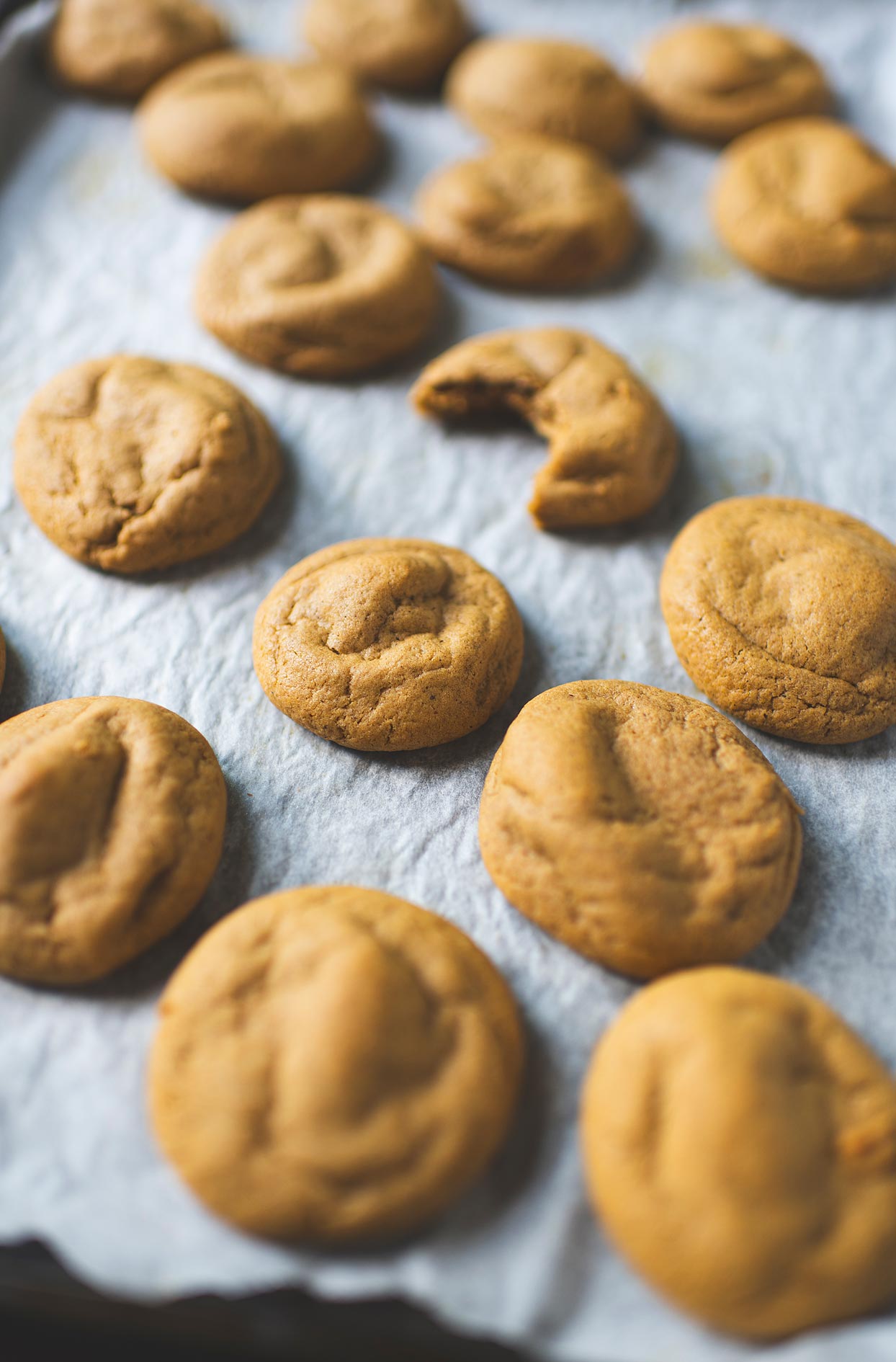
- Preparation 15 min
- Cooking 12 min
- Servings 24
- Freezing Absolutely
Ads
🍪 My grandmother’s recipe, shrunk into a cookie
This one goes way back! It’s my grandmother’s recipe, passed down to my mother, and I still bake it for my kids. The only thing I changed is the size. The big flat molasses cakes of my childhood became small thick cookies, and honestly it’s just more practical. You grab one, then three, and nobody’s counting.
❄️ Thirty minutes in the fridge changes everything
Here’s the part most recipes skip: shape your dough balls FIRST, then chill the whole sheet pan for 30 minutes before it goes anywhere near the oven. Cold butter melts slower, so the dough sets before it can spread. You get thicker cookies with crackly tops instead of thin pancakes. Try it once and you’ll never skip it again.
🥛 No milk, no baking powder, and they’re perfect
Almost every molasses cookie recipe adds milk. Mine doesn’t, and I promise you won’t miss it! Without milk the dough stays firm enough to roll, which is exactly why these hold their shape. Baking soda alone does the lifting, because molasses is acidic and sets it off on its own. That reaction is what cracks the tops. Pull them out while they still look underbaked, they firm up as they cool. Trust me on that one.
Ads
Ads
❄️ Chilling is not optional
Shape the balls BEFORE they go in the fridge, not the other way around. Thirty minutes, sheet pans already loaded, ready for the oven. The butter firms back up, melts slower in the heat, and the dough sets before it spreads. That’s the whole difference between a flat cake and a thick cookie that holds its shape.
🧈 When you forget to take the butter out
Happens to me constantly. My fix: measure the butter, cut it into cubes, drop the cubes in a bowl of lukewarm water for 15 to 20 minutes. Drain, and it’s at the perfect creaming temperature. Without water, cubes on the counter take under two hours, versus forever for a whole block.
🥄 No stand mixer? No problem
The stand mixer isn’t required, but a hand mixer is. A wooden spoon will never cream the butter long enough to aerate the dough. With a hand mixer, same speeds, one extra minute, and scrape the sides more often because the dough climbs.
⏱️ Pull them when they look underdone
Twelve minutes is my number. Out of the oven they’re very soft and you’ll swear you got it wrong. Let them sit on the sheet, they firm up on their own and turn out perfect. An overbaked molasses cookie is dry, and there’s no fixing it.
🚪 One sheet at a time, door stays shut
I bake one sheet at a time and keep the other in the fridge. I don’t rotate them halfway either: every time you open that door you lose 10 to 20 degrees, and on a 12-minute bake it shows.
📅 Make-ahead
Honestly, there’s nothing to make ahead here. Fifteen minutes of prep, 12 minutes of baking, you’re done before you had time to plan. What you can do the night before: measure and whisk the dry ingredients together in a labeled container, set the butter out to come to temperature, and clear a fridge shelf for the two sheet pans. Next day you cream, you shape, you wait 30 minutes and the house smells like your grandmother’s kitchen.
🍞 The slice of bread trick
An old one that actually works: drop a slice of bread in the airtight container with the cookies. The bread gives up its moisture to them and keeps them soft for days. Swap the slice once it goes hard.
✅ What to serve with my soft and chewy molasses cookies?
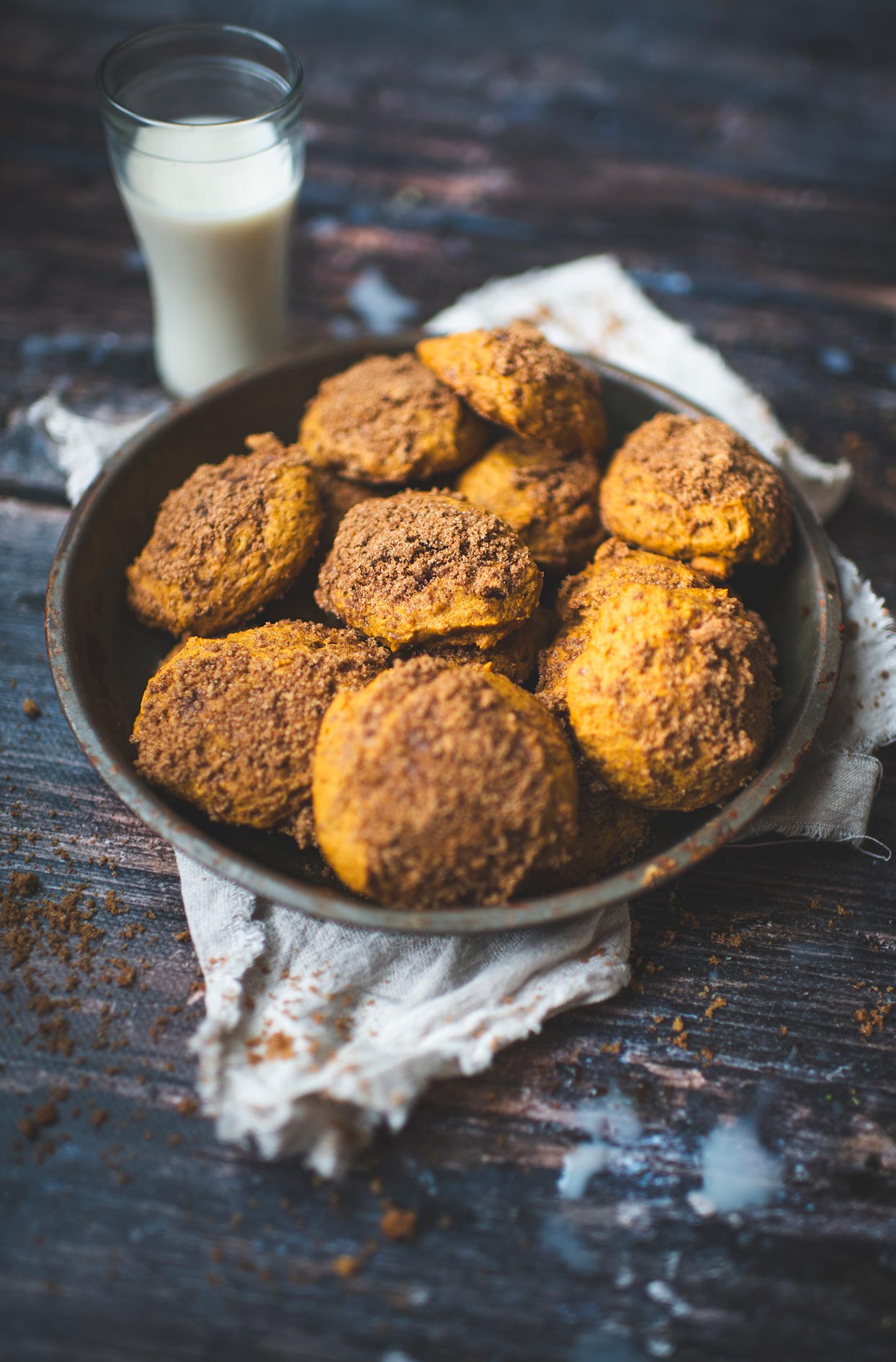
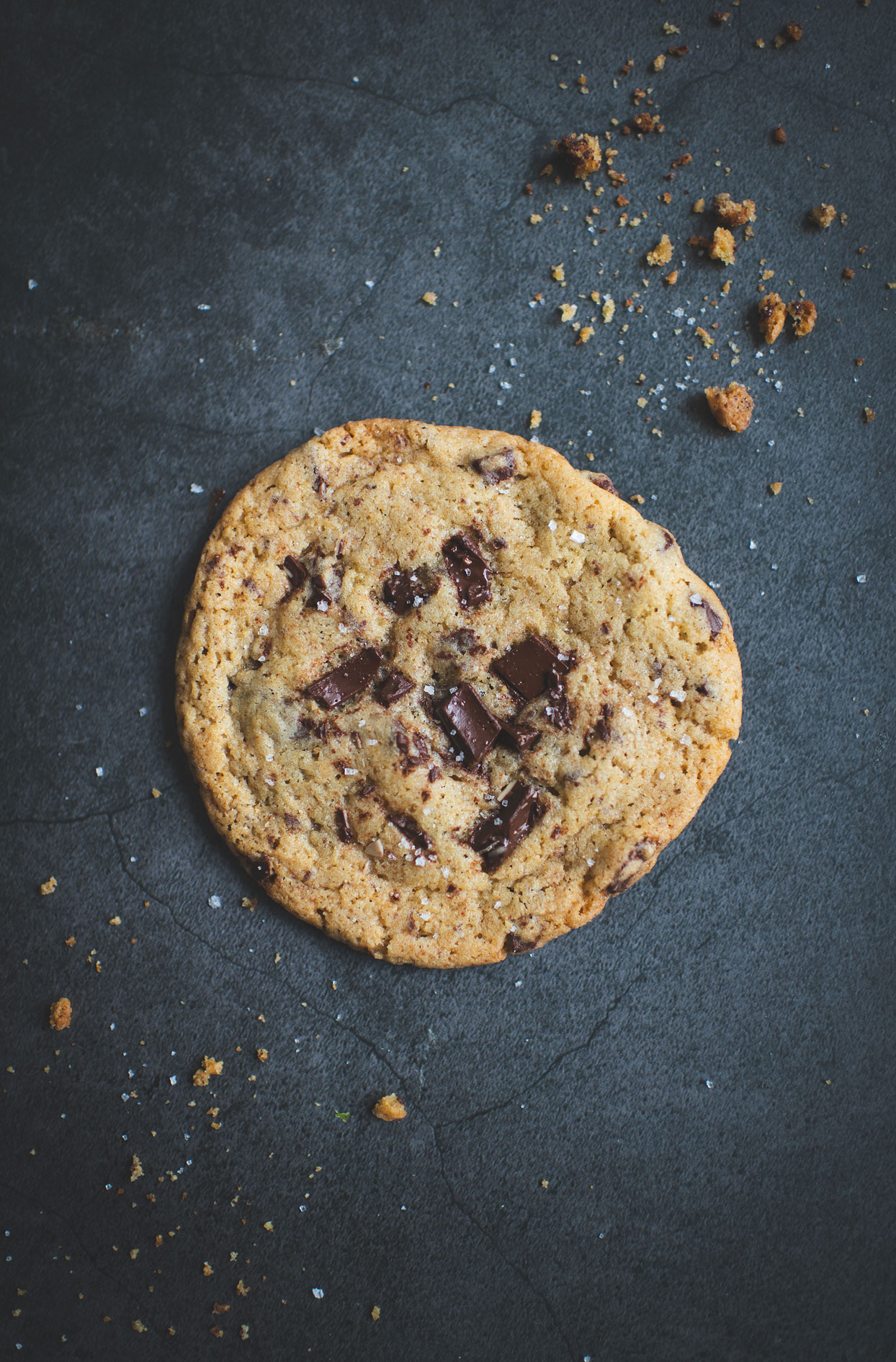
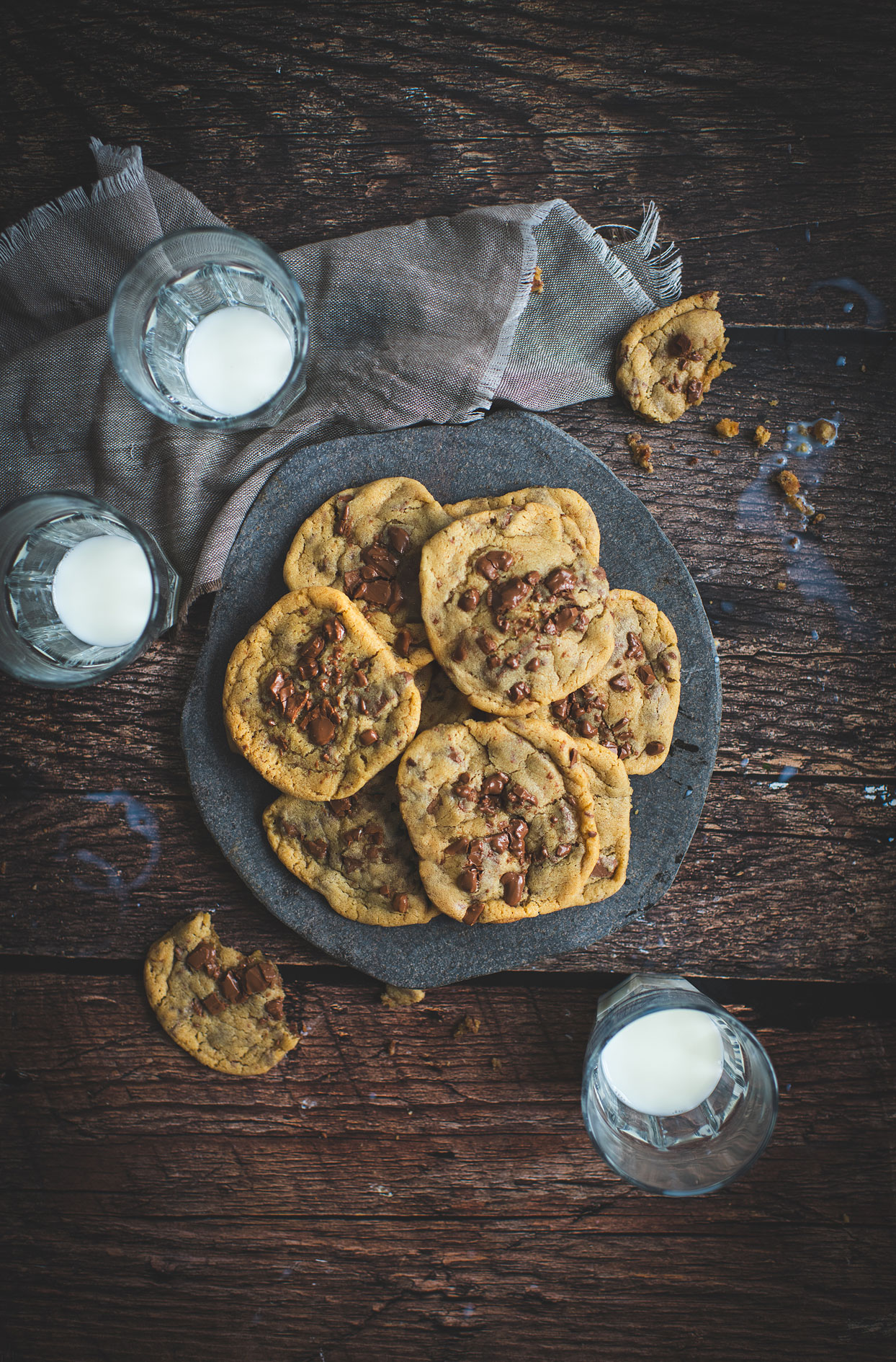
A tall glass of cold milk. Nothing to add, it’s the best pairing there is and you already know it. Black coffee works in the morning. And if you want to go completely off the rails: two cookies, a big scoop of vanilla ice cream in between, and you’ve got a molasses ice cream sandwich. For a mixed cookie plate, add my pumpkin cookies, which live in the same spice family, and my dark chocolate and fleur de sel cookies for contrast.

Ads
Ingrédients
- 2 ⅓ cups (280 g) all-purpose flour
- 1 tsp (5 ml) baking soda
- 1 tsp (5 ml) ground cinnamon
- 1 tsp (5 ml) ground ginger
- ¼ tsp (1 ml) ground cloves
- ¼ tsp (1 ml) ground nutmeg
- ¼ tsp (1 ml) fine sea salt
- ¾ cup (170 g) salted butter, softened
- ¾ cup (150 g) packed dark brown sugar
- ¼ cup (60 ml) fancy molasses
- 1 large egg
Ads
Preparation
- In a medium bowl, whisk the flour, baking soda, cinnamon, ginger, cloves, nutmeg and salt. Set aside.
- In the bowl of a stand mixer fitted with the flat beater, beat the butter, brown sugar and molasses on medium speed for about 3 minutes, until creamy and lightened in color. With a hand mixer, use the same speeds, add a minute and scrape the bowl more often.
- Add the egg and beat until fully combined, scraping the bottom and sides of the bowl.
- Reduce to low speed, add the dry ingredients and mix just until no dry flour remains. Do not overwork the dough.
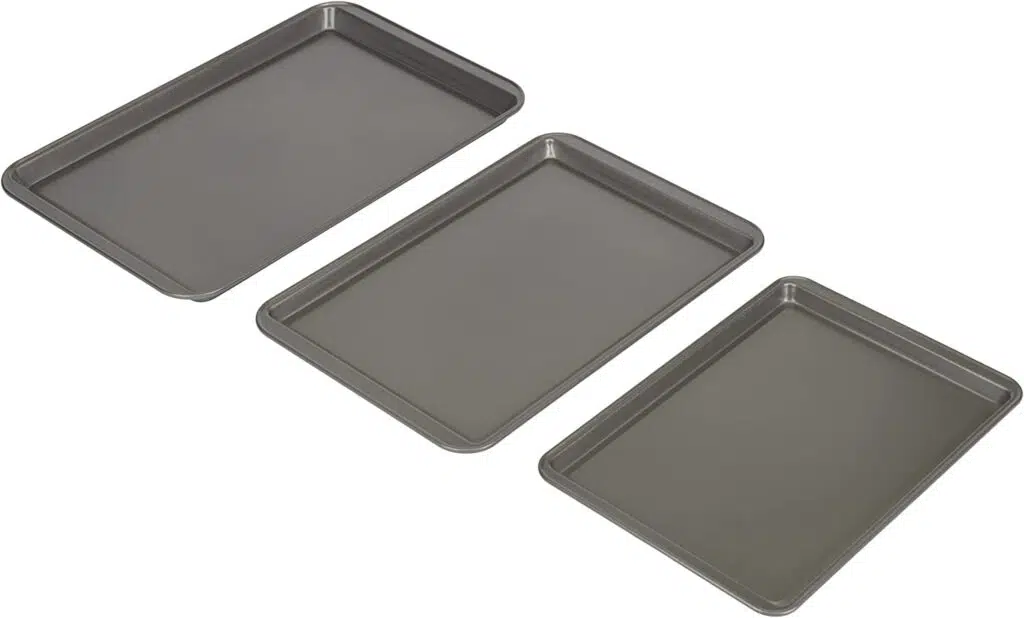
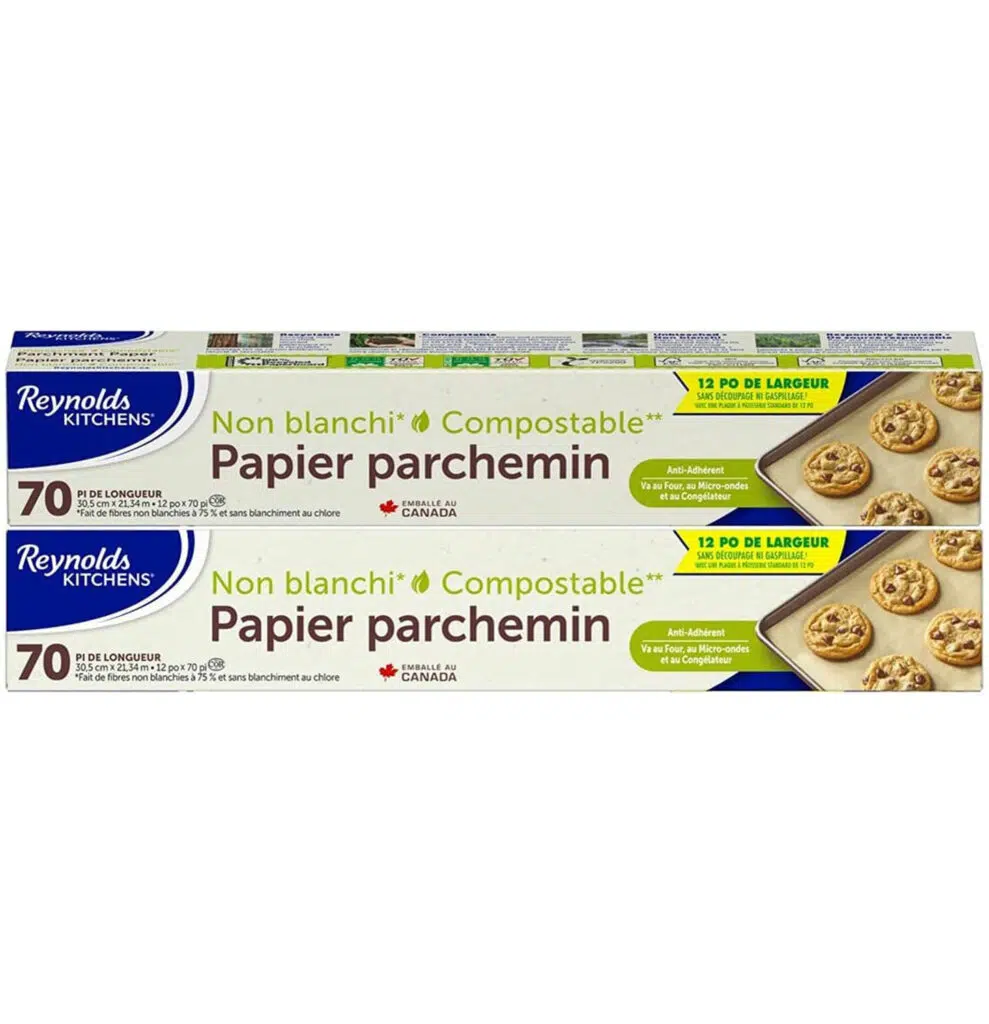
- Line 2 baking sheets with parchment paper. Shape 24 balls of about 1 ½ tbsp (22 ml) each and place them on the sheets, leaving 2 inches (5 cm) between them.
- Refrigerate the sheets for 30 minutes. Meanwhile, preheat the oven to 350°F (180°C).
- Bake one sheet at a time for 12 minutes, keeping the other in the fridge. Avoid opening the oven door while they bake.
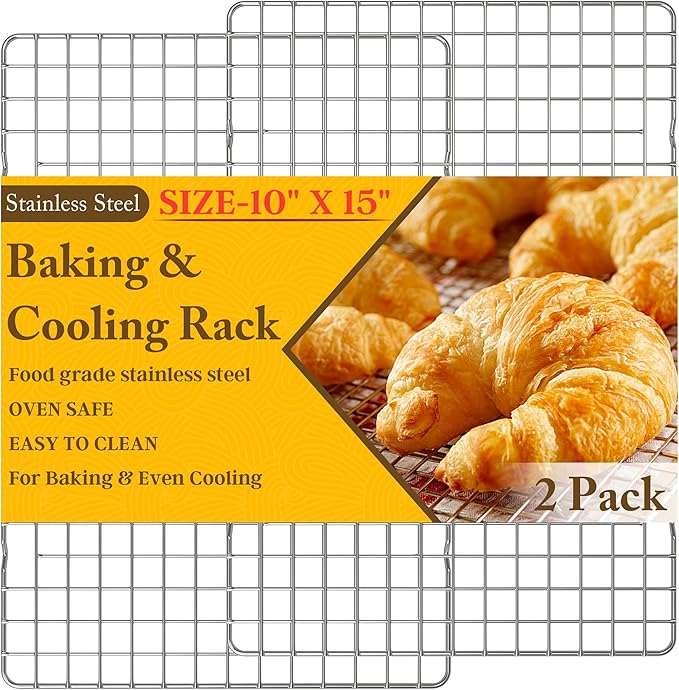
- Let cool on the sheet for 5 to 10 minutes, then transfer to a wire rack to cool completely. They come out very soft and firm up as they cool.
Gingerbread leans hard on ginger and usually carries more flour, which is what makes it stiff enough to roll out and cut into shapes. A molasses cookie is softer and chewier, built around the molasses itself, with the spices playing backup. Mine uses four spices instead of ginger alone, so cinnamon, cloves and nutmeg all get a say. The texture is the real tell: gingerbread snaps, a molasses cookie bends.
Fancy molasses, also sold as light or mild molasses. It’s round, gently sweet and a little fruity. Blackstrap is much darker and genuinely bitter, built for baked beans and bread, not for a cookie you eat with milk. If blackstrap is all you have, cut it half and half with maple syrup or corn syrup, otherwise the bitterness takes over the whole batch.
Because I don’t want either. Milk loosens the dough, and loose dough is what gives you those flat spread-out cookies. Without it the dough stays firm enough to roll into balls that hold their shape. Baking soda handles the lift on its own, since molasses is acidic and sets off the reaction, and that reaction is what cracks the tops. Adding baking powder would just make them paler and more cakey.
Yes, once baked and fully cooled. I stack them in an airtight container with parchment between the layers and they keep 2 months in the freezer. They thaw in 20 minutes on the counter, or 10 seconds in the microwave if you want them warm. At room temperature in an airtight container, count on 4 days.
A cold glass of milk, full stop. That’s how I eat them and nothing beats it. Black coffee in the morning, chai tea in the afternoon if you want to push the spices further. For a plated dessert, sandwich a scoop of vanilla ice cream between two cookies: a molasses ice cream sandwich is indulgent and exactly the kind of thing we do around here. Building a cookie tray? Add my pumpkin cookies and my giant dulce de leche chocolate pecan cookie.
Ads
Ads

Ads
Ads
Ads