

Grilled duck breasts with orange
- Preparation 20 min
- Refrigeration 24 h
- Cooking 15 min
- Servings 2 to 3
- Freezing I do not suggest
Ads
🦆 The completely wild izakaya marinade
Orange, soy, honey, ginger, sesame and a hint of lime: this izakaya-inspired marinade transforms duck into a deep sweet-and-savory dish that tastes like a Japanese restaurant on your own patio. It’s the kind of marinade so good you’ll want to put it on everything. And that’s exactly what happens: it works just as well on a steak, pork or chicken. The duck soaks it up for 24 hours and comes out grilled, lacquered and juicy.
🔥 Easier than you think
Duck intimidates a lot of people, but it’s a myth. If you can cook a steak, you can cook a delicious duck. All you really need is a meat thermometer to hit medium-rare every time. No stress, no guessing: you read the temperature, you pull it off, you let it rest. That’s it.
☀️ The showstopper summer dinner effect
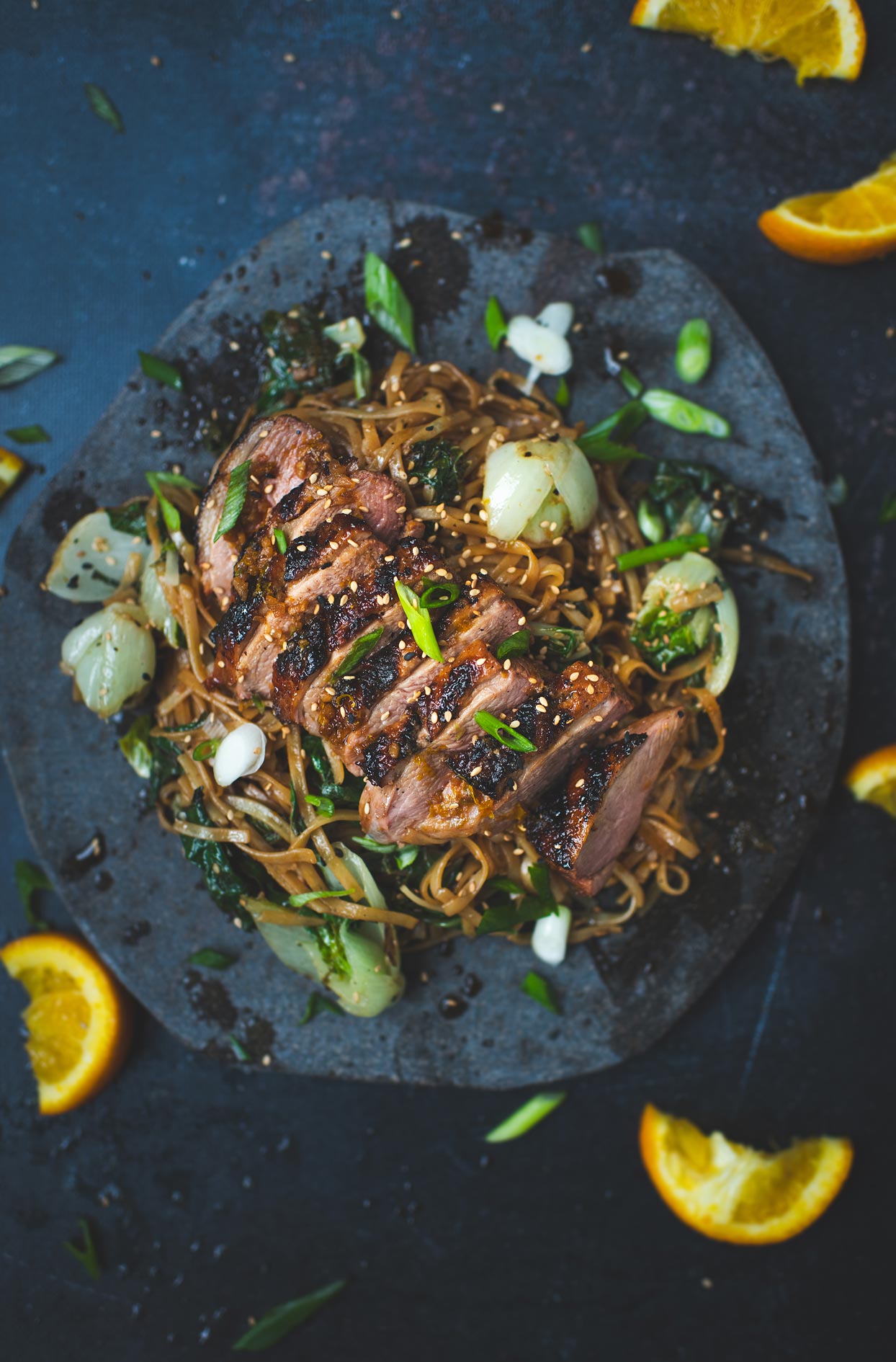
Slices of rosy duck fanned out, drizzled with an orange sauce, scattered with green onions and toasted sesame seeds: this is the dish that silences the table. Served on a bed of sesame noodles with sautéed bok choy, it becomes a complete meal worthy of a night out. But made on your barbecue in under 40 minutes of actual work.
Ads
Ads
🌡️ Get yourself a meat thermometer, period
Forget the trick of pressing your palm to guess doneness. That’s pointless sorcery. We invented tools that cost almost nothing and are meant to be used. Stick a meat thermometer into the thickest part and pull the duck at 130 °F (54 °C): it will climb to 135 °F (57 °C) during the rest for a consistently perfect medium-rare. Zero stress, zero guessing.
🔥 Indirect heat first, for the fat
Always start over the unlit burner, fat side down. This lets the fat render slowly without flaring up. If you throw the duck straight onto a blazing hot grate, the dripping fat causes flare-ups that char the skin before the flesh is ready. Patient start, perfect finish.
🔪 Crosshatch scoring every ¾ inch for the breasts
With a well-fatted magret, you can score tightly because the fat layer is thick. But a regular duck breast has much thinner skin. By spacing your cuts to ¾ inch (2 cm) apart, you let the fat escape without tearing the whole skin. Wider crosshatch, intact skin, beautiful result.
⏱️ The longer it marinates, the better it tastes
Aim for a minimum of 12 hours, but 24 hours is the absolute ideal. Duck is a dense meat: it needs time to drink up all that orange and ginger marinade. Prep it the night before, forget it in the fridge and you’ll be rewarded the next day.
🌶️ A touch of heat as an option
If you like it spicy, add 1 tsp (5 ml) of sriracha to the marinade. It wakes up the citrus and the sweetness of the honey without throwing off the Asian profile. Adjust to your tolerance. It’s easy to dial in.
🥢 A marinade that works on everything
Keep this marinade recipe in your back pocket: it’s just as spectacular on a steak, pork chops or chicken breasts. Same marinating time, same spectacular result. A great marinade is an investment you can reuse all summer long.
✅ What to serve with my grilled duck breasts with orange?
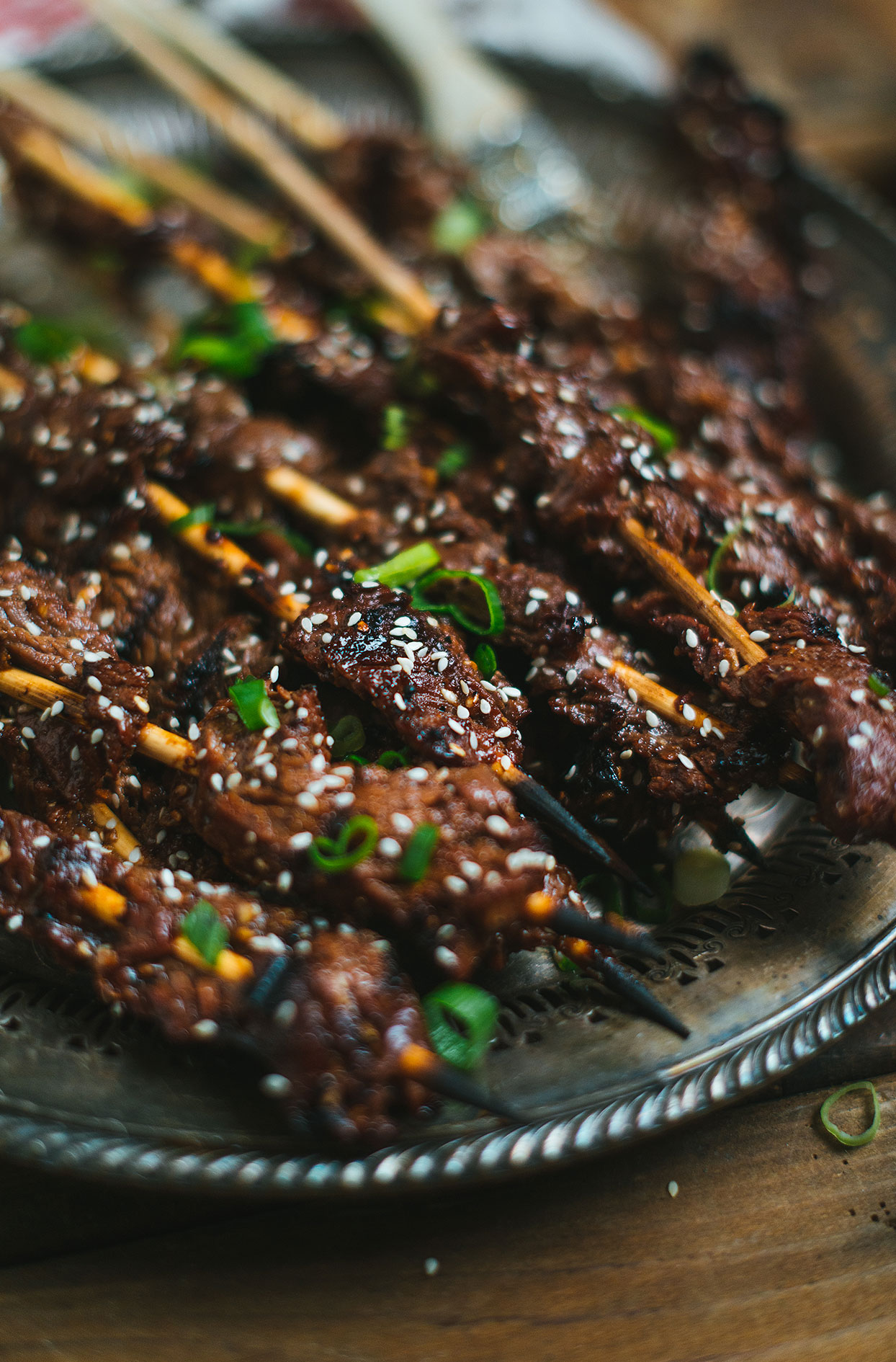
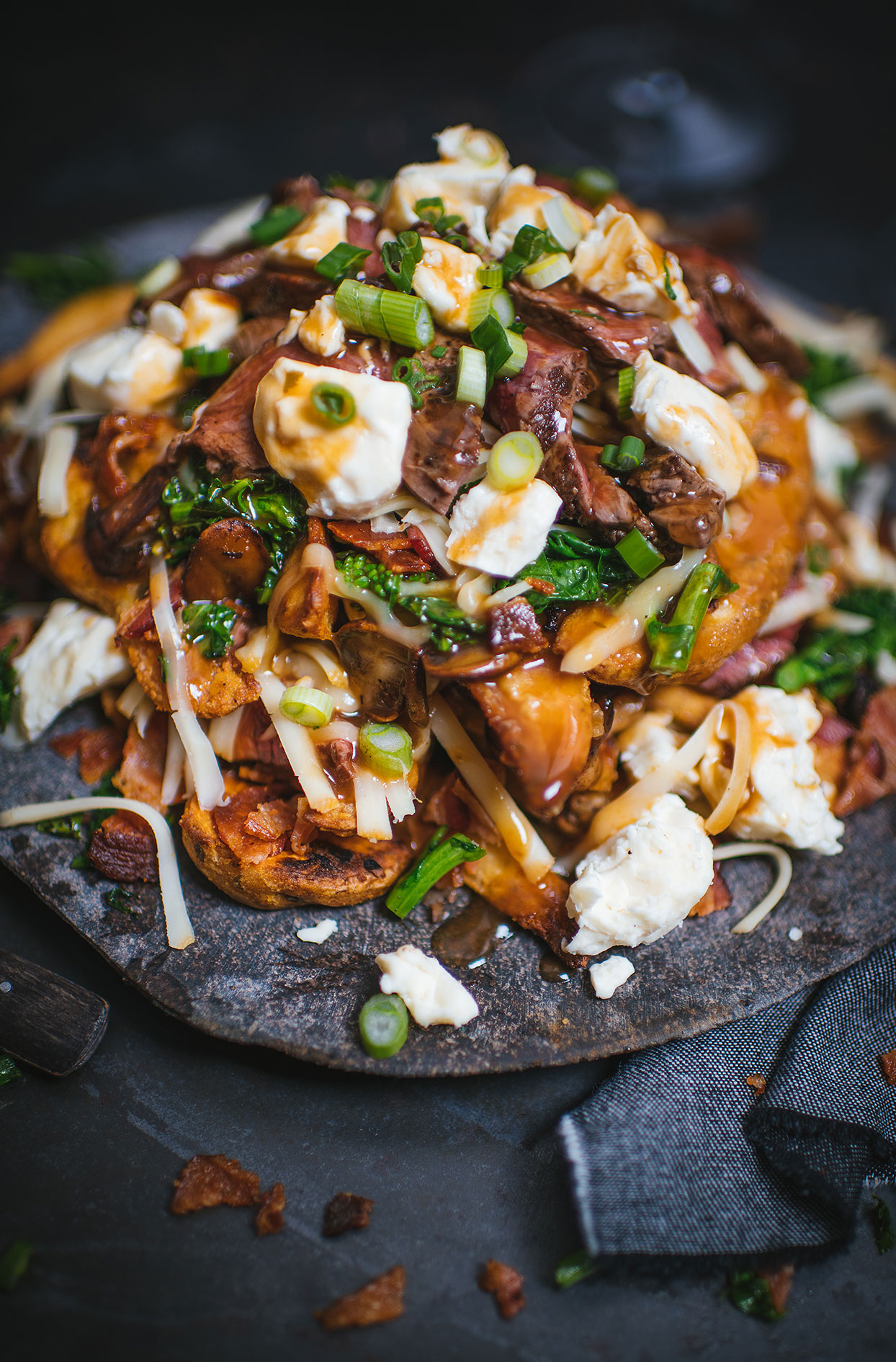
Duck loves a bed of sesame noodles with sautéed bok choy, which soak up the orange sauce. To stay in a grilled spirit, serve it alongside my Grilled BBQ asparagus or some Barbecued grilled broccoli. And if you want to push the Asian theme further, my Asian pork meatballs make a perfect starter.


Ads
For the duck
- 3 large duck breasts
- Salt and freshly ground pepper
For the orange marinade
- ¼ cup (60 ml) soy sauce
- ¼ cup (60 ml) white wine
- ¼ cup (60 ml) honey
- 1 tbsp (15 ml) mirin
- 1 tbsp (15 ml) finely grated fresh ginger
- ½ tsp (2.5 ml) toasted sesame oil
- 4 garlic cloves, finely chopped
- Juice and zest of 2 large oranges
- Juice and zest of 1 lime
For garnish
- 2 green onions, thinly sliced
- Toasted sesame seeds
Ads
Preparation
- Place the duck breasts on a work surface and score the skin in a crosshatch pattern every ¾ inch (2 cm), without cutting into the flesh. Set aside.
- In a large airtight container, combine the soy sauce, white wine, honey, mirin, ginger, sesame oil, garlic, juice and zest of the 2 oranges, and the juice and zest of the lime. Season with salt and pepper.
- Reserve ¼ of the marinade in the refrigerator (to drizzle over the duck at serving). Place the breasts in the container with the remaining marinade, flesh side down, close and toss to coat well. Refrigerate for 24 hours.
- Remove the duck from the refrigerator 30 minutes before cooking and the reserved marinade 1 hour before, so it isn’t ice-cold when poured over the hot duck. Preheat the barbecue to high heat, then turn off one burner on one side.
- Place the breasts over the unlit burner, fat side down, close the lid and cook for 5 to 6 minutes using indirect heat (watch carefully, flames can flare up and burn the fat).
- Reduce the lit side to medium heat and transfer the breasts there, flesh side down. Grill for 4 minutes, rotate 45° and continue for 4 more minutes, until the internal temperature reaches about 130 °F (54 °C), moving the meat if there are too many flare-ups. Remove the duck from the heat, cover with aluminum foil and let rest for 5 minutes: the temperature will climb a few degrees to reach the perfect medium-rare. Slice thinly.
- Drizzle the duck with the reserved marinade, scatter with green onions and toasted sesame seeds, then serve immediately with sesame noodles and bok choy.
A magret comes from a force-fed duck (raised for foie gras), so its breast is much larger and covered with a thick layer of fat. A regular duck breast comes from a conventionally raised duck: it’s smaller, with noticeably thinner skin and fat. Both grill beautifully, but the regular breast cooks a bit faster and requires wider scoring to preserve its more delicate skin.
Aim for 135 °F (57 °C) at the center, measured in the thickest part of the breast. That’s the sweet spot for rosy, juicy and tender meat. Pull the duck off the heat at that temperature, as it will continue to rise a few degrees while resting under aluminum foil. A meat thermometer is your best friend here.
At least 12 hours, but ideally 24 hours. Duck is a dense meat that needs time to absorb the orange, soy and ginger marinade. The longer it marinates, the deeper and more balanced the flavor. Don’t go beyond 48 hours though. The acidity of the citrus would eventually alter the texture.
Yes. Place the breasts in a cold pan, skin side down, and heat over medium to slowly render the fat for 6 to 8 minutes, until the skin is golden and crispy. Flip, sear for 2 minutes, then finish in the oven at 400 °F (200 °C) until the internal temperature reaches about 130 °F (54 °C) (it will climb a few degrees during the rest). Then drizzle the duck with the remaining reserved marinade, exactly as you would for the barbecue version.
On sesame noodles with sautéed bok choy, for a complete Asian-inspired meal. You can also serve them alongside my grilled bbq asparagus or my asian pork meatballs as a starter. The orange sauce also pairs beautifully with simple steamed rice.
Ads
Ads

Ads
Ads
Ads