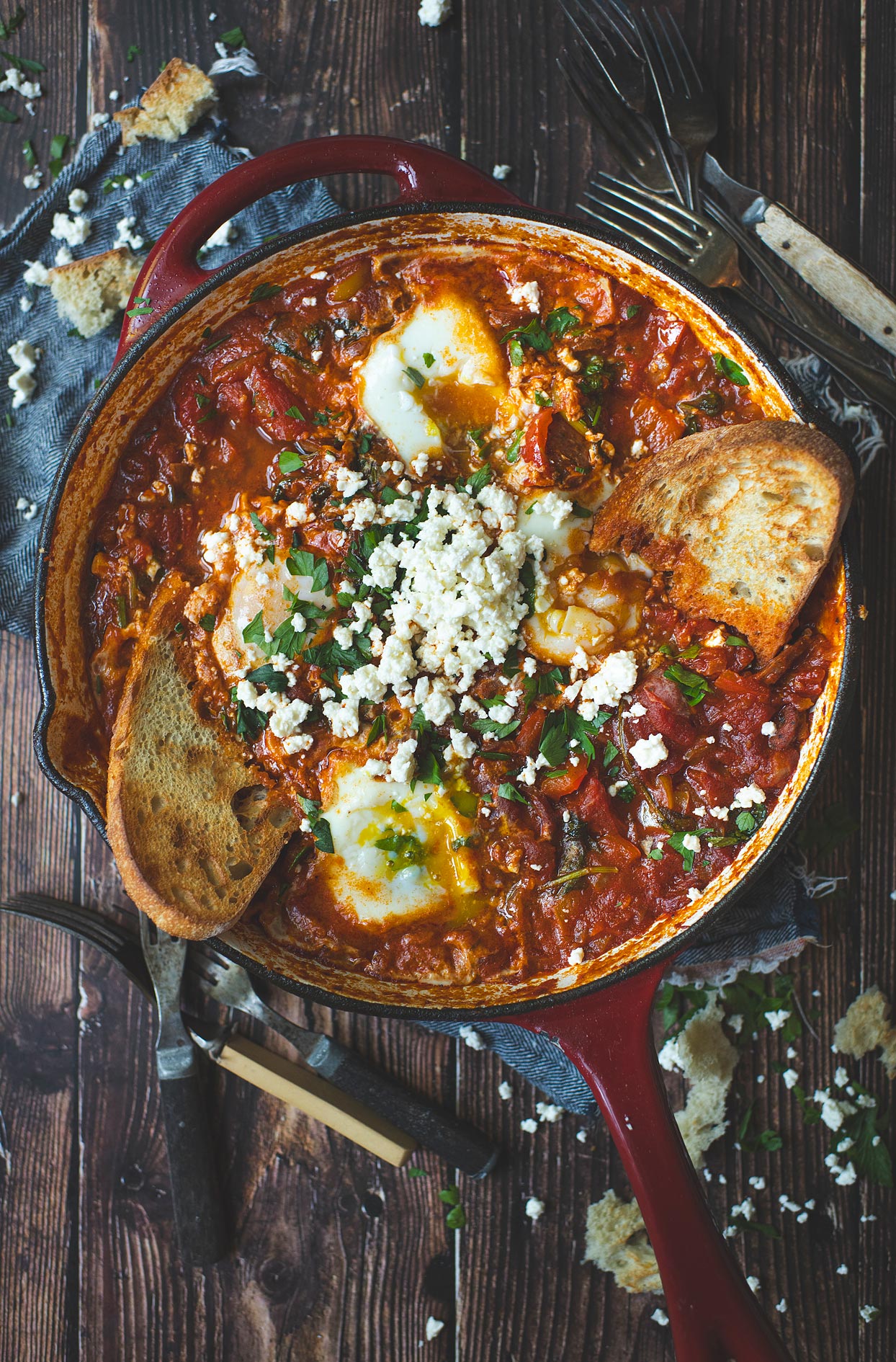
Shakshuka is eggs poached in a tomato sauce spiced with cumin, paprika and bell pepper. You break the yolk, it runs into the sauce, and everything turns creamy and tangy at once. The bread adds a third soft texture.
The dish needs something lively to wake it up. We pour a saison: its abundant bubbles cut through the egg yolk, and its yeast pepper meets the cumin in the sauce. It stays dry enough for a late breakfast, where a malty beer stretches out the morning. Witbier comes second. For wine, a Provence rosé, or a Sauvignon blanc.
The kinds change the game: the classic with spiced tomato sauce, the one with feta, or the very spicy version with harissa. The page has a beer and wine pairing for each, from the easygoing brunch to the one that bites.
The dish needs something lively to restart it, and that's where this saison comes in. Its lively bubbles cut through the egg yolk like nothing else, and the pepper from its yeast meets the cumin in the sauce. It's also dry enough for a morning meal, where a malty beer would make the morning long. Great for a Sunday brunch, with bread for dipping!
The witbier is round and soft, made with wheat and a little orange, whereas the saison is dry and peppery. Go for it if the shakshuka is well spiced, or if you want a beer that softens the tomato sauce.
This Provence rosé, with notes of strawberry and pink grapefruit, has a clean freshness and finishes dry. Next to eggs poached in a cumin and paprika tomato sauce, its freshness answers the tomato's, while its fruit meets the softness of the runny yolk. The bread on the side finds the same lightness. Serve it well chilled!
The sauvignon blanc is sharper, without the red fruit of the rosé. Pick it if you want something sharper: its bite stands up where the rosé would stay focused on the tomato and spices.
The Bloody Caesar is vodka, tomato juice and spices, salty and zesty. Classic shakshuka rests on a spiced, tangy tomato sauce, with cumin, paprika and a creamy egg: the tomato in the glass finds the tomato in the sauce and the spices answer each other. A brunch that wakes you up. The drink revives every bite of egg and sauce.
Feta adds salt and cream to an already acidic tomato sauce. This saison, with a peppery yeast and light hops, is very dry: that dryness meets the acidity of the tomato, and its lively bubbles clean the fat of the feta and the egg yolk, so the sauce stays bright. Great for an end-of-the-month dinner, when there are still eggs and feta left!
The pilsner is dry and hoppy: it freshens the tomato and the salt of the feta without adding spice. Go for it if your shakshuka is already very spicy, or if the saison feels like too much.
This dry rosé, with notes of strawberry, raspberry and citrus zest, has a lively freshness and barely dries out your mouth. Next to a tomato sauce with salty, creamy feta, its freshness answers the tomato's, and its fruit softens the salt in the cheese. A big red would turn harsh with the feta, while the rosé lets it melt.
The sangiovese offers notes of sour cherry and sun-dried tomato, with a lively freshness and a drier mouth. Pick it if you want a red: its freshness holds its own against the tomato sauce. Serve it a little cool, because it turns harsh quickly next to feta.
The Bloody Caesar, clam and tomato juice, vodka and spices, salty and spicy, goes with a shakshuka with feta, salty and creamy on top: its tomato cuts the creaminess of the feta, and its salt answers the salt of the cheese.
Our recipe → · Alcohol-free version: Virgin Caesar →Our Caesar without the vodka: the spiced tomato juice, the salted rim and the celery stay.
Harissa adds a clean heat to the acidity of the tomato. This lager, with notes of fresh bread and discreet hops, is cold and neutral: it doesn't fan the chili, and its bubbles clear the sauce off your palate between bites, so the harissa stays warm without burning. Great for mopping up the bottom of the pan with bread!
The witbier is made from wheat, soft and round, with a coriander and orange that soften the harissa. Pick it if the heat is clean and the tomato acidic, or if the lager feels too dry for a spicy dish.
This Provence rosé, with notes of white peach, strawberry and grapefruit, is lively and light. Well chilled, it refreshes your mouth against the harissa. Its freshness follows the tomato's, and its fruit softens the heat instead of hardening it, whereas a big red would bring out the burn.
The off-dry riesling offers notes of peach and lemon, with a lively freshness and a little sweetness. Pick it if the harissa is really strong: the sweetness puts out the heat, and the freshness holds its own against the tomato.
The michelada, beer, lime, tomato and sauces, salty and spicy, goes with an extra spicy shakshuka with harissa, with its bold heat added to the acidity: its sauces follow the harissa, and its lime and beer soften the fire.
This green version is made with spinach, fresh herbs and a runny egg. Saison has fine bubbles, pepper and citrus, with a dry finish. Its pepper joins the herbs, and its citrus lifts the spinach. It stays light, so it lets the egg yolk spread in your mouth.
Witbier is wheat-based, soft and round, with coriander and orange. Take it if you want a softer beer, whose coriander goes with the fresh herbs in the dish. It leaves the spinach out front.
Loire Sauvignon blanc smells of grapefruit, lime and cut grass, on a bright acidity. That cut grass joins the spinach and the fresh herbs, and its acidity cleans the runny egg yolk. With no tannin, this white keeps the greens fresh, instead of making them bitter. The egg stays creamy.
Alsace Pinot blanc smells of apple, pear and a little flower, with a supple body. Take it if you want a softer white: its roundness follows the runny egg, and its freshness stays discreet next to the herbs.
The Hugo spritz, prosecco, elderflower, mint and lime, floral and light, suits a green shakshuka with spinach and fresh herbs, with its runny egg: its mint follows the fresh herbs, and its fizz lets the runny egg shine.
Alcohol-free version: Sparkling water, elderflower syrup, mint and limeA Hugo is elderflower, mint and bubbles: the sparkling wine is only passing through.
The rich, spicy meat sits in the tomato. Amber ale has a malt of caramel and toast, with very little hop. Its caramel softens the heat, and its round body holds up against the fat. Since it isn't bitter, it doesn't fan the spices, and its caramel follows the simmered tomato.
Saison has fine bubbles, pepper and citrus, with a dry finish. Take it if you want a livelier beer, whose bubbles clean the fat and whose pepper joins the spices.
Rhône Grenache smells of ripe strawberry, raspberry and mild spices, with a round body. Its generous fruit goes with the simmered tomato, and its spices join those of the meat. It has little tannin, so the heat doesn't get worse, and the fat of the merguez goes down on its own. The simmered tomato stays the binder.
Provence rosé smells of strawberry, citrus and flowers, with a fresh acidity. Take it if you want something fresher: its acidity cuts the fat and refreshes the heat.
The Bloody Caesar, clam and tomato juice, vodka and spices, salty and spicy, holds its own against a shakshuka with merguez or spicy sausage, with the rich meat, the spices and the tomato: its tomato answers the sauce, and its spices the merguez.
Our recipe → · Alcohol-free version: Virgin Caesar →Our Caesar without the vodka: the spiced tomato juice, the salted rim and the celery stay.
The peppers are mild, the olives salty, and the tomato simmers for a long time. Saison has fine bubbles, pepper and citrus, with a dry finish. Its pepper lifts the peppers, and its bubbles refresh the salt of the olives. It's dry enough to stand up to the tomato, without crushing the mild vegetables.
Pilsner has a fresh bread malt, a grassy hop and a clean bitterness. Take it if you want a simpler, colder beer, which refreshes the salt of the olives.
Provence rosé smells of strawberry, citrus and flowers, with a fresh acidity. It's dry. Next to the mild peppers and the simmered tomato, this rosé follows the acidity of the sauce, and its fruit joins the sweetness of the vegetables. Its freshness answers the salt of the olives. The whole stays fresh, salty and mild at once.
Sardinian Vermentino smells of lemon, wild herbs and bitter almond, with a touch of salt. Take it if you prefer a white: its salty side goes with the olives, and its herbs follow those of the sauce.
The Bloody Caesar, clam and tomato juice, vodka and spices, salty and spicy, suits a shakshuka with peppers and olives, mild and briny, with simmered tomato: its tomato takes up the one in the sauce, and its salt follows the olives.
Our recipe → · Alcohol-free version: Virgin Caesar →Our Caesar without the vodka: the spiced tomato juice, the salted rim and the celery stay.
An American amber ale, clearly malt-driven: burnt caramel, cocoa and a resinous hop that balances without taking over. That's what this chorizo, feta and spinach shakshuka asks for. Chorizo and smoked paprika are heavy, charred flavours, and a light beer would get swallowed. The toasted malt holds up and goes toward the smoke instead of running from it. The slightly sweet finish softens the tomato acidity.