Nachos are a pile-up of salty grease. The chip is fried, the melted cheese clings to everything, the sour cream adds one more layer, and you eat it with both hands for an hour in front of the game. Nobody ever ate nachos with restraint.
A soft beer disappears by the third chip. IPA has the one thing that gets through melted cheese: bitterness. It puts the mouth back to neutral after every bite, and its hops meet the lime and cilantro in the guacamole or salsa. Amber ale comes second. On the wine side, a Chilean Sauvignon blanc, or a rosé.
Loaded with meat and guacamole, nachos become a meal. The hot version, jalapeños or strong salsa, is about managing the fire. Classic melted cheese nachos remain the base. The page has a beer and wine pairing for each of these styles, and our nacho recipes are below.
This IPA has the one thing that gets through melted cheese: bitterness. It resets your mouth after every bite, which lets you taste the next one. Its citrus hops meet the lime and cilantro in the guacamole or salsa. A beer that works hard, and that's what game night demands!
The amber ale is malty, with a light caramel, and less bitter than the IPA. Go for it if the nachos are loaded with cheese and sour cream, or if your guests find the IPA too strong for game night.
This Chilean sauvignon blanc, with notes of grapefruit, lime and cut grass, makes you thirsty, in a good way. Next to the pile of chips, melted cheese and sour cream, it resets your mouth, a bit like the lime you squeeze over the dish. And since it doesn't dry you out, it doesn't harden the salt, even an hour into the game.
A dry rosé, with strawberry and freshness, goes as well with the salsa as with the cheese. Pick it if your nachos are spiked with chili or hot peppers, or if you want fruit rather than grass.
The margarita is made with tequila, lime and an orange liqueur, with a salted rim: tart, salty, strong. On classic nachos with melted cheese, rich and salty, with their fried chips, the lime and the salt cut the fat. The Mexican duo par excellence, for hockey night.
Maybe a michelada, beer, lime, tomato juice and hot sauces, salty and spicy: if you want beer with your nachos, and a drink that bites as much as the sauce.
Heat, lime and corn have always gone together. The bubbles, the salt and the lime cut through grease and fried food, and the hot sauce keeps the dish company.
Meat and guacamole make nachos fattier and richer. This amber ale, with notes of caramel and toast, has discreet hops: its toasty side echoes the corn and the meat, and its light bitterness and bubbles clean the fat off your mouth. The chips stay crunchy, and so does the night!
The lager is dry and clean, without caramel. It cleans up the fat of the cheese, meat and guacamole. Go for it if your platter is heavily loaded, or if the amber ale feels too heavy for chips.
This Rioja tempranillo, with notes of cherry, leather and oak vanilla, has enough body next to the meat and guacamole not to disappear. It dries out your mouth a little, which cuts the fat of the cheese and avocado, and its woody vanilla goes well with the grilled corn. Every bite stays clean, even under the cheese.
The grenache is rounder and riper: red fruit, mild spices, very supple on the palate. Pick it if the meat is a bit sweet or spicy, or if you want an easier-drinking red.
The margarita tastes of lime and tequila, with a soft orange and salt. On nachos loaded with meat and guacamole, richer and heavier, the lime slices through the avocado and the salt brings back some sparkle.
Jalapeños and hot salsa add heat to the fat of the cheese. This dry, cold lager, with a light bread malt and almost no bitterness, puts out the fire with its freshness and bubbles. The cheese stays creamy, and the heat comes back softer on the next bite. Great for a dish that brings a few tears!
The pilsner is like the lager, with more hops and a cleaner bitterness. Pick it if your salsa is lively and acidic, or if you want a more expressive beer that stays dry next to the chili.
This dry rosé, with notes of strawberry, citrus and red fruit, is fresh. Served well chilled, it calms the heat of the chili without drying anything out, which keeps the spice at the same level. Its freshness cuts the fat of the melted cheese, and its fruit answers the salsa. You keep going back without your mouth burning.
The riesling smells like lemon and green apple, with a very lively freshness. Pick it off-dry if the salsa is really hot: the little bit of sugar calms the heat better than a dry wine, and its freshness rinses the cheese fat.
A margarita is lively tequila, lime and a salted rim. On hot nachos with jalapeños and strong salsa, heat is added to the cheese richness: the lime refreshes and the salt wakes things up.
The dish is lighter, with black beans and vegetables, and less fat. Lager is crisp, clean and very cold. It doesn't cover the mildness of the beans, and its fizz refreshes the melted cheese and the corn. Nothing weighs down the bite, so the vegetables keep their place.
Amber ale has a malt of caramel and toast, with very little hop. Take it if you like a rounder beer, whose toastiness answers that of the beans and the corn.
Provence rosé smells of strawberry, citrus and flowers, with a light body and a fresh acidity. It's dry. Next to a dish with no meat, lighter, this rosé refreshes without covering anything, and its fruit joins the vegetables and the salsa. Served very cold, it goes with the crunch of the corn. The dish stays light.
Beaujolais Gamay smells of cherry, raspberry and flowers, with a light body and almost no tannin. Take it if you prefer a red: served a little chilled, its juicy fruit goes with the black beans.
The margarita, tequila, lime and orange liqueur with a salted rim, goes with veggie nachos with black beans and vegetables, lighter on fat: the lime brightens the beans and the salt lifts the vegetables.
The pulled pork is tender and sweet, with a barbecue smokiness. Red ale has a malt of caramel and hazelnut, and a light bitterness. Its caramel joins the sweetness of the sauce, and its toastiness answers the smoke. The body of the beer holds up against the meat, so the pork doesn't crush it.
Amber ale is a little softer, with a malt of caramel and toast. Take it if your sauce is very sweet, because it adds no bitterness to the sugar. The melted cheese doesn't bother it either.
Rhône Grenache smells of ripe strawberry, raspberry and mild spices, with a round body and little tannin. Its generous fruit answers the sweetness of the sauce, and its spices go with the smoke. The tender pork doesn't need a hard wine: this one goes with it without rubbing. The melted cheese and the crunchy corn find themselves in it too.
Rhône Valley Syrah smells of black pepper, blackberry and a little smoke, with a full body. This wine is more powerful. Take it if your sauce is very smoky: its pepper and its smoke join the barbecue.
An old fashioned is whisky barely softened, with bitters and oak. On BBQ pulled pork nachos, sweet, smoky, with tender meat, the oak in the glass answers the smoke and the sugar marries the sauce.
Alcohol-free version: Smoky black tea, maple syrup and orange peel over one big ice cubeAn old fashioned is oak, a little sugar and orange: smoky tea and maple do the same.
Buffalo chicken is hot, vinegary, rich and coated in cream. Lager is crisp, light and very cold, with almost no bitterness. Its cold calms the heat, and its fizz cleans the fat. Since it has little hop, it doesn't fan the fire of the sauce, which an IPA would.
Pilsner has a bit more bitterness and a grassy hop. Take it if you like a more straightforward beer, but serve it very cold, otherwise its bitterness brings out the heat.
Alsace Riesling smells of lemon, green apple and flowers, with a bright acidity and sometimes a hint of sugar. That acidity follows the vinegar in the sauce and cuts the fat of the cream. A hint of sugar calms the heat, and with no tannin, the fire doesn't climb. The melted cheese and the vinegary sauce find their balance in it.
Provence rosé smells of strawberry, citrus and flowers, with a fresh acidity. Take it if you want something very cold: its freshness puts out the heat, and its fruit holds up against the cream.
The margarita mixes tequila, lime and orange liqueur, with salt on the edge of the glass. On buffalo chicken nachos, hot and tangy, creamy and rich, the lime cuts the fat and the salt on the rim meets the sauce.
Artichoke, black olives and shrimp on nachos: the dish is salty, fragrant and generous. This Belgian IPA brings black pepper and lemon zest that follow the shrimp, and its fizz makes the tray easier to get through. It hides its alcohol well, so take it easy.
This orange wine, 100% Vidal, is known for lovely notes of orange peel, lees, stone fruit and fresh and dried herbs. With a bright acidity and tight but pleasant tannins, it will be very interesting with these shrimp nachos, fresh, lively and sharp enough to go with the dish.
A homemade chili on nachos is fat, salt and heat stacked in the same bite. The amber ale with chili peppers carries on the warmth instead of putting it out, and its caramel malt softens the heaviness of the melted cheese and sour cream. The tray empties fast when the beer keeps up.
Melted cheese coats everything, bitterness included. This IPA with Citra, Mosaic and Simcoe hops brings tropical fruit over the beef and onions, and its round texture adds even more creaminess. The bitterness becomes discreet, which is exactly what you want on nachos.
To go with these Philly cheese steak style nachos, this Valle del Colchagua appellation wine made of 45% Cabernet Sauvignon, 40% Carmenère and 15% Syrah is a natural choice. With notes of ripe plum, cherry, tobacco, leather, chocolate and spice, it has a medium body and a bitter finish. A good wine for this kind of dish, with a smoky BBQ side to its style.
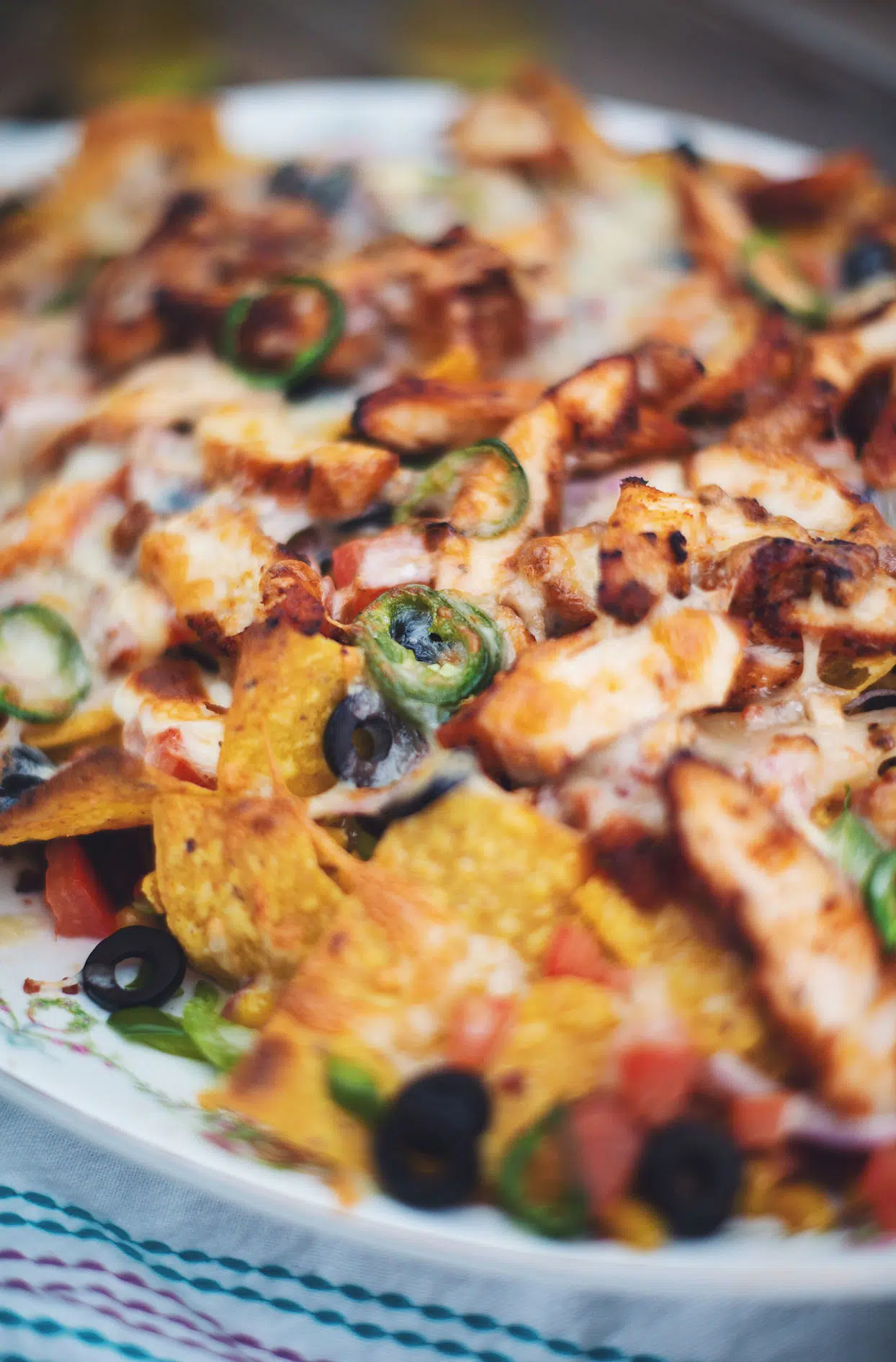
Smoky sugar in the BBQ sauce, fat in the chicken, and the chili in the beer slipping in between the two. The caramel in the amber ale picks up the sweetness of the sauce as if the two were made together, without ever getting louder than the dish. Serve it very cold, the pile of nachos won't last long.
With these supreme BBQ chicken nachos, an Argentinian Malbec is a natural choice. Its cocoa, blackcurrant and violet aromas wrap around the caramelized crust of the chicken and the richness of the melted cheese, while its notes of graphite and vanilla extend the depth of the smoked paprika.
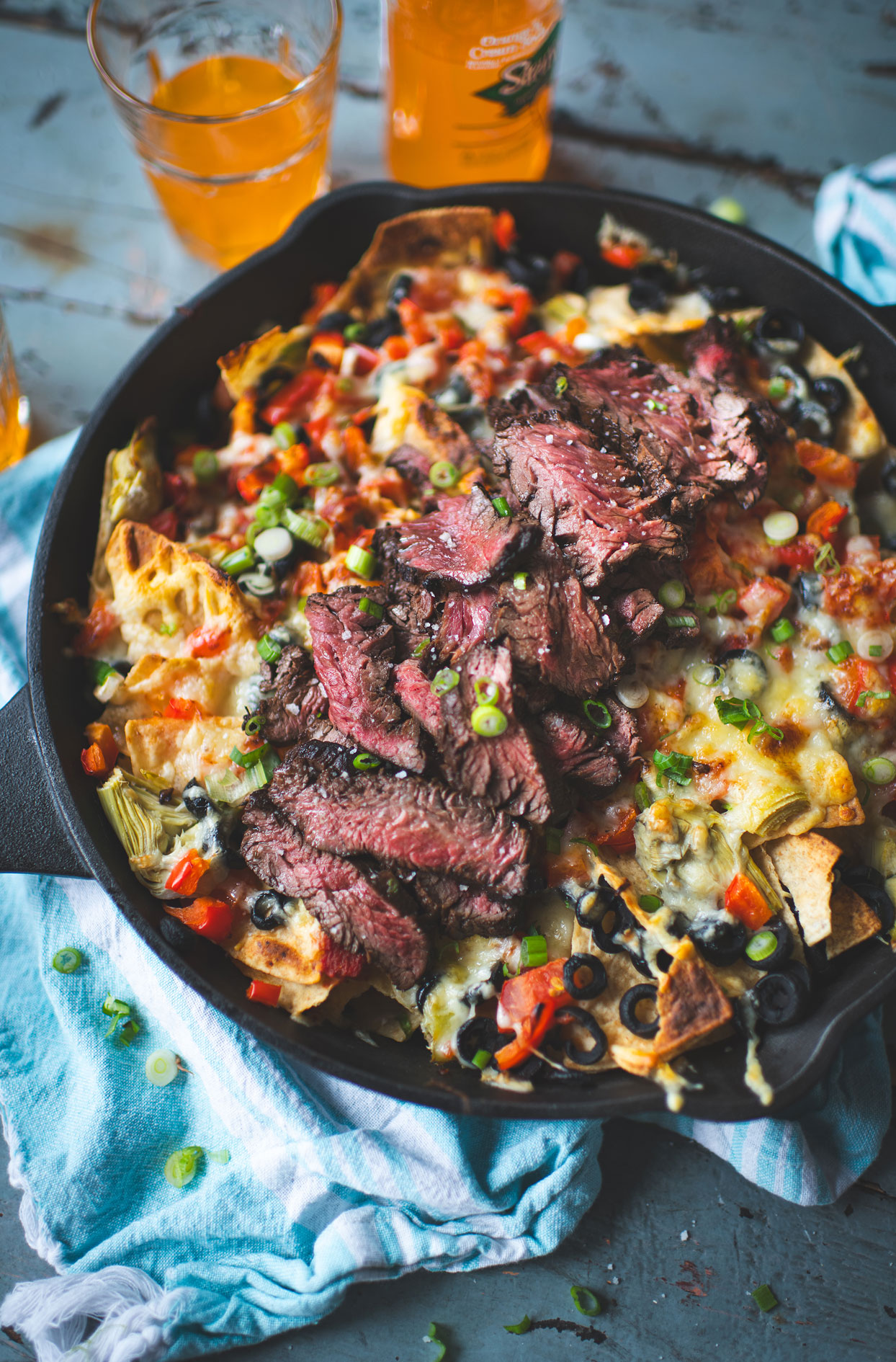
This English-inspired brown ale with hazelnut, caramel and toasted bread notes is made for these hanger steak nachos. Its caramelized aromas go naturally with the balsamic marinade and the grilled crust of the steak, while the toasted nut notes recall the melted Fontina. Its moderate alcohol makes it easy to drink bite after bite without weighing you down.
This aromatic, full-bodied Côtes du Rhône is a natural companion for these skirt steak nachos. Its smoky, peppery Syrah notes resonate with the barbecue-grilled meat and the balsamic marinade, while its intense dark fruit aromas stand up to the richness of the melted Fontina. The spicy finish of the wine complements the black olives and artichokes without ever weighing down the dish.