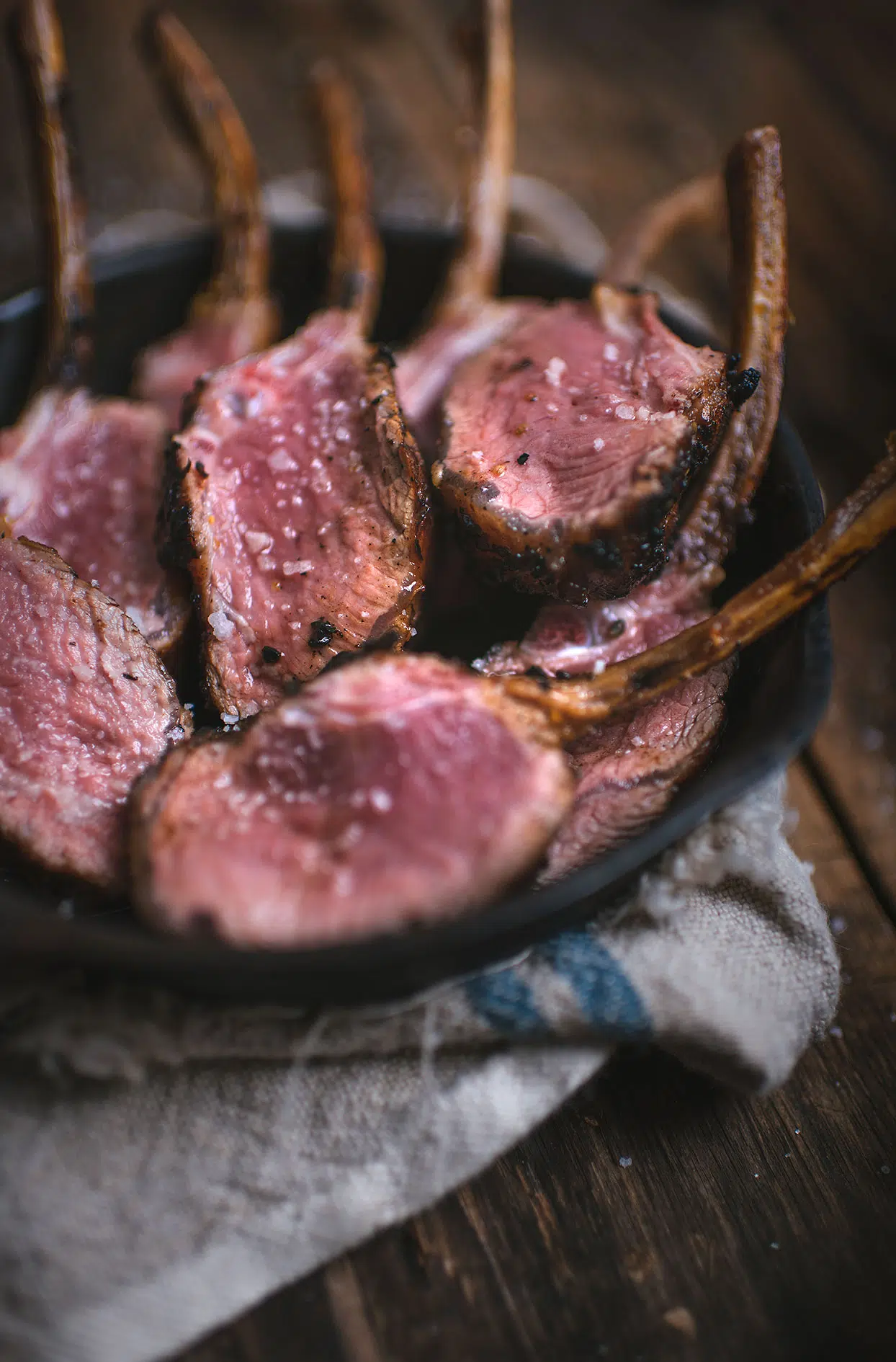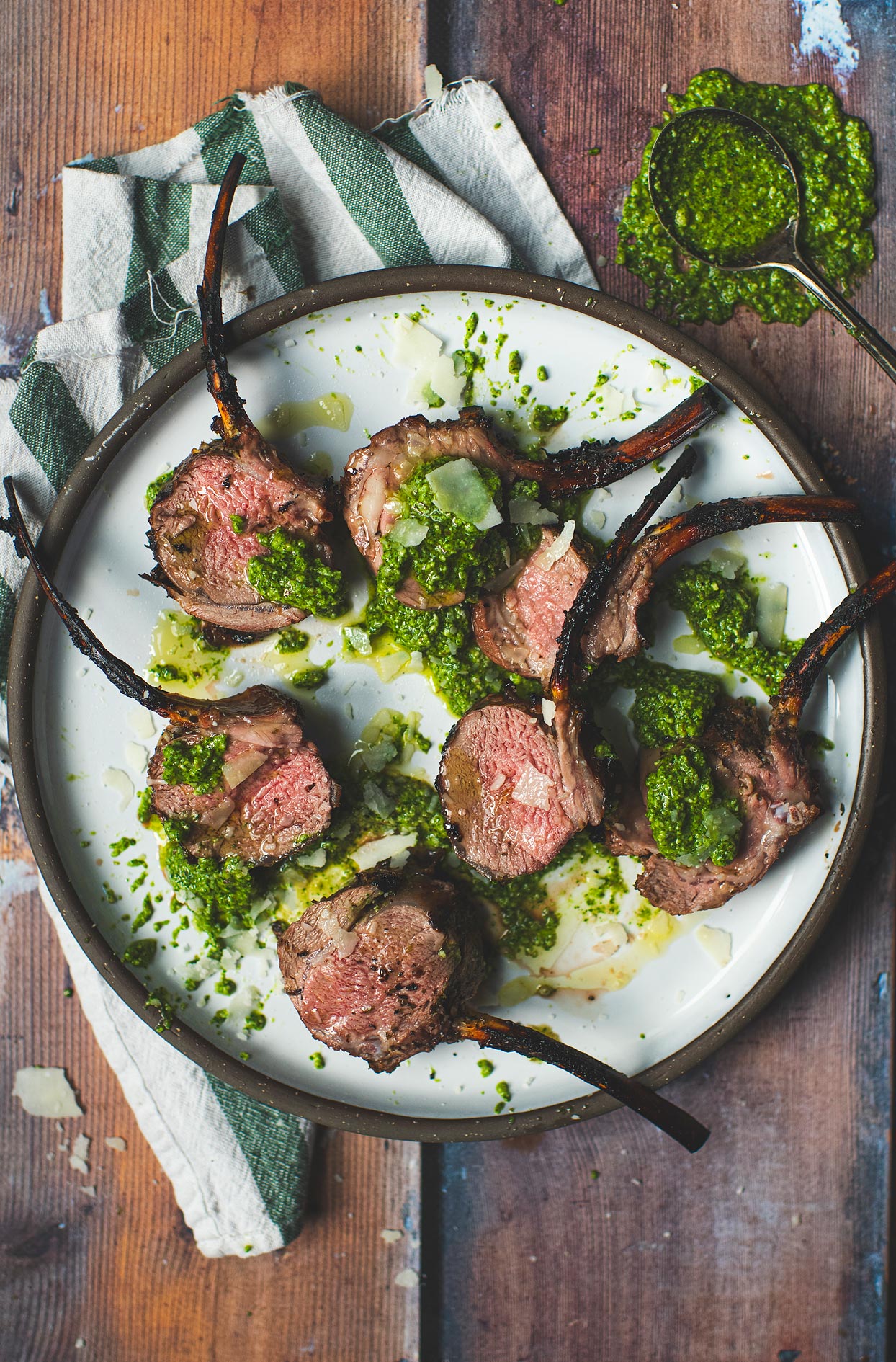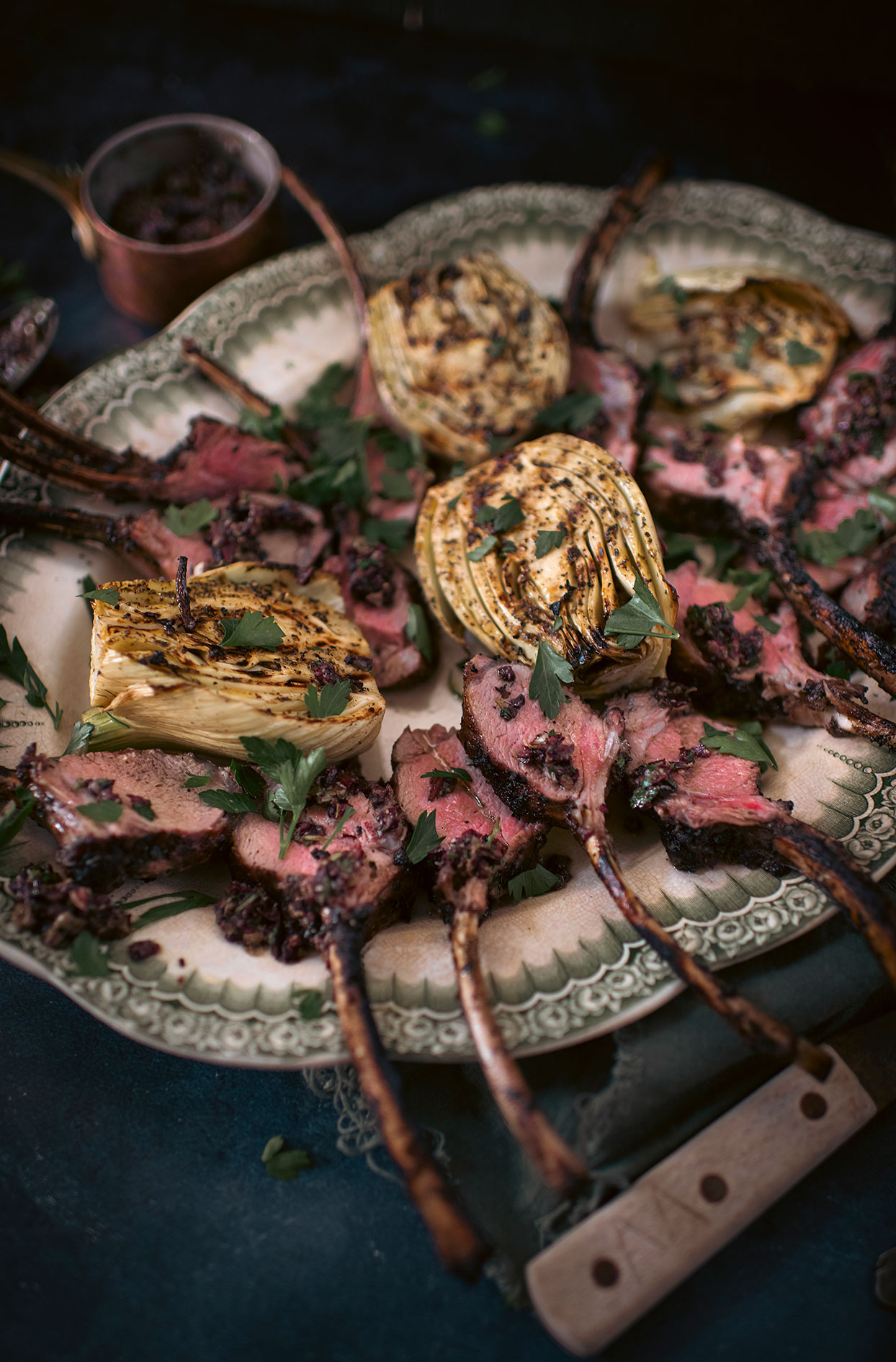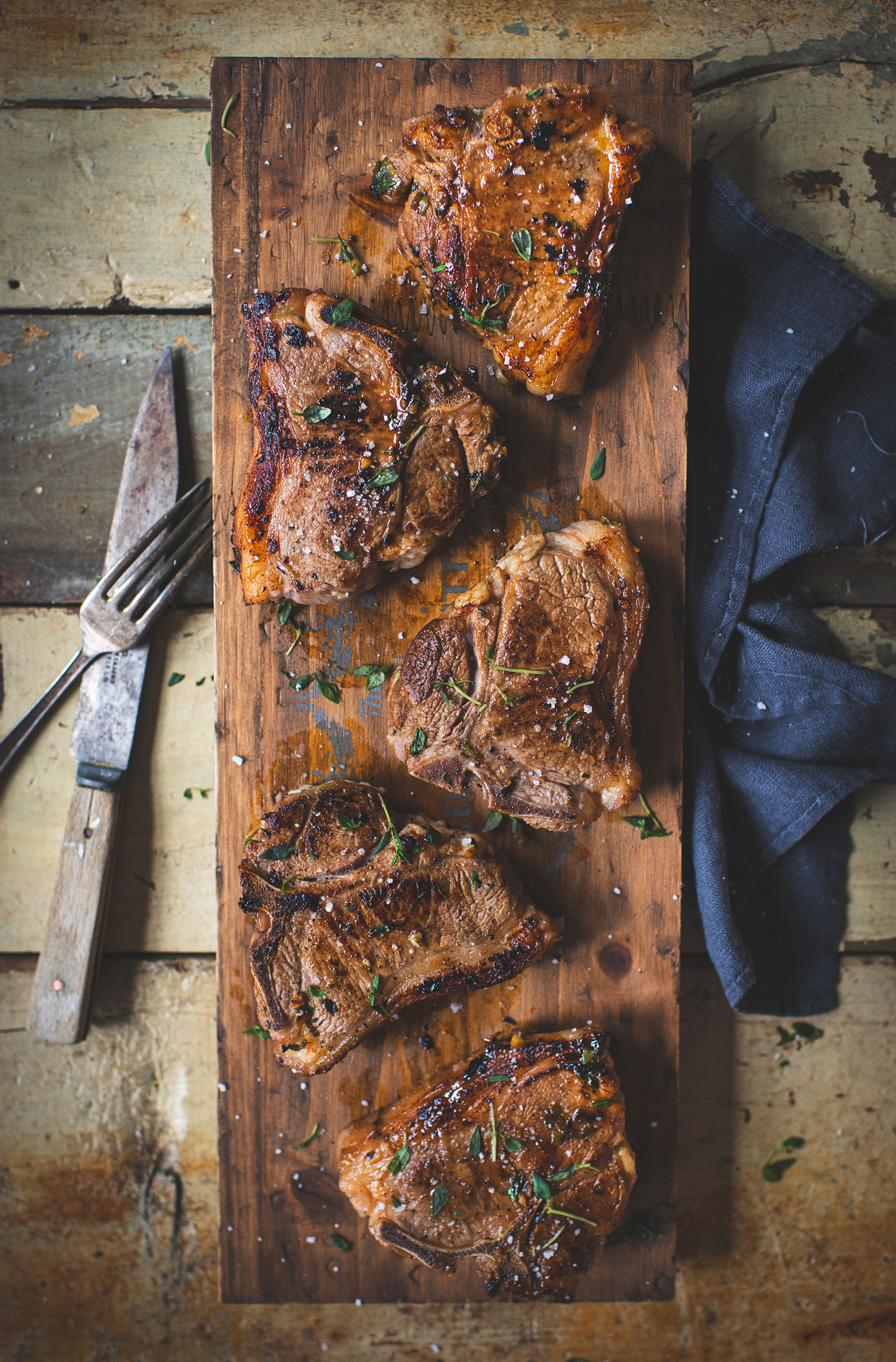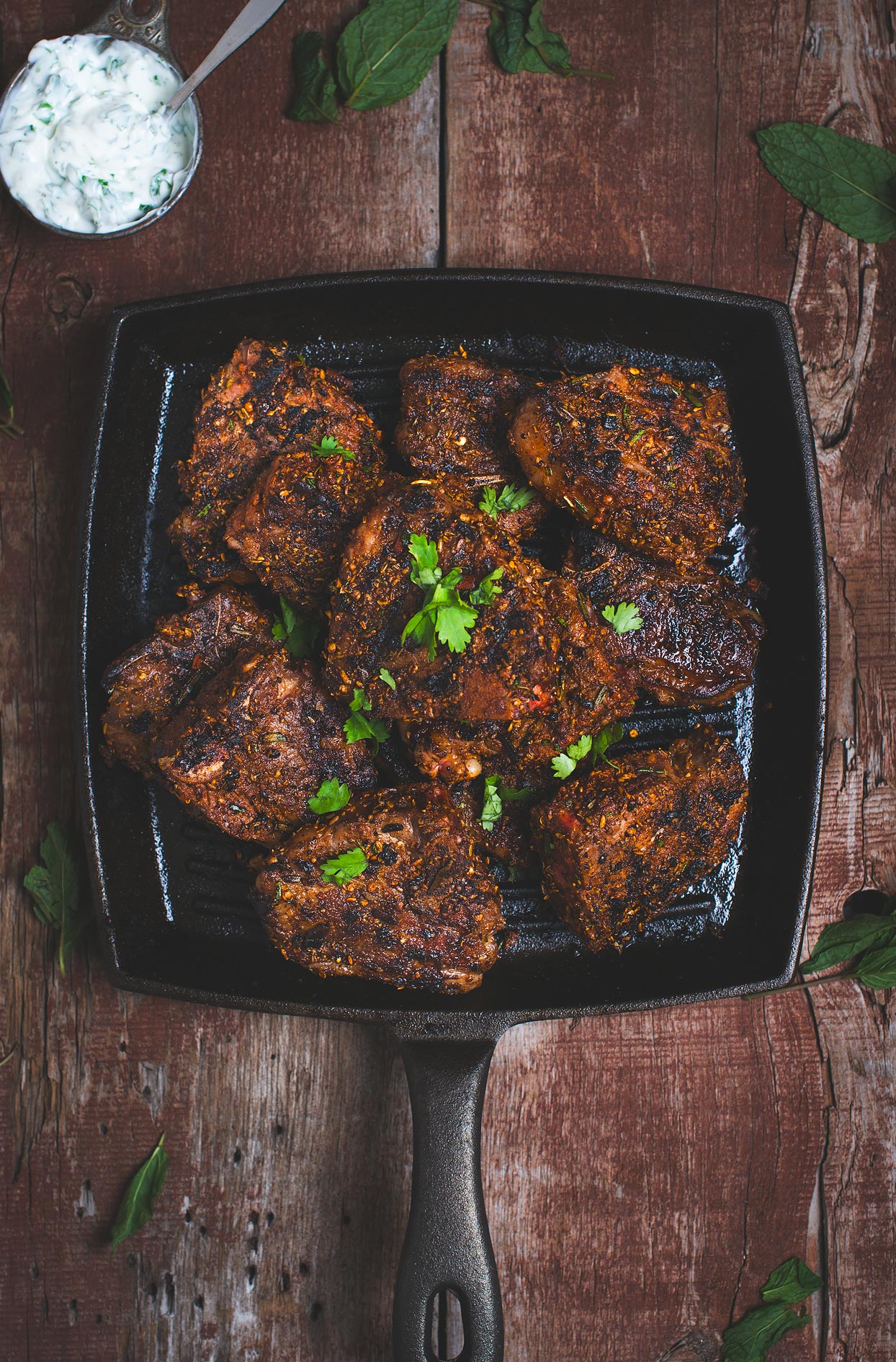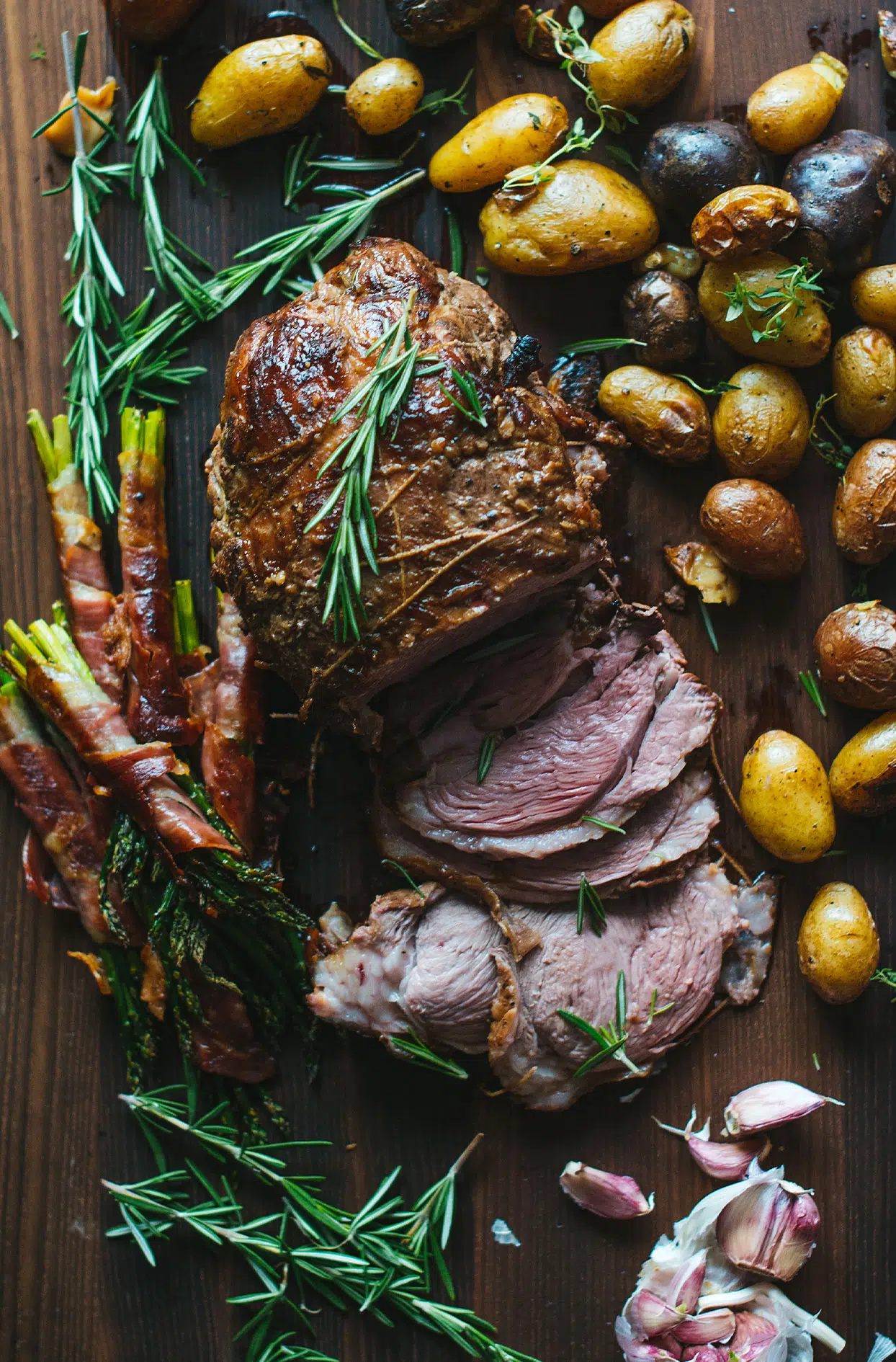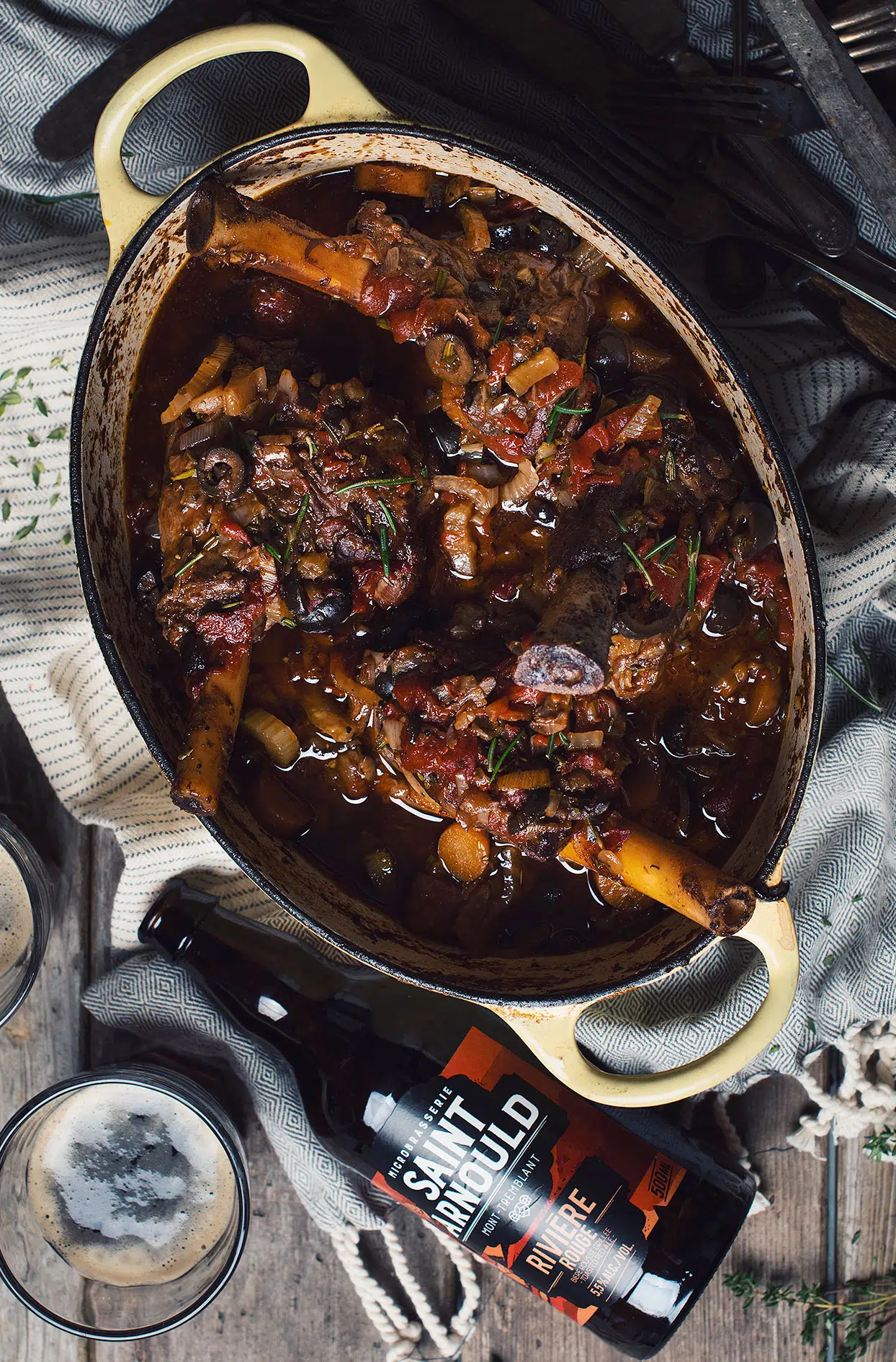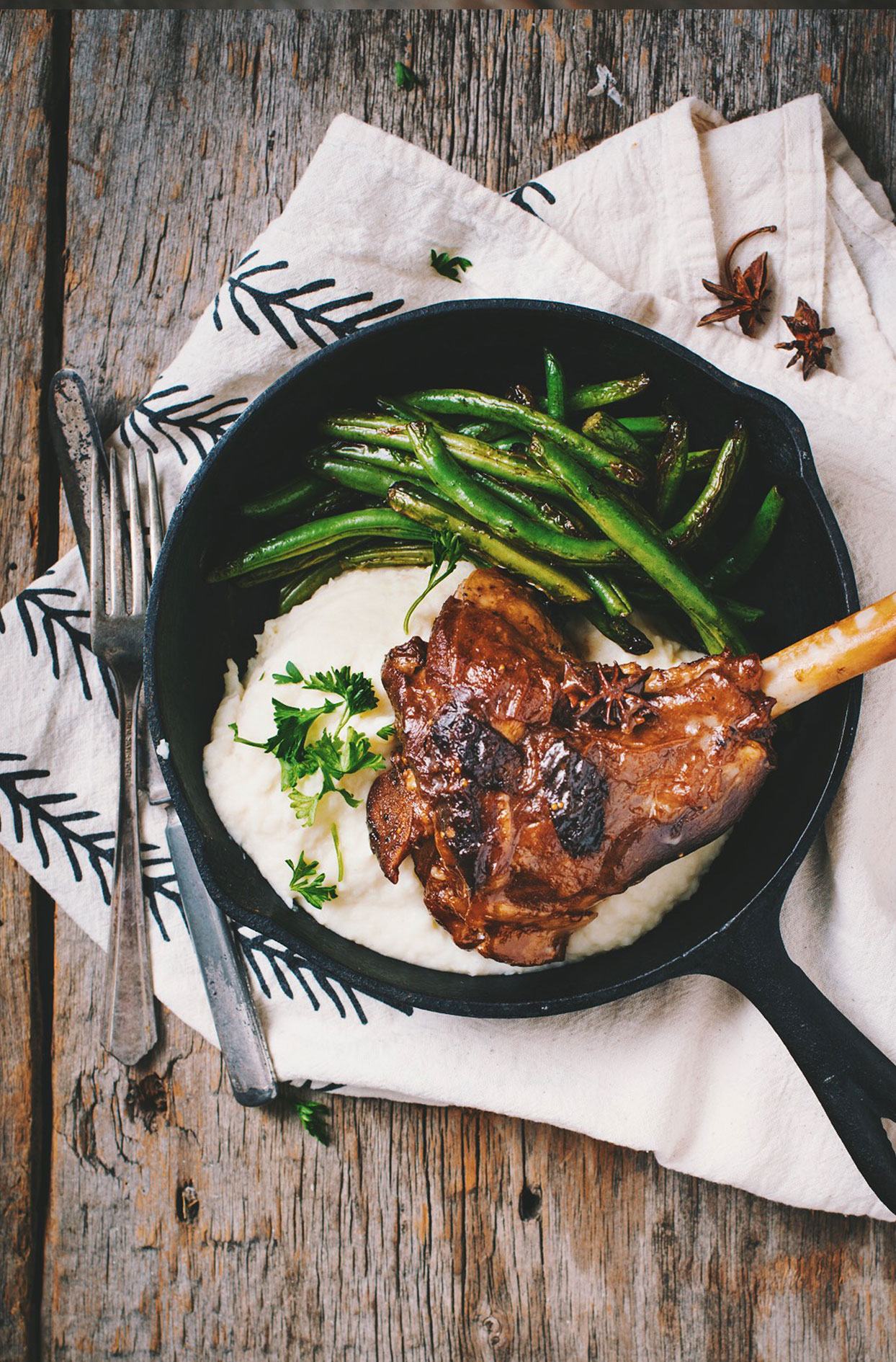
Local lamb has a farmy taste that doesn't apologize. The fat on the chop, the garlic, the herbs in the marinade: everything is clean, and the meat marks every bite. No room for shy.
In the glass, we want something dry that cuts the fat without erasing the meat. Saison is our go-to beer: its peppery yeast lines up with the farmy flavour, and its tight fizz cleans up between bites. Blonde ale follows behind, calmer. For wine, go with a Côtes du Rhône Syrah, with Grenache as the second pick.
It all changes with the style. Spicy merguez and a tagine-style braise put heat ahead of the fat, while a chop or a herb-grilled leg let the meat do the talking. The page has a beer and wine pairing for each, and our lamb recipes below.
This saison, with its notes of pepper, citrus and straw, has a farmhouse side that goes straight to the lamb. Its fine bubbles and dryness cut the fat of the chop, and its bitterness stays soft enough to let the garlic and herbs in the marinade come through. Great for a grill night, one sip between bites!
This Rhône syrah, with notes of black pepper and black olive, has an almost smoky side that meets the farmy taste of the lamb. It dries out the mouth a little, and that's a good thing: it cleans off the fat of the chop between bites. Its pepper echoes the garlic in the marinade. A great pick for a barbecue supper!
Grenache comes from the same Rhône, but it's rounder and its fruit is ripe, almost jammy. Pick it for the tagine or the braise with dried fruit, where the sweetness of the dish calls for a soft wine rather than one that dries the mouth out.
A Manhattan is whisky and sweet vermouth, silky and warm, with a cherry at the bottom. Next to a grilled chop or leg of lamb with herbs, it stands up to the rich, earthy flavour of the lamb and gets along with the pepper and garlic, since no sweet sauce complicates things. The glass wraps around the meat. Made for Sunday supper.
Or the Negroni: really bitter, gin and sweet vermouth, with orange underneath. Pick it when you want the bitterness to cut through the lamb's fat instead of wrapping around it.
Alcohol-free
Virgin mojito: mint, lime and soda
A slow-cooked dish is rich, deep and long on the palate. Crushed mint and lime lift the herbs, garlic and lemon in Mediterranean dishes.
This brown ale, with notes of dark caramel, toasted bread and raisin, picks up the roasted side of the long cook. It joins the sweet-and-salty cinnamon and cumin instead of fighting them, and every bite of melting lamb gets a dried-fruit backdrop. Great for a tagine that simmers all afternoon!
The amber ale keeps the caramel of the brown ale, with less toast and a bit more hops. Go for it if your tagine is more salty than sweet, or if the brown ale feels heavy next to the cinnamon and dried fruit.
This Rhône grenache, with notes of cooked strawberry, wild herbs and white pepper, is all round, almost sweet because the fruit is so ripe. With lamb simmered with cinnamon and cumin, it doesn't fight the spices, it carries them on. The sweet-and-salty sauce goes down easy, and the wine never feels thin beside it.
Syrah brings black pepper and blackberry, with a bit more firmness than grenache. Go for it if your tagine is more salty than sweet, or if the lamb is really fatty: it cleans the mouth, and its pepper meets the cumin.
An old fashioned, whisky, sugar and bitters, slow and woody, follows the cinnamon and cumin in a braised, tagine-style lamb. Its quiet sweetness meets the sweet-and-salty note of the long cook without smothering it.
Alcohol-free version: Smoky black tea, maple syrup and orange peel over one big ice cubeAn old fashioned is oak, a little sugar and orange: smoky tea and maple do the same.
This dry, peppery saison, with a hint of citrus, has lively bubbles and very little bitterness. Its pepper follows the harissa without stoking the fire, and its bubbles clean off the fat of the sausage. The result: the next bite bites back as hard as the first! Great for a merguez supper on the barbecue.
The red ale doesn't play the saison's pepper. It comes in malty, with a caramel that softens the harissa. Go for it if the heat gets to you quickly, or if your merguez are very fatty and you want something round.
This Rhône grenache, with notes of ripe raspberry, wild herbs and pepper, is generous and soft on the palate. Against the heat of the harissa, that's just what you need: a drier wine would bring out the fire, while its round fruit puts it out. The spicy fat of the merguez fills out the wine instead of weighing it down.
Gamay smells of cherry and strawberry, and it's lively without drying out the mouth. Serve it a little chilled: it calms the heat like a serious fruit juice, and it cuts the fat of the sausage.
A paloma, tequila with sparkling grapefruit, bitter and thirst-quenching, cools off spicy merguez with harissa. The bitterness cuts the seasoned fat and the bubbles calm the heat between bites.
Our recipe → · Alcohol-free version: Sparkling water, pink grapefruit and lime, salted rimA paloma is first of all sparkling grapefruit: the tequila is added on top, it is not required.
With no heavy sauce, the herbs lead, and this saison with notes of pepper, citrus and straw answers them. Its herbal side meets the rosemary and thyme, and its dryness lets the light juices of the lamb speak. Nothing covers the meat, the beer just underlines it. It makes for a very good Sunday lunch.
The red ale brings caramel where the saison is dry and peppery. It follows the crust of the roast rather than the rosemary. Go for it if the lamb is nicely browned, or if your guests find the saison too lively.
This Chinon cabernet franc, with notes of raspberry, pencil lead and green leaf, is fresh and lightly oaked. That leafy side looks like the herbs on the roast: the rosemary and thyme find their echo in the glass. Since the juice is light, the wine doesn't crush it and the meat stays front and centre.
Pinot noir smells of cherry and forest floor, and it's even lighter than cabernet franc. Go for it if the lamb is pink and lightly seasoned: it lets the meat shine without adding anything.
A gin and tonic, dry and bitter, works with roast lamb and fresh herbs. Gin carries its own botanical notes that meet the rosemary and thyme, and the light juices have nothing to fear from the bubbles.
Our recipe → · Alcohol-free version: Tonic, cucumber and rosemary over lots of iceThe tonic already brings the quinine, and the cucumber and rosemary do the gin's job.
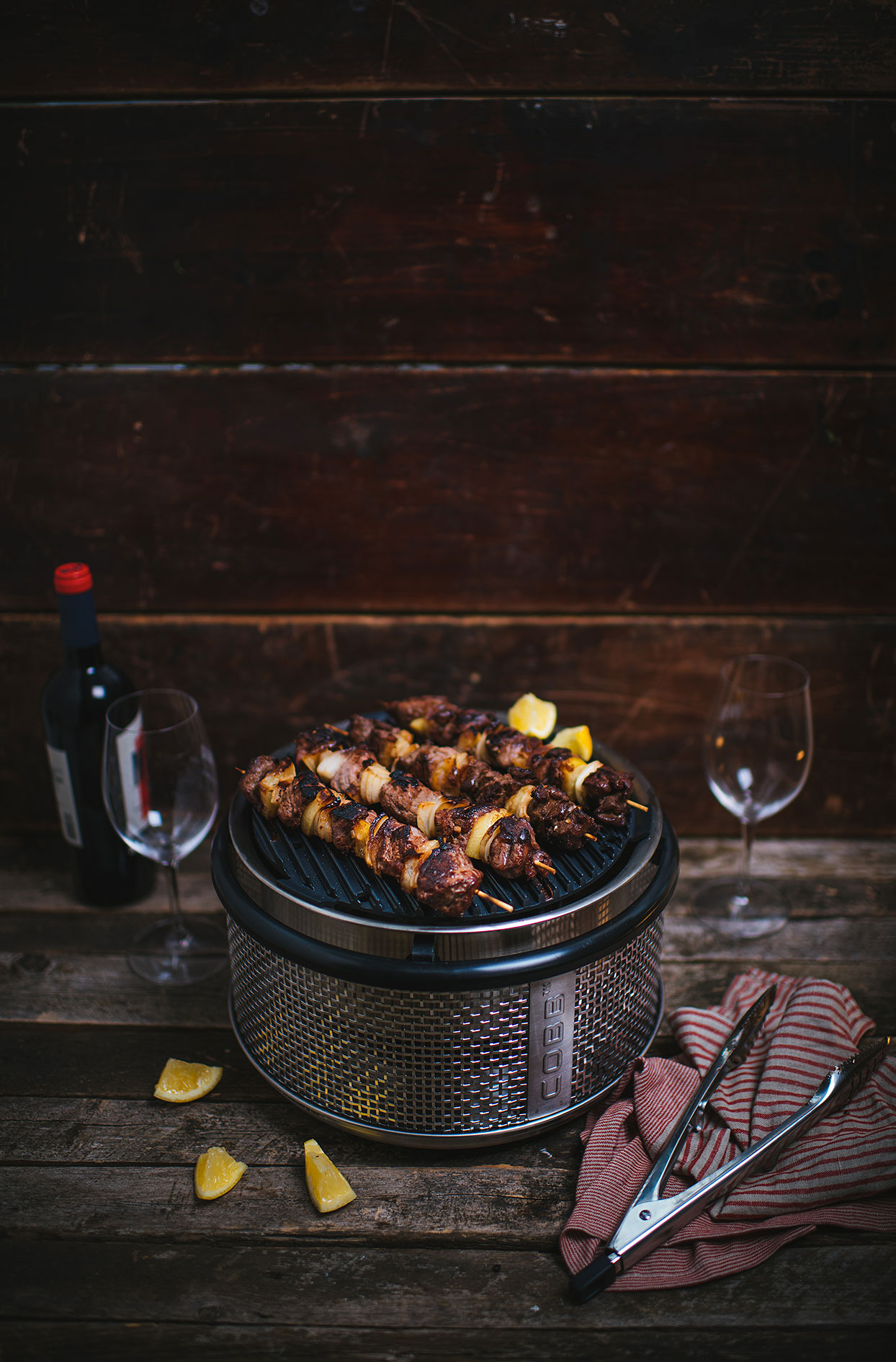
Lamb skewers grilled with lemon and oregano: meat marked by the fire, with a taste of herbs. Saison has fine bubbles, pepper and citrus, and a dry finish. Its citrus goes with the lemon in the marinade, its pepper joins the oregano, and its dry finish cuts the fat of the lamb.
Pale ale smells of citrus and resin, with a biscuit malt. Take it if your skewers are well charred, because its hop answers the smoke and the bitterness of the fire.
Rhône Grenache smells of ripe strawberry and cherry, with a hint of pepper and a supple body. Lamb grilled with lemon and oregano doesn't call for a heavy red: its fresh fruit follows the lemon, and its pepper joins the herbs. It barely dries the mouth, so the meat stays tender.
Rhône Syrah smells of blackberry, black pepper and a little smoke, with more body. Take it if your skewers are well seared, because its smoke and pepper go with the grill and the oregano.
A gin and tonic, dry and bitter with lively bubbles, suits lamb souvlaki skewers with lemon and oregano. The clean quinine washes away the grilled fat and carries on the lemon in the marinade.
Our recipe → · Alcohol-free version: Tonic, cucumber and rosemary over lots of iceThe tonic already brings the quinine, and the cucumber and rosemary do the gin's job.
Lamb shank braised in red wine is melting, with a rich and deep sauce. Brown ale smells of hazelnut, caramel and chocolate, with a round body. Its dark malt answers the brown sauce, and its caramel goes with the meat that falls apart, without adding heaviness. Together they make a winter meal.
Strong ale is richer, with ripe fruit like raisins and plum, spices and a gentle warmth. Take it if you want a beer that matches the dish, because its body equals that of the sauce.
Rhône Syrah smells of blackberry, black pepper and a hint of smoke, with a full body. Its tannin, which dries the mouth, is useful here: it cleans the fat of the meat and the rich sauce. Its dark fruit answers the wine in the braise, and its pepper wakes up a dish that could seem sweet. A light wine would get lost.
Bordeaux Cabernet sauvignon smells of blackcurrant and cedar, with a full body and a marked firmness. Take it if your shank is very tender and its sauce long reduced, because its firmness stands up to the richness.
A Manhattan, whisky and red vermouth, silky, with a cherry at the bottom, goes with lamb shank braised in red wine. Its round texture hugs the rich sauce and the very tender meat without demanding more strength.
Alcohol-free version: Tart cherry juice and cold black tea, a cherry at the bottomThe cherry and the black tea recall the red vermouth and the whisky, with the same deep base.
Lamb curry with coconut milk is spicy, creamy and mild. Witbier is wheat-based, soft and round, with coriander and orange. Its coriander marries with the curry, its softness mellows the spices, and the coconut milk stays light on the palate. The whole thing lets the taste of the lamb come through.
Saison is drier, with pepper, citrus and fine bubbles. Take it if your curry is well spiced, because its bubbles cut the coconut milk and its pepper keeps the spices company.
Rhône Viognier smells of apricot, peach and white flower, with a rich body and low acidity. Against a creamy curry, its roundness goes with the coconut milk, and its ripe fruit calms the spices. A dry, lively white would make the chili pepper seem stronger. Served a little chilled, it calms the heat even more.
Alsatian Gewürztraminer smells of lychee, rose and sweet spices, with a round body. Take it if your curry is very fragrant, because its own spices match the curry's.
A mojito, with mint, lime and white rum topped with soda, freshens lamb in a coconut milk curry. The mint and lime cut through the spice, and the soda lightens the creamy sauce without fighting it.
Our recipe → · Alcohol-free version: Virgin mojito: crushed mint, lime, sugar and sodaThe rum is only the backdrop of a mojito: the mint, the lime and the soda make the glass.
Lamb has that farmy taste that scares off a lot of beers. The clove note from a saison yeast goes right after it instead of running from it, and the light tartness of the style meets the goat cheese halfway. It finishes dry, cuts through the bacon and resets everything for the next bite.
Lemon and lamb pull in two different directions. This oaked grisette holds both: its clove follows the farmy side of the meat and its lemony notes land on the zest. Its lively fizz lightens the richness of the rack without wiping anything out.
Salted herbs are basically salt and something green in a jar. A gose brewed with sea water starts from the same place, with its briny notes and its wheat. Its citrus goes after the mustard and the thyme in the crust, and its saltiness backs up the Québec lamb instead of softening it.
This lovely Crozes-Hermitage shows blackberry, blueberry, cherry and raspberry, plus spices like pepper and cinnamon. It's long, dry and medium-bodied, the ideal wine for grilled meat or a rack of lamb. Superb!
This robust Belgian tripel, spicy and slightly sweet, is a bold choice for this grilled rack of lamb with cilantro pesto. Its power is a real match for the grilled lamb, and it never fades into the background.
This full-bodied organic red, with notes of dark fruit and spice, goes beautifully with my grilled rack of lamb with cilantro pesto. Its generous tannins stand up to the lamb while its spices answer the freshness of the pesto.
Lamb has character, the tapenade is salty and the olive oil ties it all together. A blonde ale refermented with wild yeasts brings pepper and clove that suit the meat, and yellow fruit that follows the olive. It is very dry and low in alcohol, so it refreshes where the dish is rich.
This blend of 85% Merlot, 14% Cabernet Sauvignon and 1% Carmenère stands out with aromas of jammy dark fruit, raspberry, spice and leather. On the palate it is tight, silky and textured. A very fine wine, elegant and sturdy, that will pair beautifully with the rack of lamb.
The spice crust and the beer sauce already make a well-seasoned dish. Instead of adding another layer, the saison answers with its own pepper and clove, and the two go in the same direction. Very dry, it cuts through the richness of the sauce and keeps the plate light.
A rustic saison with notes of grain, white pepper and citrus is an ideal companion for these Quebec lamb chops with honey and garlic. Its farmhouse character, made with lamb and red meat in mind, goes with the richness of the meat, while its dry freshness balances the sweetness of the honey and the bite of the garlic.
An aromatic, full-bodied Côtes du Rhône with notes of dark fruit, spice and garrigue, a great fit for these honey garlic Quebec lamb chops. Its ample structure matches the noble character of the lamb, while the herbal notes echo the fresh thyme in the marinade. The classic French pairing for lamb.
The beer is already in the marinade, so serving it alongside closes the loop. Its citrus reaches for the lemony side of the chops and its soft spices slip into the lamb fat, which stays discreet on thin chops cooked quickly on the grill. Creamy head, fine bubbles, table outside.
This grisette brings real complexity to these merguez style lamb chops. Its slightly woody, spicy aromas line up with the cumin, coriander and fennel in the marinade, and the clove notes go beautifully with the tender lamb. Its lemony notes recall the fresh citrus in the recipe and the lime juice in the yogurt marinade. Its strong fizz cuts through the richness of the meat and makes every bite feel livelier. A delicate but powerful pairing that brings out every flavour in the dish.
This grenache du Rhône brings the richness and structure these merguez-style lamb chops need. Its spicy aromas echo the cumin, coriander and fennel in the marinade, while the black fruit and plum notes go nicely with the tenderness of the lamb. The licorice adds a warm depth that recalls the North African flavours of the dish.
The cherry is already in the dish, in the beer and in the port. A cherry farmhouse ale picks up the same fruit and adds hay and clove notes that reach for the lamb. Very dry, it clears away what three hours of braising leave on the palate. The fruit acts as a bridge, never as added sugar.
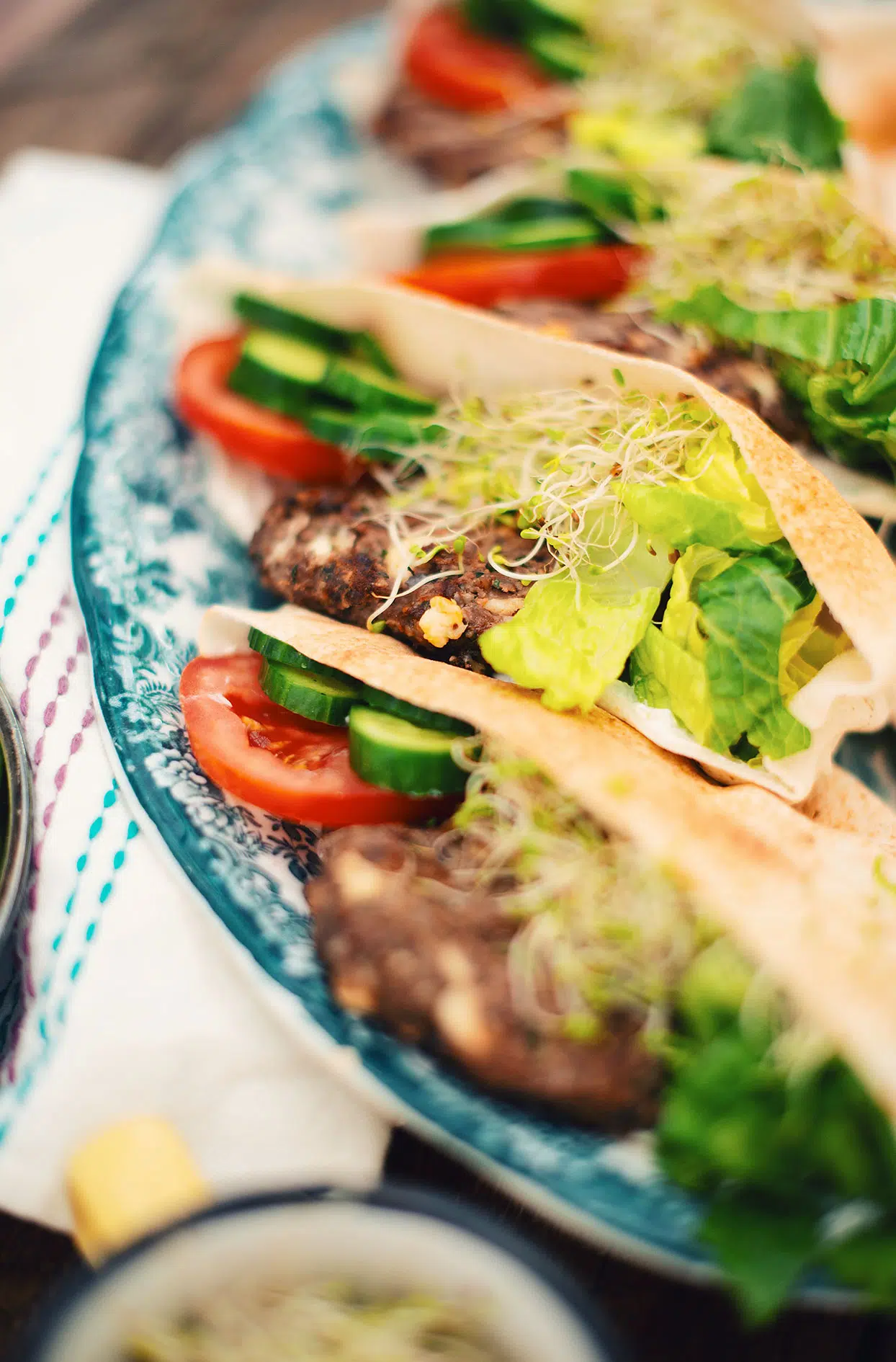
Lamb, feta and spices in a grilled pita hit hard. The clove in the saison yeast melts into the farmyard side of the meat, and the style's slight tartness answers the feta. Very dry, it keeps the kefta from feeling heavy halfway through the meal.
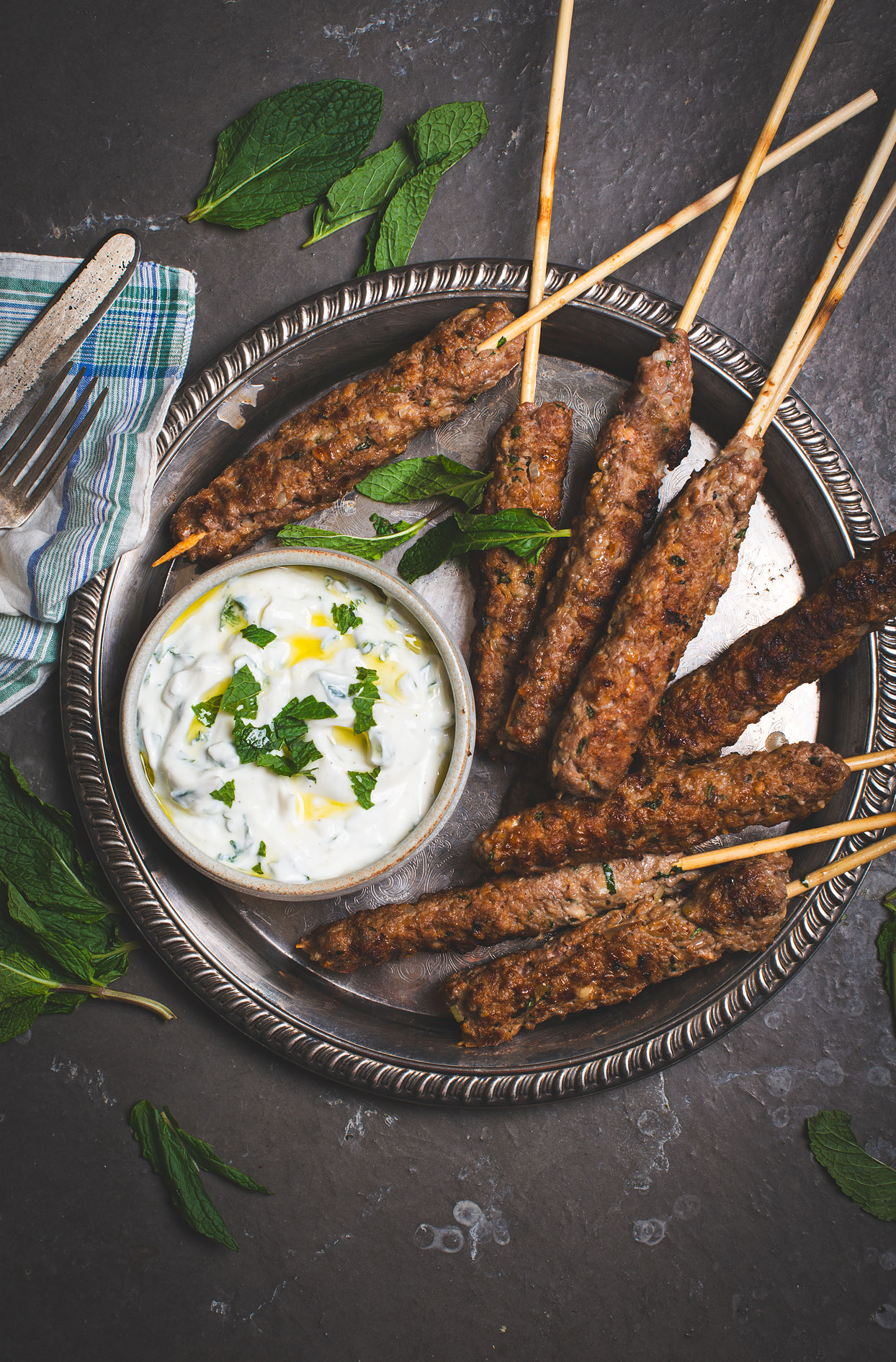
A blonde refermented with wild yeasts brings pepper and clove notes that go really well with the lamb in these keftas. Its yellow fruit aromas sit nicely with the mint, lime and fresh cilantro. Very dry and low in alcohol, it's refreshing with a meat this full of character, softened here by the cooling herbs.
With these lamb keftas, a full-bodied Côtes du Rhône with notes of dark fruit, garrigue and redcurrant is a natural fit. The wine offers licorice and violet aromas that echo the cumin and cilantro in the keftas, while its tannic structure stands up to the richness of the lamb. The garrigue notes in the wine resonate with the Mediterranean herbs and make a great match with the melted feta.
Salt-preserved lemons in the marinade, salt-preserved lemons in the beer: it doesn't get much more direct. The spices on the skewers bring out the aromas in the glass in return, and the salty acidity cuts through the lamb fat right before the next bite.
For these lamb skewers with cumin and preserved lemon, reach for this syrah, a red from Argentina. The syrah brings dark fruit and pepper that follow the cumin and garlic without flattening them. The honey rounds everything out, and the salt from the preserved lemon goes down without a hitch. A weekend supper wine.
Lamb and North African spices lead the way, and grilling adds char. A brown ale with hazelnut and sesame pulls it all together and stands up to the cumin and chili. Low in bitterness, it calms the heat instead of stoking it.
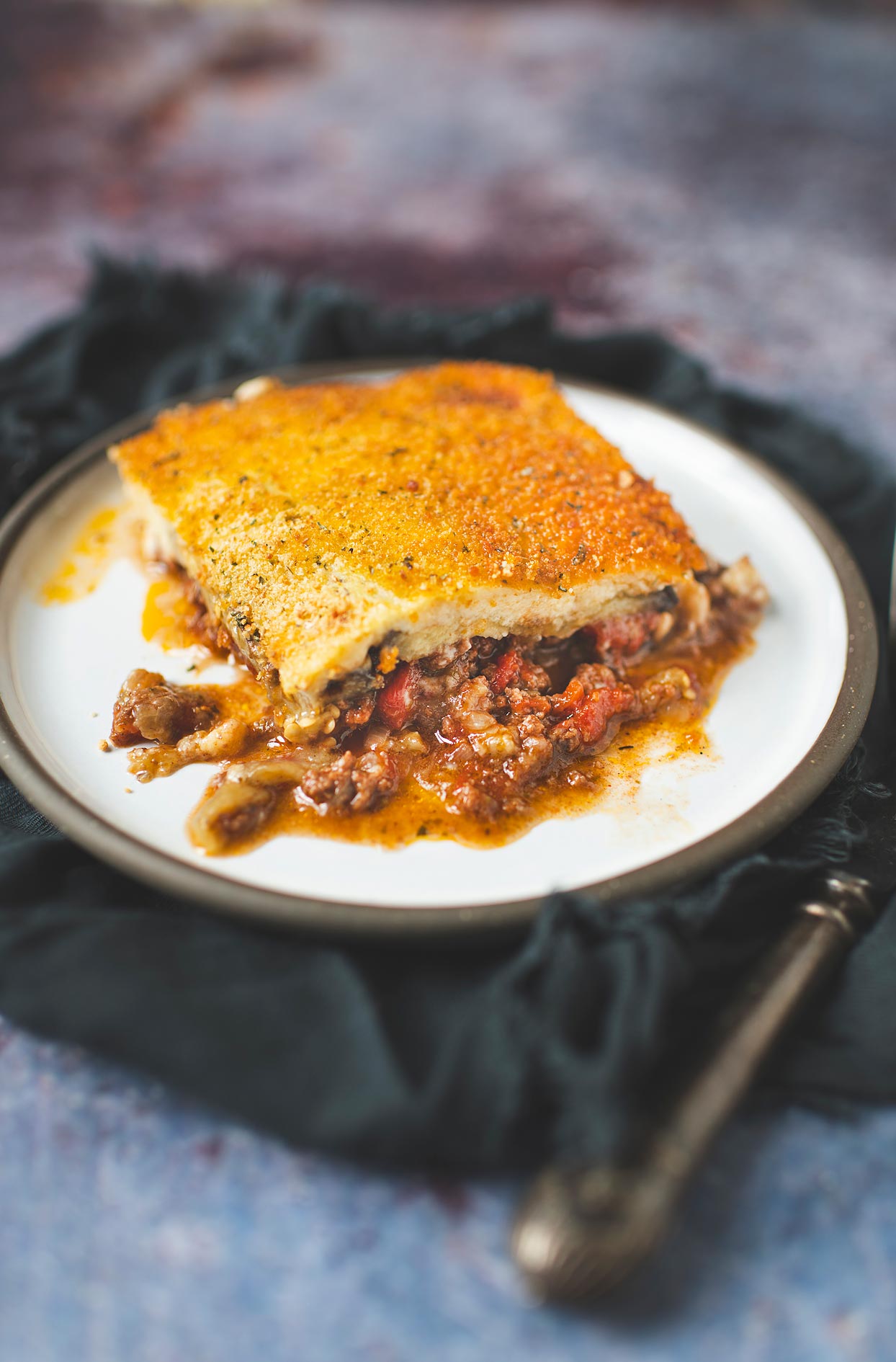
A saison is the pick for lamb, and it makes sense: lamb has a farmyard flavour that a blonde ale would just run from. The saison answers with the pepper from its yeast. With a traditional Greek lamb moussaka, its tight bubbles also cut through the fat of the béchamel.
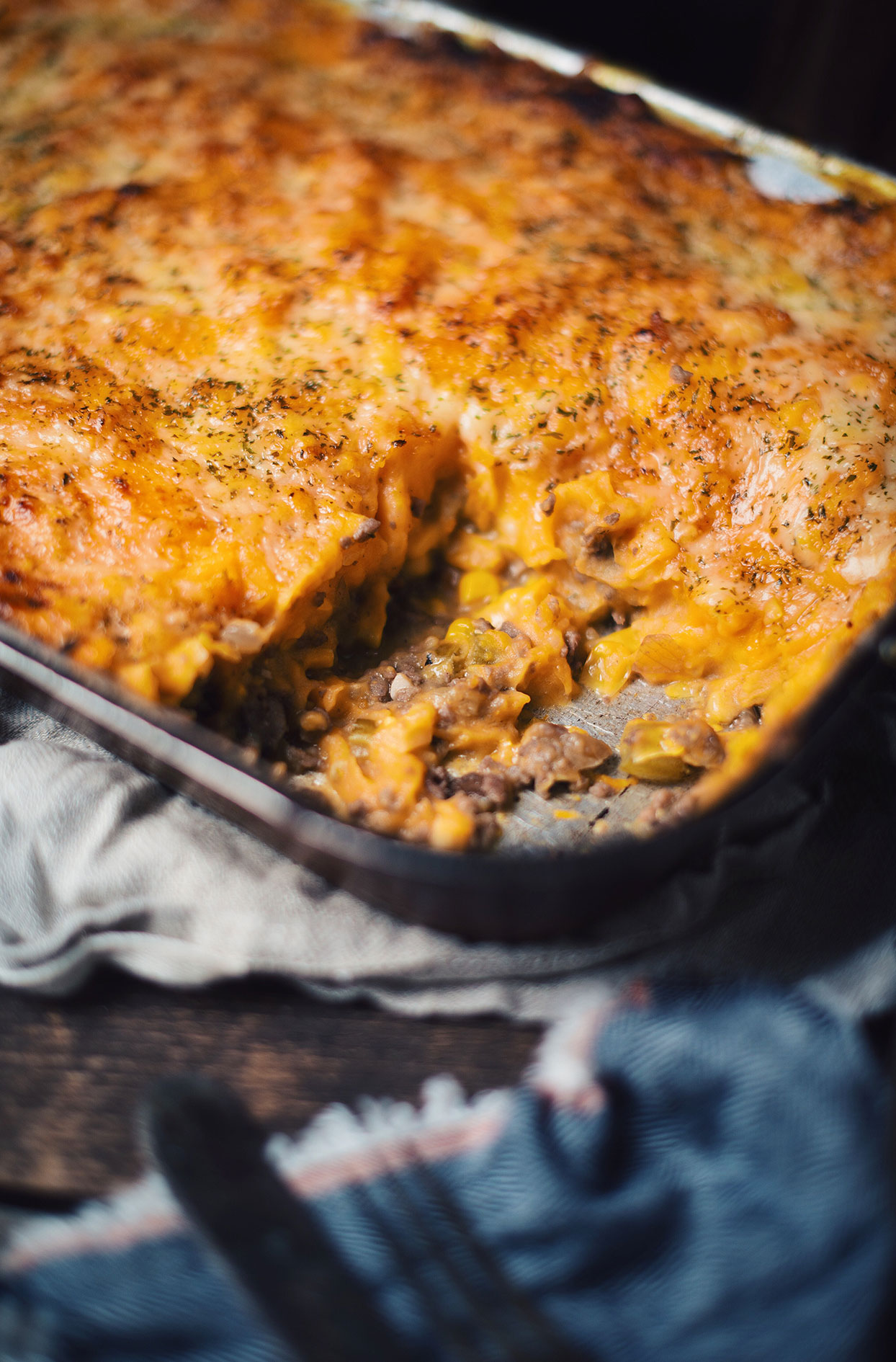
This German-style wheat beer is a surprising but well-balanced match for this deluxe shepherd's pie. Banana, clove and pepper aromas bring a fresh contrast to the rich beef and lamb, while its dryness and nice fizz offset the natural sweetness of the sweet potatoes and corn. Lively and refreshing, it lightens this dressed-up classic without taking away its comfort.
A grenache-driven Côtes-du-Rhône, supple and peppery, that stands up to my shepherd’s pie with beef, lamb and sweet potato mash without ever flattening it. Its dark fruit and garrigue note answer the lamb directly, while its melted tannins let the mash through. The faintly spicy finish lands right on the broiled Gruyère.
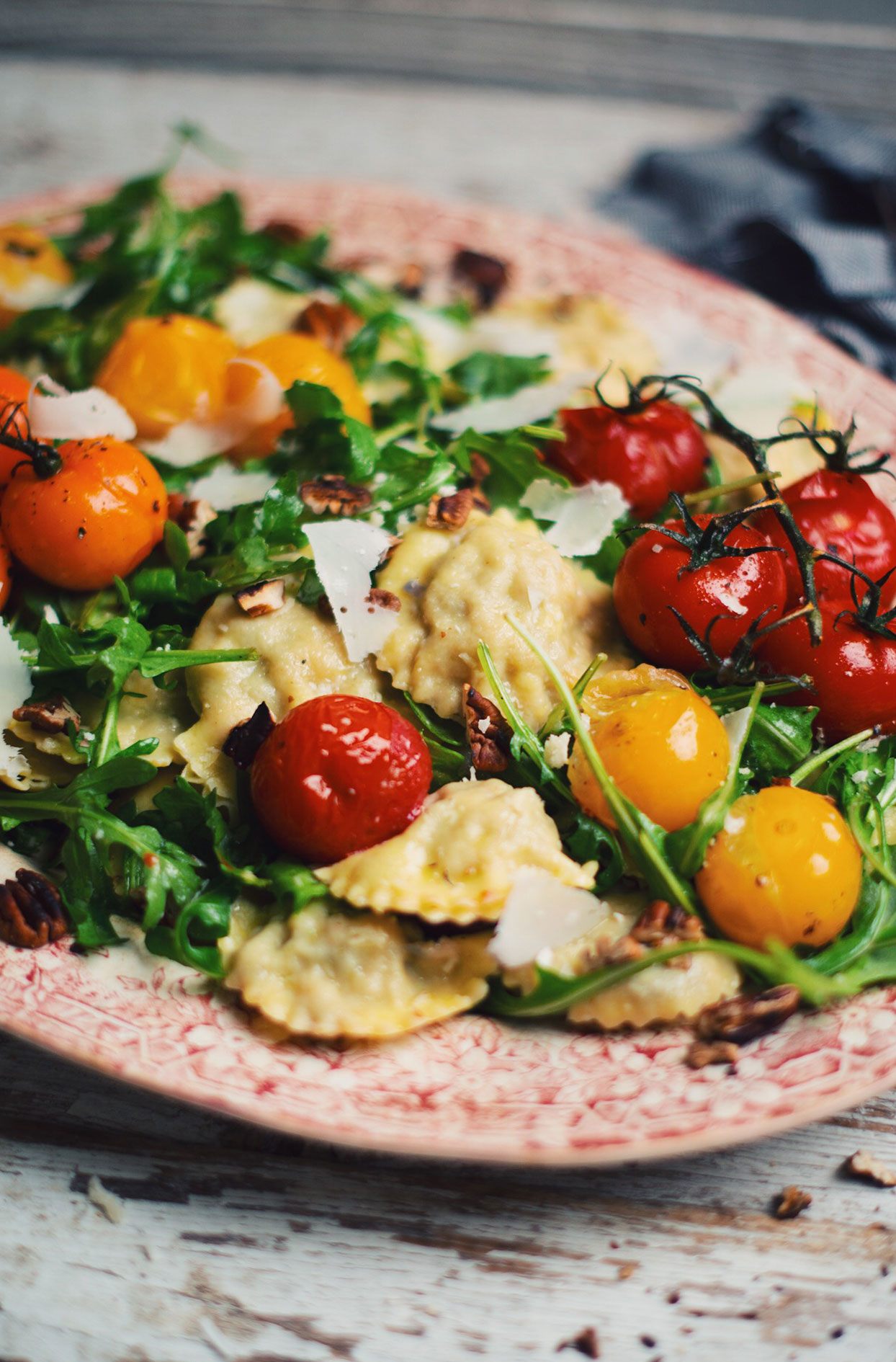
Two bold flavours in the same bite: the lamb and the goat cheese won't be talked over. A generously hopped tripel answers with wild pepper and citrus, which meet the lemon zest and the grilled cherry tomatoes. Its bitterness echoes the arugula, and its dryness closes each bite.
Shawarma spices are warm and fragrant, and the lamb is rich and straightforward. A wild-yeast blonde ale, peppery and studded with clove, goes in the same direction as the spice blend. Very dry, it cuts the fat between slices and keeps your mouth ready for more.
This wine, a blend of 85% Merlot, 14% Cabernet Sauvignon and 1% Carmenère, stands out with aromas of jammy dark fruit, raspberry, spice and leather. On the palate it is tense, silky and textured. A very fine wine, elegant and robust, that will pair beautifully with the lamb steak.
The prunes in the tagine and the cranberry in the beer speak the same language, that of candied fruit. The soft pepper from the German yeast backs up the spices in the dish, and the tart fizz lightens the lamb after hours of cooking.
Lamb, tagine. Yes, fall is almost here! To go with this dish, I suggest a little Chilean Syrah with very ripe wild berry notes, some oak and white pepper. The mouthfeel is plump, exuberant and supple. We like the spice in the wine for the coriander, saffron and the other spices in the dish. We enjoy its fullness, its roundness and its length working together with the textures of this tagine.