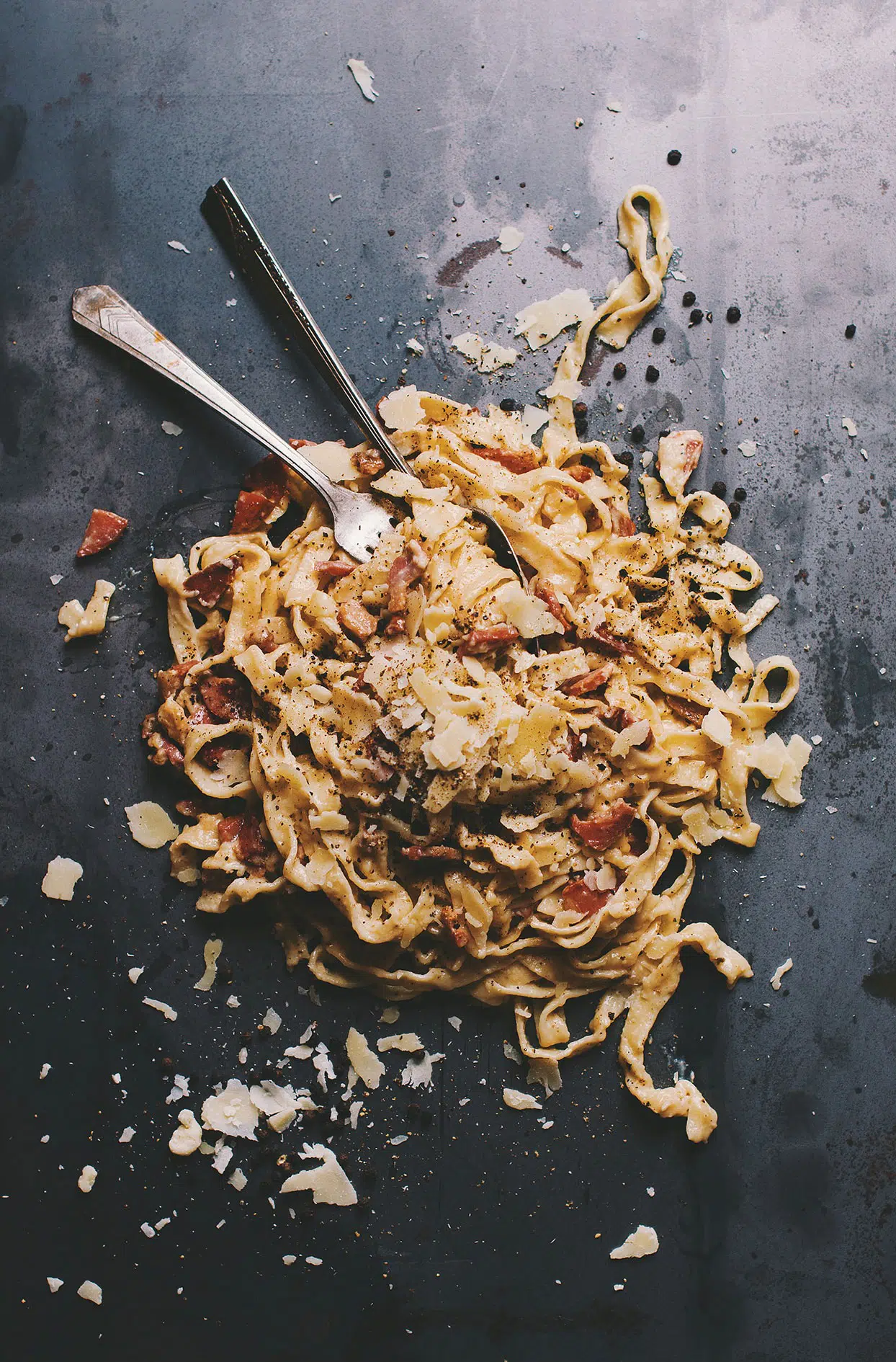
A real carbonara has no cream, and that's what makes it hard. Egg yolk, pecorino and guanciale fat make a sauce that holds on its own and coats the mouth. Add the black pepper and the salt of the cheese: no break at all.
You need some alcohol to get through fat like that. Strong ale is our base beer: its malt gives enough roundness not to slice brutally through a fragile sauce. Pilsner comes second. Too much bitterness brings out the salt in the pecorino and the dish turns harsh. For wine, a Chilean Chardonnay, with a Pinot blanc behind it.
Classic with guanciale and pecorino, lightened with pancetta or bacon, or with mushrooms: the lighter one lowers the fat, the mushrooms add another flavour. The page has a beer and wine pairing for each, and our recipes below.
This strong ale, with notes of caramel and ripe fruit, has enough alcohol and roundness to get through the fat of the guanciale and the egg yolk without bullying the sauce. A beer that's too bitter brings out the salt in the pecorino and the dish turns harsh. With this one, you take your time, one forkful at a time!
A pilsner is dry and hoppy, without the richness of the strong ale. It cleans up the fat of the guanciale and the egg yolk. Go for it if you want a beer that refreshes rather than one that warms you up.
This Chilean chardonnay, with notes of yellow apple and butter, is round enough to follow the egg sauce without breaking it. Its freshness cleans up the salt of the pecorino and the fat of the guanciale between bites. A glass for a weeknight dinner that feels like a restaurant!
The dry martini is a mix of gin and vermouth, dry, ice cold, with an olive at the bottom. On a classic carbonara with guanciale and pecorino, no cream, all egg, fat and pepper, it cuts the richness, and the salty olive goes well with the guanciale. A clean drink for a plate that is not.
Otherwise, a gin and tonic, dry and bitter, with lively bubbles and a quinine finish: easier to sip for longer if the martini seems too tight, and its bubbles clear the fat of the egg and the guanciale.
Alcohol-free
Sparkling white grape juice
A creamy sauce coats the mouth. Fruity and delicate, it refreshes like a light white wine and does not cover the dish.
This pilsner, with notes of dry bread and herbs, has a clean bitterness and a tight fizz that clean up the egg and cheese. The black pepper on the plate shows up better, and the salt stays sharp. A beer that refreshes, for a dish you always finish too fast!
The saison is dry and peppery: its pepper meets the pepper in the sauce. Go for it if your carbonara is very peppery, or if the pilsner feels too tame next to the egg, cheese and pancetta.
This garganega from the Veneto, with notes of almond, pear and white flowers, is a supple, fresh white. Next to a less fatty carbonara, the salt and egg come across lighter, so the wine follows the sauce without crushing it. Its almond finish meets the cheese. An easy-drinking glass!
Vermentino, with notes of lemon, bitter almond and herbs, is fresher than the garganega. Go for it if you want a livelier white: its salty tip meets the pancetta and the cheese.
The Dry martini tastes of dry gin and vermouth, icy and sharp. With carbonara lightened with pancetta or bacon, a little less fat but just as salty, it keeps your mouth clean and answers the salt.
Our recipe → · Alcohol-free version: Sparkling water, lemon peel and a drop of olive brineServed ice cold in a martini glass, it keeps the dry, briny side of a martini.
This dry saison, with notes of pepper, citrus and straw, meets the black pepper and the woodsy side of the mushrooms, and its lively fizz cleans up the egg and cheese. The sauce stays creamy without getting heavy. Great for a fall dinner, with rain against the window!
A blonde ale is soft and lightly malty, without the pepper of the saison. It lets the mushrooms and the cream speak on their own. Go for it if your carbonara is mild, or if the saison seems too dry next to the earthy flavours.
This Burgundy chardonnay, with notes of apple, hazelnut and butter, has a nutty side that meets the earthiness of the mushrooms, and its roundness follows the egg cream. Its freshness cuts the fat of the cheese, and since it doesn't dry the mouth, the mushrooms stay tender. A glass for comfort nights!
Pinot noir, with notes of cherry and forest floor, is a very light red. Go for it if you'd rather have a red: its forest aromas are the mushroom's, and it doesn't dry the mouth next to the egg cream.
The Dry martini is dry and ice cold, with the herbal touch of vermouth. With mushroom carbonara, extra earthy depth and still creamy, it cleans the cream and lets the earthiness speak.
Our recipe → · Alcohol-free version: Sparkling water, lemon peel and a drop of olive brineServed ice cold in a martini glass, it keeps the dry, briny side of a martini.
Chicken carbonara stays mild: tender poultry, cream, a little bacon. Blonde ale has a soft bread malt, a discreet hop and a fine fizz. It's dry enough to cut the cream, but not bitter enough to crush the poultry, and its malt answers the bacon. It leaves the chicken at the centre of the plate.
Saison is drier and livelier than blonde ale, with pepper, citrus and a fine fizz. Take it if your sauce is very creamy or the bacon is salty, because its pepper lifts the poultry.
Burgundy Chardonnay smells of apple, lemon and a hint of hazelnut, with a round body and good freshness. Against chicken and cream, it has the same roundness, and its acidity keeps the sauce from feeling heavy. It doesn't cover the tender poultry, and its hazelnut follows the bacon. The sauce stays soft.
Alsatian Pinot blanc smells of apple, pear and white flowers, light, supple and fresh. Take it if you want a white less round than the Chardonnay: it follows the chicken without dominating it and lets the cream breathe.
The gin and tonic tastes dry and bitter, with lively bubbles and a quinine finish. With chicken carbonara, mild poultry, cream and bacon, it refreshes your mouth and cuts the cream between bites.
Our recipe → · Alcohol-free version: Tonic, cucumber and rosemary over lots of iceThe tonic already brings the quinine, and the cucumber and rosemary do the gin's job.
Asparagus or peas give the carbonara a green, light side, with the egg for binding. Saison has a fine fizz, pepper, citrus and a dry finish. Its pepper and grassy side go with the green of the vegetables, and its dryness lightens the egg sauce. The asparagus keeps its flavour.
Pilsner is cleaner and simpler than saison, with a grassy hop and a clean bitterness. Take it if the peas dominate, or if the pepper of the saison seems too present for such a delicate dish.
Loire Valley Sauvignon blanc smells of grapefruit, lime and freshly cut grass, with a bright acidity. That grass joins the one in the asparagus and peas, and the acidity lightens the egg, which is rich. The dish is light, and the wine is lively enough to keep up with it without covering it. The vegetables stay green and fresh.
Sardinian Vermentino smells of lemon, wild herbs and almond, dry and lively. Take it if you want a white a little less green than the Sauvignon: it brings lemon and a small salty hint that flatter the egg.
The Gin fizz is light and lemony, with gin, sugar and bubbles. With carbonara with asparagus or peas, green vegetables, egg, a light dish, it stays fresh and doesn't cover the sweetness of the vegetables.
Our recipe → · Alcohol-free version: Sparkling water, lemon and elderflower syrupThe elderflower keeps the gin's floral side, and the lemon and bubbles make the fizz.
Seafood carbonara marries cream, garlic and brine, on well-coated pasta. Saison has a fine fizz, pepper and lemon, and a dry finish. Its lemon cuts the cream like a squeeze of juice, and its pepper answers the garlic. The brine comes back on the palate without the sauce sticking.
Pilsner is cleaner, with a fresh bread malt and a clean bitterness. Take it if the garlic is quite present in your sauce, because its lively fizz and its hop clean it better than the pepper of the saison.
Sardinian Vermentino smells of lemon, wild herbs and almond, with a salty hint on the finish. That salty hint goes with the brine of the seafood, and its liveliness slices through the cream and garlic. The wine stays fresh from one end of the dish to the other, bite after bite. The seafood keeps its clean taste.
Rías Baixas Albariño smells of peach, lemon and a hint of salt, with a bright acidity. Take it if you like a white a little fruitier than the Vermentino: its peach softens the garlic, and its salt follows the seafood.
The Dry martini is gin and dry vermouth, ice cold, crisp, a touch briny. With seafood carbonara, briny, creamy, garlicky, it echoes the sea notes and cleans up the cream without hiding the seafood.
Our recipe → · Alcohol-free version: Sparkling water, lemon peel and a drop of olive brineServed ice cold in a martini glass, it keeps the dry, briny side of a martini.
Without meat, the zucchini and parmesan carbonara rests on the egg, the cheese and the mild taste of zucchini. Pilsner has a fresh bread malt, a grassy hop and a clean bitterness. Its clean bitterness cuts the cheese, and its grassy side joins the zucchini. It's discreet, like the dish.
Saison is more peppery and more lemony than pilsner, with a dry finish. Take it if you added pepper or lemon to your zucchini, because it follows those notes and adds a fine fizz.
Veneto Garganega smells of almond, white flowers and lemon zest, light and supple, with a soft acidity. The dish is made of egg, cheese and zucchini, with no meat: this white doesn't weigh on it, and its almond joins the parmesan. It leaves the zucchini in the foreground. The dish stays light.
Alsatian Pinot blanc smells of apple, pear and white flowers, a little fuller than the Garganega. Take it if your sauce is very rich in parmesan: it has the body to hold it, and enough freshness to cut it.
The Gin fizz, gin, lemon, sugar and bubbles, stays light and fresh. With veggie carbonara with zucchini and parmesan, egg, cheese, no meat, it brings the acidity that wakes up the cheese without covering the zucchini.
Our recipe → · Alcohol-free version: Sparkling water, lemon and elderflower syrupThe elderflower keeps the gin's floral side, and the lemon and bubbles make the fizz.
Egg yolk, pecorino, guanciale: carbonara is a fat-based sauce, nothing more. That's precisely what a very dry Belgian strong ale undoes, sip after sip, with its fine bubbles and its grain and spice notes. The palate resets and the plate empties faster than planned.
This pinot gris plays the card of simplicity done well. Dry, refreshing and easy to approach, it shows notes of almond, white fruit and a discreet floral touch. Its freshness lightens the richness of the sauce and cleans the palate between bites. With linguine carbonara, it's a clean, effective counterpoint, perfect for keeping the plate indulgent without ever getting heavy.
The shrimp lighten the carbonara, but the egg yolk and the pecorino are still there. The strong Belgian ale, with its fine, abundant bubbles and its grain and spice notes, puts things back in order between forkfuls. Its dryness keeps the shrimp in front.
This vermentino from Tuscany, Carpineto's Valcolomba, is a lively white with notes of lemon and herbs, and a slightly salty edge that recalls the sea. It lightens the richness of the eggs, the pancetta and the pecorino, then meets the shrimp. The salt in the dish even brings out its fruit! A weeknight supper that tastes like a trip.