

Tuna crudo with orange sauce
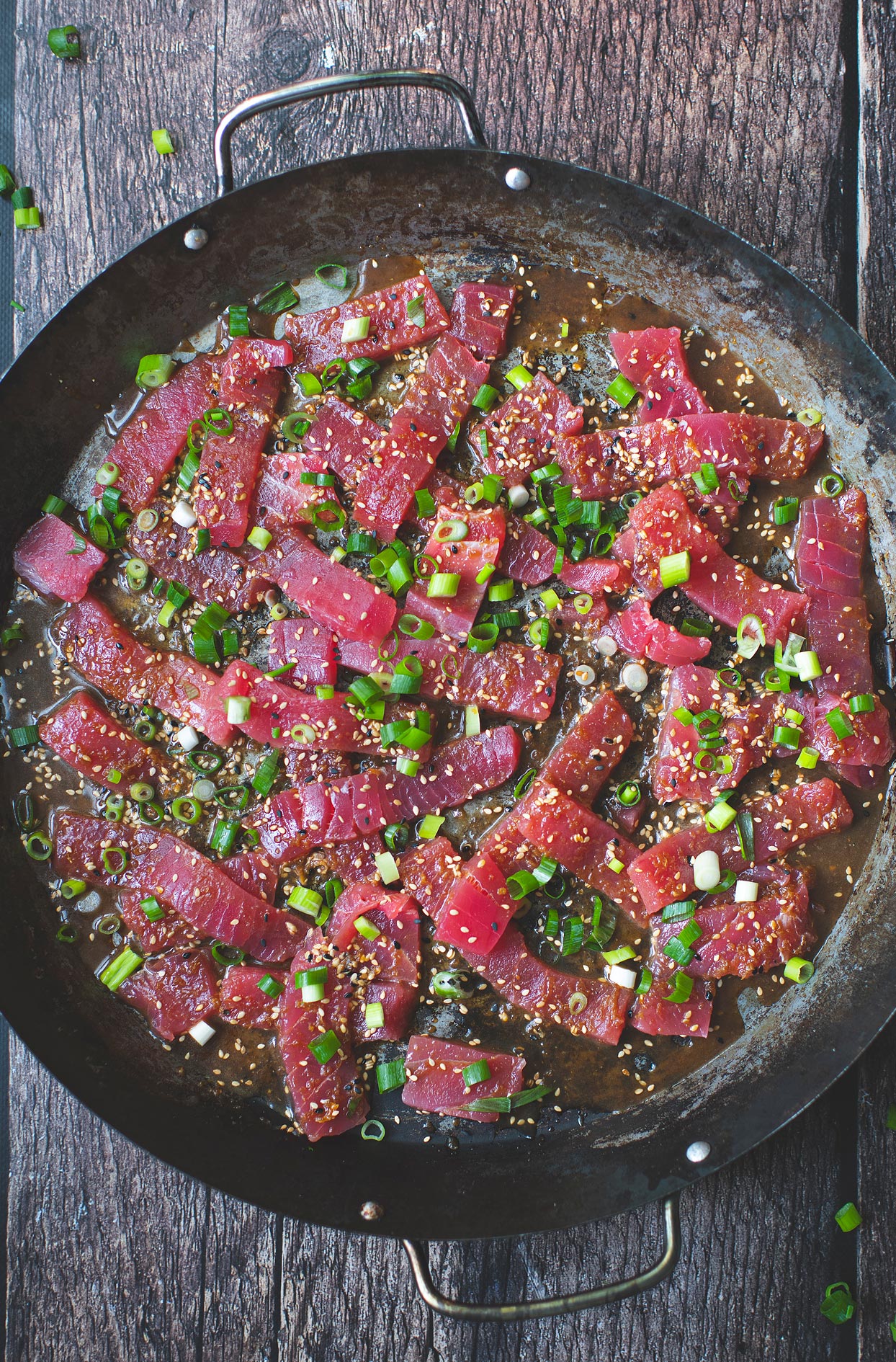
- Preparation 45 min
- Servings 2 to 4
- Freezing I do not suggest
Ads
🍊 A sauce I am literally in love with
This crudo was born from a simple craving: I wanted to eat raw tuna. And since I am literally in love with my orange sauce, the one I’ve been making for years, I figured it would work just as well on fish as on meat. The only thing I changed was adding tamari soy sauce to bring in a little saltiness that was missing with the fish. The result, honestly, was completely mind-blowing. The orange juice, honey and ginger wrap around the tuna, and the tamari pulls everything toward salty without ever overpowering the flesh.
🐟 No cooking, just freshness
This is what sets it apart from everything else: nothing is cooked. Not a second in a pan, not a second on the barbecue. The tuna is thinly sliced and served as is, which means every bite tastes exactly like what it is. The secret is to work with tuna that’s still semi-frozen. I always buy my tuna steaks frozen, that’s what gives the best results, and I let them thaw just enough to slice them cleanly. Flesh that’s too soft gets crushed under the blade and you lose all the beauty of the plate.
🥢 A starter that impresses without any stress
When you set this plate on the table, the room goes quiet. It’s beautiful, it’s fresh, and nobody suspects it took you fifteen minutes of work. I serve it as a starter when I have guests, or as a light meal for two on hot evenings when I have no desire to turn anything on. A glass of well-chilled white alongside, and you’ve got a restaurant dinner without ever touching a pan.
Ads
Ads
🧊 Buy your tuna frozen. It’s the best choice
There’s a reflex worth breaking: thinking that fresh fish from the counter is always superior. For raw preparations, it’s actually the opposite. Tuna that’s been frozen at sea or dockside is brought down to very low temperatures within hours of the catch, which locks in the texture and settles the parasite question at the same time. I get mine at a regular grocery store, there are almost always red tuna steaks in the freezer section, and I’ve never had a bad experience.
🔪 Slicing semi-frozen is the whole secret
Fully thawed tuna gets crushed by the blade instead of cut, and you end up with torn pieces. Tuna that’s still rock hard won’t let you get through it at all. The perfect window is 30 to 45 minutes out of the freezer: the flesh starts to give under your finger but stays firm. That’s the exact moment to slice, and the slices hold together instead of tearing.
📏 Against the grain, as thin as you can
On a tuna steak, the lines of the flesh are visible to the naked eye. Place your knife perpendicular to those lines and work your way down slowly, without forcing. Aim for the thinnest slices you can cut cleanly, and forget the videos where the blade glides through like butter. Even with a good knife, I have to saw a little, and that’s perfectly normal. What matters is being gentle so you don’t crush the flesh. The semi-frozen tuna already does half the work for you.
❄️ Everything must stay cold, from start to finish
Plate in the fridge half an hour before, sauce in the fridge, tuna finishing its thaw on the plate. Nothing in this recipe should come to room temperature. A lukewarm crudo loses its edge and the texture turns soft. Keep it cold, keep it clean, and serve it immediately.
🥢 The tamari is the small adjustment that changes everything
My original orange sauce has no soy in it. On raw fish, something was missing: a salty anchor to stand up to the sweetness of the honey and orange. Two tablespoons of tamari fixes that instantly. Tamari rather than regular soy sauce because it’s rounder, less aggressive, and won’t overpower such a delicate flesh.
🍊 Whisk twice, never just once
The emulsion of an oil-and-citrus sauce always breaks in the fridge. If you pour without re-whisking, you get oil on one side and juice on the other over your fish. One vigorous whisk just before serving and the sauce becomes smooth and glossy again. This sauce, by the way, I also serve on my Beef tataki with legendary orange sauce. That’s where it comes from.
🥄 Pour all the sauce, don’t hold any back
The quantity is calculated for two tuna steaks. I pour the whole thing over the crudo. There are no leftovers to manage and the fish won’t be swimming in it. A citrus sauce that sits on raw fish will eventually make it turn white like a ceviche, so put it on at the moment of serving and eat right away.
✅ What to serve with my tuna crudo with orange sauce?
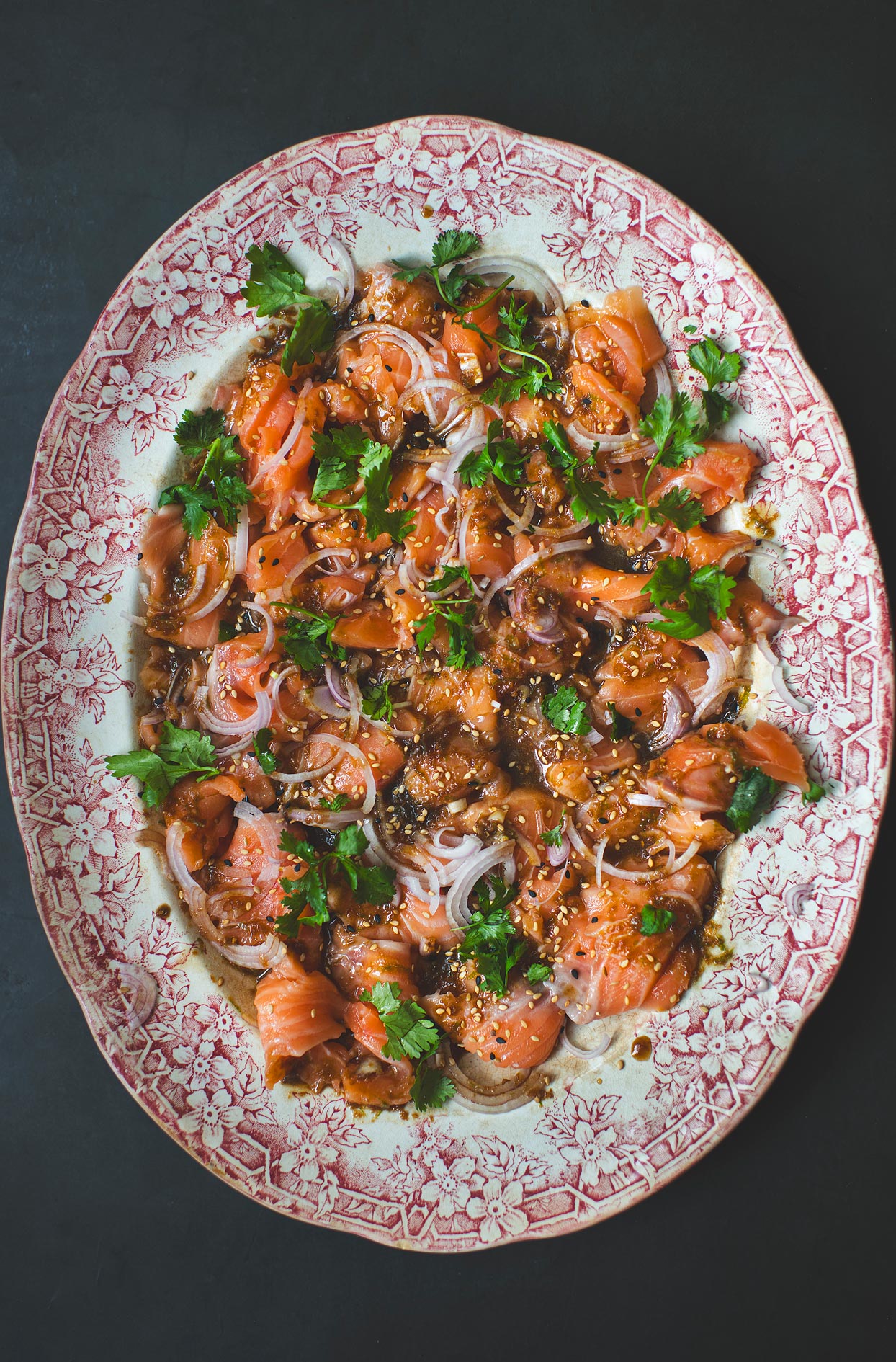
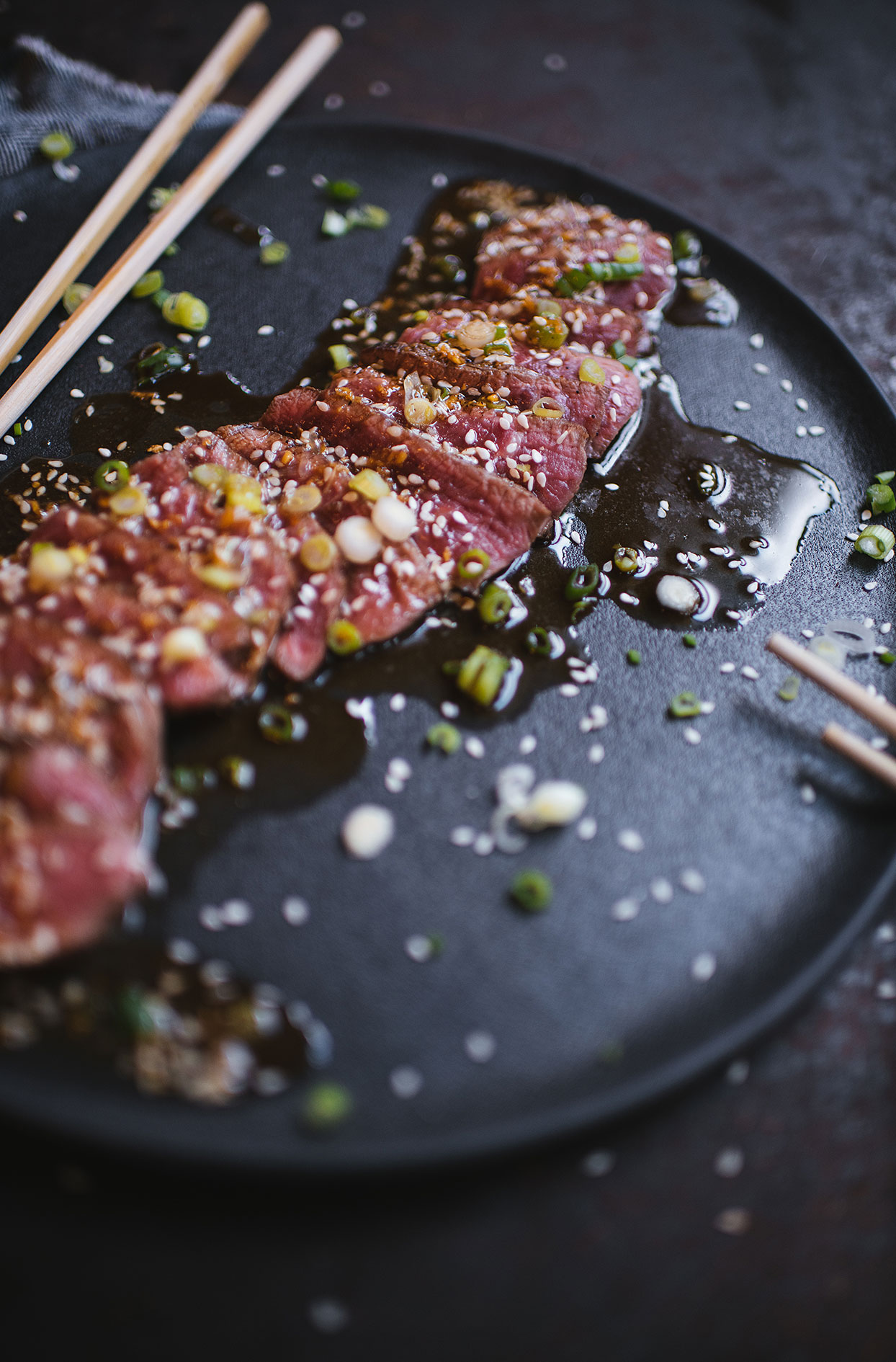
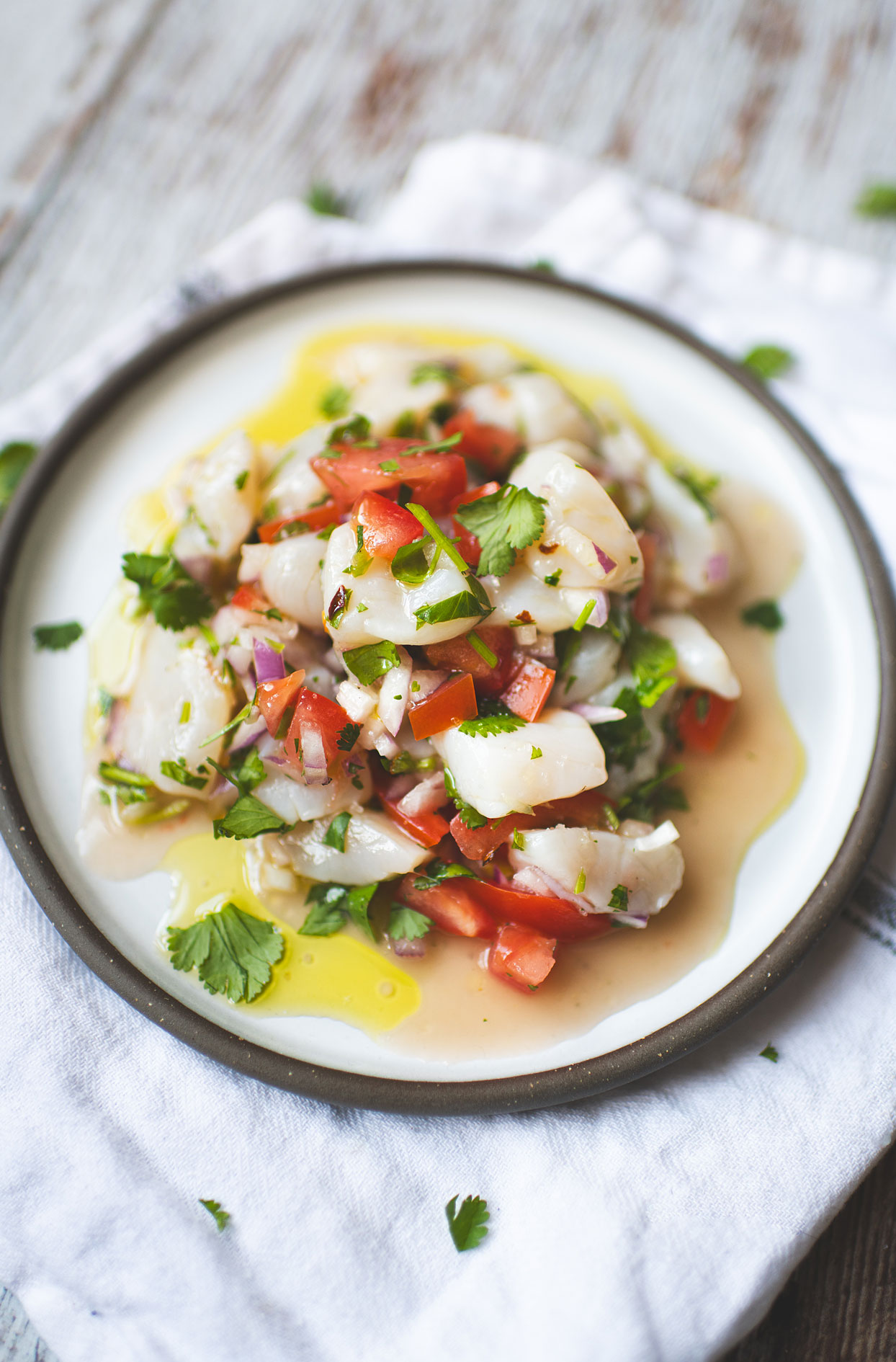
As a starter it stands on its own, but if you’re building a real spread of cold starters, that’s where it shines. Serve it alongside my Salmon crudo with soy and sesame to offer two raw fish that taste nothing alike, or my Citrus scallop ceviche to add some tart punch. My Asian-style edamame beans make the perfect snack to nibble between bites, and if you want to finish with something more substantial, my Beef tataki with legendary orange sauce uses the exact same sauce on meat.

Ads
Sauce
- 2 tbsp (30 ml) tamari soy sauce
- 2 tbsp (30 ml) freshly squeezed orange juice
- Juice of ½ lime
- 1 tbsp (15 ml) vegetable oil
- 2 tsp (10 ml) honey
- 1 tsp (5 ml) toasted sesame oil
- 1 tsp (5 ml) sesame seeds + a little more for garnish
- 1 tsp (5 ml) freshly grated ginger
- Salt and freshly ground pepper
Tuna
- 2 sushi-grade frozen red tuna steaks (about 300 g)
- 2 green onions, thinly sliced
- Fleur de sel
- Freshly ground pepper
Ads
Preparation
- Whisk all the sauce ingredients together in a small bowl until well emulsified. Season with salt and pepper, then set aside in the fridge.
- Remove the tuna steaks from the freezer and let them thaw for 30 to 45 minutes. They’re ready to slice when the flesh starts to soften while still feeling firm under your finger. This semi-frozen texture is what allows clean, even slices.
- Identify the lines of the flesh and slice the tuna against the grain, as thin as you can, working gently. Arrange the slices in a single layer on a large cold plate without overlapping. The tuna will finish thawing on the plate.
- Whisk the sauce again to reactivate the emulsion, then drizzle it over the tuna just before serving. The sauce should come straight out of the fridge, nice and cold.
- Garnish with sesame seeds and green onions, then finish with fleur de sel and freshly ground pepper. Serve immediately.
Crudo is a dish of Italian origin where fish is served completely raw, thinly sliced, with a sauce or vinaigrette poured over it at the last moment. The word simply means “raw” in Italian. Unlike ceviche, the fish isn’t marked by citrus acidity over a long marinating time, and unlike tartare, it isn’t cut into small cubes or mixed with condiments. Crudo is the most stripped-down version there is: beautiful fish, sliced properly, and a sauce that lets it shine.
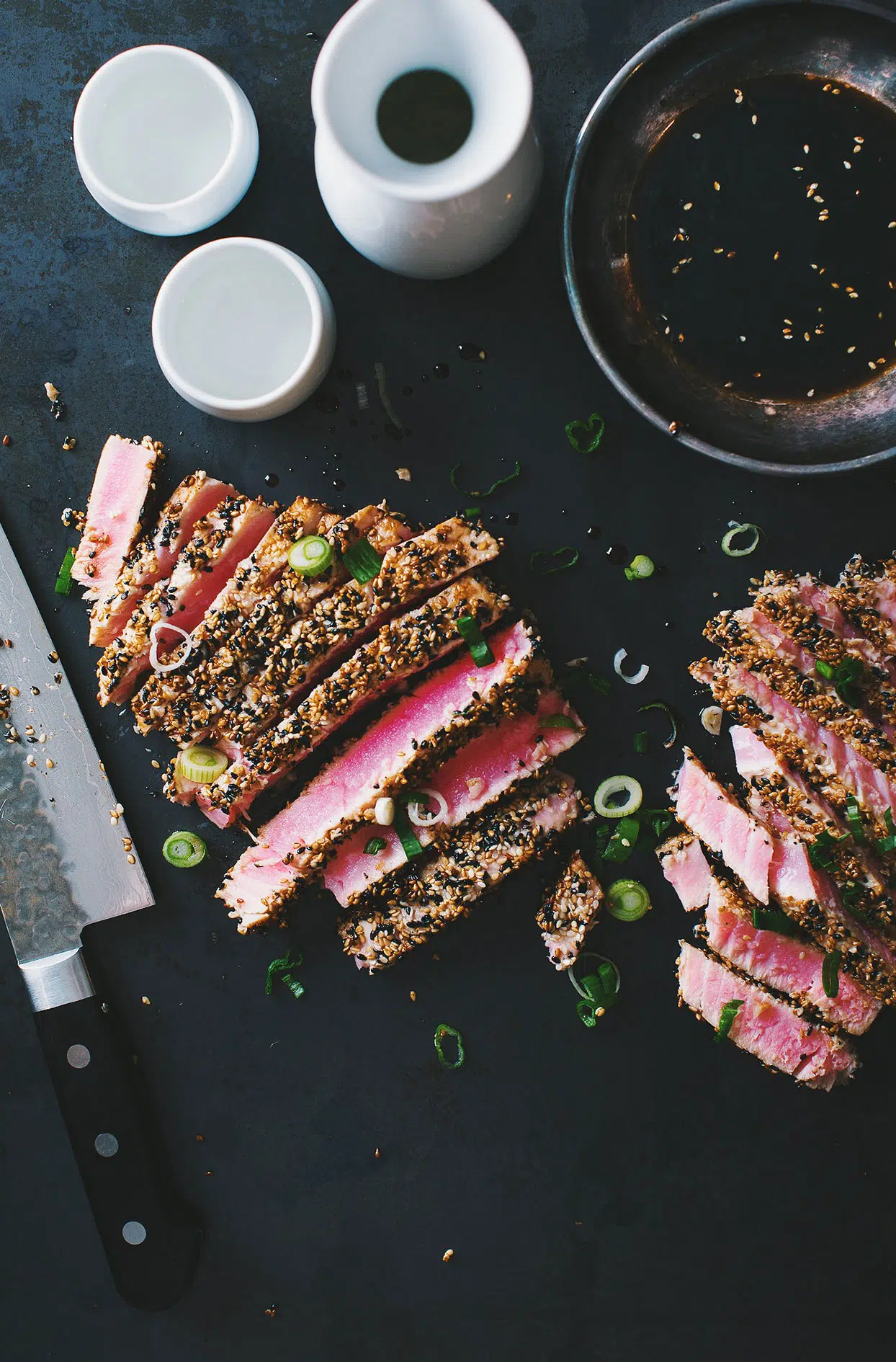
All four start with raw protein, but they don’t look anything alike. Crudo is thinly sliced and seasoned at the last moment. citrus scallop ceviche is cut into pieces and left in citrus juice, whose acidity “cooks” the flesh and turns it white. Tartare is finely chopped and mixed with condiments. tuna tataki with sesame crust is the only one of the four to hit heat: it’s seared for a few seconds on each side to create a crust, while the centre stays raw. Same fish, four completely different dishes.
Yes, as long as you start with the right product. You need tuna that is sold as sushi-grade, and frozen tuna is your best ally: freezing at very low temperatures takes care of the parasite question. That’s actually why I never buy fresh tuna for this recipe. Once thawed, the fish is handled like any delicate product: kept cold, sliced with clean utensils, and eaten the same day. This is not a dish that waits in the fridge until tomorrow.
Frozen sushi-grade red tuna steaks. I get mine at a regular grocery store. There’s almost always some in the freezer section and I don’t stress about the brand. What matters is that the flesh is a nice uniform colour, with no brown spots or discolouration. Two steaks of about 150 g each give you exactly what you need for this recipe. If you come across albacore instead of red tuna, it works too. The flesh is just a little paler.
As a starter when you’re hosting, or as a light meal for two. On a spread of cold starters, it teams up beautifully with my salmon crudo with soy and sesame and my citrus scallop ceviche, giving you three raw fish with completely different personalities. Add my asian-style edamame beans for snacking, and you’ve got a starter spread that looks impressive without having turned on the oven once.
Ads
Ads
Ads
Ads
Ads