

Pumpkin Puree Recipe (Homemade)
- Preparation 15 min
- Cooking 50 min
- Servings 2
- Freezing Absolutely
Ads
🎃 Your house is going to smell like fall for an hour
A pumpkin halved and roasting at 400 °F fills the whole place. And you have not done a thing yet. Fifteen minutes of actual work, the oven handles the rest, and what comes out is sweet and roasted instead of flat and watery. The first time I ate a spoonful of it plain, I understood why people bother making their own. Then you put it in a pie or a loaf, and we will talk again.
💧 The real difference is water
This is where it all happens and almost nobody explains it. Canned pumpkin is made from Dickinson, an oblong tan-skinned variety grown specifically for canning: dense flesh, very little water, consistent from can to can. The round orange one on your porch is grown to be carved. Your homemade puree comes out of the oven loaded with water. Two completely different textures. That is why homemade pies turn out loose and people blame the recipe. It is not the recipe. It is the water. Draining is not an optional footnote, it is the price of admission.
🧮 A small pumpkin gives you two cups
Here is the number you actually want before you buy: roughly **one cup of puree per pound of raw pumpkin**. A small pumpkin around 2.2 lb (1 kg) gives you 2 cups. That is enough for one loaf or one batch of muffins. For two pies, double it. This is the thing I wanted to know the first time and could not find anywhere.
Ads
Ads
🥫 Canned or homemade, the honest answer
Canned is not a shameful shortcut. It is made from Dickinson, a pumpkin variety grown for its dense flesh and low moisture, which is why it behaves the same way every single time. It is what I use for my pies and I do not hide it. Homemade earns its place when you feel like making it or when you have squash to use up. Both work. The only real difference is that homemade needs one extra step.
💧 Drain it overnight
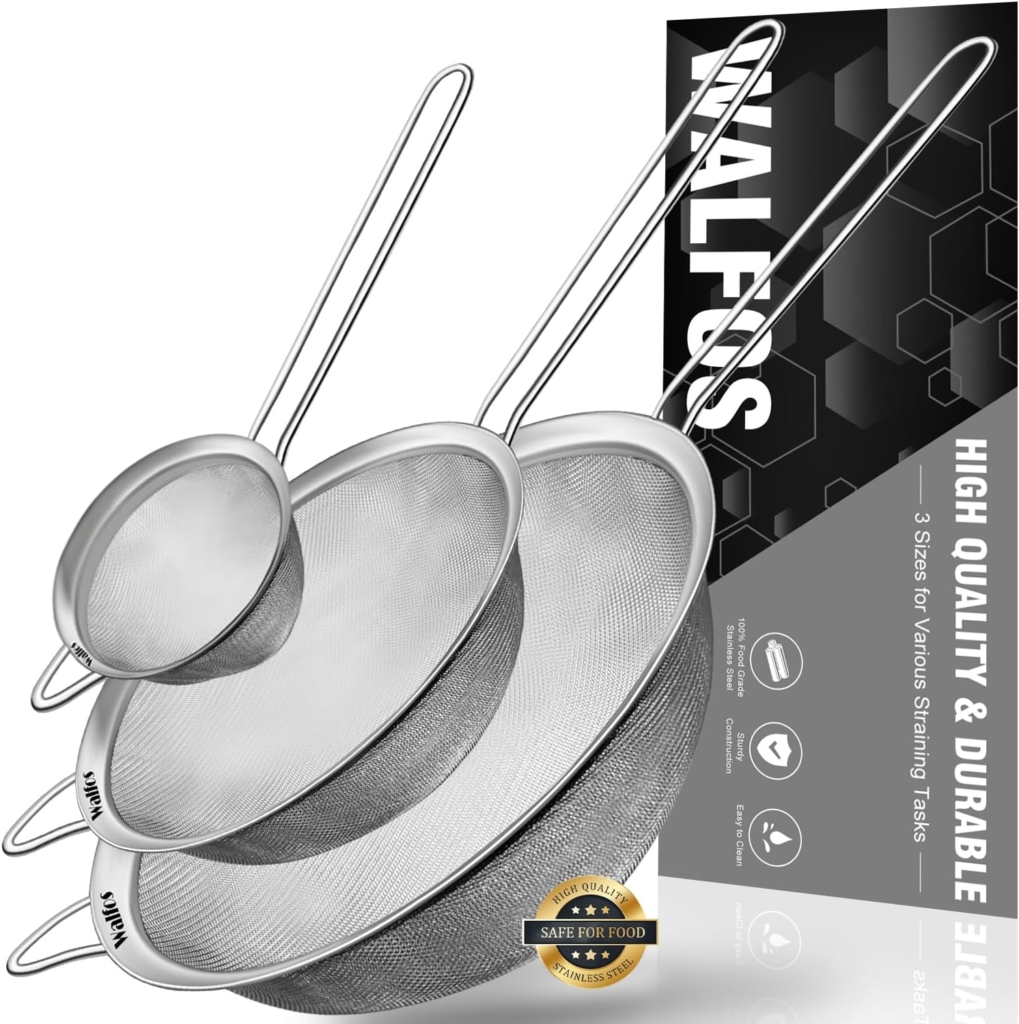
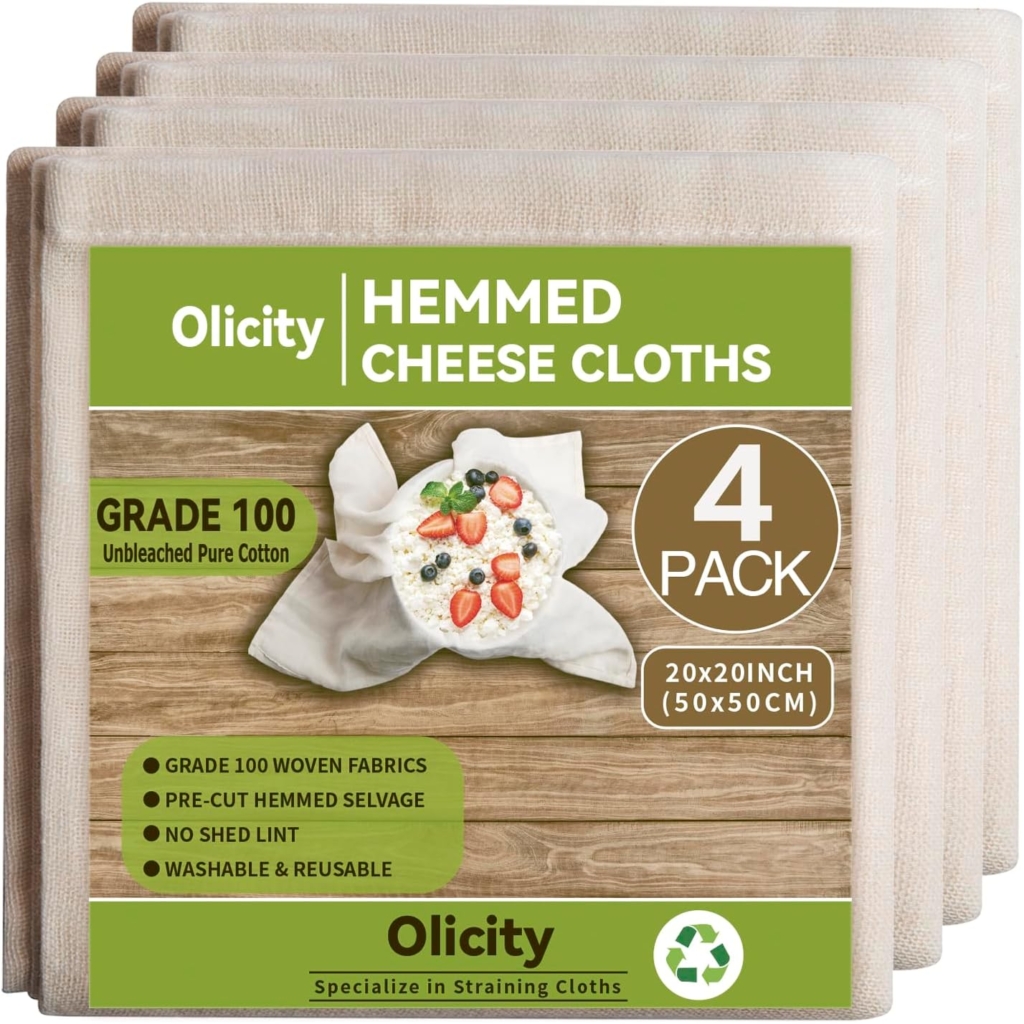
This is the step nobody does and it is exactly the one that ruins homemade pies. Fine mesh strainer or cheesecloth over a bowl, in the fridge, overnight. You will be surprised how much water comes out. The next morning, pour off the liquid and the puree is ready for anything.
👀 How to know it has drained enough
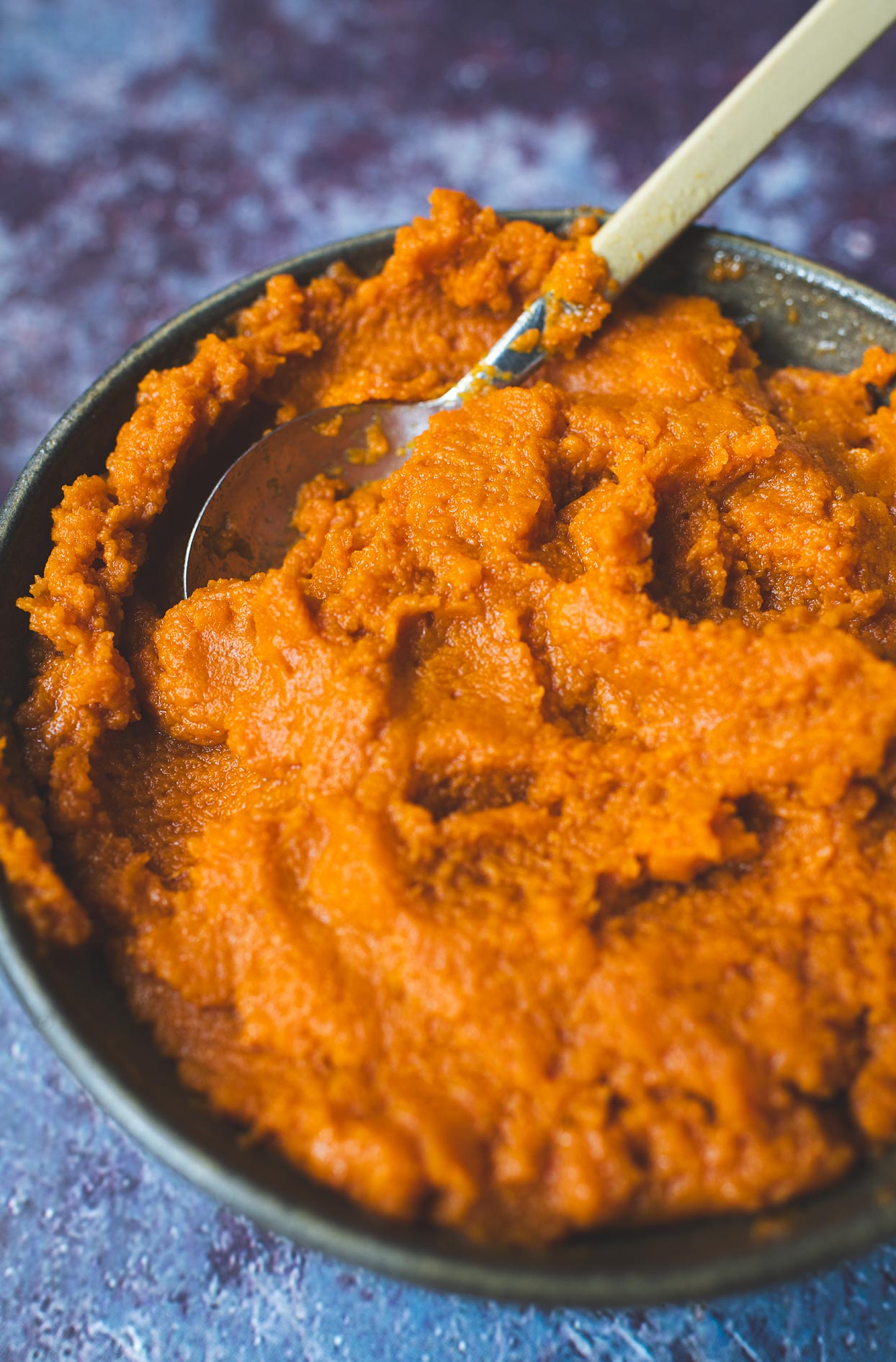
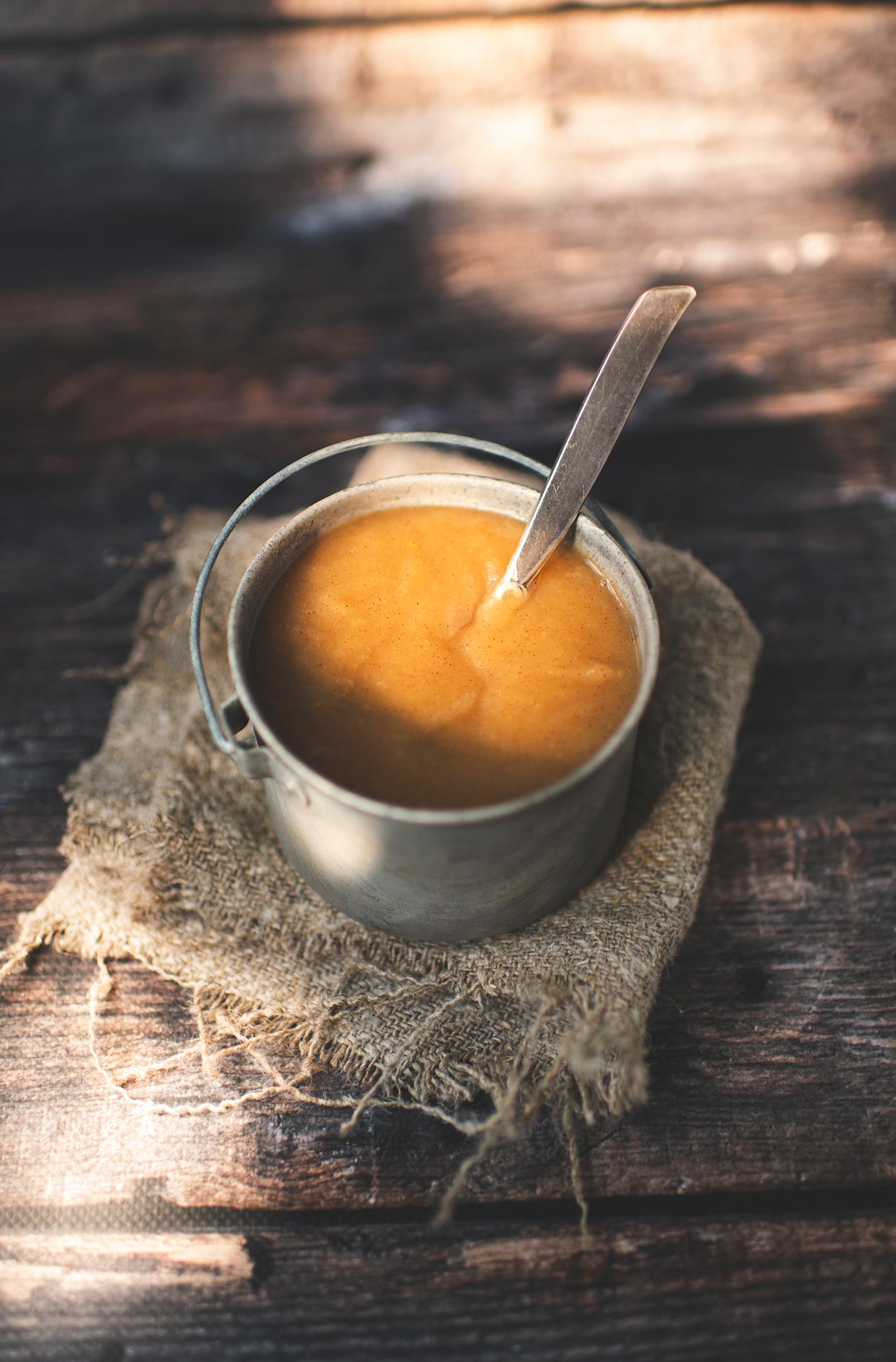
Watch the puree, not the clock. Straight out of the food processor it looks like applesauce: it runs, it flattens out in the bowl on its own. After a night in the strainer it is noticeably thicker and holds its shape when you drag a spoon through it. That is what you are after.
🎃 Not the pumpkin from your porch
Big Halloween pumpkins are grown to be carved, not eaten. The flesh is stringy, pale and waterlogged, and no amount of draining fixes that. Get a small dense-fleshed pumpkin instead. Other squashes work beautifully too: butternut, buttercup and kabocha all make excellent puree.
🔄 Food processor beats blender
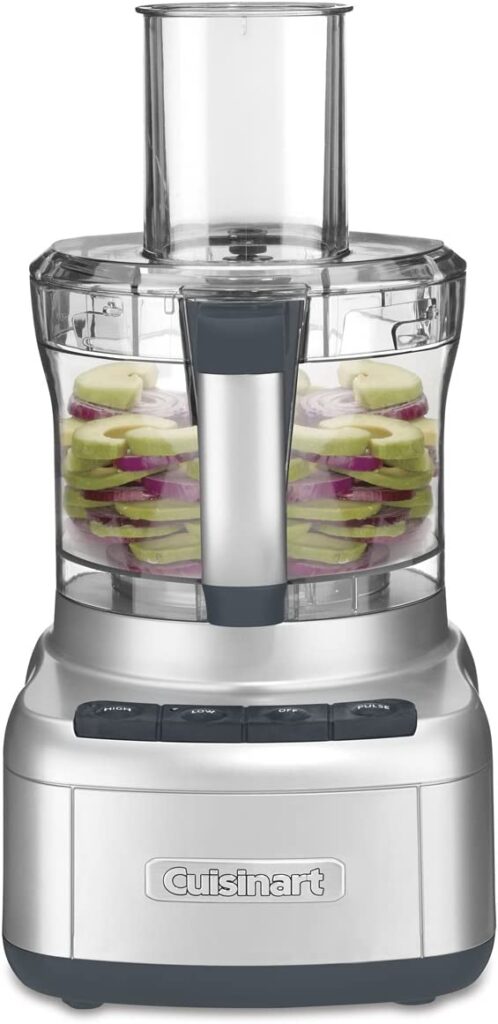
The processor wins because the puree is thick and blenders tend to jam at the bottom. With a good machine the texture comes out genuinely silky. With a weaker one it will be slightly coarser, and honestly nobody notices in a loaf or muffins. A potato masher is not enough here: the flesh stays stringy.
🧮 How much pumpkin your recipe needs
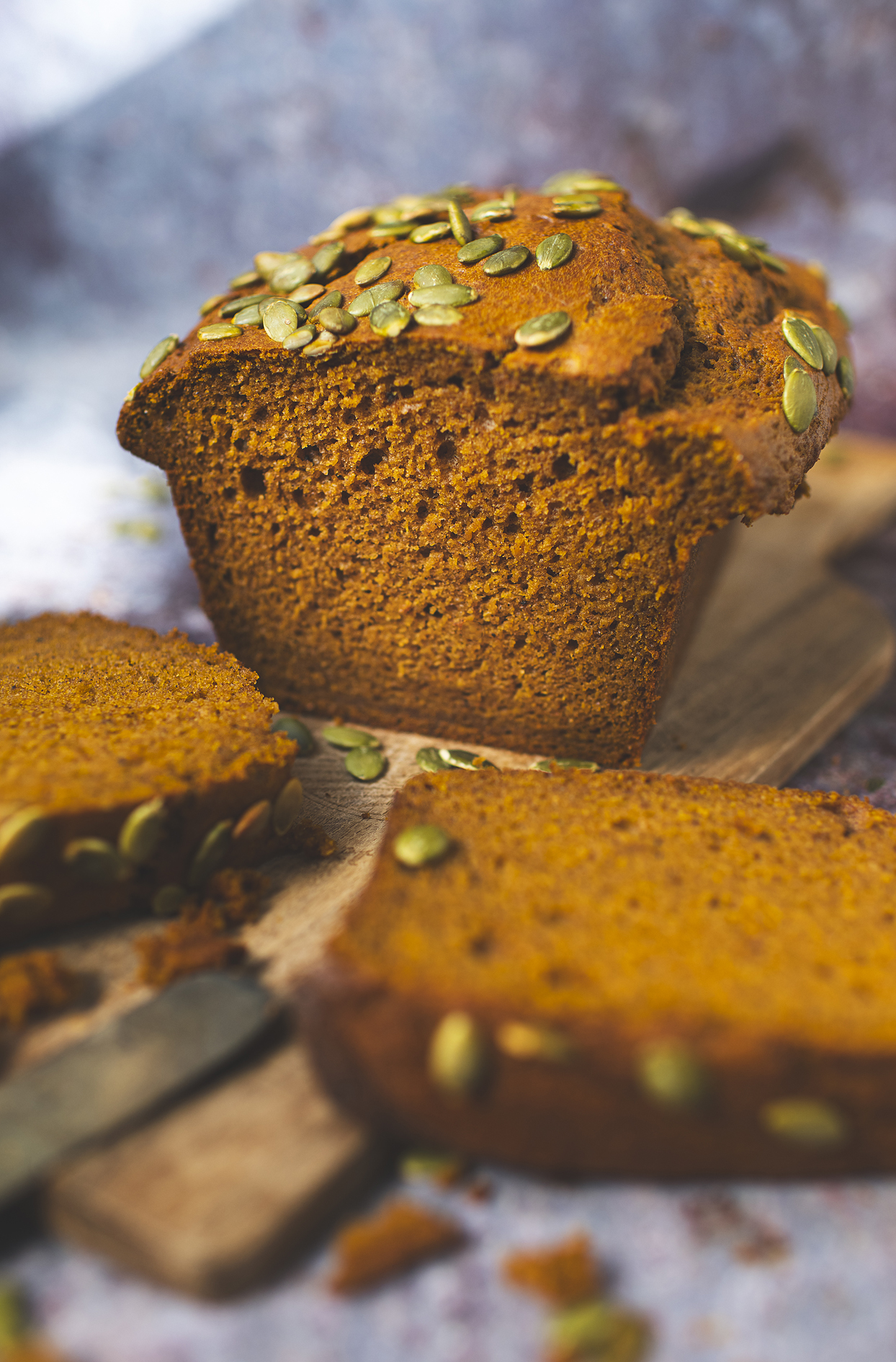
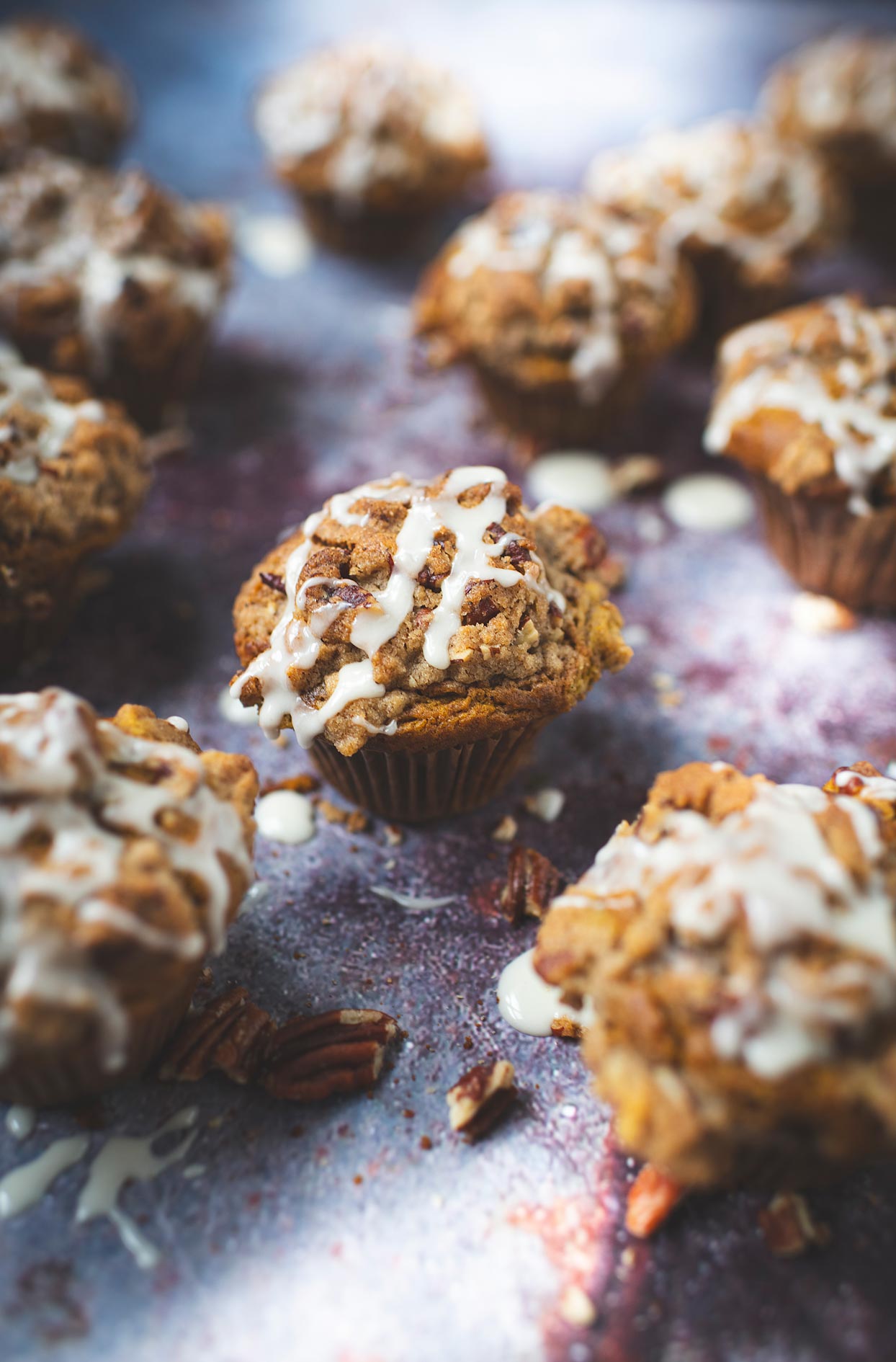
Simple rule: about one cup of puree per pound of raw pumpkin. A small 2.2 lb pumpkin gives you 2 cups, exactly what my pumpkin bread or my pumpkin muffins call for. For two pumpkin pies, buy about 4.5 lb. Now you know what to grab at the store.
🌰 Keep the seeds
Never throw the seeds out. Rinse them, pull off the stringy bits and set them aside: roasted, they beat anything sold in a bag. They disappear fast in my house.
📅 Make ahead
This recipe is almost entirely make-ahead by nature. The roasting and cooling can happen on a weeknight while you do something else, and the draining works on its own while you sleep. What really helps when you are hosting: make the puree two or three days ahead, weigh it and divide it right away into labeled containers matching what your recipes call for. On the day, you open the fridge and there is exactly 1 1/2 cups waiting for your pie, no scale and no math.
❄️ Storage and freezing
One week in the fridge in an airtight container. In the freezer it holds three months: freeze it in whatever portion suits you, but 1 cup blocks are the most practical, because that is the unit recipes are written in. Thaw in the fridge and stir before using. One thing not to do: never home-can pumpkin puree. It is too dense for heat to penetrate reliably, and that is a genuine safety risk. Freezer only.
Ads
Ingrédients
- 1 small pumpkin, about 2.2 lb (1 kg)
Ads
Preparation
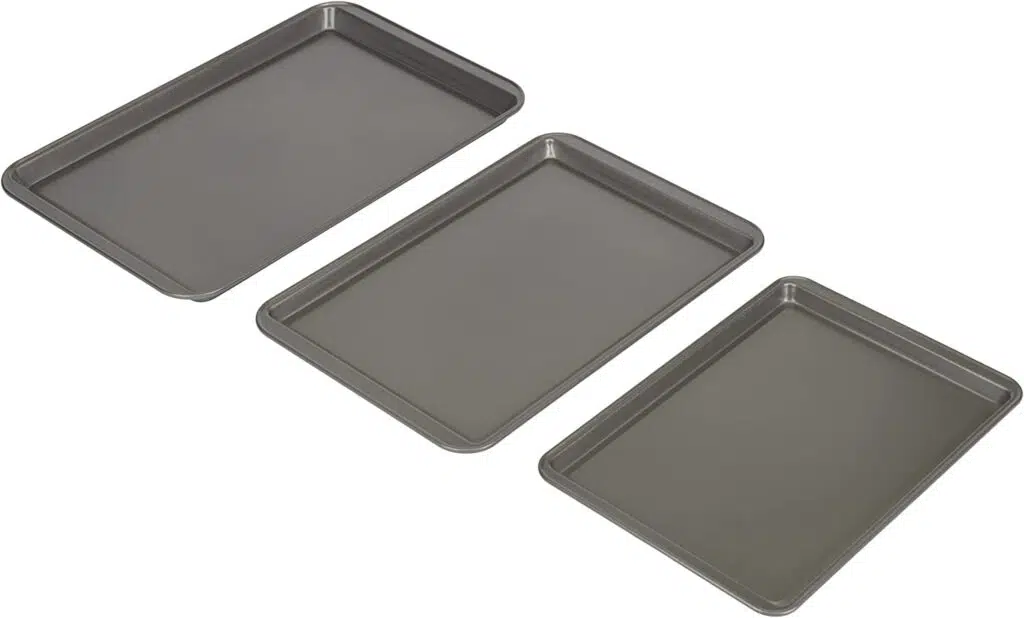
- Heat the oven to 400 °F (200 °C) and line a baking sheet with parchment paper.
- Cut the pumpkin in half and scoop out the seeds. Set them aside in a bowl, do not throw them away. Place both halves on the sheet, cut side down against the parchment.
- Roast 40 to 60 minutes, until a fork slides into the flesh with no resistance at all. Let cool about 1 hour on the sheet.
- Pull the flesh away from the skin with your hands or a spoon and drop it into the food processor. Blend until completely smooth, about 1 minute, scraping the sides once or twice.
- Transfer the puree to a fine mesh strainer or cheesecloth set over a bowl, cover, and let it drain overnight in the fridge. Do not skip this step.
- The next day, discard the liquid and move the puree to an airtight container. Refrigerate until you need it.
Water, and the variety. Canned pumpkin is made from Dickinson, an oblong tan-skinned pumpkin grown for its dense flesh and low moisture. Homemade comes out of the oven far wetter, and that water ends up in your recipe. It is why homemade pies sometimes refuse to set. Drain your puree overnight and the gap all but disappears.
Roast, no contest. In the oven the water evaporates and the sugars concentrate. Boiling soaks the flesh with even more water and washes out the flavor. A boiled puree can add up to half a cup of extra liquid per cup in your recipe, which is enough to wreck a pie filling.
No, and this is the most common mistake. Big carving pumpkins are bred for size and shell, not flesh. The result is stringy, pale and watery. Use a small sugar or pie pumpkin, or reach for butternut, buttercup or kabocha squash instead.
Plain pumpkin puree is, yes, and so is this one. What trips people up is pumpkin pie filling, which sits right beside it on the shelf and already contains sugar and spices. Check the label: if it lists anything other than pumpkin, it is filling, not puree.
One week in an airtight container. In the freezer it holds three months, and 1 cup portions are the most useful since that is how recipes are written. Thaw it in the fridge overnight and give it a stir before using.
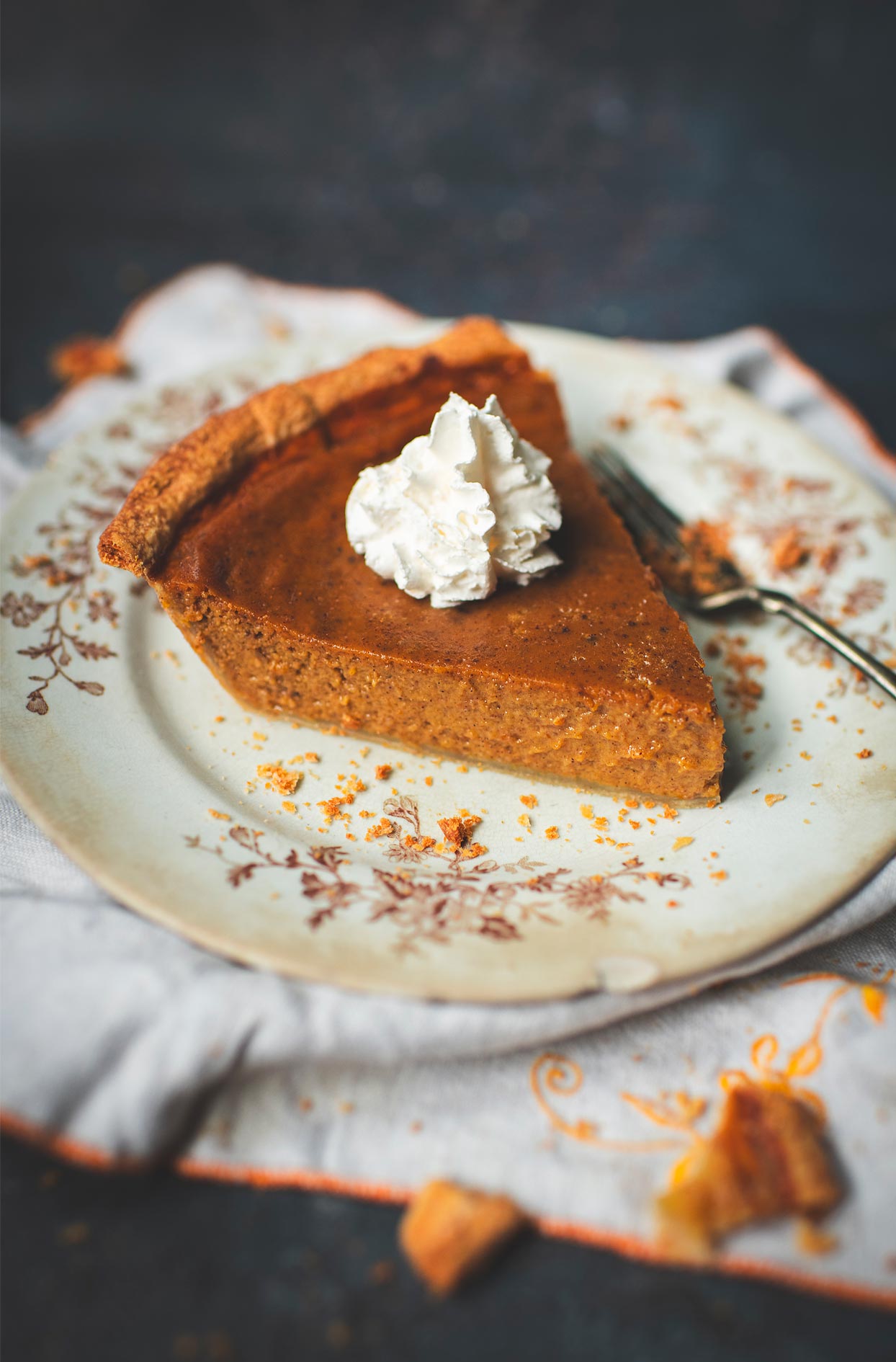
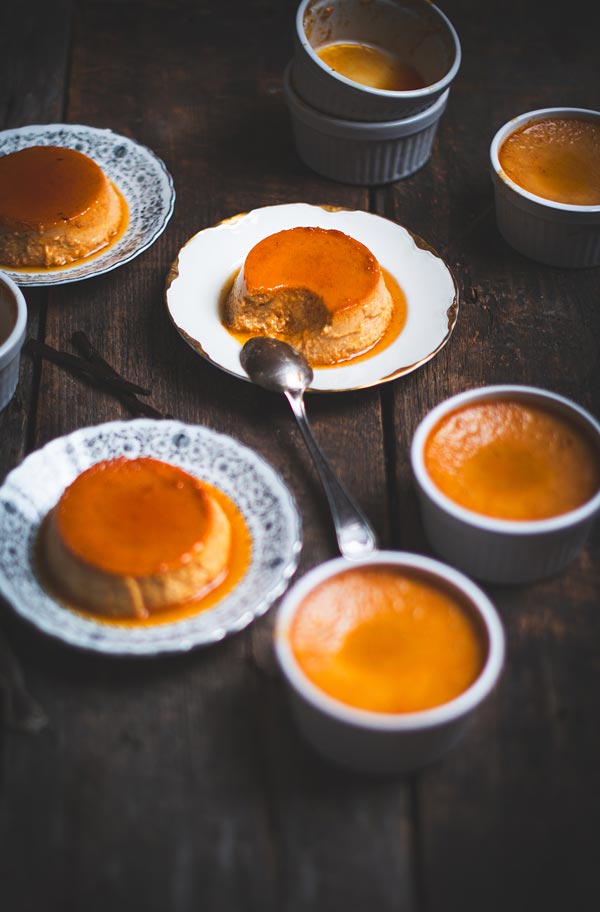
A classic pumpkin pie, pumpkin bread, muffins with pecan streusel or a pumpkin creme caramel. On the savory side, it thickens a soup or a gnocchi sauce beautifully.
Ads
Ads
Ads
Ads
Ads