

Homemade pickled beets
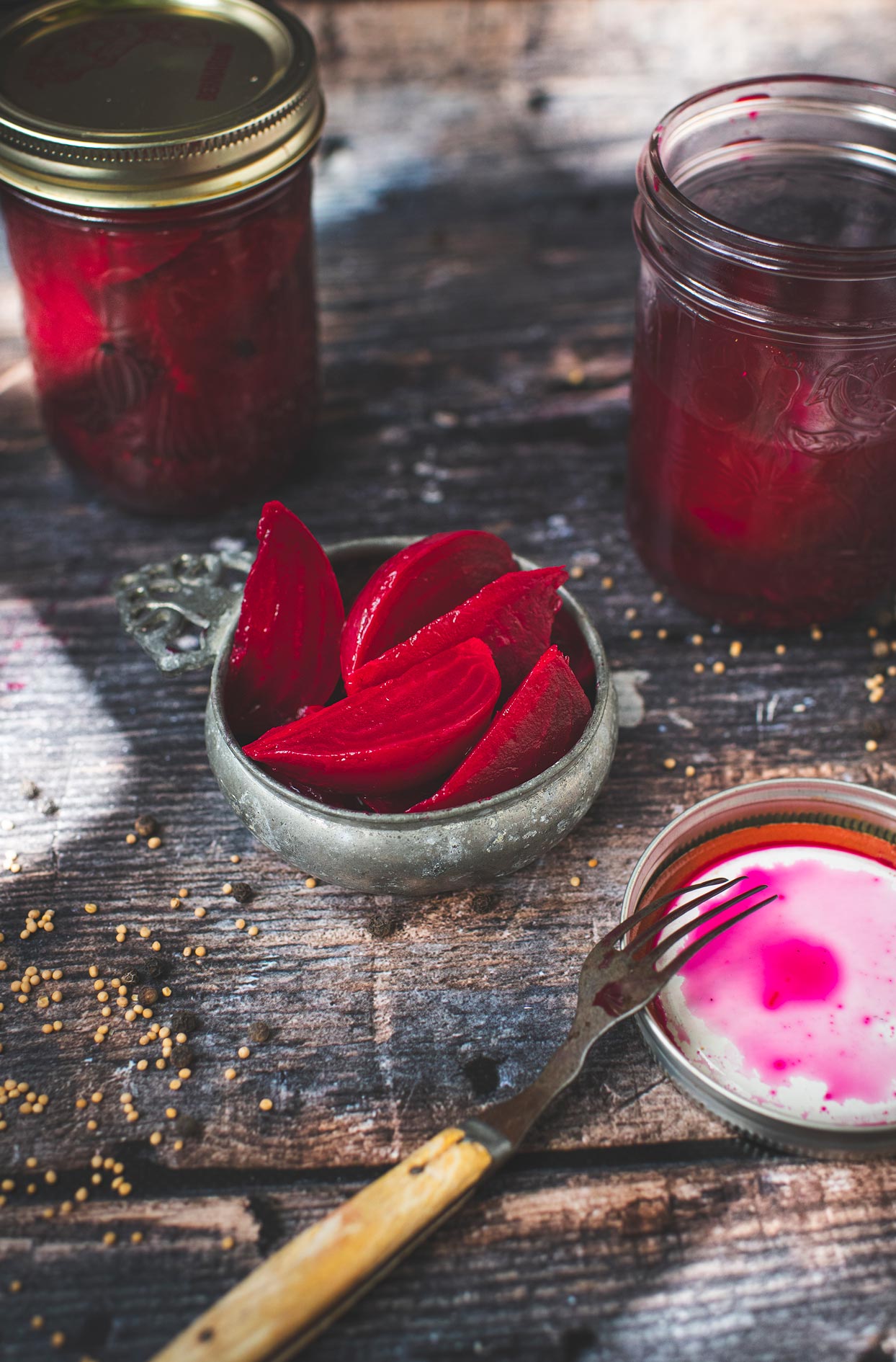
- Preparation 20 min
- Refrigeration 24 h
- Cooking 1 h
- Servings 3 x 500 ml jars
- Freezing I do not suggest
Ads
🔥 In the oven, not in boiling water
Every pickled beet recipe I’ve seen tells you to boil them. I roast mine in the oven, wrapped in aluminum foil, and honestly I find it so much simpler. You put them in, close the door, come back an hour later. No pot of water boiling over, no babysitting, nothing. And there’s a bonus I didn’t see coming: by roasting dry in their little foil packets, the beets concentrate their sugar instead of losing it into the cooking water. They taste like beets, but more so.
🍎 A cider vinegar brine, not white vinegar
The other thing I do differently is the vinegar. The Quebec tradition calls for white vinegar, but I find it too harsh. Apple cider vinegar is rounder, fruitier, and it gets along much better with the natural sweetness of roasted beets. I add cinnamon, mustard seeds and a few peppercorns, which gives a brine that tastes like autumn without ever tipping into cloying sweetness.
⏱️ Ready in 24 hours, not a week
Our grandmothers’ recipes often asked you to wait a week before touching them. Mine are good after 24 hours in the fridge, and that’s because they’re roasted and cut into wedges: the flesh is more porous and the brine gets in much faster. You can eat them the next day. They keep for two weeks in the refrigerator, or all year long if you can them, and I’ll walk you through exactly how to do that below.
Ads
Ads
🔥 The oven is simpler than boiling water
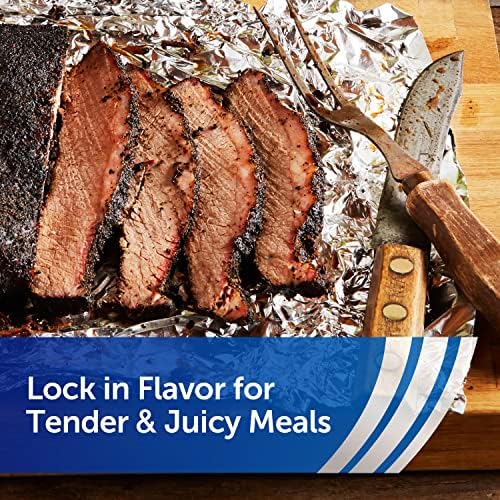
Everyone boils their beets. I roast mine, and it’s honestly less work: you wrap them, put them in the oven, close the door and forget about them for an hour. No pot to watch, no water boiling over, no cooking in a cloud of steam. As a bonus, the beet cooks in its own moisture instead of releasing its sugar into the water, so it tastes stronger and its colour stays deeper.
🔪 The only doneness test: the knife glides right through
One hour at 400 °F works for medium beets, but their size varies a lot from one bag to the next. The real test is to poke the tip of a knife into the centre: it should go through easily, without resistance. If it still catches, close the foil back up and return to the oven for another ten minutes. Large beets can easily take 1 h 15 or 1 h 20.
📦 Wrap them one by one, not all together
Each beet in its own piece of foil, wrapped tightly. Bundled together, the ones in the middle cook slower than the ones on the outside and you end up with uneven cooking. Individually, each one cooks in its own steam and you can test one without opening the others.
🧼 The skin comes off under cold water, with your fingers
That’s the beauty of foil-roasting: after an hour in the oven, the skin practically falls off on its own. Open the packets right over the sink, let cold water run over them and rub with your fingers. It comes off in strips, no peeler, no knife. You can wear rubber gloves if you care about your hands, but don’t worry. Beet stains wash off.
🌡️ Hot liquid on hot beets
Don’t let your beets cool before pouring in the brine. Both should be hot when they meet: the heat opens up the flesh and the brine penetrates much faster, which is why mine are ready in 24 hours instead of a week. Only then do you let them cool on the counter before sealing the jars and putting them in the fridge.
🥬 Don’t throw out the greens. Sauté them in butter
Beet greens are excellent and almost everyone throws them in the garbage. Just sauté them in butter with a little salt: they’re very similar to Swiss chard, incredibly good, and they’re a free vegetable you already paid for. Choose the firmest leaves and rinse them well. They tend to be sandy.
🥚 Save the liquid for pickled hard-boiled eggs
When your jar of beets is empty, do not pour the brine down the drain. Cook some hard-boiled eggs, peel them and drop them into the leftover liquid. After 24 to 48 hours in the fridge, you get pickled eggs in a spectacular magenta pink, with the same sweet-and-tangy flavour profile. It’s a classic and it costs absolutely nothing.
🫙 How to can your homemade pickled beets
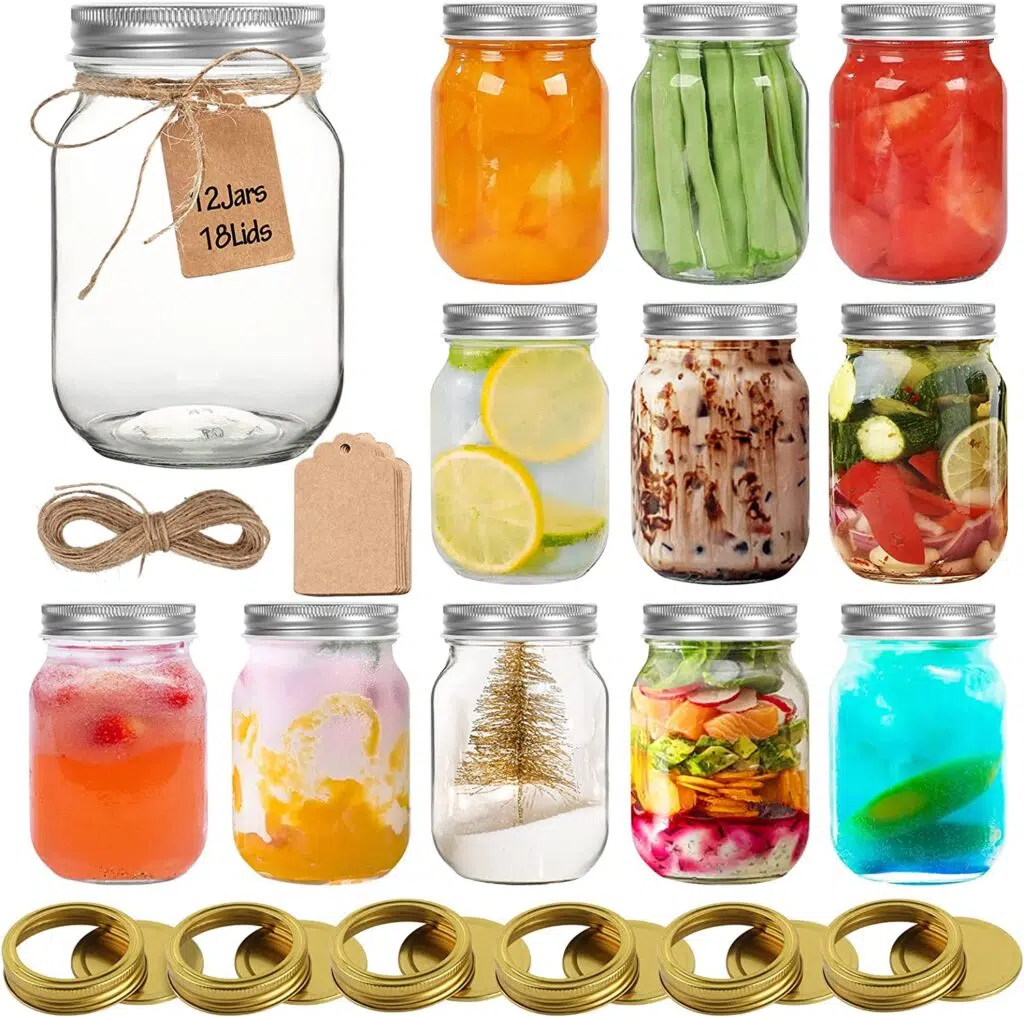
This is what lets you keep them in the pantry all year instead of two weeks in the fridge. Sterilize your Mason jars and lids by boiling them for 10 minutes. Fill them with the hot beets and boiling brine, leaving about 1 cm of headspace at the top, wipe the rim clean with a cloth, then screw on the lids without overtightening. Lower the jars back into boiling water, making sure they’re covered by at least 2 cm of water, and process for 30 minutes from the moment the water returns to a boil. Note: that’s twice as long as for a fruit ketchup, because beets are much less acidic and require a longer processing time. Remove the jars and let them cool without touching them. The lids will pop as they seal, and a properly sealed lid stays concave when you press the centre. A sealed jar keeps for up to two years, but use it within the year for best quality.
✅ What to serve with my homemade pickled beets?
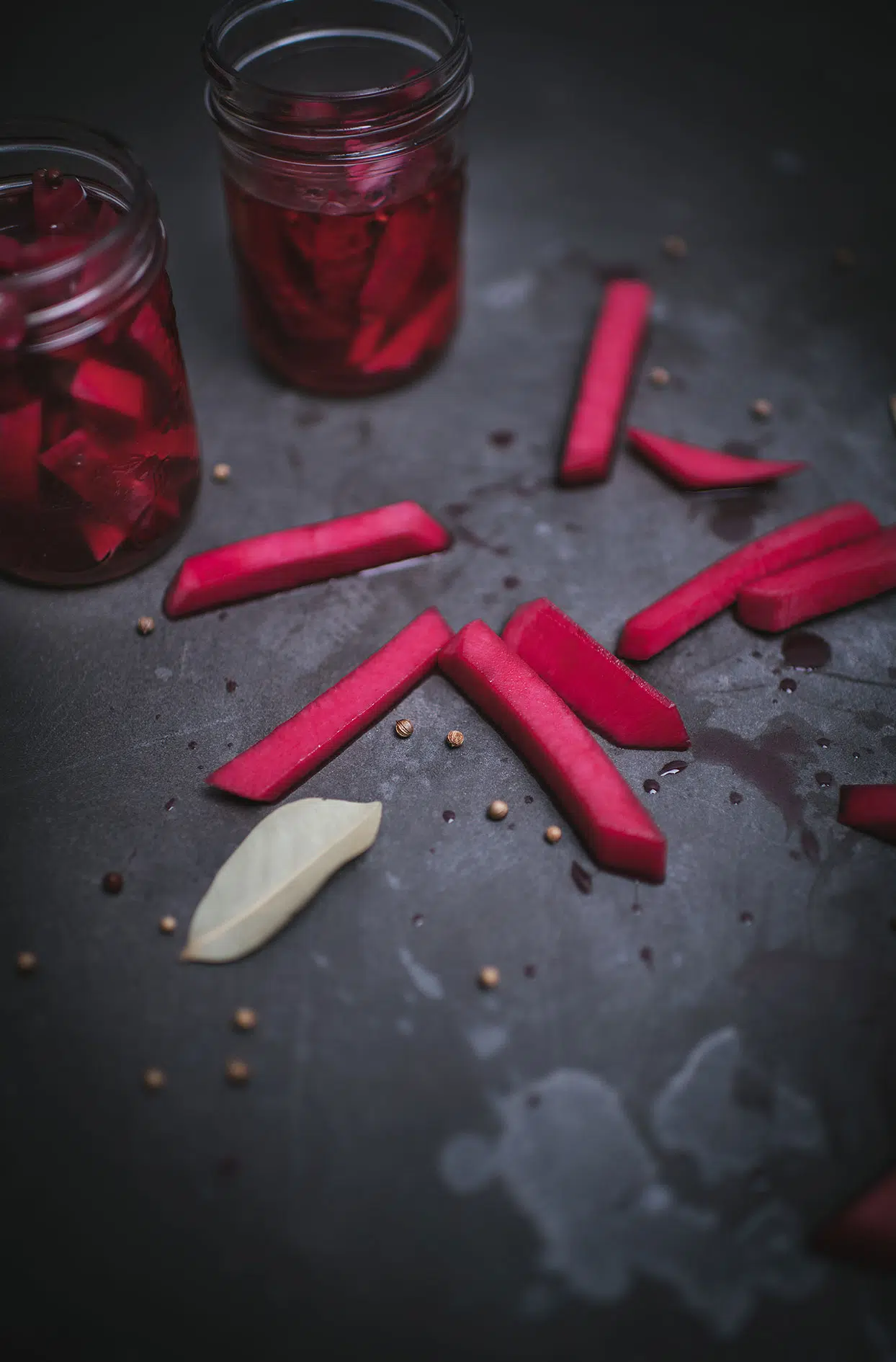
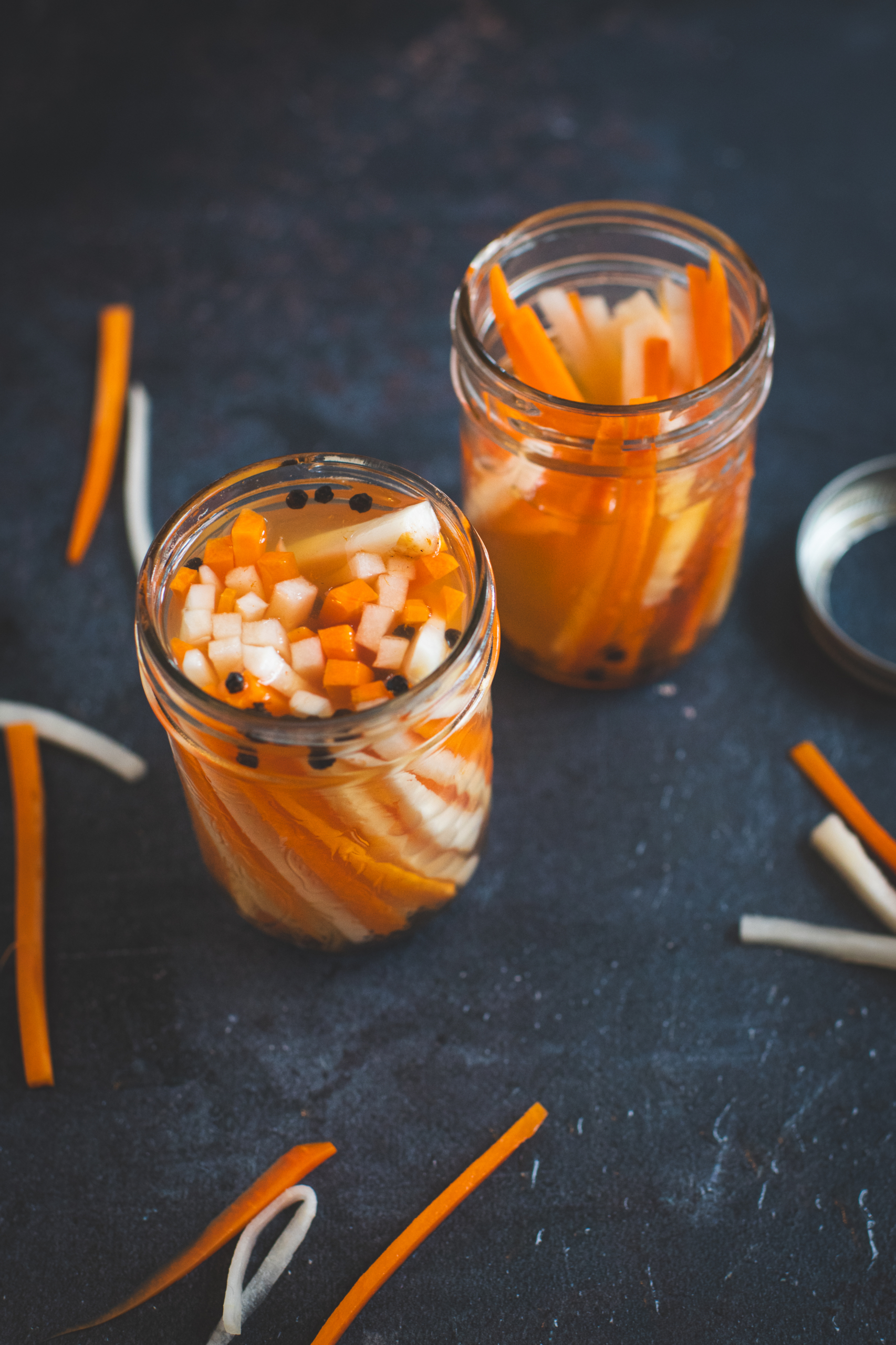
On a board, they’re unbeatable: add them to my Cheese and delicatessen plateau, where their acidity cuts right through the fat of the cured meats. They’re also perfect in a smoked meat sandwich like my Smoked meat Club Sandwich. For salads, beets and goat cheese are a classic pairing. Try them in my Lentil, apple and beet salad with goat cheese. And if you’re already in canning mode, make my Pickled turnips and my Pickled carrots and daikon while the oven is still hot.
Ads
Beets
- 1 ½ lb (680 g) fresh beets, about 6 medium
Brine
- 1 cup (250 ml) apple cider vinegar
- 1 cup (250 ml) water
- ¼ cup (60 ml) granulated sugar
- 2 tsp (10 ml) kosher salt
- 1 tsp (5 ml) mustard seeds
- 1 tsp (5 ml) ground cinnamon
- ½ tsp (2 ml) peppercorns
- 2 pinches of red pepper flakes (optional)
- 1 bay leaf
- A few sprigs of fresh dill
Ads
Preparation
- Preheat the oven to 400 °F (200 °C). Wash the beets under cold water, then remove the leaves and stems, setting the greens aside for another use. Wrap each beet individually and tightly in aluminum foil.
- Place the foil packets on the center rack and roast for 1 hour, until a knife slides through easily. Remove from the oven, open the packets over the sink and peel the beets by rubbing them under cold running water. Cut into wedges.
- Divide the still-warm beets into 3 x 500 ml Mason jars.
- In a saucepan, combine the apple cider vinegar, water, sugar, salt, peppercorns, mustard seeds, cinnamon and red pepper flakes. Add the bay leaf and dill. Bring to a boil over medium-high heat, stirring to dissolve the sugar and salt, then remove from heat.
- Pour the hot liquid over the beets, making sure they are well covered. Let cool to room temperature, then seal the jars with tight-fitting lids. Refrigerate for at least 24 hours before serving.
In three steps. First you cook the beets, because they can’t be pickled raw. I wrap them individually in aluminum foil and roast them for 1 hour at 400 °F, until a knife slides through easily. Then you make a brine by bringing vinegar, water, sugar, salt and spices to a boil, just long enough to dissolve the sugar. Finally you pour the boiling liquid over the still-hot beets cut into wedges, let cool and refrigerate. After 24 hours, they’re ready. The ratio to remember is one part vinegar to one part water.
No, and it’s a mistake that costs you a lot of beets. Raw beets are extremely dense and fibrous, so the brine barely penetrates at all: after days you’d end up with a vegetable that’s still hard in the centre, barely flavoured, and genuinely unpleasant to chew. Cooking softens the flesh and opens up the fibres, which lets the vinegar and spices get in. That’s why every traditional recipe boils the beets before pickling them. I roast mine in the oven rather than boiling them, but the principle is the same: cooked first, pickled second.
Beets are rich in natural nitrates, fibre, folate, manganese and potassium, and their colour comes from betalains, pigments with antioxidant properties. Pickling in vinegar preserves most of these nutrients while significantly extending the shelf life of the vegetable, which was actually the whole point of the practice before refrigerators existed. Two honest caveats though: a pickling brine contains added sugar and salt, so it’s not a health food in the strict sense, and boiling beets in water causes some water-soluble nutrients to leach out. That’s another argument for oven roasting, which keeps everything in the vegetable.
It belongs to the same broad family, traditional Quebec pickled beets based on vinegar, sugar, salt and spices, and the principle is identical. I don’t know her version in detail, so I’ll just tell you what sets mine apart. I roast my beets in the oven instead of boiling them, which concentrates their sugar rather than diluting it. I use apple cider vinegar instead of white vinegar, for a rounder result. And I add cinnamon and mustard seeds to the brine. If you have your family’s recipe, keep it safe and try mine alongside it.
They shine most as a savoury side. On my cheese and delicatessen plateau, they cut through the fat of the cured meats and wake up rich cheeses. In a sandwich, they’re extraordinary with smoked meat like in my smoked meat club sandwich. And in a salad, beets and goat cheese remain an unbeatable duo. Add them to my lentil, apple and beet salad with goat cheese. They also go very well alongside winter braises, much like a fruit ketchup would.
Ads
Ads
Ads
Ads
Ads