

Double Bacon Cheeseburger Recipe (Grilled)

with l'épicier

- Preparation 20 min
- Cooking 30 min
- Servings 2
- Freezing I do not suggest
Ads
🍔 The moment the second patty shows up
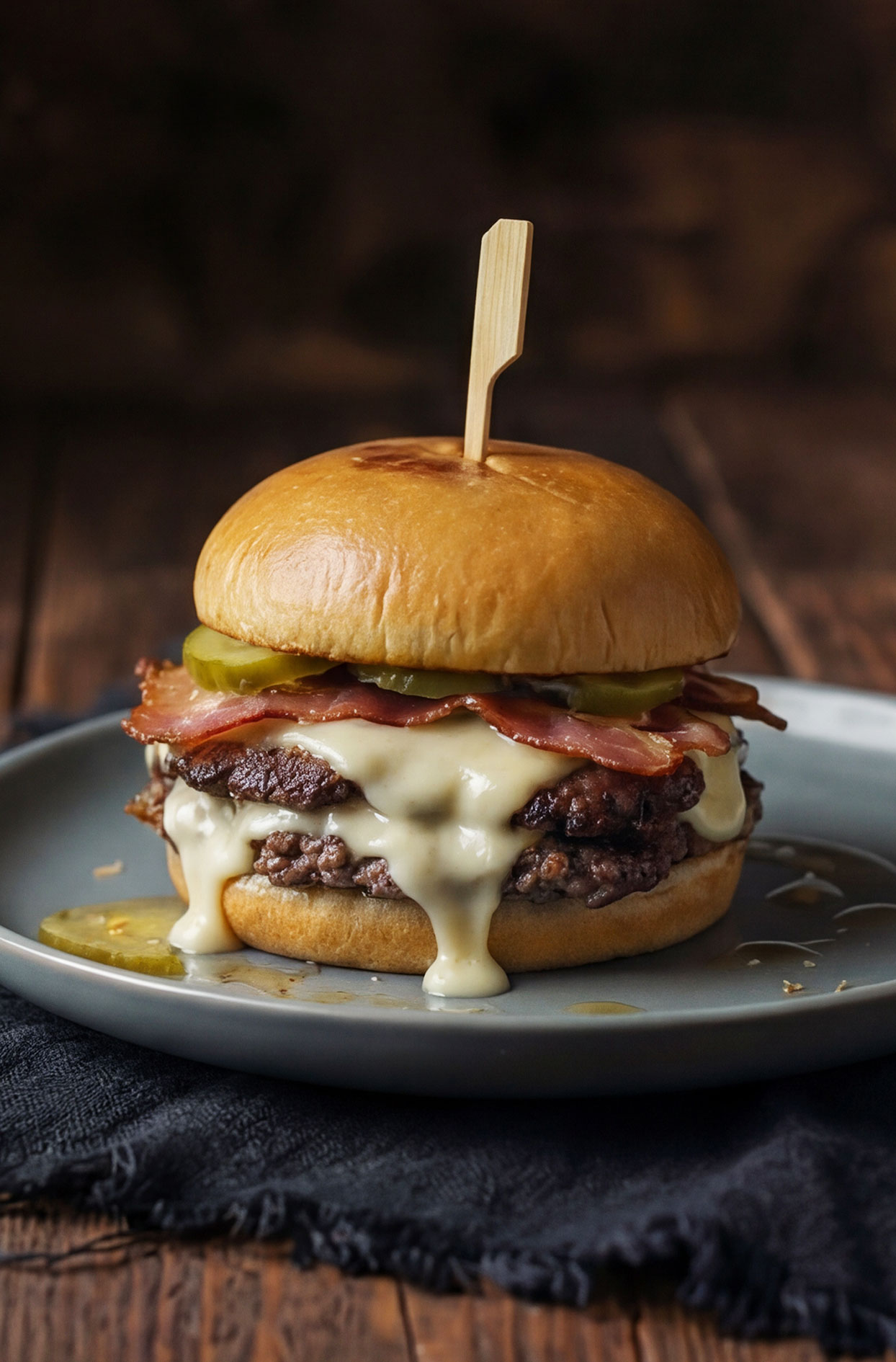
A regular cheeseburger, one patty, one slice of cheese, is fine. It gets eaten. But two 150 g patties stacked with melted cheddar between the layers, thick-cut bacon that cracks, and a bun toasted right on the grill grates, that is a different meal. That is the thing you order at a restaurant and pay 24 dollars for. The rest is classic on purpose: lettuce, tomato, red onion, pickle, mustard on the bottom, ketchup on top. No secret sauce, no yuzu aioli.
🔥 Two to three minutes per side, not five
This is where most recipes fall apart. Grill preheated all the way up, two to three minutes per side, cheese laid on the second you flip. Not five minutes. Not six. I have watched people cook their patties long enough to turn them into gray shoe leather, and then wonder why their homemade burgers never taste like the restaurant version. Three minutes of rest under foil and you build.
📏 The patty has to hang over the bun
Nobody mentions it and it ruins more burgers than anything else. Twelve centimeters for a ten centimeter bun. It will shrink, that is guaranteed, and if you build it the same size as the bun you end up with a meat donut sitting in a desert of bread. A dimple in the center with your thumb and the problem disappears. And if it is February and your grill is buried under three feet of snow, a cast iron skillet does exactly the same job. I explain how further down.
Ads
Ads
🥩 The seasoning goes IN the meat, and that is it
There is a school of thought that says to season only the surface, at the last second, because salt mixed into ground beef dissolves the proteins and gives you a sausage texture. That is true if you make your patties the day before. But if you mix, shape and head straight for the grill, the salt has no time to do anything at all. Salt, pepper, garlic powder, onion powder, work it into the beef with your hands, form your balls and you are done. It is simpler and the seasoning is everywhere instead of just on the crust.
📏 Twelve centimeters for a ten centimeter bun
This is the tip I give most often and the one people forget every single time. A beef patty loses 20 to 25 percent of its diameter as it cooks. Collagen contracts under heat, the patty pulls in on itself, and if you made it exactly the size of the bun, you just built a burger with a ring of empty bread all the way around. Make it hang over the edge. Always.
👍 The dimple, and why it actually works
On a grill, heat does not just come from below: it climbs up the sides of the patty. The edges cook faster, contract, and push the center upward. That is where the football-shaped burger comes from. A half-inch dimple pressed in with your thumb offsets exactly that movement, and the patty comes off flat. One honest caveat: in a cast iron skillet, heat only touches the bottom, so the dimple is close to pointless. On the grill, it is essential.
🍳 No grill? Cast iron does the job
This is my winter backup and it is very good. Heat a large cast iron skillet over high heat with a tablespoon of canola oil, until it is almost smoking. Cook the patties one minute thirty per side, top with cheese the moment you flip, and rest three minutes just the same. The crust is actually better than on the grill because the contact with the metal is total. The only downside: four twelve-centimeter patties will not fit at once, so plan on two batches.
🌡️ If you want to be sure, it is 160 °F (71 °C)
I cook by eye and it has worked for twenty years. But I am telling you anyway because it matters: unlike a steak, where bacteria stay on the surface, ground beef has them distributed throughout the patty by the grinding itself. The USDA recommends 160 °F (71 °C) in the center. If you are serving kids, older folks or anyone with a fragile immune system, get the thermometer out. Color proves nothing.
🧅 Red onion, raw or quick-pickled
Both are good and I go back and forth depending on my mood. Raw, you get the crunch and the sharp bite that wakes everything up. Pickled, you soften the onion and add an acidity that cuts through the fat of the bacon and the cheese. For the pickled version: thin rings in a bowl, white vinegar just to cover, a pinch of salt and a pinch of sugar, twenty minutes on the counter. They turn pink and more or less irresistible.
🥬 Lettuce first, against the bottom bun
This is not just for looks. The romaine leaf makes a barrier between the bread and everything that runs: juice from the patty, water from the tomato, vinegar from the pickle. Without it, your bottom bun is soggy before you have even finished building the burger. And a long sandwich pick through the center is not decoration, it is the only thing keeping a double from falling into three pieces when you pick it up.
📅 Make ahead
The patties can be made ahead and keep two to three days in the fridge, raw, separated by a small square of wax paper and stacked in a labeled container. They freeze very well the same way. You can also slice the tomato, onion and pickles a few hours ahead and keep them in separate containers in the fridge, and cook your bacon ahead: it reheats in two minutes in the oven without losing its crunch. What I never do ahead: cooked patties and toasted buns. A reheated patty is a wasted patty, and a toasted bun that sits around goes soft. Those two things happen once people have already arrived, and honestly, the smell of the grill firing up while your guests are having their first drink is part of the meal.
✅ What to serve with my double bacon cheeseburgers?
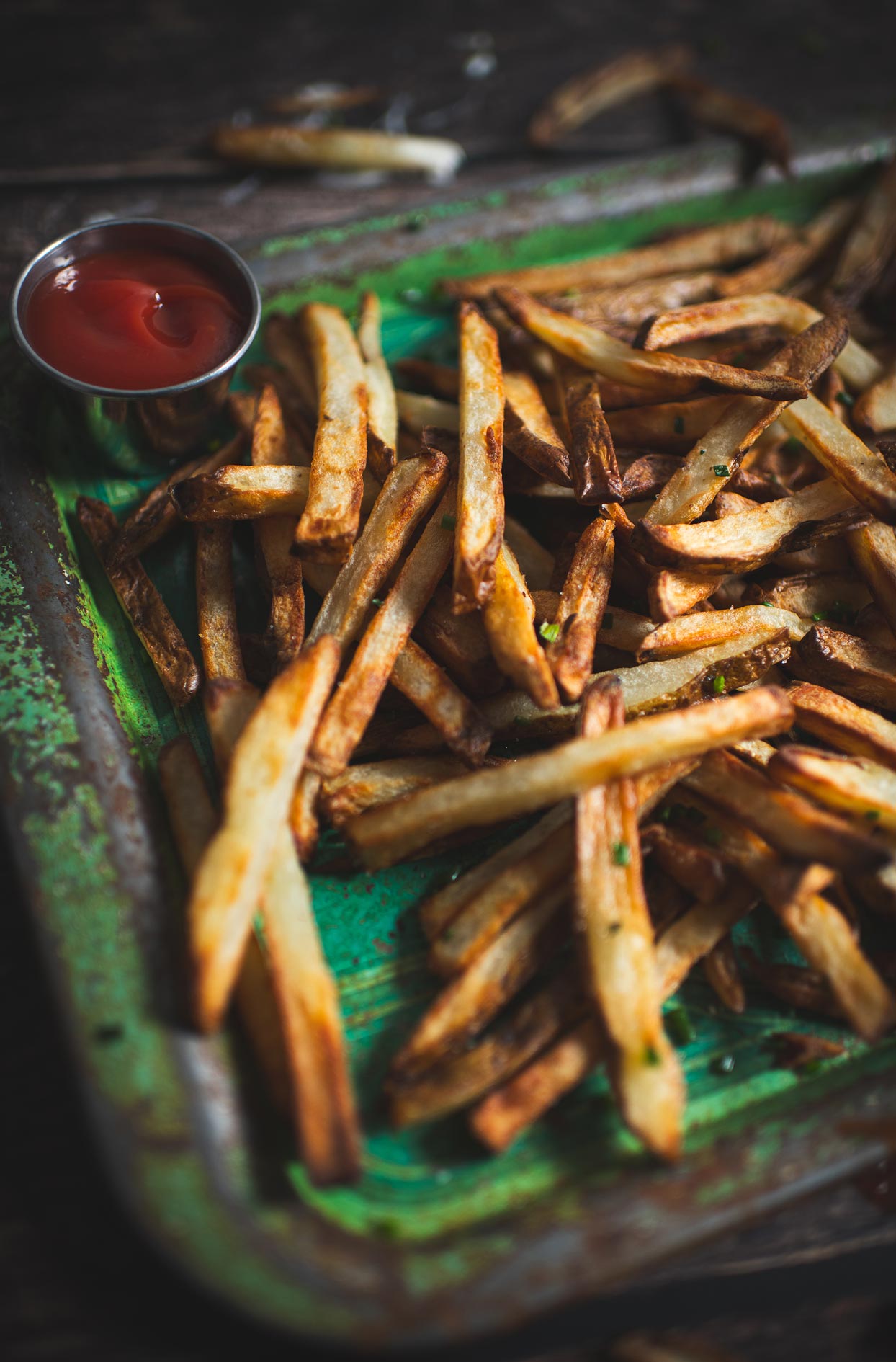
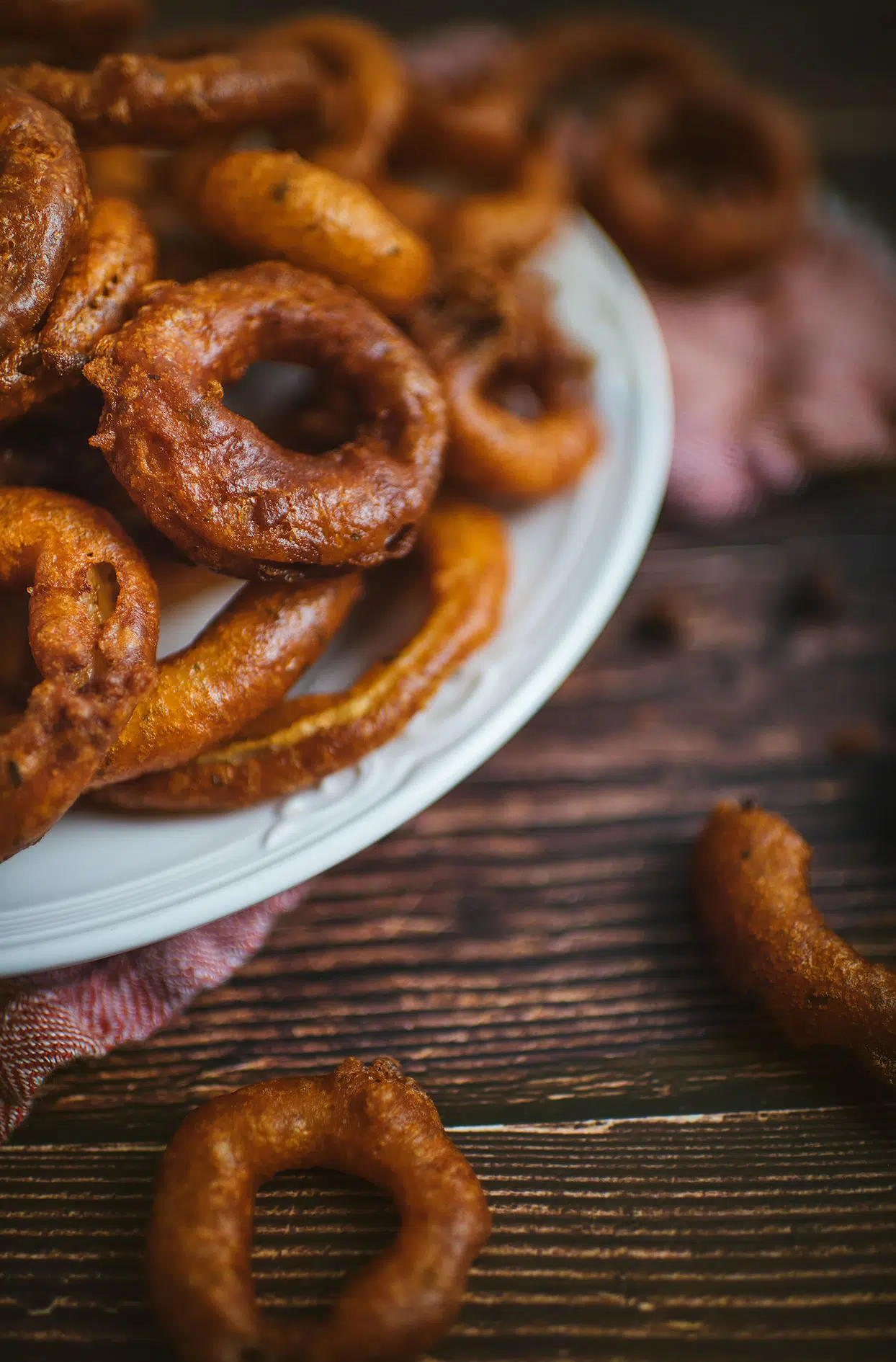
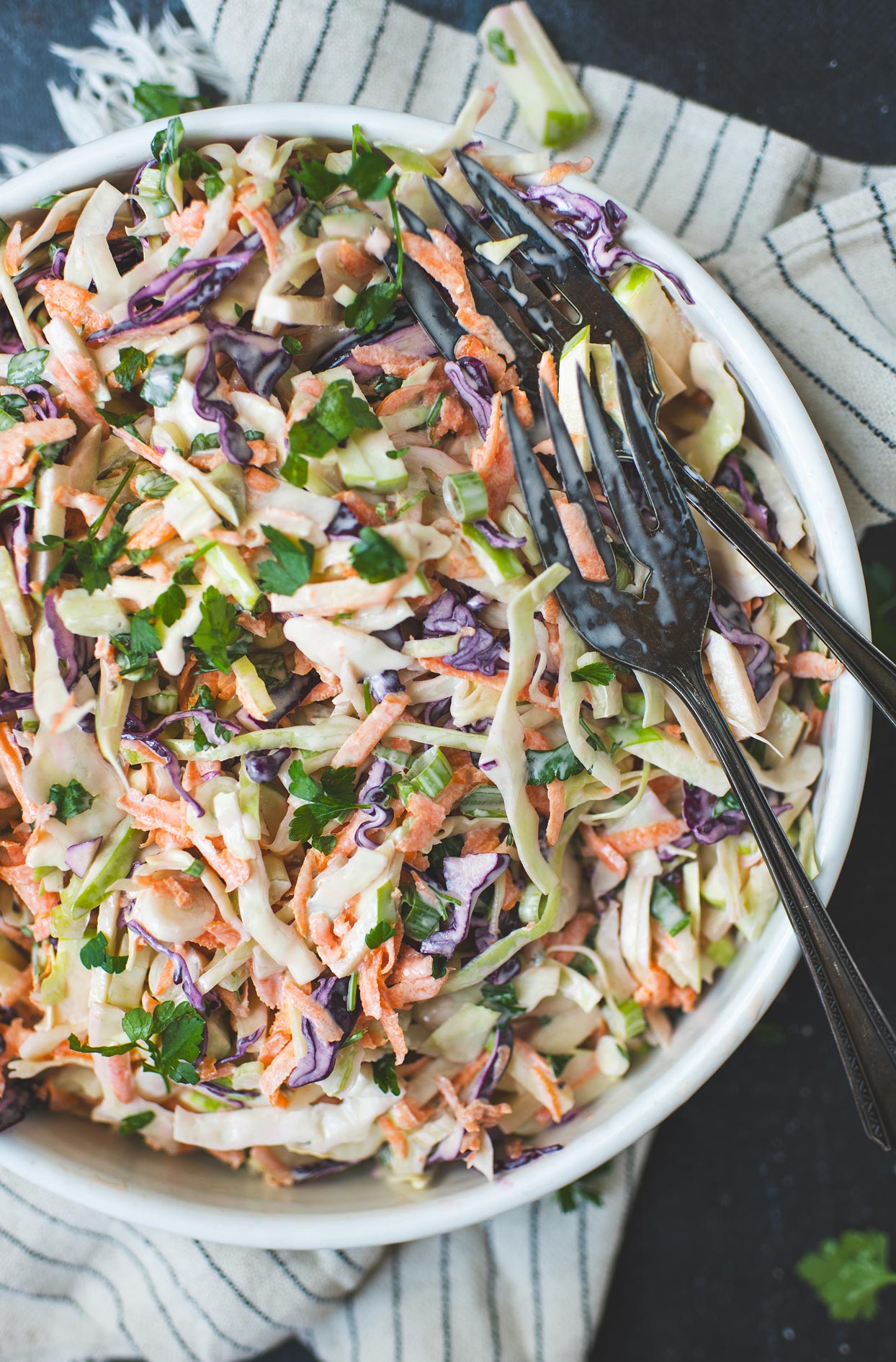
Fries, no debate. My air fryer French fries are perfect because they cook while the grill heats up and they need no watching. My beer-battered onion rings if you really want to go all out. And my creamy coleslaw with apples and celery on the side, for the cold, acidic contrast against all that hot fat.

Ads
Patties
- 600 g (1.2 lb) medium ground beef
- 1/2 tsp (2 ml) salt
- 1/2 tsp (2 ml) pepper
- 1/2 tsp (2 ml) garlic powder
- 1/2 tsp (2 ml) onion powder
Toppings
- 4 slices thick-cut bacon
- 4 slices orange cheddar
- 2 regular hamburger buns, about 4 in (10 cm) wide
- 4 romaine lettuce leaves, torn
- 1 large tomato, cut into 4 slices 1/4 in (7 mm) thick
- 1/2 red onion, thinly sliced into rings
- 1 large dill pickle, thinly sliced
- Mustard and ketchup, to taste
Ads
Preparation
- In a bowl, combine the ground beef, salt, pepper, garlic powder and onion powder. Mix by hand until the seasoning is evenly distributed, without working the meat any longer than needed. Divide into 4 equal portions, roll each into a ball, then press into round patties about 4.7 in (12 cm) wide and 1/2 in (1 cm) thick. They should be wider than the bun, they will shrink. Press a dimple into the center of each patty with your thumb. Set aside.
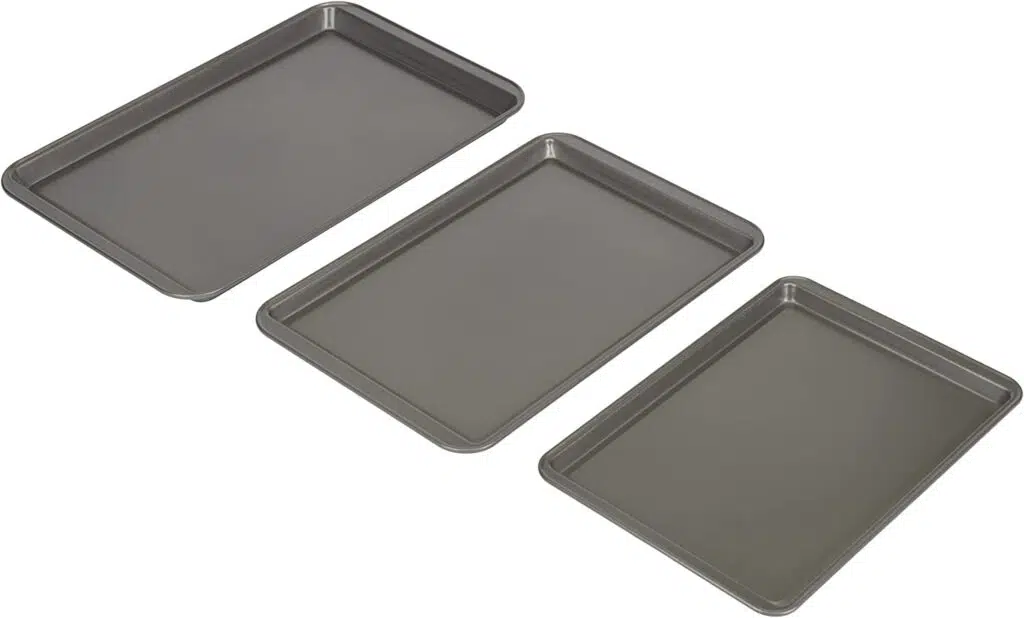
- Preheat the oven to 425 °F (220 °C). Lay the bacon slices on a foil-lined baking sheet and cook 20 to 25 minutes, until crisp. Drain on paper towels and set aside.
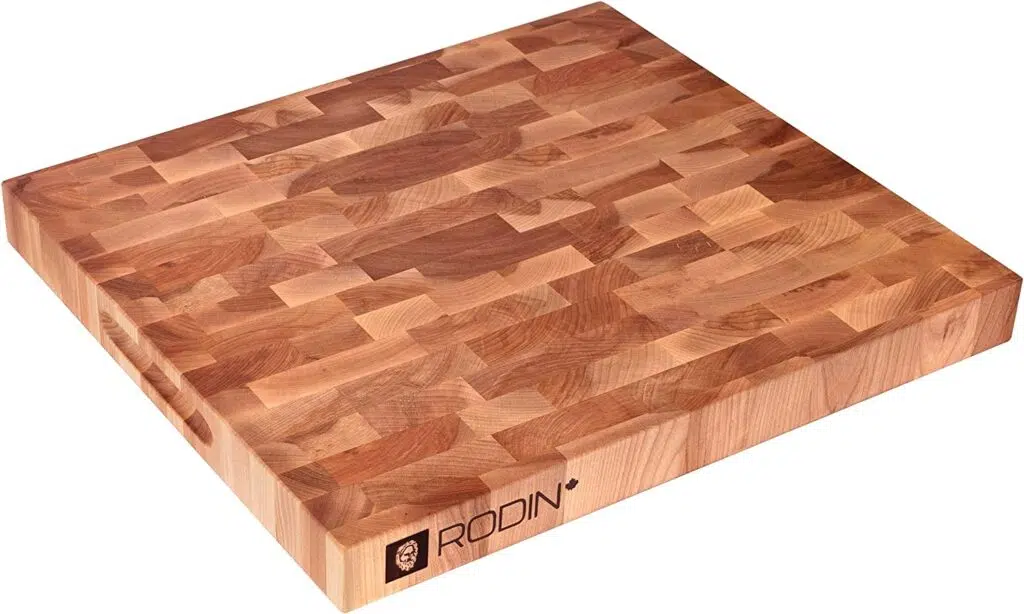
- Meanwhile, prepare all your toppings: slice the tomato, red onion and pickle, tear the lettuce. Get the mustard and ketchup out.
- Preheat the grill on high with the lid closed until it is very hot. If your grates are well seasoned, you have nothing to do. Otherwise, brush them lightly with oil.
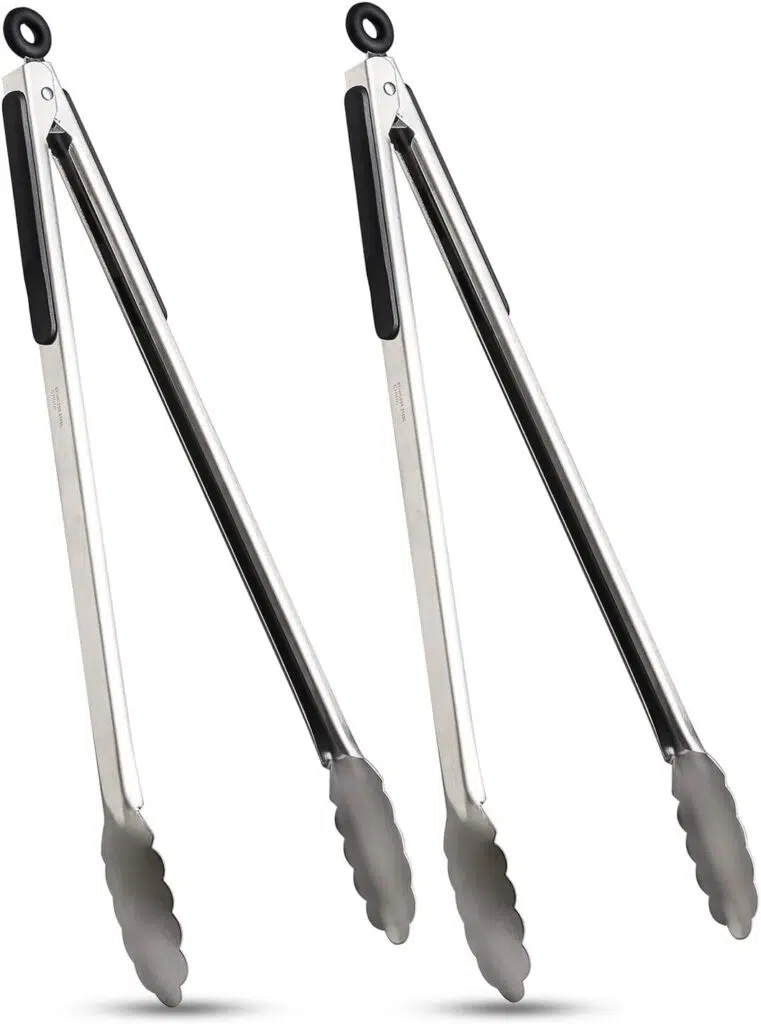
- Place the patties on the grates and cook 2 to 3 minutes. Flip them, immediately top each patty with a slice of cheddar, then continue cooking 2 to 3 minutes, until cooked through. The cheese melts on its own.
- Transfer the patties to a plate, cover with foil and let rest 3 minutes.
- While they rest, toast the buns cut side down directly on the grill grates, 2 to 3 minutes, until golden.
- Spread mustard on the bottom bun. Build in this order: lettuce, one patty with its cheese, a second patty with its cheese, tomato, red onion, pickles, then the bacon. Spread a little ketchup on the top bun, close the burger and skewer it through the center with a long sandwich pick so it holds together.
- Serve immediately with homemade fries.
Start with what does the work: a well-seasoned beef patty, melted cheese and crisp bacon. From there you want three kinds of contrast. Something crunchy and fresh, romaine lettuce or raw red onion. Something acidic, dill pickles or quick-pickled onions. Something juicy, a thick slice of tomato. Mustard on the bottom bun, ketchup on the top. Anything beyond that is decoration, and on a double it usually just makes the thing impossible to eat.
It is a shorthand for cooking a thick patty on a grill: roughly five minutes per side for medium-rare, six for medium, seven for medium-well. It applies to patties around an inch thick. It does not apply here at all. My patties are half an inch, made deliberately wide and thin, over a grill on full blast. At five minutes per side they would be ruined. Two to three minutes per side is the number for this shape.
Because it is physical and nothing stops it completely. Collagen in the meat contracts above 140 °F (60 °C), the fibers tighten and push water and fat out. A patty normally loses 20 to 25 percent of its diameter. Three things limit the damage: shape it wider than the bun from the start, press a dimple in the center with your thumb, and never smash the patty with a spatula while it cooks. Every time you press, you push out the juice that should be staying in.
Yes, and the crust is even better. A large cast iron skillet, a tablespoon of canola oil, high heat until it is almost smoking. One minute thirty per side, cheese the second you flip, three minutes of rest. The only constraint is space: four twelve-centimeter patties will not fit together, so plan two batches and keep the first ones warm under foil.
Medium ground beef from the grocery store, nothing complicated. That runs around 17 percent fat, and fat is what keeps a patty juicy under heat this aggressive. If you reach for extra-lean thinking you are doing the right thing, you end up with a dry, tight patty. If you have a butcher and want to push it, ask for ground chuck: that is what people who take this seriously use, around 20 percent fat.
Raw, two to three days in the fridge in an airtight container, separated by wax paper. They also freeze very well, up to three months, and thaw overnight in the fridge. Cooked, they keep two to three days and I never throw them out: gently reheated in a skillet, they make an excellent lunch. What does not keep is an assembled burger. The bread soaks up everything and turns into a sponge within hours.
Ads
Ads
Ads
Ads
Ads