

Chocolate Pudding Recipe (From Scratch)
- Preparation 10 min
- Refrigeration 4 h
- Cooking 10 min
- Servings 4
- Freezing Absolutely
Ads
🍫 We went through all four pots in three hours!
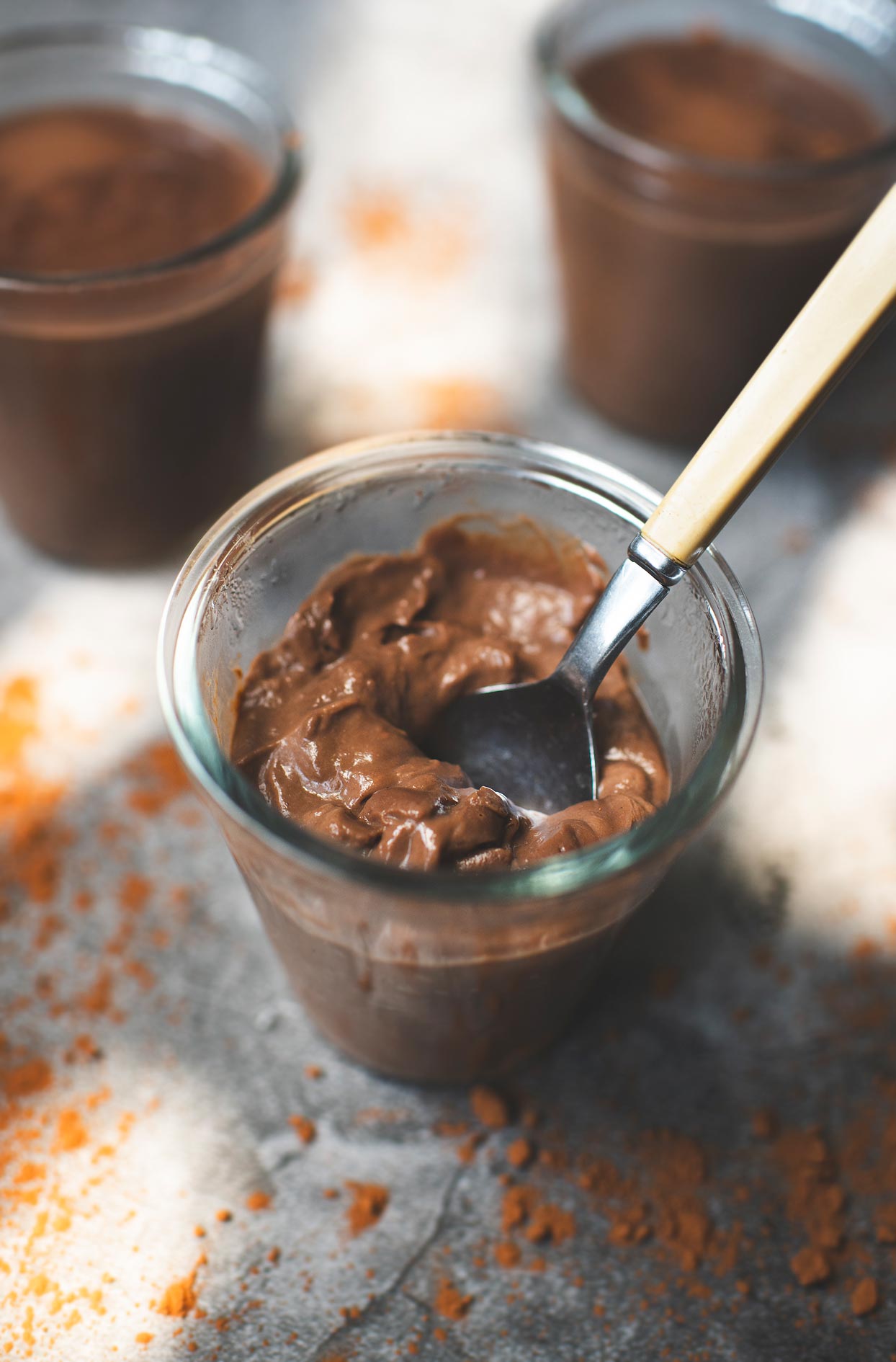
I will be honest: my youngest and I ate every single one the same day. Not one survived. This is a dessert everybody loves and it asks almost nothing of you. Ten minutes standing at the stove, four hours in the fridge, and you end up with something that has nothing in common with the boxed powder at the store. Make it on a weeknight, eat it the next day.
🥛 Milk AND cream, half and half
This is where mine breaks away from all the others. Every homemade pudding I have seen uses milk, full stop. I use one cup of whole milk and one cup of heavy cream. It changes the texture completely. The pudding turns dense and velvety instead of merely thick. It is a little richer, and you should own that, it is dessert.
🥚 Two egg yolks, and not for thickening
The cornstarch already does all the thickening. The yolks are there for something else: roughly a third of a yolk is fat, and the lecithin it contains is an emulsifier that keeps fat and water bound together. That is exactly what gives pastry cream its velvet. Cornstarch alone gives you thickness, never that richness on the palate. Two yolks is all it takes.
Ads
Ads
🫧 It HAS to bubble, or it stays runny
This is the single most important thing in the recipe and almost nobody explains it. Cornstarch starts swelling around 62 °C, but it only reaches full thickening power after boiling in earnest for about a minute. The starch granules have to swell and burst completely. Pull it too early and your pudding looks fine in the pan and stays runny once cold. The other end of the problem is just as real: keep boiling long after that and the starch network breaks down and it goes liquid again. The cue is visual, not timed. Big bubbles, very thick, very smooth, off the heat.
🥛 One cup milk, one cup cream
Half and half, and that is what separates this from every other homemade pudding. Milk alone gives you something thick but flat on the palate. Heavy cream brings the fat that coats your tongue and carries the cocoa flavor. If all you have is milk, the recipe still works, but you will not get the same thing.
🍮 The wrap TOUCHES the pudding, it does not cover the bowl
A two-second detail that solves a real problem. Skin forms because water evaporates from the surface exposed to air: the milk proteins denature, unfold, and trap the fat into an elastic film. Laying the wrap directly on the pudding removes contact with air entirely, so evaporation cannot even begin. Wrap stretched across the rim of the bowl does nothing at all.
☕ A little coffee to intensify it
If you want to push the chocolate further, add a teaspoon of instant coffee to the dry ingredients, or swap two tablespoons of the milk for strong coffee. The coffee does not read as coffee, it amplifies the cocoa. It is the simplest way to turn a good pudding into a genuinely intense one.
🥣 If the texture is off, a sieve fixes everything
It does not happen to me, but if you ever spot small grains in your pudding, pass it through a fine sieve before pouring it into the pots. It takes ten seconds and rescues any rough start. Using a whisk rather than a spoon, and scraping the corners of the pan, prevents the problem 95% of the time.
🍨 Individual pots, not one big bowl
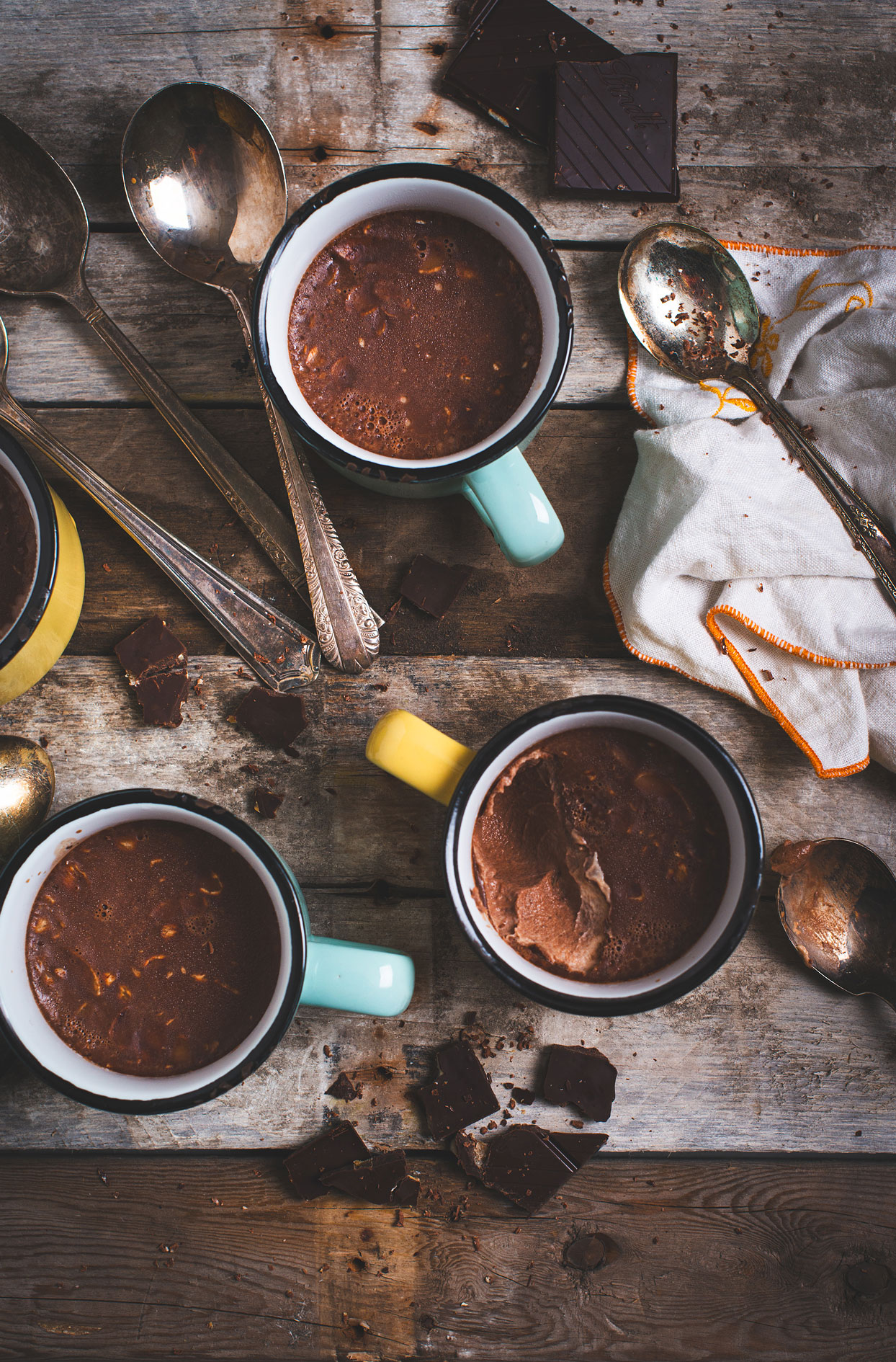
I serve it in small glass dessert cups, one per person. It is not just for looks: in a large bowl the exposed surface is enormous and it chills unevenly. In individual portions, every pot sets at the same rate, and you can cover them one by one.
📅 Make ahead
This is a dessert that REQUIRES making ahead, so you may as well take advantage of it. Four hours in the fridge is the minimum, and it is also the sweet spot. You can make it on a weeknight and serve it the next day without any trouble. What you should not do is pull it out an hour before serving thinking you are helping. This pudding is meant to be eaten cold, that is when the texture is at its best.
✅ What to serve with my creamy chocolate pudding?
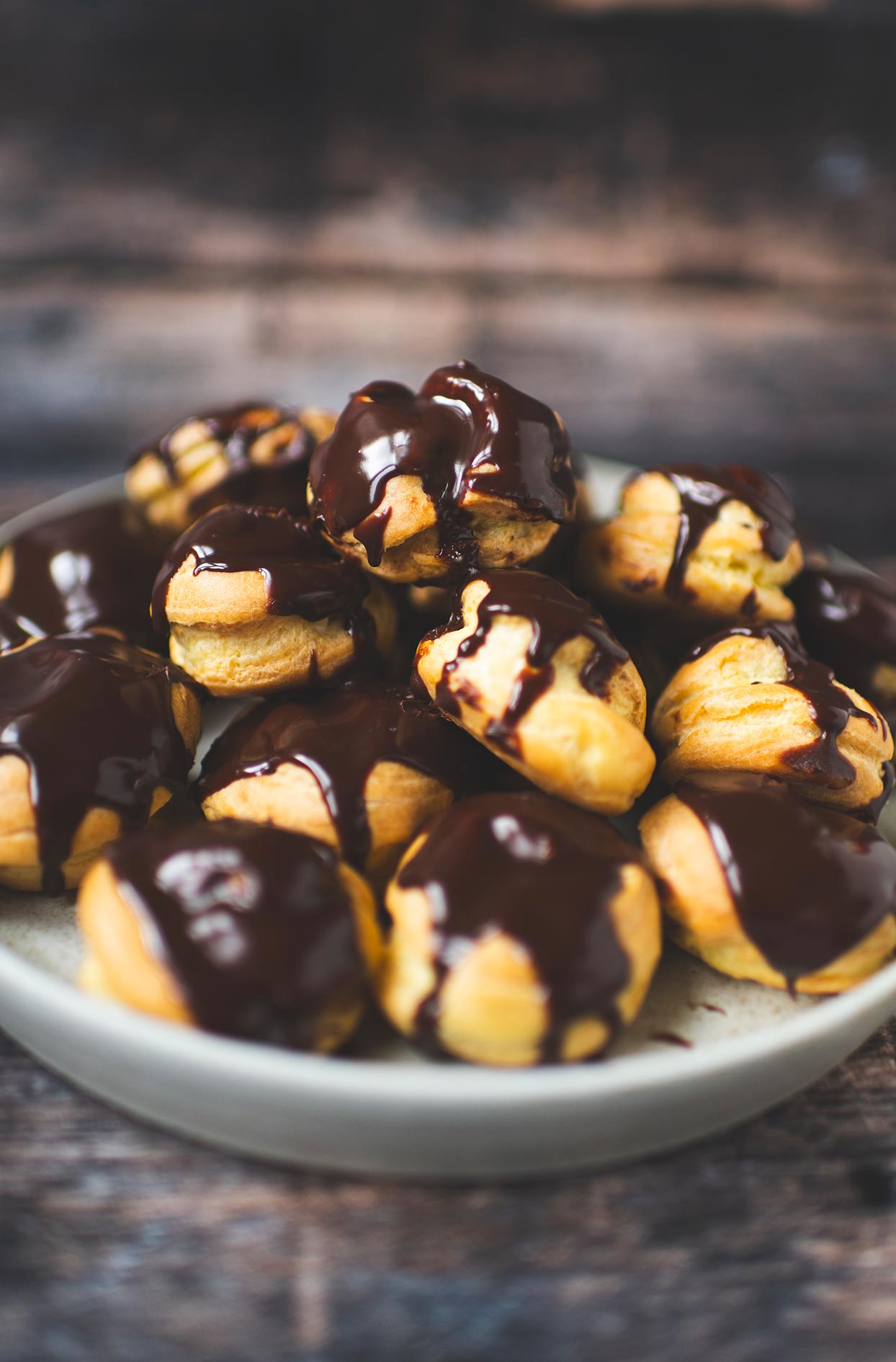
I put nothing on it. It is rich enough as it is and I find the straight chocolate stands on its own. If you want a garnish anyway, unsweetened whipped cream or a few fresh raspberries do the job without adding sugar. If you like creamy desserts, go look at my orange and coffee chocolate panna cotta, which plays in the same register using gelatin instead of cornstarch. And if it is the pastry cream technique that interests you, my chocolate profiteroles use exactly the same principle of cornstarch and egg yolks.

Ads
Pudding
- 1/4 cup (60 ml) sugar
- 1/4 cup (60 ml) golden brown sugar, packed
- 1/4 cup (60 ml) unsweetened cocoa powder
- 2 tbsp (30 ml) cornstarch
- 1 pinch of salt
- 2 large egg yolks
- 1 cup (250 ml) whole milk
- 1 cup (250 ml) heavy cream
To finish
- 2 tbsp (30 ml) unsalted butter
- 1 tsp (5 ml) vanilla extract
Ads
Preparation
- In a medium saucepan, whisk together the sugar, brown sugar, cocoa, cornstarch and salt until not a single lump remains. Add the egg yolks and about 1/3 cup of the milk, then mix into a thick, smooth paste.
- Set the saucepan over medium heat and gradually whisk in the remaining milk and the cream. Cook, stirring constantly, for 5 to 10 minutes.
- Keep going until the mixture starts bubbling in earnest. That is the moment it truly thickens. As soon as it is very thick and very smooth, pull it off the heat and keep stirring gently.
- Add the butter and the vanilla, and stir until the butter has completely melted.
- Pour into 4 small pots or dessert cups. Lay a sheet of plastic wrap directly on the surface of the pudding, in contact with it, to keep a skin from forming.
- Refrigerate at least 4 hours before serving. Serve cold.
Five ingredients do the work: cocoa powder, sugar, cornstarch, dairy and egg yolks. Whisk all the dry ingredients together first so the cocoa cannot clump, then make a smooth paste with the yolks and a splash of the milk. Add the rest of the dairy over medium heat and stir constantly until it bubbles and thickens, which takes 5 to 10 minutes. Off the heat, stir in butter and vanilla. Then it has to chill for at least four hours.
Because it did not boil enough. Cornstarch begins thickening around 62 °C, but it only reaches full power after bubbling in earnest for about a minute: the starch granules have to swell and burst completely. Pudding pulled too early looks fine in the pan and stays loose once cold. Watch the other extreme too: cooking well past the boil breaks the starch network and thins it out again.
Yes, cornstarch can thicken on its own and plenty of recipes work that way. But you lose something. About a third of an egg yolk is fat, and the lecithin in it is an emulsifier that keeps fat and water bound together, which is what gives pastry cream its velvet. Without yolks you get a thick pudding, but not a rich one. Two yolks make the whole difference.
Pudding is cooked and thickened with starch, sometimes with egg yolks, then chilled until it sets. Mousse is not cooked the same way at all: it gets its structure from air whipped into cream or egg whites, which makes it light and foamy. Pudding is dense and spoonable, mousse is airy. Same flavors, completely different textures and techniques.
To stop a skin from forming. That skin appears because water evaporates from the surface exposed to air: whey proteins denature, unfold and trap fat globules, creating a dense elastic film. Laying the wrap in direct contact with the pudding removes the interface with air entirely, so evaporation never starts. Wrap stretched over the rim of the bowl accomplishes nothing.
Up to 4 days in the fridge, in an airtight container or with the wrap still pressed against the surface. It contains egg yolks, milk and cream, so it does not keep as long as a baked dessert. Store it at the back of the fridge rather than in the door, where the temperature swings too much. I would not freeze it: the cornstarch and the yolks weep on thawing and the texture is ruined.
Ads
Ads
Ads
Ads
Ads