

Beef Stroganoff Recipe (Egg Noodles)

- Preparation 20 min
- Cooking 25 min
- Servings 4 to 6
- Freezing I do not suggest
Ads
🍝 The noodles go IN the pan, and it changes everything!
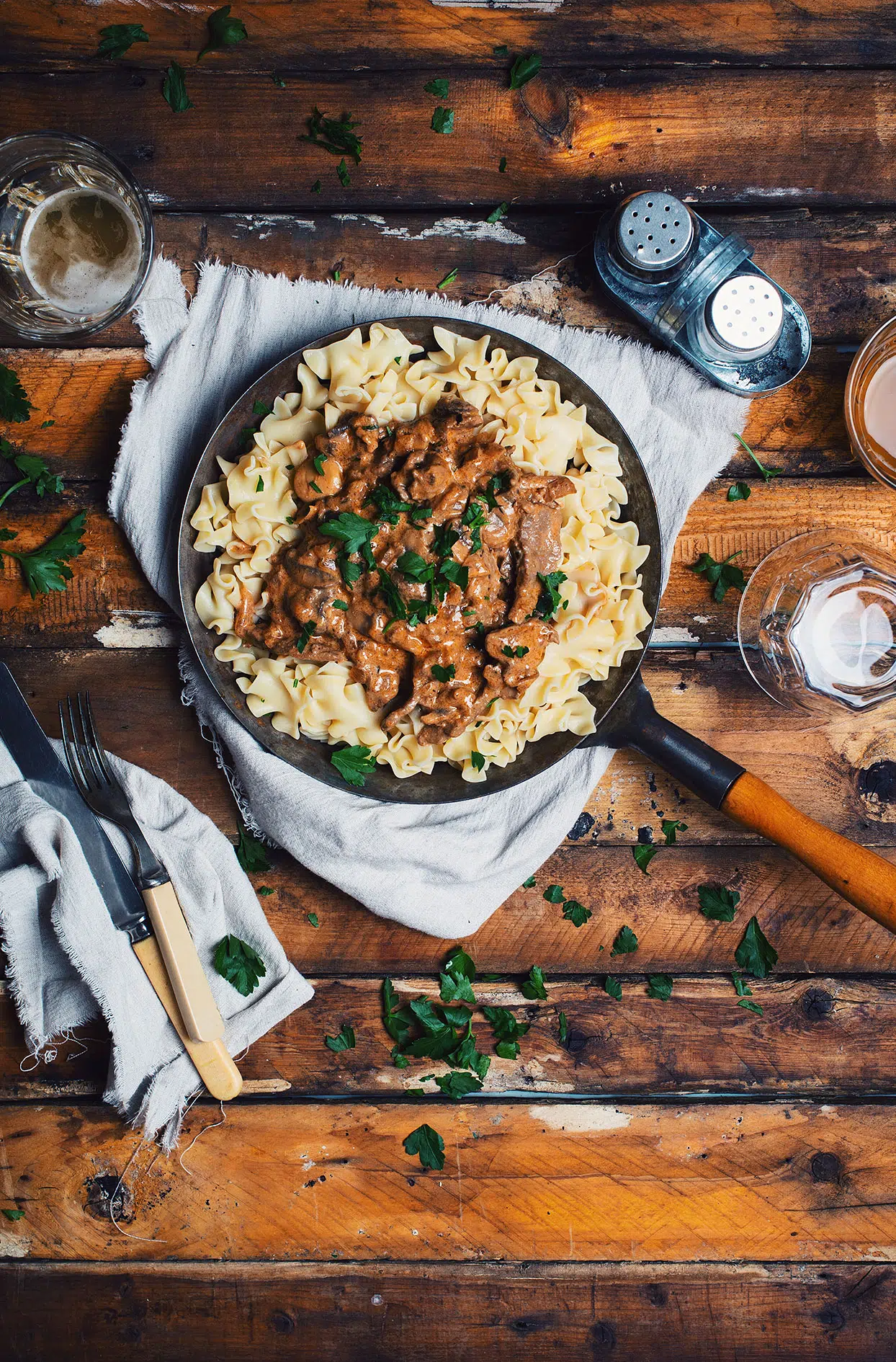
Do it this way once and you will never serve your noodles on the side again. Everybody builds the sauce and pours it over a bed of pasta. I throw all 400 g of egg noodles straight into the pan and toss. The sauce coats every single noodle instead of pooling at the bottom of the plate. One less pot to wash, one dish on the table, and honestly it tastes better. Try it, you will see.
🥩 Ribeye, not stewing beef
This is where most stroganoffs fall apart. Mine is made with ribeye cut into thin strips, seared one minute per side and pulled right back out. A good cut, marbled just enough, that stays tender because it barely spends any time in the pan. It is ridiculous, honestly. And if ribeye is out of budget that week, I give you the alternative further down.
🍄 Two containers of mushrooms, not one
The first time I used a single one and thought there was not nearly enough. Get two, 450 g of sliced cremini. And here is the trick nobody mentions: the mushrooms go into the pan at the same time as the onion and the garlic. The garlic does not burn, because the mushrooms release their water almost immediately. That water deglazes the bottom, and you scrape up every bit of fond the beef left behind.
Ads
Ads
🍄 Garlic with the mushrooms, and why it does not burn
Every recipe has you add the garlic at the end, out of fear it will scorch. I put the onion, the mushrooms and the garlic in the pan all at once, and it works for a specific reason: mushrooms release their water almost immediately. That moisture shields the garlic and brings the temperature of the pan bottom down. As a bonus, it deglazes all the fond the beef left behind. Take a wooden spoon and scrape the bottom while it cooks, that is where the flavor is.
🥩 Ribeye, and the alternative when it costs too much
Ribeye is a good cut, marbled just enough, and sliced into thin strips it stays tender even after a fast sear. That is what I recommend. It is also expensive. If the budget does not allow it, go with sirloin or top sirloin: less marbled, but sliced thin against the grain and seared quickly, the result holds up very well. What I would avoid is stewing beef or braising cubes, which need hours to tenderize and will stay rubbery in a 25-minute recipe.
🔥 Sear in small batches, never all at once
This is not chef fussiness. A browned crust needs more than 140 °C, but the water the meat releases caps out at 100 °C. Crowd the pan and that moisture has nowhere to evaporate, it pools at the bottom, and your beef boils in its own juice instead of crusting. Two or three small batches beat one big one. And between each, let the pan come back up to heat.
⏱️ Two to three minutes, not five
The sauce thickens far faster than most recipes claim, because there is a quarter cup of flour in there. Stay in front of it. Go too long and it turns pasty, and you will not be able to coat your noodles properly. On the other hand, if it tightens up too much, that is no problem at all: loosen it with a little broth, milk or cream until it coats the back of a spoon.
🍜 Al dente noodles, or they fall apart
Cook them one minute less than the package says. They will finish cooking in the hot sauce, and if you cooked them all the way through they will break down when you toss. Wide ribbon-style is what I use, but any egg noodle does the job.
🍽️ Tossed in the pan or served on the side?
I toss everything together, that is my version and I much prefer it: the sauce coats every noodle. But if you have company and want it to look more classic on the plate, you can keep the sauce in the pan and spoon it over the noodles, or even over mashed potatoes. Both work, it really is a matter of taste.
📅 Make ahead
The real work here is the knife: slicing the beef thin, dicing the onion, cleaning and slicing two containers of mushrooms. All of it can be done the day before and kept in labeled containers in the fridge. Cover the sliced beef well and salt it only when you are ready to cook. What I never do ahead: the sauce and the final toss. A sour cream sauce that sits loses its texture, and noodles already tossed drink up all the liquid. Anyway, once the knife work is done, the whole cook takes twenty-five minutes.
✅ What to serve with my beef Stroganoff?
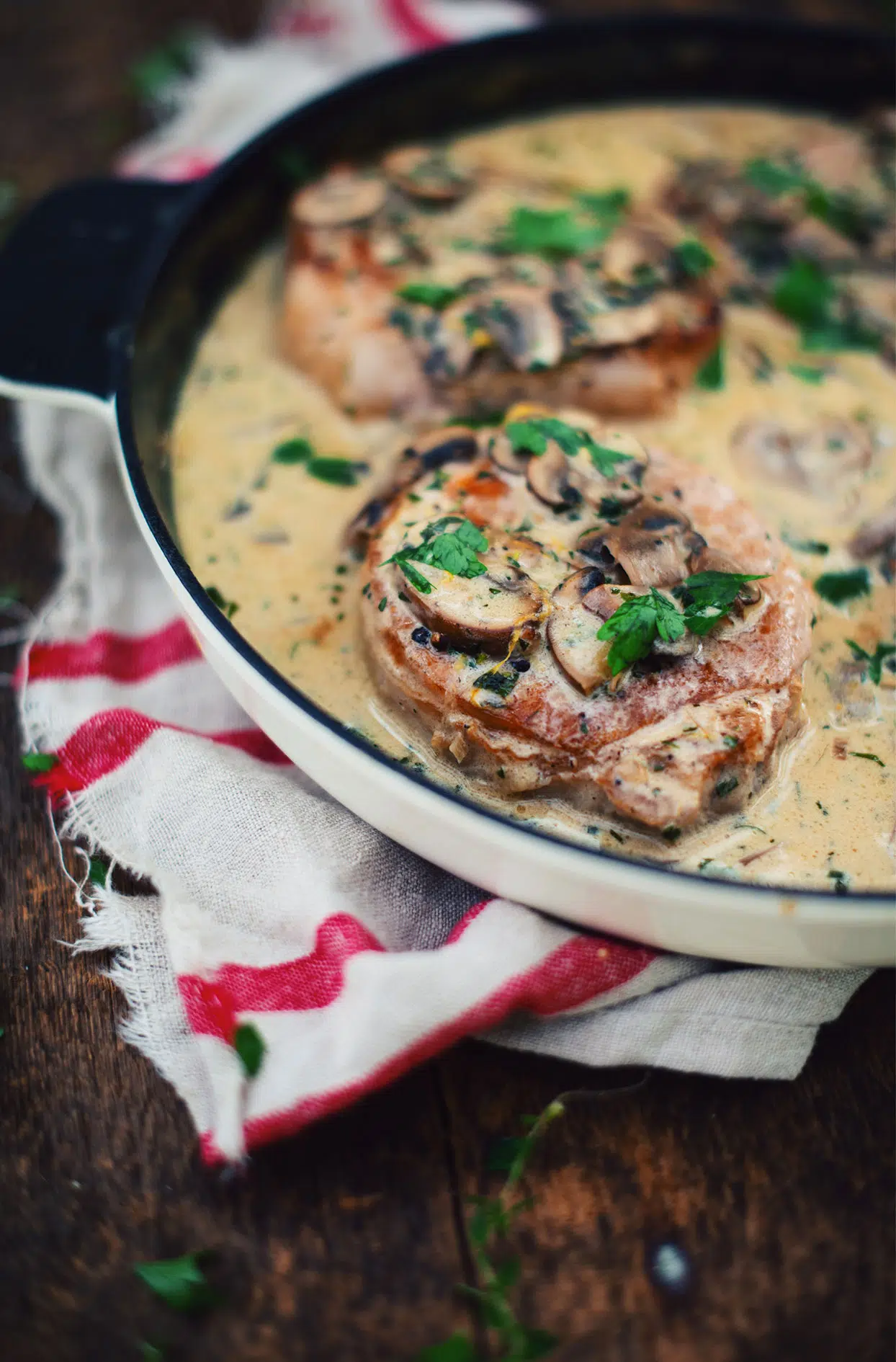
It is a complete meal with the noodles in it, so nothing is missing. If you want more on the table, a grilled Caesar salad alongside brings the crunch and acidity a dish this creamy is short on. And my cheesy garlic bread for mopping the pan, because there will be sauce left. If this is your kind of dish, go look at my legendary veal Stroganoff, the finer version made with veal, or my pork chops with creamy mushroom sauce, which play in the same family.
Ads
Beef
- 675 g (1 1/2 lb) ribeye steak, lightly trimmed and cut into 1/4 in (0.5 cm) strips
- 2 tbsp (30 ml) extra virgin olive oil
- Salt and pepper, generously
Sauce
- 4 tbsp (60 ml) unsalted butter
- 1 medium yellow onion, diced
- 450 g (1 lb) cremini mushrooms, sliced
- 2 garlic cloves, finely minced
- 1/4 cup (60 ml) flour
- 2 cups (500 ml) beef broth
- 2 tbsp (30 ml) fresh thyme, finely chopped
- 1 tbsp (15 ml) Worcestershire sauce
- 1/2 cup (125 ml) sour cream
- 1 tbsp (15 ml) Dijon mustard
To serve
- 400 g wide egg noodles, cooked al dente
- Fresh parsley, finely chopped
Ads
Preparation
- Season the beef strips generously with salt and pepper on all sides.
- In a large skillet, heat 1 tbsp of the olive oil over medium-high heat. Working in small batches, add the beef and cook without disturbing it, 1 to 2 minutes per side, until browned. Transfer to a plate. Repeat with the remaining beef, adding oil as needed.
- Reduce to medium heat and add the butter to the same skillet. Once the butter has melted, add the onion, mushrooms and garlic all at once. Cook about 5 minutes, until the onion is tender and the mushrooms start to brown. The water the mushrooms release will deglaze the bottom: scrape with a wooden spoon to bring all the fond back into the pan.
- Stir in the flour and cook, stirring, for 1 minute. Slowly pour in the beef broth, stirring until fully incorporated. Add the thyme, season generously with salt and pepper, then simmer, stirring often, for just 2 to 3 minutes. It thickens fast.
- Stir in the Worcestershire sauce, sour cream and Dijon mustard until the sauce is smooth. It should be thick enough to coat the back of a wooden spoon. If it is too tight, loosen it with a little broth, milk or cream.
- Return the beef to the pan along with its juices, add the al dente egg noodles and toss well to coat everything. Scatter with fresh parsley and serve immediately.
Two things, and neither is an ingredient. First, the cut: use ribeye or sirloin sliced thin, seared one minute per side and pulled out of the pan immediately, so it never has time to toughen. Second, the sear itself: work in small batches. A crowded pan traps the moisture the meat releases and your beef boils instead of browning, which costs you both the crust and the fond that flavors the whole sauce.
The 1871 original is surprisingly bare: cubed beef, mustard, broth and sour cream. No mushrooms, no onion, no noodles. Everything we know today was added over the decades and across borders. The version most of us grew up with keeps the mustard and the sour cream and adds mushrooms and egg noodles. That is the one I make here.
Sour cream carries roughly 18 to 20% fat, against 30 to 40% for cooking cream, and it is that fat that normally shields the proteins from heat. With less of it, a hard boil can make the whey coagulate into grains. Two simple precautions solve it: stir it in while the sauce is barely simmering rather than boiling, and never let it boil afterward. The flour already in the sauce helps a great deal, it stabilizes the whole thing.
Ribeye, cut into thin 0.5 cm strips. It is a marbled cut that stays tender through a fast sear, which is exactly what this dish asks for: the beef spends barely a minute per side in the pan. Sirloin and top sirloin also work at a better price, sliced thin against the grain. Avoid stewing beef or braising cubes, which need hours of slow cooking to tenderize.
Not only can you, it is far better. The can is a shortcut that mostly brings salt and starch. Here the sauce is built in three moves: a roux with butter and flour, beef broth poured in slowly, then sour cream and Dijon at the end. The mushroom flavor comes from actual mushrooms, two containers of cremini browned in butter. It takes five extra minutes and there is no comparison.
Three to four days in the fridge in an airtight container. The noodles will drink up the sauce overnight, which is normal and not a problem: when reheating, loosen it with a little milk, cream or broth and stir. The microwave works well, so does a skillet over low heat. It also freezes, though plan on even more liquid when you reheat it.
Ads
Ads
Ads
Ads
Ads