

Homemade Apple Crisp
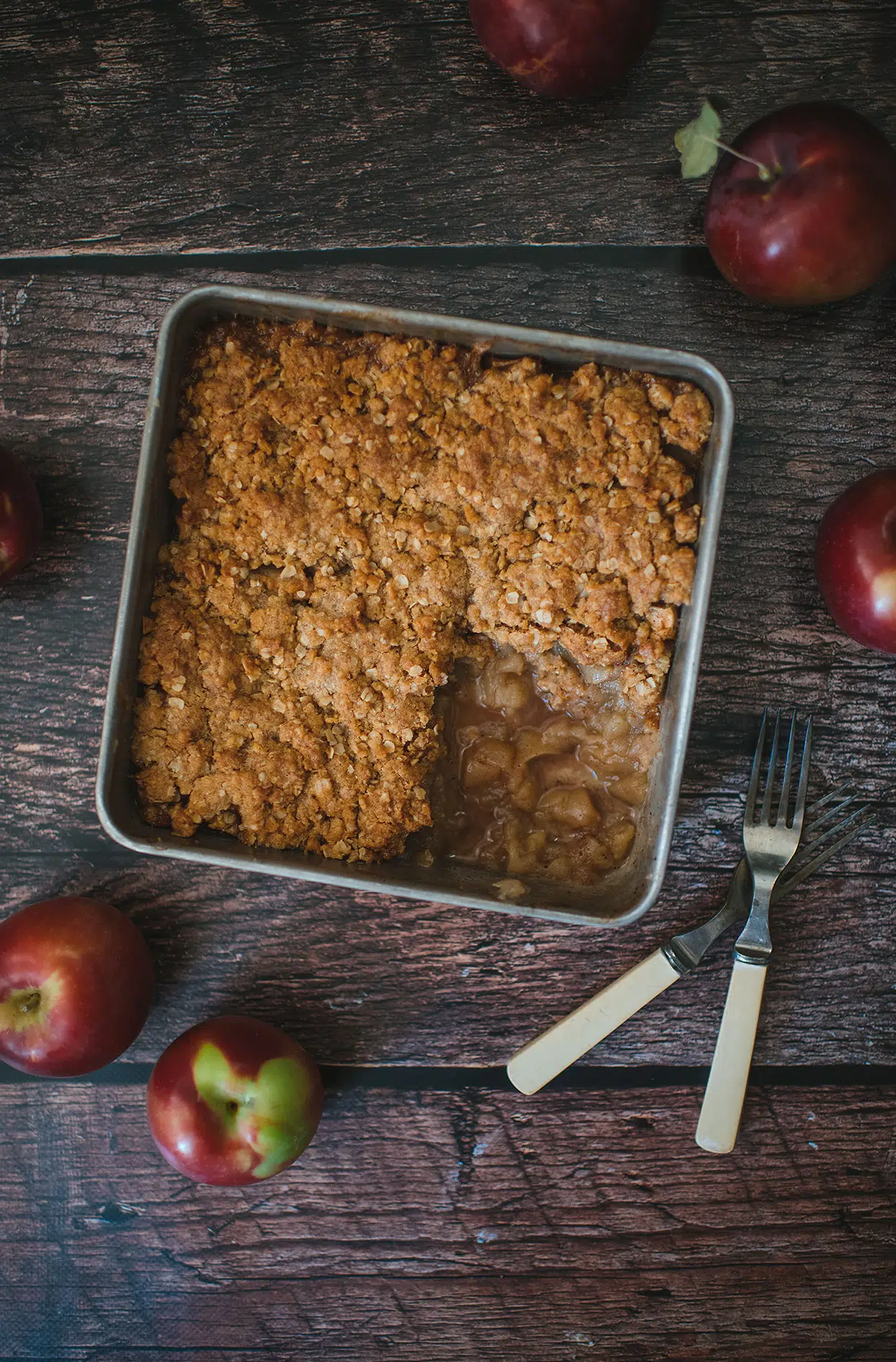
- Preparation 25 min
- Cooking 45 min
- Servings 6
- Freezing Absolutely
Ads
🍎 An apple crisp inspired by my mother’s
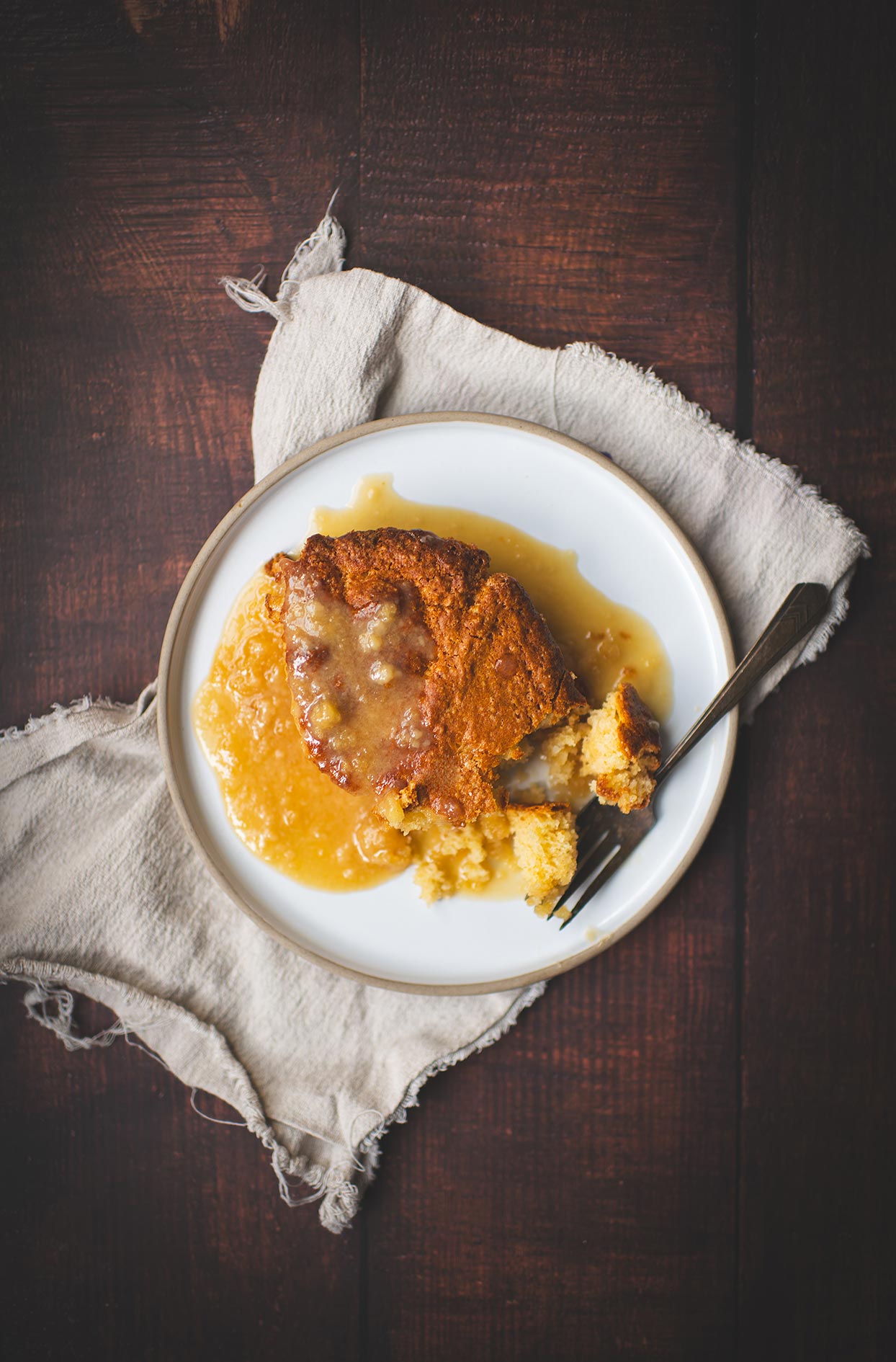
This homemade apple crisp is inspired by my mother’s. It’s a really good crisp: full of flavor, with a beautiful topping, just sweet enough. I love it. Every fall, I go apple picking at a small organic orchard near Oka, and when we get back, it’s the first recipe we make with the kids. They work the topping with their fingers to form the little beads of butter, and honestly, it’s as much their recipe as mine.
🥃 Cider, my little secret
What sets my crisp apart is the cider I add to the apple mixture. It brings real flavor: the apple taste intensifies, the sweetness balances out, and the acidity wakes everything up. It’s incredible. With salted butter in the topping for a little hit of salt, and a spoonful of maple syrup for roundness, you get a crisp that tastes like much more than just sugar and cinnamon.
❄️ Great in fall, even better in winter
We always associate apple crisp with apple season, but honestly, it’s in the dead of winter that it does the most good. In January when it’s minus twenty, or in March during spring break and maple season, a warm crisp with ice cream melting on top is unbeatable. And the best apples for apple crisp, the Quebec baking varieties, are in stores twelve months a year, so you have no excuse.
Ads
Ads
🍎 The best apples for apple crisp, and when to buy them
I use Lobo and McIntosh, the apples I pick at the orchard in the fall. If you want pieces that hold their shape better, Cortland is the Quebec reference: it keeps its form while baking and browns far less. McIntosh and Lobo soften more (Lobo is actually a McIntosh descendant), which gives a more melting texture. From January to March, when Lobo is off the market, go with Cortland, Empire or Spartan: they’re available year-round thanks to controlled atmosphere storage. Skip the eating apples that turn to water in the oven.
🥃 Cider changes everything
Three tablespoons of cider in the apple mixture and the flavor goes up a notch. Cider intensifies the apple taste, brings acidity and balances the sweetness. It’s my personal addition and I wouldn’t go without it. If you don’t have any on hand, unsweetened apple juice will do, but it won’t be the same.
🧈 Cold salted butter, worked into little beads
I use salted butter because it gives a little hit of salt that brings out the sugar and the apple. And most importantly, it has to be very cold and worked by hand until it forms little beads. The cold butter pieces melt in the oven creating air pockets, and that’s exactly what gives an apple crisp topping that crumbles instead of packing down. Melted butter would coat the flour from the start and give a denser texture.
⏱️ The 30-minute rest, don’t skip it
This is the step everyone skips and yet it’s the one that solves the runny crisp problem. As it cools, the juice released by the apples thickens naturally and the topping regains its crunch. A crisp served too hot runs all over the plate. Thirty minutes of patience and the texture is perfect.
🔥 A baking sheet underneath, preheated
With six large apples in an 8-inch dish, there isn’t much margin and it can bubble over. Slide a baking sheet under your dish to catch any spills. The trick: put it in the oven to preheat from the start. An already-hot sheet helps the bottom of the crisp cook instead of cooling it down.
❄️ Freeze it after baking
I freeze it once baked. Let it cool completely, wrap it well and freeze. To serve, reheat it in the oven: the topping gets its crunch back, which the microwave will never do. It’s perfect for having a dessert ready when company shows up unannounced.
✅ What to serve with my apple crisp
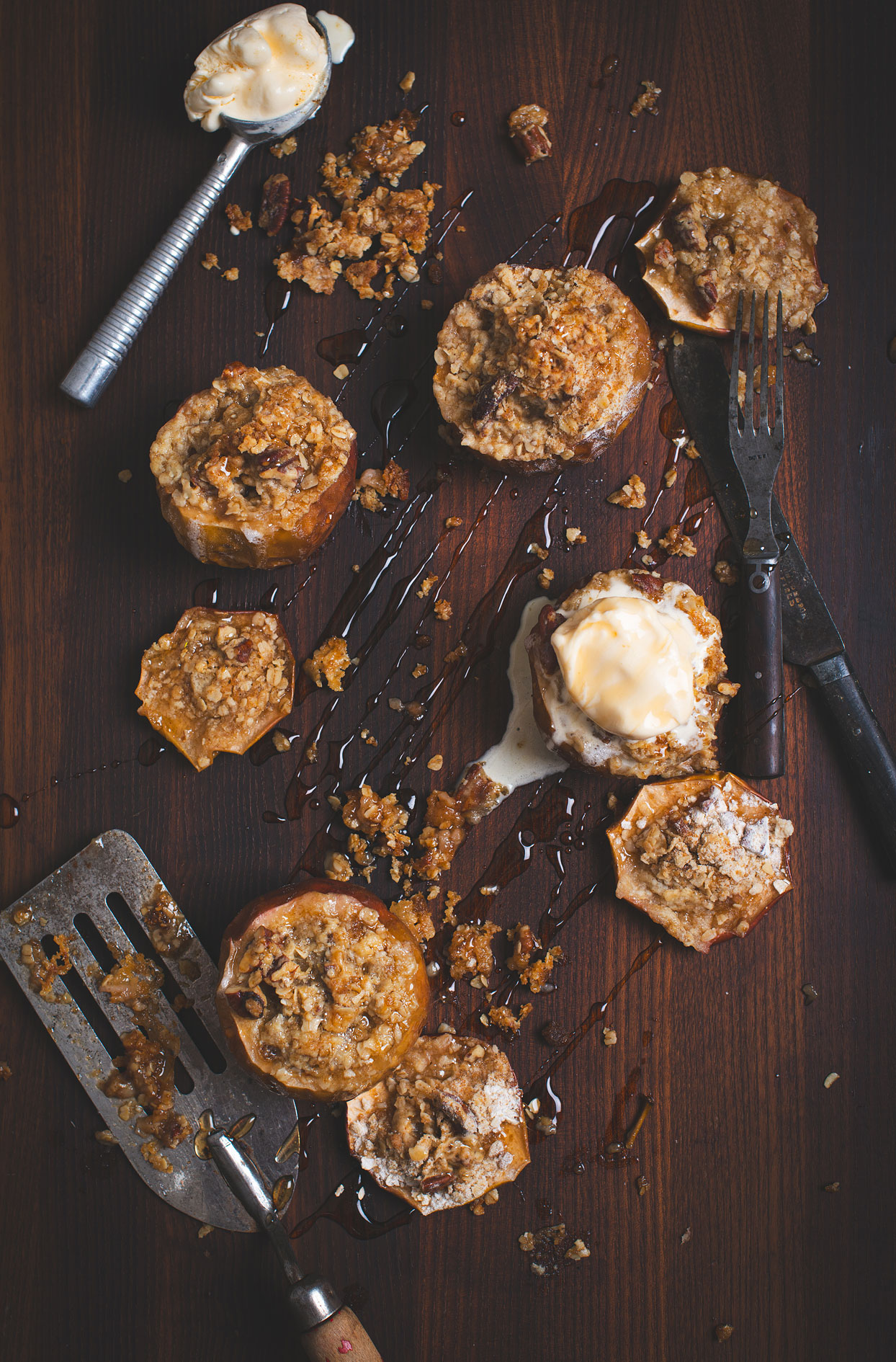
Hot, warm or cold, it’s always good. My classic: still warm with vanilla ice cream melting on top, or a splash of cold cream poured right into the bowl. And the next morning, reheat a portion with plain Greek yogurt, it makes an incredible breakfast. If you like apple desserts, also try my stuffed apples with crumble.
Ads
Apple filling
- 3 large Lobo apples, peeled, cored and diced
- 3 large McIntosh apples, peeled, cored and diced
- 3 tablespoons (45 ml) cider
- 2 tablespoons (30 ml) brown sugar
- 1 tablespoon (15 ml) maple syrup
- 1/2 teaspoon (2.5 ml) ground cinnamon
- 1/2 teaspoon (2.5 ml) ground nutmeg
- Juice of 1/2 lemon
Topping
- 1 cup (250 ml) brown sugar
- 3/4 cup (180 ml) quick-cooking rolled oats
- 3/4 cup (180 ml) all-purpose flour
- 1/2 teaspoon (2.5 ml) ground cinnamon
- 1/2 teaspoon (2.5 ml) ground nutmeg
- 1 pinch of salt
- 1/2 cup (125 ml / 1 stick) cold salted butter, cut into small cubes
Ads
Preparation
- Preheat the oven to 375 °F (190 °C). Grease an 8″x8″ (20 cm) baking dish.
- In a large bowl, combine the ingredients for the apple filling and mix well. Pour into the baking dish.
- In another large bowl, combine every topping ingredient except the butter. Add the cold butter and work it in with your hands until the mix forms pea-sized beads.
- Scatter the topping over the apples, spread it out and press lightly to even it.
- Bake for 45 minutes, until the top is lightly browned. Let it rest at least 30 minutes before serving.
Cortland is the Quebec reference: it keeps its shape while baking and browns very little. I use Lobo and McIntosh, which soften more and give a melting texture. Empire and Spartan work too, and all four stay on grocery shelves twelve months a year thanks to controlled atmosphere storage. Mixing two varieties gives you both texture and flavor.
Almost always because it was served too hot. The juice released by the apples thickens as it cools, so a 30-minute rest out of the oven fixes it on its own. Cut that rest and the juice runs across the plate every time.
A crisp has oats in its topping, which is what gives the granular, crunchy texture the name is talking about. A crumble is usually just flour, butter and sugar, sandier and softer. In Quebec we call this a croustade, and it is always the oat version. British and English-Canadian cooks tend to say crumble for both.
The butter. It has to be very cold and worked by hand until it forms little beads in the dry mix. Those beads melt in the oven and leave air pockets, and that is the whole trick. Melted or soft butter coats the flour right away and you end up with a dense, cakey layer instead of a crisp topping.
Yes, very well. I freeze it after baking: let it cool completely, wrap it well and put it in the freezer. To serve, reheat it in the oven, never the microwave, which will leave the topping soft.
Three tablespoons of cider in the apples. It sharpens the apple flavor and brings the acidity that keeps all that brown sugar from turning flat. Salted butter in the topping and a spoonful of maple syrup do the rest. That is the whole difference between a good crisp and a bowl of sweet mush.
Ads
Ads
Ads
Ads
Ads