

Beef Broth Recipe
- Preparation 20 min
- Cooking 7 h 15 min
- Servings 12
- Freezing Absolutely
Ads
🍲 The beef broth that changes every soup you make!
Once you’ve tasted real homemade beef broth, the boxed stuff is over! Beef bones and a beef shank roasted in the oven until deeply browned, vegetables caramelized with tomato paste, a red wine deglaze, then six hours at the gentlest simmer. You get a dark, rich broth full of flavor that you can even sip from a mug. Nothing like what you buy at the store!
🦴 The best of my veal stock
I took the method from my homemade veal stock, with the roasted bones, tomato paste and wine, and adapted it to beef to make a real broth. I added a beef shank for more flavor, a whole head of garlic, a parsnip for a little sweetness, and just a bit of salt. Beef gives a bolder, deeper flavor, perfect for soups and winter dishes.
🥩 One shank, two recipes
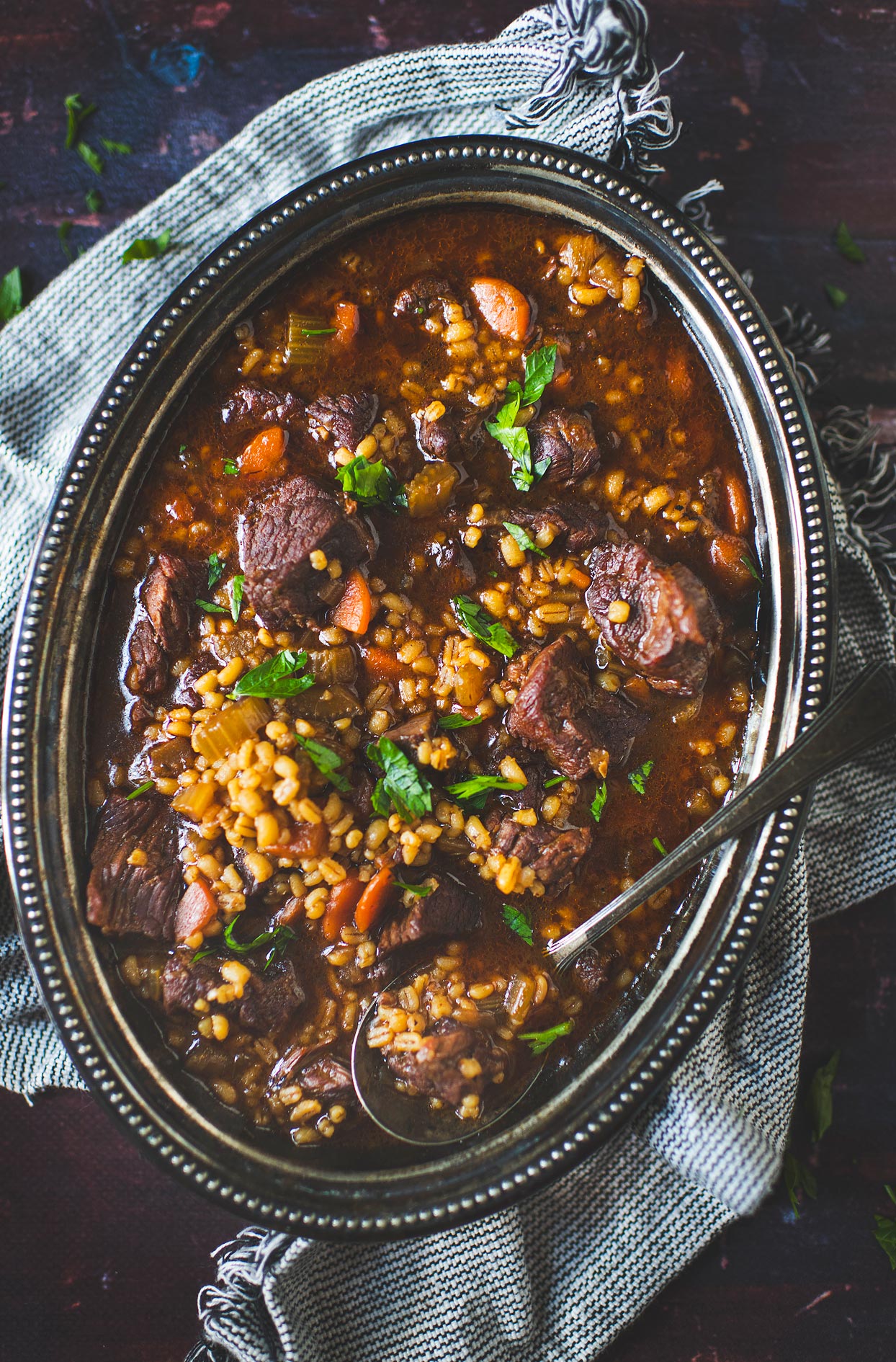
The shank doesn’t go to waste. After three hours in the pot, the meat is tender: you pull it out, shred it and save it for a soup, then the bone goes back in to keep simmering. My beef barley soup, made with this broth and that meat, is the perfect winter dinner.
Ads

Ads
🦴 The right bones
Use neck, shank or oxtail soup bones: they have meat, flavor and lots of collagen, and that’s what gives the broth body. Avoid using only marrow bones, they mostly add fat. You’ll find them at the butcher counter at the grocery store. If they’re too big for your roasting pan, ask the butcher to cut them, it takes them two minutes.
🔥 Brown everything properly
This is the step that makes all the difference between a dark broth and a pale one. Well-browned bones and shank, caramelized vegetables, tomato paste that turns dark brown: that’s what gives the color and flavor. Don’t pull the roasting pan out too soon, and turn the bones halfway so they brown on every side. If it’s pale in the oven, your broth will be pale in the pot too.
🍷 The wine gets the flavor
Everything stuck to the bottom of the roasting pan after the oven is concentrated flavor, and the wine is what lifts it. Put the pan over medium heat, pour in the wine and scrape well with a wooden spoon while it heats. Let it reduce by half before pouring it into the stockpot: the alcohol taste cooks off and only the good stuff stays. A dry red wine does the job, no need for an expensive bottle.
🌡️ Never let it boil
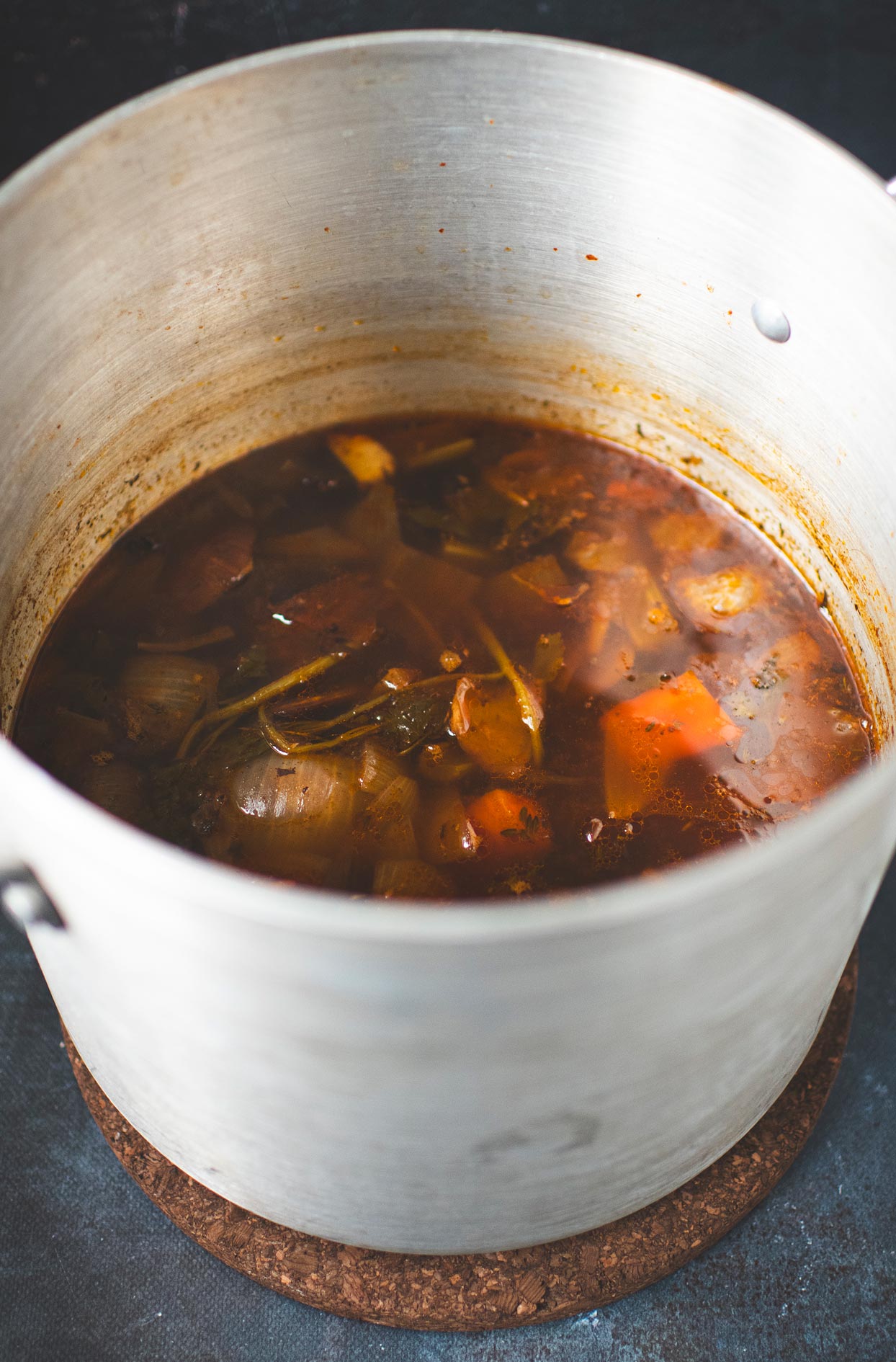
That’s THE broth rule. If it boils too hard, the fat and tiny particles mix into the liquid and it turns cloudy and bitter. It should barely simmer, with a few small bubbles rising now and then, for the full six hours. During the first hour, skim the foam with a ladle: that’s what keeps it clear.
🥩 The shank, halfway through
After three hours, the shank meat is tender and falls right off the bone. Take it out of the pot, let it cool a bit and shred the meat, removing the fat, then put the bone back in the broth: it still has flavor and collagen to give. If you leave the meat in for six hours, it gives everything to the broth and turns dry. Keep it in the fridge in a closed container, it’s perfect in a beef barley soup.
🧂 Just a little salt
I only add a teaspoon of salt at the start, and I season to taste at the end, when I use it. As it simmers and reduces, the broth concentrates, and a pinch too much at the start becomes way too much at the end. For a soup, salt the soup. And if you want to sip it straight from a mug, add a pinch right before serving.
🧊 If it doesn’t gel, don’t panic
A broth rich in collagen often gels in the fridge, and that’s a good sign. But if it’s still liquid the next day, don’t throw it out: my veal stock didn’t gel either, and it was still full of flavor. It depends on the bones you got. Shank and oxtail are the ones that gel the most.
🍲 How to use it
It’s the base for all your beef soups, your gravy and your hot pot. You can also reduce part of it by half over medium-low heat for a more concentrated flavor in a sauce. Since it barely simmers, it makes more broth than you’d think, so plan some freezer space. And for veal-based sauces, stick with my homemade veal stock.
📅 Make-ahead prep
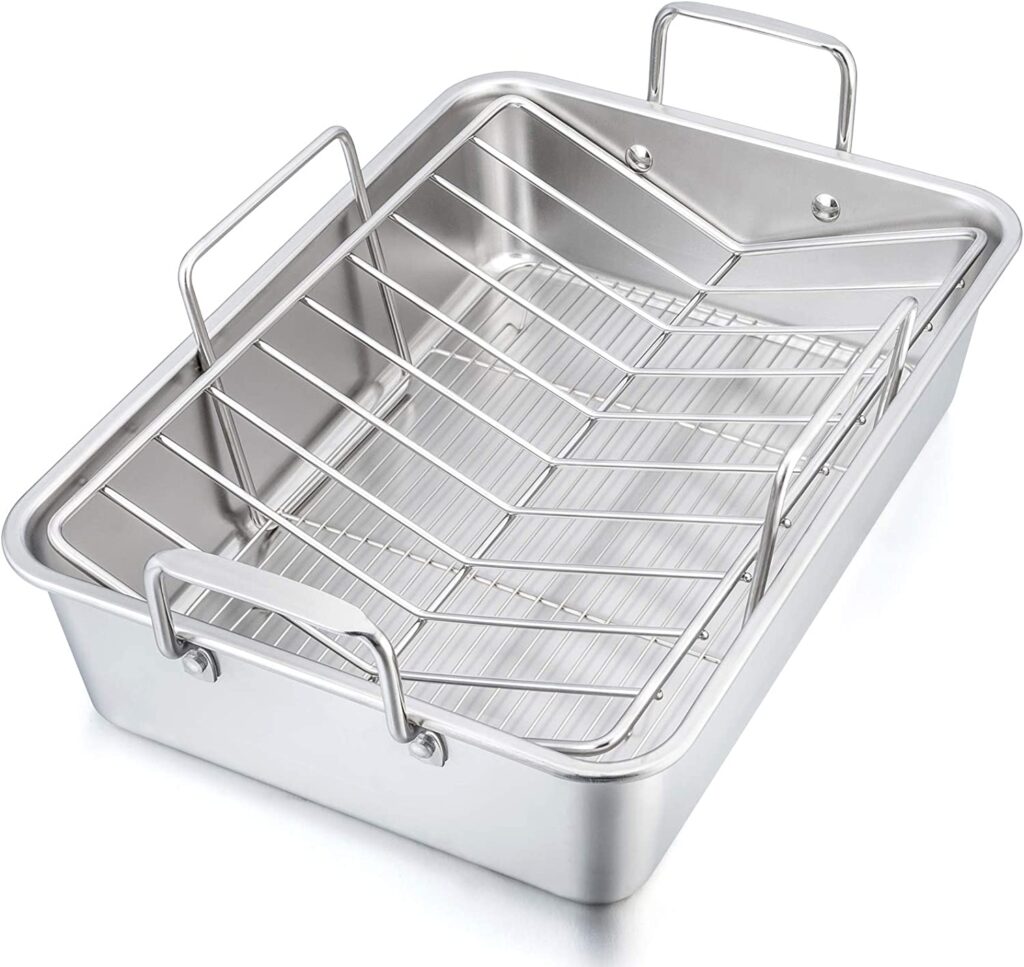
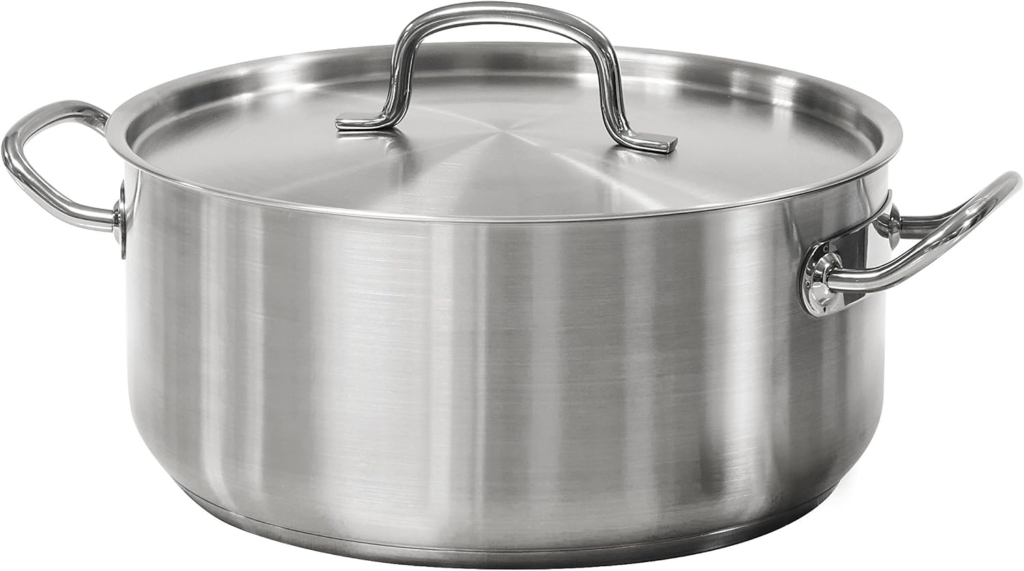
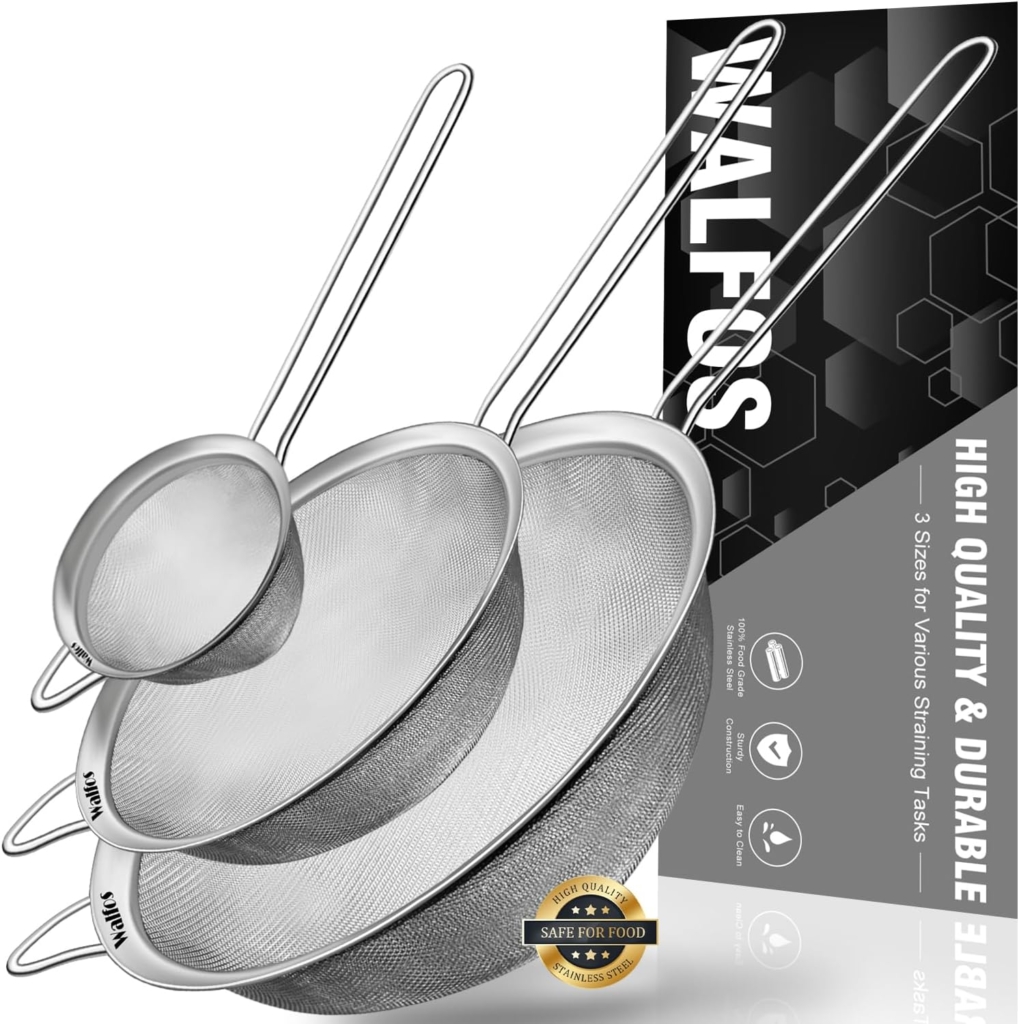
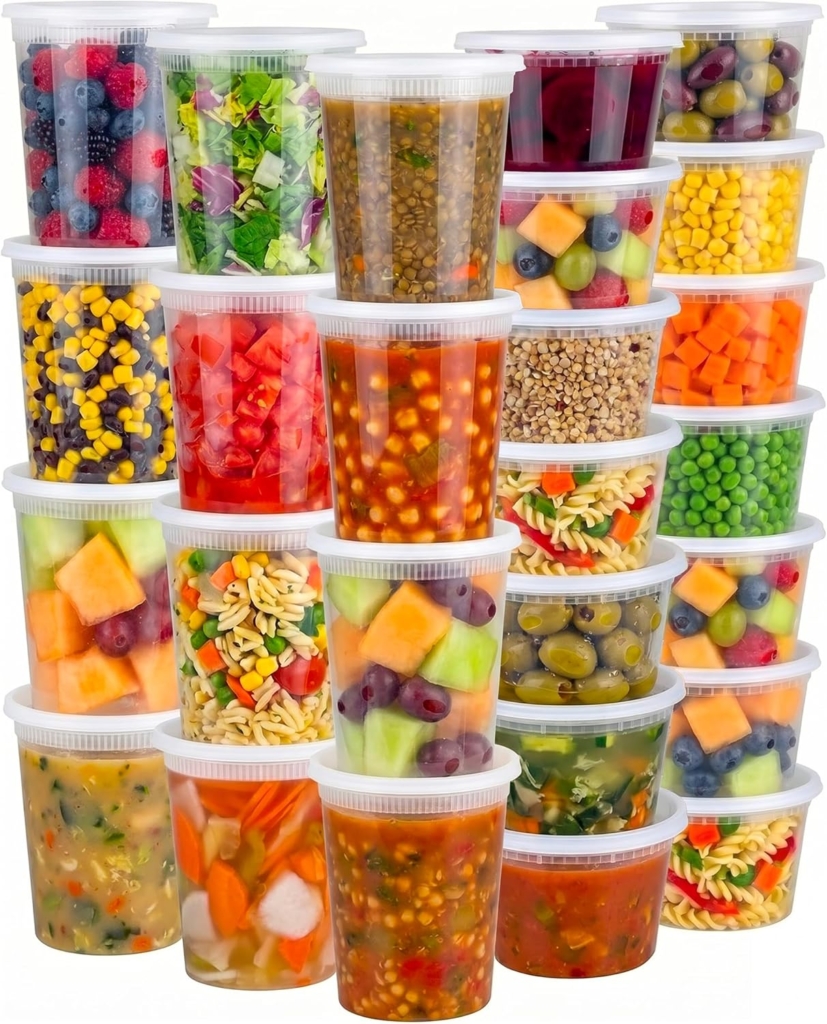
The day before, chop the onions, carrots, celery and parsnip, then store them in the fridge in a labeled container. Pull out the roasting pan, stockpot, fine-mesh strainer and freezer containers too. On the day, the bones go in the oven first thing in the morning, and the broth simmers for six hours while you do something else. The fat comes off the next day, once it’s set.
❄️ Storage
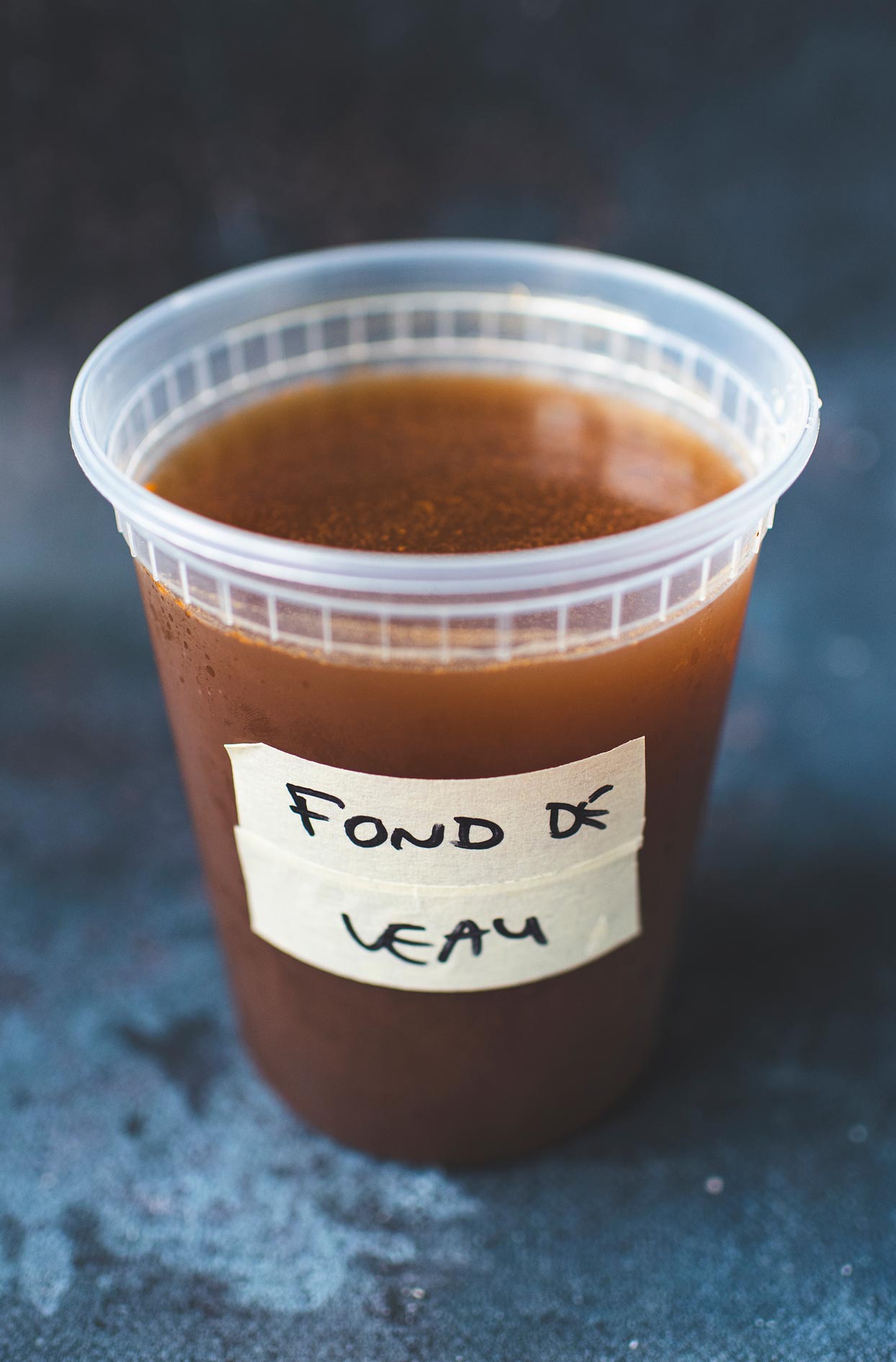
Homemade beef broth keeps for 3 to 5 days in the fridge in a closed container. It absolutely freezes: portion it in 4-cup containers, leaving a little room at the top because the liquid expands as it freezes. Write the date on each container. You just take out what you need for a soup or a sauce.
✅ What to make with my beef broth recipe
Use it in my beef barley soup or my ground beef, pearl couscous and vegetable soup. For your sauces, make my veal stock recipe. And for a lighter base, try my homemade chicken stock.
Ads
Ingrédients
- Bones and meat
- 5 lb (2.3 kg) beef soup bones (neck, shank or oxtail)
- 1 ½ lb (680 g) beef shank
Vegetables
- 2 medium onions, cut into large wedges, skin on
- 2 carrots, cut into large chunks
- 2 celery stalks, cut into large chunks
- 1 parsnip, cut into large chunks (optional)
- 1 head garlic, halved crosswise
- 3 tbsp (45 ml) tomato paste
- ½ cup (125 ml) dry red wine
Simmering
- 16 cups (4 L) cold water
- 6 sprigs fresh thyme
- 2 bay leaves
- 1 small bunch parsley
- 1 tsp (5 ml) black peppercorns
- 1 tsp (5 ml) salt, plus more to taste at the end
Ads
Preparation
- Preheat the oven to 425°F. Spread the bones and shank in a roasting pan in a single layer. Roast for 45 minutes, turning them halfway through, until well browned.
- Add the onions, carrots, celery, parsnip and garlic. Brush with tomato paste. Roast for 25 to 30 minutes, until the vegetables are caramelized and the tomato paste is dark brown.
- Transfer the bones, shank and vegetables to a large 8 to 10 L stockpot, leaving the fat in the roasting pan.
- Deglaze the roasting pan with the wine over medium heat, scraping up everything stuck to the bottom. Let it reduce by half, then pour it into the stockpot.
- Add the cold water, thyme, bay leaves, parsley, peppercorns and salt. The water should cover the bones by about 2 inches (5 cm).
- Slowly bring to a simmer, without ever letting it boil. During the first hour, skim off the foam that forms on top with a ladle.
- Simmer over very low heat, partly covered. After 3 hours, remove the shank, pull off the meat and refrigerate it for a soup, then return the bone to the pot.
- Keep simmering for 3 more hours, for a total of 6 hours. Add hot water as needed to keep the bones covered.
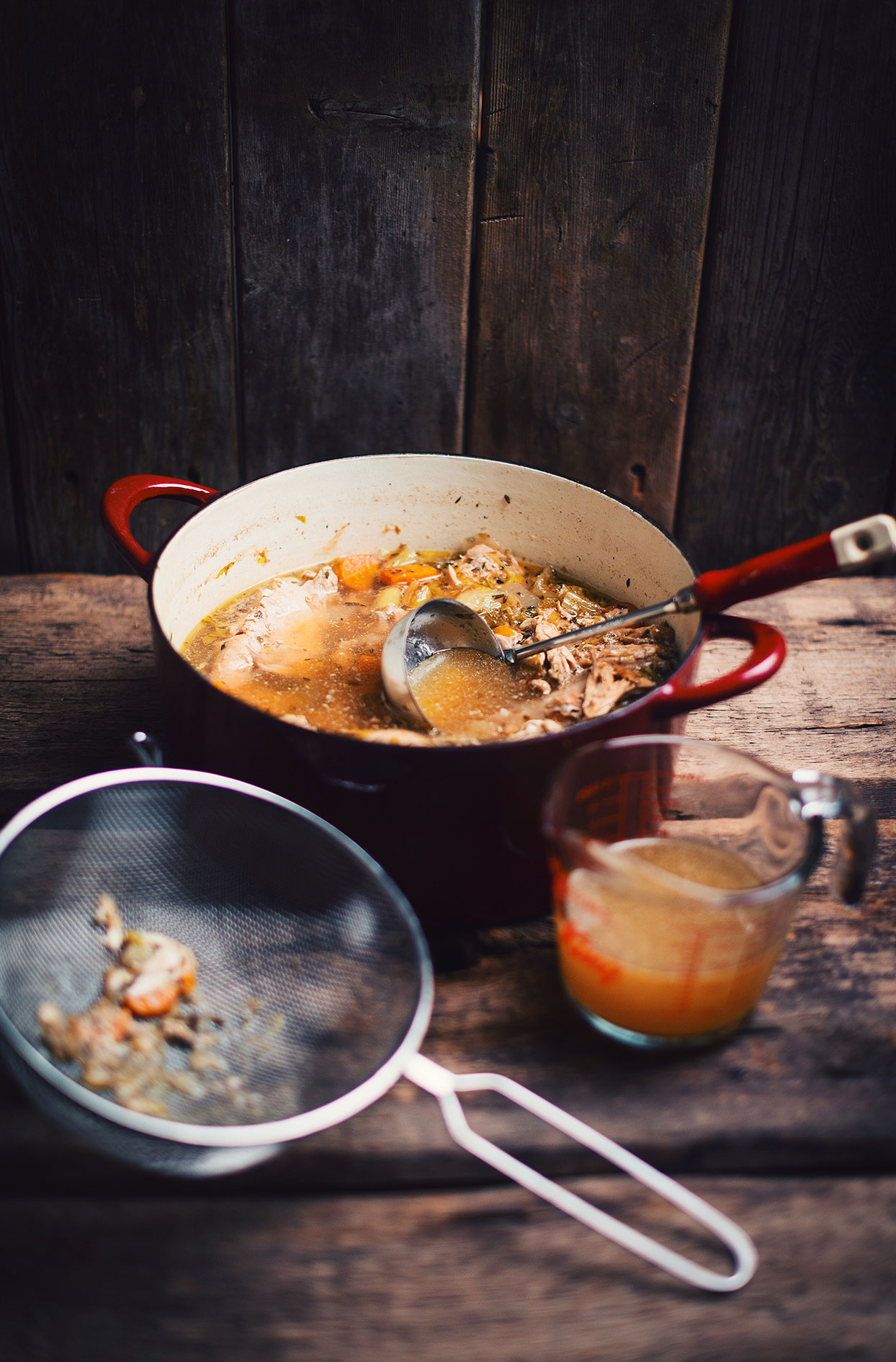
- Strain through a colander, then a fine-mesh strainer, into a large bowl. Discard the bones and vegetables.
- Cool quickly by setting the bowl in an ice water bath. Refrigerate overnight, then lift off the solid fat on top. Season to taste when you use it.
Beef shank, along with neck, shank or oxtail soup bones. The meat adds flavor and the bones add body.
Roast the bones at 425°F, add the vegetables and tomato paste, then deglaze with red wine. Put everything in a stockpot with cold water and aromatics, and simmer for 6 hours without boiling.
Stock is often reduced to be more concentrated and is mostly used for sauces. Broth is a bit lighter, lightly salted and used for soups. Mine is made with roasted bones, like my veal stock recipe, so it’s rich enough for both.
Beef broth is darker and richer, made from roasted beef bones. Chicken broth is lighter and milder. Use beef broth for beef soups and gravy, and chicken broth for lighter dishes.
3 to 5 days in the fridge in a closed container.
Absolutely. Freeze it in 4-cup portions, leaving a little room at the top of the container.

Ads
Ads
Ads
Ads
Ads