

Beef Wellington Recipe (Easy)
- Preparation 45 min
- Refrigeration 1 h 5 min
- Cooking 1 h
- Servings 8
- Freezing Absolutely
Ads
🔪 The dish that silences an entire table!
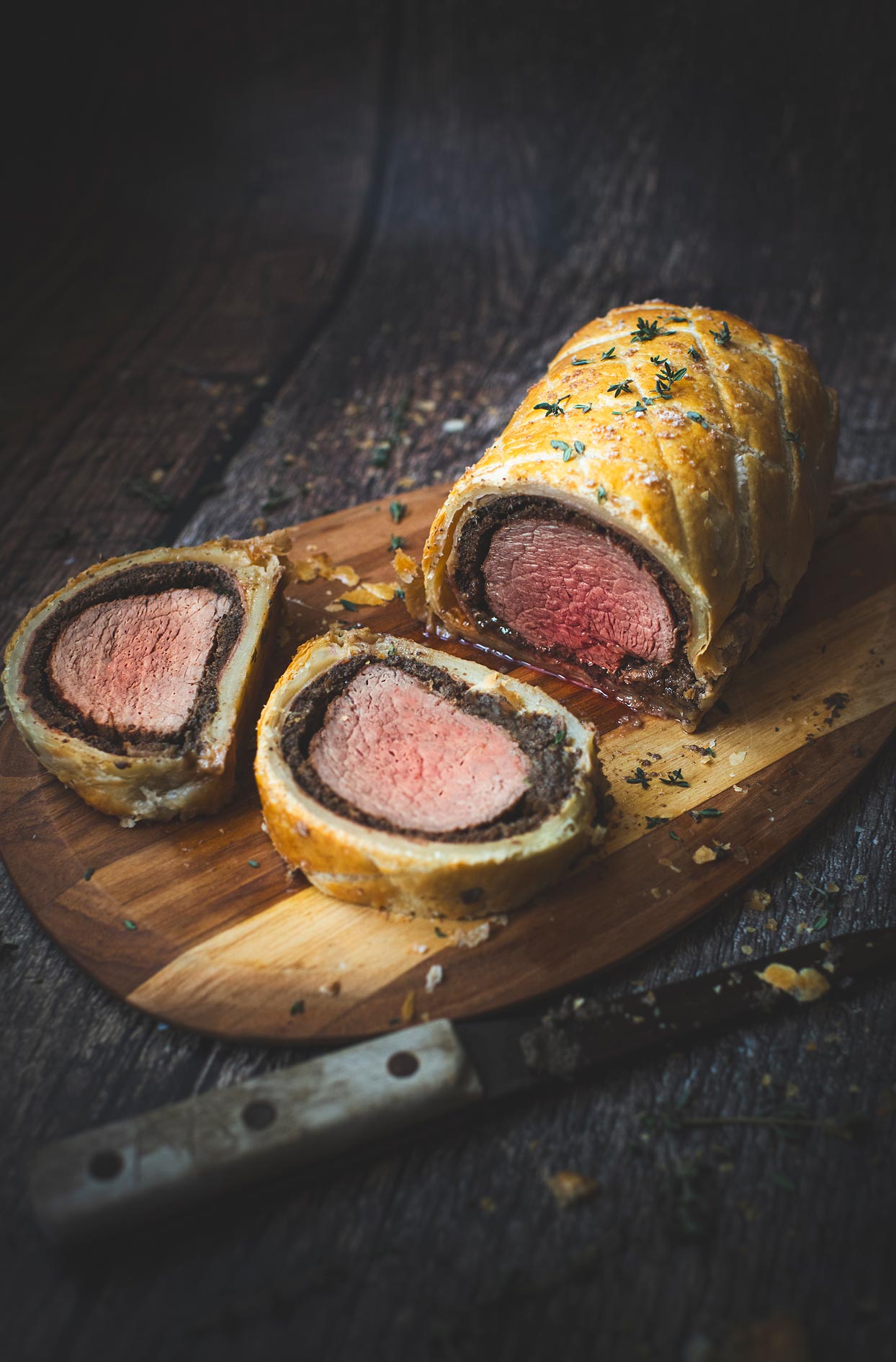
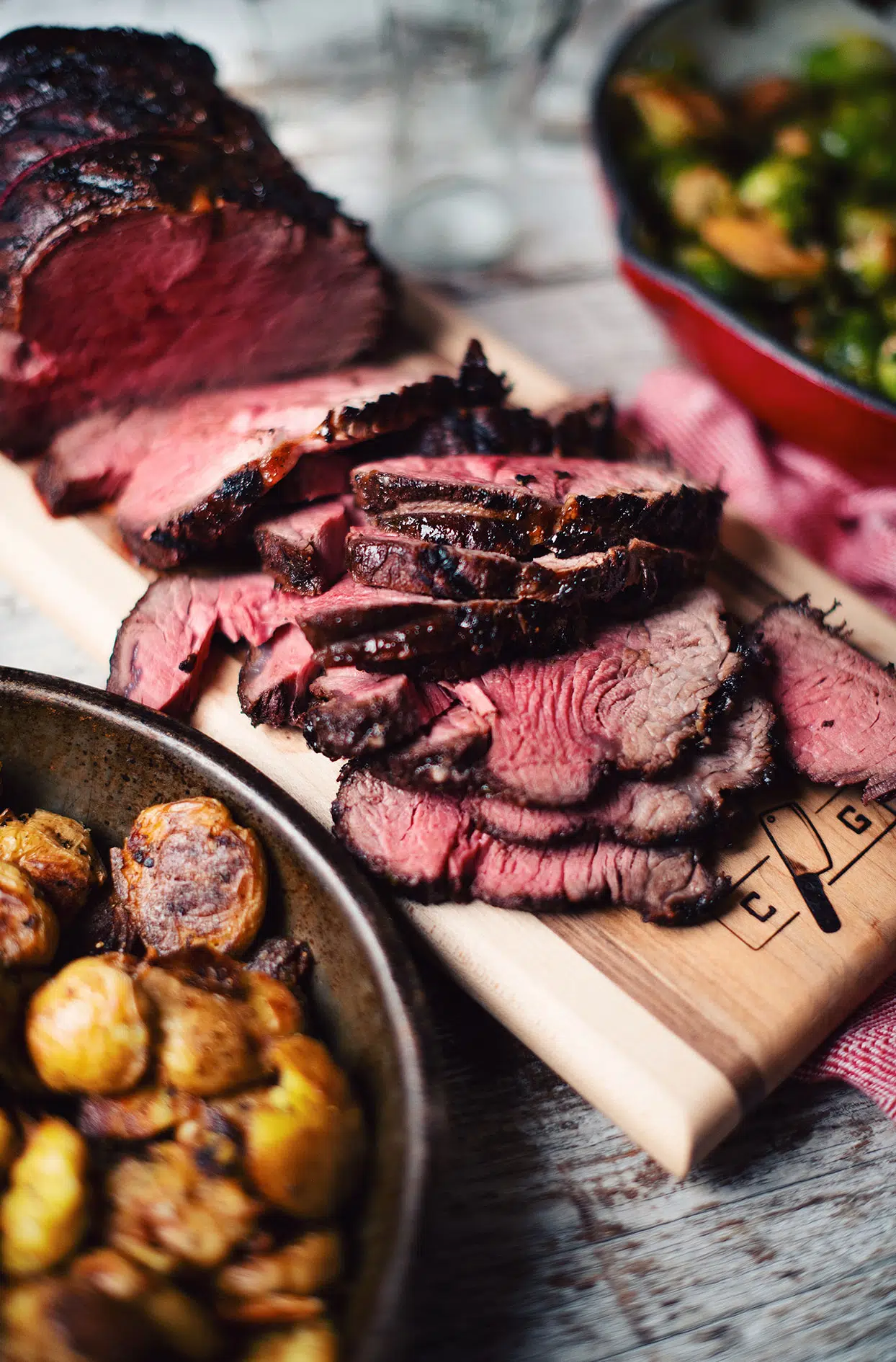
You set it on the board, pick up your knife, cut the first slice in half, and the room goes wow. Not a polite wow. A real one. Because inside that golden, flaky crust there is a perfectly pink tenderloin, a dark band of mushrooms and a thin layer of prosciutto. This is the dish people assume you cannot pull off at home. And honestly, it is genuinely easy if you go slow and take your time. Don’t talk yourself out of it, just go!
🌡️ There is only one thing that can wreck it
Temperature. That is it. The pastry is a blanket: it holds the heat and the meat keeps cooking after you pull it from the oven. My first time I pulled it at 120 °F and then let it rest a good twenty-five minutes. It kept cooking that whole time under its crust, and when I cut it the center was grey. Still good, but badly overcooked, and at 75 dollars for the tenderloin that stings. So the thermometer is not optional here, it is the main tool in the recipe. Pull it earlier than your gut tells you.
🎄 Christmas, New Year’s, a milestone birthday
This is the centerpiece for the big ones. Thanksgiving, the holiday table, a dinner where you want to make a statement. It is not a Tuesday night dish and nobody will pretend otherwise. But once a year, when you have people you love around the table, very little beats a beef Wellington coming out of the oven. And the good news is that the work happens ahead: by the time your guests arrive, all that is left is watching the oven.
Ads
Ads
🌡️ Insert the thermometer from the TOP, never from the bottom
This is the mistake I made and it is what soaked my bottom crust. I went in from the side, low, and the hole turned into a chimney: all the meat juice ran down through it and pooled between the pastry and the sheet. Go in from the top, aim for the center, and leave the hole up where juice cannot run out. It does not solve everything, but it is the simplest thing you can change and it makes a real difference.
🔥 The screaming-hot sheet, my best find
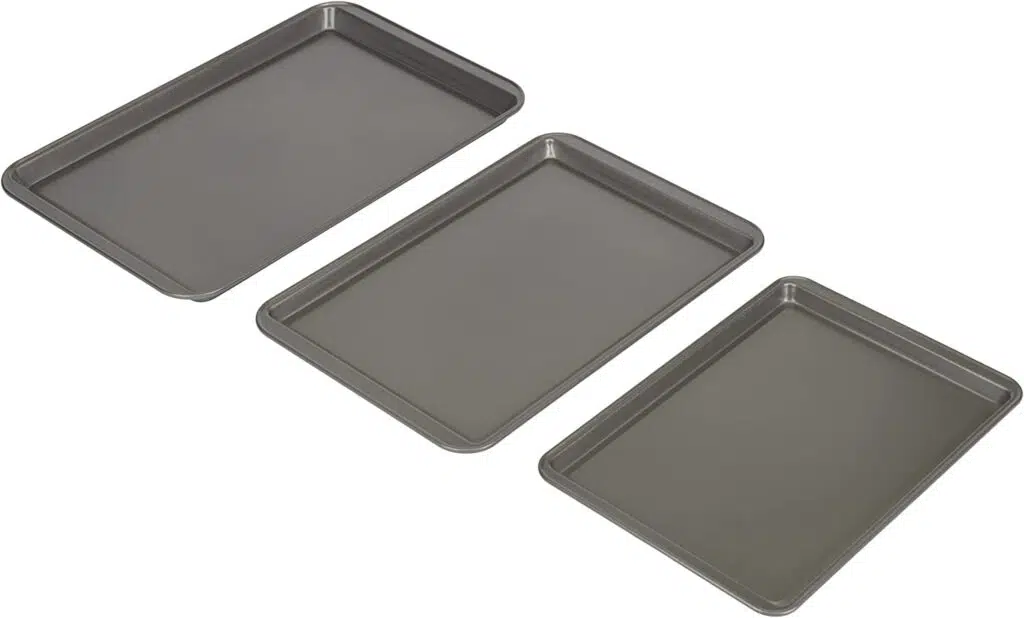
Put your baking sheet in the oven while it preheats, on the top rack, and switch to broil for the last 5 minutes so it gets truly hot. Pull it out with mitts, move it down to the bottom rack and set your Wellington on it. The pastry sears on contact instead of slowly poaching in its own juice. This is Jamie Oliver’s move, who heats his tray on the stovetop before baking, and it is by far the highest-payoff step against a soft bottom.
🍄 Duxelles in the processor, in 2 or 3 batches
Dump the whole container of mushrooms in at once and the bottom of the bowl turns to slurry while the top stays in big chunks. Work in two or three rounds, it costs you thirty seconds and the texture comes out even. Then cook the duxelles longer than you think: it is ready when it starts sticking to the pan and browning, not when it merely looks dry. Every drop of water left in there turns to steam inside the pastry.
🧂 Season the mushrooms generously
Yes, the prosciutto is already salty. Doesn’t matter: if your duxelles is not properly seasoned, the whole center of the Wellington tastes flat, and you only find out at the table when it is too late. The tenderloin itself takes 1 tsp of salt per pound, and the mushrooms take as much as they need to taste good straight off the spoon.
🧵 Remove the twine right after searing
I forgot mine. I found out while slicing, in front of my guests, and had to pick it off slice by slice. Not my finest moment. Take it off the second the tenderloin leaves the pan, while it is still hot and the knots give easily. The meat holds its shape on its own anyway, and the tight roll in plastic wrap is what gives it back.
🌀 Roll it like you’re twisting a skipping rope
This is the move that makes the assembly work. You roll the prosciutto and duxelles around the tenderloin with the plastic wrap, then grab both ends and twist, and twist, and twist, until the roll is genuinely tight and compact. Everything packs down, the air escapes, and the roll becomes a clean cylinder. Thirty minutes in the fridge after that and it holds its own shape while you wrap it in pastry.
🥐 Two sheets of pastry, stacked dry
The puff pastry rolls sold here hold two sheets for 450 g total. I stack them one on top of the other, with nothing between them, and roll them out together. You get a thicker, sturdier crust that holds the juice and does not tear while rolling. Roll until the rectangle is slightly wider than your beef roll, then trim the sides: too much thickness at the seam and that spot stays raw.
📅 Make-ahead prep
The assembled roll does not spend the night in the fridge, and I would not do it. It would go cold three separate times, and then you would have to let it come back to room temperature for a good two hours before baking or the center never comes up. What gets done the day before is the prep. The whole duxelles, cooked, seasoned, cooled, in a labeled container in the fridge. Shallots and garlic peeled. Thyme picked. Pastry moved from the freezer to the fridge to thaw. On the day, all that is left is the sear, the assembly and the oven.
❄️ Leftovers keep, the pastry less so
It keeps in the fridge, well covered. The pastry obviously will not be as crisp the next day, it goes softer, but it is still very good. Reheat the slices in the air fryer or the oven, never the microwave, which turns pastry into rubber. And no, I would not freeze this: between the pastry and the pink tenderloin, nothing in here gains anything from a trip to the freezer.
✅ What to serve with my beef Wellington
It needs no sauce, I served none and nobody asked. What it wants is a purée to catch the juices and something green to cut the richness. My Boursin garlic and herb mashed potatoes are the obvious call, and my green beans with white wine and lemon bring exactly the acidity the plate is missing. If you are building out a bigger holiday table, my parsnip and green pea purée makes for a more colorful plate than potatoes, and it can be made while the Wellington rests.

Ads
Beef
- 1 center-cut beef tenderloin, trimmed and tied, 2 to 3 lb (900 g to 1.4 kg)
- 2 tbsp (30 ml) olive oil
- 2 tbsp (30 ml) Dijon mustard
- Salt and pepper
Duxelles
- 1 ½ lb (680 g) cremini mushrooms
- 2 French shallots
- 4 garlic cloves
- 2 tsp (10 ml) fresh thyme
- 2 tbsp (30 ml) butter
- 1 tbsp (15 ml) olive oil
Assembly
- 12 slices prosciutto (115 g)
- 450 g puff pastry, thawed (2 sheets)
- 1 egg, beaten
- Fleur de sel and fresh chives, to serve
Ads
Preparation
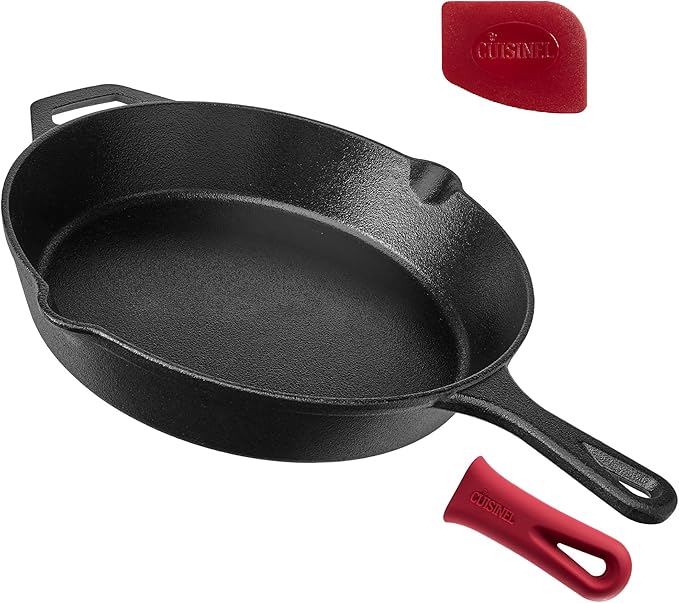
- Season the tenderloin generously with salt and pepper, counting 1 tsp of salt per pound. In a very hot cast iron skillet, sear it in the oil for 2 minutes per side, ends included, adding oil as needed. Remove the twine right away, while the meat is still hot. Refrigerate for 20 minutes.
- Brush the cooled tenderloin all over with Dijon mustard. Lay it on thick, Dijon loses a lot of its punch once cooked.
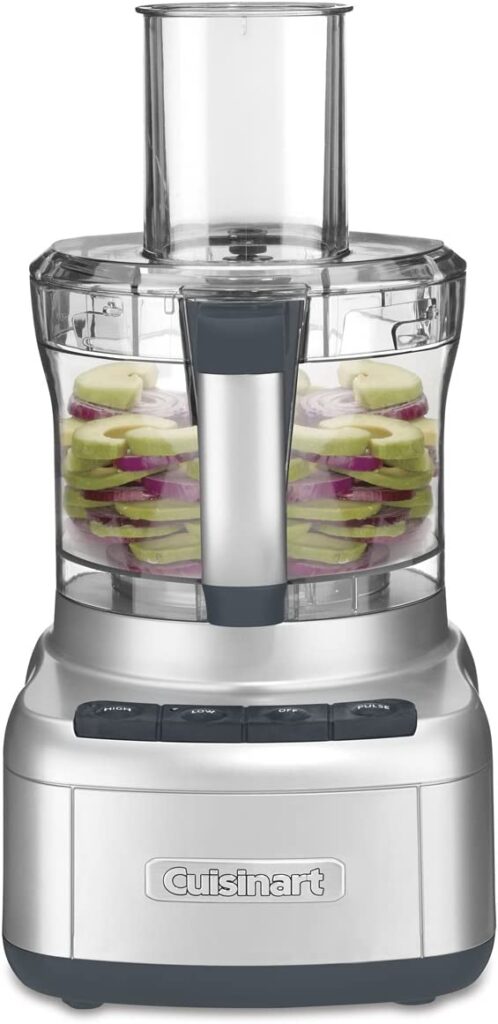
- In a food processor, finely chop the mushrooms, shallots, garlic and thyme in 2 or 3 batches. Never all at once: the bottom turns to slurry while the top stays in chunks.
- In the same skillet over medium-high heat, melt the butter in the oil. Cook the duxelles, stirring, until all the water has evaporated and the mixture starts to stick to the pan and brown, 15 to 20 minutes. Season generously with salt and pepper. Let it cool completely.
- On a double layer of plastic wrap, lay out the 12 slices of prosciutto, overlapping them into a rectangle slightly larger than the tenderloin. Spread the duxelles over it, mostly in the center and a little up the sides.
- Set the tenderloin at one end and roll it up tightly with the wrap. Twist both ends like a skipping rope, turning until the roll is genuinely compact. Refrigerate for 30 minutes.
- Set a rack at the bottom of the oven and a baking sheet on the top rack. Preheat to 425 °F (220 °C). Once the oven is fully hot, switch to broil for 5 minutes so the sheet gets screaming hot.
- Meanwhile, stack the 2 sheets of puff pastry one on top of the other, with nothing between them. On a floured surface, roll them out together into a rectangle slightly wider than the beef roll, then trim the excess from the sides.
- Remove the plastic wrap, set the tenderloin on the pastry and roll it up. Seal the seam and the ends with the beaten egg. Set it on a sheet of parchment paper, seam side down. Refrigerate for 15 minutes.
- Brush the whole surface with beaten egg. Score diagonally in both directions, about 1 mm deep only, to draw a diamond pattern. Sprinkle with fleur de sel.
- Pull the hot sheet from the oven with mitts, set it on the bottom rack and slide the Wellington onto it with its parchment. Return the oven to 425 °F (220 °C).
- Bake for 40 to 45 minutes. Tent with foil if the pastry browns too fast.
- Check the temperature by inserting the thermometer from the TOP, aiming for the center, never from underneath or low on one side. A hole in the bottom becomes a chimney and all the juices run out onto the pastry. Pull it from the oven at 115 °F (46 °C) and leave the thermometer in the meat.
- Rest with the thermometer still in and watch it: the center climbs on its own to 120 °F (49 °C) for a rare tenderloin, which takes about 5 minutes. Slice as soon as it hits the target, thick, and finish with fresh chives and fleur de sel.
A center-cut beef tenderloin, trimmed and tied. Center-cut matters: it is the section with the same diameter end to end, so it cooks evenly. I found mine already trimmed and tied at the grocery store. If you cannot find one, go to a butcher and ask for a center-cut filet mignon, saying it is for a beef Wellington, and they will know exactly what to hand you. It is expensive, yes: mine was 2.5 lb and came to roughly 75 dollars.
Pull it at 115 °F (46 °C) and leave the thermometer in. During the rest the center climbs on its own to 120 °F (49 °C) for rare, which takes about 5 minutes, and that is when you slice. Don’t go by the clock, go by the target. Puff pastry acts as insulation and the meat keeps cooking long after it leaves the oven. Gordon Ramsay pulls his between 120 and 125 °F, but from a 400 °F oven after only 20 to 25 minutes. Cook’s Illustrated, working with a large roast like ours, pulls at 85 °F and lets it climb 45 degrees over a 45-minute rest. Me, my first time, I pulled at 120 °F and then rested it twenty-five minutes: it must have climbed to 150 °F and it hit the board grey. It wasn’t the pull that got me, it was the rest.
Three moves, highest payoff first. One: the screaming-hot baking sheet, preheated in the oven and broiled for 5 minutes, the way Jamie Oliver does it. Two: the thermometer inserted from the top and never the bottom, because a hole underneath becomes a juice chimney. Three: duxelles cooked until it sticks to the pan, because every drop of water left turns to steam. Gordon Ramsay adds a thin crêpe between the duxelles and the pastry, but I skipped it and Cook’s Illustrated rejects it on the grounds that the crêpe goes soggy itself. Honestly, a bottom that is slightly less crisp is not the end of the world.
Not the assembled roll, no. It would go cold three separate times, and then you would have to let it come back to room temperature for at least two hours before baking or the center stays cold and the whole timing falls apart. What you can do the day before is the duxelles in full, the shallots and garlic peeled, the thyme picked and the pastry thawing in the fridge. On the day: sear, assemble, bake.
A purée and something green, and no sauce needed. My Boursin garlic and herb mashed potatoes with my green beans with white wine and lemon make the complete plate. For a bigger table, add my parsnip and green pea purée.
Ads
Ads
Ads
Ads
Ads