

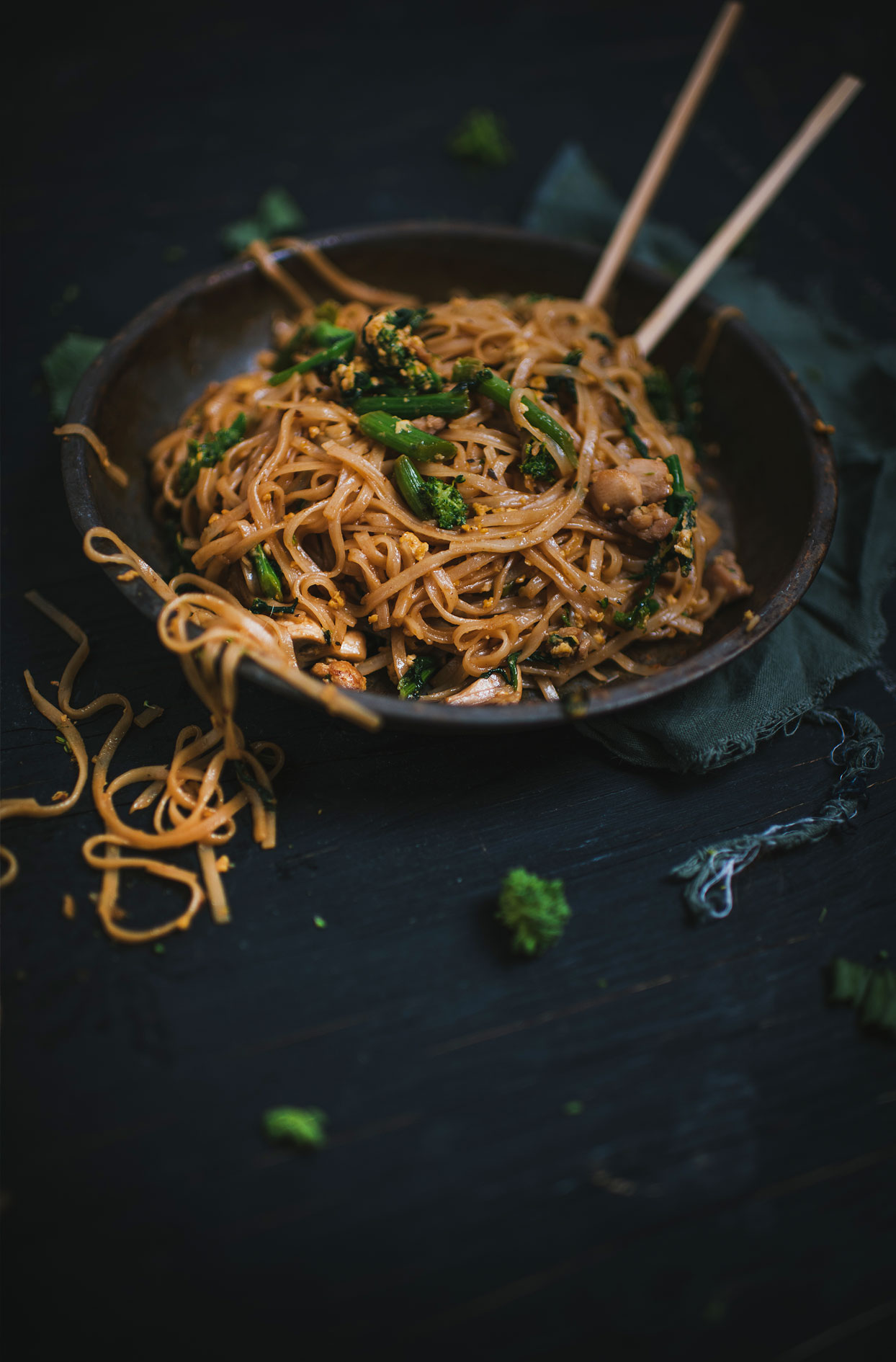
Chicken Pad See Ew
- Preparation 30 min
- Cooking 15 min
- Servings 4
- Freezing I do not suggest
Ads
🥬 The Thai culinary hug that rivals the restaurant
Picture this: a pair of chopsticks in your hand, in front of a plate of Chicken Pad See Ew so perfectly prepared that even the noodles seem to smile in anticipation of the feast. This dish is like getting a culinary hug from your grandmother. Provided your grandmother is Thai and handles the wok like a rock star. Slippery noodles, crunchy fresh vegetables, tender chicken marinated in pure magic. Ready to wok’n’roll?
🔥 Signature 10-ingredient sauce (vs 4 elsewhere)
What makes my Pad See Ew unique is the ultra-complex sauce: oyster sauce, soy sauce, brown sugar, rice vinegar, sriracha, fish sauce, molasses (my trick to mimic dark soy sauce), dried basil, ground coriander and fresh ginger, 10 ingredients that dance together. Most competitors stick to 4-5 basic ingredients. My version delivers a depth of flavor that rivals any Thai restaurant on the Plateau.
🌿 Quebec rapini + accessible Pad Thai noodles
Don’t live next to an Asian market? No panic. I use rapini instead of gai lan (Chinese broccoli) because it’s available at every Quebec grocery store. For noodles, wide rice noodles are ideal, but Pad Thai noodles (more accessible) do the job perfectly. That’s what I used myself. This dish comes together in 45 minutes total and becomes your go-to stir fry for nights when you want to treat yourself without going out.
Ads
Ads
🍗 Boneless chicken thighs — why not breast
I always use boneless chicken thighs for this dish. Three reasons: juicier (intramuscular fat), more flavor (dark meat = deeper taste) and holds high-heat wok cooking better without going dry. Breast works but goes dry 2x faster in a hot wok. Thighs = top.
🥢 Dark soy sauce (see ew dam) vs my molasses simulation
Authentic Pad See Ew uses dark soy sauce (“see ew dam” in Thai) — thick, almost black, slightly sweet with licorice notes. You can buy it at Asian markets (T&T, Kim Phat). If you can’t find it, my simulation = regular soy sauce + 1 tsp (5 ml) molasses gives a very close result. Don’t skip the molasses — it brings the color AND the signature caramelized note.
🌿 Accessible rapini vs original gai lan
Authentic = gai lan (Chinese broccoli with wide leaves and thick stems). Hard to find outside Asian markets. My accessible substitute: rapini (found in every Quebec grocery store) — similar texture, slight bitterness perfect to balance the sauce’s sweetness. If you can find gai lan, go for it — the result is more authentic.
🍜 Wide noodles vs Pad Thai — both work
Ideal = WIDE rice noodles (sen yaï, about 1-2 cm wide, fresh or dry at Asian markets). More accessible and what I used: Pad Thai noodles (thinner, available in supermarket Asian aisle). Avoid fresh ramen — texture too different. Cook them just al dente, rinse with cold water + drizzle of sesame oil so they don’t stick.
🍤 Protein variants — the sauce works on everything
Substitute the chicken with: thinly sliced pork (500 g, loin or shoulder, cook 3-4 min), peeled shrimp (300 g, cook 2-3 min at the end), thinly sliced beef sirloin (500 g, sear 2 min), or drained firm tofu in cubes (1 block, sear 4-5 min until golden). Marinade and sauce stay the same.
🌱 Fresh Thai basil (Krapow) — next-level version
I use dried basil in the sauce because fresh was hard to find in my area. But if you have access to fresh Thai basil (“horapha” or “krapow”), that’s the next-level version — more complex, more authentic. Use 10-15 chopped fresh leaves to replace the dried, added to the sauce or as final garnish.
🔥 Caramelize the noodles 1 minute WITHOUT stirring
The step that takes the dish from good to memorable: after mixing noodles + sauce in the wok, leave them 1 minute without touching. The sauce sugar caramelizes against the hot wok, creating that signature grilled flavor you can’t replicate by stirring constantly. This is what separates “homemade” Pad See Ew from real “Thai restaurant” version.
🚫 Wok at high heat + DON’T overload
The wok must be very hot before adding the chicken. If you put too many ingredients at once, temperature drops and you steam instead of sear — wet, flat stir fry. Keep the wok half full max. If you double the recipe, do the chicken in 2 batches.
♻️ Reheating leftovers — wok or pan, microwave as backup
Next day, ideal: wok or pan over high heat with a splash of water (2-3 tbsp / 30-45 ml) to rehydrate. 3-4 minutes stirring and it comes back almost like new. The microwave works as backup but noodles go a bit rubbery — always prefer wok or pan if possible.
✅ If you fall in love with my Pad See Ew, here’s the next stop
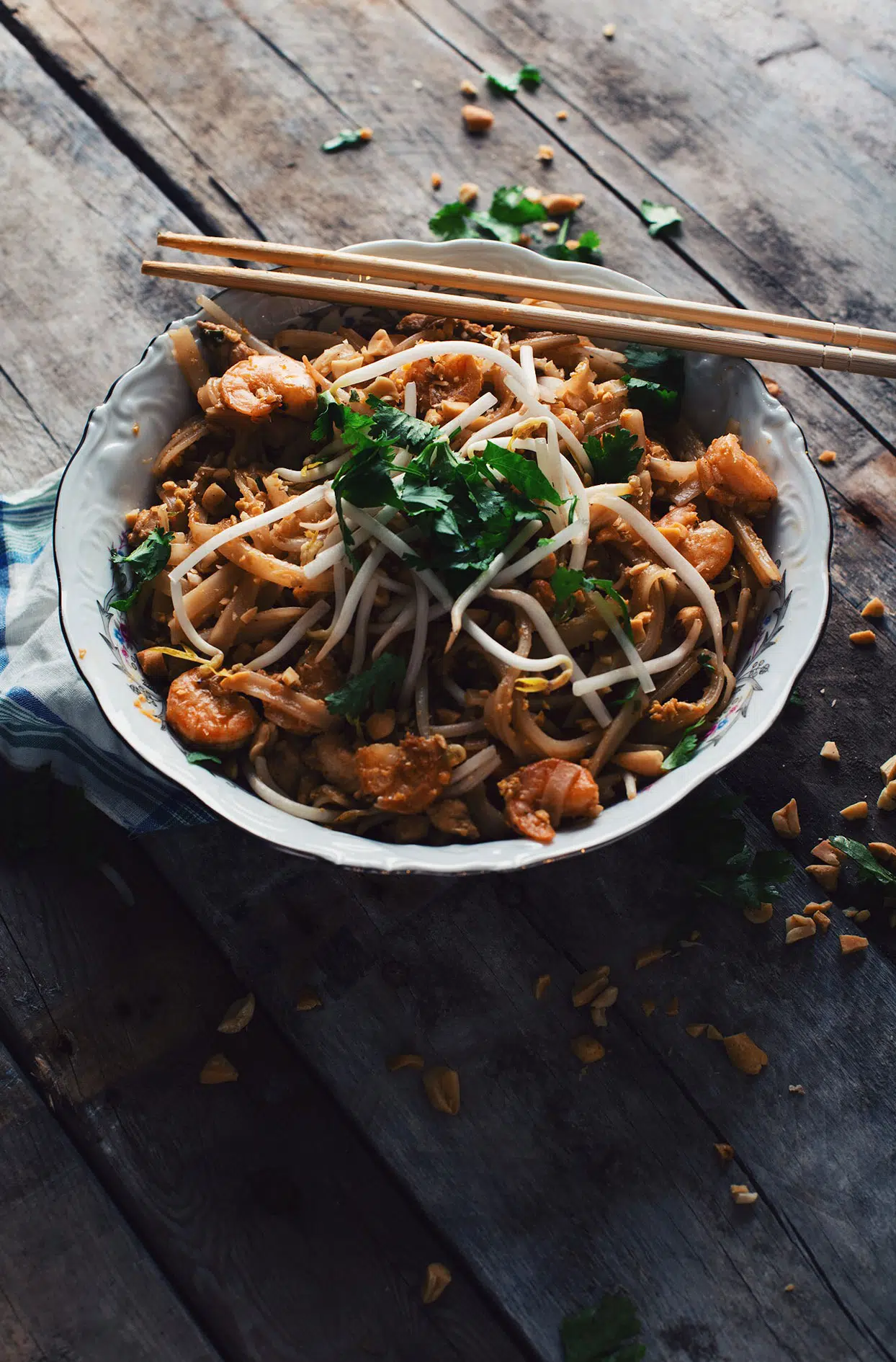
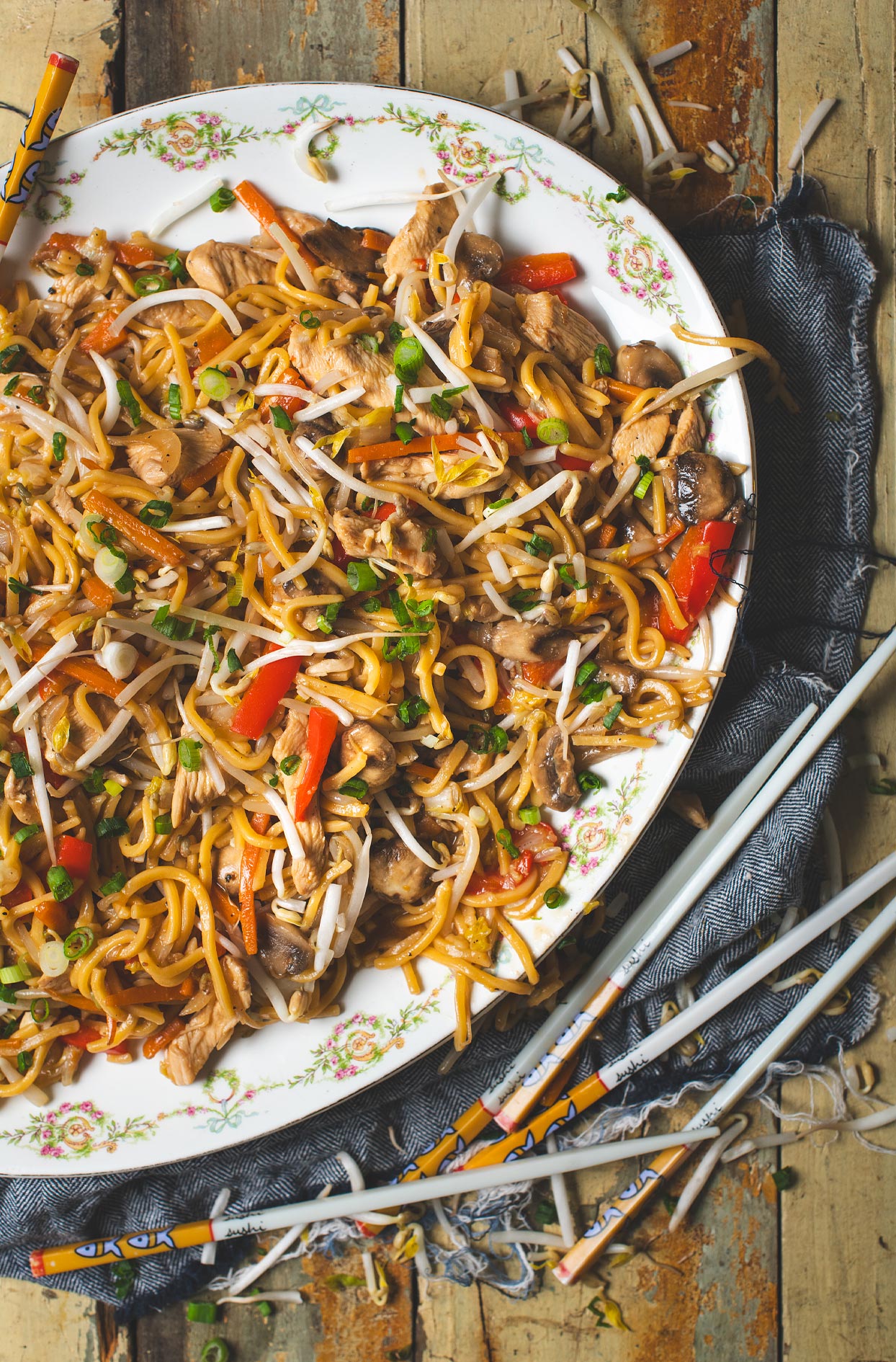
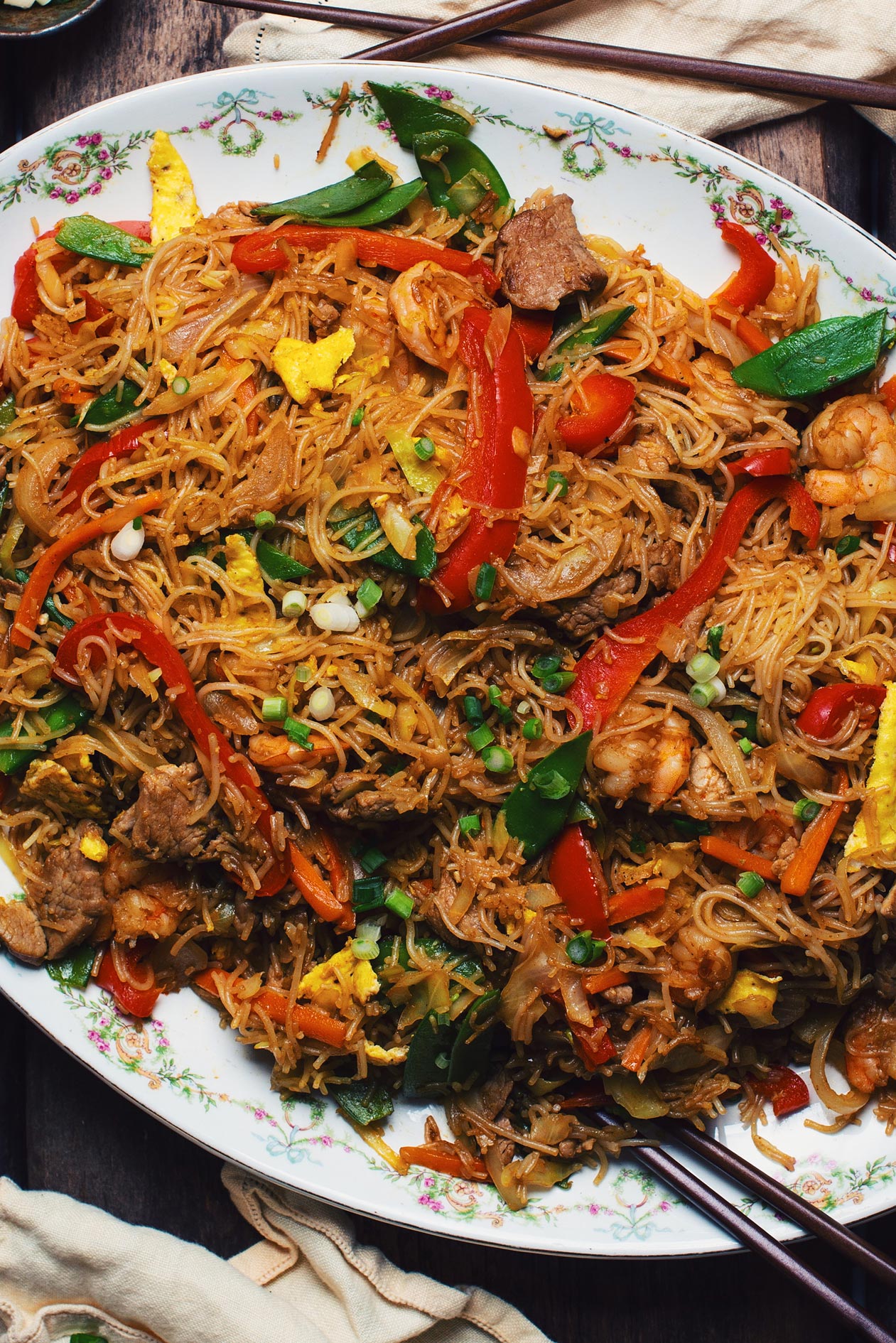
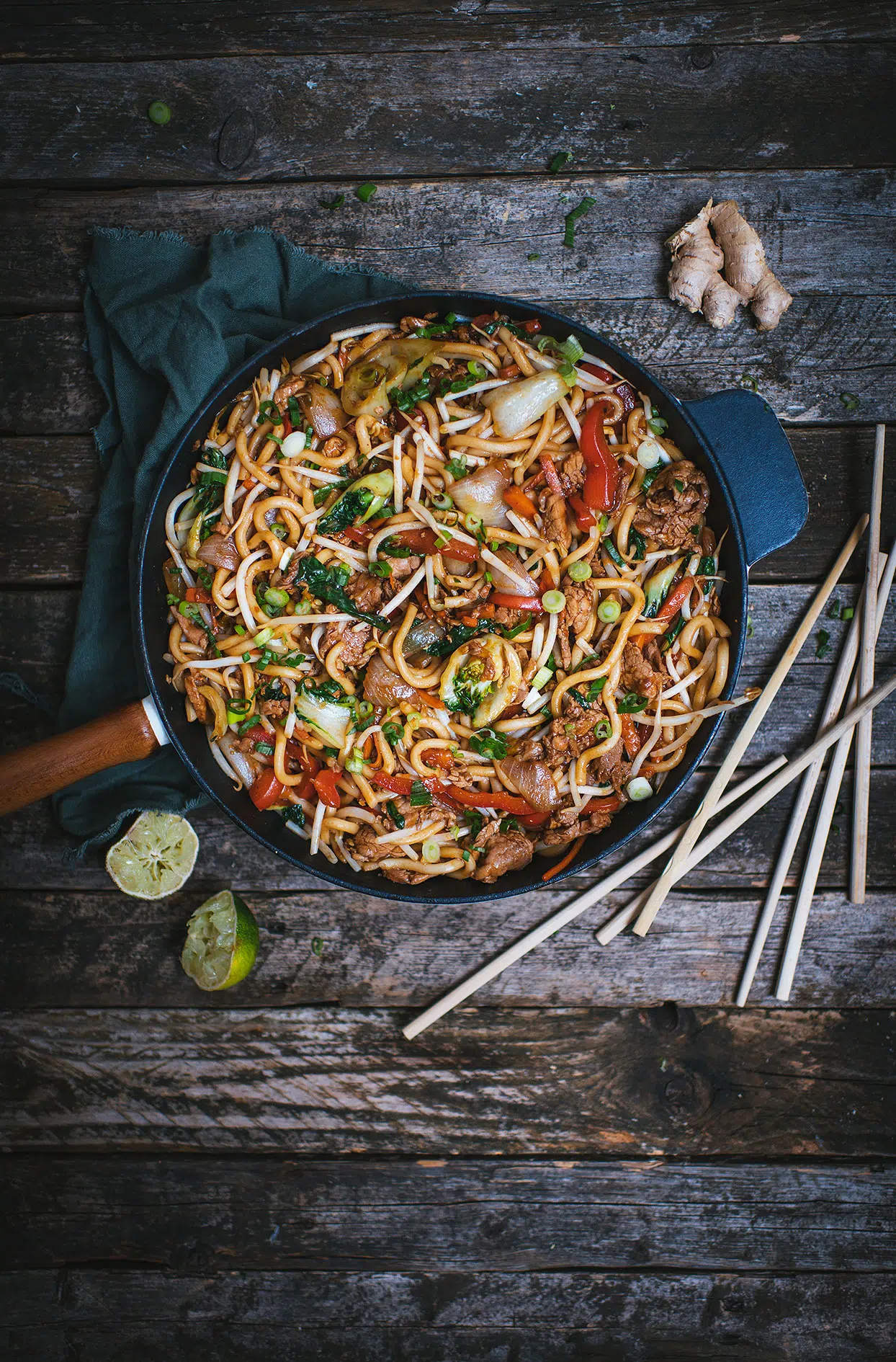
This Pad See Ew lives in my legendary Asian quartet with my authentic pad thai with chicken and shrimp, my chicken chow mein, my Singapore noodles and my pork udon noodle stir fry. Pair with a chilled Alsace Pinot Gris or a hoppy saison to round out the homemade Thai restaurant experience.

Ads
For the chicken marinade
- 500 g boneless chicken thighs, cut into pieces
- 2 tbsp (30 ml) soy sauce
- 1 tsp (5 ml) toasted sesame oil
- Freshly ground black pepper, to taste
For the sauce
- 3 tbsp (45 ml) oyster sauce
- 2 tbsp (30 ml) low-sodium soy sauce
- 2 tbsp (30 ml) brown sugar
- 1 tbsp (15 ml) rice vinegar
- 1 tsp (5 ml) sriracha sauce (adjust to taste)
- ½ tbsp (7.5 ml) fish sauce
- 1 tsp (5 ml) molasses
- ½ tsp (2.5 ml) dried basil (or fresh Thai basil chopped for next-level version)
- ½ tsp (2.5 ml) ground coriander
- 1 tsp (5 ml) freshly grated ginger
- Freshly ground black pepper, to taste
Other ingredients
- ½ bunch rapini, cut into pieces (separate stems from tops) — or gai lan/Chinese broccoli for original version
- 3 large garlic cloves, finely minced
- 3 eggs, beaten
- 300 g wide rice noodles (ideal) or Pad Thai noodles if not found
- 2 tbsp (30 ml) vegetable oil
- 227 g white mushrooms, cut into large pieces
Ads
Preparation
- In a bowl, mix the chicken pieces with the soy sauce, toasted sesame oil and pepper generously. Set aside.
- Mix all the sauce ingredients in a bowl and set aside.
- In a large pot of boiling water, cook the rice noodles until al dente, then drain, rinse with cold water and toss with a drizzle of sesame oil. Set aside.
- Heat the vegetable oil in a wok over high heat, add the marinated chicken and rapini stems, salt and pepper. Cook 3-4 minutes, stirring occasionally.
- Add the rapini tops, minced garlic and mushrooms. Continue cooking 2-3 minutes, stirring.
- Make a well in the center of the wok, pour in the beaten eggs and cook 2 minutes, stirring only in the center, then mix with the rest. Continue cooking 2 to 3 minutes.
- Transfer the mixture to a large bowl and scrape the wok clean. Add a fresh drizzle of oil, then the noodles and the sauce. Mix well and cook WITHOUT stirring for 1 minute to slightly caramelize the noodles — this step makes all the difference.
- Return the chicken mixture to the wok, mix well and serve immediately.
It is a Thai stir-fried noodle dish: marinated chicken thighs and wide rice noodles tossed in a wok with rapini, garlic, mushrooms and beaten eggs, all coated in a savory sauce and briefly cooked without stirring to lightly caramelize the noodles at the end.
The Pfaff Pinot Gris from Alsace pairs brilliantly with my chicken Pad See Ew — its roundness and slightly spicy, honeyed notes perfectly balance the oyster sauce, ginger, sriracha and caramelized sweet-savory dish. The wine's citrus freshness cuts through the umami depth of the signature 10-ingredient sauce. Serve well chilled, around 8°C.
See the productWith my chicken Pad See Ew, this hoppy, peppery saison from Le Castor (6% ABV) brings herbaceous notes that echo the ginger and basil in the sauce. Its lively carbonation cleanses the palate between caramelized bites while its fruity aromas complement the oyster and fish sauce umami. Much lighter than a tripel, it keeps the experience fresh. Serve very cold.
See the productAds
Ads
Ads
Ads
Ads