

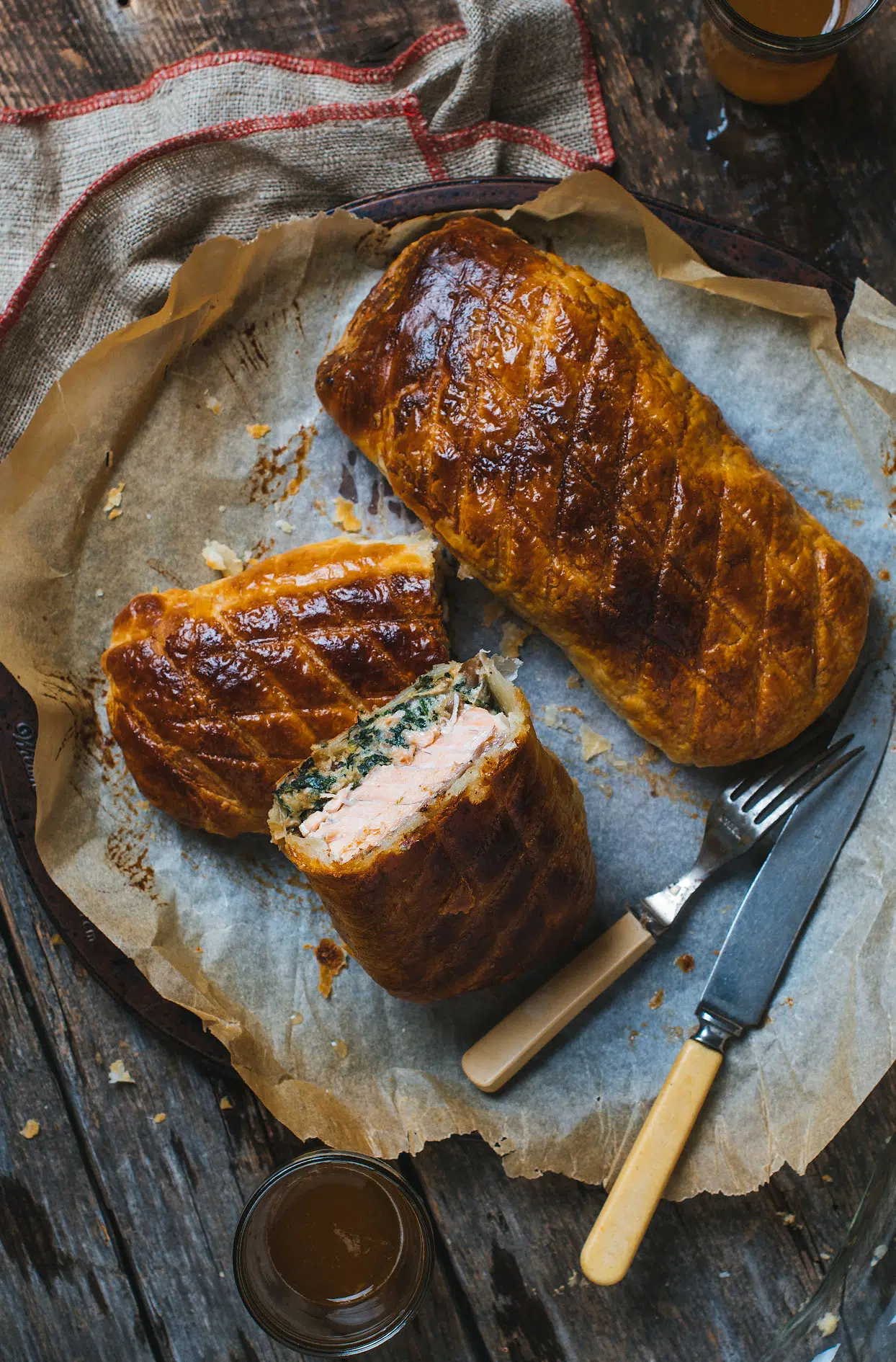
Salmon wellington
- Preparation 25 min
- Cooking 25 min
- Servings 4 to 6
- Freezing I do not suggest
Ads
🐟 Salmon, puff pastry and garlic herb cheese
I have always loved salmon and I have always loved puff pastry. The day I put the two together with garlic and herb cheese in the middle, the argument was over. It is a genuinely wild combination. The fish cooks gently inside its pastry case, it does not lose a drop, and the cheese melts into the spinach to form a creamy layer between the salmon and the crust.
Why salmon and not another fish? Two reasons, and they both count. The fillet has real thickness, so it survives twenty-five minutes in the oven without falling apart. And it has good fat, fat that marries beautifully with the garlic herb cheese. Those two together are a must. A lean fish would not give you the same thing, and I have never felt the need to try anything else.
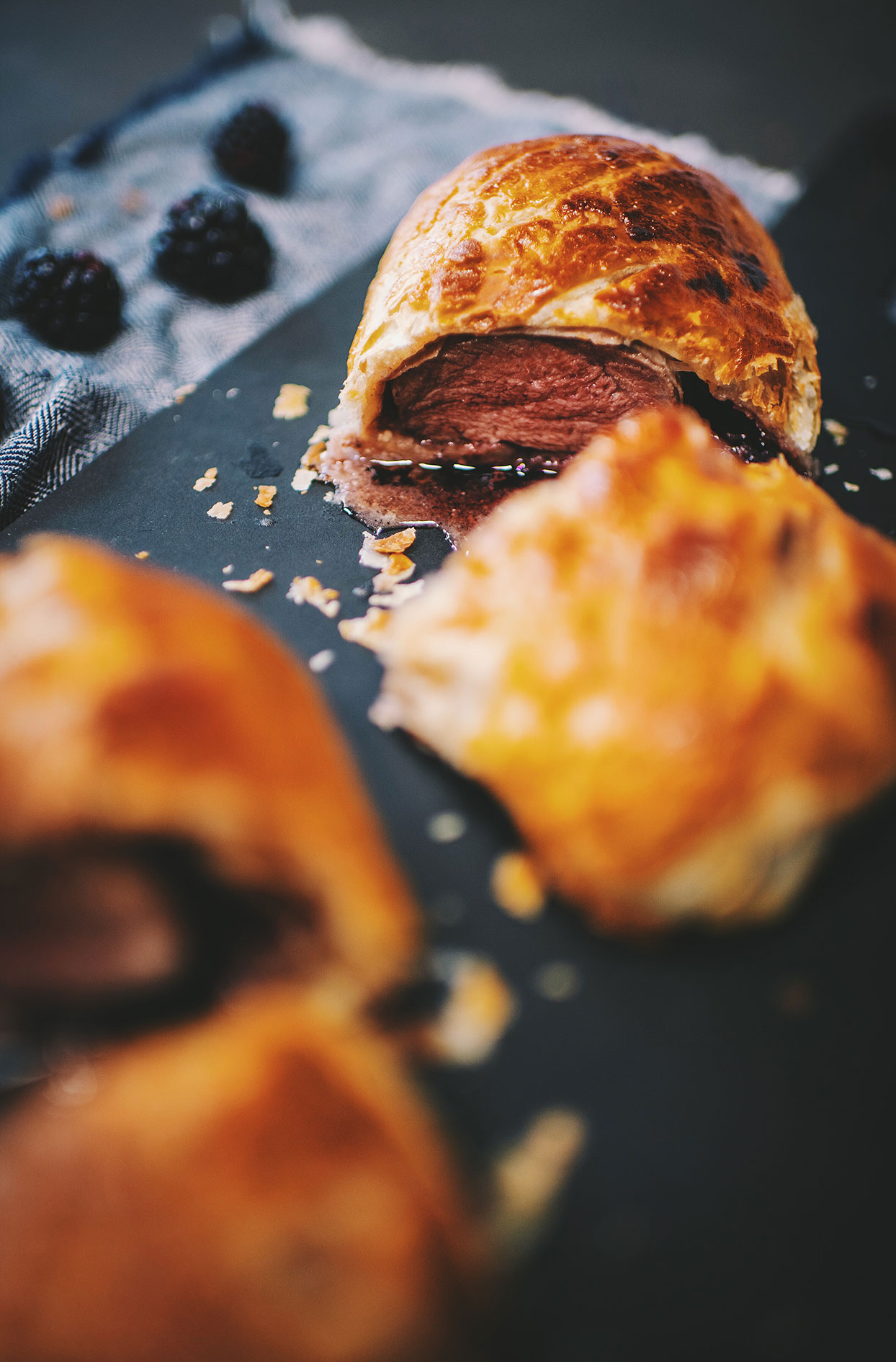
We do not think often enough about wrapping fish in pastry. It looks complicated and it is not: twenty-five minutes of prep, twenty-five minutes in the oven, and out comes something that looks like it came from a restaurant kitchen. If you want the other end of the family, my wellington duck with blackberry jam plays exactly the same card with poultry.
🛒 I buy my puff pastry, and I own it
Let me say it right away: I do not make my own puff pastry. I buy it, like almost everybody, and I have never felt bad about that. Store-bought puff pastry is good, it is consistent, it is predictable, and above all it saves you two hours of laminating on a night when people are coming over.
There are recipes where homemade changes everything. This is not one of them. The flavour here comes from the salmon, the garlic herb cheese and the mushrooms, not from butter you folded eighteen times yourself. Buy an all-butter pastry rather than a shortening one and you have done ninety percent of the work.
🎄 A holiday dish you can make all year
In my head this is still a Christmas dish, and that is when I cook it. It looks beautiful on a table, you slice it in front of everyone, and it impresses without you having spent the day in the kitchen. Some people call it salmon en croûte, others salmon wellington: same dish, pastry wrapped around fish.
That said, I do not wait for December. It is far too good to come out once a year. A big salad on the side and dinner is handled, there is nothing else to pull out of the fridge.
Ads
Ads
💧 The only real trap: water from the vegetables
Everything that can go wrong in this recipe happens at the mushroom and spinach stage. Both are full of water, and if you do not drive it out in the pan, it will come out in the pastry instead. Cook the mushrooms until the pan goes dry again and you hear sizzling rather than bubbling. Same for the spinach. If the mixture still looks wet after the cheese goes in, spread it on a plate and let it cool for ten minutes before it touches the salmon.
🥧 Store-bought pastry, but the right one
I have never made my own puff pastry for this and I do not plan to start. What matters is reading the ingredient list: buy all-butter puff pastry. Shortening or palm oil versions still rise, but they leave a greasy aftertaste that flattens the salmon. I will not name you a brand, several are perfectly fine and it changes from one store to the next. Move the pastry from the freezer to the fridge the night before, never onto the counter.
📐 Sheet sizes lie, roll them out yourself
This is the detail that makes people panic at assembly. Store-bought puff pastry sheets do not all come at 30 cm by 30 cm: some arrive as short rectangles, some as a block you have to roll. Assume it and get your rolling pin out. If you are short on surface, press two pieces together end to end with a wet fingertip along the seam, press down, then roll the whole thing to the size you need. Puff pastry welds back together perfectly as long as it stays cold, and the seam vanishes completely in the oven.
🌡️ 145 °F (63 °C), and the thermometer decides
It is the only tool that tells you what is happening under the crust. Twenty-five minutes is a good average, but a thicker fillet needs longer and a thin one cooks faster. Aim for 145 °F (63 °C) at the centre of the fish: that is the North American standard for fish, and it is where salmon is cooked through without drying out. Push the probe in from the side, through the pastry seam, so you do not pierce the good top. At 160 °F (70 °C) and beyond, the salmon is dry and nothing brings it back.
🟤 Deeply golden means brown
The pastry should be properly coloured, not pale beige. A pale crust is a crust that has not finished cooking inside, and that is where people end up with a soft layer underneath. The egg wash matters a lot: brush it everywhere, including the folded sides. If the top colours before the twenty-five minutes are up, drop the oven to 400 °F (200 °C) and keep going.
🔄 Flipping the parcel is not optional
The seams go underneath. That is what gives you a smooth top for the scoring, and more importantly it is what stops the parcel from bursting open under steam pressure in the oven. Space the two fillets well apart on the sheet: pushed together, they trade moisture and the facing sides stay pale.
🧀 The garlic herb cheese is the flavour of the dish
Garlic and herb cheese is not interchangeable here. It carries the whole signature, with the shallot and chive already built into it, and its fat marries exactly with the fat of the salmon. I buy the Boursin shallot and chive, and I have never bothered looking further. If you can only find the plain version, add one finely chopped French shallot and a spoonful of fresh chives to the mixture. The cream cheese is there for texture: it keeps everything from running when it heats up.
🥄 There is no sauce, and that is fine
Plenty of people go looking for a sauce to serve with salmon en croûte. I do not serve one. There is already melted garlic herb cheese in the spinach, salmon fat and buttery pastry in the same bite: a sauce over that is one layer too many and it soaks the crust on the plate. If you truly want one, go acidic and thin rather than creamy: sour cream loosened with lemon juice and chopped dill, served on the side and never poured over the top.
🍽️ Slicing without crushing
Rest it three or four minutes out of the oven, no longer, just enough for the steam to settle. Slice with a bread knife, sawing gently, never pressing down. A chef’s knife crushes the crust and pushes the cheese out the sides. Each fillet gives two or three good slices, which is where the 4 to 6 servings comes from.
📅 Getting ahead
The spinach, mushroom and cheese filling can be made up to two days ahead and kept in the fridge in a sealed container. It is actually better that way: cold, it spreads more easily on the fish and runs less. You can also chop your shallots and garlic the day before, and move the pastry from the freezer to the fridge.
What has to wait until the last minute is the assembly. A wellington sitting assembled in the fridge means salt pulling water out of the fish and into the pastry, and a soggy crust before it ever sees the oven. Assemble, brush, bake. Thirty minutes ahead is my maximum and it is the only delay I have actually tested: I have never built it the day before, so I will not tell you that it works.
❄️ Freezing: no
I do not suggest it and I have never done it. Cooked salmon weeps on thawing, puff pastry goes limp, and you end up with something sad. Leftovers keep one day in the fridge and reheat in a 350 °F (180 °C) oven for ten minutes, never in the microwave.
✅ What to serve with salmon wellington
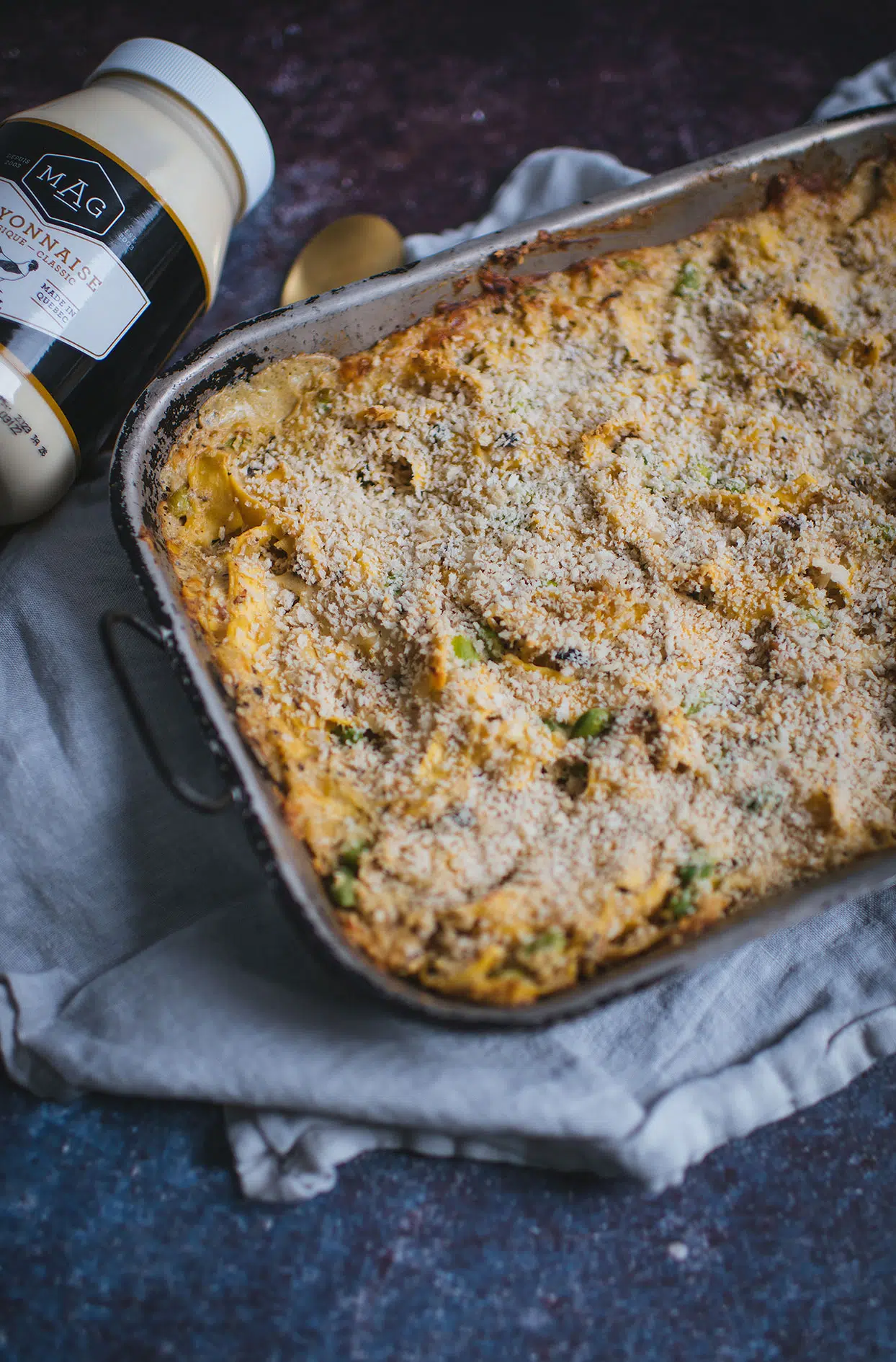
A big green salad, a sharp vinaigrette and nothing else. There is already fish, cheese and pastry on the plate, it does not need backup. For a holiday dinner, roasted asparagus with lemon or buttered green beans do the job without stealing the show. If you like this approach, the wellington duck with blackberry jam is the house big brother, and the salmon casserole covers the nights when you do not feel like pulling out puff pastry.


Ads
Ingredients
- 2 tablespoons (30 ml) butter
- 2 large French shallots, finely chopped
- 3 garlic cloves, finely chopped
- 2 cups (500 ml) white mushrooms (about 8 large), chopped
- 16 cups (4 L) baby spinach (about 250 g / 9 oz), roughly chopped
- 150 g (5.2 oz) garlic and herb cheese, shallot and chive style
- 100 g (3.5 oz) cream cheese
- 1 tablespoon (15 ml) breadcrumbs
- 400 g (14 oz) store-bought puff pastry, cut in half
- Flour, for the work surface
- 2 salmon fillets of about 375 g (13 oz) each, skin removed
- 1 egg, beaten
Ads
Preparation
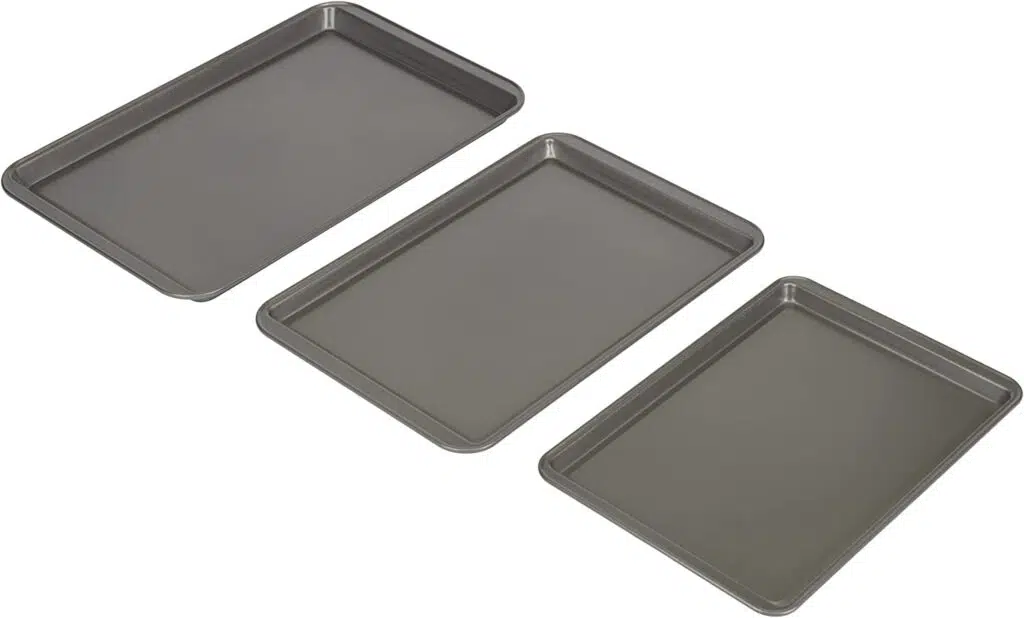
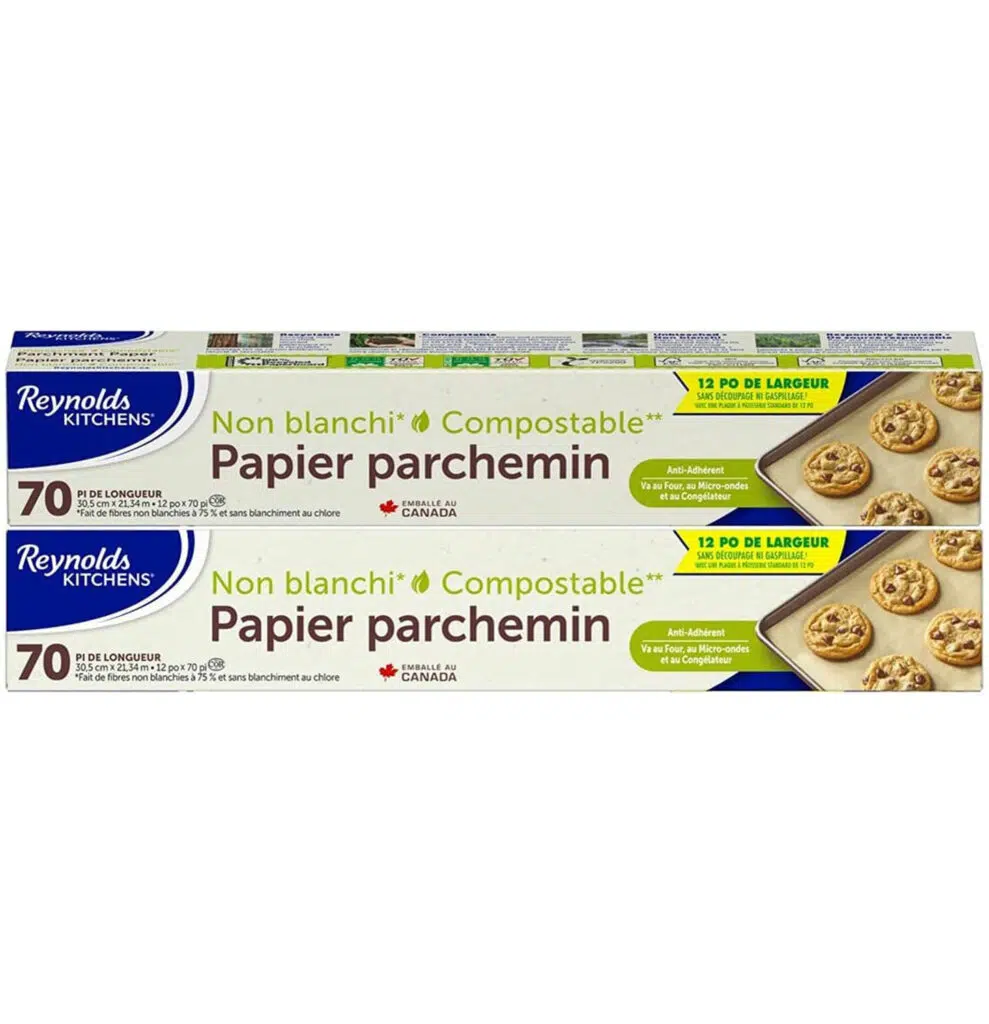
- Preheat the oven to 425 °F (220 °C). Cover a baking sheet with parchment paper.
- In a skillet over medium heat, melt the butter and add the shallots and garlic. Cook for 2 to 3 minutes, stirring.
- Add the mushrooms and stir. Cook for 5 to 6 minutes, stirring, to drive the water out of the mushrooms. Season with salt and pepper.
- Add the spinach, stir and keep cooking for 4 to 5 minutes to wilt it and drive out the water.
- Remove from heat and add the cream cheese, the garlic and herb cheese and the breadcrumbs. Stir for a few minutes until the texture is even. Taste and adjust the seasoning if needed. Set aside.
- On a lightly floured work surface, roll the puff pastry into 2 sheets of 30 cm by 30 cm. Store-bought sheets do not all come the same size: if yours are too small, press two pieces together with a wet fingertip along the seam and roll the whole thing out to the size you need. Season the salmon fillets with salt and pepper on both sides and place them in the centre of the sheets.
- Spoon the spinach mixture on top of the salmon fillets and spread it to cover the fish completely (and only the fish).
- Fold the top of the pastry to the centre and the bottom over it. Brush the pastry lightly with water and press gently to seal.
- Trim the excess pastry on the sides, keeping about 2 cm. Fold that pastry inward and press firmly to seal. Place the fillets on the baking sheet upside down, so the good side of the pastry is on top. Space the two well apart on the sheet for even cooking.
- Using a knife, score a shallow criss-cross pattern on top of the pastry. Brush the top with the beaten egg.
- Place in the oven and bake for about 25 minutes, or until the pastry is deeply golden and the salmon reaches an internal temperature of 145 °F (63 °C). Serve immediately!
Store-bought all-butter puff pastry, either a block or ready-rolled sheets: both work. You need 400 g for two fillets. Read the ingredient list and skip anything built on shortening or palm oil, which leaves a greasy note that flattens the fish. Because sizes vary from brand to brand, plan on pressing pieces together and rolling them out yourself to 30 cm by 30 cm. Same pastry as in my wellington duck with blackberry jam.
Almost always because the water from the mushrooms and spinach was not cooked off long enough in the pan. Keep going until the bottom of the pan is dry again. Two other culprits: a still-warm filling laid on the fish, and a wellington assembled too far ahead. Assemble and bake within the same half hour.
The spinach, mushroom and cheese filling can be made up to two days ahead and kept in the fridge. The assembly happens no more than thirty minutes before baking, uncovered in the fridge. That is the only delay I have tested. Built any earlier, the salt pulls water out of the salmon and into the pastry and you lose the crust.
With an instant-read thermometer pushed in from the side, through the pastry seam, to the centre of the fish. You are aiming for 145 °F (63 °C), the North American standard for fish. A deeply golden crust is necessary but not sufficient: pastry can be ready while a thick fillet is not, and the reverse happens too.
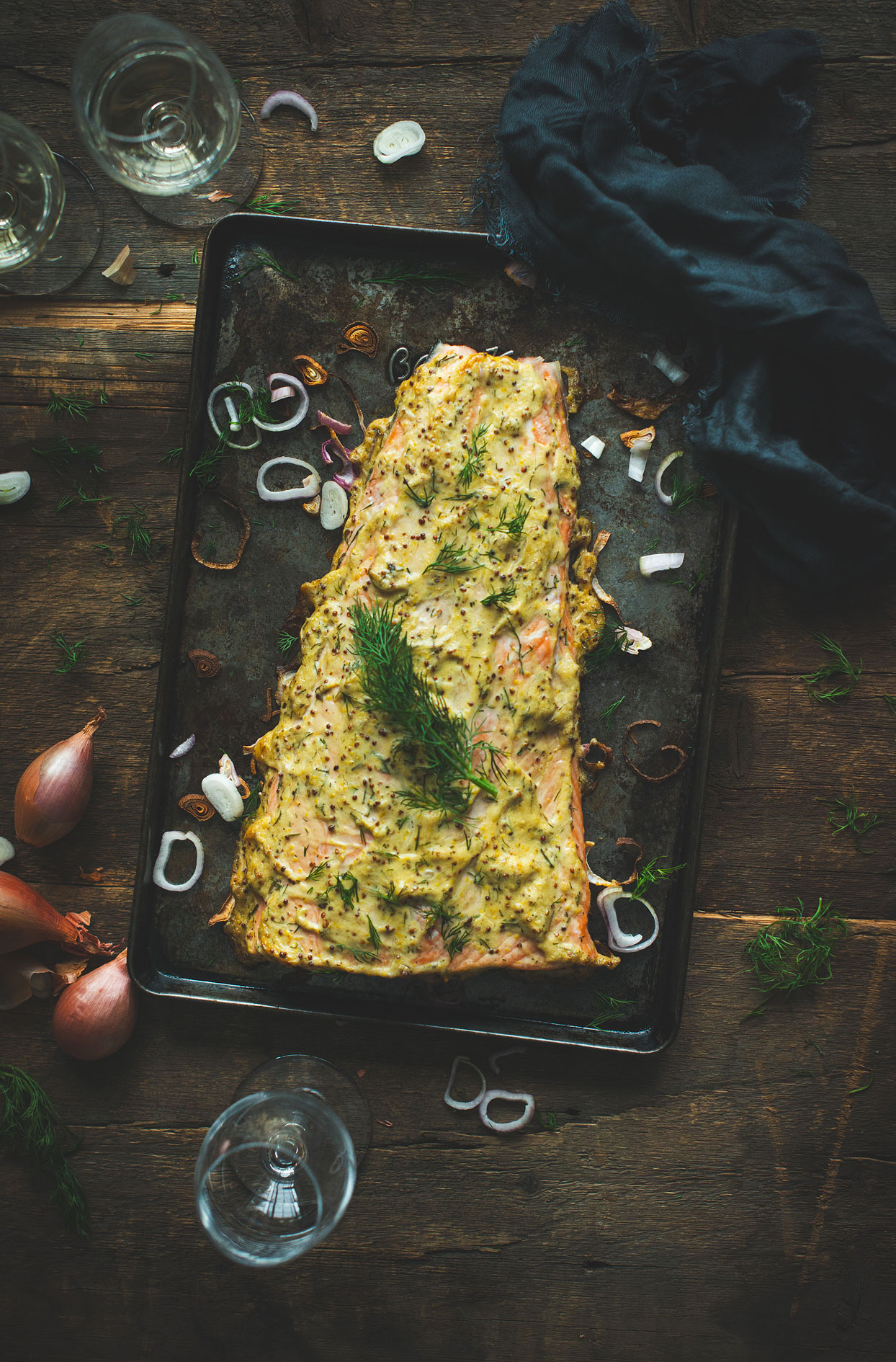
None, at our house. The garlic herb cheese melting into the spinach already works as a sauce inside the parcel, and adding something creamy over the top soaks the crust on the plate. If you really want one, stay acidic and thin: sour cream loosened with lemon juice and chopped dill, served on the side. For salmon that genuinely wears a sauce, look at my oven-baked salmon with a mayo, mustard and dill crust instead.
I do not suggest it. Cooked salmon releases water as it thaws and puff pastry loses every bit of its crispness. Leftovers keep one day in the fridge and reheat for ten minutes in a 350 °F (180 °C) oven. The microwave turns the crust into a sponge.
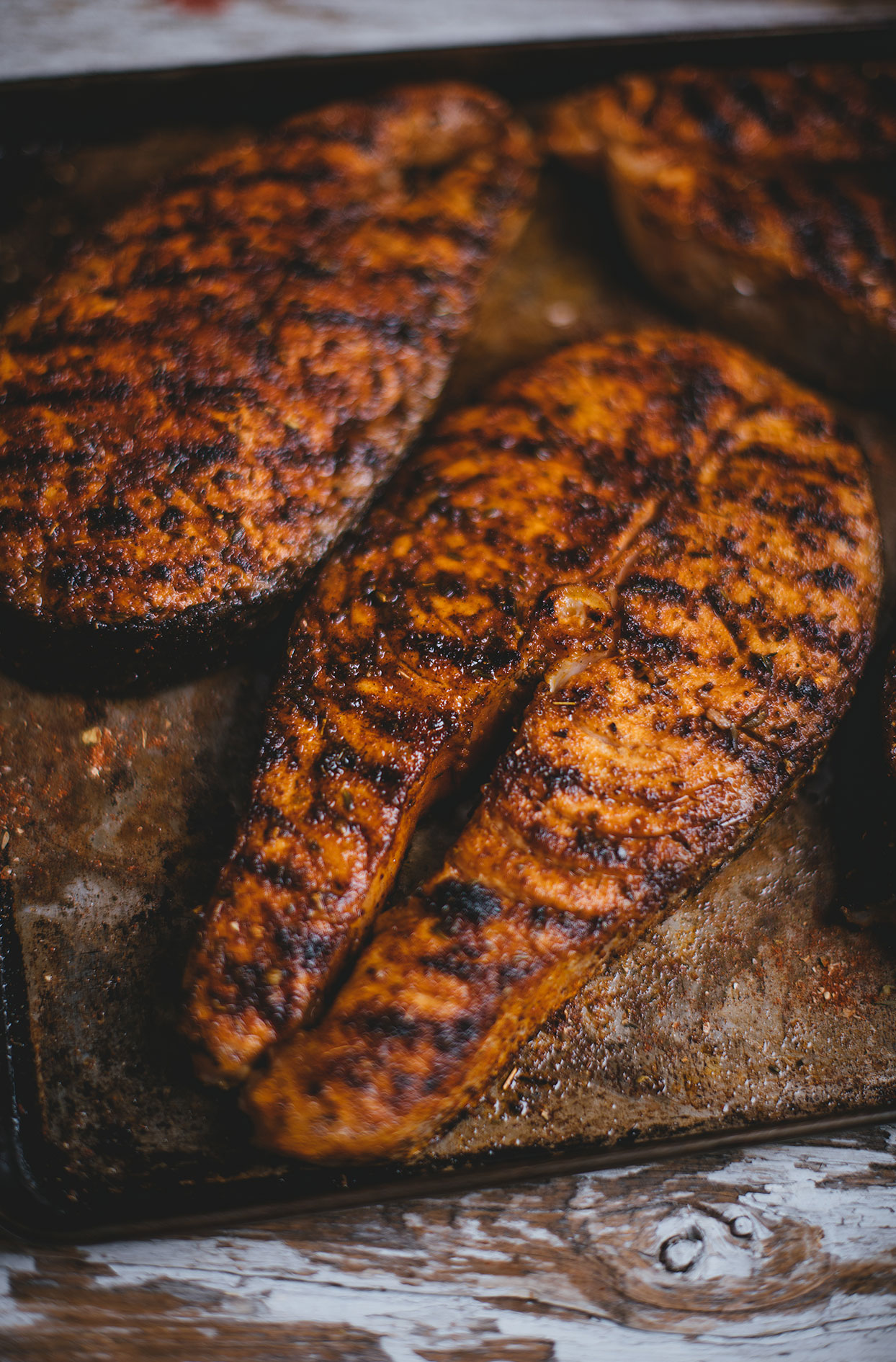
A big green salad with a sharp vinaigrette and honestly nothing else: there is already fish, cheese and pastry in the same bite. For a holiday dinner, add roasted asparagus with lemon or buttered green beans. And if you are building a full table, the wellington duck with blackberry jam or the blackened salmon steaks sit well next to it. For a weeknight without puff pastry, the salmon casserole does the job.
None. It is the same dish under two names: a salmon fillet wrapped in puff pastry and baked. Salmon en croûte is what you will hear in Britain, salmon wellington is what most people say here, borrowed from the beef version. Recipes differ in what goes between the fish and the pastry, and mine puts spinach, mushrooms and garlic herb cheese in there.
Ads
Ads

Ads
Ads
Ads