

Roasted Sweet Potatoes Recipe (Crispy Cubes)
- Preparation 10 min
- Cooking 40 min
- Servings 4
- Freezing Absolutely
Ads
🍠 The salty, sweet, lemony contrast is unreal!
I had to stop myself from eating the whole pan standing up beside it. I will say it straight: these are among the best sweet potatoes I have ever eaten. What gets you is the contrast. The sweetness of the caramelized sweet potato, the salt of the flaky salt crunching between your teeth, and raw lemon zest over the top waking everything up. Three things that should not work together, and do.
🚫 NEVER flip them, and that is the whole secret
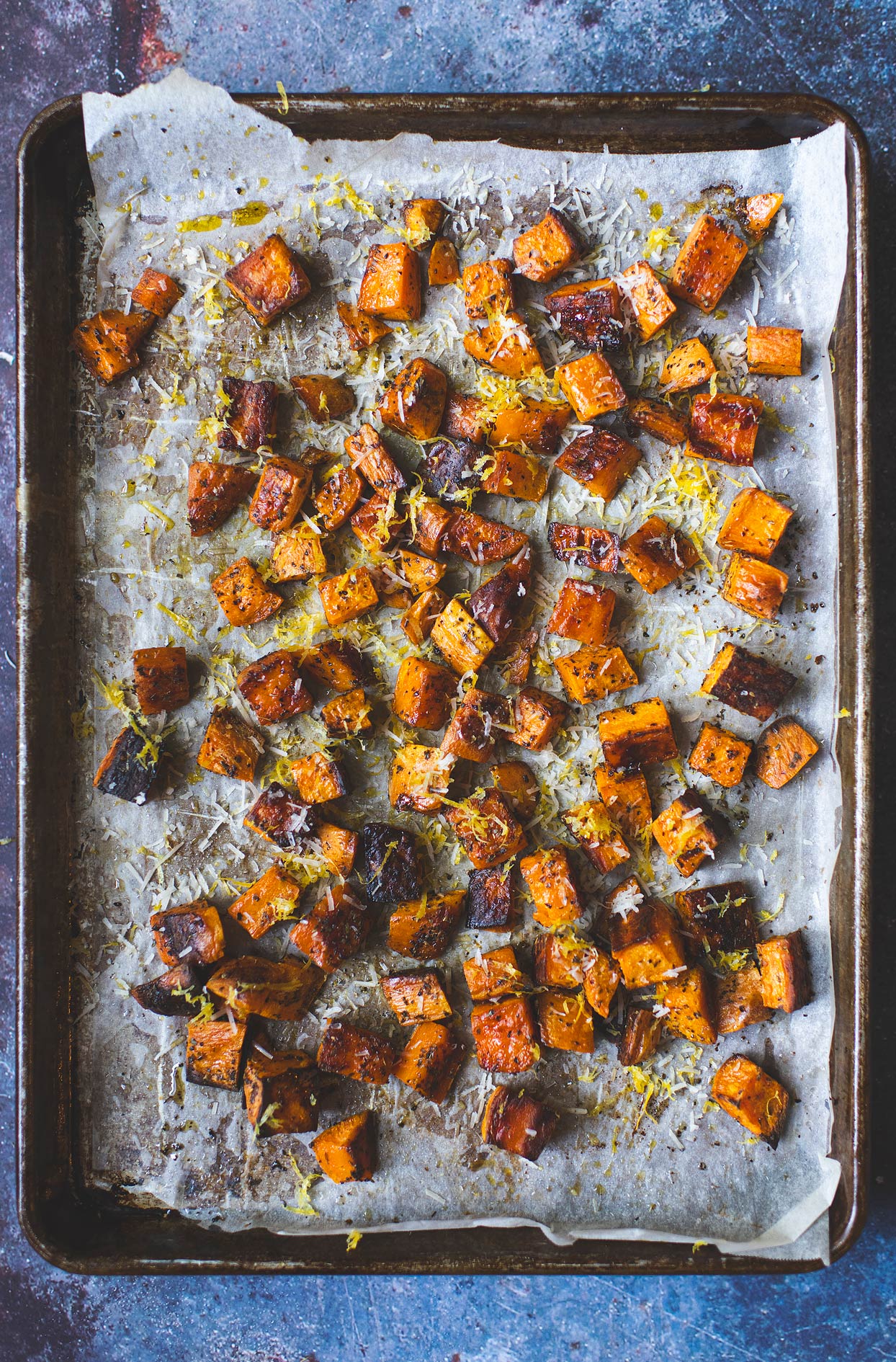
Every recipe tells you to flip halfway through. Do not. One face staying glued to the scorching pan for forty minutes is a face that truly caramelizes, with dark, crisp edges. Stir them around and you spread the heat over every side and get nothing good anywhere. It is the simplest move in the recipe and it is the one that makes all the difference.
🧀 Parmesan never goes in the oven
Six ingredients, and the cheese arrives at the very end. Parmesan is a hard, aged cheese: past 400 °F it turns bitter within minutes. It is a finishing cheese, not a melting cheese. So you transfer the cubes to your serving dish, let them rest five minutes, and only then add the zest, the parmesan, the flaky salt and the pepper. The cheese softens just enough on the residual heat, without ever scorching.
Ads
Ads
🚫 Not flipping is a choice, not an oversight
I know it goes against everything you have read. Here is why it works: one face in continuous contact with scorching metal drives caramelization all the way on that face. You get one side genuinely dark, almost confit, and three softer sides. That contrast is what makes the bite interesting. Stir them and you spread the heat evenly and end up with four beige faces. Single layer on the pan, cubes not touching, and close the oven door.
🍬 Why sweet potatoes caramelize faster than regular potatoes
They contain an enzyme, beta-amylase, that converts their starch into sugar as the temperature climbs. In other words, they go into the oven carrying free sugars a regular potato does not have, and those sugars brown well before the starch in a russet even starts to color. That is why 425 °F and forty minutes give you edges that dark, and it is also why a long steady roast gives sweeter flesh than a quick blast of heat.
🧀 Parmesan after the roast, never during
Parmesan is a hard, aged cheese, and it goes from golden to bitter within minutes in the oven. It is not a melting cheese, it is a seasoning cheese. Laid on cubes that are still scorching but out of the oven, it softens just enough to cling, and it keeps its grain under your teeth. That is also the reason for the five-minute rest: it gives the heat time to come down a little.
🍋 Raw zest, not juice
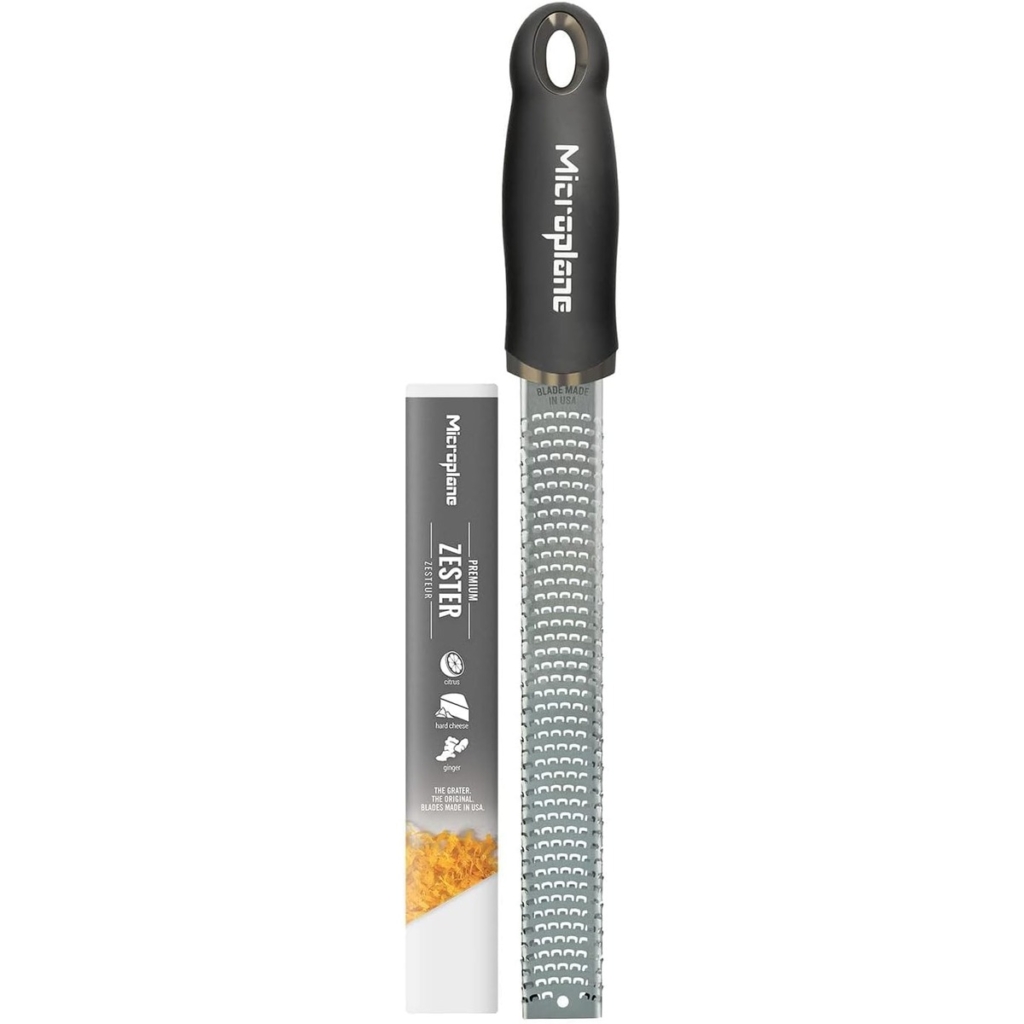
The zest does the work, not the juice. Zest carries the essential oils of the lemon, so the perfume, without adding the liquid acidity that would sog the cubes. Grate it directly over the dish so the oils land in it. One lemon is plenty for 900 g of potatoes.
🥔 To peel or not to peel?
Usually I do not peel my sweet potatoes, the skin holds up well and gives a more rustic result. This time I peeled them, and honestly, I preferred it: with no skin, all you get is the sweet flesh and the caramel on the edges, with nothing to distract you. If you keep the skin on, scrub it well and count on the same cooking time.
📏 Big 2 cm cubes, no smaller
It may seem large, and it is deliberate. A small cube cooks too fast and goes soft before the outside has time to caramelize. A 2 cm cube keeps a melting center while the edges darken. And 900 g of cubes fit in a single layer on a large sheet pan, which matters: cubes touching each other steam against one another.
📅 Make ahead
You can peel and cut the sweet potatoes the day before and keep them in the fridge in a container of cold water, which stops them from browning. Drain and dry them thoroughly before oiling, because any water left will make steam instead of letting them caramelize. Grate your parmesan ahead too if it helps, it keeps very well. What I never do ahead: the roasting and the finish. Roasted sweet potatoes that sit around lose exactly what we went after, the crispness of the edges. And lemon zest has to be grated at the last second, its oils fade fast.
✅ What to serve with my roasted sweet potatoes?
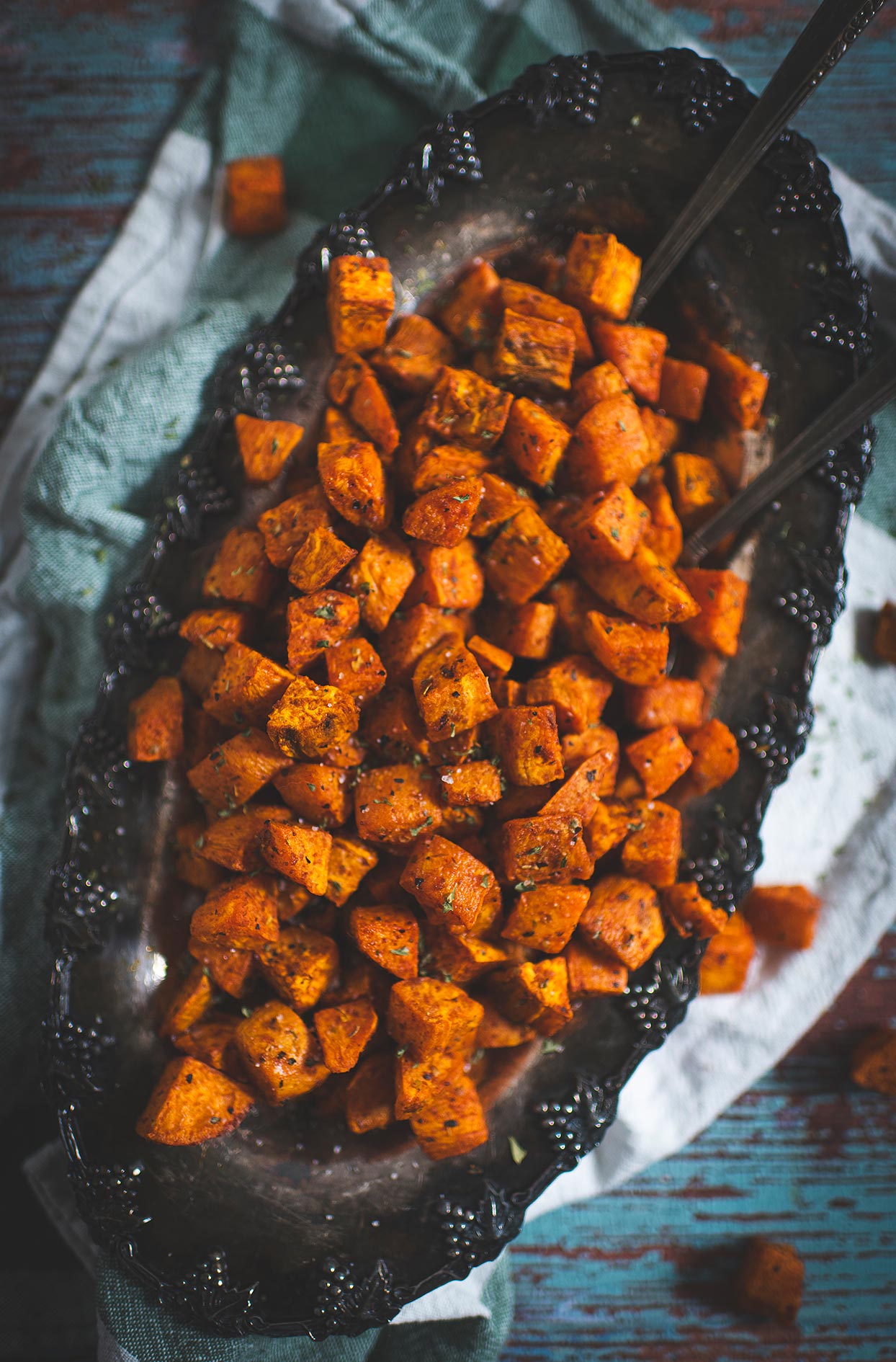
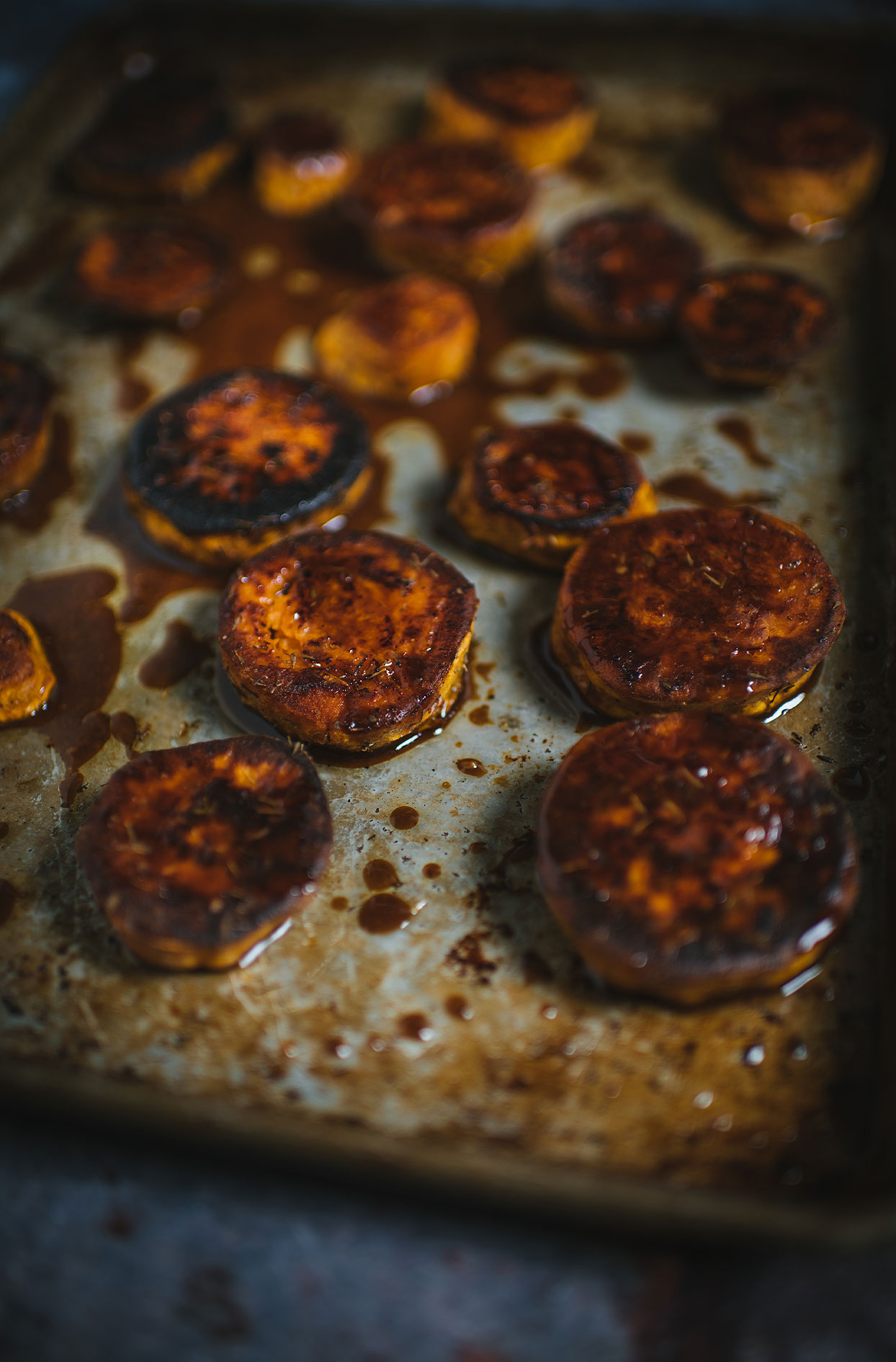
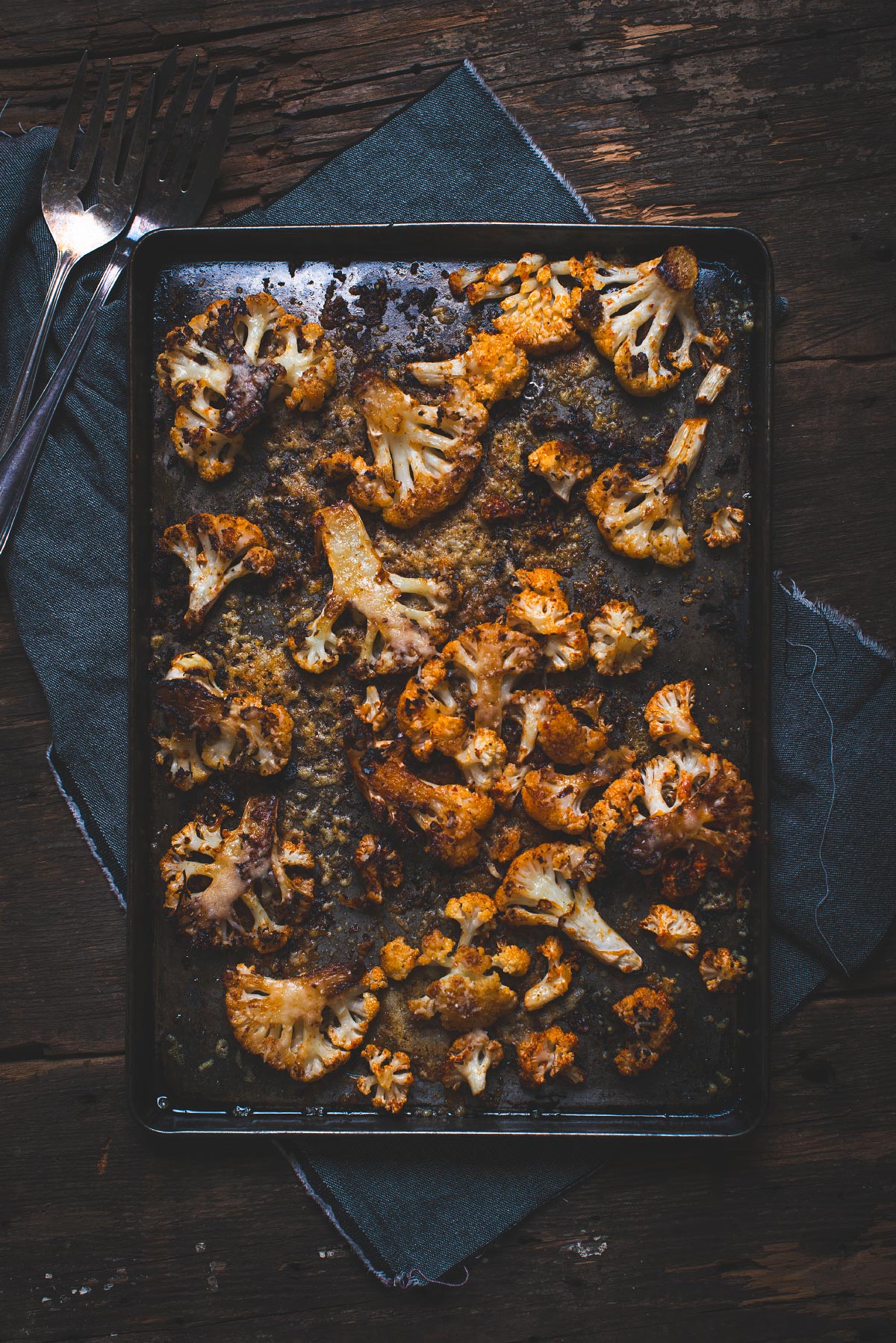
With just about anything. Steak, fish, chicken. They also stand entirely on their own, straight out of a bowl. If it is the vegetable you are after, go look at my air fryer sweet potatoes for the nights you are in a rush, my maple roasted sweet potatoes for a sweeter take, or my parmesan roasted cauliflower, which plays the exact same game with another vegetable.
Ads
Sweet potatoes
- 2 large sweet potatoes (about 900 g), peeled and cut into 2 cm cubes
- 1/4 cup (60 ml) olive oil
- 1 1/2 tsp (7.5 ml) herbes de Provence
To finish
- 1/4 cup (60 ml) finely grated parmesan
- Zest of 1 lemon
- Flaky salt and freshly ground pepper, to taste
Ads
Preparation
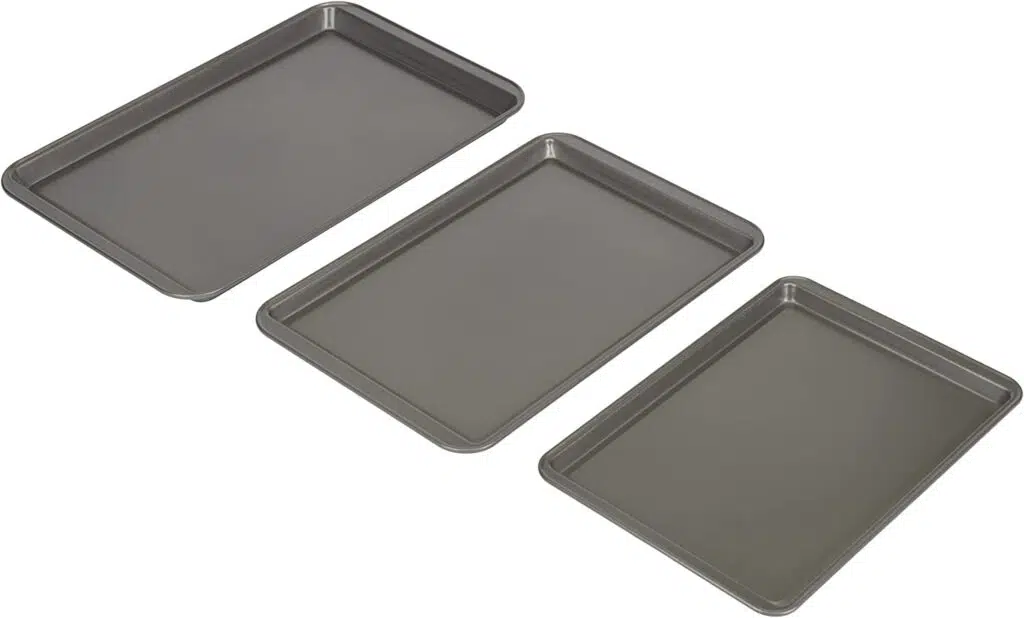
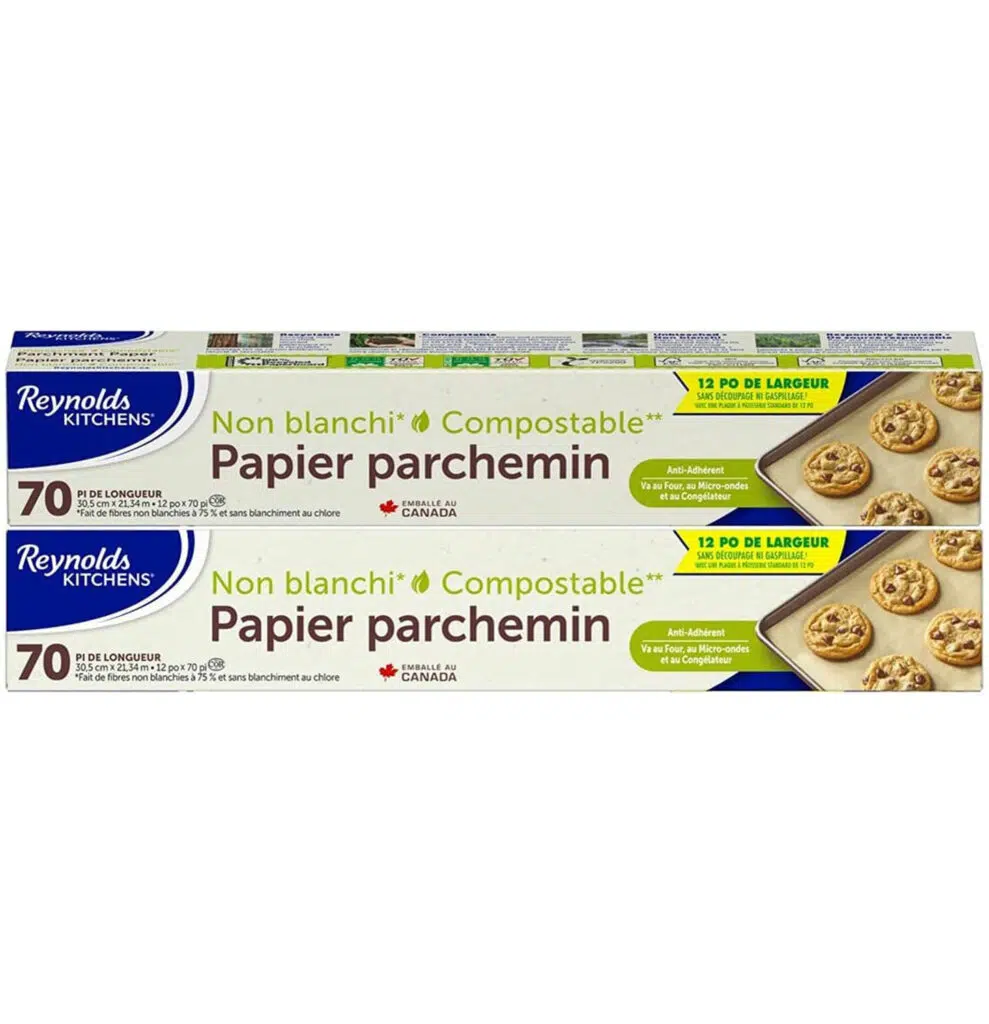
- Set the rack in the center of the oven and preheat to 425 °F (220 °C). Line a large sheet pan with parchment paper.
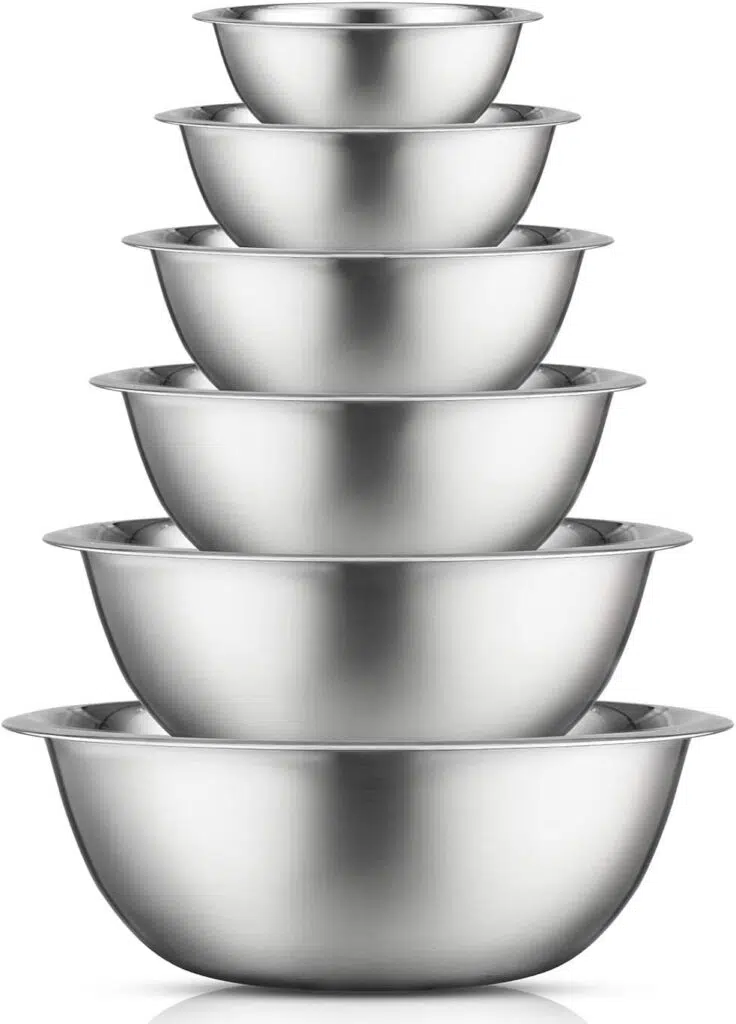
- In a large bowl, toss the sweet potato cubes with the olive oil and the herbes de Provence. Season lightly with salt.
- Spread the cubes on the pan in a single layer, not touching. Roast 35 to 40 minutes, without ever flipping them, until the edges are deeply browned and a fork slides in without resistance.
- Transfer the cubes to a serving dish and let rest 5 minutes.
- Grate the lemon zest over them, add the parmesan, then finish with flaky salt and a good grind of pepper. Serve right away.
425 °F (220 °C), and I would not go lower. Sweet potatoes carry free sugars that brown early, so a hot oven gives you dark, caramelized edges within the same window that cooks the center through. At 350 or 375 the cubes soften before they color, and you end up with something closer to steamed than roasted. Rack in the center, single layer, 35 to 40 minutes.
35 to 40 minutes for 2 cm cubes, without flipping them. Trust the look over the clock: the edges should be genuinely dark, almost brown, and a fork should slide in without resistance. Smaller cubes will cook faster but go soft before they caramelize, which is the opposite of what you want here.
Three. Crowding the pan, which makes the cubes steam against each other instead of roasting. Being shy with the oil, when it is the oil that carries heat to the edges. And flipping them halfway, which spreads the heat over every face and leaves you with nothing browned anywhere. A fourth, if you use cheese: putting parmesan in the oven, where it turns bitter.
It works both ways. Usually I leave the skin on, it holds up well and gives a more rustic result. For this recipe I peeled them and preferred it: with no skin, all you taste is the sweet flesh and the caramelized edges. If you keep the skin, scrub it well and count on the same time in the oven.
Because parmesan burns. It is a hard, aged cheese with little moisture, and past 400 °F it darkens and turns bitter within minutes. It is not a melting cheese like mozzarella, it is a seasoning cheese. Laid over cubes coming out of the oven, it softens just enough to cling while keeping its grain. Use real parmigiano off the block and grate it yourself.
Four to five days in the fridge in an airtight container. The cubes will soften, there is no avoiding it, but they are still very good. To bring back some crispness, the oven or an air fryer work far better than a microwave. And add fresh parmesan when you serve them, never too much.
Ads
Ads
Ads
Ads
Ads