

Stuffed pork tenderloin with Italian sausage and leek
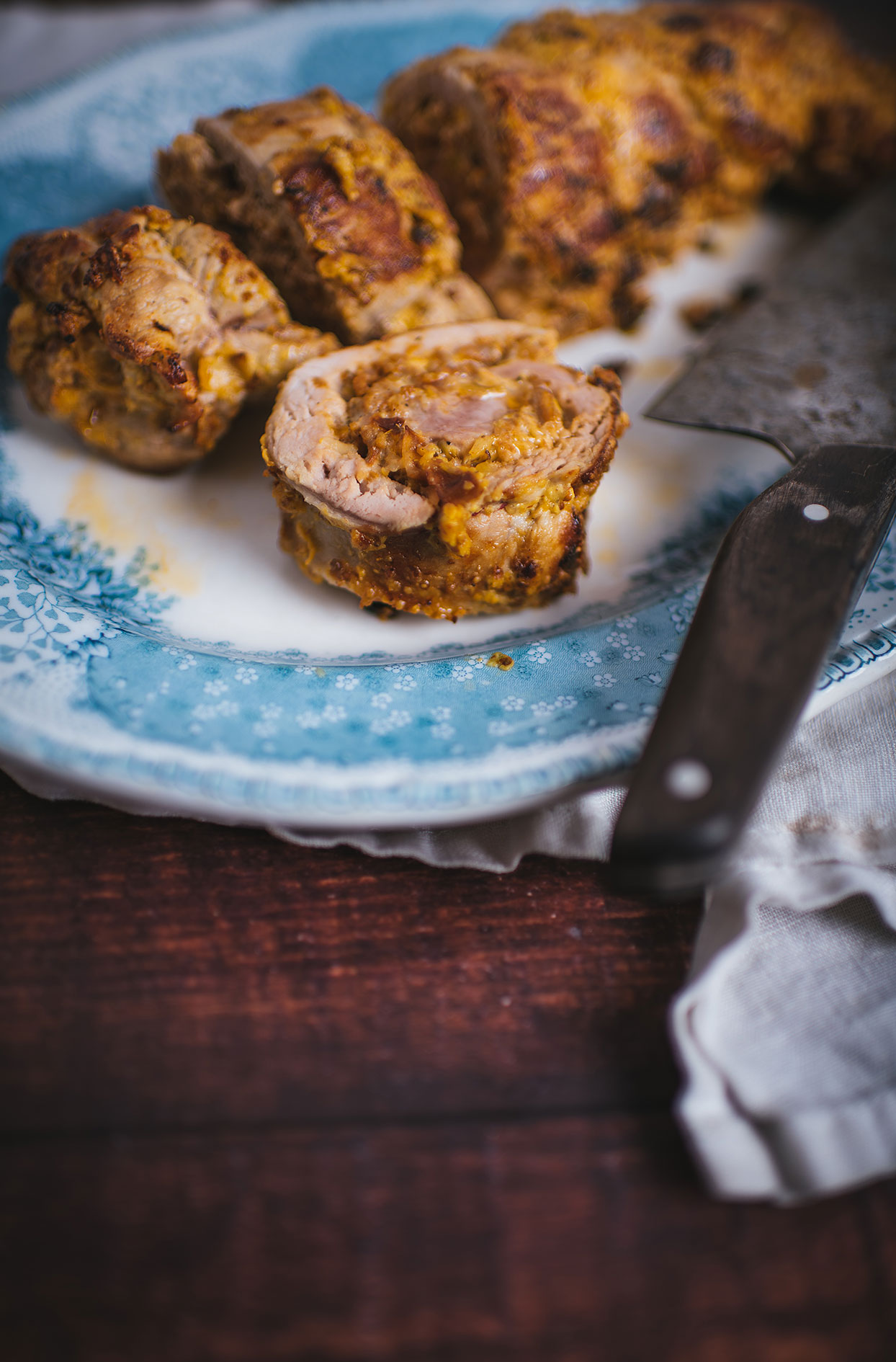
- Preparation 25 min
- Cooking 55 min
- Servings 4
- Freezing I do not suggest
Ads
🐷 Why I stuff my pork tenderloin
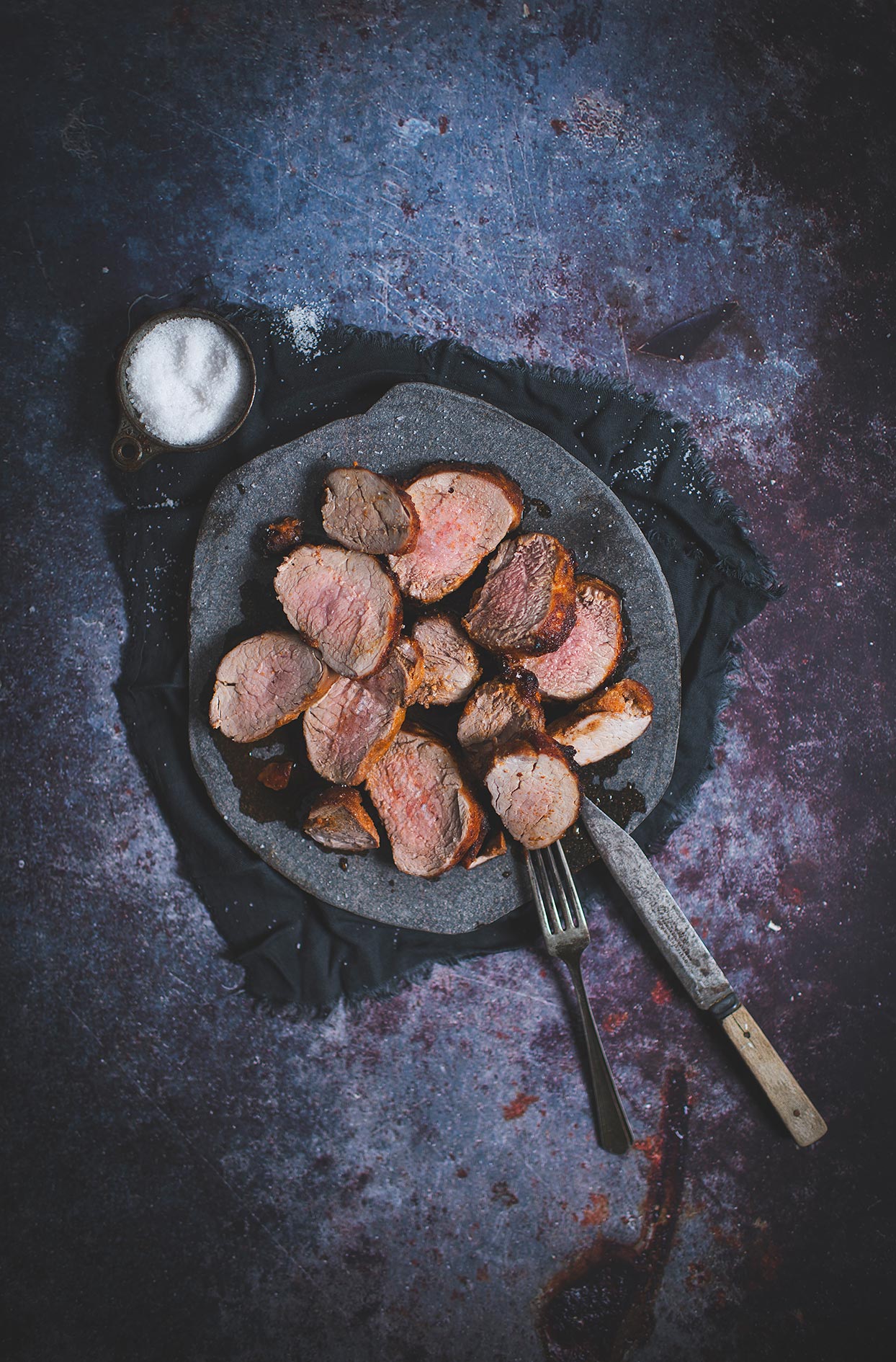
This one came out of nowhere one afternoon. I like pork tenderloin plenty, but I like it a whole lot more once there’s something rolled up inside it. Cook a plain tenderloin two minutes too long and you get dry, heavy meat nobody comes back to. Stuffed, it’s a different animal: the filling keeps it moist, the flavour has somewhere to go, and you can swap what’s inside for whatever the fridge hands you. I haven’t gone back to a plain one since.
🔪 Butterflying it without going through
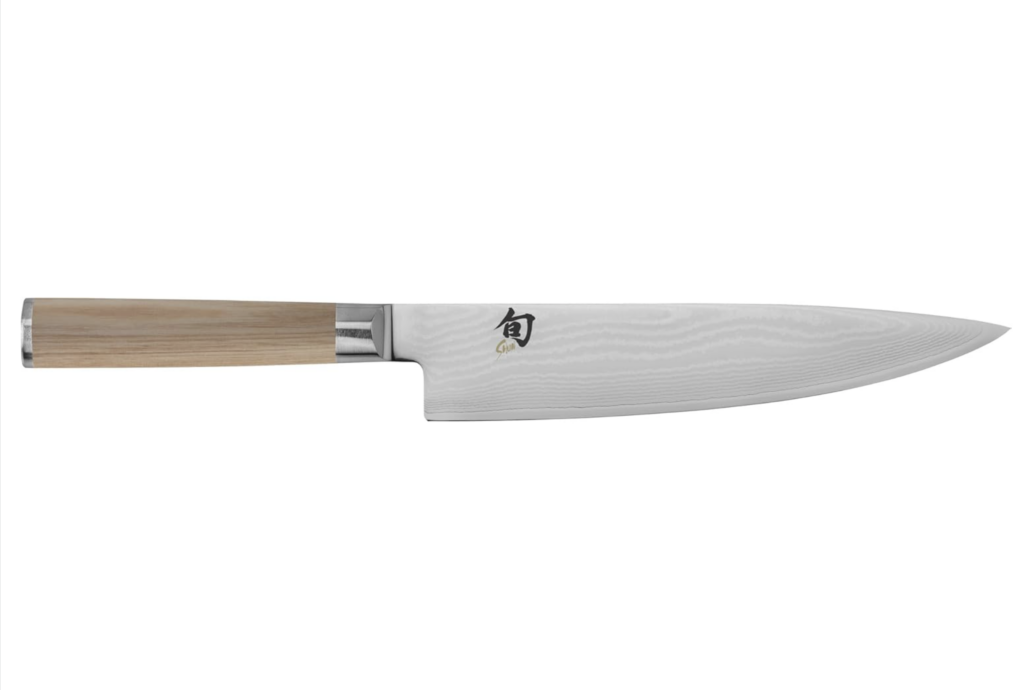
Everything rides on this step. Slice the tenderloin open like a book, lay it between two sheets of plastic wrap, then wrap your rolling pin in plastic too and tap outward from the middle. Hit the same spot twice and you punch a hole. Go slow, a few strokes toward each edge, and it flattens like nothing. Buy the biggest tenderloin the butcher has while you’re at it: more surface means more room for the stuffing and a tighter roll.
🧀 The stuffing, and why leek beats onion here
Italian sausage meat, leek softened in olive oil, garlic, and cream cheese to bind the whole thing. That’s the list. The cream cheese is what makes a stuffed pork tenderloin creamy instead of crumbly, and it’s the reason the filling stays put when you slice into it. Leek isn’t just a fancy onion either. It’s milder, finer, a little sweet, and it lets the sausage do the talking. I use mild sausages because I’ve got kids at the table, but hot ones are fair game if that’s your thing. Serve it with Boursin mashed potatoes and some BBQ grilled veggies and dinner is done.
Ads
Ads
🔪 How to butterfly a pork tenderloin without piercing it
Slice the tenderloin open like a book, wrap your rolling pin in plastic wrap and tap gently, always working outward from the centre. Hammer the same spot twice and you go straight through. Slow strokes toward each edge and it flattens without a single hole.
🐷 Go big
Grab the largest tenderloin you can find. More surface means more room to spread the stuffing and a tighter roll. A small one fills up fast and gets awkward to tie without the filling squeezing out the ends.
🧀 Don’t overload the stuffing
It’s tempting to pile it on, but overload it and the filling escapes while you’re still tying. A generous but reasonable layer, spread right to the edges, rolled tight, then butcher’s twine every 2 inches (5 cm). If you’re wondering what to stuff a pork tenderloin with beyond this one: anything that binds. Cream cheese, ricotta, goat cheese. Something dry and crumbly will fall out the second you slice.
🌭 Mild or hot Italian sausage
I go mild because of the kids. Hot works just as well if you want the heat.
🧅 Leek changes the whole thing
Leek tastes nothing like onion once it’s cooked down: milder, finer, faintly sweet. That’s what gives this stuffing its polish. Soften it properly with the garlic in olive oil before the sausage meat goes in, otherwise you get crunchy bits in a creamy filling.
🌡️ Pull it at 145 °F, and reheat leftovers low
The internal temperature for pork tenderloin is 145 °F (65 °C), measured in the meat and not in the stuffing. Past that it dries out and no filling saves it. Rest it five minutes before slicing. Don’t freeze this one, the pork recooks on the way back and turns tough. Leftovers go in the air fryer or a low oven, gently.
✅ What to serve with stuffed pork tenderloin
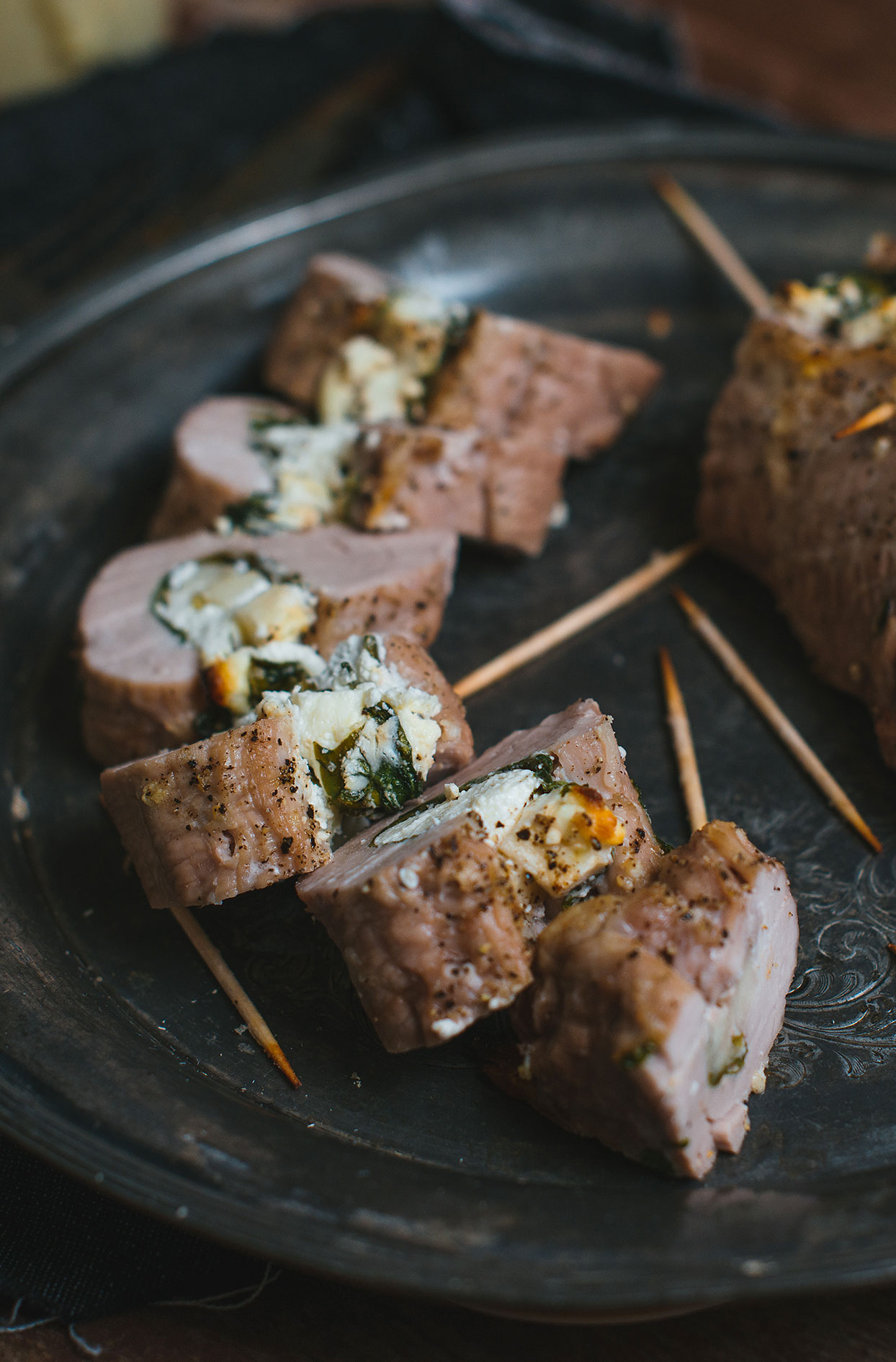
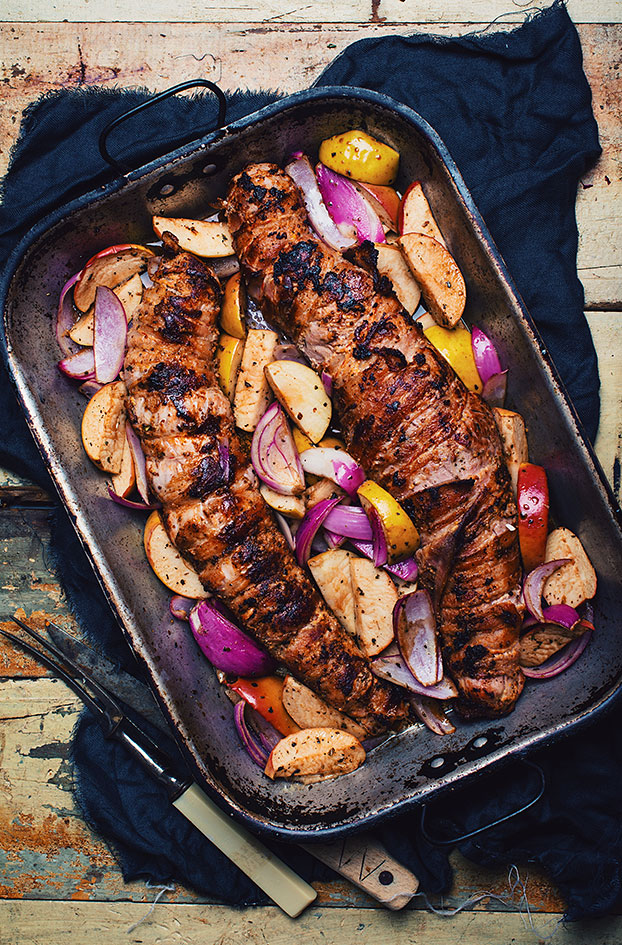
My winning combo: a creamy Boursin mashed potato and roasted vegetables. BBQ grilled veggies do the job in summer. And if you’re into this cut, try my pork tenderloins stuffed with apples, goat cheese and spinach.
Ads
Pork and stuffing
- One 1 lb (500 g) pork tenderloin
- 2 leek whites, finely chopped
- 2 large garlic cloves, finely chopped
- Olive oil
- 3 Italian sausages (mild or hot), casings removed
- 1/4 cup (60 ml) cream cheese
- 1/2 tsp (2.5 ml) Italian seasoning
Mustard sauce
- 2 tbsp (30 ml) grainy mustard
- 1 tbsp (15 ml) Dijon mustard
- 1 tbsp (15 ml) olive oil
Ads
Preparation
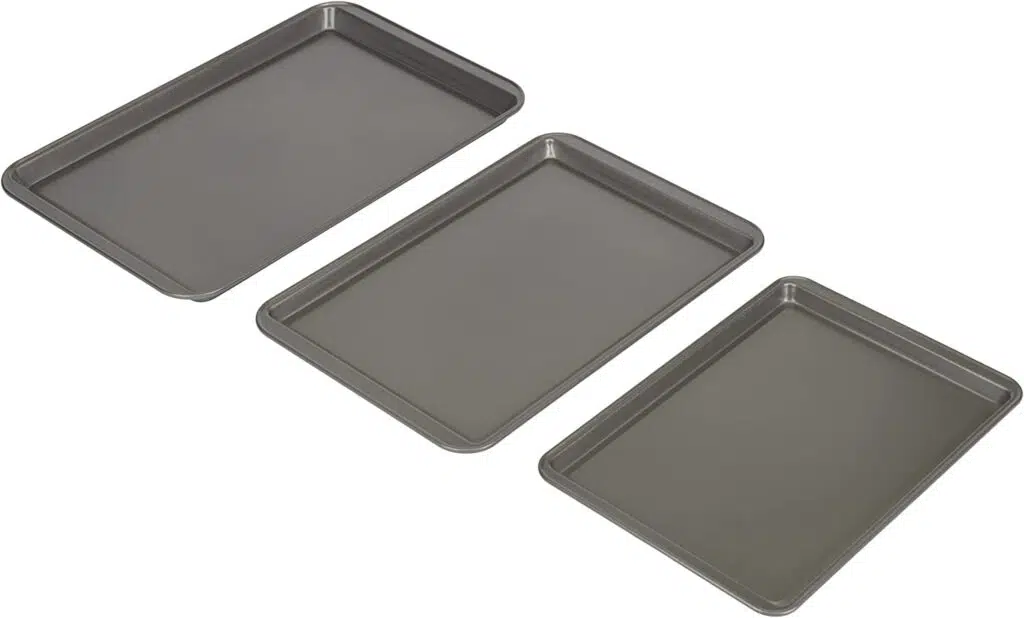
- Preheat the oven to 400 °F (200 °C). Line a baking sheet with parchment paper.
- On a work surface, place the pork tenderloin and butterfly it open. Put it between two sheets of plastic wrap and pound with a rolling pin. The goal is to flatten it as much as possible without going through. Set aside.
- In a large pan heated over medium, add the leek and garlic and drizzle with a good amount of olive oil. Cook 3 to 4 minutes, stirring.
- Add the sausage meat and cook for 7 to 8 minutes, or until the meat is cooked. Break the meat into small pieces. Transfer to a large bowl and let cool 5 minutes.
- Add the cream cheese, the Italian seasoning, season with salt and pepper and mix. Spread the mixture over the pork tenderloin all the way to the edges, roll tightly and tie with butcher’s twine every 2 inches.
- In the same pan heated over medium-high, pour a good amount of oil and brown the pork tenderloin on all sides, about 7 to 8 minutes total. Season generously with salt and pepper. Place the pork on the baking sheet.
- In a bowl, combine the sauce ingredients and mix. Brush the pork tenderloin with the sauce and place in the oven. Cook for 35 to 45 minutes, or until the internal temperature reaches 145 °F (65 °C). Let rest 5 minutes before slicing and serving!
Anything that binds. Here it’s Italian sausage meat, leek, garlic and cream cheese, and the cream cheese is doing the heavy lifting: it holds the filling together so it doesn’t dump out when you slice. Ricotta or goat cheese work the same way. Spinach, mushrooms, apple, sun-dried tomato all belong in there too, as long as you cook the moisture out of them first.
Sear it on all sides first, 7 to 8 minutes total, then 35 to 45 minutes at 400 °F (200 °C). Time is a guideline, not the rule: a fat tenderloin packed with stuffing takes the long end, a skinny one is done well before. Go by temperature, then rest it 5 minutes before slicing.
145 °F (65 °C), taken in the meat itself and not in the filling, which heats faster and will lie to you. A touch of pink in the centre is exactly right. Push it to 160 °F and you’ve got the dry, heavy pork tenderloin everybody complains about.
Two things. Don’t overfill: a generous layer to the edges, not a mountain in the middle. And roll it tight, then tie with butcher’s twine every 2 inches (5 cm). Seam side down in the pan when you sear it, so the first side to set is the one holding everything shut.
My go-to is a Boursin mashed potato, creamy enough to catch the mustard sauce. In summer I swap in BBQ grilled veggies. A green salad with a sharp vinaigrette also cuts the richness nicely.
Ads
Ads
Ads
Ads
Ads