

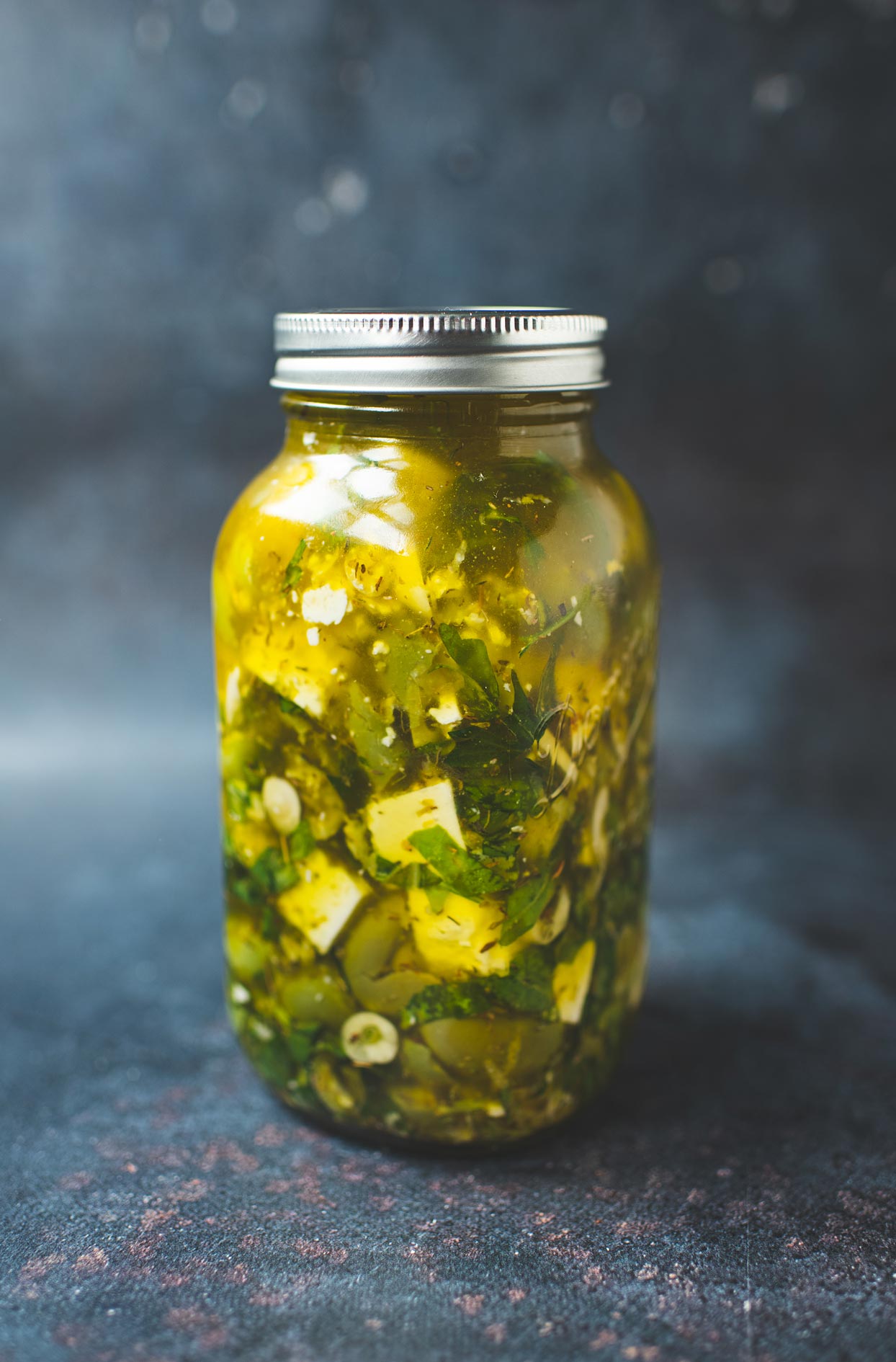
Marinated feta with olives and herbs
- Preparation 15 min
- Refrigeration 30 min
- Servings 8
- Freezing I do not suggest
Ads
🫒 The Mediterranean appetizer always ready in the fridge
My marinated feta with olives and herbs has become a permanent staple in my fridge. I’ve seen several versions on social media in recent months and I absolutely had to make my own. I tested it, refined it and now I bring it out every time I have people over. A big one-liter Mason jar ready to go in 30 minutes, that keeps for a week in the fridge. When someone drops by last minute or I want an express appetizer, I pull out the jar, grab my crostini and we’re done. Zero stress, zero effort, result that’s just insanely good. ### 🇬🇷🇮🇹 The Greek-Italian mix that changes everything What sets my version apart is the marriage between Greek feta and Italian Castelvetrano olives. Two Mediterranean worlds meeting in the same Mason jar. Castelvetrano are my favorite olives on the planet: crispy green, meaty, mild, elegant, nothing like the standard black olives you find in 95% of marinated feta recipes. Combine that with four garlic cloves (signature dose, I’m not apologizing), fresh torn basil, parsley, whole lemon zest and a touch of hot pepper, and you have a complete Mediterranean condiment that pops with every bite.
🍝 So much more than just an appetizer
That’s the mistake people make with marinated feta: seeing it just as an appetizer dip and limiting it to crostini. My version goes much further. It’s eaten on hot or cold pasta, on a Greek salad, on grilled BBQ steak, with scrambled eggs at breakfast or in an improvised dip. And the flavored oil left at the bottom of the jar when the feta is gone? Liquid gold. You reuse it to make a vinaigrette, to start a pasta sauce, to brush homemade pizza. Nothing is wasted, everything is delicious.
Ads

Ads
🧀 The feta secret: regular, never low-fat
That’s the first absolute rule. Reduced-fat feta breaks apart and crumbles in the oil, you end up with a pasty mixture rather than beautiful firm cubes that hold their shape. Buy regular feta (any brand that just says “feta” on the package) and drain it well before cutting. Extra tip: don’t salt your feta. It’s already well salted on its own and most people oversalt without realizing it. Taste before ruining everything.
🫒 The technique for pitting Castelvetrano
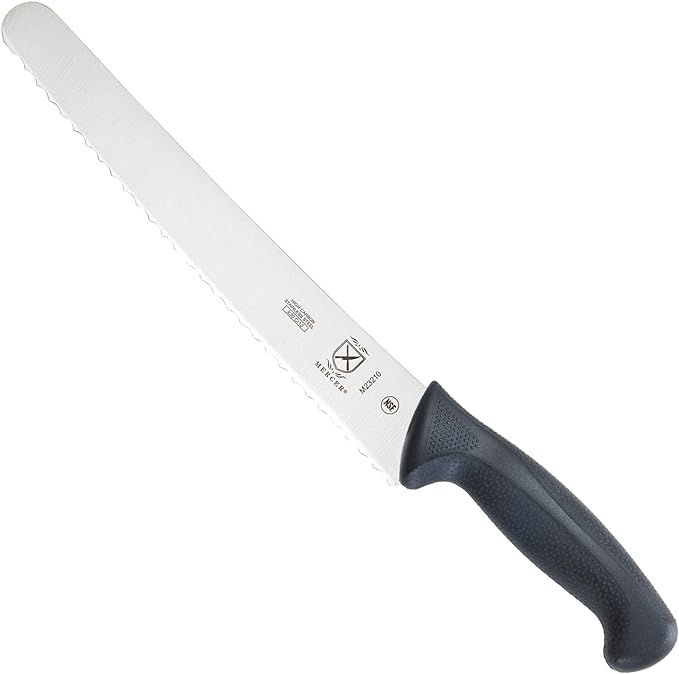
Castelvetrano almost always come with their pits at the grocery store. It’s rare to find them pre-pitted. Here’s my pro technique: place 2 or 3 olives flat on the cutting board, take a large chef’s knife and give a sharp tap with the flat side of the blade forward. The olives crush slightly and the pit comes out easily by hand. Once pitted, tear them into rustic pieces with your fingers. It releases more aroma and gives an authentic Mediterranean texture.
🌿 My herb variations according to your mood
My version (basil + parsley + dried oregano) is the Italian classic. But you can play with the profile depending on what you have on hand: Provençal (fresh rosemary + thyme), fresh Mediterranean (dill + mint), rustic (sage + thyme), pure Greek (oregano + mint + dill). The golden rule: always mix a dried herb (which gives depth) with one or two fresh herbs (which give liveliness). Avoid using only dried herbs, it lacks freshness.
🔥 The HOT oven variation. Bonus for appetizers
When you want to switch it up, transform your marinated feta into a hot spreadable version. Place the feta with a little marinade in a small oven-safe dish and bake at 200°C (400°F) for 15 minutes, until the feta is melty and lightly golden on top. Serve immediately with grilled pita bread or warm crostini. It’s another Mediterranean classic totally different from the cold version, using the same base jar.
♻️ The flavored oil at the end, NEVER throw it away
That’s the most important instruction I can give you. When there’s almost no feta left in the jar, you’re left with olive oil flavored with garlic, herbs, lemon and olives. It’s liquid gold in the kitchen. Use it as a vinaigrette base, to sauté pasta or vegetables, to brush homemade pizza before cooking, to start a tomato sauce, or simply drizzled on a caprese, Greek salad or grilled fish. You can even transfer it to a bottle to keep it another week in the fridge after straining the solids.
⏰ Patience pays: 30 min minimum, 1 hour is better
You can serve your marinated feta after just 30 minutes in the fridge if you’re in a hurry, and it’s already very good. But if you can wait a full hour, the flavors have time to develop well, the oil penetrates better into the feta and the garlic mellows. Ideally, prepare your jar in the morning to serve in the evening, or even the day before. The longer you wait, the better it gets. Up to about 24 hours for full potential.
❄️ Olive oil solidifying in the fridge is totally normal
After a few days in the fridge, you’ll notice the olive oil in your jar has solidified. It takes on a whitish, solid texture. This is completely normal and does NOT mean your marinated feta has gone bad. Olive oil naturally solidifies at cold fridge temperatures. Just take your jar out of the fridge 1 to 2 hours before serving to let the oil come back to room temperature and turn liquid again. You’re back to full fluidity and ready to serve.
✅ What to serve with my marinated feta with olives and herbs?
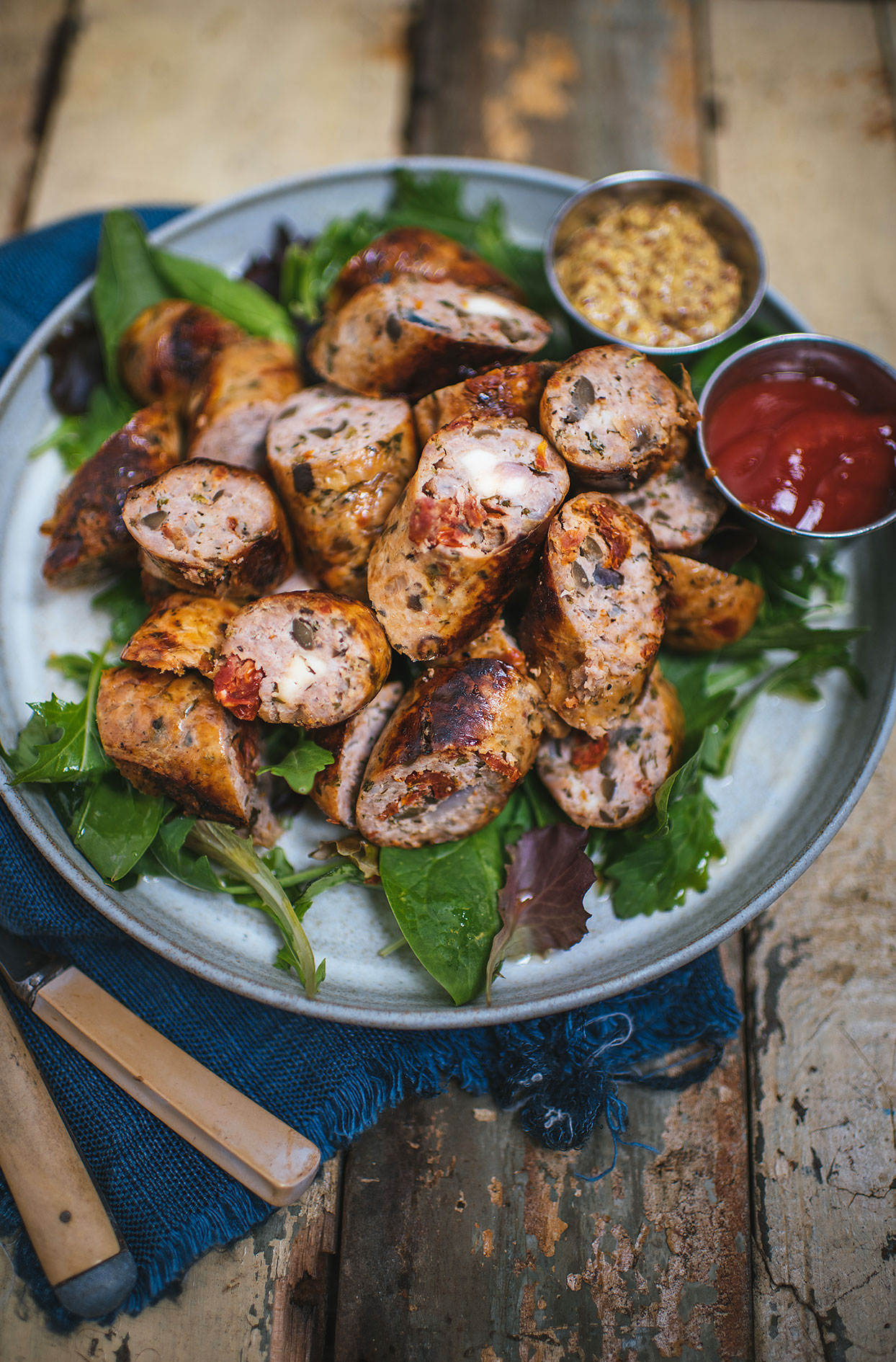
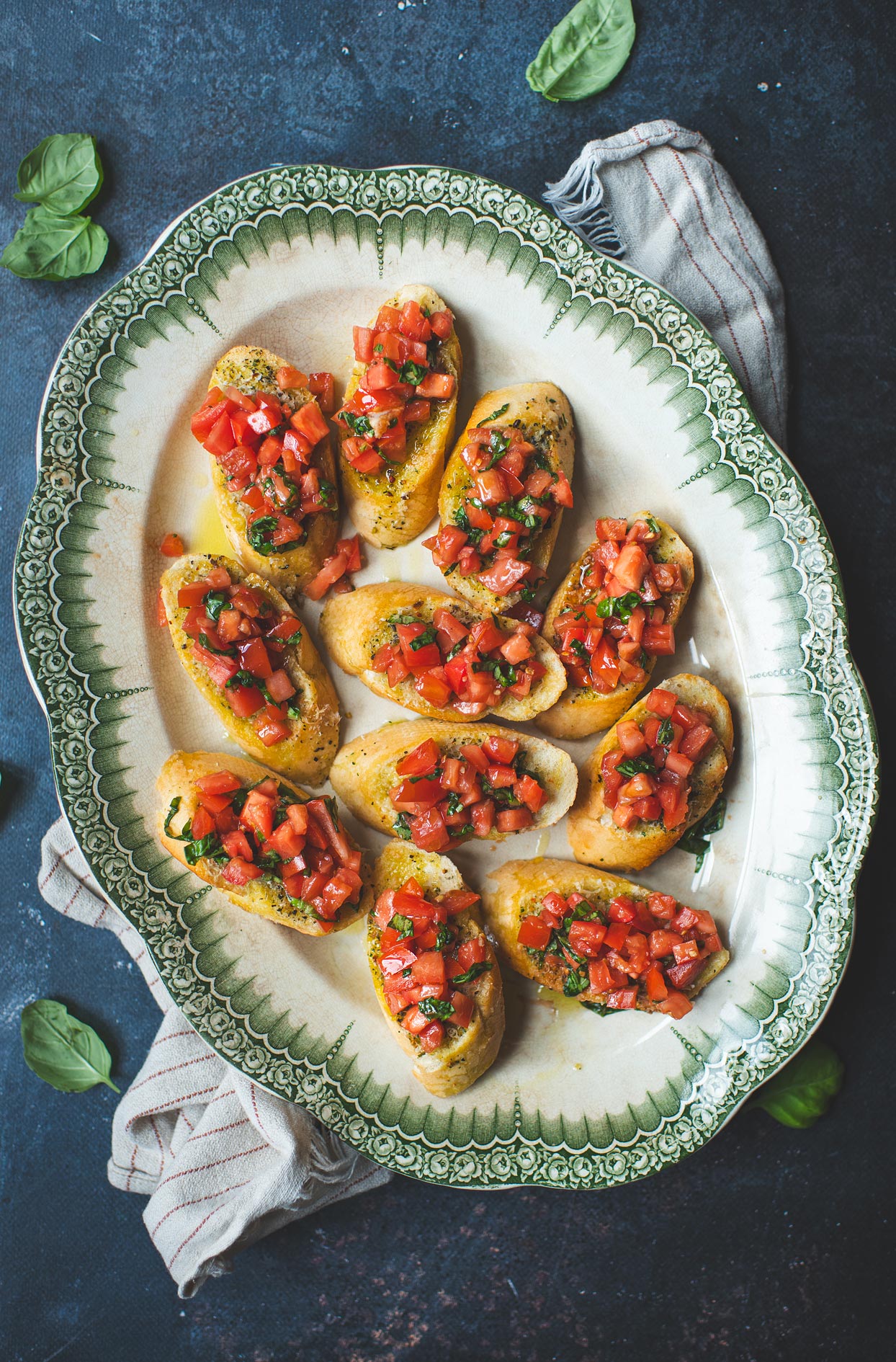
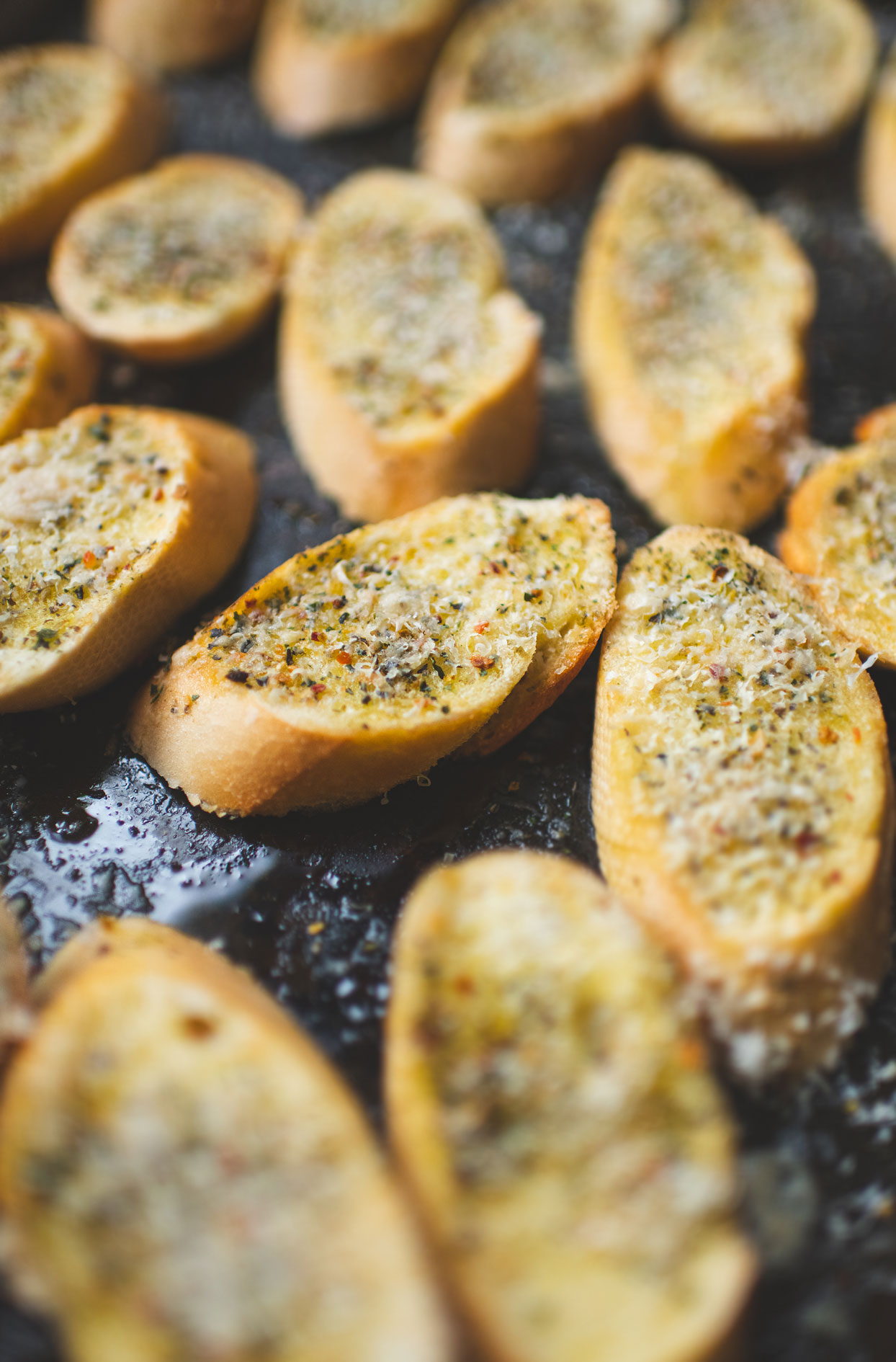
My marinated feta is so versatile it can accompany just about anything Mediterranean. For appetizers, serve it with my Parmesan croutons for bruschetta to soak up the flavored oil. As a starter or light meal, place it on my The best traditional Greek salad for a perfect Greek-Italian combo. For a complete meal, follow with my Tomato bruschetta or with saucisses grecques avec feta, tomates séchées et olives noires. It’s just impossible to mess up.


Ads
Marinated feta
- 400 g regular feta (not low-fat), drained and cut into ½-inch cubes
- ½ cup (125 ml) Castelvetrano olives, pitted and hand-torn
- 4 garlic cloves, thinly sliced
- ¼ cup (60 ml) fresh basil, hand-torn
- ¼ cup (60 ml) fresh parsley, chopped
- Zest of 1 lemon
- 1 tbsp (15 ml) dried oregano
- ½ tsp (2.5 ml) red pepper flakes
- 2 cups (500 ml) extra virgin olive oil
For serving
- Homemade crostini
Ads
Preparation
- Drain the feta, then cut into approximately ½-inch cubes. Set aside in a bowl.
- Pit the Castelvetrano olives: place 2 or 3 olives flat on the cutting board, give them a sharp tap with the flat side of a large knife blade (forward motion) to lightly crush them. Remove the pit by hand, then tear each olive into rustic pieces.
- Place the feta cubes in a one-liter Mason jar. Add the torn olives, sliced garlic, basil, parsley, lemon zest, dried oregano and red pepper flakes.
- Pour the olive oil to completely cover the feta and aromatics. Close the jar tightly and shake gently to coat all ingredients well.
- Refrigerate 30 minutes to 1 hour before serving (1 hour is even better, the flavors have time to develop well).
- After a few days in the fridge, the olive oil may solidify and take on a whitish solid texture (this is completely normal and your feta isn’t spoiled!). Take the jar out of the fridge 1 to 2 hours before serving to let the oil return to room temperature and turn liquid again.
- Serve directly from the jar with homemade crostini, or use on pasta, in a salad, on grilled meat or with eggs.
Four days in the fridge, no more. And it is not the feta that sets the limit, it is what goes with it. Fresh garlic and fresh herbs fully submerged in oil end up with no oxygen, and that is an environment where bacteria can grow even when cold. Official guidance for oil infused with fresh garlic or herbs is 4 days in the refrigerator.
Keep the cubes covered in oil at all times, top it up as needed, and keep the jar tightly sealed in the fridge between servings. Never on the counter.
Want it to last longer? Add 1 tbsp (15 ml) of lemon juice when you build the jar. The acidity changes everything and buys you up to a month.
Yes, but honestly Castelvetrano are really what makes my recipe special (green, crispy, mild, Italian. Nothing like standard black olives). If you can’t find them, use Cerignola-type green olives to stay in the same spirit, or black Kalamata if you prefer a more rustic and Greek profile. Avoid olives that are too salty in aggressive brine which will unbalance the whole marinade.
Because feta is already well salted on its own. That’s its nature, it was preserved in brine for weeks. Castelvetrano olives also bring their dose of salt, and parmesan if you choose to add it as a final touch. If you salt on top of all that, you’ll end up with an inedible dish. Always taste before adding anything. That’s the golden rule in Mediterranean cooking.
Regular feta, that’s all. Any brand that simply indicates “feta” on the package works, whether it’s Greek, Bulgarian, French or Quebec. What you absolutely must avoid is reduced-fat feta (low-fat, 0%, light). It falls apart when cut, crumbles in the oil and you end up with a pasty mixture instead of beautiful firm cubes. Always drain it before cutting.
It’s ultra versatile: as an appetizer with my parmesan croutons for bruschetta to soak up the flavored oil, as an accompaniment to my the best traditional greek salad for a light meal, paired with my tomato bruschetta in a Mediterranean platter, or alongside my saucisses grecques avec feta, tomates séchées et olives noires for a complete meal. It’s also enjoyed on hot pasta, on grilled BBQ steak or with morning scrambled eggs.
Ads
Ads



Ads
Ads
Ads