

Duck rillettes
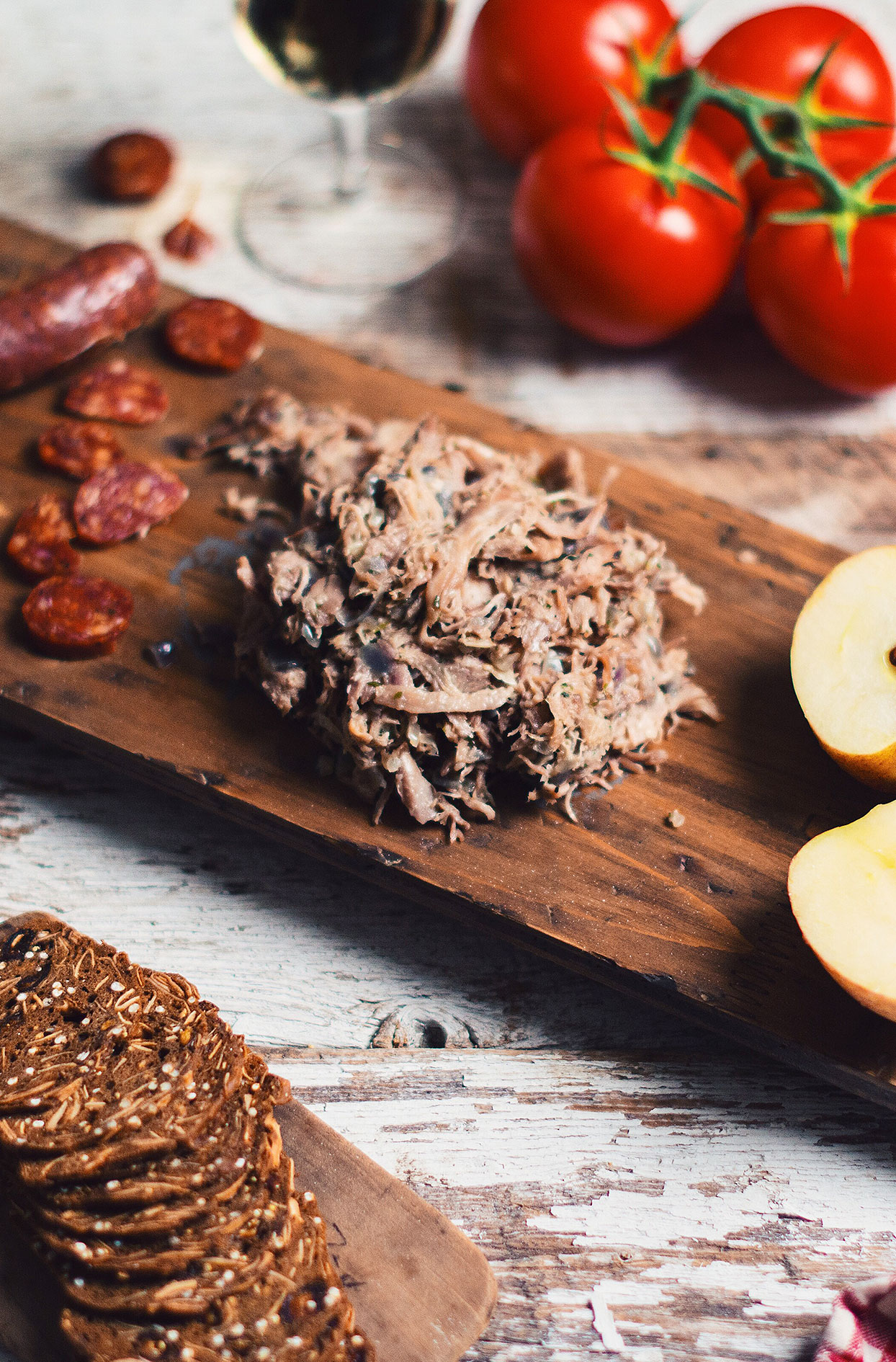
- Preparation 50 min
- Refrigeration 2 h
- Cooking 15 min
- Servings 2 cups (about 4 to 6 as an appetizer)
- Freezing Absolutely, up to 3 months
Ads
🦆 My take on rillettes
I made this once. Once. And I thought it was insane. This is my version of rillettes, the funky one, with maple syrup and red ale going into the pan. Classic French rillettes are a lot more polite than this. Mine taste like Quebec.
🎁 The jar you bring to someone’s house
Show up somewhere with a jar of this and people lose it. They taste it, they tell you it makes no sense how good it is, and the next question is always the same one: how did you make this. It is a host gift that costs you four duck legs.
🥖 Better than the store jar
Store bought rillettes are fine. Yours will be better, and it is not close. You control the salt, you control the texture, and you put real beer in it instead of a flavour listed on the label.
The work takes about fifty minutes, half of it chopping. The fridge handles the rest.
Ads


Ads
🧈 The fat seal, the step everybody skips
Pack the rillettes into the jar, melt your duck fat, pour it over until you cannot see the meat anymore. That is it. Two minutes of work, and it changes how long the jar lives.
The fat sets as it cools and becomes an airtight lid. No air on the meat means nothing dries out and nothing oxidizes. This is how rillettes were kept before refrigeration, and it is still why every store jar has that white layer on top.
One thing that matters: press the meat down before you pour. An air pocket trapped under the fat is exactly where it will turn first. And once you open the jar, pour a fresh thin layer of melted fat back over whatever is left.
💧 Reduced, but still moist
This is the one real trap in the recipe. You cook the liquid down, but you stop while the mix still looks glossy. Take it all the way to a dry pan and your rillettes will be dry, and you will be disappointed. Too rich has never been a problem here. Too dry is.
🍴 This is not a purée
I do not mash mine. Confit duck falls apart on its own as you chop it, and you want to see those strands. A quick press with a fork in the jar if you feel like it, and stop there.
🧂 It has to be salty
Confit duck already is, and that is not enough. This recipe needs to lean salty, that is what makes it good. Taste it warm, before it goes into the jars, and go a little past what your instinct tells you.
🍺 Any red ale will do
No need to overthink it. A corner store red ale does the job. What you are after is the caramel edge that answers the maple syrup, not a rare bottle. No beer? Use the same amount of beef broth.
🦆 Store bought confit, or your own
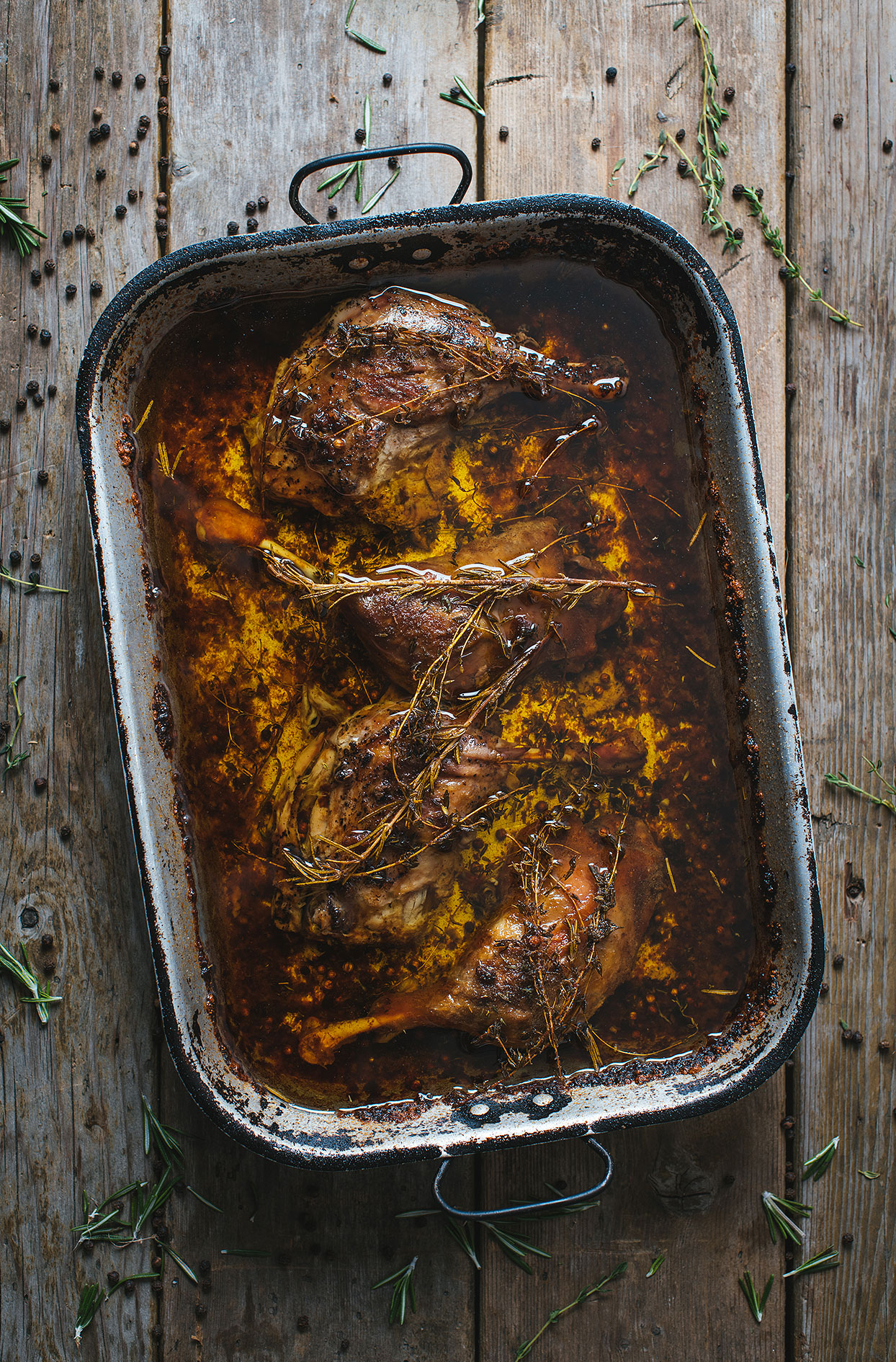
Here I use legs that are already confit. They are easy to find, they are good, and they make this doable on a Tuesday night. If you want the next level version, confit your own duck legs and come back to make the rillettes with them. You will not go back.
🕐 Make it ahead
That is the whole point. Two to three days ahead is perfect, and I would not push past a week in the fridge even under the fat seal. Pull the jar out twenty minutes before serving, otherwise the fat is still hard and it spreads badly.
In the freezer it holds three months. Freeze the sealed jar as is, and thaw it in the fridge overnight, not on the counter.
✅ What do I serve with my duck rillettes?
A fancy bread baguette, full stop. What you need beside it is acid to cut the richness. Cornichons, a mustard with some bite. An onion jam if you have a jar open. That is what makes you go back for another one. Building a whole apéro around the jar? Set it on a cheese and charcuterie board and add duck confit crostinis with honey beer apples to stay in the family.


Ads
Ingredients
- 1 tbsp (15 ml) olive oil
- 3 tablespoons (45 ml) rendered duck fat
- 1 yellow onion, finely chopped
- 3 garlic cloves, finely chopped
- 4 confit duck legs (total 560 g), deboned and shredded
- 1 tablespoon (15 ml) maple syrup
- 1 tablespoon (15 ml) fresh rosemary leaves, finely chopped
- ½ cup (125 ml) white wine
- ½ cup (125 ml) red ale (or the same amount of beef broth)
- ½ teaspoon (2.5 ml) dried parsley
- 3 tablespoons (45 ml) melted duck fat, for the seal
Ads
Preparation
- In a pan at medium heat, add the olive oil and 1 tablespoon (15 ml) of the duck fat. Cook the onion and garlic for 3-4 minutes, until soft, while stirring often.
- Add the duck and the rest of the duck fat, maple syrup, rosemary, wine, beer and parsley. Season generously with salt and pepper, then mix well.
- Continue cooking for 10 minutes, or until the liquid is fully reduced but still moist. Stir often.
- Remove from heat and let cool down for 15 minutes. Pack into jars, pressing down to push out any air pockets. Mash lightly with a fork if you want, but never into a purée.
- Melt the remaining 3 tablespoons (45 ml) of duck fat and pour it over the rillettes, until the meat disappears under a thin layer. That is the seal: as it sets in the cold, the fat cuts off the air and keeps the rillettes fresh far longer.
- Place in the fridge for at least 2 hours. Serve with a fancy bread baguette!
Duck rillettes are duck cooked slowly in its own fat, then shredded and packed into a jar under a layer of that fat. It spreads like a rough pâté, it is salty, and you can still see the strands of meat.
It is a preservation method first and a spread second. The fat on top seals out the air, which is why a jar keeps for weeks instead of days.
Texture. Rillettes are shredded, so you see fibres and it stays rustic. Pâté is ground smooth, usually with liver in the mix, and it slices or spreads like a paste.
A terrine is a third thing again: cooked as a block in its mould, then sliced with a knife. Mine are firmly rillettes, you can see the duck.
Yes. Three months in the freezer, in the jar, with the fat seal in place, since that layer is what keeps freezer burn away from the meat.
Thaw in the fridge overnight. Not on the counter, not in the microwave. The fat needs to settle back slowly or the texture breaks.
Absolutely, and that is what this recipe calls for. Confit legs from the grocery store are good and they cut the work in half.
If you would rather confit the legs yourself, you get to pick your own salt and aromatics, and you end up with plenty of rendered fat for the seal.
A fancy bread baguette, cornichons, a sharp mustard or an onion jam. The acid cuts the fat, and that is what keeps people coming back to the jar. The Ventoux red and the abbey dubbel on this page handle the rest.
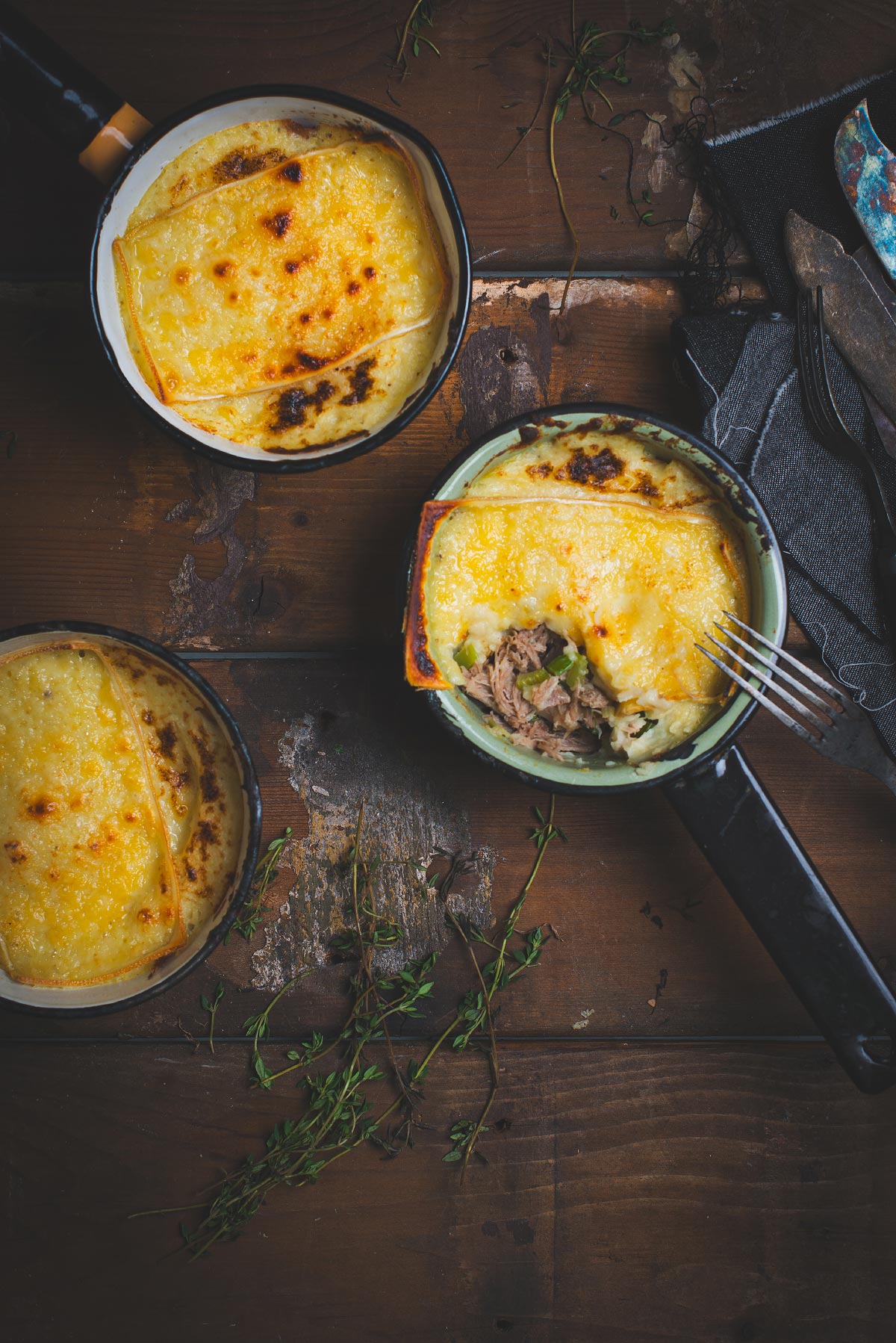
For a full spread, set the jar on a cheese and charcuterie board, or carry the duck through to a main with my duck parmentier.
Ads
Ads


Ads
Ads
Ads