

Boiled Dinner Recipe (Beef Chuck Roast)
- Preparation 30 min
- Cooking 3 h 30 min
- Servings 8
- Freezing Absolutely
Ads
🍲 My grandparents’ dinner, rebuilt my way!
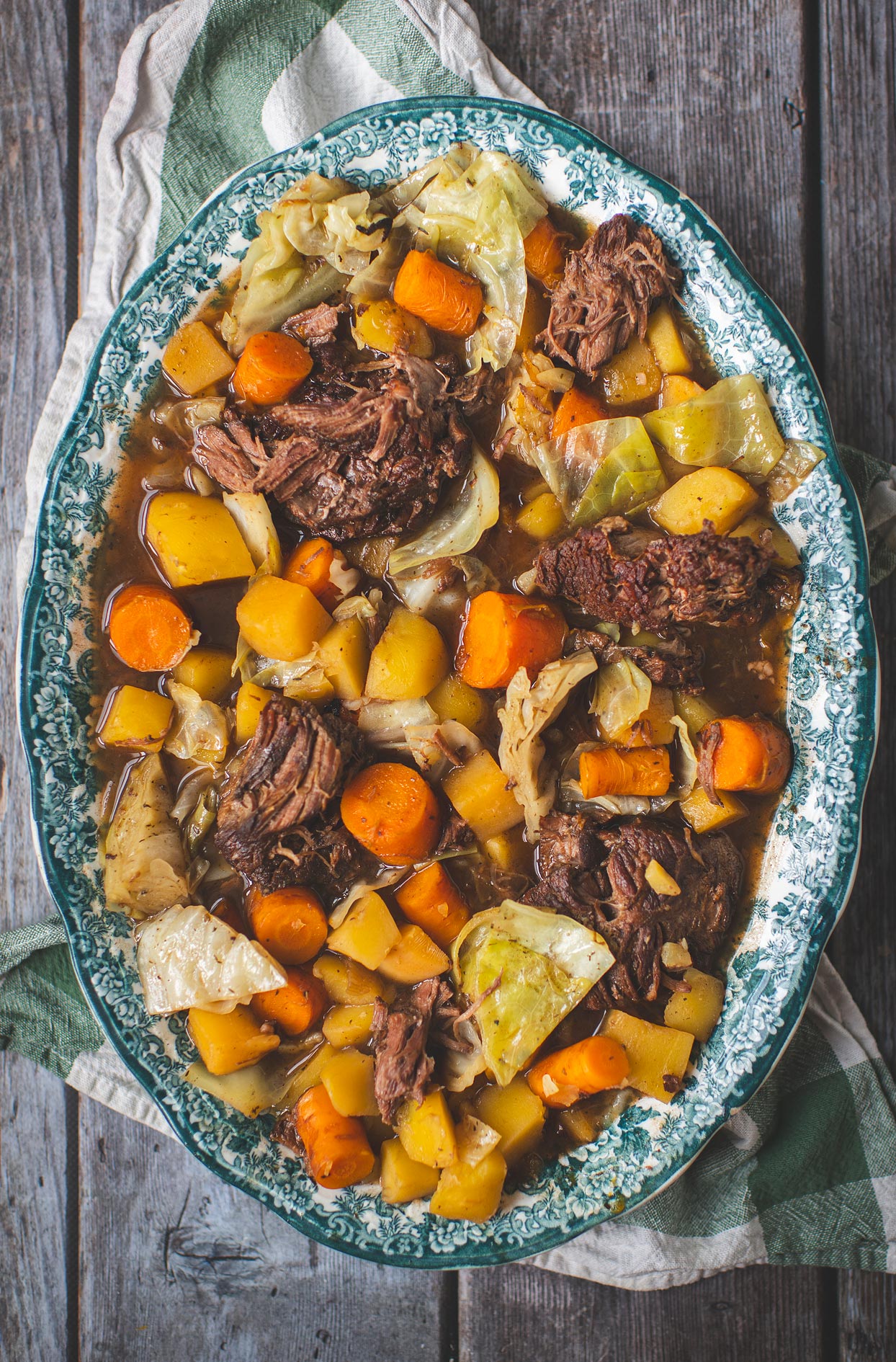
One pot on the stove, three and a half hours, and eight plates that overflow. Beef chuck roast that pulls apart with a fork, yellow potatoes, carrots, rutabaga and wedges of green cabbage that have soaked up all that broth. On the table: bread, plenty of butter and pickled beets. It is the best-value fall supper I know, and the next day it is even better!
🥓 What I kept from the old recipe, and what I changed
The salt pork stays. It is the backbone of a real boiled dinner, and I brown it before the onion so everything else cooks in that fat. Nobody touches that part. The rest I pushed. A red wine deglaze, maple syrup and cider vinegar in the braising liquid. Three things my grandmother would never have put in there. The wine lifts everything stuck to the bottom of the pot, the maple rounds it off, the vinegar keeps it alive. A boiled dinner can be dull. This one is not.
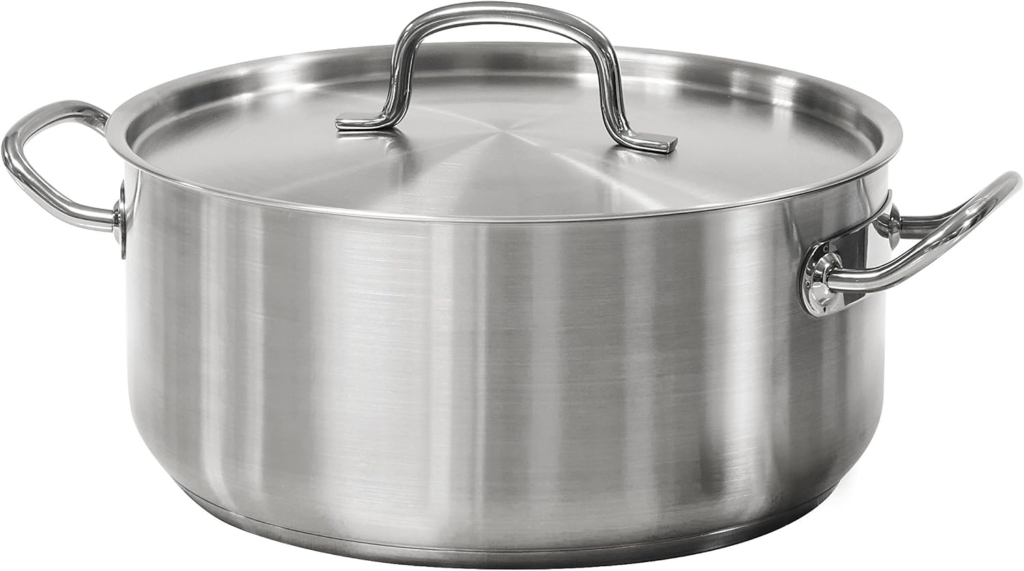
⚠️ Get your biggest pot out. I mean it.
Three litres of stock, three pounds of meat, six potatoes, six carrots, a rutabaga and a whole cabbage. It does not fit in a regular Dutch oven. I ended up pulling out my giant pasta pot, and it was still tight. Count on 7 L minimum, 9 L if you have it. Otherwise split it between two pots. Nothing is more annoying than reaching the vegetable stage and realizing they will not fit.
Ads

Ads
🍲 The pot is THE decision of this recipe
I keep saying it because it is what makes people fail. Three litres of liquid, three pounds of meat and a whole cabbage needs 7 L minimum. A standard 5.7 L enameled Dutch oven, the most common one out there, is not enough. I pulled out my big pasta pot and it was still tight. If you do not have the size, split it between two pots instead of cramming: a pot filled to the rim does not simmer, it overflows.
🥓 Salt pork is where the flavor actually comes from
A quarter pound in lardons, browned before the onion. It is the signature ingredient of a traditional boiled dinner and it is what separates this from an ordinary beef stew. It renders its fat, the onion and garlic cook in it, and the whole pot carries that for three hours. If you cannot find it, thick-cut smoked bacon does the job, but the flavor shifts toward smoky rather than salty.
🍷 Deglaze with red, not white
Most boiled dinners use white wine when they deglaze at all. Mine is red, half a cup, and an ordinary cooking wine works fine. The gesture matters more than the bottle: after searing the chuck and browning the pork, there is a layer of stuck-on browning at the bottom of the pot. That is where half the flavor of the dish is hiding. Pour, scrape with a wooden spoon, let it reduce a minute.
🍁 Maple and cider vinegar, both together
Three tablespoons of maple in three litres of stock is not much, and that is on purpose. It is not there to sweeten, it is there to round off the mineral edge of the rutabaga. The two tablespoons of cider vinegar do the opposite: they keep the broth alive instead of letting it go heavy after three hours. Neither one reads on its own. Take them out and you will feel the hole.
🥔 Yukon Gold, not just any potato
Yellow, firm-fleshed. A Russet, after forty-five minutes in a simmering broth, falls apart into mush and clouds everything. Yukon Gold holds its shape and soaks up the broth without collapsing. Cut in large chunks, never diced: the smaller they are, the faster they go.
🥬 Vegetables in two stages, cabbage last
Roots for twenty minutes, cabbage for twenty to twenty-five. Nobody gives the two times separately, everywhere you read “add the vegetables and cook 45 minutes.” Except a green cabbage that cooks forty-five minutes turns into grey rags. The wedges have to still be wedges when you lift them out. And keep them whole: sliced thin, cabbage vanishes into the broth.
🧂 Salt at the end, never at the start
Between the salt pork and three litres of beef stock, there is already a lot of salt in that pot before you even begin. Pepper the meat generously, but salt it with your fingertips. Then you leave it alone for three hours. The broth reduces and concentrates, and it is only at step 9, once the meat is shredded, that you taste and adjust.
🍜 The broth does not get thrown out
There is always some left, and it is gold: three hours of chuck, salt pork and root vegetables in there. I start by ladling a good amount into each bowl so the bread can go get it. Whatever survives that goes in the freezer and becomes a soup the following week. Add barley or noodles and you have a free second meal.
📅 Make-ahead
All the knife work happens the day before. Peeling six potatoes, six carrots and a rutabaga takes a solid half hour, and that is exactly what you do not want to be doing while people are arriving. Cut everything into large pieces the night before, keep the potatoes in a bowl of cold water in the fridge so they do not darken, the rest in labeled containers. Cut the roast into four while you are at it, and make your lardons. The next day all that is left is searing and simmering. And that part is hands-off: the pot works on its own for two and a half hours, you are with your people, and the house smells like braised beef when the door opens. The one thing that waits until the last minute: the cabbage. Cut ahead, it oxidizes and picks up a sulfur smell. Cut it into wedges twenty minutes before it goes in the pot.
✅ What to serve with my old-fashioned boiled dinner
Bread, plenty of butter and pickled beets. That part is not negotiable at our place: the acidity of the beets does in the bowl exactly what the cider vinegar does in the broth. If you want to stay with pot cooking, my Guinness braised beef chuck roast and my beef stew with beer work the same cut differently. And for the leftover broth, go look at my French cabbage soup.
Ads
Boiled dinner
- 3 lb (1.35 kg) beef chuck roast, cut into 4 pieces
- Salt and freshly ground black pepper
- 2 tbsp (30 ml) olive oil
- 1/4 lb (115 g) salt pork, cut into lardons
- 1 large yellow onion, quartered
- 4 garlic cloves, whole and crushed
- 1/2 cup (125 ml) red wine
- 12 cups (3 L) beef stock
- 3 tbsp (45 ml) maple syrup
- 2 tbsp (30 ml) apple cider vinegar
- 1 bay leaf
- 1 1/2 tsp (7 ml) dried thyme
Vegetables
- 6 medium Yukon Gold potatoes, peeled and cut into large chunks
- 6 carrots, peeled and cut into large pieces
- 1 rutabaga, peeled and cubed
- 1 small green cabbage, cut into wedges
Ads
Preparation
- Pat the chuck roast dry with paper towel. Pepper it generously on all sides and salt it lightly only, because the salt pork and the stock already bring plenty.
- In a very large pot of at least 7 L, heat the oil over medium-high. Sear the pieces of meat 4 to 5 minutes per side, until deeply browned. Set aside on a plate.
- In the same pot, brown the salt pork lardons 3 to 4 minutes, until they have rendered their fat and taken on color.
- Add the onion and garlic. Cook 3 to 4 minutes, until well browned.
- Deglaze with the red wine. Scrape the bottom of the pot with a wooden spoon to lift everything stuck there, then let it reduce 1 minute.
- Return the meat to the pot. Add the beef stock, maple syrup, cider vinegar, bay leaf and thyme. Bring to a boil, then lower the heat, cover and simmer 2 h 30, until the meat pulls apart with a fork.
- Add the potatoes, carrots and rutabaga. Continue cooking, covered, 20 minutes.
- Add the cabbage wedges. Continue cooking 20 to 25 minutes, until all the vegetables are tender.
- Remove the bay leaf. Take the meat out, shred it with a fork and return it to the pot. Adjust salt and pepper.
- Serve the shredded meat and vegetables in shallow bowls, with a good ladle of broth. Bread, butter and pickled beets on the side.
The bones of it are always the same: a tough cut of meat, salt pork, a long simmer, then vegetables added late. In New England the meat is usually corned beef or ham. In Quebec, where this recipe comes from, it is a beef chuck roast with salt pork, and the vegetable lineup is potato, carrot, rutabaga and cabbage. My version adds a red wine deglaze and a braising liquid lifted with maple syrup and cider vinegar. Two and a half hours of simmering, then roots for twenty minutes and cabbage for twenty to twenty-five.
Yes, and that is exactly what this recipe does. Corned beef is brisket that has been cured in brine, which is why it is pink and aggressively salty. Chuck roast is fresh beef shoulder, cheaper, and it gives you a broth you can actually season yourself instead of one dictated by the cure. The trade-off is time: corned beef is already tenderized by the brine, chuck needs its full two and a half hours to break down. Do not shorten it.
Only if you never actually boil it. Chuck is full of collagen, and collagen starts converting to gelatin around 160 to 180 °F and needs hours in that window. At a hard rolling boil, the muscle fibres contract faster than the collagen melts, and you end up with dry, stringy meat in a cloudy broth. What you want is a lazy simmer, barely a bubble breaking the surface. Low and slow is not a slogan here, it is the whole mechanism.
Two and a half hours at a gentle simmer, before any vegetables go in. That is the number for a 3 lb roast cut into four pieces. If it does not pull apart with a fork at that point, give it another thirty minutes rather than moving on. Once the roots and cabbage go in, you are adding another forty to forty-five minutes, so the meat sits in that pot for well over three hours total and it only gets better.
It is, as long as it goes in last. Cabbage needs twenty to twenty-five minutes, not three hours. Added at the start it disintegrates, turns grey and pushes a sulfur smell through the whole pot. Added at the end, in whole wedges, it stays in one piece, soaks up the broth and gives you the sweetness that balances the salt pork. Keep the wedges big and cut them right before they go in.
Bread, butter and pickled beets. Ladle a good amount of broth right into the shallow bowl so the bread can soak in it, that is the best part of the meal. It makes eight generous servings. For other pot dishes, look at my Guinness braised beef chuck roast or my beef stew with beer.
Ads
Ads
Ads
Ads
Ads